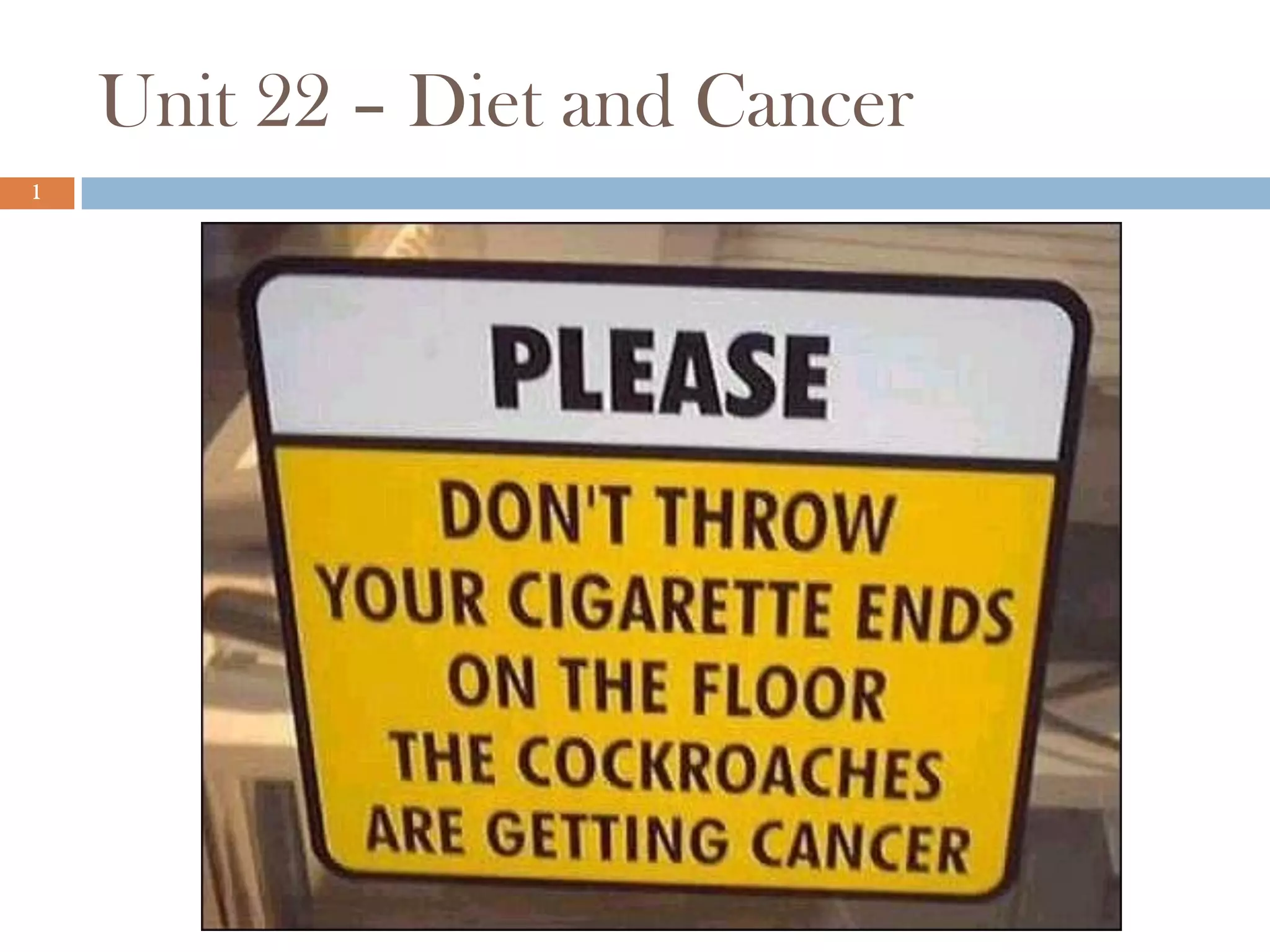
Unit 22 – Diet and Cancer
1
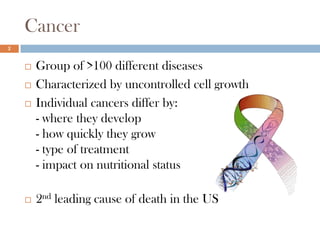
Cancer
2


       Group of >100 different diseases
       Characterized by uncontrolled cell growth
       Individual cancers differ by:
        - where they develop
        - how quickly they grow
        - type of treatment
        - impact on nutritional status

       2nd leading cause of death in the US
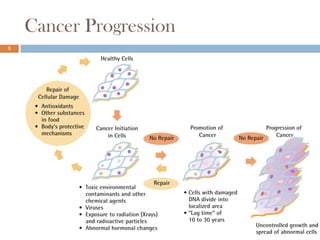
Cancer Progression
3
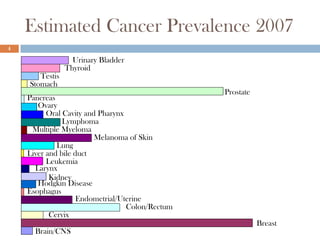
Estimated Cancer Prevalence 2007
4

                  Urinary Bladder
                Thyroid
       Testis
    Stomach
                                                 Prostate
    Pancreas
       Ovary
          Oral Cavity and Pharynx
               Lymphoma
     Multiple Myeloma
                         Melanoma of Skin
             Lung
    Liver and bile duct
          Leukemia
      Larynx
           Kidney
       Hodgkin Disease
    Esophagus
                    Endometrial/Uterine
                                  Colon/Rectum
           Cervix
                                                            Breast
      Brain/CNS
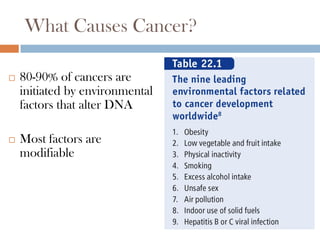
What Causes Cancer?

   80-90% of cancers are
    initiated by environmental
    factors that alter DNA

   Most factors are
    modifiable
Causes of Cancer
6

       Aflatoxins – toxin made my       Arsenic
        Aspergillus fungi                Asbestos
       Ethanol - alcoholic              Chromium hexavalent cpds
        beverages
                                         Hepatitis B and C virus
       Coal-tars
                                         Human papilloma viruses:
       Herbal remedies containing        some genital-mucosal types
        plant species of the genus
        Aristolochia                     Mustard gas
       Salted fish (Chinese-style)      Solar radiation
       Soot                             Sunlamps or sunbeds
       Tobacco, smokeless               X-radiation and gamma
                                          radiation
       Wood dust
                                         Nitrates
What Causes Cancer?
   Diet accounts for approx. 40% of cancer risk
-   Westernized dietary intake and lifestyle increase risk
    of many types of cancer


   Genetic factors account for approx. 5-42% of risk
    for some cancers
-   Prostate, breast, and pancreatic cancers
Nutrition and Cancer
8


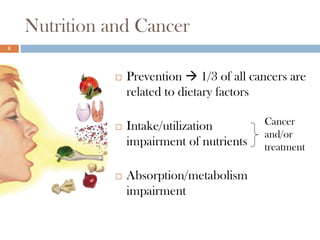
                 Prevention  1/3 of all cancers are
                  related to dietary factors

                 Intake/utilization        Cancer
                                            and/or
                  impairment of nutrients   treatment

                 Absorption/metabolism
                  impairment
Nutrition in Cancer Prevention
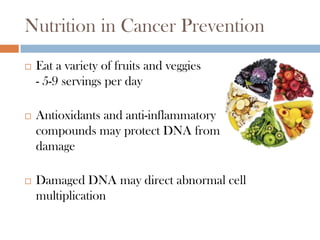
   Eat a variety of fruits and veggies
    - 5-9 servings per day

   Antioxidants and anti-inflammatory
    compounds may protect DNA from
    damage

   Damaged DNA may direct abnormal cell
    multiplication
Nutrition in Cancer Prevention
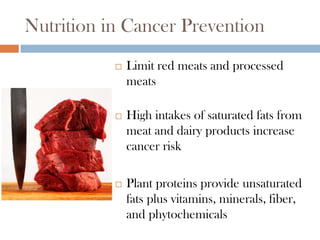
              Limit red meats and processed
               meats

              High intakes of saturated fats from
               meat and dairy products increase
               cancer risk

              Plant proteins provide unsaturated
               fats plus vitamins, minerals, fiber,
               and phytochemicals
Nutrition in Cancer Prevention
11


     Excess body weight and physical inactivity
      ↑ risk of esophageal, colon/rectal, postmenopausal
       breast, endometrial, and renal cancers

        Increases hormones that promote cancer cell growth
        Promotes insulin resistance and hyperinsulinism
        Promotes low levels of inflammation which can
         promote cancer cell growth and development
Nutrition in Cancer Prevention
12


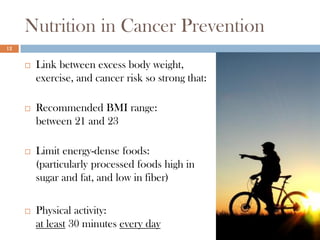
        Link between excess body weight,
         exercise, and cancer risk so strong that:

        Recommended BMI range:
         between 21 and 23

        Limit energy-dense foods:
         (particularly processed foods high in
         sugar and fat, and low in fiber)

        Physical activity:
         at least 30 minutes every day
American Institute for Cancer Research
13
     Recommendations

        Avoid sugary drinks
        Limit foods high in salt
        Limit alcohol to 1-2 drinks per day (if any at all)
        Don’t use supplements to protect against cancer
        Breastfeed up to 6 months
        Do not smoke or chew tobacco
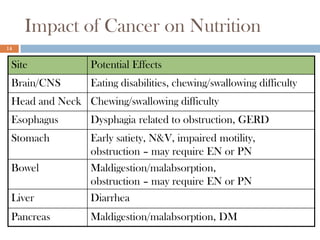
Impact of Cancer on Nutrition
14


 Site            Potential Effects
 Brain/CNS       Eating disabilities, chewing/swallowing difficulty
 Head and Neck Chewing/swallowing difficulty
 Esophagus       Dysphagia related to obstruction, GERD
 Stomach         Early satiety, N&V, impaired motility,
                 obstruction – may require EN or PN
 Bowel           Maldigestion/malabsorption,
                 obstruction – may require EN or PN
 Liver           Diarrhea
 Pancreas        Maldigestion/malabsorption, DM
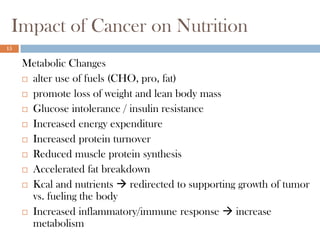
Impact of Cancer on Nutrition
15


     Metabolic Changes
      alter use of fuels (CHO, pro, fat)

      promote loss of weight and lean body mass

      Glucose intolerance / insulin resistance

      Increased energy expenditure

      Increased protein turnover

      Reduced muscle protein synthesis

      Accelerated fat breakdown

      Kcal and nutrients  redirected to supporting growth of tumor
       vs. fueling the body
      Increased inflammatory/immune response  increase
       metabolism
Impact of Cancer on Nutrition
16


     Anorexia
      Contributing factor to weight loss and malnutrition

      Potential causes:

       - pain, depression, anxiety, fatigue, early satiety, N&V
      Treatments contribute:

       - taste alterations, loss of taste, sore mouth, dry mouth,
       thick saliva, esophagitis, fatigue
      Optimizing intake:

       - texture/temp modification, scheduled eating, meds to
Impact of Cancer on Nutrition
17


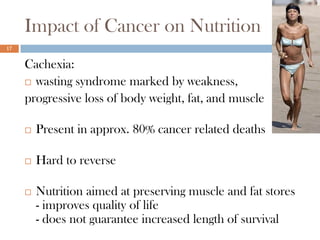
     Cachexia:
      wasting syndrome marked by weakness,

     progressive loss of body weight, fat, and muscle

        Present in approx. 80% cancer related deaths

        Hard to reverse

        Nutrition aimed at preserving muscle and fat stores
         - improves quality of life
         - does not guarantee increased length of survival
Nutrition Therapy During Treatment
18


        Improve tolerance to treatment

        Enhance immune function

        Aid in recovery

        Improve quality of life

        Enhance well-being
Nutrition Therapy during Treatment
19


        Calories

         - Nonambulatory/sedentary
             25-30 kcal/kg body weight

         - Hypermetabolic/weight gain
             30-35 kcal/kg body weight

         - Hypermetabolic, severely stressed, malabsorption
             35 kcal/kg body weight
Nutrition Therapy during Treatment
20


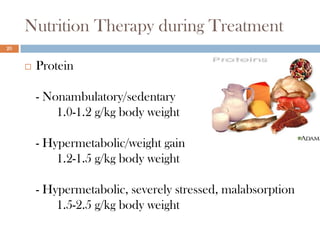
        Protein

         - Nonambulatory/sedentary
             1.0-1.2 g/kg body weight

         - Hypermetabolic/weight gain
             1.2-1.5 g/kg body weight

         - Hypermetabolic, severely stressed, malabsorption
             1.5-2.5 g/kg body weight
Tips to increase kcals and protein
21


        Add cheese
         - to toast, crackers, sandwiches, baked potatoes,
         veggies, soups, and noodles

        Add peanut butter
         - to toast, bread, English muffins, fruit
         - blended into chocolate or vanilla milkshake

        Add nuts and seeds:
         - sprinkled over cereals, fruit, desserts, veggies,
         salads, and pasta
Altered Taste/Smell
22

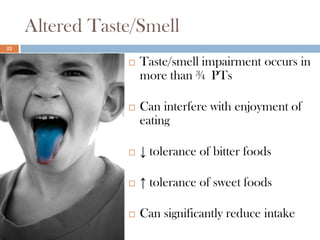
                    Taste/smell impairment occurs in
                     more than ¾ PTs

                    Can interfere with enjoyment of
                     eating

                    ↓ tolerance of bitter foods

                    ↑ tolerance of sweet foods

                    Can significantly reduce intake
Strategies to Reduce Food-borne
23
     Illness Risk – Neutropenic Diet
        Proper hand washing
        Cook meat to “well-done”
        No raw eggs, even in dressings, “over-easy” eggs
        No sushi, raw seafood, raw meats, unpasteurized milk
        Wash fruits/veggies thoroughly
        Thaw food in fridge-not on counter or in sink
        Refrigerate leftovers immediately and discard after 3d
        Avoid salad bars and buffets when eating out
Low-Bacterial / Low-Microbial Diet
24


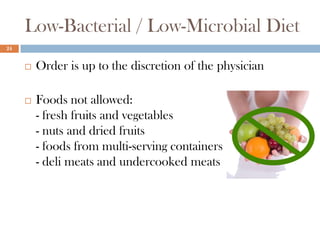
        Order is up to the discretion of the physician

        Foods not allowed:
         - fresh fruits and vegetables
         - nuts and dried fruits
         - foods from multi-serving containers
         - deli meats and undercooked meats
For More Information
25


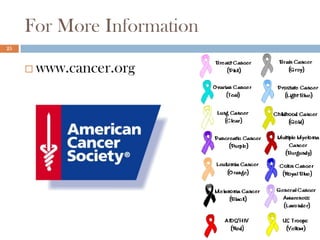
        www.cancer.org

HLT 138 Unit 22

  • 1.
    Unit 22 –Diet and Cancer 1
  • 2.
    Cancer 2  Group of >100 different diseases  Characterized by uncontrolled cell growth  Individual cancers differ by: - where they develop - how quickly they grow - type of treatment - impact on nutritional status  2nd leading cause of death in the US
  • 3.
  • 4.
    Estimated Cancer Prevalence2007 4 Urinary Bladder Thyroid Testis Stomach Prostate Pancreas Ovary Oral Cavity and Pharynx Lymphoma Multiple Myeloma Melanoma of Skin Lung Liver and bile duct Leukemia Larynx Kidney Hodgkin Disease Esophagus Endometrial/Uterine Colon/Rectum Cervix Breast Brain/CNS
  • 5.
    What Causes Cancer?  80-90% of cancers are initiated by environmental factors that alter DNA  Most factors are modifiable
  • 6.
    Causes of Cancer 6  Aflatoxins – toxin made my  Arsenic Aspergillus fungi  Asbestos  Ethanol - alcoholic  Chromium hexavalent cpds beverages  Hepatitis B and C virus  Coal-tars  Human papilloma viruses:  Herbal remedies containing some genital-mucosal types plant species of the genus Aristolochia  Mustard gas  Salted fish (Chinese-style)  Solar radiation  Soot  Sunlamps or sunbeds  Tobacco, smokeless  X-radiation and gamma radiation  Wood dust  Nitrates
  • 7.
    What Causes Cancer?  Diet accounts for approx. 40% of cancer risk - Westernized dietary intake and lifestyle increase risk of many types of cancer  Genetic factors account for approx. 5-42% of risk for some cancers - Prostate, breast, and pancreatic cancers
  • 8.
    Nutrition and Cancer 8  Prevention  1/3 of all cancers are related to dietary factors  Intake/utilization Cancer and/or impairment of nutrients treatment  Absorption/metabolism impairment
  • 9.
    Nutrition in CancerPrevention  Eat a variety of fruits and veggies - 5-9 servings per day  Antioxidants and anti-inflammatory compounds may protect DNA from damage  Damaged DNA may direct abnormal cell multiplication
  • 10.
    Nutrition in CancerPrevention  Limit red meats and processed meats  High intakes of saturated fats from meat and dairy products increase cancer risk  Plant proteins provide unsaturated fats plus vitamins, minerals, fiber, and phytochemicals
  • 11.
    Nutrition in CancerPrevention 11 Excess body weight and physical inactivity  ↑ risk of esophageal, colon/rectal, postmenopausal breast, endometrial, and renal cancers  Increases hormones that promote cancer cell growth  Promotes insulin resistance and hyperinsulinism  Promotes low levels of inflammation which can promote cancer cell growth and development
  • 12.
    Nutrition in CancerPrevention 12  Link between excess body weight, exercise, and cancer risk so strong that:  Recommended BMI range: between 21 and 23  Limit energy-dense foods: (particularly processed foods high in sugar and fat, and low in fiber)  Physical activity: at least 30 minutes every day
  • 13.
    American Institute forCancer Research 13 Recommendations  Avoid sugary drinks  Limit foods high in salt  Limit alcohol to 1-2 drinks per day (if any at all)  Don’t use supplements to protect against cancer  Breastfeed up to 6 months  Do not smoke or chew tobacco
  • 14.
    Impact of Canceron Nutrition 14 Site Potential Effects Brain/CNS Eating disabilities, chewing/swallowing difficulty Head and Neck Chewing/swallowing difficulty Esophagus Dysphagia related to obstruction, GERD Stomach Early satiety, N&V, impaired motility, obstruction – may require EN or PN Bowel Maldigestion/malabsorption, obstruction – may require EN or PN Liver Diarrhea Pancreas Maldigestion/malabsorption, DM
  • 15.
    Impact of Canceron Nutrition 15 Metabolic Changes  alter use of fuels (CHO, pro, fat)  promote loss of weight and lean body mass  Glucose intolerance / insulin resistance  Increased energy expenditure  Increased protein turnover  Reduced muscle protein synthesis  Accelerated fat breakdown  Kcal and nutrients  redirected to supporting growth of tumor vs. fueling the body  Increased inflammatory/immune response  increase metabolism
  • 16.
    Impact of Canceron Nutrition 16 Anorexia  Contributing factor to weight loss and malnutrition  Potential causes: - pain, depression, anxiety, fatigue, early satiety, N&V  Treatments contribute: - taste alterations, loss of taste, sore mouth, dry mouth, thick saliva, esophagitis, fatigue  Optimizing intake: - texture/temp modification, scheduled eating, meds to
  • 17.
    Impact of Canceron Nutrition 17 Cachexia:  wasting syndrome marked by weakness, progressive loss of body weight, fat, and muscle  Present in approx. 80% cancer related deaths  Hard to reverse  Nutrition aimed at preserving muscle and fat stores - improves quality of life - does not guarantee increased length of survival
  • 18.
    Nutrition Therapy DuringTreatment 18  Improve tolerance to treatment  Enhance immune function  Aid in recovery  Improve quality of life  Enhance well-being
  • 19.
    Nutrition Therapy duringTreatment 19  Calories - Nonambulatory/sedentary 25-30 kcal/kg body weight - Hypermetabolic/weight gain 30-35 kcal/kg body weight - Hypermetabolic, severely stressed, malabsorption 35 kcal/kg body weight
  • 20.
    Nutrition Therapy duringTreatment 20  Protein - Nonambulatory/sedentary 1.0-1.2 g/kg body weight - Hypermetabolic/weight gain 1.2-1.5 g/kg body weight - Hypermetabolic, severely stressed, malabsorption 1.5-2.5 g/kg body weight
  • 21.
    Tips to increasekcals and protein 21  Add cheese - to toast, crackers, sandwiches, baked potatoes, veggies, soups, and noodles  Add peanut butter - to toast, bread, English muffins, fruit - blended into chocolate or vanilla milkshake  Add nuts and seeds: - sprinkled over cereals, fruit, desserts, veggies, salads, and pasta
  • 22.
    Altered Taste/Smell 22  Taste/smell impairment occurs in more than ¾ PTs  Can interfere with enjoyment of eating  ↓ tolerance of bitter foods  ↑ tolerance of sweet foods  Can significantly reduce intake
  • 23.
    Strategies to ReduceFood-borne 23 Illness Risk – Neutropenic Diet  Proper hand washing  Cook meat to “well-done”  No raw eggs, even in dressings, “over-easy” eggs  No sushi, raw seafood, raw meats, unpasteurized milk  Wash fruits/veggies thoroughly  Thaw food in fridge-not on counter or in sink  Refrigerate leftovers immediately and discard after 3d  Avoid salad bars and buffets when eating out
  • 24.
    Low-Bacterial / Low-MicrobialDiet 24  Order is up to the discretion of the physician  Foods not allowed: - fresh fruits and vegetables - nuts and dried fruits - foods from multi-serving containers - deli meats and undercooked meats
  • 25.
    For More Information 25  www.cancer.org