TOPIC HIV/AIDS AND NUTRITION   PRESENTED BY: HONEST CHIRWA
INTRODUCTION Most of the world’s 40 million people currently living with HIV/AIDS reside in communities already suffering from poverty and malnutrition.
INTRODUCTION HIV/AIDS has significant nutrition-related implications and consequences for individuals, families, and communities. In infected individuals, HIV contributes to and is affected by nutritional status.
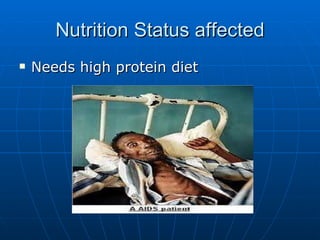
Nutrition Status affected Needs high protein diet
Consequences of HIV infection include   Inability to absorb nutrients from food. Changes in metabolism. Reductions in food intake due to HIV-related symptoms.
Poor Nutrition   Increases the vulnerability to, and the severity of, opportunistic infections.  Reduce medication efficiency and adherence  Can accelerate the progression of disease.
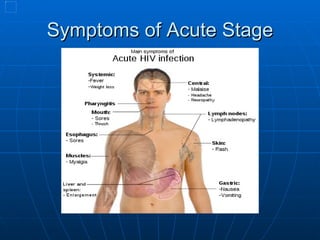
Symptoms of Acute Stage
Objectives of food and nutrition assistance include:   Using food aid to improve the nutritional status of individuals affected by HIV/AIDS to increase the quality and duration of life, and to keep children affected by HIV/AIDS in ACTIVE.
Objectives of food and nutrition assistance include: Increasing overall food security in infected or affected households  Improving knowledge and promoting practices on the nutritional requirements of people living with HIV/AIDS
Study   A recent study found that, compared with an average adult, a person with HIV requires 10 to 15 percent more energy  50 to 100 percent more protein a day.  The Kcal intake is increased to 2500
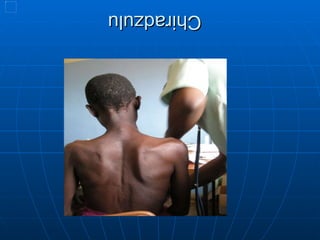
Chiradzulu
The risk of malnutrition   Increases significantly during the course of the infection. Good nutrition cannot cure AIDS or prevent HIV infection, but it can help to maintain and improve the nutritional status of a person with HIV/AIDS and delay the progression from HIV to AIDS-related diseases.
Good Nutrition Can improve the quality of life of people living with HIV/AIDS.  Nutritional care and support are important from the early stages of the infection to prevent the development of nutritional deficiencies.
Good Nutrition A healthy and balanced diet will help to maintain body weight and fitness.  Eating well helps to maintain and improve the performance of the immune system - the body's protection against infection - and therefore helps a person to stay healthy.
Nutritional Assessment and Support of HIV Positive     Assessment:  Detailed diet history  A medication history: to include antiretroviral, any medications for opportunistic infection treatment, use of /vitamins, minerals, and other food supplements should not be taken unless prescribed by your doctor or nutritionist.
Nutritional Assessment and Support of HIV Positive Anthropometric data- height, weight, height-for-age, weight-for-age, weight-for-height, and head circumference in children up to 7 years of age. Medications may need to be recalculated based on weight and height changes because the body surface area has changed.
Nutritional Assessment and Support of HIV Positive Evaluation of weight changes. The definition for AIDS Wasting Syndrome is 10% body weight loss.   It is crucial to remember in pediatric patients, that this can amount to as little as a 1 kilogram (kg) weight loss.
List of lab tests that are beneficial for HIV/AIDS & nutrition   Albumin and Prealbumin  Transferrin/Total Fe and % saturation  B12/Folate  CBC with Differential  Electrolytes  Liver and Renal Functions
Conclusion   Good Nutrition is very important in HIV patients. It is important to meet a Dietitian/Nutritionist for diet recommendations. A frequently used and tolerated intervention is to encourage small, frequent feedings instead of a traditional three (3) meal pattern.
Conclusion In Infants Formulas can also be boosted with medical nutritional such as carbohydrate sources (Polycose®), protein sources (Promod®, Meritene®), or fat sources (Microlipid®).
Conclusion Other supplements available for older children greater than 8-10 years of age, include Pediasure®, Instant Breakfast type drinks, Resource®, and Scandishake® (high pro diet)
THE END THANK YOU & GOD BLESS

HIV and Nutrition

  • 1.
    TOPIC HIV/AIDS ANDNUTRITION PRESENTED BY: HONEST CHIRWA
  • 2.
    INTRODUCTION Most ofthe world’s 40 million people currently living with HIV/AIDS reside in communities already suffering from poverty and malnutrition.
  • 3.
    INTRODUCTION HIV/AIDS hassignificant nutrition-related implications and consequences for individuals, families, and communities. In infected individuals, HIV contributes to and is affected by nutritional status.
  • 4.
    Nutrition Status affectedNeeds high protein diet
  • 5.
    Consequences of HIVinfection include Inability to absorb nutrients from food. Changes in metabolism. Reductions in food intake due to HIV-related symptoms.
  • 6.
    Poor Nutrition Increases the vulnerability to, and the severity of, opportunistic infections. Reduce medication efficiency and adherence Can accelerate the progression of disease.
  • 7.
  • 8.
    Objectives of foodand nutrition assistance include: Using food aid to improve the nutritional status of individuals affected by HIV/AIDS to increase the quality and duration of life, and to keep children affected by HIV/AIDS in ACTIVE.
  • 9.
    Objectives of foodand nutrition assistance include: Increasing overall food security in infected or affected households Improving knowledge and promoting practices on the nutritional requirements of people living with HIV/AIDS
  • 10.
    Study A recent study found that, compared with an average adult, a person with HIV requires 10 to 15 percent more energy 50 to 100 percent more protein a day. The Kcal intake is increased to 2500
  • 11.
  • 12.
    The risk ofmalnutrition Increases significantly during the course of the infection. Good nutrition cannot cure AIDS or prevent HIV infection, but it can help to maintain and improve the nutritional status of a person with HIV/AIDS and delay the progression from HIV to AIDS-related diseases.
  • 13.
    Good Nutrition Canimprove the quality of life of people living with HIV/AIDS. Nutritional care and support are important from the early stages of the infection to prevent the development of nutritional deficiencies.
  • 14.
    Good Nutrition Ahealthy and balanced diet will help to maintain body weight and fitness. Eating well helps to maintain and improve the performance of the immune system - the body's protection against infection - and therefore helps a person to stay healthy.
  • 15.
    Nutritional Assessment andSupport of HIV Positive Assessment: Detailed diet history A medication history: to include antiretroviral, any medications for opportunistic infection treatment, use of /vitamins, minerals, and other food supplements should not be taken unless prescribed by your doctor or nutritionist.
  • 16.
    Nutritional Assessment andSupport of HIV Positive Anthropometric data- height, weight, height-for-age, weight-for-age, weight-for-height, and head circumference in children up to 7 years of age. Medications may need to be recalculated based on weight and height changes because the body surface area has changed.
  • 17.
    Nutritional Assessment andSupport of HIV Positive Evaluation of weight changes. The definition for AIDS Wasting Syndrome is 10% body weight loss. It is crucial to remember in pediatric patients, that this can amount to as little as a 1 kilogram (kg) weight loss.
  • 18.
    List of labtests that are beneficial for HIV/AIDS & nutrition Albumin and Prealbumin Transferrin/Total Fe and % saturation B12/Folate CBC with Differential Electrolytes Liver and Renal Functions
  • 19.
    Conclusion Good Nutrition is very important in HIV patients. It is important to meet a Dietitian/Nutritionist for diet recommendations. A frequently used and tolerated intervention is to encourage small, frequent feedings instead of a traditional three (3) meal pattern.
  • 20.
    Conclusion In InfantsFormulas can also be boosted with medical nutritional such as carbohydrate sources (Polycose®), protein sources (Promod®, Meritene®), or fat sources (Microlipid®).
  • 21.
    Conclusion Other supplementsavailable for older children greater than 8-10 years of age, include Pediasure®, Instant Breakfast type drinks, Resource®, and Scandishake® (high pro diet)
  • 22.
    THE END THANKYOU & GOD BLESS