HIV AIDS
Presented By
DR. KALPANA LAHADE
Teaching Associate
College of Community Science
VNMKV Parbhani
Content Overview
 What is HIV?
 What is AIDS?
 Stages of HIV infection
 Micro and macro nutrients deficiency
 Dietary management
 HIV transmission
 Treatment
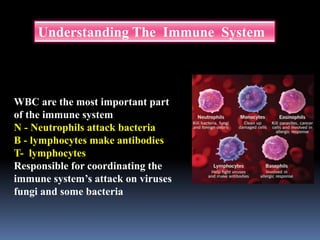
Understanding The Immune System
WBC are the most important part
of the immune system
N - Neutrophils attack bacteria
B - lymphocytes make antibodies
T- lymphocytes
Responsible for coordinating the
immune system’s attack on viruses
fungi and some bacteria
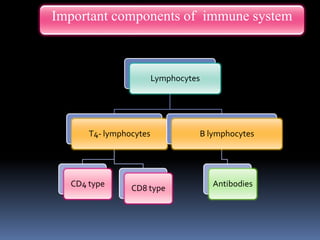
Lymphocytes
T4- lymphocytes
CD4 type CD8 type
B lymphocytes
Antibodies
Important components of immune system
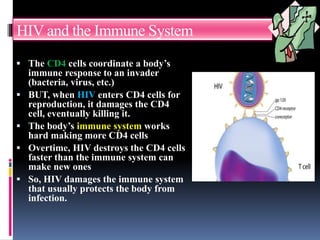
HIV and the Immune System
 The CD4 cells coordinate a body’s
immune response to an invader
(bacteria, virus, etc.)
 BUT, when HIV enters CD4 cells for
reproduction, it damages the CD4
cell, eventually killing it.
 The body’s immune system works
hard making more CD4 cells
 Overtime, HIV destroys the CD4 cells
faster than the immune system can
make new ones
 So, HIV damages the immune system
that usually protects the body from
infection.
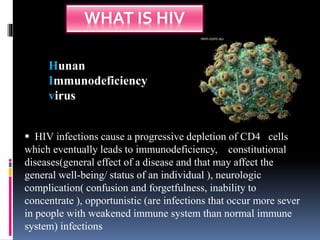
WHAT IS HIV
Hunan
Immunodeficiency
virus
 HIV infections cause a progressive depletion of CD4 cells
which eventually leads to immunodeficiency, constitutional
diseases(general effect of a disease and that may affect the
general well-being/ status of an individual ), neurologic
complication( confusion and forgetfulness, inability to
concentrate ), opportunistic (are infections that occur more sever
in people with weakened immune system than normal immune
system) infections
and neoplasm (a new abnormal growth of tissue).
 HIV is retrovirus that attacks the immune
system.
 Over time, the immune system and the body loses it
ability to fight the virus.
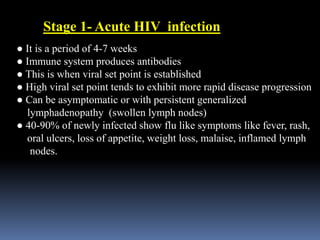
● It is a period of 4-7 weeks
● Immune system produces antibodies
● This is when viral set point is established
● High viral set point tends to exhibit more rapid disease progression
● Can be asymptomatic or with persistent generalized
lymphadenopathy (swollen lymph nodes)
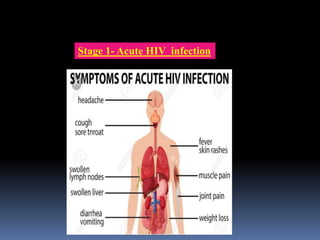
● 40-90% of newly infected show flu like symptoms like fever, rash,
oral ulcers, loss of appetite, weight loss, malaise, inflamed lymph
nodes.
Stage 1- Acute HIV infection
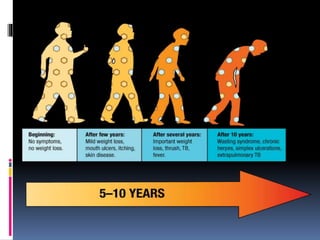
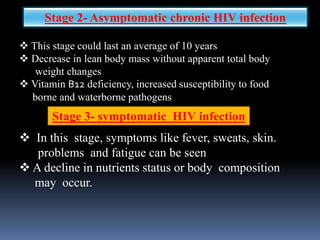
 This stage could last an average of 10 years
 Decrease in lean body mass without apparent total body
weight changes
 Vitamin B12 deficiency, increased susceptibility to food
borne and waterborne pathogens
Stage 3- symptomatic HIV infection
Stage 2- Asymptomatic chronic HIV infection
 In this stage, symptoms like fever, sweats, skin.
problems and fatigue can be seen
 A decline in nutrients status or body composition
may occur.
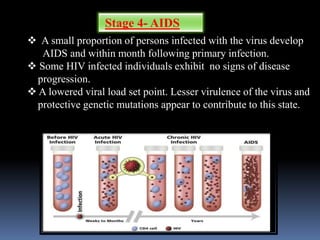
Stage 4- AIDS
 A small proportion of persons infected with the virus develop
AIDS and within month following primary infection.
 Some HIV infected individuals exhibit no signs of disease
progression.
 A lowered viral load set point. Lesser virulence of the virus and
protective genetic mutations appear to contribute to this state.
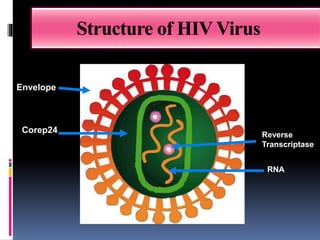
Structure of HIV Virus
Envelope
Envelope
Corep24
Reverse
Transcriptase
RNA
What is AIDS?
Acquired:To come into control of something new
Immune Deficiency:Decrease or weakness in the body’s
ability to fight off infections and illnesses
Syndrome:A group of signs and symptoms that occur together
and characterize a particular abnormality
AIDS is the final stage of the disease caused by infection with a
type of virus called HIV.
• HIV is the virus that causes AIDS
• Not everyone who is infected with HIV has AIDS
• Everyone with AIDS is infected with HIV
• AIDS is result of the progression of HIV Infection
• Anyone infected with HIV, although healthy, can still
transmit the virus to another person
HIV vs. AIDS
 During HIV infection ,nutrient requirements are increased to
sustain immune cell turnover.
 In particular, deficiency of vitamin A, zinc,& iron adversely
affect immune function through different mechanisms, and their
correction can restore immune function, though they do not
compensate for T lymphocyte depletion, which occurs in HIV
infection.
 Zinc is important in the activity of many enzymes, DNA-
binding protein, and thymic hormone, thymulin, and its
deficiency impaired lymphocyte function.
 In addition low levels of 1,25-dihydroxyvitamin D &vitamin E
have been reported in various HIV-infected populations.
Nutritional problems of in HIV patients
Micronutrients Deficiency
 Deficiencies in B-vitamins can also compromise
immune function by virtue of their roles as cofactors
in many enzymes ,including those involved in
nucleic acid synthesis.
 Serum levels of other water- soluble vitamins also
have been reported to be low .
 Where as fat soluble vitamin deficiencies occur in
subject with diarrhea and malabsorption .
 Selenium deficiency has been associated
epidemiologically with increased mortatality , risk
while autopsy studies have been shown low
myocardial concentrations of selenium in HIV –
infected subjects antioxidants requirements are
increased in HIV patients .
Macronutrient Deficiencies
 In asymptomatic patients ,mild weight loss may be
noted.
 Early studies documented disproportionate
depletion of body cell mass in AIDS patients with
clinical complications.
 Body Cell mass depletion is associated with
variable amounts of fat depletion ,and with
expansion of the extracellular space.
 Weight loss and body cell mass depletion in HIV
infection are associated with shorted survival and
diminished quality of life
 Malnutrition is an important and complicated
consequence of HIV infection
 Nutrient deficiencies may play an important role in the
pathogenesis of HIV disease . Medical nutrition therapy
and counseling are critical aspects of treatment.
 Protein energy malnutrition is a frequent complication
of AIDS.
 Weight loss, body cell mass depletion ,decreased skin
fold thickness and mid arm circumference ,decreased
iron- binding capacity and hypoalbuminemia are
frequently reported.
 water loss and wasting are due to lack of adequate
intake ,malabsorbtion ,metabolic irregularities,
uncontrolled opportunistic infection and lack of physical
activity .
● Fever
● Sore throat
● Fatigue
● Dry cough
● Pain while swallowing
● Nausea
● Diarrhea
● Loss of appetite
● Night sweats
● Vomiting
● Mouth ulcers
● Headache
Signs and symptoms
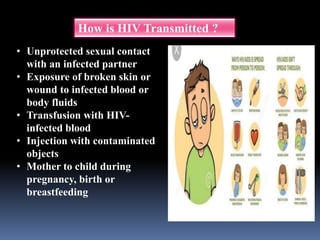
How is HIV Transmitted ?
• Unprotected sexual contact
with an infected partner
• Exposure of broken skin or
wound to infected blood or
body fluids
• Transfusion with HIV-
infected blood
• Injection with contaminated
objects
• Mother to child during
pregnancy, birth or
breastfeeding
● HIV enters brain after infection and may lead to
AIDS dementia or HIV encephalopathy and other
neurologic complications
● Liver and kidney disease
● Retinitis or blindness
● Tuberculosis
● Hepatitis Infections
Infections
Nutritional Requirements
Energy : generally a patient may require 30-45 kcal /kg
body weight at different stages of the disease.
Protein : Protein requirement may be estimated at 1.0 and
1.4 g/kg for repletion.
Fat : in individuals with malabsorbtion or diarrhea, use of
low fat diet may aid in management.
Fluid and electrolytes : 30-35ml/kg .additional amounts
are required to compensate for losses from diarrhea, nausea
and vomiting ,night sweat and prolong fever.
Vitamins and minerals : immune nutrients and antitoxins
can also be supplemented. those who are taking inadequate
diet ,vitamin mineral supplement should be taken.
Oral Supplements
 High Neuropsychological abnormalities associated with low
serum vitamin B12 concentrations improved after specific
supplementation.
High doses of vitamin A are shown to stabilize CD4 cells in an
inner –city intravenous drug use population
In vitro ,addition of antioxidant vitamins to experimental
systems block this activation and inhibits HIV replication.
Supplementation with vitamin C and E produced a significant
decrease in oxidative stress indices and trend toward reduced
HIV viral load.
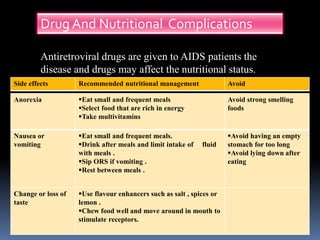
Drug And Nutritional Complications
Antiretroviral drugs are given to AIDS patients the
disease and drugs may affect the nutritional status.
Anorexia Eat small and frequent meals
Select food that are rich in energy
Take multivitamins
Avoid strong smelling
foods
Nausea or
vomiting
Eat small and frequent meals.
Drink after meals and limit intake of fluid
with meals .
Sip ORS if vomiting .
Rest between meals .
Avoid having an empty
stomach for too long
Avoid lying down after
eating
Change or loss of
taste
Use flavour enhancers such as salt , spices or
lemon .
Chew food well and move around in mouth to
stimulate receptors.
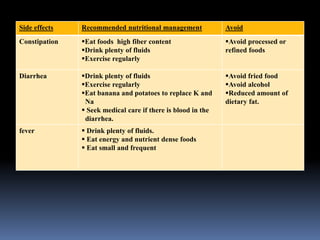
Side effects Recommended nutritional management Avoid
Constipation Eat foods high fiber content
Drink plenty of fluids
Exercise regularly
Avoid processed or
refined foods
Diarrhea Drink plenty of fluids
Exercise regularly
Eat banana and potatoes to replace K and
Na
 Seek medical care if there is blood in the
diarrhea.
Avoid fried food
Avoid alcohol
Reduced amount of
dietary fat.
fever  Drink plenty of fluids.
 Eat energy and nutrient dense foods
 Eat small and frequent
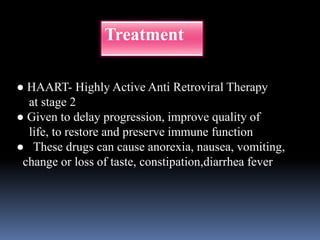
● HAART- Highly Active Anti Retroviral Therapy
at stage 2
● Given to delay progression, improve quality of
life, to restore and preserve immune function
● These drugs can cause anorexia, nausea, vomiting,
change or loss of taste, constipation,diarrhea fever
Treatment
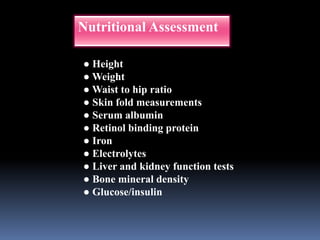
● Height
● Weight
● Waist to hip ratio
● Skin fold measurements
● Serum albumin
● Retinol binding protein
● Iron
● Electrolytes
● Liver and kidney function tests
● Bone mineral density
● Glucose/insulin
Nutritional Assessment
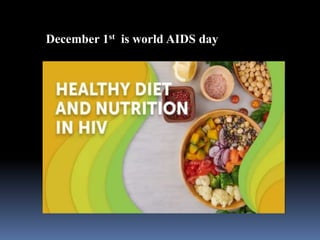
December 1st is world AIDS day
HIV AIDS.pptx

HIV AIDS.pptx

  • 1.
    HIV AIDS Presented By DR.KALPANA LAHADE Teaching Associate College of Community Science VNMKV Parbhani
  • 2.
    Content Overview  Whatis HIV?  What is AIDS?  Stages of HIV infection  Micro and macro nutrients deficiency  Dietary management  HIV transmission  Treatment
  • 4.
    Understanding The ImmuneSystem WBC are the most important part of the immune system N - Neutrophils attack bacteria B - lymphocytes make antibodies T- lymphocytes Responsible for coordinating the immune system’s attack on viruses fungi and some bacteria
  • 5.
    Lymphocytes T4- lymphocytes CD4 typeCD8 type B lymphocytes Antibodies Important components of immune system
  • 6.
    HIV and theImmune System  The CD4 cells coordinate a body’s immune response to an invader (bacteria, virus, etc.)  BUT, when HIV enters CD4 cells for reproduction, it damages the CD4 cell, eventually killing it.  The body’s immune system works hard making more CD4 cells  Overtime, HIV destroys the CD4 cells faster than the immune system can make new ones  So, HIV damages the immune system that usually protects the body from infection.
  • 7.
    WHAT IS HIV Hunan Immunodeficiency virus HIV infections cause a progressive depletion of CD4 cells which eventually leads to immunodeficiency, constitutional diseases(general effect of a disease and that may affect the general well-being/ status of an individual ), neurologic complication( confusion and forgetfulness, inability to concentrate ), opportunistic (are infections that occur more sever in people with weakened immune system than normal immune system) infections
  • 8.
    and neoplasm (anew abnormal growth of tissue).  HIV is retrovirus that attacks the immune system.  Over time, the immune system and the body loses it ability to fight the virus.
  • 9.
    ● It isa period of 4-7 weeks ● Immune system produces antibodies ● This is when viral set point is established ● High viral set point tends to exhibit more rapid disease progression ● Can be asymptomatic or with persistent generalized lymphadenopathy (swollen lymph nodes) ● 40-90% of newly infected show flu like symptoms like fever, rash, oral ulcers, loss of appetite, weight loss, malaise, inflamed lymph nodes. Stage 1- Acute HIV infection
  • 10.
    Stage 1- AcuteHIV infection
  • 11.
     This stagecould last an average of 10 years  Decrease in lean body mass without apparent total body weight changes  Vitamin B12 deficiency, increased susceptibility to food borne and waterborne pathogens Stage 3- symptomatic HIV infection Stage 2- Asymptomatic chronic HIV infection  In this stage, symptoms like fever, sweats, skin. problems and fatigue can be seen  A decline in nutrients status or body composition may occur.
  • 12.
    Stage 4- AIDS A small proportion of persons infected with the virus develop AIDS and within month following primary infection.  Some HIV infected individuals exhibit no signs of disease progression.  A lowered viral load set point. Lesser virulence of the virus and protective genetic mutations appear to contribute to this state.
  • 13.
    Structure of HIVVirus Envelope Envelope Corep24 Reverse Transcriptase RNA
  • 14.
    What is AIDS? Acquired:Tocome into control of something new Immune Deficiency:Decrease or weakness in the body’s ability to fight off infections and illnesses Syndrome:A group of signs and symptoms that occur together and characterize a particular abnormality AIDS is the final stage of the disease caused by infection with a type of virus called HIV.
  • 15.
    • HIV isthe virus that causes AIDS • Not everyone who is infected with HIV has AIDS • Everyone with AIDS is infected with HIV • AIDS is result of the progression of HIV Infection • Anyone infected with HIV, although healthy, can still transmit the virus to another person HIV vs. AIDS
  • 16.
     During HIVinfection ,nutrient requirements are increased to sustain immune cell turnover.  In particular, deficiency of vitamin A, zinc,& iron adversely affect immune function through different mechanisms, and their correction can restore immune function, though they do not compensate for T lymphocyte depletion, which occurs in HIV infection.  Zinc is important in the activity of many enzymes, DNA- binding protein, and thymic hormone, thymulin, and its deficiency impaired lymphocyte function.  In addition low levels of 1,25-dihydroxyvitamin D &vitamin E have been reported in various HIV-infected populations. Nutritional problems of in HIV patients Micronutrients Deficiency
  • 17.
     Deficiencies inB-vitamins can also compromise immune function by virtue of their roles as cofactors in many enzymes ,including those involved in nucleic acid synthesis.  Serum levels of other water- soluble vitamins also have been reported to be low .  Where as fat soluble vitamin deficiencies occur in subject with diarrhea and malabsorption .  Selenium deficiency has been associated epidemiologically with increased mortatality , risk while autopsy studies have been shown low myocardial concentrations of selenium in HIV – infected subjects antioxidants requirements are increased in HIV patients .
  • 18.
    Macronutrient Deficiencies  Inasymptomatic patients ,mild weight loss may be noted.  Early studies documented disproportionate depletion of body cell mass in AIDS patients with clinical complications.  Body Cell mass depletion is associated with variable amounts of fat depletion ,and with expansion of the extracellular space.  Weight loss and body cell mass depletion in HIV infection are associated with shorted survival and diminished quality of life  Malnutrition is an important and complicated consequence of HIV infection
  • 19.
     Nutrient deficienciesmay play an important role in the pathogenesis of HIV disease . Medical nutrition therapy and counseling are critical aspects of treatment.  Protein energy malnutrition is a frequent complication of AIDS.  Weight loss, body cell mass depletion ,decreased skin fold thickness and mid arm circumference ,decreased iron- binding capacity and hypoalbuminemia are frequently reported.  water loss and wasting are due to lack of adequate intake ,malabsorbtion ,metabolic irregularities, uncontrolled opportunistic infection and lack of physical activity .
  • 20.
    ● Fever ● Sorethroat ● Fatigue ● Dry cough ● Pain while swallowing ● Nausea ● Diarrhea ● Loss of appetite ● Night sweats ● Vomiting ● Mouth ulcers ● Headache Signs and symptoms
  • 21.
    How is HIVTransmitted ? • Unprotected sexual contact with an infected partner • Exposure of broken skin or wound to infected blood or body fluids • Transfusion with HIV- infected blood • Injection with contaminated objects • Mother to child during pregnancy, birth or breastfeeding
  • 22.
    ● HIV entersbrain after infection and may lead to AIDS dementia or HIV encephalopathy and other neurologic complications ● Liver and kidney disease ● Retinitis or blindness ● Tuberculosis ● Hepatitis Infections Infections
  • 23.
    Nutritional Requirements Energy :generally a patient may require 30-45 kcal /kg body weight at different stages of the disease. Protein : Protein requirement may be estimated at 1.0 and 1.4 g/kg for repletion. Fat : in individuals with malabsorbtion or diarrhea, use of low fat diet may aid in management. Fluid and electrolytes : 30-35ml/kg .additional amounts are required to compensate for losses from diarrhea, nausea and vomiting ,night sweat and prolong fever. Vitamins and minerals : immune nutrients and antitoxins can also be supplemented. those who are taking inadequate diet ,vitamin mineral supplement should be taken.
  • 24.
    Oral Supplements  HighNeuropsychological abnormalities associated with low serum vitamin B12 concentrations improved after specific supplementation. High doses of vitamin A are shown to stabilize CD4 cells in an inner –city intravenous drug use population In vitro ,addition of antioxidant vitamins to experimental systems block this activation and inhibits HIV replication. Supplementation with vitamin C and E produced a significant decrease in oxidative stress indices and trend toward reduced HIV viral load.
  • 25.
    Drug And NutritionalComplications Antiretroviral drugs are given to AIDS patients the disease and drugs may affect the nutritional status. Anorexia Eat small and frequent meals Select food that are rich in energy Take multivitamins Avoid strong smelling foods Nausea or vomiting Eat small and frequent meals. Drink after meals and limit intake of fluid with meals . Sip ORS if vomiting . Rest between meals . Avoid having an empty stomach for too long Avoid lying down after eating Change or loss of taste Use flavour enhancers such as salt , spices or lemon . Chew food well and move around in mouth to stimulate receptors. Side effects Recommended nutritional management Avoid
  • 26.
    Side effects Recommendednutritional management Avoid Constipation Eat foods high fiber content Drink plenty of fluids Exercise regularly Avoid processed or refined foods Diarrhea Drink plenty of fluids Exercise regularly Eat banana and potatoes to replace K and Na  Seek medical care if there is blood in the diarrhea. Avoid fried food Avoid alcohol Reduced amount of dietary fat. fever  Drink plenty of fluids.  Eat energy and nutrient dense foods  Eat small and frequent
  • 27.
    ● HAART- HighlyActive Anti Retroviral Therapy at stage 2 ● Given to delay progression, improve quality of life, to restore and preserve immune function ● These drugs can cause anorexia, nausea, vomiting, change or loss of taste, constipation,diarrhea fever Treatment
  • 28.
    ● Height ● Weight ●Waist to hip ratio ● Skin fold measurements ● Serum albumin ● Retinol binding protein ● Iron ● Electrolytes ● Liver and kidney function tests ● Bone mineral density ● Glucose/insulin Nutritional Assessment
  • 29.
    December 1st isworld AIDS day