NUTRITION IN HIV/AIDS
• The retrovirus human immunodeficiency virus
(HIV) causes acquired immune deficiency
syndrome (AIDS). It injects its Ribonucleic acid
(RNA) into target cells and then transcribes
the RNA into DNA using a reverse
transcriptase enzyme.
• Target cells for HIV include T4 or CD4
lymphocites, monocytes, macrophages, and
other cells of the immune system.
• Antibodies are produced against the virus and
are detectable with 2 to 4 months after
exposure. The replication of the infected cell
results in a steady depletion of the CD4 cell
count causing severe depression of immune
function and increasing the risk for
opportunistic infections and malignancies.
• Diagnosis of AIDS:
• CD4 cell count less than 200mm³ or less than
14% of total white blood cell count.
• The two major prognostic factors for HIV are
the CD4 T-cell count and the measurement of
plasma HIV RNA (viral load for HIV).
Transmission
• HIV is a bloodborne and sexually transmitted
infection.
• Transmission is through contact with
contaminated blood, semen, viginal
secretions, and breast milk.
• HIV also crosses the placenta from the mother
to the baby
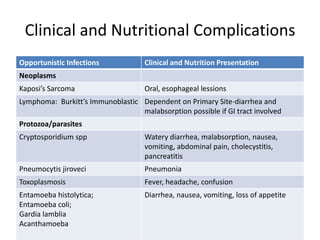
Clinical and Nutritional Complications
Opportunistic Infections Clinical and Nutrition Presentation
Neoplasms
Kaposi’s Sarcoma Oral, esophageal lessions
Lymphoma: Burkitt’s Immunoblastic Dependent on Primary Site-diarrhea and
malabsorption possible if GI tract involved
Protozoa/parasites
Cryptosporidium spp Watery diarrhea, malabsorption, nausea,
vomiting, abdominal pain, cholecystitis,
pancreatitis
Pneumocytis jiroveci Pneumonia
Toxoplasmosis Fever, headache, confusion
Entamoeba histolytica;
Entamoeba coli;
Gardia lamblia
Acanthamoeba
Diarrhea, nausea, vomiting, loss of appetite
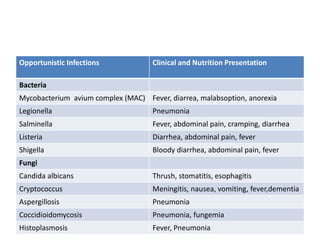
Opportunistic Infections Clinical and Nutrition Presentation
Bacteria
Mycobacterium avium complex (MAC) Fever, diarrea, malabsoption, anorexia
Legionella Pneumonia
Salminella Fever, abdominal pain, cramping, diarrhea
Listeria Diarrhea, abdominal pain, fever
Shigella Bloody diarrhea, abdominal pain, fever
Fungi
Candida albicans Thrush, stomatitis, esophagitis
Cryptococcus Meningitis, nausea, vomiting, fever,dementia
Aspergillosis Pneumonia
Coccidioidomycosis Pneumonia, fungemia
Histoplasmosis Fever, Pneumonia
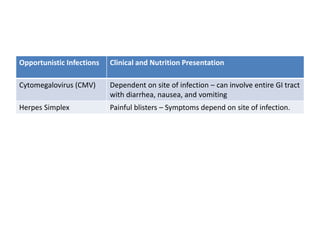
Opportunistic Infections Clinical and Nutrition Presentation
Cytomegalovirus (CMV) Dependent on site of infection – can involve entire GI tract
with diarrhea, nausea, and vomiting
Herpes Simplex Painful blisters – Symptoms depend on site of infection.
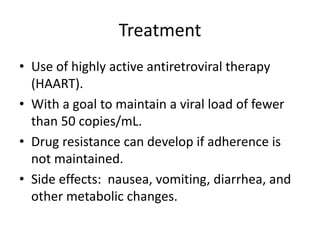
Treatment
• Use of highly active antiretroviral therapy
(HAART).
• With a goal to maintain a viral load of fewer
than 50 copies/mL.
• Drug resistance can develop if adherence is
not maintained.
• Side effects: nausea, vomiting, diarrhea, and
other metabolic changes.
Malnutrition in HIV/AIDs
• Most nutritional problems coincide with the
incidence of high viral loads, opportunistic
infections, and the development of viral
resistance.
• With the evolution of HAART, nutritional
problems have been shifted to include more
chronic disease issues such as hyperlidemia,
insulin resistance, and diabettes mellitus
• The presence of malnutrition and weight loss
(>10% in one month) is still considered an
important predictor of both morbidity and
mortality from the disease.
Causes of malnutrition in HIV/AIDs
• Altered nutrient intake
• Weight loss
• Body composition changes
• Physical Impairement
• Endocrine disorders
• Metabolic changes
• Malabsorption
• Presence of opportunistic infections
• Psychosocial issues
• Economic conditions
Altered Nutrient Intake
• Anorexia is a frequent symptom for altered
nutrient intake. Lack of appetite may be
caused by HIV infection, presence of
opportunistic infections, fatigue, fever, or
medication side effects.
• Physical Impairement from mucositis,
esophagitis, pain, nausea, and vomiting affect
the client’s ability to inject adequate
nutrients.
• Depression, loneliness, fear, anxiety, or other
psychosocial issues can play a significant role
in the client’s desire to eat.
• In addition, economic availability of adequate
food supplies is often the most difficult
problem to solve.
Interventions
• Education about the role of nutrition;
nutrition is a critical element of medical care,
it is one area in which clients can exert some
control over their medical care. Emphasising
the benefits of maintaining nutritional status
such as repair and building of tissue,
preserving lean body mass and GI function,
minimizing fatigue and improving quality of
life are important components of education.
• Identification of contributing factors to
anorexia will guide the client and the
practitioner in developing strategies to
improve oral intake.
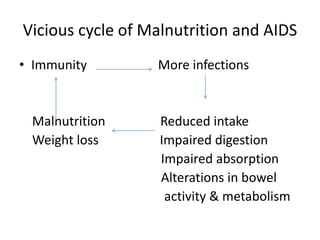
Vicious cycle of Malnutrition and AIDS
• Immunity More infections
Malnutrition Reduced intake
Weight loss Impaired digestion
Impaired absorption
Alterations in bowel
activity & metabolism
Maximizing Food Intake in HIV/AIDs
• HIV/AIDS patients may have difficulty
consuming enough kcal to meet physiologic
requirements.
Strategies to increase kcal and protein
without increasing quantity
• Substitute kcal – containing and nutrient
dense foods and beverages for low-or no- kcal
foods and beverages: milk shakes instead of
coffee or tea, regular soft drinks for sugar free
drinks.
• Increase the number or size of feedings daily.
Offer 5 – 6 small meals/snacks
• Fortify foods with kcal and protein-containing
ingredients. Add skim milk powder to milk,
shakes, gravies, and hot cereals.
• Use kcal-containing condiments. Add
butter/margarine to hot cereals, veges, and
starches.
• Modify diet according to tolerances. Try cold
or room – temperature foods, bland or salty
foods; avoid greasy and sweet foods and
liquids between meals.
• Add kcal containing supplements as needed.
Weight loss and body composition
changes
• Weight loss may occur from decreased
nutrient intake, physical impairement or as a
result of symptoms that impair appetite.
• Chronic weight loss in malnutrition: There is
decrease in metabolic rate and reliance on fat
stores for energy
• Acute weight loss in stress: There is increase
in metabolic rate, reliance on glucose as fuel,
and a depletion of lean body mass.
• Body composition changes have been noted in
lipodystrophy (fat redistribution syndrome).
There are drugs for anprexia, appetite, mood,
weight maintenance.
• Side effects: Euphoria, dizziness, impaired
thinking.
• Other drugs improve on lean body mass,
decrease abdominal adiposity, depression.
Physical Impairement
• Frequent Problems
• Nausea, vomiting, mouth, esophageal lesions
and impaired dentition.
• Due to opportunistic infections such as
candidiasis and gingivitis or from side effects
of antiretroviral therapy, prophylactic
treatment to prevent opportunistic infections,
and medication for management of pain.
Endocrine and Metabolic disorders
• Hypogonadism (deficiency in secretory activity of
the ovary or testis) is common in people with
HIV/AIDS. Condition is associated with fatigue,
decreased libido, loss of muscle mass, muscle
weakness, impotence and loss of body hair.
• The fatigue contributes to decreased appetite
and impaired ability to prepare and consume
meals. Loss of lean body mass is a prominent
feature of malnutrition and wasting syndrome of
AIDs.
• Adrenal insufficiency may contribute to
changes in appetite, loss of fuel storage, and
changes in metabolism.
• Fat redistribution syndrome (lipodystropy) has
been described as a syndome of body
composition changes and metabolic
disturbances in some patients receiving ART.
• In many patients this increase in abdominal
obesity was accompanied by high serum
triglycerides, cholesteral, glucose and insulin
resistance associated with both protease
inhibitors and nucleoside analog therapy.
Malabsorption
• Due to:
• Opportunistic infections that damage the GI
tract.
• Effects of malnutrition on villus height and
enterocyte function
• From the disease itself
• In those patients with HIV – related diarrhea,
steatorrhea has been noted in clients without
GI infections.
• Some studies have documented abnormal D-
xylose tests, which indicates the presence of
malabsorption.
• A significant number of those subjects had
dirrhea, and almost half of these cases, no
pathogens could be identified.
• Treatment of the underlying cause if possible
is crucial in reversing the malnutrition caused
by malabsorptive symptoms and diarrhea, the
restriction of fat and lactose is common.
• The use of lactose-free supplements and
those supplements containing medium-chain
triglycerides such as Advera, Alitraq,
Peptamen, or lipisorb are frequently
prescribed.
• Additionally probiotics and prebiotics as well
as glutamine and arginine in enteral products
or given seperately as a supplement have
been used to assist in this malabsorption
syndrome and in treating diarrhea.
• Careful attention must be taken to ensure
adequate caloric and protein intake in the face
of restricting these important kcal and protein
sources.
• Fluid losses may be high with the presence of
diarrhea.
• Prevention of dehydration and
supplementation with vitamins and minerals
are priority considerations as well.
Nutrition Assessment in cancer and
HIV/AIDS
• Anthropometric data:
• Body weight compared with clients’s usual
body weight. Any unexplained weight loss of
greater than 10% in 6 months is considered to
place the cliet at risk.
• BMI < 18 is associated with increased risk of
mortality. Loss of lean body mass is
characteristic of malnutrition in AIDs.
• Biochemical indices
• Monitoring disease progrssion CD4 or viral
load
• Acute phase proteins that measure
inflamatory processes (C-reactive protein) and
overall visceral protein stores (serum albumin
– NI 3.5 to 5g/dL and prealbumin – NI 20 to
50mg/dL) can be used to monitor acute
changes.
• Dietary Assessment
• 24 hour recall, food frequency, or food diary.
• Careful attention should be made to
gastrointestinal function, the presence of
steartorrhea and diarrhea, and other pysical
symptoms that might interfere with adequate
oral intake.
• Using a multiple parameters will allow a more
thorough evaluation of patient’s nutritional
status and risk for protein – energy
malnutrition.
Nutrition Therapy
• Overall goals of nutrition management;
• Preserve lean body mass and gut function
• Prevent development of malnutrition
• Provide adequate levels of all nutrients to
maintain daily physical and mental functioning
• Minimize the symptoms of malabsorption.
• Prevent nutrition related immunosuppression.
• Improve quality of life
• HAART’s focus of nutrition therapy includes
not only preventing malnutrition but also
addressing chronic nutrition problems, such as
hyperlipidemia, hyperglycemia and
hypertension.
• Objectives of nutrition care plan need to be
realistic and individualised. Interventions
should be based on the nutritional assessment
and current medical treatment for that cliet
Steps
• Assessment
• Determine energy and protein requirements
• Vitamin and mineral requirement
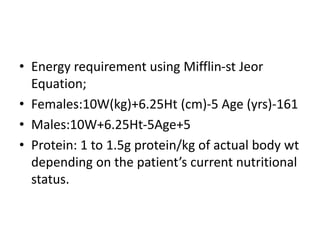
• Energy requirement using Mifflin-st Jeor
Equation;
• Females:10W(kg)+6.25Ht (cm)-5 Age (yrs)-161
• Males:10W+6.25Ht-5Age+5
• Protein: 1 to 1.5g protein/kg of actual body wt
depending on the patient’s current nutritional
status.
• Vitamin and mineral status deficiencies may
evolve not only from suppressed oral intake
but also the increased requirements of certain
micronutrients.
• It is routinely recommended, that people with
HIV and AIDS take a general multivitamin
suppliment that meets 100% of the RDA for
vitamins and minerals.
• Antiretroviral therapy requires specific
nutrition recommendations. Many of the
medications used to treat this condition result
in symptoms such as nausea, vomiting,
diarrhea, or anorexia that might impair oral
intake.
• Even the number of pills that must be taken
can be overwhelming to the patient.
• Additionally, the ingestion of food along with
certain medications may affect absorption of
that drug or vice versa. Below are examples:
• Efavirenz (sustiva): Avoid taking with high fat
meals.
• Lopinavir (kaletra) + ritonavir (Norvir):
Moderate fat meals increases availablity of
capsules; it should be taken with food.
• Saquinavir (Invirase): Take this protease
inhibitor within 2 hours of meal containing
high fat foods or a large snack containing
carbohydrate, protein, or fat.
• Ritonavir (Norvir): If this protease inhibitor is
consumed with a meal, it may decrease the
abdominal cramping and dirrhea that is
common when this drug is initially prescribed.
• These symptoms usually disappear within 8
weeks.
• Indinavir (crixivan): This protease inhibitor
should be taken on an empty stomach. A
meal can be eaten 1 hour after the drug or 2
hours before the drug.
• For some it may be necessary to eat a small
snack with the drug, but fat should be
avoided.
Prevention of Foodborne illness
• Crucial for people with HIV/AIDs
• As CD4 counts fall, cliets are at higher risk of
these infections from this source.
• Nutrition education should focuss on:
• Safe methods of food purchasing, preparation,
and storage.
• Often a low microbial diet is prescribed that
recommends avoidance of undercooked
meats, eggs, raw vegetables, and fruits.
• Cryptosporidium infections can be life
threatening and lead to chronic, debilitating
diarrhea.
• Infectious outbreaks have been linked to
water sources. This protozoon is restant to
chlorination, hence HIV/AIDs people should
monitor their water sources. Avoid all public
taps, drink only filtered/boiled water.
• Fruits and vegetables can be cleaned with a
mixture of 20 drops of 2% iodine in 1 gallon of
water to prevent contamination.
Exercise Recommendations
• Regular aerobic exercises assist with lipid
abnormalities, fat redistribution syndrome,
and other body composition changes noted in
those patients with HIV/AIDs.
Recommendations should be individualised
and initiated slowly after receiving a
physician’s approval.
Benefits
• Increased muscle volume, strength, functional
capacity and quality of life.
• Decreased abdominal fat.
• Prevention of glucose abnormalities and
improved insulin sensitivity.
• Improved circulation
• Improved bone metabolism
Multidisciplinary Approach
• Malnutrition and wasting associated with
HIV/AIDs are multifactorial. Nutrition,
counselling, and support are critical
components of the medical care for HIV/AIDs.
Effective treatment requires a
multidisciplinary approach based on
collaboration of all health care team
members.
• Early recognition and intervention for
nutritional risk factors are keys to effective
nutrition support and related medical
therapies.

NUTRITION_IN_HIV (1).pptx

  • 1.
  • 2.
    • The retrovirushuman immunodeficiency virus (HIV) causes acquired immune deficiency syndrome (AIDS). It injects its Ribonucleic acid (RNA) into target cells and then transcribes the RNA into DNA using a reverse transcriptase enzyme. • Target cells for HIV include T4 or CD4 lymphocites, monocytes, macrophages, and other cells of the immune system.
  • 3.
    • Antibodies areproduced against the virus and are detectable with 2 to 4 months after exposure. The replication of the infected cell results in a steady depletion of the CD4 cell count causing severe depression of immune function and increasing the risk for opportunistic infections and malignancies.
  • 4.
    • Diagnosis ofAIDS: • CD4 cell count less than 200mm³ or less than 14% of total white blood cell count. • The two major prognostic factors for HIV are the CD4 T-cell count and the measurement of plasma HIV RNA (viral load for HIV).
  • 5.
    Transmission • HIV isa bloodborne and sexually transmitted infection. • Transmission is through contact with contaminated blood, semen, viginal secretions, and breast milk. • HIV also crosses the placenta from the mother to the baby
  • 6.
    Clinical and NutritionalComplications Opportunistic Infections Clinical and Nutrition Presentation Neoplasms Kaposi’s Sarcoma Oral, esophageal lessions Lymphoma: Burkitt’s Immunoblastic Dependent on Primary Site-diarrhea and malabsorption possible if GI tract involved Protozoa/parasites Cryptosporidium spp Watery diarrhea, malabsorption, nausea, vomiting, abdominal pain, cholecystitis, pancreatitis Pneumocytis jiroveci Pneumonia Toxoplasmosis Fever, headache, confusion Entamoeba histolytica; Entamoeba coli; Gardia lamblia Acanthamoeba Diarrhea, nausea, vomiting, loss of appetite
  • 7.
    Opportunistic Infections Clinicaland Nutrition Presentation Bacteria Mycobacterium avium complex (MAC) Fever, diarrea, malabsoption, anorexia Legionella Pneumonia Salminella Fever, abdominal pain, cramping, diarrhea Listeria Diarrhea, abdominal pain, fever Shigella Bloody diarrhea, abdominal pain, fever Fungi Candida albicans Thrush, stomatitis, esophagitis Cryptococcus Meningitis, nausea, vomiting, fever,dementia Aspergillosis Pneumonia Coccidioidomycosis Pneumonia, fungemia Histoplasmosis Fever, Pneumonia
  • 8.
    Opportunistic Infections Clinicaland Nutrition Presentation Cytomegalovirus (CMV) Dependent on site of infection – can involve entire GI tract with diarrhea, nausea, and vomiting Herpes Simplex Painful blisters – Symptoms depend on site of infection.
  • 9.
    Treatment • Use ofhighly active antiretroviral therapy (HAART). • With a goal to maintain a viral load of fewer than 50 copies/mL. • Drug resistance can develop if adherence is not maintained. • Side effects: nausea, vomiting, diarrhea, and other metabolic changes.
  • 10.
    Malnutrition in HIV/AIDs •Most nutritional problems coincide with the incidence of high viral loads, opportunistic infections, and the development of viral resistance. • With the evolution of HAART, nutritional problems have been shifted to include more chronic disease issues such as hyperlidemia, insulin resistance, and diabettes mellitus
  • 11.
    • The presenceof malnutrition and weight loss (>10% in one month) is still considered an important predictor of both morbidity and mortality from the disease.
  • 12.
    Causes of malnutritionin HIV/AIDs • Altered nutrient intake • Weight loss • Body composition changes • Physical Impairement • Endocrine disorders • Metabolic changes • Malabsorption • Presence of opportunistic infections • Psychosocial issues • Economic conditions
  • 13.
    Altered Nutrient Intake •Anorexia is a frequent symptom for altered nutrient intake. Lack of appetite may be caused by HIV infection, presence of opportunistic infections, fatigue, fever, or medication side effects. • Physical Impairement from mucositis, esophagitis, pain, nausea, and vomiting affect the client’s ability to inject adequate nutrients.
  • 14.
    • Depression, loneliness,fear, anxiety, or other psychosocial issues can play a significant role in the client’s desire to eat. • In addition, economic availability of adequate food supplies is often the most difficult problem to solve.
  • 15.
    Interventions • Education aboutthe role of nutrition; nutrition is a critical element of medical care, it is one area in which clients can exert some control over their medical care. Emphasising the benefits of maintaining nutritional status such as repair and building of tissue, preserving lean body mass and GI function, minimizing fatigue and improving quality of life are important components of education.
  • 16.
    • Identification ofcontributing factors to anorexia will guide the client and the practitioner in developing strategies to improve oral intake.
  • 17.
    Vicious cycle ofMalnutrition and AIDS • Immunity More infections Malnutrition Reduced intake Weight loss Impaired digestion Impaired absorption Alterations in bowel activity & metabolism
  • 18.
    Maximizing Food Intakein HIV/AIDs • HIV/AIDS patients may have difficulty consuming enough kcal to meet physiologic requirements.
  • 19.
    Strategies to increasekcal and protein without increasing quantity • Substitute kcal – containing and nutrient dense foods and beverages for low-or no- kcal foods and beverages: milk shakes instead of coffee or tea, regular soft drinks for sugar free drinks. • Increase the number or size of feedings daily. Offer 5 – 6 small meals/snacks
  • 20.
    • Fortify foodswith kcal and protein-containing ingredients. Add skim milk powder to milk, shakes, gravies, and hot cereals. • Use kcal-containing condiments. Add butter/margarine to hot cereals, veges, and starches.
  • 21.
    • Modify dietaccording to tolerances. Try cold or room – temperature foods, bland or salty foods; avoid greasy and sweet foods and liquids between meals. • Add kcal containing supplements as needed.
  • 22.
    Weight loss andbody composition changes • Weight loss may occur from decreased nutrient intake, physical impairement or as a result of symptoms that impair appetite. • Chronic weight loss in malnutrition: There is decrease in metabolic rate and reliance on fat stores for energy • Acute weight loss in stress: There is increase in metabolic rate, reliance on glucose as fuel, and a depletion of lean body mass.
  • 23.
    • Body compositionchanges have been noted in lipodystrophy (fat redistribution syndrome). There are drugs for anprexia, appetite, mood, weight maintenance. • Side effects: Euphoria, dizziness, impaired thinking. • Other drugs improve on lean body mass, decrease abdominal adiposity, depression.
  • 24.
    Physical Impairement • FrequentProblems • Nausea, vomiting, mouth, esophageal lesions and impaired dentition. • Due to opportunistic infections such as candidiasis and gingivitis or from side effects of antiretroviral therapy, prophylactic treatment to prevent opportunistic infections, and medication for management of pain.
  • 25.
    Endocrine and Metabolicdisorders • Hypogonadism (deficiency in secretory activity of the ovary or testis) is common in people with HIV/AIDS. Condition is associated with fatigue, decreased libido, loss of muscle mass, muscle weakness, impotence and loss of body hair. • The fatigue contributes to decreased appetite and impaired ability to prepare and consume meals. Loss of lean body mass is a prominent feature of malnutrition and wasting syndrome of AIDs.
  • 26.
    • Adrenal insufficiencymay contribute to changes in appetite, loss of fuel storage, and changes in metabolism. • Fat redistribution syndrome (lipodystropy) has been described as a syndome of body composition changes and metabolic disturbances in some patients receiving ART.
  • 27.
    • In manypatients this increase in abdominal obesity was accompanied by high serum triglycerides, cholesteral, glucose and insulin resistance associated with both protease inhibitors and nucleoside analog therapy.
  • 28.
    Malabsorption • Due to: •Opportunistic infections that damage the GI tract. • Effects of malnutrition on villus height and enterocyte function • From the disease itself
  • 29.
    • In thosepatients with HIV – related diarrhea, steatorrhea has been noted in clients without GI infections. • Some studies have documented abnormal D- xylose tests, which indicates the presence of malabsorption. • A significant number of those subjects had dirrhea, and almost half of these cases, no pathogens could be identified.
  • 30.
    • Treatment ofthe underlying cause if possible is crucial in reversing the malnutrition caused by malabsorptive symptoms and diarrhea, the restriction of fat and lactose is common. • The use of lactose-free supplements and those supplements containing medium-chain triglycerides such as Advera, Alitraq, Peptamen, or lipisorb are frequently prescribed.
  • 31.
    • Additionally probioticsand prebiotics as well as glutamine and arginine in enteral products or given seperately as a supplement have been used to assist in this malabsorption syndrome and in treating diarrhea. • Careful attention must be taken to ensure adequate caloric and protein intake in the face of restricting these important kcal and protein sources.
  • 32.
    • Fluid lossesmay be high with the presence of diarrhea. • Prevention of dehydration and supplementation with vitamins and minerals are priority considerations as well.
  • 33.
    Nutrition Assessment incancer and HIV/AIDS • Anthropometric data: • Body weight compared with clients’s usual body weight. Any unexplained weight loss of greater than 10% in 6 months is considered to place the cliet at risk. • BMI < 18 is associated with increased risk of mortality. Loss of lean body mass is characteristic of malnutrition in AIDs.
  • 34.
    • Biochemical indices •Monitoring disease progrssion CD4 or viral load • Acute phase proteins that measure inflamatory processes (C-reactive protein) and overall visceral protein stores (serum albumin – NI 3.5 to 5g/dL and prealbumin – NI 20 to 50mg/dL) can be used to monitor acute changes.
  • 35.
    • Dietary Assessment •24 hour recall, food frequency, or food diary. • Careful attention should be made to gastrointestinal function, the presence of steartorrhea and diarrhea, and other pysical symptoms that might interfere with adequate oral intake.
  • 36.
    • Using amultiple parameters will allow a more thorough evaluation of patient’s nutritional status and risk for protein – energy malnutrition.
  • 37.
    Nutrition Therapy • Overallgoals of nutrition management; • Preserve lean body mass and gut function • Prevent development of malnutrition • Provide adequate levels of all nutrients to maintain daily physical and mental functioning • Minimize the symptoms of malabsorption. • Prevent nutrition related immunosuppression. • Improve quality of life
  • 38.
    • HAART’s focusof nutrition therapy includes not only preventing malnutrition but also addressing chronic nutrition problems, such as hyperlipidemia, hyperglycemia and hypertension. • Objectives of nutrition care plan need to be realistic and individualised. Interventions should be based on the nutritional assessment and current medical treatment for that cliet
  • 39.
    Steps • Assessment • Determineenergy and protein requirements • Vitamin and mineral requirement
  • 40.
    • Energy requirementusing Mifflin-st Jeor Equation; • Females:10W(kg)+6.25Ht (cm)-5 Age (yrs)-161 • Males:10W+6.25Ht-5Age+5 • Protein: 1 to 1.5g protein/kg of actual body wt depending on the patient’s current nutritional status.
  • 41.
    • Vitamin andmineral status deficiencies may evolve not only from suppressed oral intake but also the increased requirements of certain micronutrients. • It is routinely recommended, that people with HIV and AIDS take a general multivitamin suppliment that meets 100% of the RDA for vitamins and minerals.
  • 42.
    • Antiretroviral therapyrequires specific nutrition recommendations. Many of the medications used to treat this condition result in symptoms such as nausea, vomiting, diarrhea, or anorexia that might impair oral intake. • Even the number of pills that must be taken can be overwhelming to the patient.
  • 43.
    • Additionally, theingestion of food along with certain medications may affect absorption of that drug or vice versa. Below are examples: • Efavirenz (sustiva): Avoid taking with high fat meals. • Lopinavir (kaletra) + ritonavir (Norvir): Moderate fat meals increases availablity of capsules; it should be taken with food.
  • 44.
    • Saquinavir (Invirase):Take this protease inhibitor within 2 hours of meal containing high fat foods or a large snack containing carbohydrate, protein, or fat. • Ritonavir (Norvir): If this protease inhibitor is consumed with a meal, it may decrease the abdominal cramping and dirrhea that is common when this drug is initially prescribed.
  • 45.
    • These symptomsusually disappear within 8 weeks. • Indinavir (crixivan): This protease inhibitor should be taken on an empty stomach. A meal can be eaten 1 hour after the drug or 2 hours before the drug. • For some it may be necessary to eat a small snack with the drug, but fat should be avoided.
  • 46.
    Prevention of Foodborneillness • Crucial for people with HIV/AIDs • As CD4 counts fall, cliets are at higher risk of these infections from this source. • Nutrition education should focuss on: • Safe methods of food purchasing, preparation, and storage. • Often a low microbial diet is prescribed that recommends avoidance of undercooked meats, eggs, raw vegetables, and fruits.
  • 47.
    • Cryptosporidium infectionscan be life threatening and lead to chronic, debilitating diarrhea. • Infectious outbreaks have been linked to water sources. This protozoon is restant to chlorination, hence HIV/AIDs people should monitor their water sources. Avoid all public taps, drink only filtered/boiled water.
  • 48.
    • Fruits andvegetables can be cleaned with a mixture of 20 drops of 2% iodine in 1 gallon of water to prevent contamination.
  • 49.
    Exercise Recommendations • Regularaerobic exercises assist with lipid abnormalities, fat redistribution syndrome, and other body composition changes noted in those patients with HIV/AIDs. Recommendations should be individualised and initiated slowly after receiving a physician’s approval.
  • 50.
    Benefits • Increased musclevolume, strength, functional capacity and quality of life. • Decreased abdominal fat. • Prevention of glucose abnormalities and improved insulin sensitivity. • Improved circulation • Improved bone metabolism
  • 51.
    Multidisciplinary Approach • Malnutritionand wasting associated with HIV/AIDs are multifactorial. Nutrition, counselling, and support are critical components of the medical care for HIV/AIDs. Effective treatment requires a multidisciplinary approach based on collaboration of all health care team members.
  • 52.
    • Early recognitionand intervention for nutritional risk factors are keys to effective nutrition support and related medical therapies.