HIV and AIDS Control
Programme: Objectives and
Functions
This presentation explores the objectives, functions, and key
components of a comprehensive HIV and AIDS control programme,
focusing on its critical role in curbing the epidemic and improving the
lives of people living with HIV.
by Payel Mukherjee
Overview of the HIV and AIDS Epidemic
Global Statistics
According to UNAIDS, an estimated 38.4 million people
were living with HIV at the end of 2022, and 1.5 million
people acquired HIV in 2022. This global epidemic
continues to pose significant challenges to health systems
worldwide.
Impact on Individuals and Communities
HIV and AIDS have had a profound impact on individuals,
families, and communities, leading to social stigma,
economic hardship, and a high burden on healthcare
resources. Effective control programmes are essential to
address these challenges.
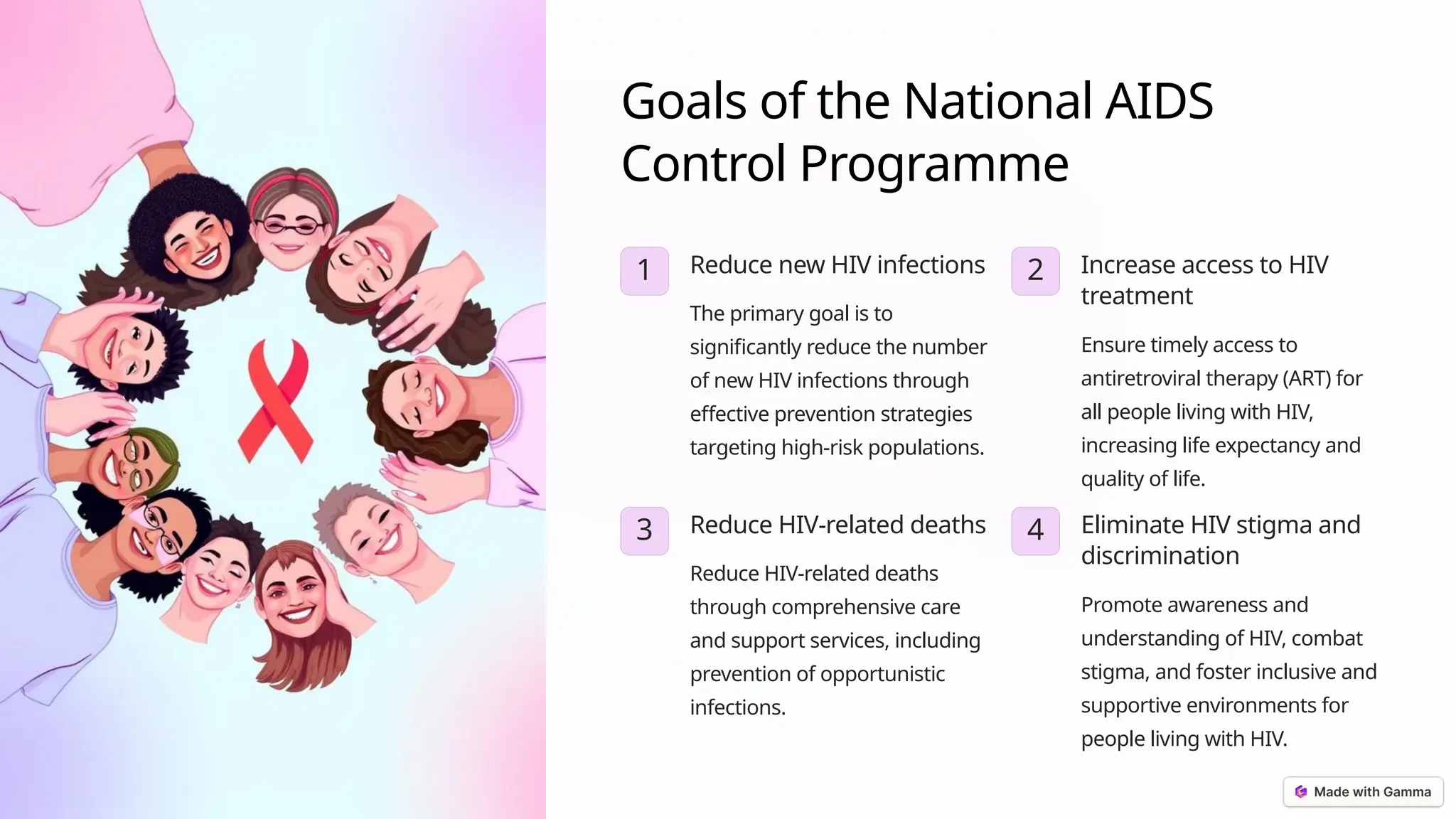
Goals of the National AIDS
Control Programme
1 Reduce new HIV infections
The primary goal is to
significantly reduce the number
of new HIV infections through
effective prevention strategies
targeting high-risk populations.
2 Increase access to HIV
treatment
Ensure timely access to
antiretroviral therapy (ART) for
all people living with HIV,
increasing life expectancy and
quality of life.
3 Reduce HIV-related deaths
Reduce HIV-related deaths
through comprehensive care
and support services, including
prevention of opportunistic
infections.
4 Eliminate HIV stigma and
discrimination
Promote awareness and
understanding of HIV, combat
stigma, and foster inclusive and
supportive environments for
people living with HIV.
Strategies for Prevention and Control
of HIV/AIDS
Behavioral Interventions
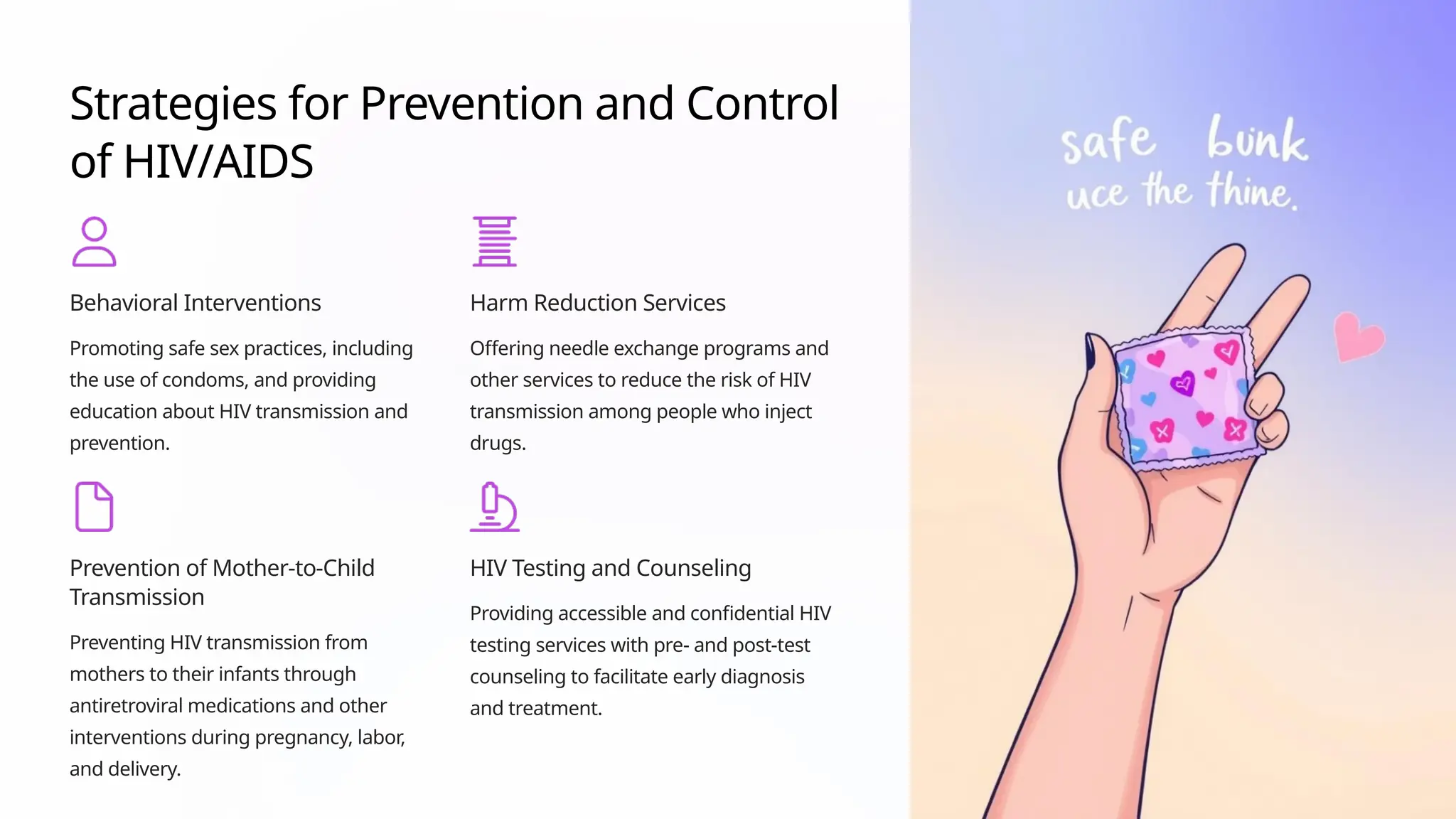
Promoting safe sex practices, including
the use of condoms, and providing
education about HIV transmission and
prevention.
Harm Reduction Services
Offering needle exchange programs and
other services to reduce the risk of HIV
transmission among people who inject
drugs.
Prevention of Mother-to-Child
Transmission
Preventing HIV transmission from
mothers to their infants through
antiretroviral medications and other
interventions during pregnancy, labor,
and delivery.
HIV Testing and Counseling
Providing accessible and confidential HIV
testing services with pre- and post-test
counseling to facilitate early diagnosis
and treatment.
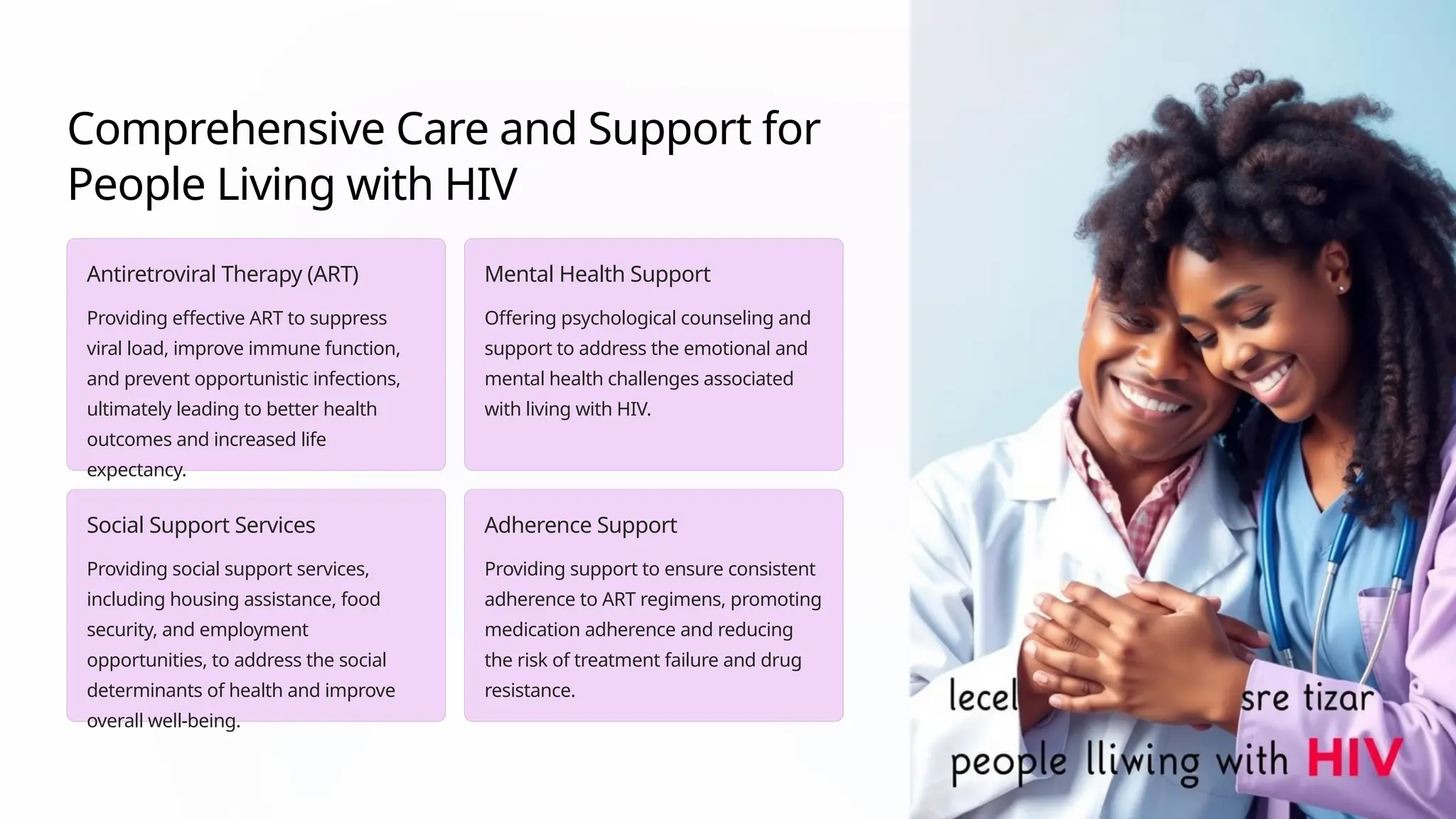
Comprehensive Care and Support for
People Living with HIV
Antiretroviral Therapy (ART)
Providing effective ART to suppress
viral load, improve immune function,
and prevent opportunistic infections,
ultimately leading to better health
outcomes and increased life
expectancy.
Mental Health Support
Offering psychological counseling and
support to address the emotional and
mental health challenges associated
with living with HIV.
Social Support Services
Providing social support services,
including housing assistance, food
security, and employment
opportunities, to address the social
determinants of health and improve
overall well-being.
Adherence Support
Providing support to ensure consistent
adherence to ART regimens, promoting
medication adherence and reducing
the risk of treatment failure and drug
resistance.
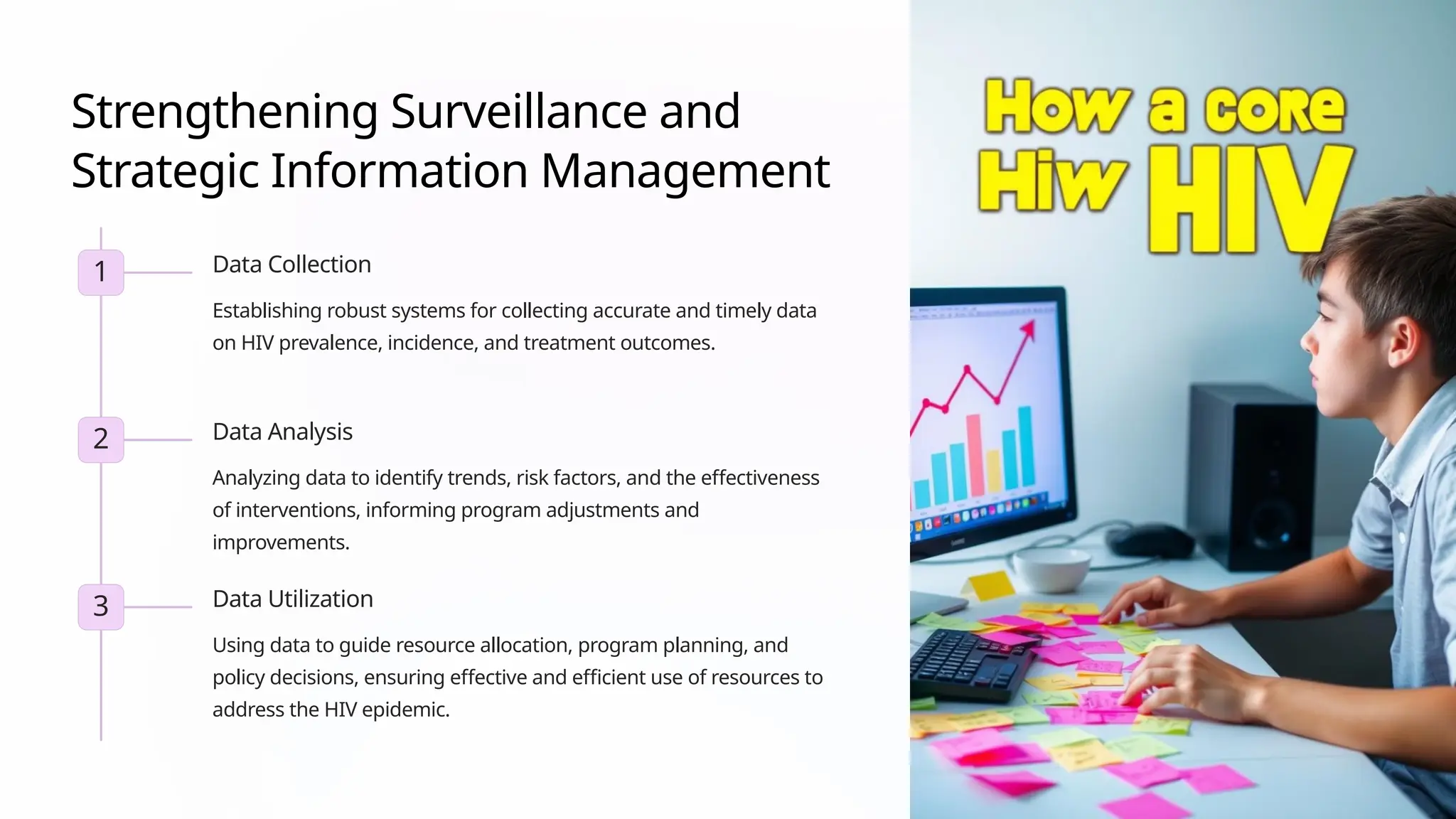
Strengthening Surveillance and
Strategic Information Management
1 Data Collection
Establishing robust systems for collecting accurate and timely data
on HIV prevalence, incidence, and treatment outcomes.
2 Data Analysis
Analyzing data to identify trends, risk factors, and the effectiveness
of interventions, informing program adjustments and
improvements.
3 Data Utilization
Using data to guide resource allocation, program planning, and
policy decisions, ensuring effective and efficient use of resources to
address the HIV epidemic.
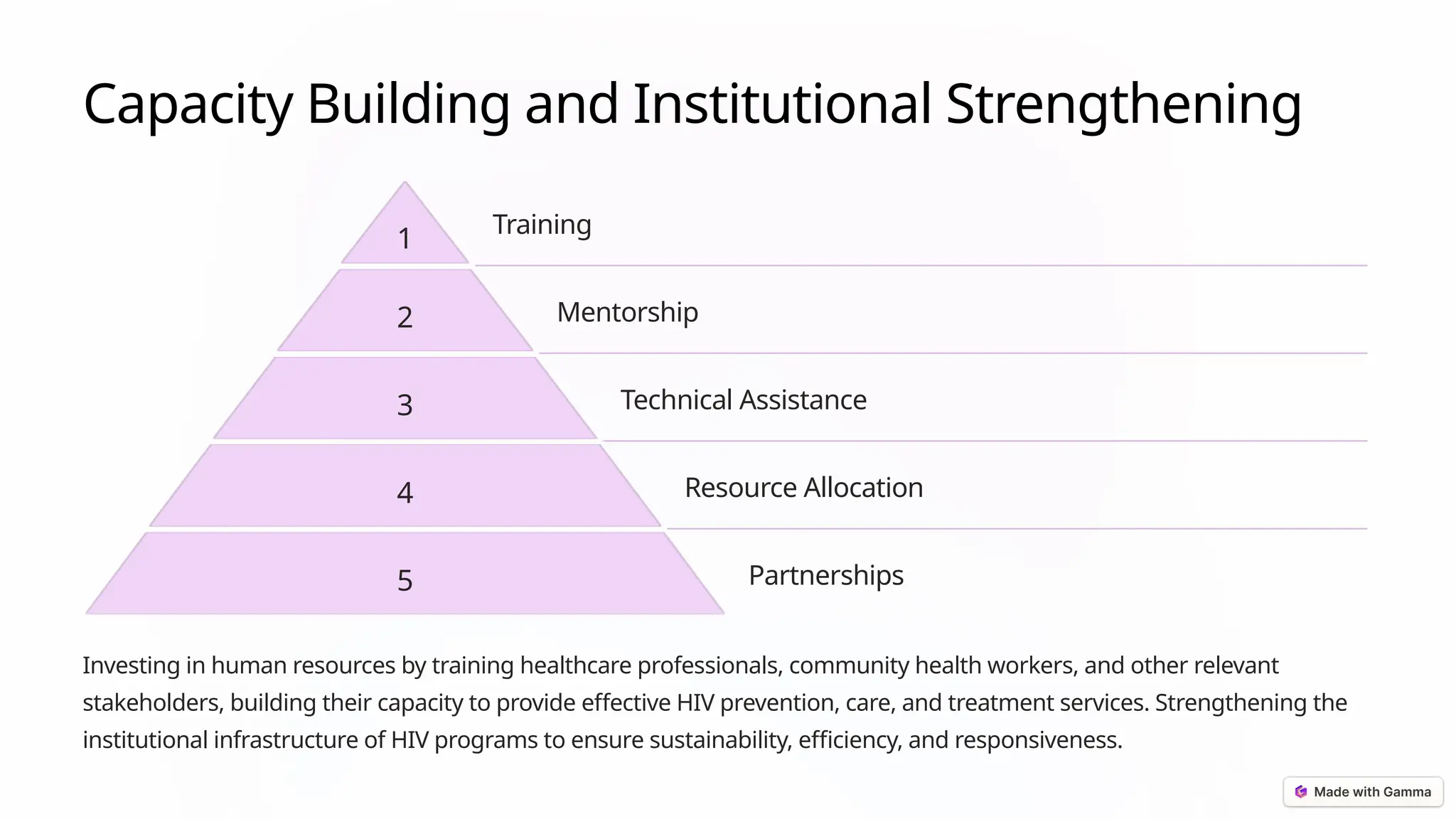
Capacity Building and Institutional Strengthening
1
Training
2 Mentorship
3 Technical Assistance
4 Resource Allocation
5 Partnerships
Investing in human resources by training healthcare professionals, community health workers, and other relevant
stakeholders, building their capacity to provide effective HIV prevention, care, and treatment services. Strengthening the
institutional infrastructure of HIV programs to ensure sustainability, efficiency, and responsiveness.
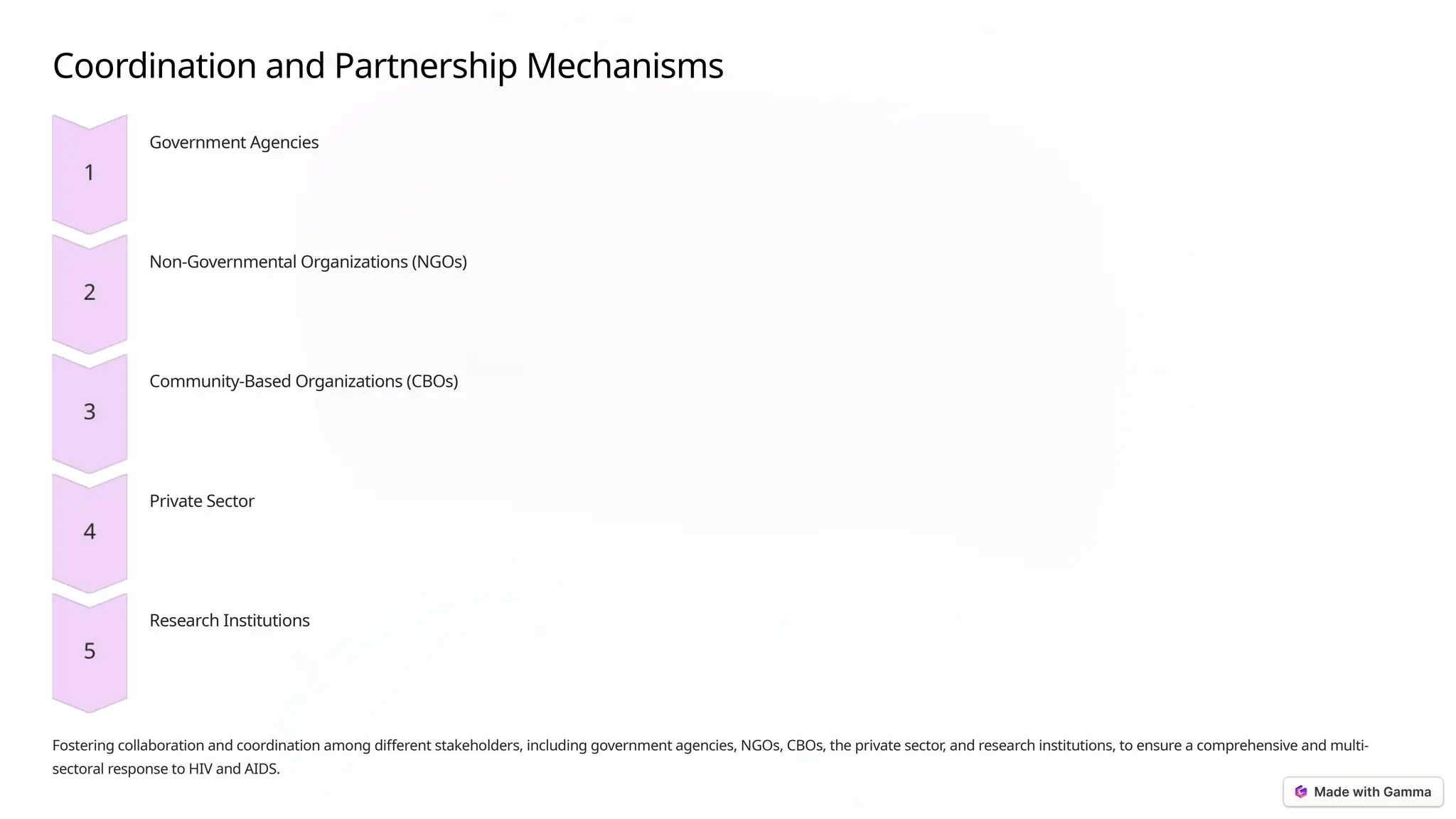
Coordination and Partnership Mechanisms
Government Agencies
Non-Governmental Organizations (NGOs)
Community-Based Organizations (CBOs)
Private Sector
Research Institutions
Fostering collaboration and coordination among different stakeholders, including government agencies, NGOs, CBOs, the private sector, and research institutions, to ensure a comprehensive and multi-
sectoral response to HIV and AIDS.
Monitoring and Evaluation of Programme Outcomes
1
Data Collection
Collecting data on key indicators to measure progress towards program objectives and impact.
2
Data Analysis
Analyzing collected data to assess program effectiveness, identify strengths
and weaknesses, and inform program adjustments.
3
Report Generation
Generating reports and sharing findings with
stakeholders to ensure transparency, accountability, and
continuous improvement.
Challenges and Future Directions
1M
Stigma and Discrimination
Addressing persistent stigma and
discrimination against people living with
HIV to foster acceptance and ensure
equal access to services.
20M
Financial Constraints
Securing adequate and sustainable
funding to support comprehensive HIV
programs and ensure long-term
effectiveness.
30M
Emerging Challenges
Adapting to evolving challenges, such as
drug resistance, the impact of COVID-19
on HIV services, and emerging
technologies in HIV prevention and
treatment.

HIV-and-AIDS-Control-Programme-Objectives-and-Functions.

  • 1.
    HIV and AIDSControl Programme: Objectives and Functions This presentation explores the objectives, functions, and key components of a comprehensive HIV and AIDS control programme, focusing on its critical role in curbing the epidemic and improving the lives of people living with HIV. by Payel Mukherjee
  • 2.
    Overview of theHIV and AIDS Epidemic Global Statistics According to UNAIDS, an estimated 38.4 million people were living with HIV at the end of 2022, and 1.5 million people acquired HIV in 2022. This global epidemic continues to pose significant challenges to health systems worldwide. Impact on Individuals and Communities HIV and AIDS have had a profound impact on individuals, families, and communities, leading to social stigma, economic hardship, and a high burden on healthcare resources. Effective control programmes are essential to address these challenges.
  • 3.
    Goals of theNational AIDS Control Programme 1 Reduce new HIV infections The primary goal is to significantly reduce the number of new HIV infections through effective prevention strategies targeting high-risk populations. 2 Increase access to HIV treatment Ensure timely access to antiretroviral therapy (ART) for all people living with HIV, increasing life expectancy and quality of life. 3 Reduce HIV-related deaths Reduce HIV-related deaths through comprehensive care and support services, including prevention of opportunistic infections. 4 Eliminate HIV stigma and discrimination Promote awareness and understanding of HIV, combat stigma, and foster inclusive and supportive environments for people living with HIV.
  • 4.
    Strategies for Preventionand Control of HIV/AIDS Behavioral Interventions Promoting safe sex practices, including the use of condoms, and providing education about HIV transmission and prevention. Harm Reduction Services Offering needle exchange programs and other services to reduce the risk of HIV transmission among people who inject drugs. Prevention of Mother-to-Child Transmission Preventing HIV transmission from mothers to their infants through antiretroviral medications and other interventions during pregnancy, labor, and delivery. HIV Testing and Counseling Providing accessible and confidential HIV testing services with pre- and post-test counseling to facilitate early diagnosis and treatment.
  • 5.
    Comprehensive Care andSupport for People Living with HIV Antiretroviral Therapy (ART) Providing effective ART to suppress viral load, improve immune function, and prevent opportunistic infections, ultimately leading to better health outcomes and increased life expectancy. Mental Health Support Offering psychological counseling and support to address the emotional and mental health challenges associated with living with HIV. Social Support Services Providing social support services, including housing assistance, food security, and employment opportunities, to address the social determinants of health and improve overall well-being. Adherence Support Providing support to ensure consistent adherence to ART regimens, promoting medication adherence and reducing the risk of treatment failure and drug resistance.
  • 6.
    Strengthening Surveillance and StrategicInformation Management 1 Data Collection Establishing robust systems for collecting accurate and timely data on HIV prevalence, incidence, and treatment outcomes. 2 Data Analysis Analyzing data to identify trends, risk factors, and the effectiveness of interventions, informing program adjustments and improvements. 3 Data Utilization Using data to guide resource allocation, program planning, and policy decisions, ensuring effective and efficient use of resources to address the HIV epidemic.
  • 7.
    Capacity Building andInstitutional Strengthening 1 Training 2 Mentorship 3 Technical Assistance 4 Resource Allocation 5 Partnerships Investing in human resources by training healthcare professionals, community health workers, and other relevant stakeholders, building their capacity to provide effective HIV prevention, care, and treatment services. Strengthening the institutional infrastructure of HIV programs to ensure sustainability, efficiency, and responsiveness.
  • 8.
    Coordination and PartnershipMechanisms Government Agencies Non-Governmental Organizations (NGOs) Community-Based Organizations (CBOs) Private Sector Research Institutions Fostering collaboration and coordination among different stakeholders, including government agencies, NGOs, CBOs, the private sector, and research institutions, to ensure a comprehensive and multi- sectoral response to HIV and AIDS.
  • 9.
    Monitoring and Evaluationof Programme Outcomes 1 Data Collection Collecting data on key indicators to measure progress towards program objectives and impact. 2 Data Analysis Analyzing collected data to assess program effectiveness, identify strengths and weaknesses, and inform program adjustments. 3 Report Generation Generating reports and sharing findings with stakeholders to ensure transparency, accountability, and continuous improvement.
  • 10.
    Challenges and FutureDirections 1M Stigma and Discrimination Addressing persistent stigma and discrimination against people living with HIV to foster acceptance and ensure equal access to services. 20M Financial Constraints Securing adequate and sustainable funding to support comprehensive HIV programs and ensure long-term effectiveness. 30M Emerging Challenges Adapting to evolving challenges, such as drug resistance, the impact of COVID-19 on HIV services, and emerging technologies in HIV prevention and treatment.