NATIONAL AIDS CONTROLPROGRAMME
HIV is caused by a virus.
HIV (human immunodeficiency virus) is a virus that
attacks cells that help the body fight infection, making a
person more vulnerable to other infections and diseases.
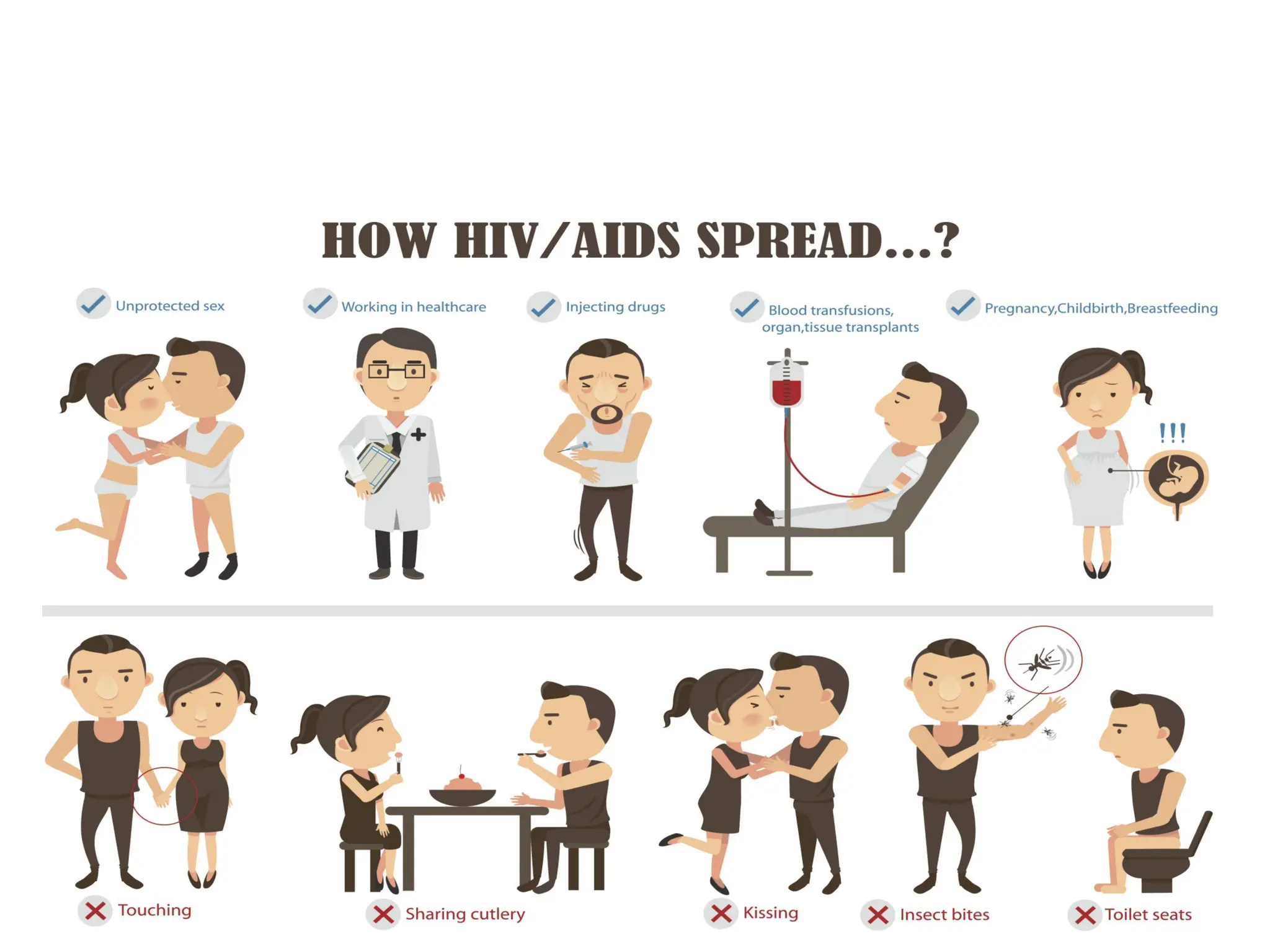
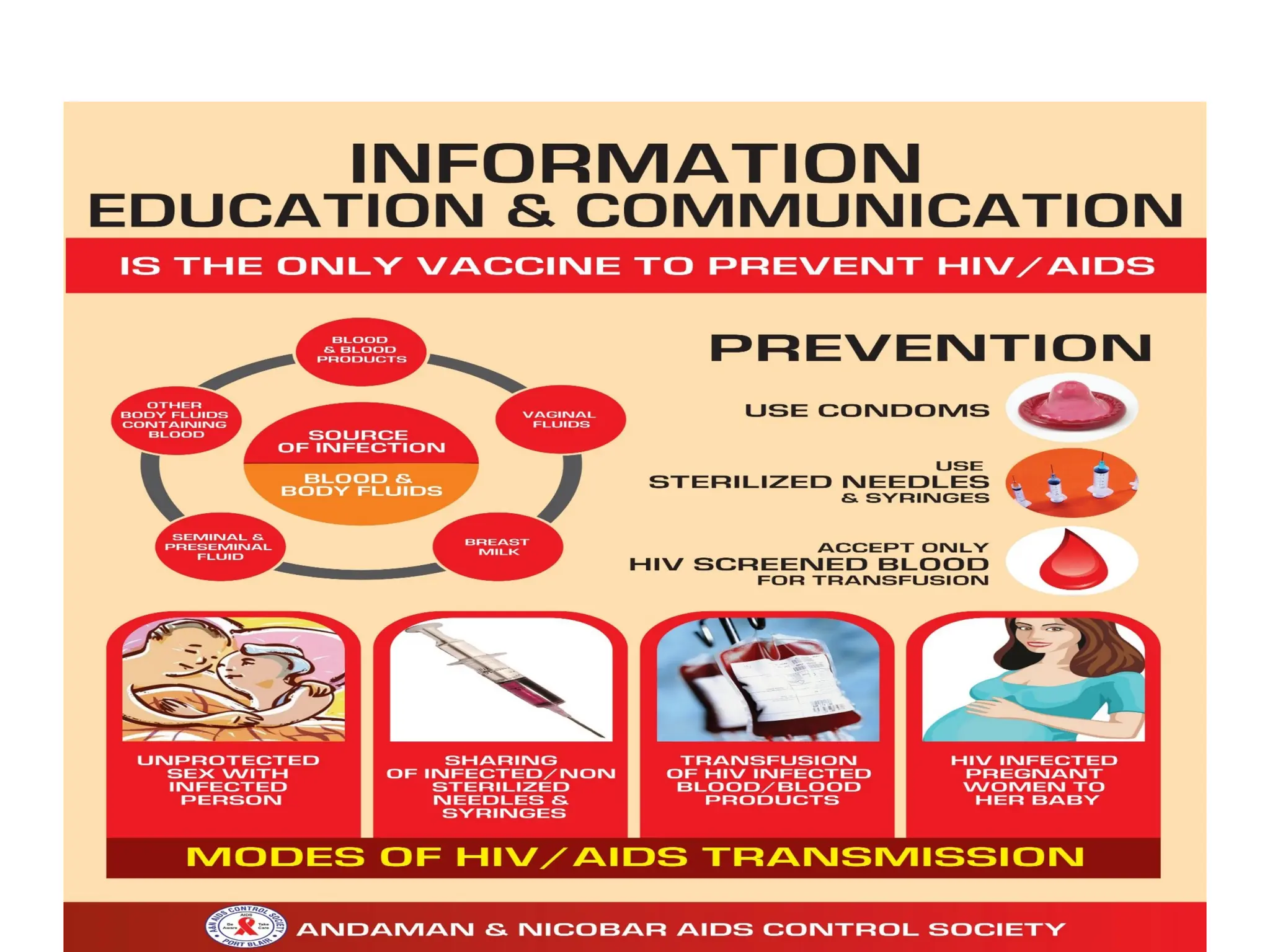
It can spread through sexual contact, illicit injection drug
use or sharing needles, contact with infected blood, or
from mother to child during pregnancy, childbirth or
breastfeeding. HIV destroys CD4 T cells — white blood
cells that play a large role in helping your body fight
disease.
3.
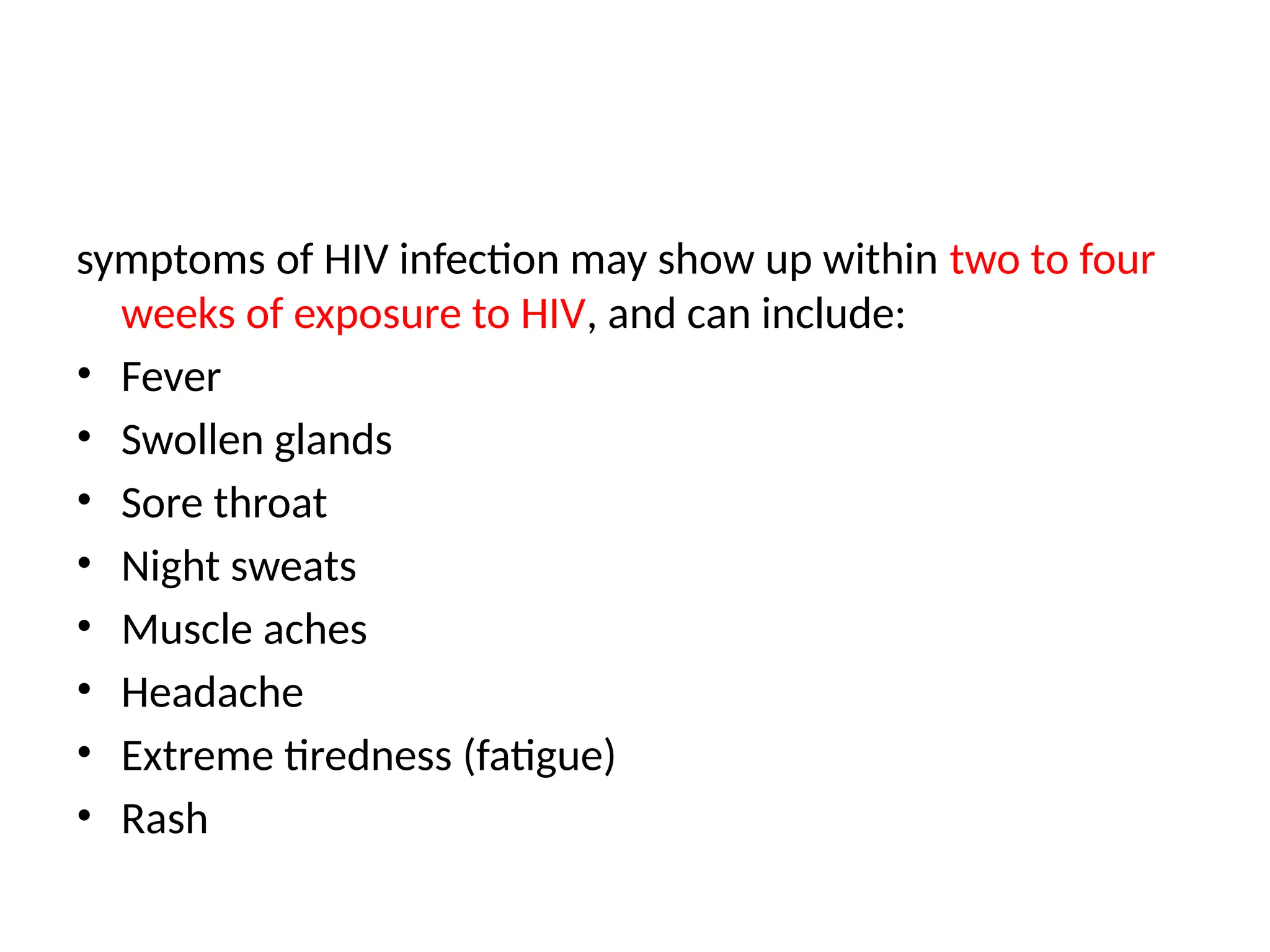
symptoms of HIVinfection may show up within two to four
weeks of exposure to HIV, and can include:
• Fever
• Swollen glands
• Sore throat
• Night sweats
• Muscle aches
• Headache
• Extreme tiredness (fatigue)
• Rash
4.
Diagnosis of AIDS
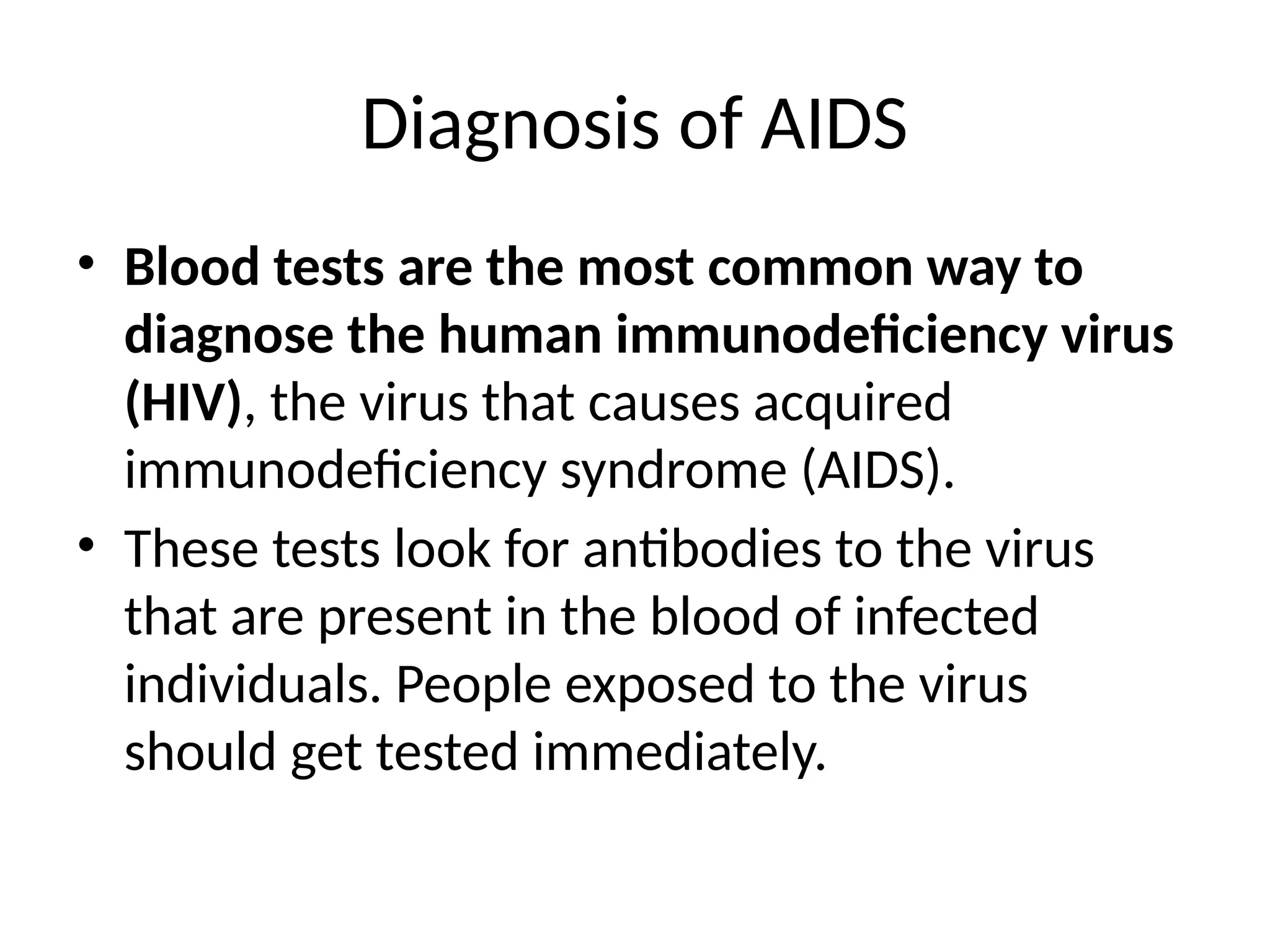
•Blood tests are the most common way to
diagnose the human immunodeficiency virus
(HIV), the virus that causes acquired
immunodeficiency syndrome (AIDS).
• These tests look for antibodies to the virus
that are present in the blood of infected
individuals. People exposed to the virus
should get tested immediately.
5.
• National AIDSControl Programme was launched
in India in the year 1987.
• The Ministry of Health and Family Welfare has set
up National AIDS Control Organization (NACO) as a
separate wing to implement and closely monitor
the various components of the programme.
• The aim of the programme is to prevent further
transmission of HIV, to decrease morbidity and
mortality associated with HIV infection and to
minimize the socio-eonomic impact resulting from
HIV infection.
6.
The milestones ofthe programme
1986 - First case of HIV detected.
- AIDS Task Force set up by the ICMR.
- National AIDS Committee established under the Ministry of
Health.
1990 - Medium Term Plan launched for four states and the four
metros.
1992 - NACP-1 launched to slow down the spread of HIV infection.
- National AIDS Control Board constituted.
- NACO set-up.
1999 - NACP-II begins, focussing on behaviour change,
increased decentralization and NGO involvement.
- State AIDS Control Societies established.
7.
2002 - NationalAIDS Control Policy adopted.
- National Blood Policy adopted.
2004 - Anti-retroviral treatment initiated.
2006 - National Council on AIDS constituted under
chairmanship of the Prime Minister.
- National Policy on Paediatric ART formulated.
2007 - NACP-III launched for 5 years (2007-2012).
2014- NACP-IV launched for 5 years (2012-2017).
2017 - National Strategic Plan for HIV/AIDS and STDs
2017- 2024
8.
NATIONAL STRATEGY
1. Establishmentof surveillance centres to cover
the whole country; identification of high-risk
group and their screening;
2. Issuing specific guidelines for management of
detected cases and their follow-up;
3. Formulating guidelines for blood bank, blood
product manufacturers, blood donors and
dialysis units;
4. IEC activities and control of sexually transmitted
diseases; and condom programme.
10.
• Term Plan(1990- 92), NACP-1 (1992-99),
NACP-II (1999- 2006) and NACP-lll (2007-
2012).
• Based on the lessons learnt and achievements
made in Phase I, II and Ill. India developed the
Fourth National Programme Implementation
Plan (NACP- IV, 2012- 2017).
• The package of services under NACP-IV are
11.
1. Prevention servicesincludes:
-Targeted interventions for high-risk groups,
-Needle-syringe exchange programme and opioid
substitution therapy for IDUs.
- Prevention and control of sexually transmitted
infections/reproductive tract infections.
- HIV counselling and testing services.
- Prevention of parent to child transmission.
- Condom promotion.
12.
2. Care, supportand treatment services :
- Laboratory services for CD4 testing and other
investigations
- Free first-line and second-line Anti-Retroviral Therapy
(ART) through ART centres and Link ART Centres
(LACs), Centres of Excellence (CoE) and ART plus
centres. Paediatric ART for children.
- Early infant diagnosis for HIV exposed infants and
children below 18 months.
- Nutritional and psycho-social support through Care
and Support Centres (CSC).
13.
ORGANIZATIONAL STRUCTURE
• TheNational AIDS Control Organization (NACO) is
presently established as a division under the
Ministry of Health and Family Welfare, headed by
the Additional Secretary, Ministry of Health and
Director General, NACO Govt. of India. The
technical divisions are headed by officers at the
level of Deputy Director General/DGHS.
• The finance division is headed by Director-
Finance while Admin and Procurement is headed
by the Joint Secretary, Ministry of Health.
14.
Country scenario
• GroupI High Prevalence States : includes states of
Maharashtra, Tamil Nadu, Karnataka , Andhra Pradesh,
Manipur and Nagaland where the HIV infection has crossed
5 per cent mark in high-risk group and 1 % or more in
antenatal women.
• Group II Moderate Prevalence States : includes states of
Gujarat, Goa and Puducherry where HIV infection has
crossed 5% or more among high risk groups but the
infection is below 1 % in antenatal women.
• Group Ill Low Prevalence States : includes remaining states
where the HIV infection in any of the high risk groups is still
less than 5% and is less than 1 % among antenatal women.
15.
HIV SURVEILLANCE
The typesof surveillance are :
(a) HIV Sentinel Surveillance
(b) HIV Sero- Surveillance
(c) AIDS Case Surveillance,
(d) STD Surveillance
(e) Behavioural Surveillance, and
(f) Integration with surveillance of other diseases
like tuberculosis etc.
16.
• HIV SENTINELSURVEILLANCE:
1. To determine the level of HIV infection among general
population as well as high-risk groups in different states;
2. To understand the trends of HIV epidemic among general
population as well as high-risk groups in different states;
3. To understand the geographical spread of HIV infection
and to identify emerging pockets;
4. To provide information for prioritization of programme
resources and evaluation of programme impact; and
5. To estimate HIV prevalence and HIV burden in the
country.
BY 2016-17 the HIV SENTINEL SURVEILLANCE Sites- 1323
17.
Counselling and HIVtesting services
The Basic Service Division of the department of AIDS
control provides HIV counselling and testing services for HIV
infection. The national programme is offering these services
since 1997 with the goal to identify as many people living
with HIV, as early as possible (after acquiring the HIV
infection), and linking them appropriately and in a timely
manner to prevention, care and treatment services. The HIV
counselling and testing services include the following
components:
1. Integrated Counselling and Testing Centres (ICTC).
2 . Prevention of parent-to-child transmission of HIV
(PPTCT).
3 . HIV/tuberculosis collaborative activities.
18.
Integrated Counselling andTesting Centers
(ICTC):
• Functions of ICTC include early detection of
HIV, provision of basic information on modes
of transmission and prevention of HIV/AIDS for
promoting behavioral change and reducing
vulnerability, and linking PLHIV with other HIV
prevention, care and treatment services. The
ICTC have been classified into two types: Fixed
facility ICTC and Mobile ICTC.
19.
Fixed facility ICTCsare located within an existing
healthcare facility/hospital/health centre , and are of
two types - Standalone ICTC and Facility-integrated
counselling and testing centres.
Standalone ICTC (SA-ICTC): The client load is high in
these centres, with full-time counsellor & laboratory
technician who provide HIV counselling and testing
services.
SA-ICTC are located in medical colleges, district
hospitals, sub-district hospitals, CHCs etc.
20.
Facility-integrated counselling andtesting centres
(F-ICTCs):
Considering the need for rapid scale-up
and sustainability of HIV counselling and testing
services, the F-ICTCs have been set up below the
block levels at 24 x 7 PHC, etc. Staff of the existing
health facilities are trained in counselling and testing
services of HIV.
21.
• Mobile ICTC:Mobile counselling and testing centre is a
van with a room to conduct general examination,
counselling and space for collection and processing blood
samples by a team of paramedical healthcare providers
(a health educator/ANM, counsellor and laboratory
technician). Mobile ICTC are set up as temporary clinics
in hard-to-reach areas with flexible working hours and
provide a wide range of services like counseling and
testing services for HIV, syndromic management of STI/
RTI and other minor ailments, along with regular health
check-ups, antenatal, immunization services etc