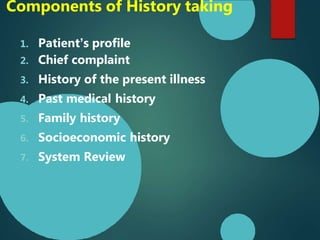
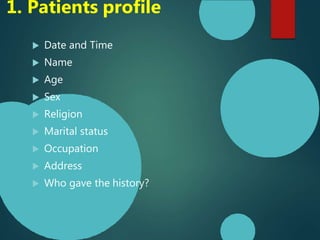
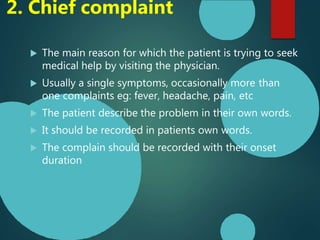
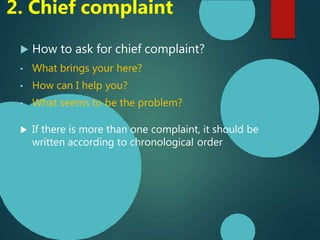
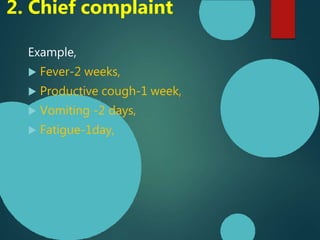
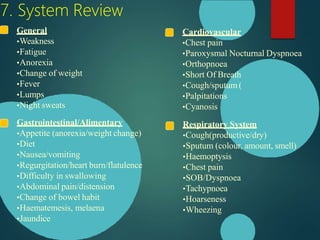
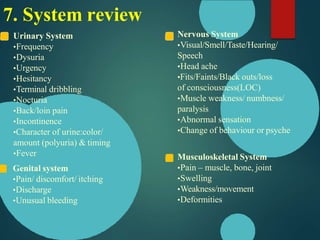
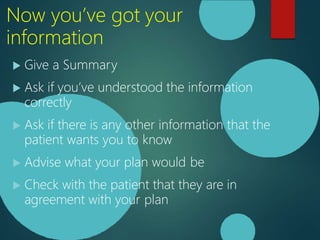
The document outlines the process and importance of history taking in medical diagnosis and care. It explains that obtaining an accurate history from the patient is the critical first step, and that a physician can make a diagnosis in 70% of cases based on the history alone. The document then describes the components of a thorough history, including the patient's profile, chief complaint, history of present illness, past medical history, family history, social history, and a systems review. An effective history takes practice and focuses on active listening, building rapport, and involving the patient to understand their experience fully.





![Hypothalamus short ppt by Dr. Neha [PT].pptx](https://cdn.slidesharecdn.com/ss_thumbnails/hypothalamusbydr-260124145759-b9f94a93-thumbnail.jpg?width=640&height=640&fit=bounds)


