PHYSICAL DIAGNOSIS LECTURE
FOR C1 PUBLIC HEALTH STUDENTS
SLU-CMHS
Dr. Henok A. (MD)
OVERVIEW OF HISTORY TAKING
& PHYSICAL EXAMINATION
Outline
• Introduction
• Overview of History taking
• Overview of Physical Examination
INTRODUCTION
• Basic clinical skills are
– Medical interviewing
– Physical examination and
– Communication ( history taking, explaining diagnosis to a
patient, telling your peer about a “case”)
…
• Complete medical evaluation includes
 Medical history
 Physical examination
 Appropriate laboratory or imaging studies
 Analysis of data
 Diagnoses
 Treatment plan
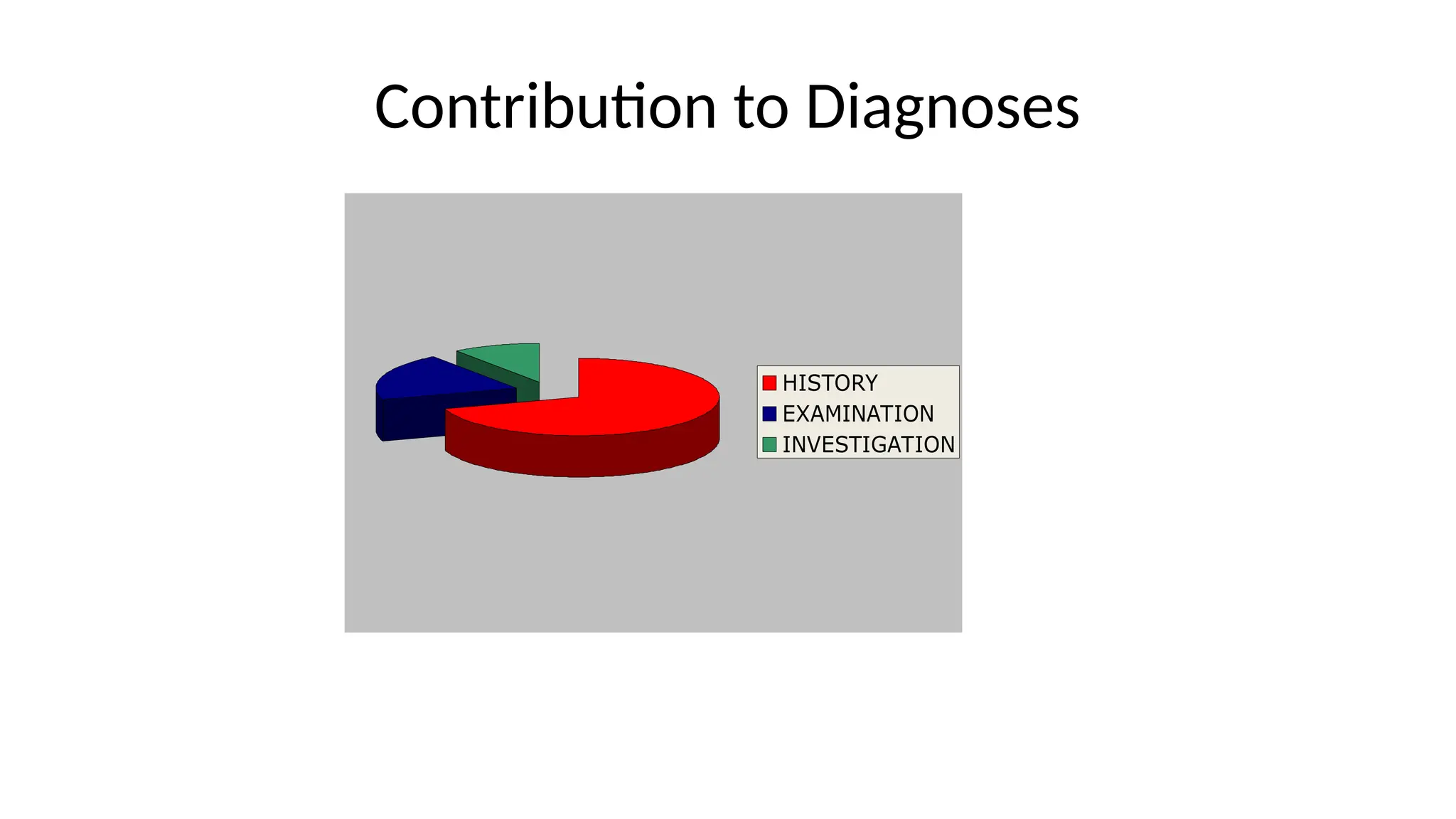
Contribution to Diagnoses
HISTORY
EXAMINATION
INVESTIGATION
Guidelines for taking history
• Questions should be open ended (encourage)
• Guidance of conversation but not restricting
• Avoid leading questions (‘yes’ or ‘no’ answers)
• Clear & specific questions
• Ask one question at a time
• Cover various aspects of diseased organ
• Direct questions may be required sometimes
• Patient symptoms in his own words.
Factors in establishing rapport
• Introduce yourself in a warm, friendly manner
• Ask for permission to proceed
• Maintain good eye contact
• Listen attentively
• Facilitate verbally and non-verbally
• Look smart on your behavior and appearance
• Avoid unfamiliar or street terms
• Touch patients appropriately
• Discuss patients’ personal concerns
The “ Classic” History Taking Sequence
The order is :-
• Date & time
• Identification
• Previous Admission
• Chief Complaints
• History of Present Illness
• Past Illness
• Personal-Social History
• Family History
• Functional Inquiry ( System Review)
Identification
• Full name
• Age
• Sex
• Marital status
• Religion
• Ethnic origin
• Occupation , level of education
• Address
• Admission date, and Hospital or Bed No
…
• The source of history can be the patient, a family
member or friend, a police officer, a consultant, or the
medical record.
• It helps to assess the value and possible bias of the
information.
• Reliability- should be documented if relevant
…
• Source of referral
- Knowing this is important especially when patients do not
initiate their own visits. It indicates that a written report may be
important
Previous Admissions
• This is a list of hospitalization in the order they occurred.
• In each case, specify the date, name and location of the health
institution, the disease that led to admission and the outcome as
briefly as possible.
• If detailed description is necessary this may be recorded under
past illness.
• On the other hand, if the previous admission is related to the
present illness, it should be described in the appropriate place in
the history of the present illness.
Chief Complaint(s)
• These are the major symptoms for which the patient
is seeking care or advice.
• They should be written using the words of the patient.
• The duration of the complaint should be specified.
• When there is more than one chief complaint, they
should be listed in the order of occurrence.
• E.g: Cough of 1 week duration, fever of 3 day duration
…
• Sometimes patients have no overt complaints, in which
case you should report their goals instead. For example,
“I have come for my regular check up”
History of present illness (HPI)
• This section of the history is a complete, clear, and
chronologic account of the problems prompting the
patient to seek care.
• Chronological order of events of symptoms and further
clarification of each symptom
• If there is known chronic illness, start HPI like …This is a
known cardiac patient for the past 2 years……
• The principal symptoms should be well-characterized, with
descriptions of
(1) location, (2) quality, (3) quantity or severity,
(4) timing, including onset, duration, and frequency,
(5) the setting in which they occur,
(6) factors that have aggravated or relieved the symptoms, and
(7) associated manifestations.
• These seven attributes are invaluable for understanding all
patient symptoms
Date of onset: It is better to start the history of the present
illness with the phrase “the patient was perfectly or relatively
well until ….” or
“He/she was last perfectly/relatively healthy ….days/months
back”
 Mode of onset, course and duration:
Ask whether the onset was:
• Abrupt or gradual
• Intermittent or persistent and
• Steady or increasing in severity.
 Character : If we take pain as an example, it is important to
ask whether the pain is:
Stabbing
Burning
Pricking
Aching
Colicky vs Steady
 Location: It should be precise.
 Pain radiation to other areas and describe the extent and
manner of radiation.
…
Exacerbating and Remitting Factors
-What makes the problem worse E.g, anginal pain is made worse
by exertion
-There can also be relieving factors for pains. E.g rest usually
relieves anginal pain
• Negative- Positive statements: These inquiries are
conducted as thoroughly as possible with a view to
constructing a differential diagnosis.
• A negative statement may be as important as a positive
statement. These statements are expressed in terms of
signs and symptoms but not diseases.
• Negative statements try to rule out the differential
diagnoses
…
• Medications should be noted, including name, dose, route,
color, shape and frequency of use.
• It is a good idea to ask patients to bring in all of their
medications so you can see exactly what they take.
• Alcohol and drug use should always be asked.
• Allergies: specific reactions to each medication, allergies to
foods, insects, or environmental factors.
• Tobacco use: type, duration and dose which is reported in pack-
years.
– A pack year is defined as twenty cigarettes(1 pack) smoked
everyday for one year.
– Number of pack-years = (packs smoked per day) × (years as a
smoker).
– E.g. a person who has smoked 15 cigarettes a day for 40 years
has = 30 pack-year smoking history.
• The mode of arrival: The last paragraph of the history of the
present illness should state how the patient came to the health
institution i.e., on a stretcher , being supported or walking.
• Also there could be a mention of any color change
• These factors will give some knowledge of the general condition of
the patient.
Past illness
• This includes important illnesses from infancy onwards.
• Childhood illnesses like measles, rubella, mumps, whooping cough,
chicken pox, etc.
- Adult Illnesses in each of the areas:
– Medical (Diabetes, hypertension, cardiac illness, Bronchial Asthma,
Epilepsy, hepatitis, HIV, TB).
– Surgical (include dates, indications, and types of operations);
– Obstetric/gynecologic(obstetric history, menstrual history, birth
control);
– Psychiatric (dates, diagnoses, hospitalizations, and treatments).
…
• History of blood transfusion
• Immunizations, such as tetanus, pertussis, diphtheria, polio,
measles, Haemophilus influenza type b, hepatitis B
Personal-social history
• It captures the patient’s personality and interests, sources of
support, life style, strengths, and fears.
• It is recorded as follows;
– Early development: place of birth and where the patient lived
before, childhood development and activities.
– Education:
– Marital status: history of extramarital sexual activity etc.
– Work Record: type of work, age begun, the income, number
of jobs, occupational hazards, and attitudes to work.
…
– Home surroundings: their sanitary condition, and the possible
existence of over crowding or of loneliness, how pets are kept? etc.
– Habits: dietary history; history of substances like alcohol, tobacco,
chat, etc.
– Exercise and diet
Family history
• Outline or diagram the age and health, or age and cause of
death, of each immediate relative.
– Including parents, grandparents, siblings, children, and
grandchildren.
• It is very important because it provides information about:-
– health status of immediate relatives,
– hereditary illnesses,
– emotional difficulties which may be the cause of symptoms or
maladjustments of the patient.
…
• Review Familial diseases like;
–Asthma, diabetes mellitus, hypertensive disorders,
migraine.
–Coronary artery disease, elevated cholesterol levels, stroke
–Thyroid or renal disease, cancer
Functional Inquiry (System Review)
• This is a detailed account of symptoms referable to each system
of the body.
• Think about asking series of questions going from “head to toe.”
• Purposes:
– It gives a clear understanding of the present illness
– It is a double check on the history of present illness
– It guides the examiner to concentrate on specific systems
during the physical examination when he/she is in a hurry.
…
• Significant health events, such as a major prior illness require full
exploration.
• Remember that major health events should be moved to the
present illness or past history in your write-up
Standard series of review-of-system questions
• General
– Usual weight, recent weight change, any clothes that fit
more tightly or loosely than before.
– Weakness, fatigue, fever.
• Head, Eyes, Ears, Nose, Throat (HEENT)
– Head: Headache, head injury, dizziness, lightheadedness.
– Eyes: Vision, pain, redness, excessive tearing, double
vision etc.
Review of systems cont.…
– Ears: Hearing, vertigo, earaches, discharge.
– Nose and sinuses: nasal stuffiness, discharge, or itching,
nosebleeds, etc
– Throat (or mouth and pharynx): Condition of teeth, gums,
bleeding gums, dentures, sore throats, hoarseness.
• Lymphoglanduar system: “swollen glands,” pain, or stiffness in
the neck, breast pain or discomfort, nipple discharge.
Review of systems cont.…
Respiratory and Cardiac
– Chest pain
– Intermittent claudication
– Palpitation
– Ankle swelling
– Shortness of breath
– Orthopnea
– Paroxysmal Nocturnal dyspnea
– Cough
– Hemoptysis
Gastrointestinal system
–Abdominal pain
–Pain during swallowing
–Nausea and/or vomiting
–Change in appetite
–Weight loss or gain
–Bowel pattern and any
change
–Rectal bleeding
Review of systems cont.…
Musculoskeletal system
– Joint pain
– Change in mobility/stiffness
Genitourinary
– Reddish urine discoloration
– Frequency
– Pain during urination
– Menstrual irregularity
– Urethral discharge
Nervous system
–Seizures
–Collapse
–Dizziness and loss of balance
–Transient loss of function (vision,
speech, sight)
–Weakness
–Spasms and involuntary movements
–Headache
Special situations
• Children under 5yrs; parent is interviewed
• Unconscious patients
• Shy patients
• Emergency situation
• The trauma patient
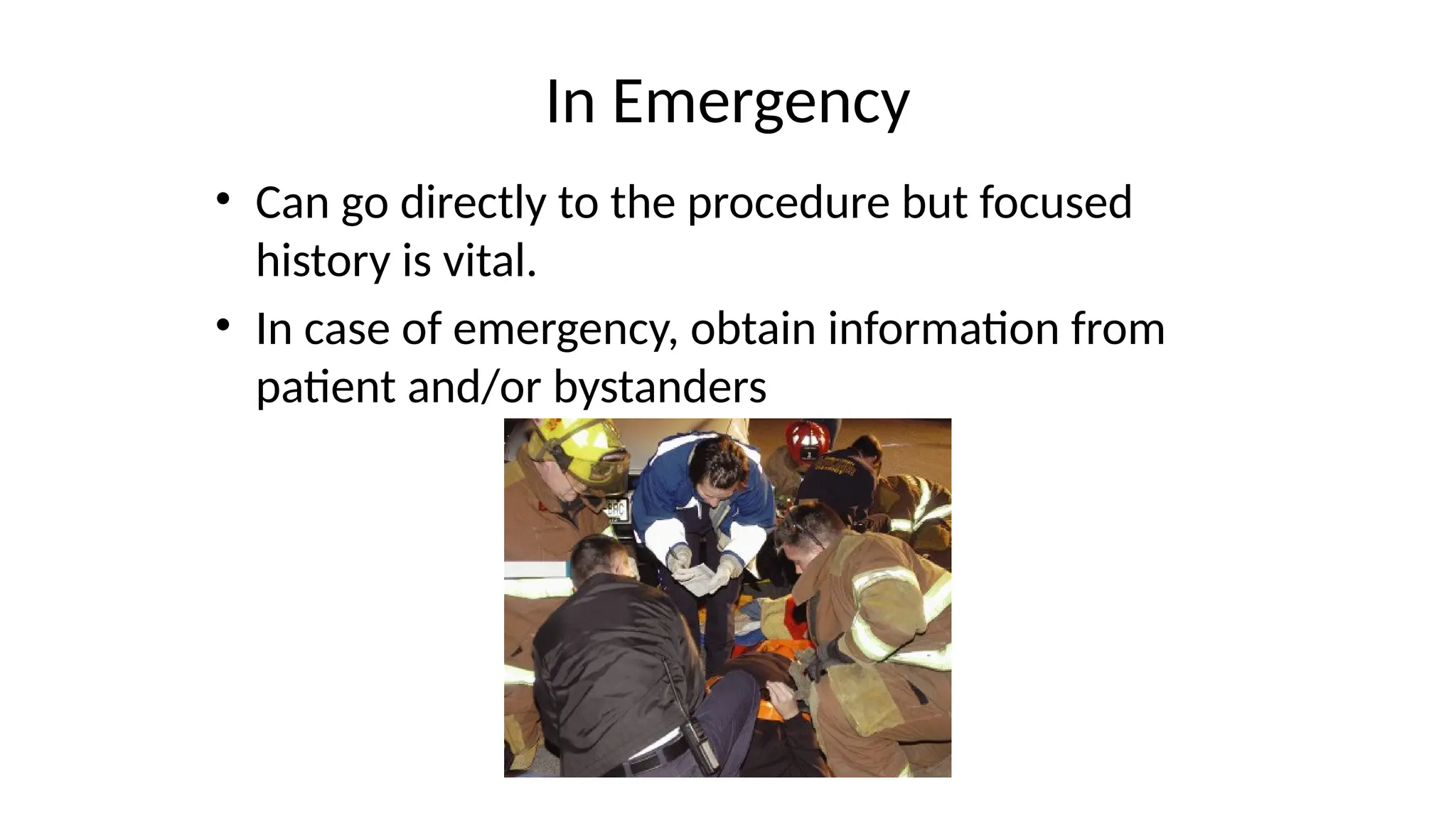
In Emergency
• Can go directly to the procedure but focused
history is vital.
• In case of emergency, obtain information from
patient and/or bystanders
Physical Examination
• Is the examination of the patient looking for signs of
disease
• 'Symptoms' are what the patient tells
• 'Signs' are what the physician detects by
examination).
…
• Success in recording complete physical findings depends
on a step-by-step and systematic examination
• Depending on the system involved or suspected,
negative reports are as significant as positive ones
…
…
The four cardinal methods
• Inspection
• Palpation
• Percussion
• Auscultation
1.General appearance
• Severity and acuteness of illness
• Physique & Constitution
• Nutritional state
• Emotional state
2.Vital Signs
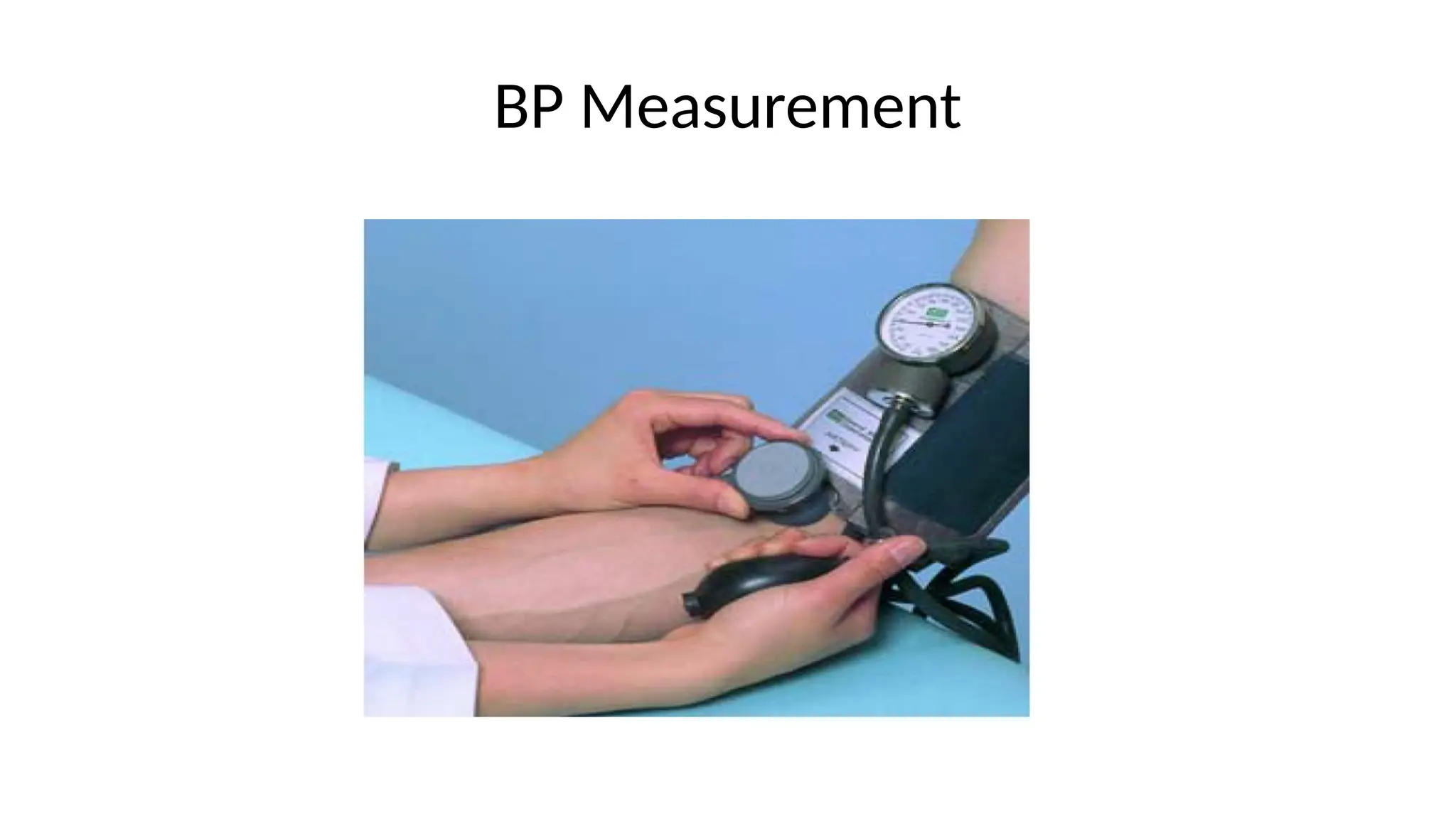
A. The Blood Pressure
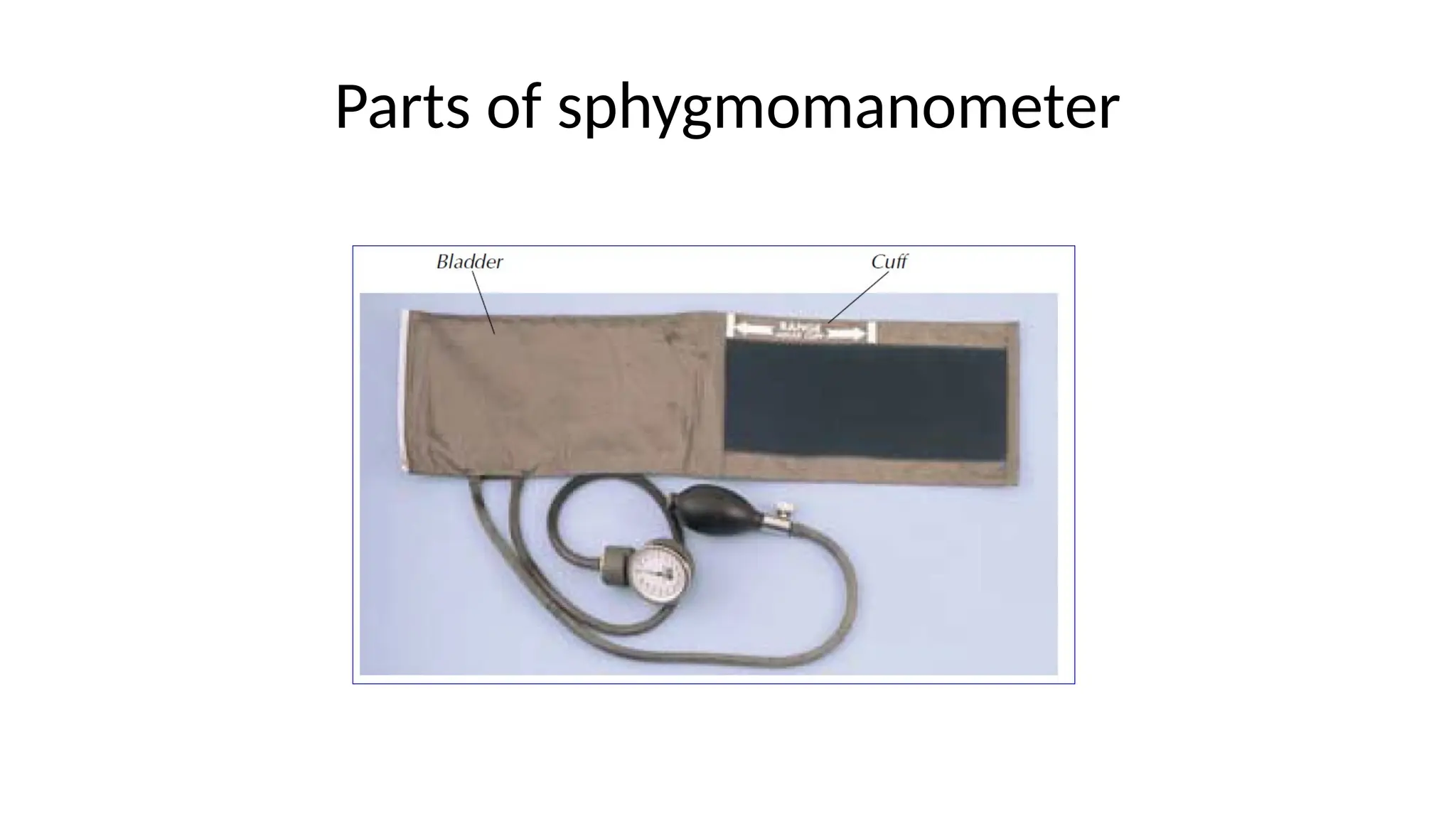
• Usually measurements of the systolic and diastolic pressures are
obtained with a sphygmomanometer.
• The SBP is the peak pressure that occurs in the artery following
ventricular systole.
• DBP is the level to which the arterial blood pressure falls during
ventricular diastole.
• The usual blood pressure cuff width for a normal-sized adult forearm is
12.5 cm.
The Blood Pressure cont.….
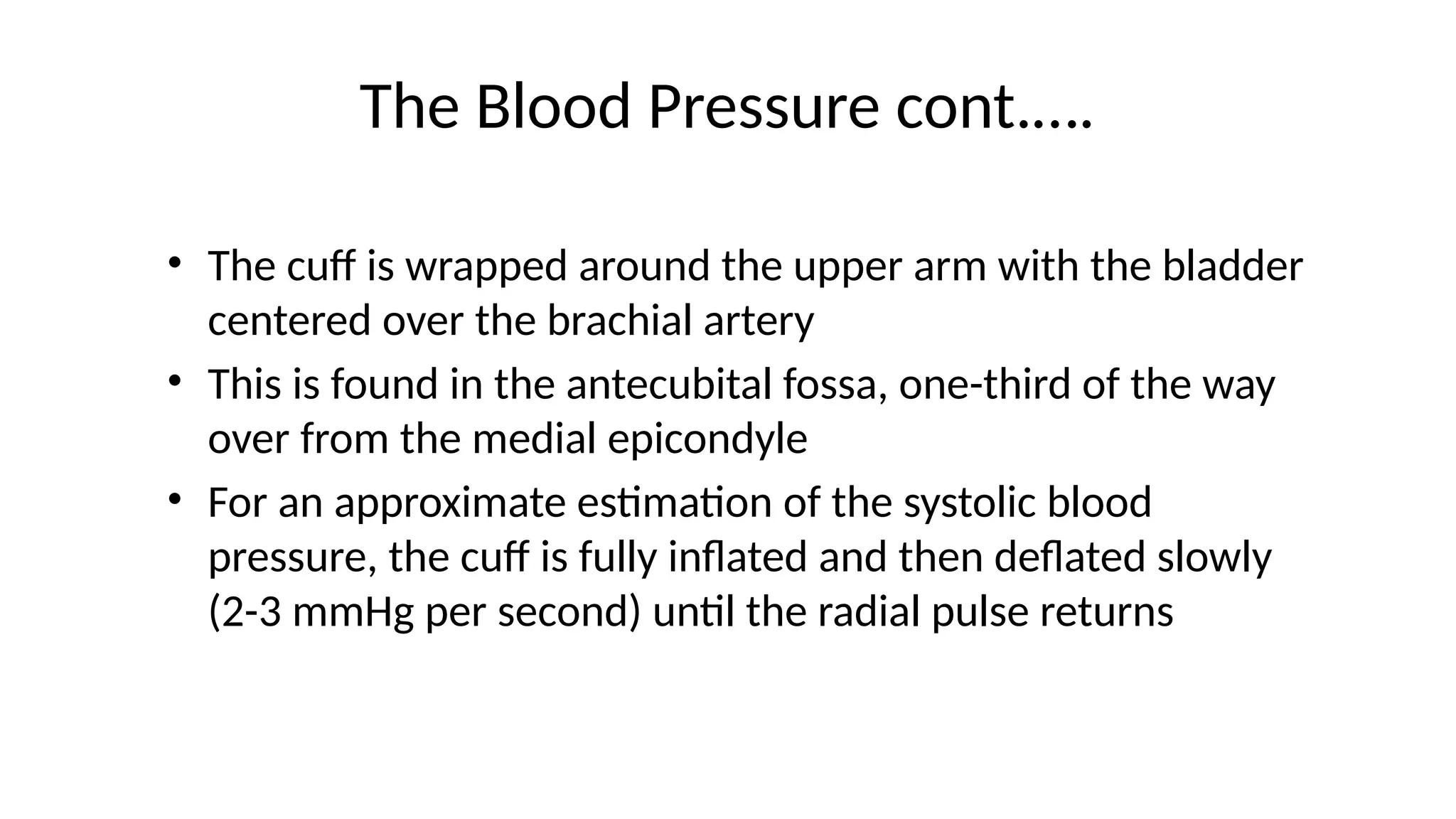
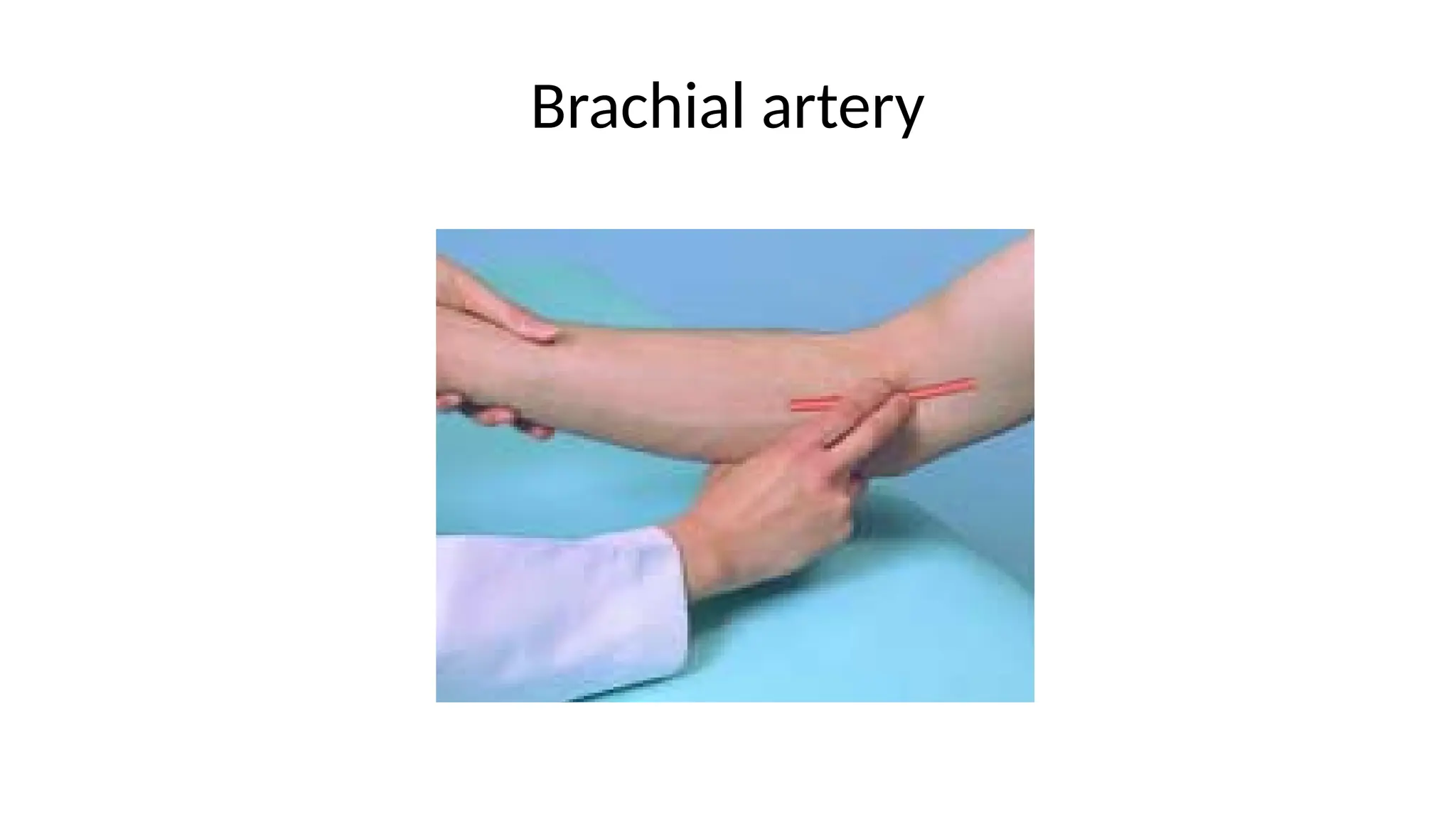
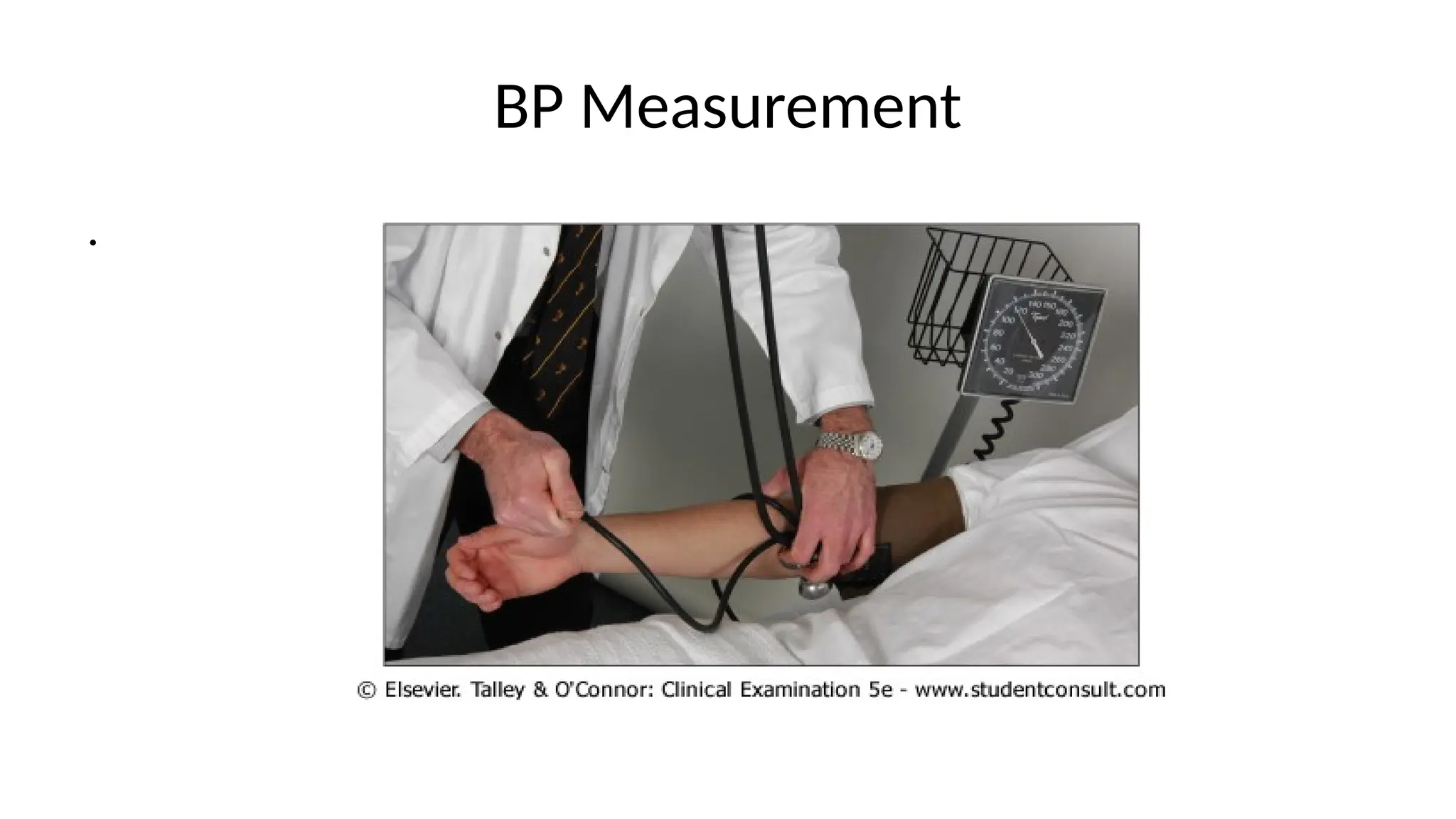
• The cuff is wrapped around the upper arm with the bladder
centered over the brachial artery
• This is found in the antecubital fossa, one-third of the way
over from the medial epicondyle
• For an approximate estimation of the systolic blood
pressure, the cuff is fully inflated and then deflated slowly
(2-3 mmHg per second) until the radial pulse returns
Brachial artery
Parts of sphygmomanometer
BP Measurement
.
BP Measurement
The Blood Pressure cont.…
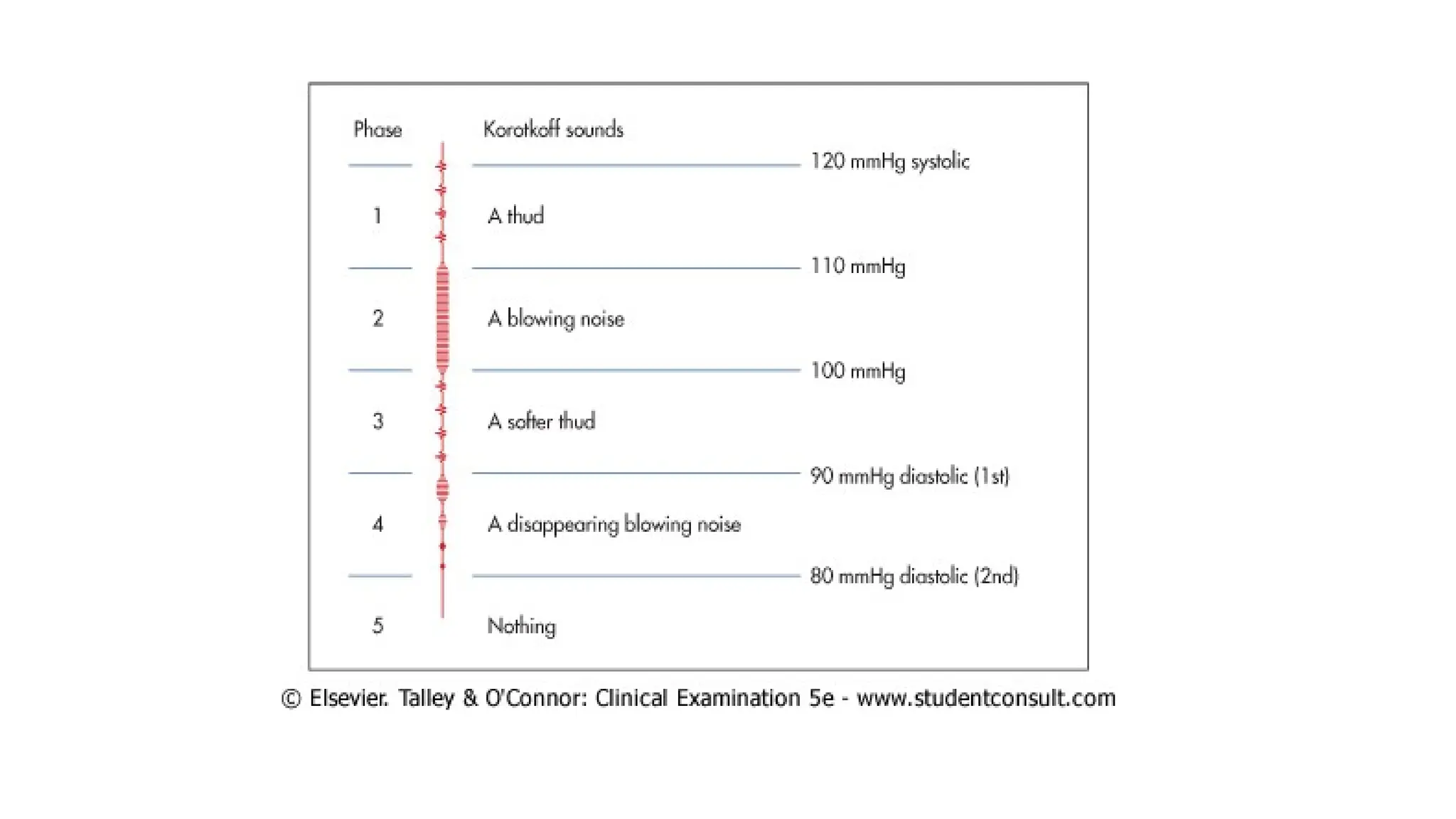
• Five different sounds will be heard as the cuff is slowly released.
These are called the Korotkoffk sounds.
• The pressure at which a sound is first heard over the artery is the
systolic blood pressure (Korotkoff I).
• Korotkoff V is probably the best diastolic pressure measure.
.
BP measurement
• The SBP may normally varies:
– Between the arms by up to 10 mmHg;
– In the legs the blood pressure is normally up to 20 mmHg
higher than in the arms, unless the patient has
coarctation of the aorta.
• The blood pressure should routinely be taken with the
patient both lying down and standing.
• A fall of >=20 mmHg in systolic BP or 10 mmHg in diastolic
BP on standing is abnormal (=postural hypotension).
Vital Signs….
B. Pulse rate
• Formal counting over 30 or 60 seconds is accurate
and requires only simple mathematics to obtain the
rate per minute.
• Record the rate and rhythm.
• The normal resting heart rate in adults is between 60 &
100 beats per minute.
─ Bradycardia: less than 60 beats per minute.
─ Tachycardia: over 100 beats per minute.
The Arterial pulse
Characterize the pulse:
• Rate (normally: between 60 – 100)
• Rhythm (regular or irregular)
• Volume (full or feeble)
• Condition of vessel wall
• Radiofemoral delay (if present: coarctation of aorta)
The Radial pulse
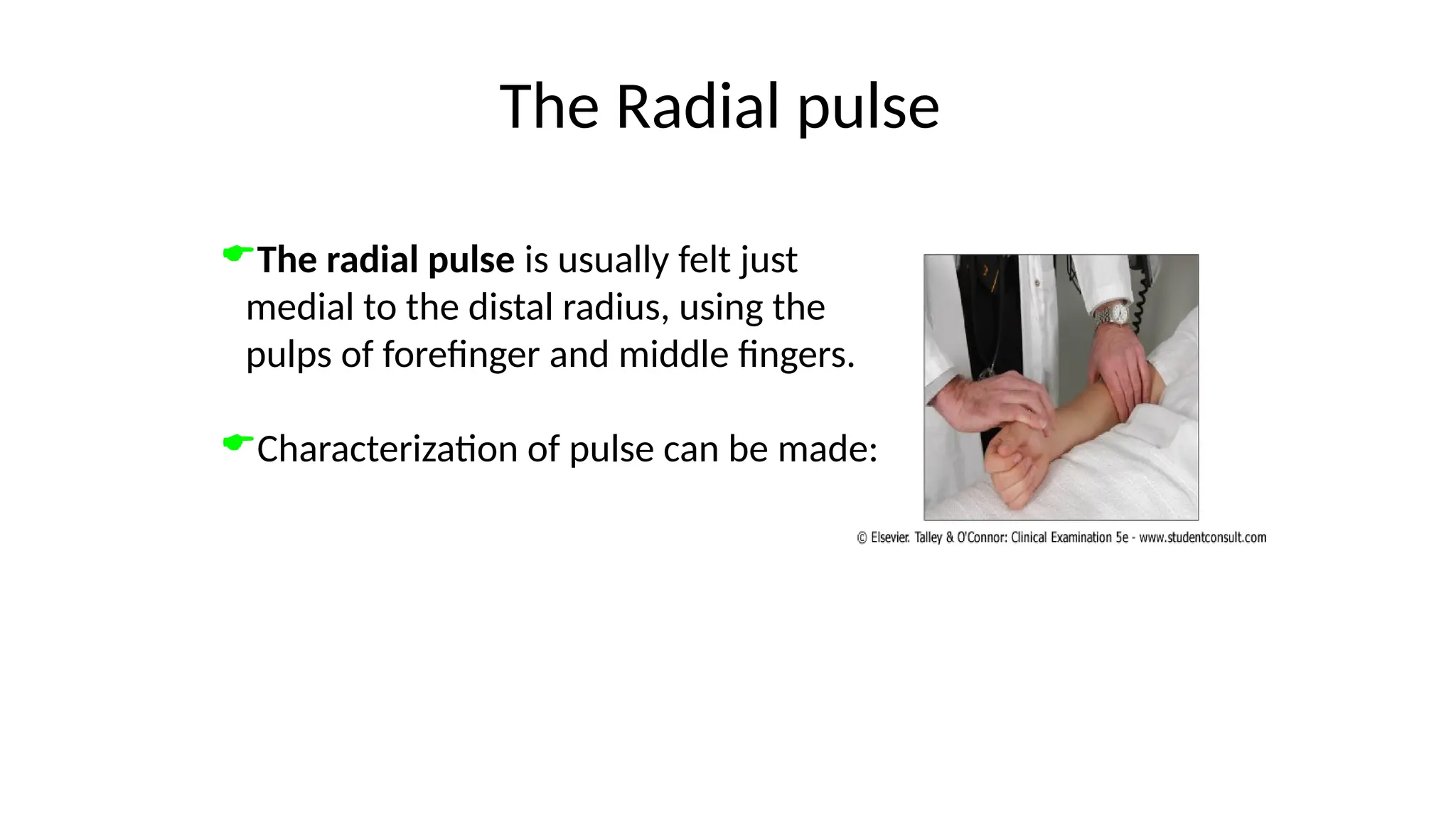
The radial pulse is usually felt just
medial to the distal radius, using the
pulps of forefinger and middle fingers.
Characterization of pulse can be made:
Vital Signs…
C. Respiratory Rate
• Observe the patient's breathing. Is it normal or
labored?
• Without letting go of the patients wrist Count breaths
for 1min and record breaths per minute
• In adults, normal resting respiratory rate is between
12-24 breaths/minute
• Rapid respiration is called tachypnea.
Vital Signs….
D. Temperature
• Temperature can be measured using a thermometer in several different
ways:
• Oral , Axillary, Rectal or "core" & Aural (the ear)
• Of these, axillary is the least and rectal is the most accurate.
Vital Signs…
E. Oxygen saturation(SaO2)
• Is necessary in patients with cardiorespiratory distress
Head
• Look for scars, lumps, rashes, hair loss, or other lesions.
• Look for facial asymmetry, involuntary movements, or edema.
• Palpate to identify any areas of tenderness or deformity.
Head, Ears, Eye, Nose and Mouth and Throat
Ears
• Inspect the auricles and move them around gently. Ask the patient if this
is painful.
• Palpate the mastoid process for tenderness or deformity.
• Palpate for tragus tenderness
• Insert the otoscope inspect the ear canal and middle ear structures
noting any redness, drainage, or deformity.
• Repeat for the other ear.
…
Eyes
• Inspect lid lag, ptosis, exophthalmoses, lacrimation, peri-orbital
edema and nystabmus
• Inspect conjunctival pallor, hemorrhage, scleral colour and pterygia
• Examine the fundi by using ophthalmoscope; clarity of disc outline,
papilloedema or changes in the physiological cup, irregularity in
vascular caliber, tortuosity silver-wire appreances, A/V nicking,
exudates, hemorrhages, geanuloma and pigmentation
…
Nose
• Tilt the patient's head back slightly. Ask them to hold their breath for the
next few seconds.
• Inspect nasal septum for deviation
• Insert the otoscope into the nostril, avoiding contact with the septum.
• Inspect the visible nasal structures and note any swelling, redness,
drainage, polyp or deformity
• Repeat for the other side.
…
Throat
• Ask the patient to open their mouth.
• Using a wooden tongue blade and a good light source, inspect the inside
of the patients mouth including the buccal folds and under the tougue.
Note any ulcers, white patches (leucoplakia), or other lesions
• If abnormalities are discovered, use a gloved finger to palpate the anterior
structures and floor of the mouth.
• Inspect the posterior oropharynx by depressing the tongue and asking the
patient to say "Ah." Note any tonsilar enlargement, redness, or discharge
…
Next parts of Physical Examination
Lymphoglandular system
Respiratory system
Cardiovascular system
Abdomen
Genito-urinary system
Integumentary system
Musculoskeletal system
Nervous system
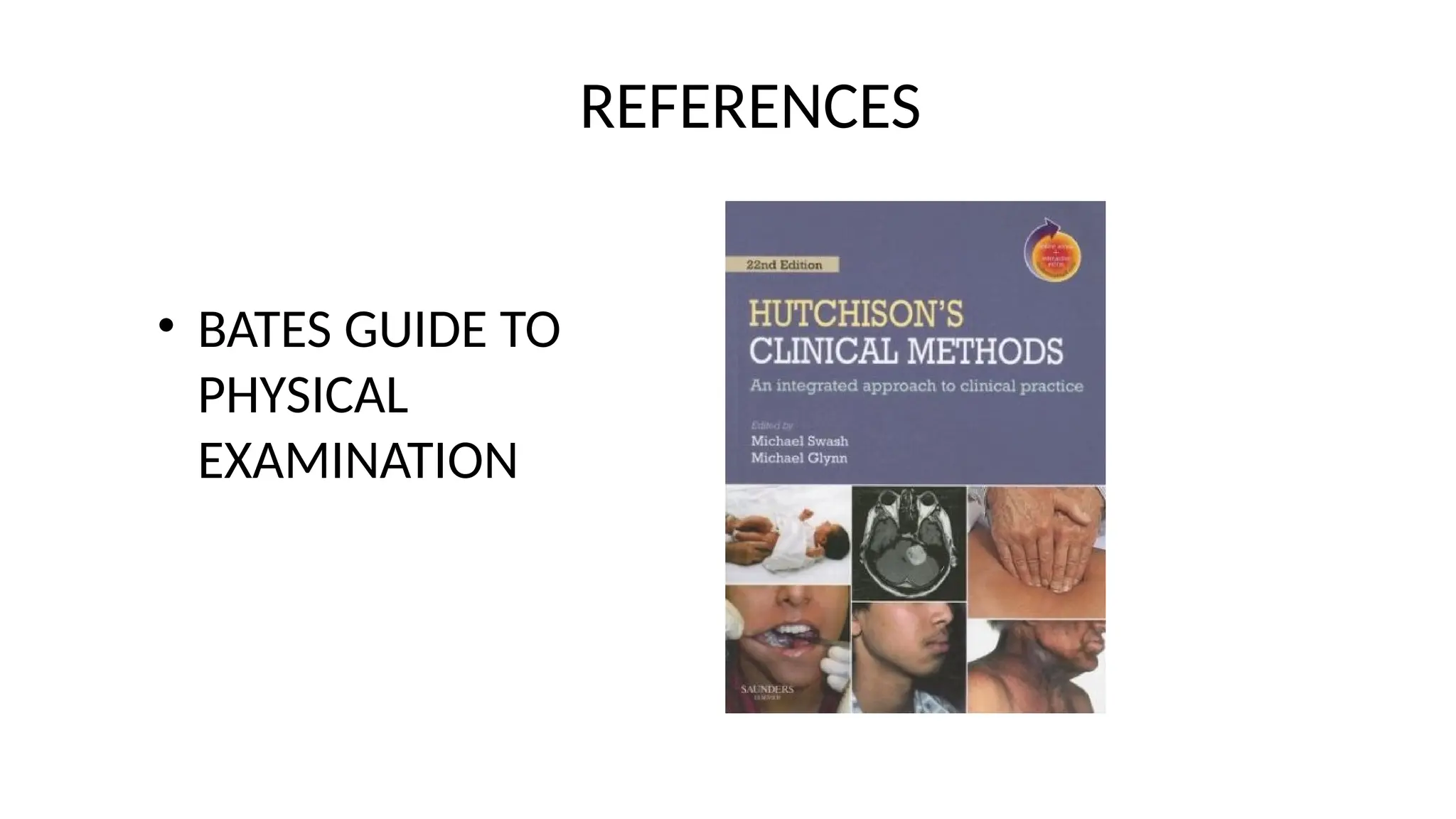
REFERENCES
• BATES GUIDE TO
PHYSICAL
EXAMINATION
THANK YOU!

1. PHYSICAL DIAGNOSIS LECTURE.pptx examination

  • 1.
    PHYSICAL DIAGNOSIS LECTURE FORC1 PUBLIC HEALTH STUDENTS SLU-CMHS Dr. Henok A. (MD)
  • 2.
    OVERVIEW OF HISTORYTAKING & PHYSICAL EXAMINATION
  • 3.
    Outline • Introduction • Overviewof History taking • Overview of Physical Examination
  • 4.
    INTRODUCTION • Basic clinicalskills are – Medical interviewing – Physical examination and – Communication ( history taking, explaining diagnosis to a patient, telling your peer about a “case”)
  • 5.
    … • Complete medicalevaluation includes  Medical history  Physical examination  Appropriate laboratory or imaging studies  Analysis of data  Diagnoses  Treatment plan
  • 6.
  • 7.
    Guidelines for takinghistory • Questions should be open ended (encourage) • Guidance of conversation but not restricting • Avoid leading questions (‘yes’ or ‘no’ answers) • Clear & specific questions • Ask one question at a time • Cover various aspects of diseased organ • Direct questions may be required sometimes • Patient symptoms in his own words.
  • 8.
    Factors in establishingrapport • Introduce yourself in a warm, friendly manner • Ask for permission to proceed • Maintain good eye contact • Listen attentively • Facilitate verbally and non-verbally • Look smart on your behavior and appearance • Avoid unfamiliar or street terms • Touch patients appropriately • Discuss patients’ personal concerns
  • 9.
    The “ Classic”History Taking Sequence The order is :- • Date & time • Identification • Previous Admission • Chief Complaints • History of Present Illness • Past Illness • Personal-Social History • Family History • Functional Inquiry ( System Review)
  • 10.
    Identification • Full name •Age • Sex • Marital status • Religion • Ethnic origin • Occupation , level of education • Address • Admission date, and Hospital or Bed No
  • 11.
    … • The sourceof history can be the patient, a family member or friend, a police officer, a consultant, or the medical record. • It helps to assess the value and possible bias of the information. • Reliability- should be documented if relevant
  • 12.
    … • Source ofreferral - Knowing this is important especially when patients do not initiate their own visits. It indicates that a written report may be important
  • 13.
    Previous Admissions • Thisis a list of hospitalization in the order they occurred. • In each case, specify the date, name and location of the health institution, the disease that led to admission and the outcome as briefly as possible. • If detailed description is necessary this may be recorded under past illness. • On the other hand, if the previous admission is related to the present illness, it should be described in the appropriate place in the history of the present illness.
  • 14.
    Chief Complaint(s) • Theseare the major symptoms for which the patient is seeking care or advice. • They should be written using the words of the patient. • The duration of the complaint should be specified. • When there is more than one chief complaint, they should be listed in the order of occurrence. • E.g: Cough of 1 week duration, fever of 3 day duration
  • 15.
    … • Sometimes patientshave no overt complaints, in which case you should report their goals instead. For example, “I have come for my regular check up”
  • 16.
    History of presentillness (HPI) • This section of the history is a complete, clear, and chronologic account of the problems prompting the patient to seek care. • Chronological order of events of symptoms and further clarification of each symptom • If there is known chronic illness, start HPI like …This is a known cardiac patient for the past 2 years……
  • 17.
    • The principalsymptoms should be well-characterized, with descriptions of (1) location, (2) quality, (3) quantity or severity, (4) timing, including onset, duration, and frequency, (5) the setting in which they occur, (6) factors that have aggravated or relieved the symptoms, and (7) associated manifestations. • These seven attributes are invaluable for understanding all patient symptoms
  • 18.
    Date of onset:It is better to start the history of the present illness with the phrase “the patient was perfectly or relatively well until ….” or “He/she was last perfectly/relatively healthy ….days/months back”  Mode of onset, course and duration: Ask whether the onset was: • Abrupt or gradual • Intermittent or persistent and • Steady or increasing in severity.
  • 19.
     Character :If we take pain as an example, it is important to ask whether the pain is: Stabbing Burning Pricking Aching Colicky vs Steady  Location: It should be precise.  Pain radiation to other areas and describe the extent and manner of radiation.
  • 20.
    … Exacerbating and RemittingFactors -What makes the problem worse E.g, anginal pain is made worse by exertion -There can also be relieving factors for pains. E.g rest usually relieves anginal pain
  • 21.
    • Negative- Positivestatements: These inquiries are conducted as thoroughly as possible with a view to constructing a differential diagnosis. • A negative statement may be as important as a positive statement. These statements are expressed in terms of signs and symptoms but not diseases. • Negative statements try to rule out the differential diagnoses
  • 22.
    … • Medications shouldbe noted, including name, dose, route, color, shape and frequency of use. • It is a good idea to ask patients to bring in all of their medications so you can see exactly what they take. • Alcohol and drug use should always be asked.
  • 23.
    • Allergies: specificreactions to each medication, allergies to foods, insects, or environmental factors. • Tobacco use: type, duration and dose which is reported in pack- years. – A pack year is defined as twenty cigarettes(1 pack) smoked everyday for one year. – Number of pack-years = (packs smoked per day) × (years as a smoker). – E.g. a person who has smoked 15 cigarettes a day for 40 years has = 30 pack-year smoking history.
  • 24.
    • The modeof arrival: The last paragraph of the history of the present illness should state how the patient came to the health institution i.e., on a stretcher , being supported or walking. • Also there could be a mention of any color change • These factors will give some knowledge of the general condition of the patient.
  • 25.
    Past illness • Thisincludes important illnesses from infancy onwards. • Childhood illnesses like measles, rubella, mumps, whooping cough, chicken pox, etc. - Adult Illnesses in each of the areas: – Medical (Diabetes, hypertension, cardiac illness, Bronchial Asthma, Epilepsy, hepatitis, HIV, TB). – Surgical (include dates, indications, and types of operations); – Obstetric/gynecologic(obstetric history, menstrual history, birth control); – Psychiatric (dates, diagnoses, hospitalizations, and treatments).
  • 26.
    … • History ofblood transfusion • Immunizations, such as tetanus, pertussis, diphtheria, polio, measles, Haemophilus influenza type b, hepatitis B
  • 27.
    Personal-social history • Itcaptures the patient’s personality and interests, sources of support, life style, strengths, and fears. • It is recorded as follows; – Early development: place of birth and where the patient lived before, childhood development and activities. – Education: – Marital status: history of extramarital sexual activity etc. – Work Record: type of work, age begun, the income, number of jobs, occupational hazards, and attitudes to work.
  • 28.
    … – Home surroundings:their sanitary condition, and the possible existence of over crowding or of loneliness, how pets are kept? etc. – Habits: dietary history; history of substances like alcohol, tobacco, chat, etc. – Exercise and diet
  • 29.
    Family history • Outlineor diagram the age and health, or age and cause of death, of each immediate relative. – Including parents, grandparents, siblings, children, and grandchildren. • It is very important because it provides information about:- – health status of immediate relatives, – hereditary illnesses, – emotional difficulties which may be the cause of symptoms or maladjustments of the patient.
  • 30.
    … • Review Familialdiseases like; –Asthma, diabetes mellitus, hypertensive disorders, migraine. –Coronary artery disease, elevated cholesterol levels, stroke –Thyroid or renal disease, cancer
  • 31.
    Functional Inquiry (SystemReview) • This is a detailed account of symptoms referable to each system of the body. • Think about asking series of questions going from “head to toe.” • Purposes: – It gives a clear understanding of the present illness – It is a double check on the history of present illness – It guides the examiner to concentrate on specific systems during the physical examination when he/she is in a hurry.
  • 32.
    … • Significant healthevents, such as a major prior illness require full exploration. • Remember that major health events should be moved to the present illness or past history in your write-up
  • 33.
    Standard series ofreview-of-system questions • General – Usual weight, recent weight change, any clothes that fit more tightly or loosely than before. – Weakness, fatigue, fever. • Head, Eyes, Ears, Nose, Throat (HEENT) – Head: Headache, head injury, dizziness, lightheadedness. – Eyes: Vision, pain, redness, excessive tearing, double vision etc.
  • 34.
    Review of systemscont.… – Ears: Hearing, vertigo, earaches, discharge. – Nose and sinuses: nasal stuffiness, discharge, or itching, nosebleeds, etc – Throat (or mouth and pharynx): Condition of teeth, gums, bleeding gums, dentures, sore throats, hoarseness. • Lymphoglanduar system: “swollen glands,” pain, or stiffness in the neck, breast pain or discomfort, nipple discharge.
  • 35.
    Review of systemscont.… Respiratory and Cardiac – Chest pain – Intermittent claudication – Palpitation – Ankle swelling – Shortness of breath – Orthopnea – Paroxysmal Nocturnal dyspnea – Cough – Hemoptysis Gastrointestinal system –Abdominal pain –Pain during swallowing –Nausea and/or vomiting –Change in appetite –Weight loss or gain –Bowel pattern and any change –Rectal bleeding
  • 36.
    Review of systemscont.… Musculoskeletal system – Joint pain – Change in mobility/stiffness Genitourinary – Reddish urine discoloration – Frequency – Pain during urination – Menstrual irregularity – Urethral discharge Nervous system –Seizures –Collapse –Dizziness and loss of balance –Transient loss of function (vision, speech, sight) –Weakness –Spasms and involuntary movements –Headache
  • 37.
    Special situations • Childrenunder 5yrs; parent is interviewed • Unconscious patients • Shy patients • Emergency situation • The trauma patient
  • 38.
    In Emergency • Cango directly to the procedure but focused history is vital. • In case of emergency, obtain information from patient and/or bystanders
  • 39.
    Physical Examination • Isthe examination of the patient looking for signs of disease • 'Symptoms' are what the patient tells • 'Signs' are what the physician detects by examination).
  • 40.
    … • Success inrecording complete physical findings depends on a step-by-step and systematic examination • Depending on the system involved or suspected, negative reports are as significant as positive ones
  • 41.
  • 42.
  • 43.
    The four cardinalmethods • Inspection • Palpation • Percussion • Auscultation
  • 44.
    1.General appearance • Severityand acuteness of illness • Physique & Constitution • Nutritional state • Emotional state
  • 45.
    2.Vital Signs A. TheBlood Pressure • Usually measurements of the systolic and diastolic pressures are obtained with a sphygmomanometer. • The SBP is the peak pressure that occurs in the artery following ventricular systole. • DBP is the level to which the arterial blood pressure falls during ventricular diastole. • The usual blood pressure cuff width for a normal-sized adult forearm is 12.5 cm.
  • 46.
    The Blood Pressurecont.…. • The cuff is wrapped around the upper arm with the bladder centered over the brachial artery • This is found in the antecubital fossa, one-third of the way over from the medial epicondyle • For an approximate estimation of the systolic blood pressure, the cuff is fully inflated and then deflated slowly (2-3 mmHg per second) until the radial pulse returns
  • 47.
  • 48.
  • 49.
  • 50.
  • 51.
    The Blood Pressurecont.… • Five different sounds will be heard as the cuff is slowly released. These are called the Korotkoffk sounds. • The pressure at which a sound is first heard over the artery is the systolic blood pressure (Korotkoff I). • Korotkoff V is probably the best diastolic pressure measure.
  • 52.
  • 53.
    BP measurement • TheSBP may normally varies: – Between the arms by up to 10 mmHg; – In the legs the blood pressure is normally up to 20 mmHg higher than in the arms, unless the patient has coarctation of the aorta. • The blood pressure should routinely be taken with the patient both lying down and standing. • A fall of >=20 mmHg in systolic BP or 10 mmHg in diastolic BP on standing is abnormal (=postural hypotension).
  • 54.
    Vital Signs…. B. Pulserate • Formal counting over 30 or 60 seconds is accurate and requires only simple mathematics to obtain the rate per minute. • Record the rate and rhythm. • The normal resting heart rate in adults is between 60 & 100 beats per minute. ─ Bradycardia: less than 60 beats per minute. ─ Tachycardia: over 100 beats per minute.
  • 55.
    The Arterial pulse Characterizethe pulse: • Rate (normally: between 60 – 100) • Rhythm (regular or irregular) • Volume (full or feeble) • Condition of vessel wall • Radiofemoral delay (if present: coarctation of aorta)
  • 56.
    The Radial pulse Theradial pulse is usually felt just medial to the distal radius, using the pulps of forefinger and middle fingers. Characterization of pulse can be made:
  • 57.
    Vital Signs… C. RespiratoryRate • Observe the patient's breathing. Is it normal or labored? • Without letting go of the patients wrist Count breaths for 1min and record breaths per minute • In adults, normal resting respiratory rate is between 12-24 breaths/minute • Rapid respiration is called tachypnea.
  • 58.
    Vital Signs…. D. Temperature •Temperature can be measured using a thermometer in several different ways: • Oral , Axillary, Rectal or "core" & Aural (the ear) • Of these, axillary is the least and rectal is the most accurate.
  • 59.
    Vital Signs… E. Oxygensaturation(SaO2) • Is necessary in patients with cardiorespiratory distress
  • 60.
    Head • Look forscars, lumps, rashes, hair loss, or other lesions. • Look for facial asymmetry, involuntary movements, or edema. • Palpate to identify any areas of tenderness or deformity. Head, Ears, Eye, Nose and Mouth and Throat
  • 61.
    Ears • Inspect theauricles and move them around gently. Ask the patient if this is painful. • Palpate the mastoid process for tenderness or deformity. • Palpate for tragus tenderness • Insert the otoscope inspect the ear canal and middle ear structures noting any redness, drainage, or deformity. • Repeat for the other ear. …
  • 62.
    Eyes • Inspect lidlag, ptosis, exophthalmoses, lacrimation, peri-orbital edema and nystabmus • Inspect conjunctival pallor, hemorrhage, scleral colour and pterygia • Examine the fundi by using ophthalmoscope; clarity of disc outline, papilloedema or changes in the physiological cup, irregularity in vascular caliber, tortuosity silver-wire appreances, A/V nicking, exudates, hemorrhages, geanuloma and pigmentation …
  • 63.
    Nose • Tilt thepatient's head back slightly. Ask them to hold their breath for the next few seconds. • Inspect nasal septum for deviation • Insert the otoscope into the nostril, avoiding contact with the septum. • Inspect the visible nasal structures and note any swelling, redness, drainage, polyp or deformity • Repeat for the other side. …
  • 64.
    Throat • Ask thepatient to open their mouth. • Using a wooden tongue blade and a good light source, inspect the inside of the patients mouth including the buccal folds and under the tougue. Note any ulcers, white patches (leucoplakia), or other lesions • If abnormalities are discovered, use a gloved finger to palpate the anterior structures and floor of the mouth. • Inspect the posterior oropharynx by depressing the tongue and asking the patient to say "Ah." Note any tonsilar enlargement, redness, or discharge …
  • 65.
    Next parts ofPhysical Examination Lymphoglandular system Respiratory system Cardiovascular system Abdomen Genito-urinary system Integumentary system Musculoskeletal system Nervous system
  • 66.
    REFERENCES • BATES GUIDETO PHYSICAL EXAMINATION
  • 67.