”Hygiene	
Hypothesis”
con
Josep	Morera
Novembre	2019
ACTUALITZACIÓ EN CONEIXEMENTS
EN PATOLOGIA
RESPIRATÒRIA
4a edició
SALA VILANA DEL COMB
8 NOVEMBRE 2019
Directors del Curs:
Dr. A. Malet
(Centre Mèdic Teknon)
Dr. J. Morera
(Centre Mèdic Teknon)
Dr. I. Chiriac
(CAMFIC)
Organitza:
programa PRELIMINAR
Hay	fever,	hygiene,	
and	household	size.	
Strachan	DP.	BMJ.	1989	Nov	18;299(6710):1259-60
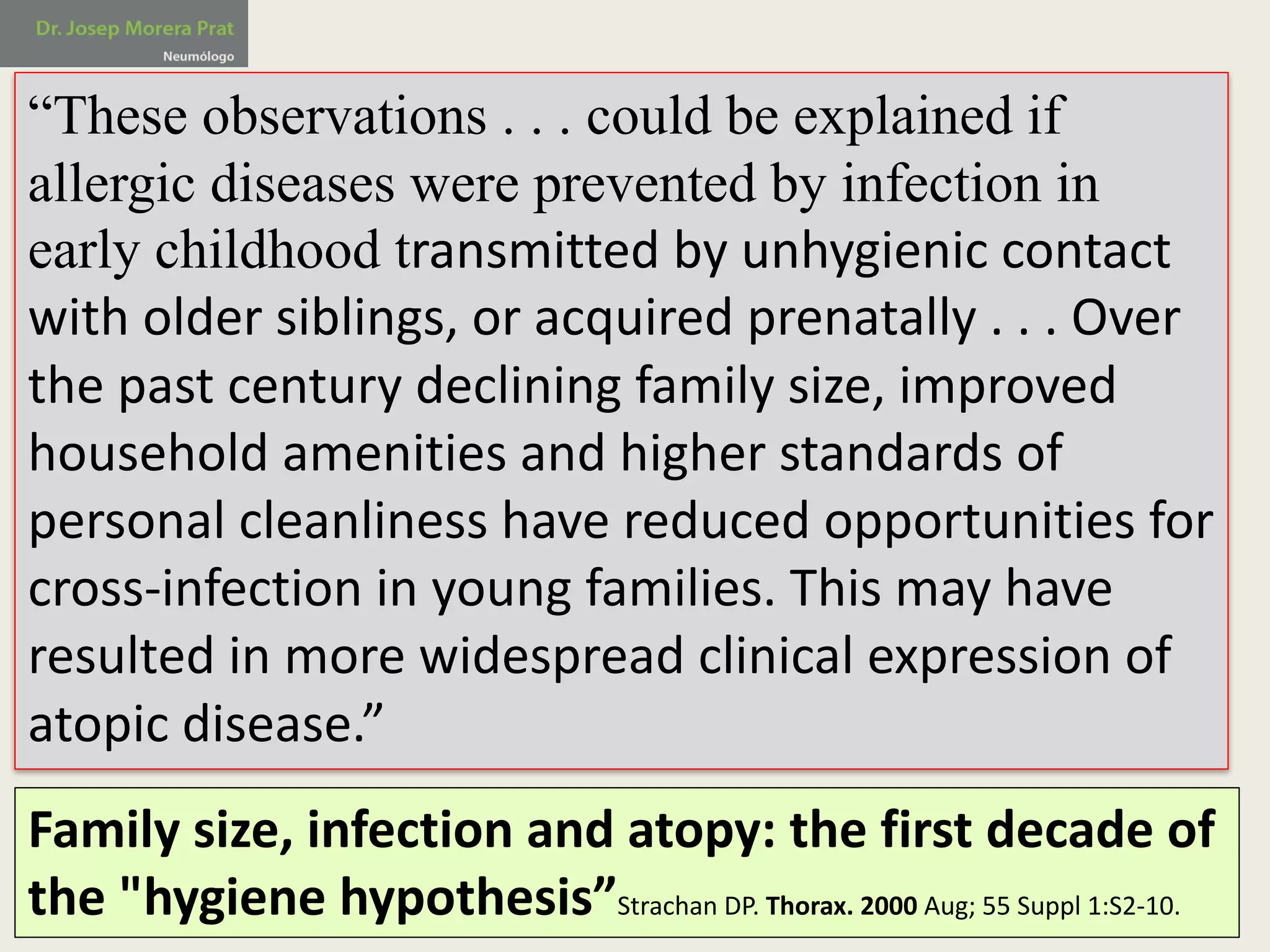
“These observations . . . could be explained if
allergic diseases were prevented by infection in
early childhood transmitted	by	unhygienic	contact	
with	older	siblings,	or	acquired	prenatally	.	.	.	Over	
the	past	century	declining	family	size,	improved	
household	amenities	and	higher	standards	of	
personal	cleanliness	have	reduced	opportunities	for	
cross-infection	in	young	families.	This	may	have	
resulted	in	more	widespread	clinical	expression	of	
atopic	disease.”
Family	size,	infection	and	atopy:	the	first	decade	of	
the	"hygiene	hypothesis”Strachan DP.	Thorax.	2000	Aug;	55	Suppl 1:S2-10.
The	“hygiene	hypothesis”	for	
allergic	disease	is	a	misnomer
William Parker. BMJ	2014;349	
Acute	appendicitis	and	
bathrooms	in	three	samples	
of	British	children.
Barker	DJ,	Osmond	C,	Golding	J,	Wadsworth	ME.
Br	Med	J	(Clin Res	Ed).	1988	Apr	2;296(6627):956-8.
Human	TH1	and	TH2	subsets:	
regulation	of	differentiation	and	
role	in	protection	and	
immunopathology.
Romagnani S.		Int Arch	Allergy	Immunol.	1992;98(4):279-85.	Review.
The	magnitude	of	the	effect	of	smaller	family	
sizes	on	the	increase	in	the	prevalence	of	
asthma	and	hay	fever	in	the	United	Kingdom	
and	New	Zealand.
Wickens	K1,	Crane	J,	Beasley	R.	J	Allergy	Clin Immunol.	1999	Sep;104(3	Pt	1):554-8.
Conclusions:	Changes	in	family	size	over	the	last	30	
years	do	not	appear	to	explain	much	of	the	
reported	increase	in	asthma	or	hay	fever	
prevalence.	The	contribution	that	other	risk	factors	
have	made	to	these	increases	could	be	assessed	
with	use	of	a	similar	approach.
The	precipitation	of	asthma	by	
upper	respiratory	infections.
Busse WW	Chest.	1985	Jan;87(1	Suppl):44S-48S
The	relationship	between	
viral	infections	and	onset	of	
allergic	diseases	and	asthma.
Busse WW.	Clin Exp Allergy.	1989	Jan;19(1).
Increased	risk	of	pneumonia	and	bronchiolitis	
after	bacterial	colonization	of	the	airways	as	
neonates.Vissing NH,.	Am	J	Respir Crit Care	Med.	2013	Nov	15;188(10):1246-52.	
Is	childhood	wheeze	and	asthma	in	Latin	America	
associated	with	poor	hygiene	and	infection?	A	
systematic	review.
Ardura-Garcia	C1,	Garner	P1,	Cooper	PJ. BMJ	Open	Respir Res.	2018	Feb	22;5(1):
Development	of	allergy	in	children.	I.	
Association	with	virus	infections.
Frick	OL,	German	DF,	Mills	J.
J	Allergy	Clin Immunol.	1979	Apr;63(4):228-41.
Effect	of	respiratory	and	other	virus	
infections	on	IgE	immunoregulation.
Frick	OL.	J	Allergy	Clin Immunol.	1986	Nov;78(5	Pt	2):1013-8.
Detection	of	pathogens	by	real-time	
PCR	in	adult	patients	with	acute	
exacerbation	of	bronchial	asthma.
Yoshii	Y,	Shimizu	K,	Morozumi M,	BMC	Pulm Med.	2017	Nov	22;17(1):150.
Prevalence	of	respiratory	viruses	
in	wheezing	children	not	older	than	
24	months	of	age.
Bedolla-Barajas	M1,	Montero	H2,	Gac Med	Mex. 2017 May-Jun;153(3):329-334.
Too	clean,	or	not	too	clean:	the	
hygiene	hypothesis	and	home	hygiene.
Bloomfield	SF1,	Stanwell-Smith	R,	Crevel	RW,	Pickup	J.
Clin Exp Allergy.	2006	Apr;36(4):402-25.
Scientists	debunk	idea	that	rise	in	
allergic	diseases	is	due	to	homes	
becoming	"too	clean”
Limb	M.	BMJ.	2012	Oct	3;345
Asthma	and	the	hygiene	hypothesis.	
Does	cleanliness	matter?
Weber	J1,	Illi S,	Nowak	D,	Schierl R,	Holst	O,	von	Mutius E,	Ege MJ.	
Am	J	Respir Crit Care	Med.	2015	Mar	1;191(5):522-9.
Asthma	and	the	hygiene	hypothesis.	
Does	cleanliness	matter?
Weber	J1,	Illi S,	Nowak	D,	Schierl R,	Holst	O,	von	Mutius E,	Ege MJ.	
Am	J	Respir Crit Care	Med.	2015	Mar	1;191(5):522-9.
Scientists	debunk	idea	that	
rise	in	allergic	diseases	is	due	
to	homes	becoming	"too	
clean"Limb M.	BMJ.	2012	Oct	3;345
Inner-city	asthma.	
The	epidemiology	of	an	emerging	
US	public	health	concern.	
under 18 years old, US asthma hospitalization rates have
demonstrated dramatic increases" of4.5% per annum during
the 19805.5 Rates for children increased during a time when
total hospitalization rates for children decreased." In re-
sponse to these disturbing epidemiologic trends, reductions
in US asthma hospitalization rates have been targeted as a
national objective," and a National Asthma Education Pr0-
gram (NAEP)-whose goal is to improve asthma care in the
United States-has been established."
A key aspect to many of the recent epidemiologic studies
of asthma has been the identification of subpopulations at
higher risk for morbidity. Among the highest risk subpopu-
lations are raciaVethnic minorities, who are both poor and
reside in the certain urban envtronments.w-" In this report,
the epidemiologic studies that have defined the problem of
asthma in the inner city will beexamined, and directions in
which new research and changes in clinical practice may
positively impact upon this high risk population will be
explored.
GEOGRAPHIC VARlATiONS IN ASTHMA
The special problems of managing asthma in poor urban
populations in the United States have been noted for
decades,":" Only recently, however, have population-based
studies begun to elucidate the magnitude of the risk that
exists for the urban poor living in certain types of city
neighborhoods.
Studies in the world literature have reported asthma in
children and adolescents to be more prevalent in urban
areas as compared to rural area.5•14-18 This relationship of
asthma prevalence to urban status, however, remains some-
what equivocal. For example, a study from South Australia
found asthma prevalence among children ages 5 to 16 years
higher in rural vs urban environments.17
A study of geographic variation of all US asthma deaths
*From the Departments of Health Care Science and Medicine,
George WashIngton University Medical Center and Center for
Health PolicyResearch, George Washington University, Washing-
ton, D.C. (Dr. Weiss); the Division of Allergy, Immunology, and
Transplantation, National Institute of Allergy and Infectious Dis-
ease, National Institutes of Health, Bethesda, (Dr. Gergen); and
the Department of Pediatrics, Albert Einstein College of Medicine,
Division of General Pediatrics (Emergency Medicine), Bronx
Municipal Hospital Center, (Dr. Crain).
Reprint requests: Dr. DHCS, Rm 28-401, George Washing-
ton University, 2150 Pennsylvania Avenue NWWashington, DC
20037
mortality and hospitalization rates are not evenly distributed
among urban neighborhoods; rather extremely high rates
are concentrated in very small areas of high poverty
commonly termed "the inner city:' Small area analyses of
mortality in Chicago demonstrate that disproportionate
numbers of deaths occurred within a very few Inner-city
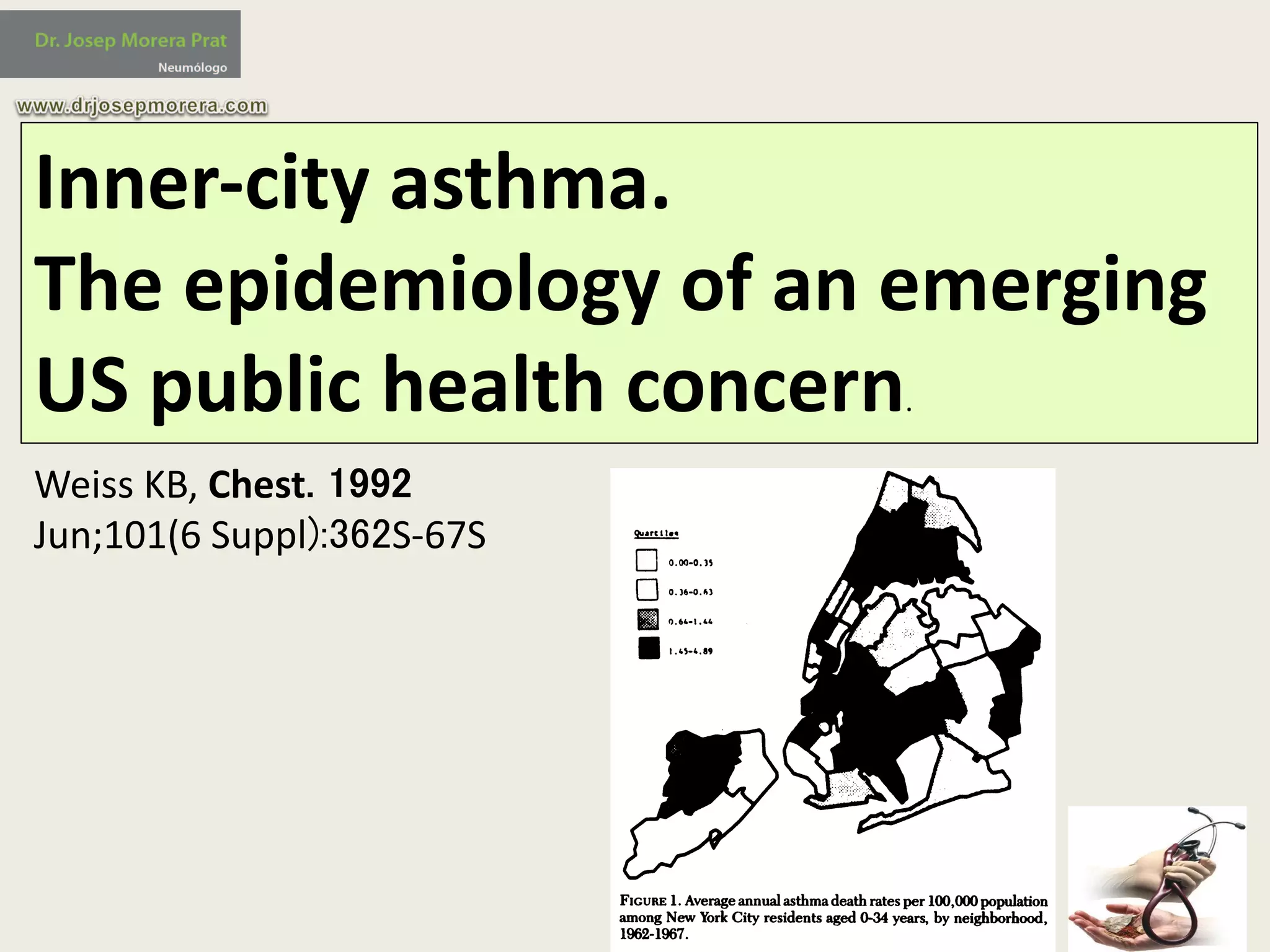
neighborhoods.10 As seen in Figure 1, small area analyses of
New YorkCity asthma mortality rates demonstrate similar
findings.9
Asthma mortality rates in 1 New York City
neighborhood, East Harlem, were nearly 10 times higher
thanthe average US rate. Disproportionately high mortality
rates within the inner city appear to be closely correlated
with high hospitalization rates.9
RACElETHNICIlY AND ASTHMA
The inner city in the United States is inhabited by
impoverished people who are disproportionately nonwhite.
This demography raises questions as to whether, race!
ethnicity or socioeconomic status (SES), represents themore
prominent risk factor for asthma morbidity Asthma preva-
lence varies among racialIethnic groups in the United States.
o
o 0.)6-0.11)
-. . 0.64-1.44
•
FIGURE 1. Averageannual asthma death rates per 100,000 population
among New YorkCity residents aged 6-34 years, by neighborhood,
1962-1967.
Weiss	KB,	Chest. 1992
Jun;101(6	Suppl):362S-67S
The	environment	and	asthma	
in	US	inner	cities.
Eggleston	PA.	Chest.	2007	Nov;132(5	Suppl):782S-788S.
Patterns	of	asthma	mortality	in	
Philadelphia	from	1969	to	1991.
Lang	DM,	Polansky	M. N	Engl J	Med.	1994	Dec	8;331(23):1542-6.
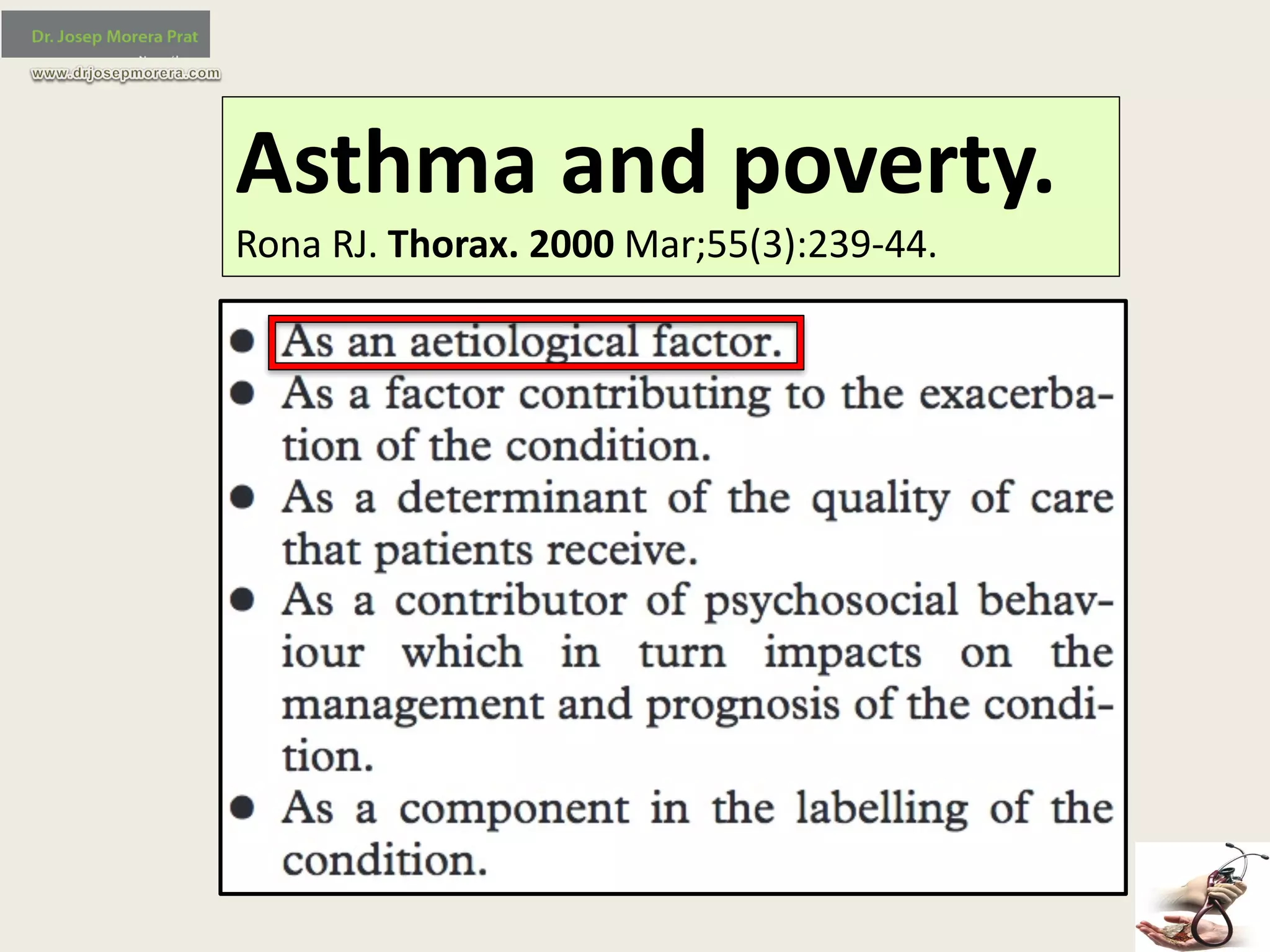
Asthma	and	poverty.
Rona	RJ.	Thorax.	2000	Mar;55(3):239-44.
The	role	of	cockroach	allergy	and	
exposure	to	cockroach	allergen	in	causing	
morbidity	among	inner-city	children	with	
asthma.	Rosenstreich DL,	Eggleston	P.	N	Engl J	Med.	1997	May	8;336(19):1356-63.
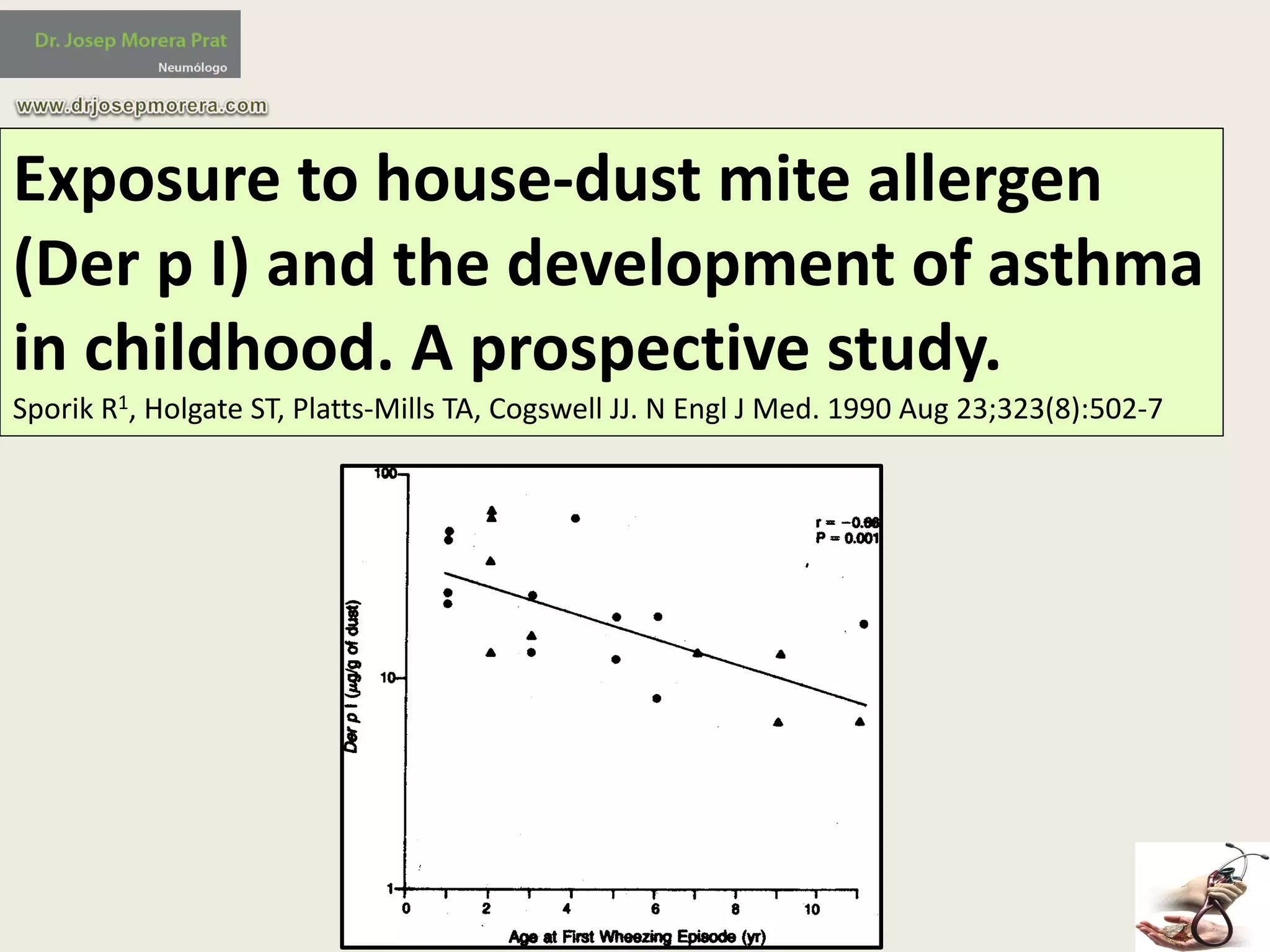
Exposure	to	house-dust	mite	allergen	
(Der	p	I)	and	the	development	of	asthma	
in	childhood.	A	prospective	study.
Sporik	R1,	Holgate	ST,	Platts-Mills	TA,	Cogswell	JJ. N	Engl J	Med.	1990	Aug	23;323(8):502-7
Persistent	variations	in	national	asthma	mortality,	hospital	
admissions	and	prevalence	by	socioeconomic	status	and	
region	in	England. Gupta	RP,	Mukherjee	M,	Sheikh	A,	Strachan DP.	Thorax.	
2018	Aug;73(8):706-712.
Conclusions
Despite	asthma	mortality,	emergency	admissions	and	
prevalence	decreasing	over	recent	decades,	England	
still	experiences	significant	SES	and	regional	
variations.	The	previously	undocumented	inverse	
relation	between	deprivation	and	mortality	 in	the	
young	requires	further	investigation.
Asthma	prevalence	and	deprivation:	a	
small	area	analysis.Salmond C,	J.Epidemiol Community	
Health.	1999	Aug;53(8):476-80.
Asthma	in	children	and	adolescents	in	
Brazil:	contribution	of	the	International	
Study	of	Asthma	and	Allergies	in	
Childhood	(ISAAC).
Solé D,	Camelo-Nunes IC,	Mallozi MC.	Rev	Paul	Pediatr.	2014	Mar;32(1):114-25.
Combined	impact	of	healthy	lifestyle	factors	on	
risk	of	asthma,	rhinoconjunctivitis and	eczema	
in	school	children:	ISAAC	phase	III.
Morales	E1,	Strachan	D2,	Asher	I3,	Ellwood	P3,	Pearce	N4,	Garcia-Marcos	L5;	ISAAC	phase	III	study	group;	
ISAAC	Phase	Three	Study	Group. Thorax.	2019	Jun;74(6):531-8	
This large worldwide multicentre
cross- sectional study found that
with each point added to a child’s
healthy lifestyle index (ie,
no parental smoking, child’s
healthy body mass index,
adherence to a Mediterranean diet,
physical activity and non-sedentary
behaviour), the risk of current
wheeze and reported asthma ever
fell by 13% and 11%, respectively.
Do	fast	foods	cause	asthma,	
rhinoconjunctivitis	and	eczema?	Global	
findings	from	the	International	Study	of	
Asthma	and	Allergies	in	Childhood	(ISAAC)	
phase	three.
Ellwood	P,	Asher	MI,	García-Marcos	L,	Williams	H,	Keil U,	Robertson	C,	Nagel	G;	ISAAC	
Phase	III	Study	Group.	Thorax.	2013	Apr;68(4):351-60.
Are	environmental	risk	factors	for	
current	wheeze	in	the	International	
Study	of	Asthma	and	Allergies	in	
Childhood	(ISAAC)	phase	three	due	to	
reverse	causation?
Silverwood	RJ,	Rutter	CE,	Garcia-Marcos	L,	Strachan	DP,;	ISAAC	Phase	Three	Study	
Group.	Clin Exp Allergy.	2019	Apr;49(4):430
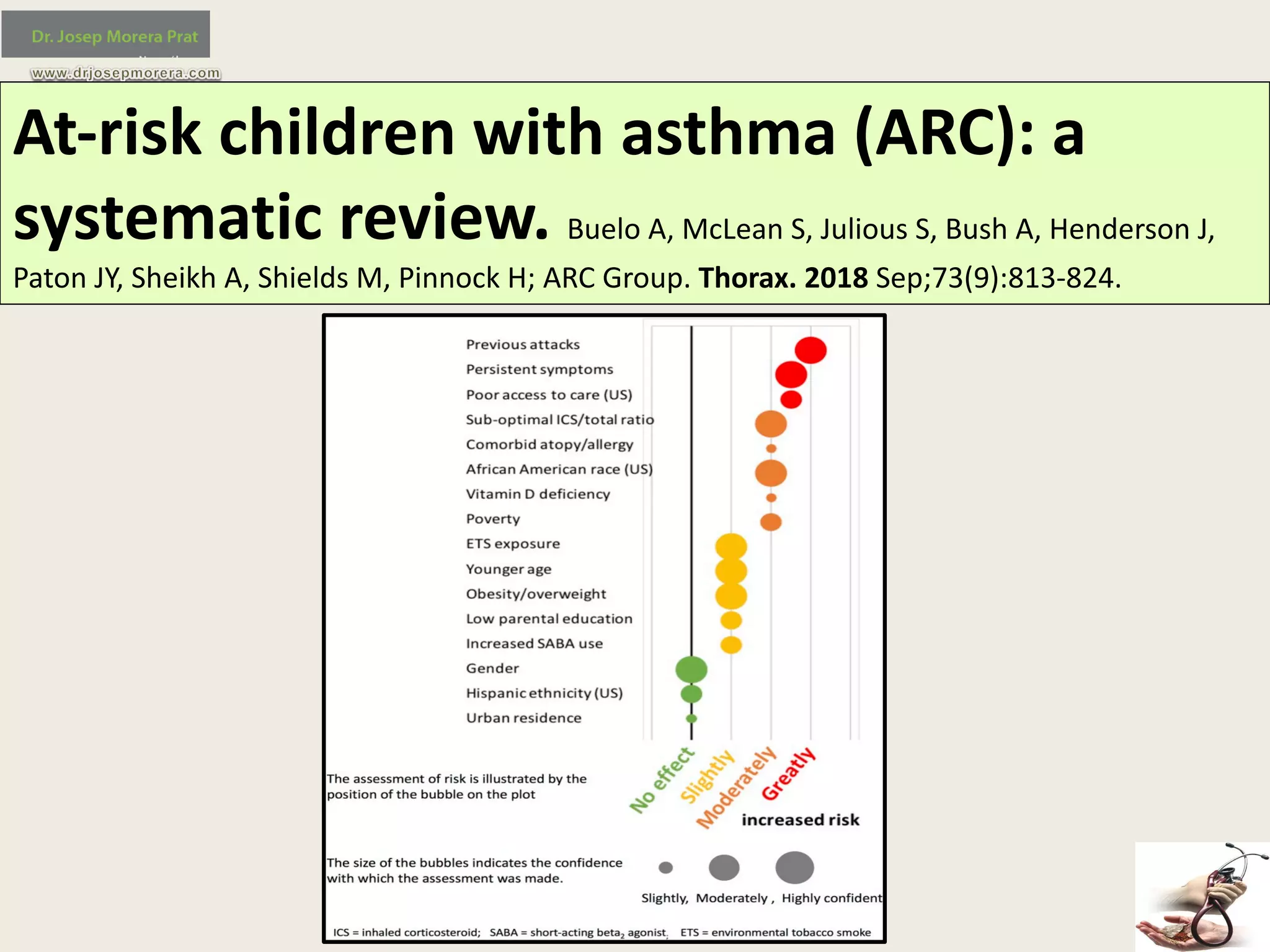
At-risk	children	with	asthma	(ARC):	a	
systematic	review.	Buelo A,	McLean	S,	Julious S,	Bush	A,	Henderson	J,	
Paton	JY,	Sheikh	A,	Shields	M,	Pinnock	H;	ARC	Group.	Thorax.	2018	Sep;73(9):813-824.
Lack	of	evidence	for	a	protective	effect	of	
prolonged	breastfeeding	on	childhood	
eczema:	lessons	from	the	International	Study	
of	Asthma	and	Allergies	in	Childhood	(ISAAC)	
Phase	Two.	Flohr C,	Nagel	G,	Weinmayr G,	Kleiner A,	Strachan	DP,	Williams	
HC;	ISAAC	Phase	Two	Study	Group.	Br	J	Dermatol.	2011	Dec;165(6):1280-9.
Probiotics:	Myths	or	facts	about	
their	role	in	allergy	prevention.
Krzych-Fałta E,	Furmańczyk K,	Tomaszewska A,	Olejniczak D,	Samoliński
B,	Samolińska-Zawisza U.	Adv Clin Exp Med.	2018	Jan;27(1):119-124.
Helicobacter,	Hygiene,	Atopy,	and	
Asthma.	Miftahussurur M,	Nusi IA,	Graham	DY,	Yamaoka	Y.	
Front	Microbiol.	2017	Jun	8;8:1034.
Absence	of	relationships	between	
tuberculin	responses	and	
development	of	adult	asthma	with	
rhinitis	and	atopy.	Li	J,	Zhou	Z,	Chest.	2008	Jan;133(1):100-6
Relation	between	house-dust	endotoxin	
exposure,	type	1	T-cell	development,	and	
allergen	sensitisation	in	infants	at	high	risk	of	
asthma.	Gereda JE,	Leung	DY,	MR,	Liu	AH.	Lancet.	2000	May	13;355(9216)
Allergic	diseases	and	atopic	
sensitization	in	children	related	to	
farming	and	anthroposophic	lifestyle-
-the	PARSIFAL	study.	Alfvén T,	Braun-Fahrländer PARSIFAL	
study	group.	Allergy.	2006	Apr;61(4):414-21.
Allergic	disease	and	sensitization	in	
Steiner	school	children.
Flöistrup H,	PARSIFAL	Study	Group.	J	Allergy	Clin Immunol.	2006	Jan;117(1):59-66
Measles	and	atopy	in	
Guinea-Bissau.
Shaheen SO,	Aaby P,	Hall	AJ,	Barker	DJ,	Heyes CB,	Shiell AW,	Goudiaby A.
Lancet.	1996	Jun	29;347(9018):1792-6.
Measles	infection,	measles	
vaccination	and	the	effect	of	birth	
order	in	the	aetiology	of	hay	fever.
Lewis	SA,	Britton	JR.	Clin Exp Allergy.	1998	Dec;28(12):1493-500.
Conclusions
1.- La	“hygiene hypothesis”durant més	d’una	
dècada	va	seduir	la	comunitat	mèdica	generant	
múltiples	treballs	d’investigació.
2.- Alguns	punts	de	la“hygiene hypothesis”s’han
utilitzats	per	defensar	l’antroposofia	i	les	Escoles	
Steiner.
Conclusions
3.-L’asma	“inner city”	i	les	infeccions	víriques	eren	
elements	importants	que	ignorava	la	“hygiene
hypothesis”.
4.-L’asma	és	una	entitat	multifactorial	amb	
interacció	genètica,	epigenètica	i	ambiental	
impossible	d’aplicar-li	la	el	mètode	de	“la	navalla	
de	Ockham”
Higiene hypothesis,

Higiene hypothesis,