INTRODUCTION:
◦ “WOMEN ANDWOMB” requires the utmost additional care and guidance.
◦ Pregnancy is the happiest event for a woman.
◦ We categorize pregnancies as high-risk and low-risk.
◦ High-risk (or high-risk) pregnancies are those that pose a danger to the mother,
fetus, or newborn.
◦ It can be life-threatening factors or factors that cause complications due to pre-
existing diseases or occur during pregnancy.
◦ There can be several reasons for a high-risk pregnancy.
◦ Roughly 20-30% of women belong to this category and if we want to improve
obstetric outcomes, this group needs to be identified and given special
treatment.
3.
DEFINITION:
◦A high-risk pregnancyis defined as one
which is complicated by factors that
adversely affect the pregnancy outcome
and safe delivery process – maternal or
perinatal or both.
4.
RISK FACTORS/CAUSES INHIGH-RISK
PREGNANCY:
◦ A woman’s lifestyle, as well as a variety of pre-existing health issues and developments,
can contribute to a pregnancy being considered high-risk. Some common risk factors that
may increase the chance of having a High-risk pregnancy include:
◦ High blood pressure
◦ Epilepsy
◦ Anaemia
◦ Platelet disorders
◦ Diabetes
◦ Epilepsy
◦ Genetic disorders (consanguineous marriages)
◦ Neurological disorders
◦ Kidney disease
5.
◦ Liver disease(jaundice)
◦ Heart problems
◦ Benign Tumours (fibroids)
◦ Cancers
◦ Lung condition
◦ Asthma
◦ Lupus
◦ Urinary tract infections
◦ Sexually transmitted diseases
◦ Bleeding disorders or menstrual irregularities
◦ Infertility treatments (failure procedures) or twin pregnancies or low placental growth
◦ Previous C-sections
◦ Previous abortions
◦ Personal habits like Smoking cigarettes, drinking alcohol or using certain drugs
6.
◦ Being significantlyunderweight or overweight during pregnancy
◦ Age, especially if the mother is younger than 20 or older than 35years
◦ Problems with the uterus, such as an abnormal shape
◦ Hormonal changes or pre-existing menstrual abnormalities
◦ Poor prenatal nutrition
◦ Weakness in the cervix or a short cervix
◦ History of premature labor
◦ Previous birth of a child with a genetic condition such as Down syndrome
◦ Being pregnant with multiple foetuses (twins, triplets)
◦ Any autoimmune disorders
7.
HIGH-RISK PREGNANCY
SYMPTOMS:
◦ Symptomsof high-risk pregnancy are often difficult to distinguish from typical
pregnancy symptoms. There can be multiple reasons and associated symptoms. During
a high-risk pregnancy, a woman may experience symptoms depending on the
condition/disease that is affecting their pregnancy.
◦ Pregnant women with diabetes can have IUGR (intrauterine growth restriction) or
extreme weight loss.
◦ Low platelet count
◦ Severe pain or cramping in the lower abdomen
◦ Some patients present with anaemia
◦ Deficiencies of Vitamin d and b12 can cause problems
◦ Previous C-section pregnancies run a risk of ectopic pregnancy
8.
HIGH-RISK PREGNANCY
SYMPTOMS:
◦ Uncontrolledbleeding or abnormal bleeding in patients with previous C section
patients or abortion
◦ Noticeable changes in vision, including blurred vision
◦ Decreased fetal movement
◦ Persistent headaches
◦ Mood disorders
◦ Painful burning sensations while urinating
◦ Clear, watery fluid discharge, similar to a yeast infection
◦ Frequent contractions
◦ Hypertension
9.
ASSESSMENT & SCREENINGTO BE
DONE REGULARLY:
◦ ASSESSMENT:
◦ Detailed assessment tells us the nature of the problem, helps in making a diagnosis and
develops specific treatment recommendations.
◦ All cases in the high-risk category are identified at the first prenatal examination,
preferably in the first trimester of pregnancy. Some risk factors may appear later and
will be recognized during later visits
◦ INITIAL SCREENING HISTORY:
◦ Maternal age
◦ Reproductive history
◦ Family history
PHYSIOLOGICAL
CONSIDERATIONS:
◦ Physiological andnutritional adjustments to pregnancy
◦ General nursing assessment of the high-risk patient and family
◦ Fetal well-being assessment
◦ Perinatal screening, diagnosis and fetal therapies
◦ Integrative therapies in pregnancy and childbirth
TIMELY INTERVENTION AND
MANAGEMENTFOR LABOUR:
◦ Principles of management
◦ The definitive treatment is delivery, but we need to wait
until full term especially until lung maturity and
gestational age are reached.
◦ Before conceiving if a couple comes for a visit, Pre-
pregnancy screening and counselling play a vital role in
management to avoid high-risk pregnancy
◦ After conceiving, proper history taking, frequent
investigation and scanning, blood tests, nutritional
support and trying to treat the pre-existing conditions will
avoid pregnancy complications
16.
HIGH-RISK PREGNANCY
MANAGEMENT:
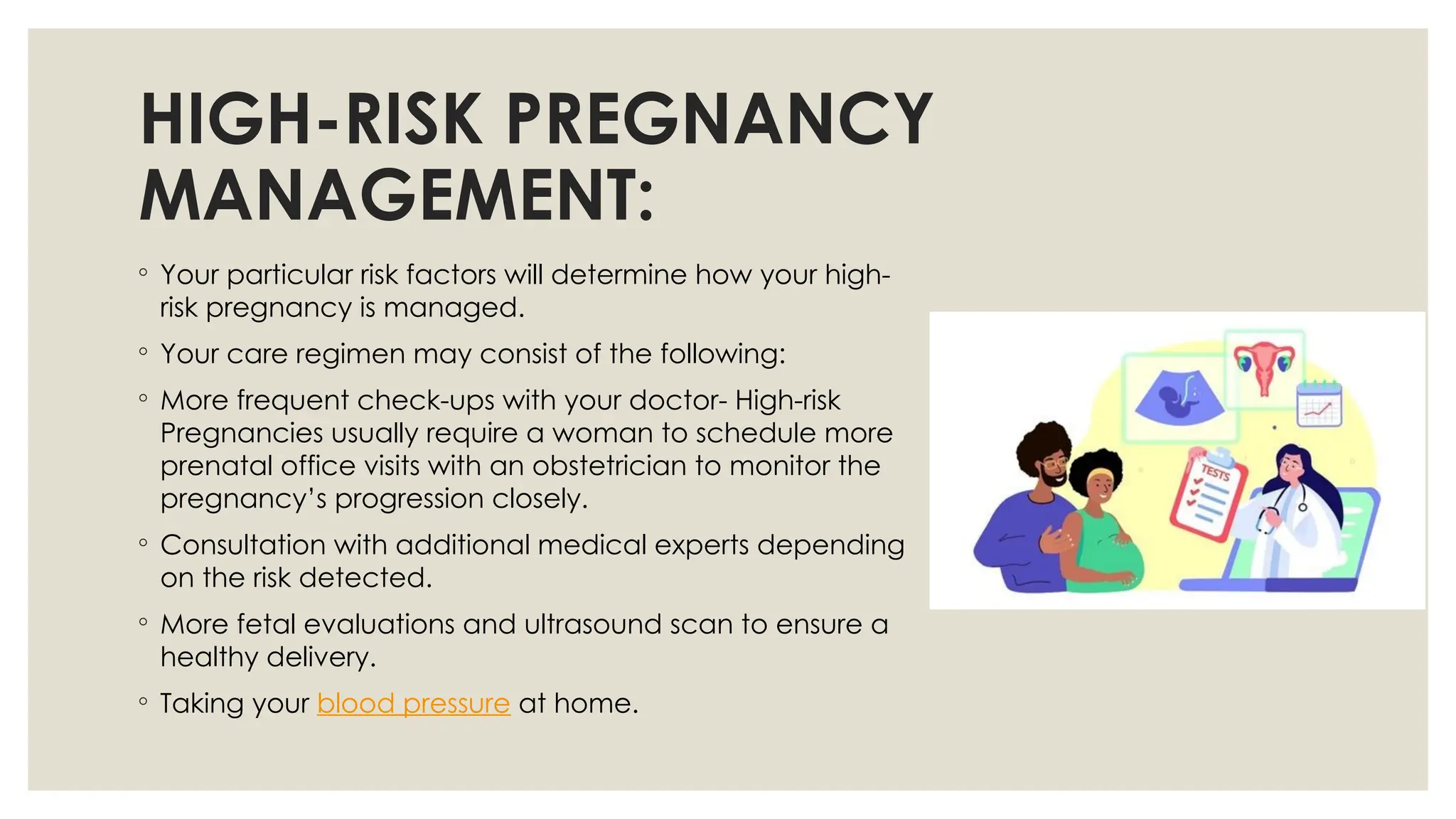
◦ Yourparticular risk factors will determine how your high-
risk pregnancy is managed.
◦ Your care regimen may consist of the following:
◦ More frequent check-ups with your doctor- High-risk
Pregnancies usually require a woman to schedule more
prenatal office visits with an obstetrician to monitor the
pregnancy’s progression closely.
◦ Consultation with additional medical experts depending
on the risk detected.
◦ More fetal evaluations and ultrasound scan to ensure a
healthy delivery.
◦ Taking your blood pressure at home.
17.
HIGH-RISK PREGNANCY
MANAGEMENT:
◦ Monitoringclosely the usage of drugs to treat pre-
existing diseases.
◦ Delivery of a high-risk pregnancy is recommended in a
hospital setting since giving birth at home is considered
too risky for women with severe health conditions or
complications.
◦ Depending on the individual case, the baby may be
delivered vaginally or through a C-section.
◦ Anticipating High-risk deliveries and planning the
management procedures are necessary for safer
delivery in high-risk pregnancies. For example, anaemic
patients can be treated early to correct anemia and
blood loss can be corrected by blood transfusions.
18.
◦ Women withhigh-risk pregnancies are counselled to be attentive to their health, eat a
nutritious diet, gain a appropriate weight, and avoid any risky substances or
medications.
◦ Pre-existing medical conditions will be managed to optimal levels .
◦ Obese patients should be counselled to maintain a healthy BMI and provided
nutritional support.
◦ Explanation and proper counselling for the patient is the most important step.
◦ Rarely after proper counselling and information is provided, the uterus may need to be
removed , and a hysterectomy will be done to protect the patient’s life from acute
blood loss.
◦ Saving the mother, neonate, and uterus is essential and can be managed mainly by
close follow-up, which is a doctor’s main goal.
◦ Doctors will often prescribe vitamins, iron supplements, or medicines to enhance the
health of the mother and baby.
19.
Here are easytips for managing the health
and wellbeing of yourself and your baby:
◦ Stay Informed
◦ Have a Support System
◦ Create a Plan with Your Health Care Providers
◦ Put your self-care first
◦ Listen to your body
◦ Address mental health concerns
◦ Avoid health hazards
◦ Manage your mindset