HPBMS High Performance Building Management System 2009 A framework for the building lifecycle cost engineering continuum,  from conceptual planning (BIM) through facilities operations. ●  Research  ● Reference Cost Databases & Lifecycle Cost Engineering ● Benchmarking & Analytics ● Standardized Processes
Climate change and the new economic landscape
Owners are #1 Owners pay the bills in all sectors - government, corporate, institutional markets.  Planning and Budgeting” is the primary need for  process improvement. Cost estimating accuracy is the primary risk to an  organization.     - Construction Financial Managers (CFMA) Study - 2008
Renovation is Critical The Altered Enviro-Economic Landscape.  Owner Requirements: Drive down operational costs Focus upon lifecycle costing and energy demand reduction Validate repair, maintenance, and construction estimates Accurately project multi-year capital budgets JOC implementation for renovation project under $10 million
Sustainability and High Performance Building Management  are core to strategic organizational decision making. Workflow / Process  Inventory  Conditions – Physical and Functional Decision Support Project Creation & Job Order Contracting Capital Planning Benchmarks   Data Localization Standardized Practices & Data
Essential Information for Facility Stewardship  Qualitative information from community/stakeholders Facility condition assessment information Space adequacy assessment information Utilization Sustainability Demographic analysis Future requirements
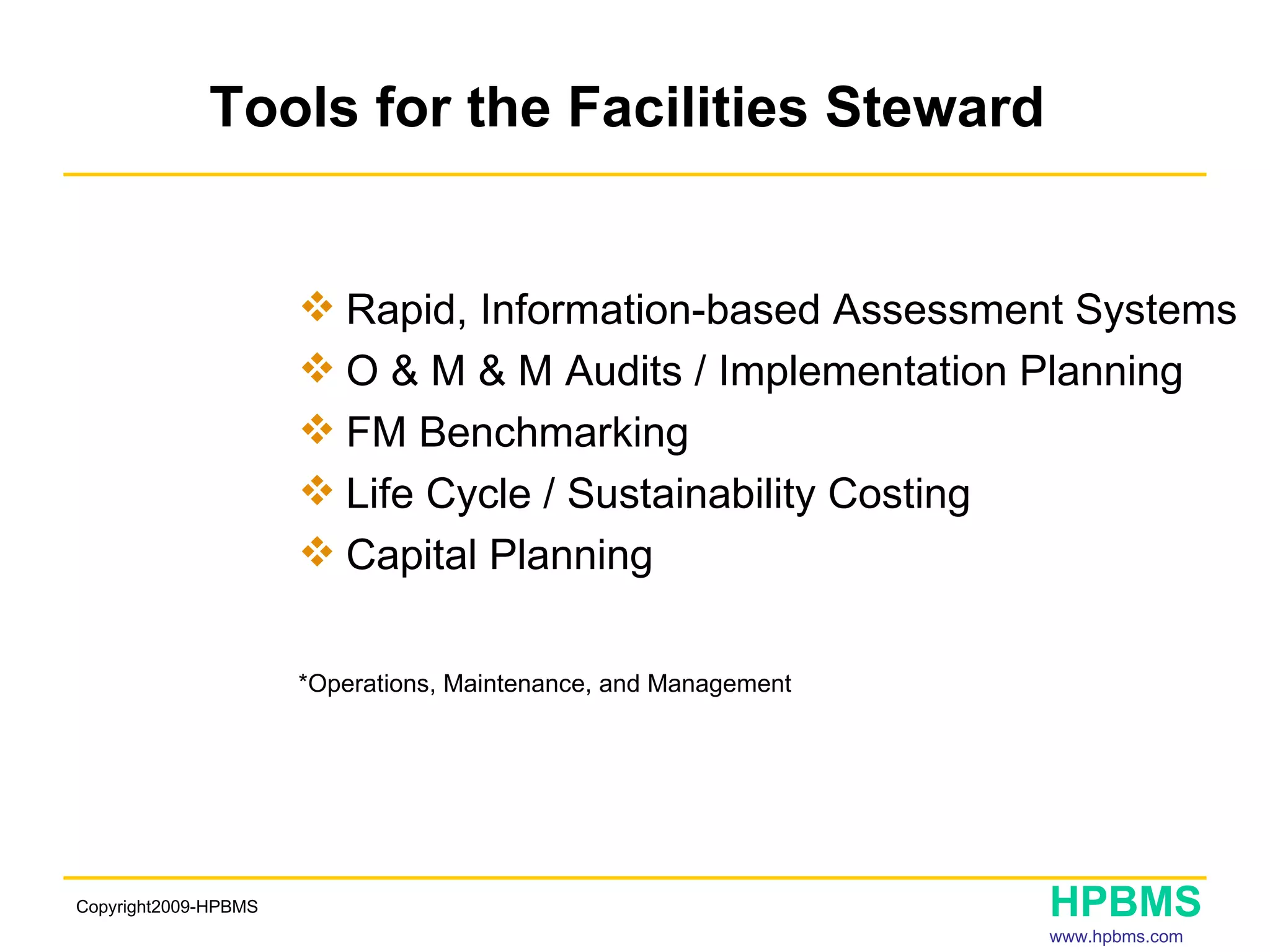
Tools for the Facilities Steward  Rapid, Information-based Assessment Systems O & M & M Audits / Implementation Planning FM Benchmarking Life Cycle / Sustainability Costing Capital Planning *Operations, Maintenance, and Management
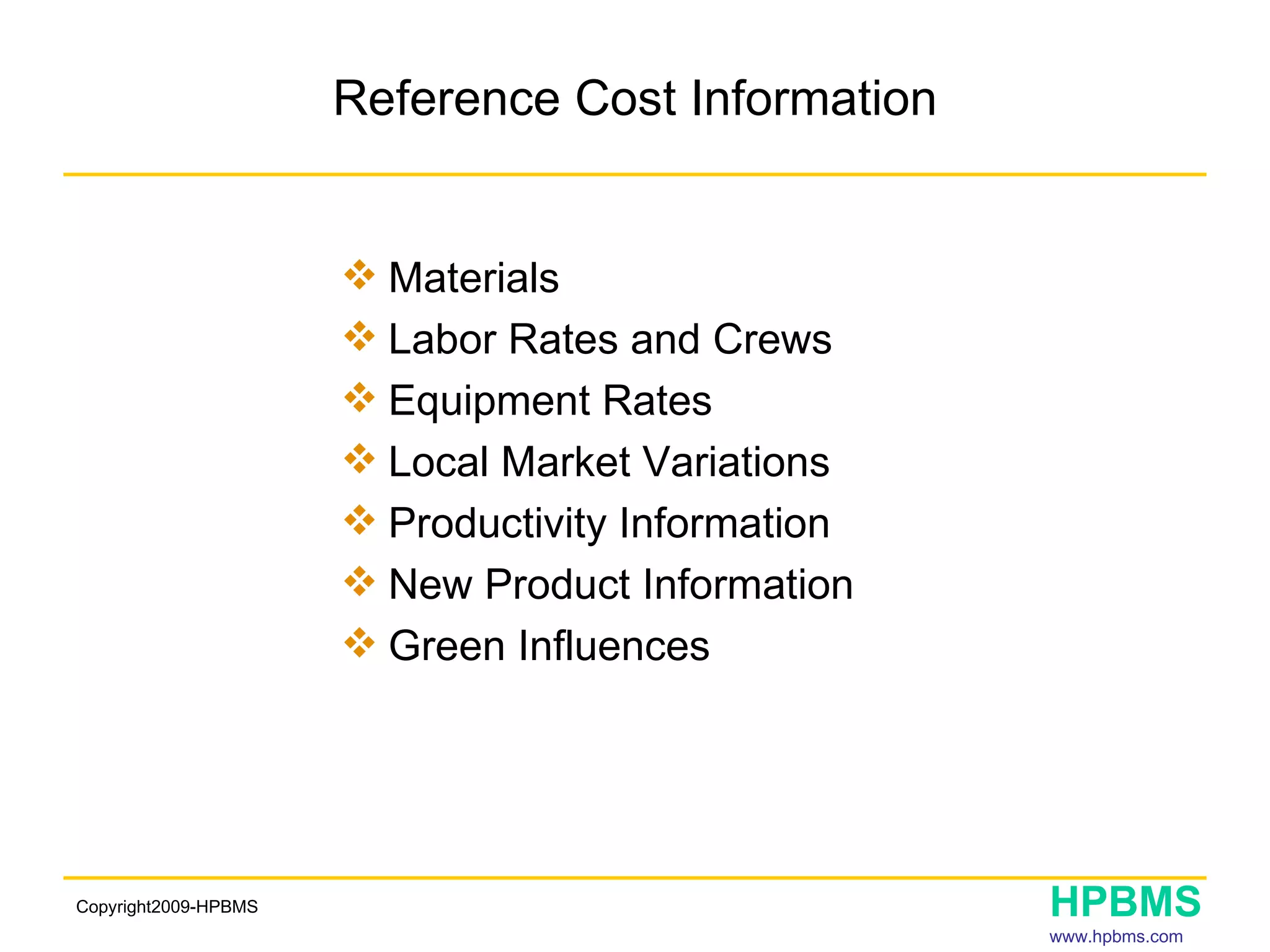
Reference Cost Information Materials Labor Rates and Crews Equipment Rates Local Market Variations Productivity Information New Product Information Green Influences
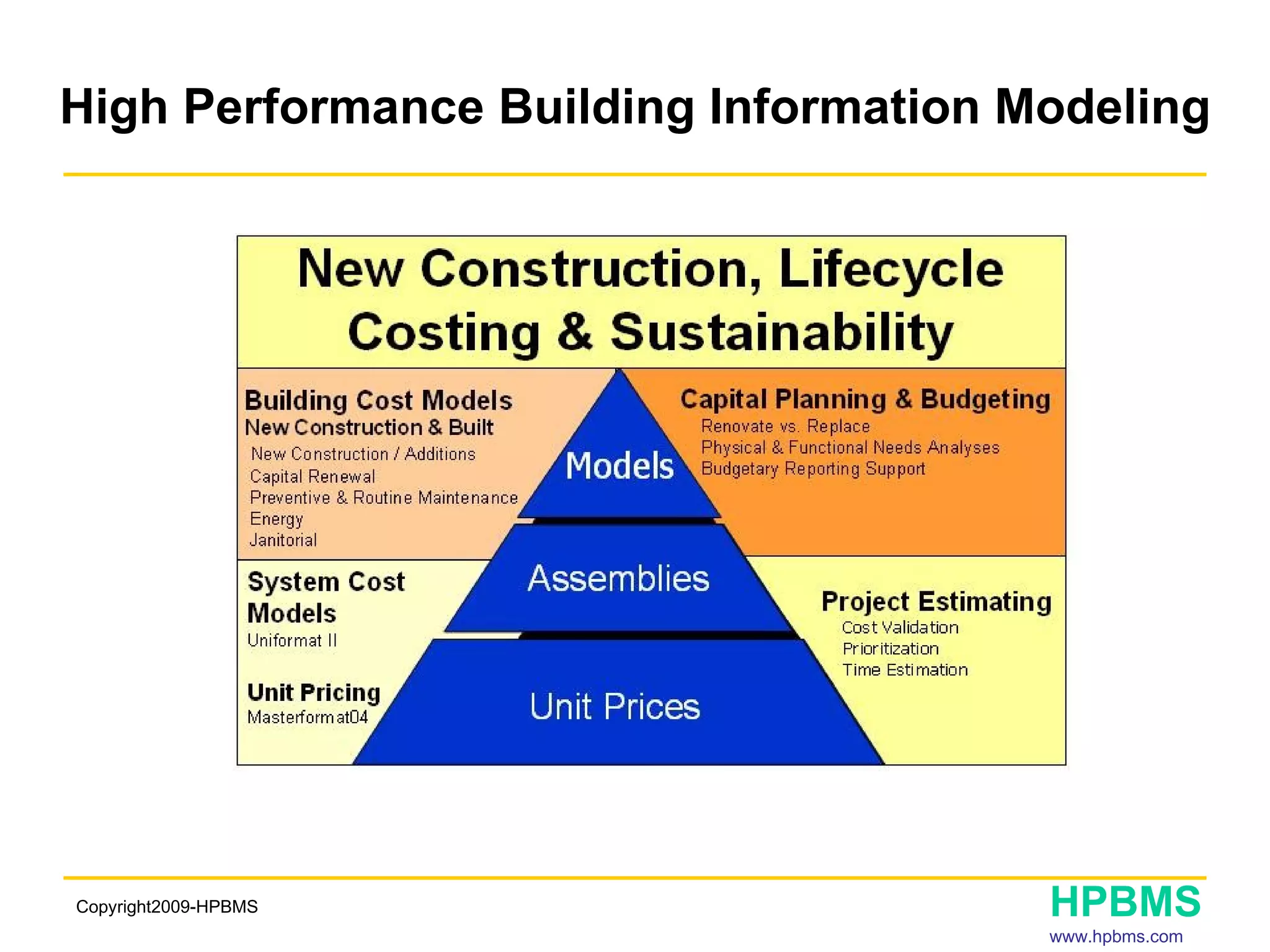
High Performance Building Information Modeling
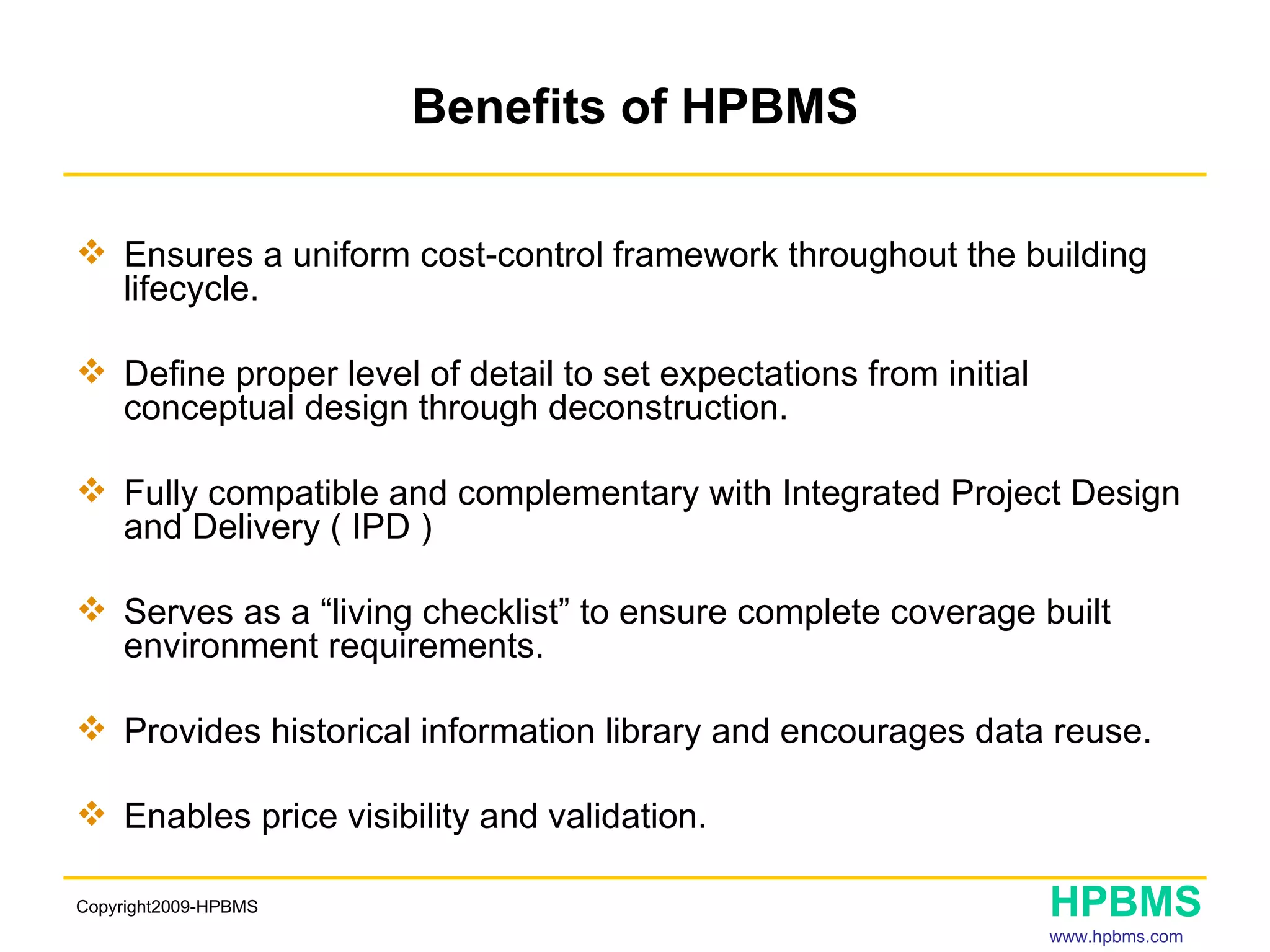
Benefits of HPBMS Ensures a uniform cost-control framework throughout the building lifecycle.  Define proper level of detail to set expectations from initial conceptual design through deconstruction. Fully compatible and complementary with Integrated Project Design and Delivery ( IPD ) Serves as a “living checklist” to ensure complete coverage built environment requirements. Provides historical information library and encourages data reuse.  Enables price visibility and validation.
Sustainability and High Performance Building Management are core to survival.

High Performance Building Management System.Ppt

  • 1.
    HPBMS High PerformanceBuilding Management System 2009 A framework for the building lifecycle cost engineering continuum, from conceptual planning (BIM) through facilities operations. ● Research ● Reference Cost Databases & Lifecycle Cost Engineering ● Benchmarking & Analytics ● Standardized Processes
  • 2.
    Climate change andthe new economic landscape
  • 3.
    Owners are #1Owners pay the bills in all sectors - government, corporate, institutional markets. Planning and Budgeting” is the primary need for process improvement. Cost estimating accuracy is the primary risk to an organization. - Construction Financial Managers (CFMA) Study - 2008
  • 4.
    Renovation is CriticalThe Altered Enviro-Economic Landscape. Owner Requirements: Drive down operational costs Focus upon lifecycle costing and energy demand reduction Validate repair, maintenance, and construction estimates Accurately project multi-year capital budgets JOC implementation for renovation project under $10 million
  • 5.
    Sustainability and HighPerformance Building Management are core to strategic organizational decision making. Workflow / Process Inventory Conditions – Physical and Functional Decision Support Project Creation & Job Order Contracting Capital Planning Benchmarks  Data Localization Standardized Practices & Data

  • 6.
    Essential Information forFacility Stewardship Qualitative information from community/stakeholders Facility condition assessment information Space adequacy assessment information Utilization Sustainability Demographic analysis Future requirements
  • 7.
    Tools for theFacilities Steward Rapid, Information-based Assessment Systems O & M & M Audits / Implementation Planning FM Benchmarking Life Cycle / Sustainability Costing Capital Planning *Operations, Maintenance, and Management
  • 8.
    Reference Cost InformationMaterials Labor Rates and Crews Equipment Rates Local Market Variations Productivity Information New Product Information Green Influences
  • 9.
    High Performance BuildingInformation Modeling
  • 10.
    Benefits of HPBMSEnsures a uniform cost-control framework throughout the building lifecycle. Define proper level of detail to set expectations from initial conceptual design through deconstruction. Fully compatible and complementary with Integrated Project Design and Delivery ( IPD ) Serves as a “living checklist” to ensure complete coverage built environment requirements. Provides historical information library and encourages data reuse. Enables price visibility and validation.
  • 11.
    Sustainability and HighPerformance Building Management are core to survival.

Editor's Notes

  • #6 Cost Engineering Services (this is where cost stewardship positioning ends up plus the services) High Performance Building Benchmarks  (Gene’s bit plus FM Benchmarks for the start) Local Market Analysis (BRAC and Clark study set out as generic methodology) Job Order Contracting (JOC) Predictive Analytics (this is all the BPM activity which will open up under Market Insights page on RCD site) Means DATA™
  • #10 Assemblies - Uniformat II MeansData Assemblies apply the seven major group elements of Uniformat II to cost data for building-system and component site elements. This “systems” approach uses a hierarchical structure of cost elements (example: Level 1 Substructure, Exterior Enclosure, and Interior Construction) and proceeding to successively more detailed subdivisions of these systems. Unit Costs - Masterformat MeansData Unit Costs applies the 50-division MasterFormat* guideline to provide individual unit line item cost data sufficiently detailed to allow material and equipment quantity takeoffs, and it is typically aligned with a general contractor’s approach to preparing a bid. Unit-price cost estimates are developed by adding up the direct costs of materials and supplies, labor, and construction equipment for each individual task of construction work. *MasterFormat is a product of the Construction Specifications Institute (CSI), is the most widely used standard for organizing building-project specifications and detailed cost-estimating data in the U.S..
  • #11 Cost Engineering Services Conceptual Building Cost Models 3 rd Party Cost Validation Local Market Analysis High Performance Building Benchmarks  Life Cycle Costing and Sustainability Capital Renewal & Maintenance Multi-year Models High Performance Building Models O & M: Audits, Training; Implementation Programs Job Order Contracting Predictive Analytics / Dashboards Sq. Ft. Cost Building Models Green Opportunities Detailed Cost Estimates Repair / Renovate / vs. Replace Analysis Major Equipment Replacement vs. Repair Analysis Lifecycle Utility Cost Analysis vs. Replacement with low carbon footprint. New Building Cost Estimates Repair & Remodel Cost Estimates Equipment Upgrade Cost Estimates Detailed Mechanical and Electrical Cost Estimates. Detailed Building Component Estimates. O & M Audit – Smart Questionnaire Based O & M Audit - Smart Questionnaire & On-site O & M Training – On-site Training – Mission Statement, Critical Equipment List, Facility Operations and Maintenance Planning.