


Insight into the most effective executive
leadership development programmes
Dubai International Summit: 7 – 8 September 2015 – Rick Helliwell
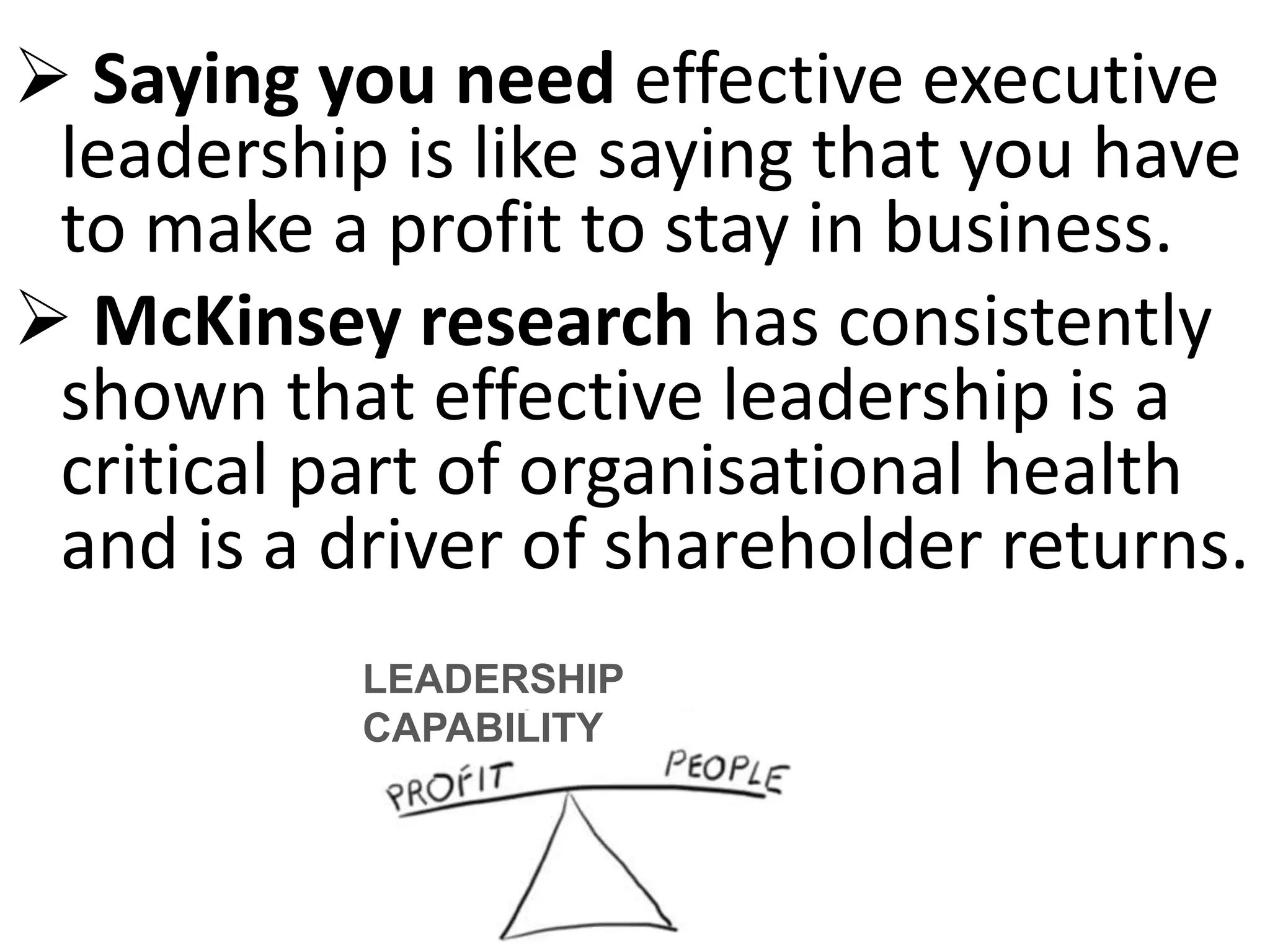
 Saying you need effective executive
leadership is like saying that you have
to make a profit to stay in business.
 McKinsey research has consistently
shown that effective leadership is a
critical part of organisational health
and is a driver of shareholder returns.
LEADERSHIP
CAPABILITY
Leadership Research Studies
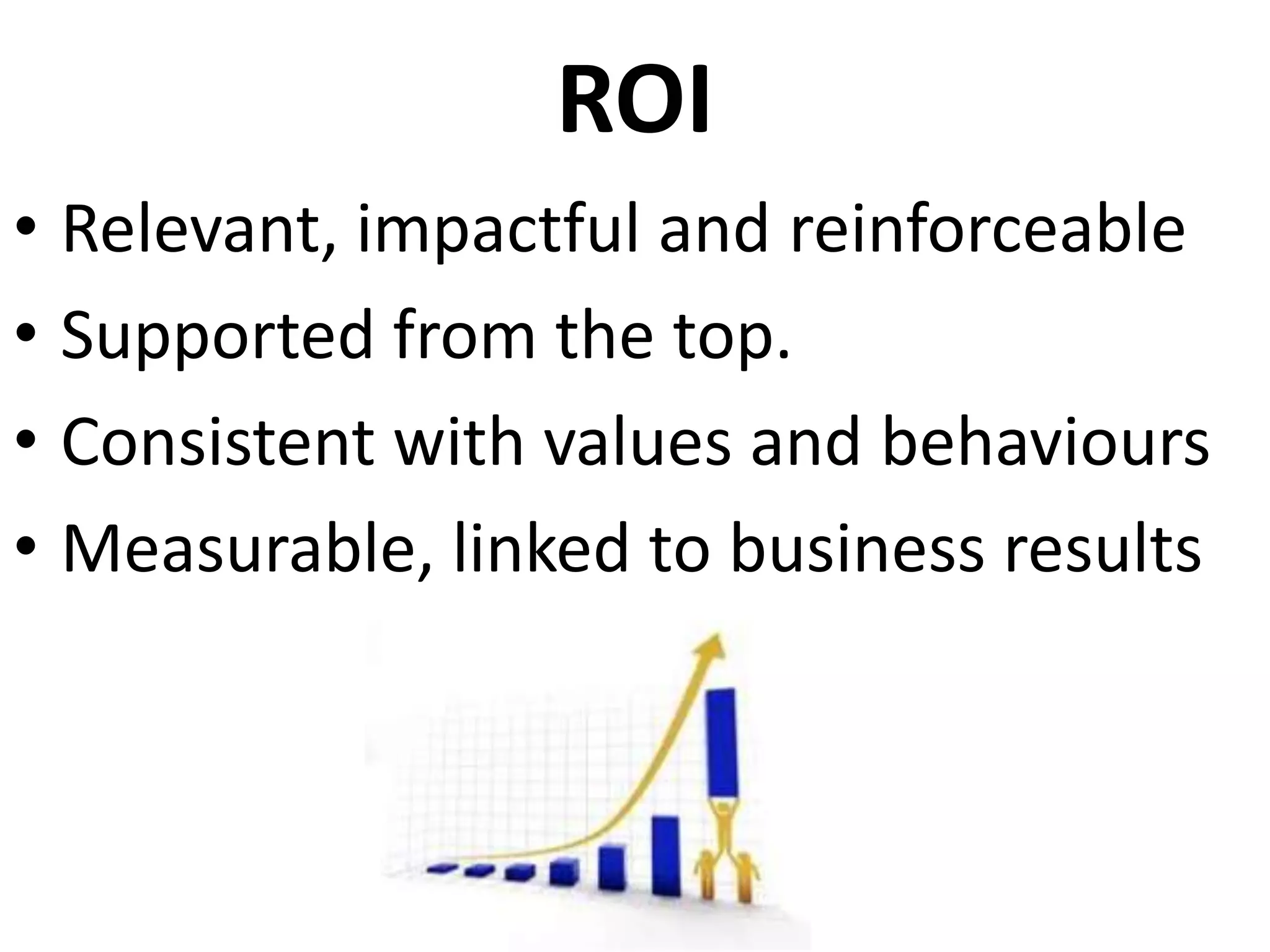
ROI
• Relevant, impactful and reinforceable
• Supported from the top.
• Consistent with values and behaviours
• Measurable, linked to business results
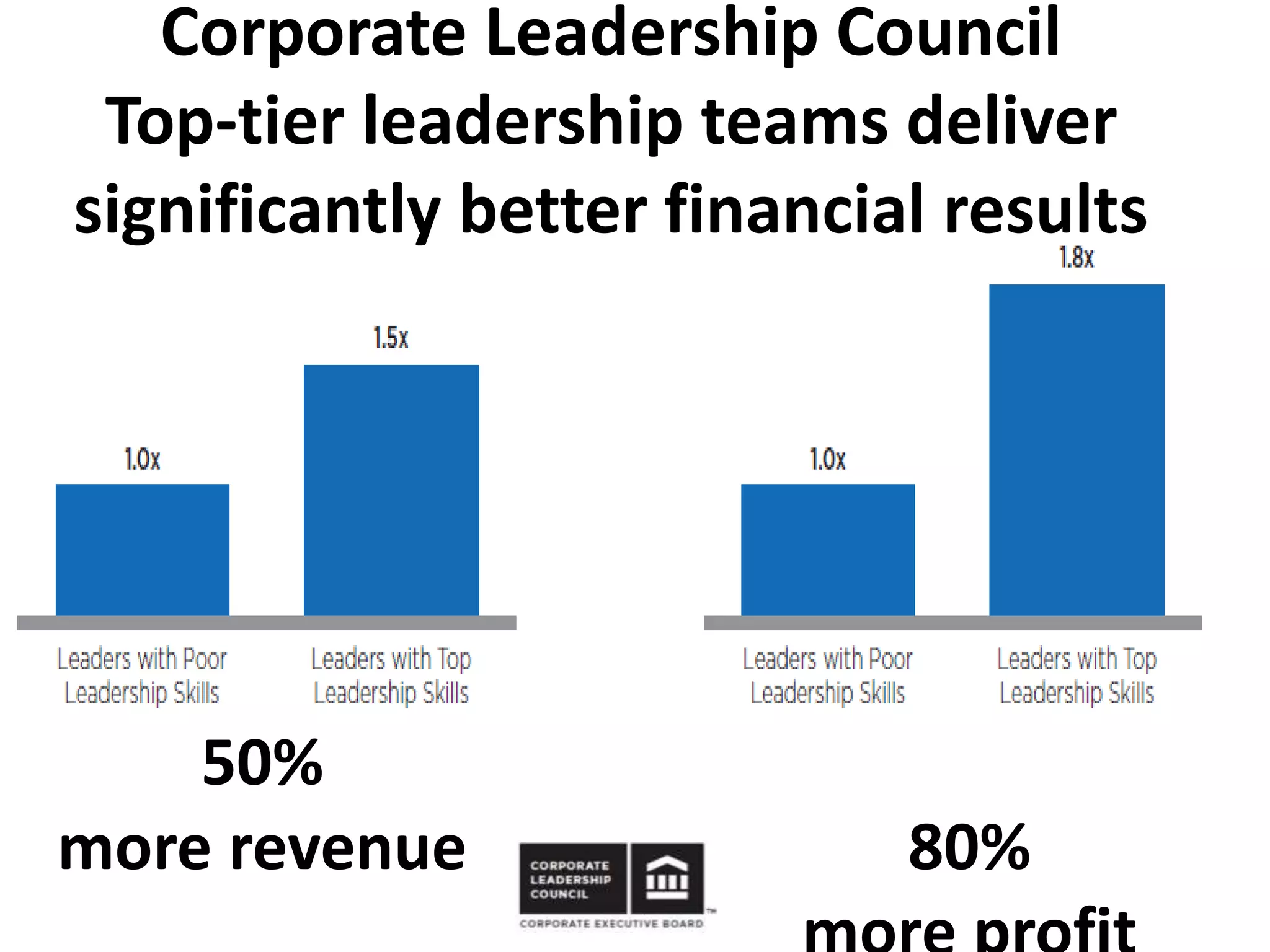
50%
more revenue 80%
Corporate Leadership Council
Top-tier leadership teams deliver
significantly better financial results
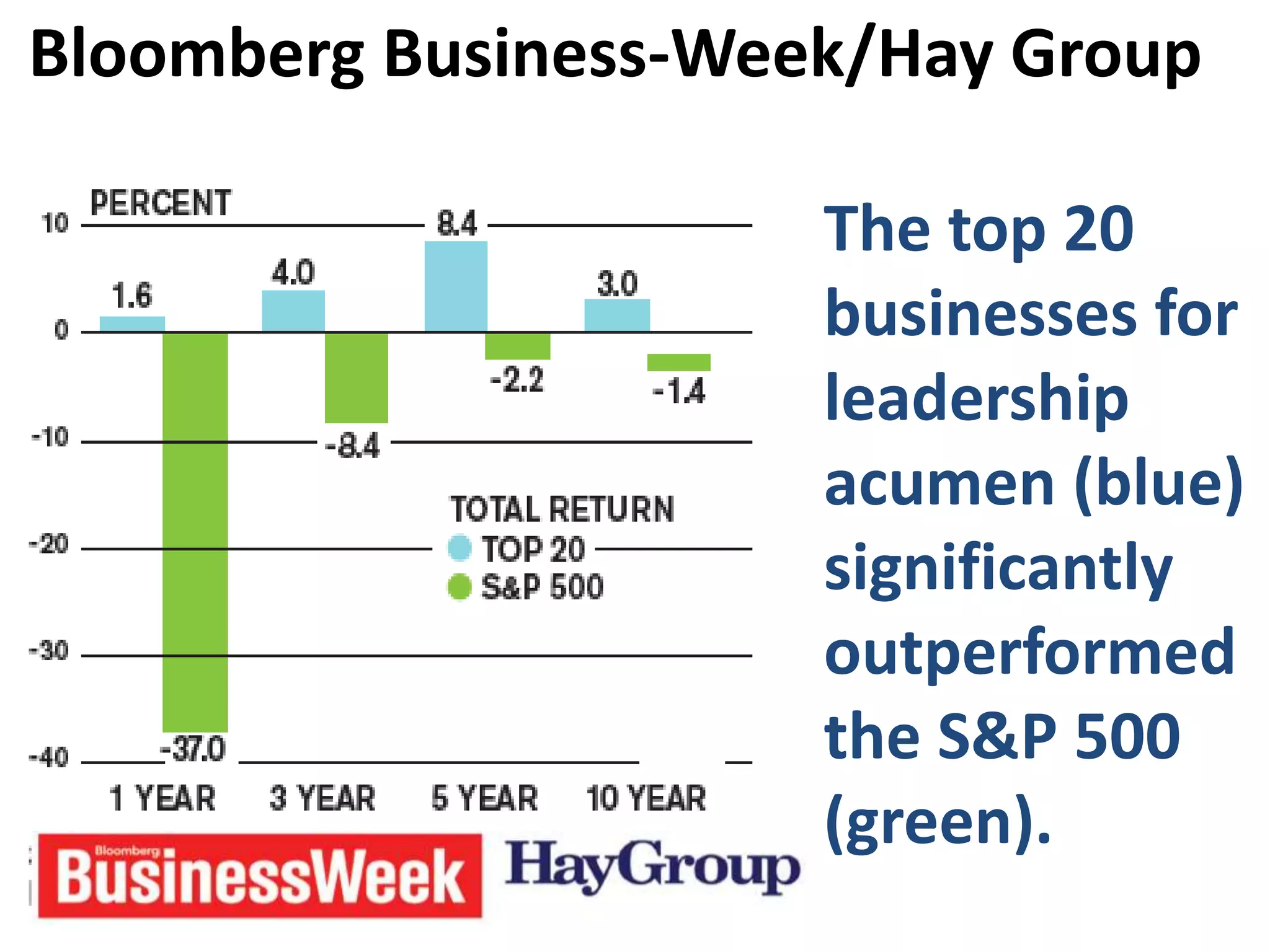
Bloomberg Business-Week/Hay Group
The top 20
businesses for
leadership
acumen (blue)
significantly
outperformed
the S&P 500
(green).
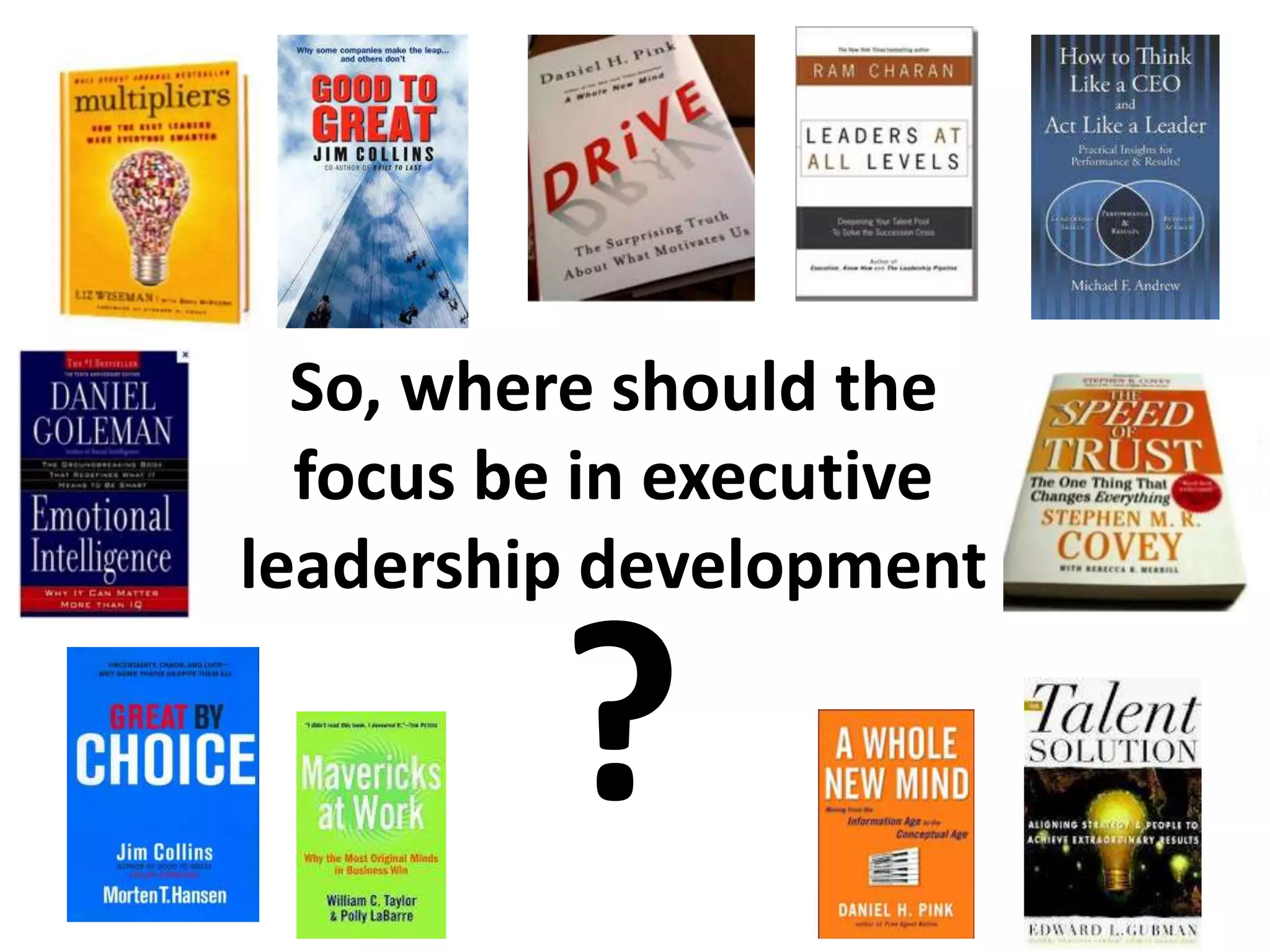
So, where should the
focus be in executive
leadership development
?
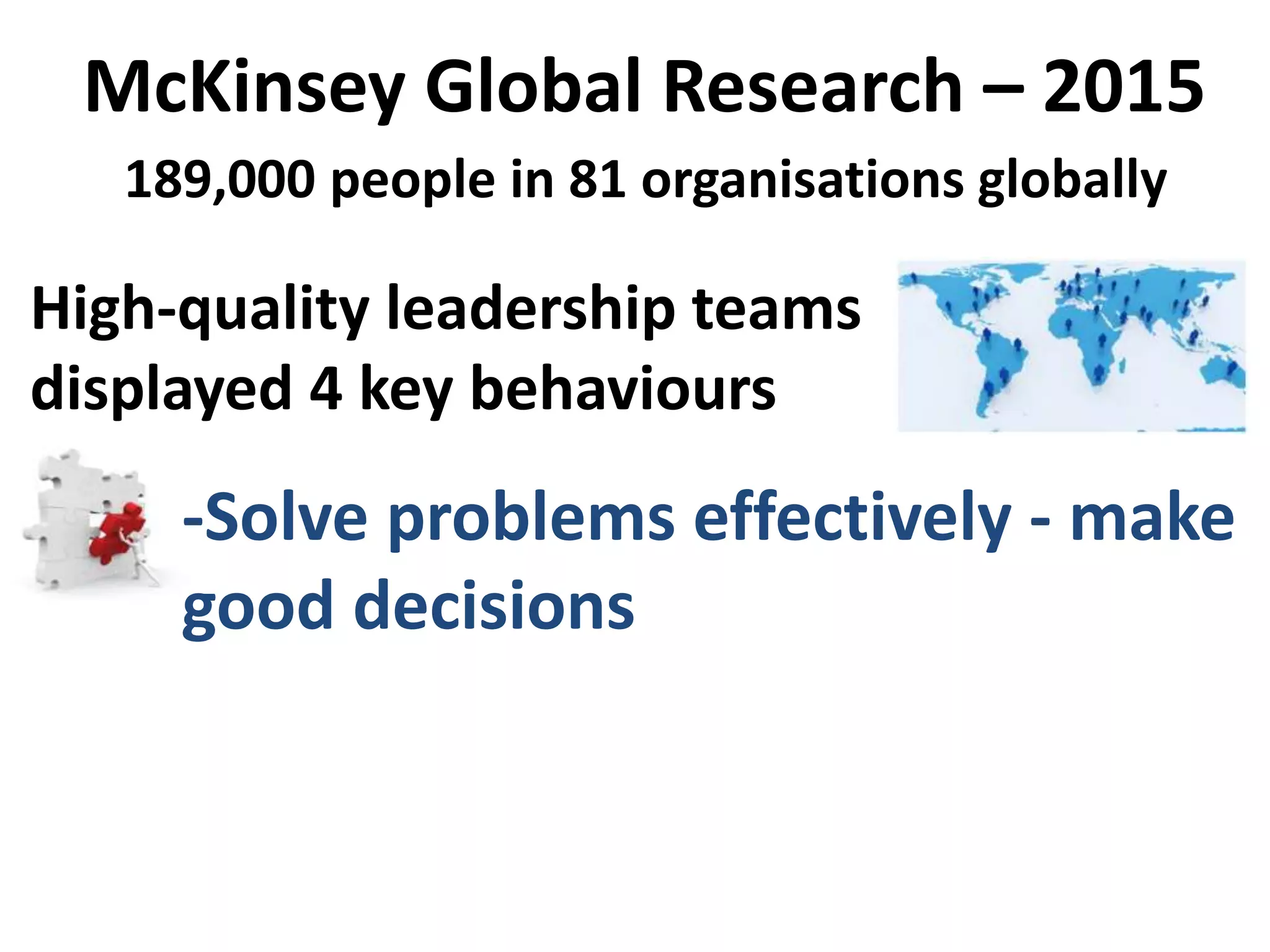
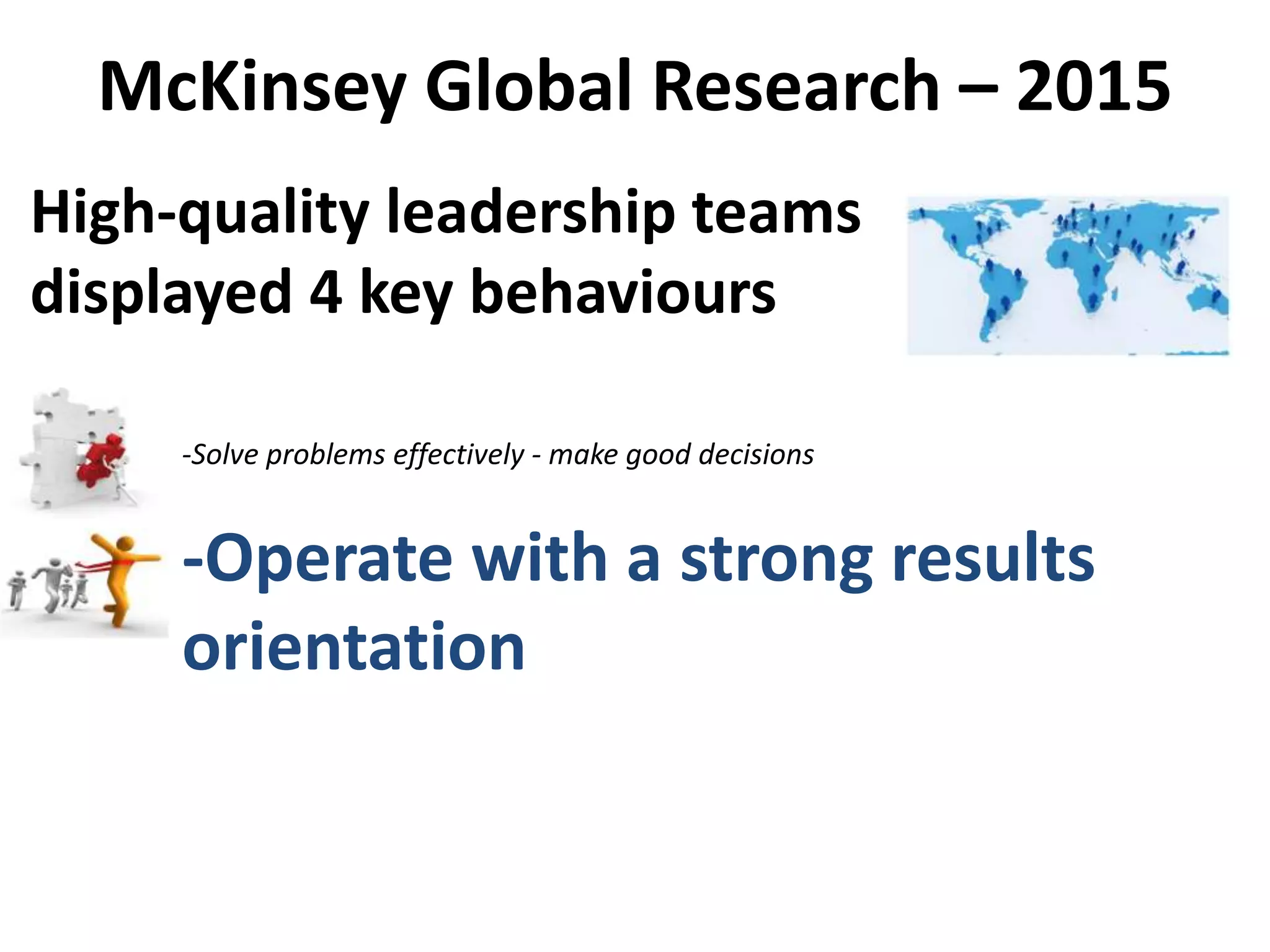
-Solve problems effectively - make
good decisions
McKinsey Global Research – 2015
189,000 people in 81 organisations globally
High-quality leadership teams
displayed 4 key behaviours
-Operate with a strong results
orientation
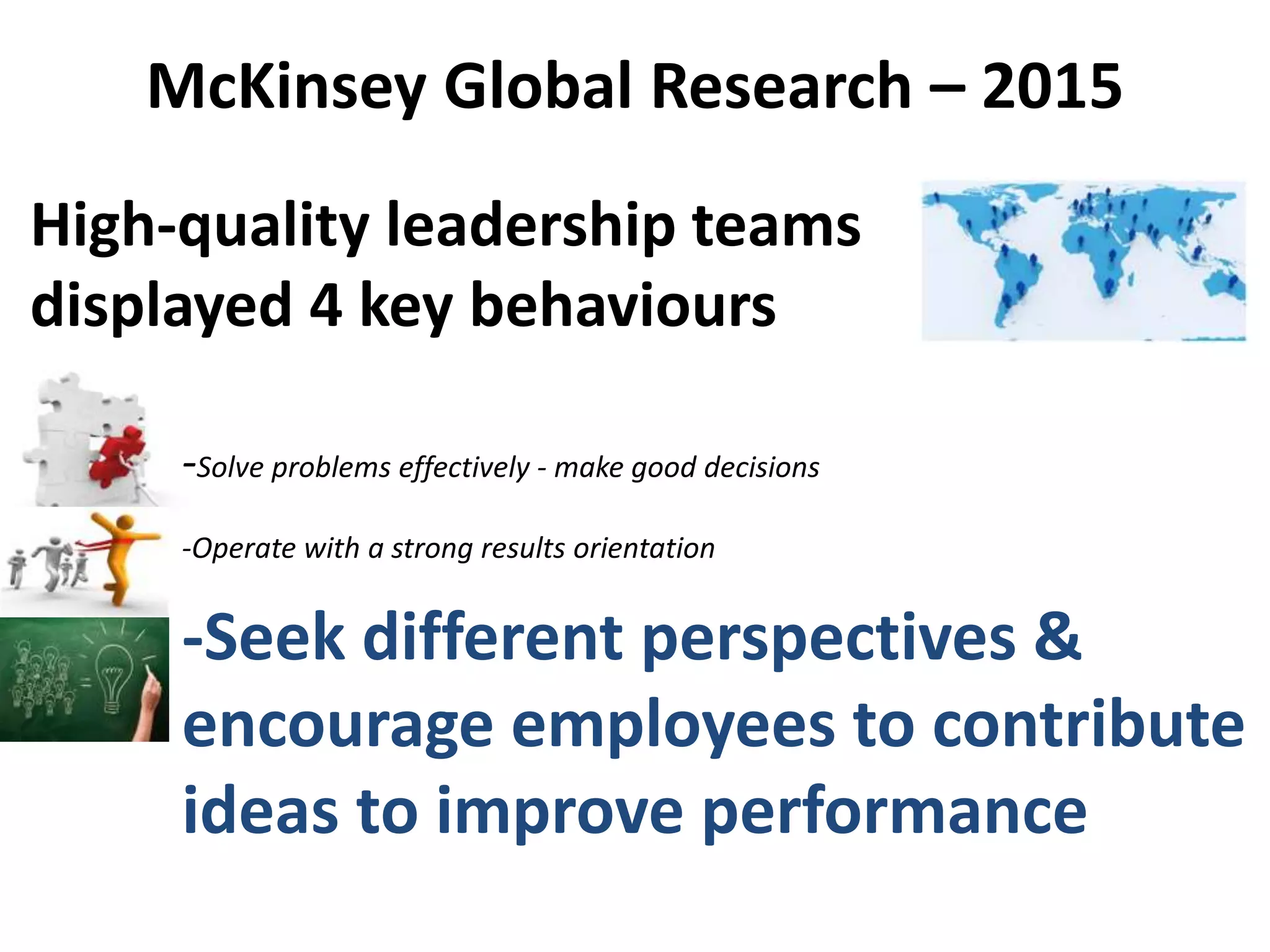
McKinsey Global Research – 2015
High-quality leadership teams
displayed 4 key behaviours
-Solve problems effectively - make good decisions
-Operate with a strong results orientation
-Seek different perspectives &
encourage employees to contribute
ideas to improve performance
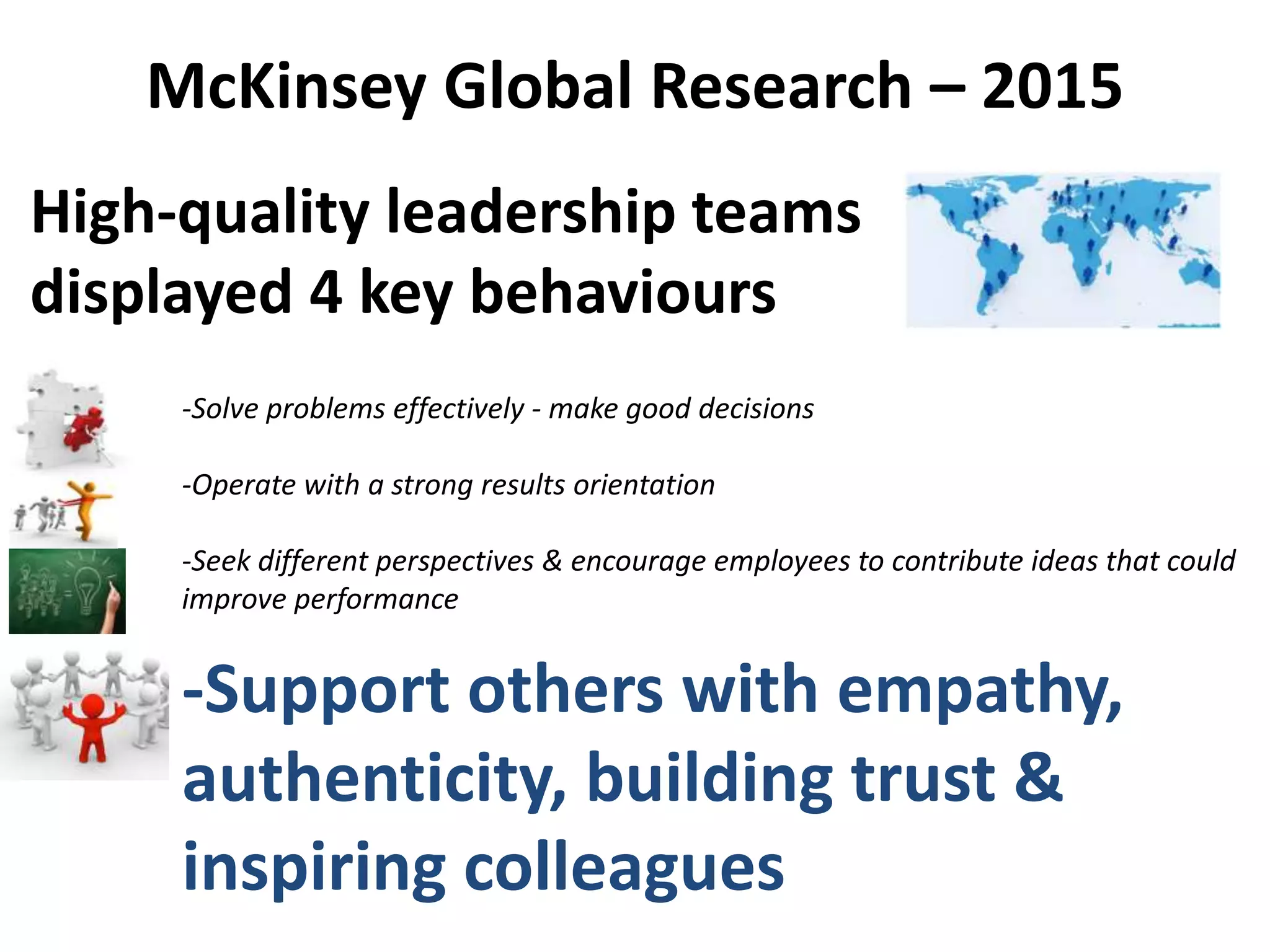
McKinsey Global Research – 2015
High-quality leadership teams
displayed 4 key behaviours
-Solve problems effectively - make good decisions
-Operate with a strong results orientation
-Seek different perspectives & encourage employees to contribute ideas that could
improve performance
-Support others with empathy,
authenticity, building trust &
inspiring colleagues
McKinsey Global Research – 2015
High-quality leadership teams
displayed 4 key behaviours
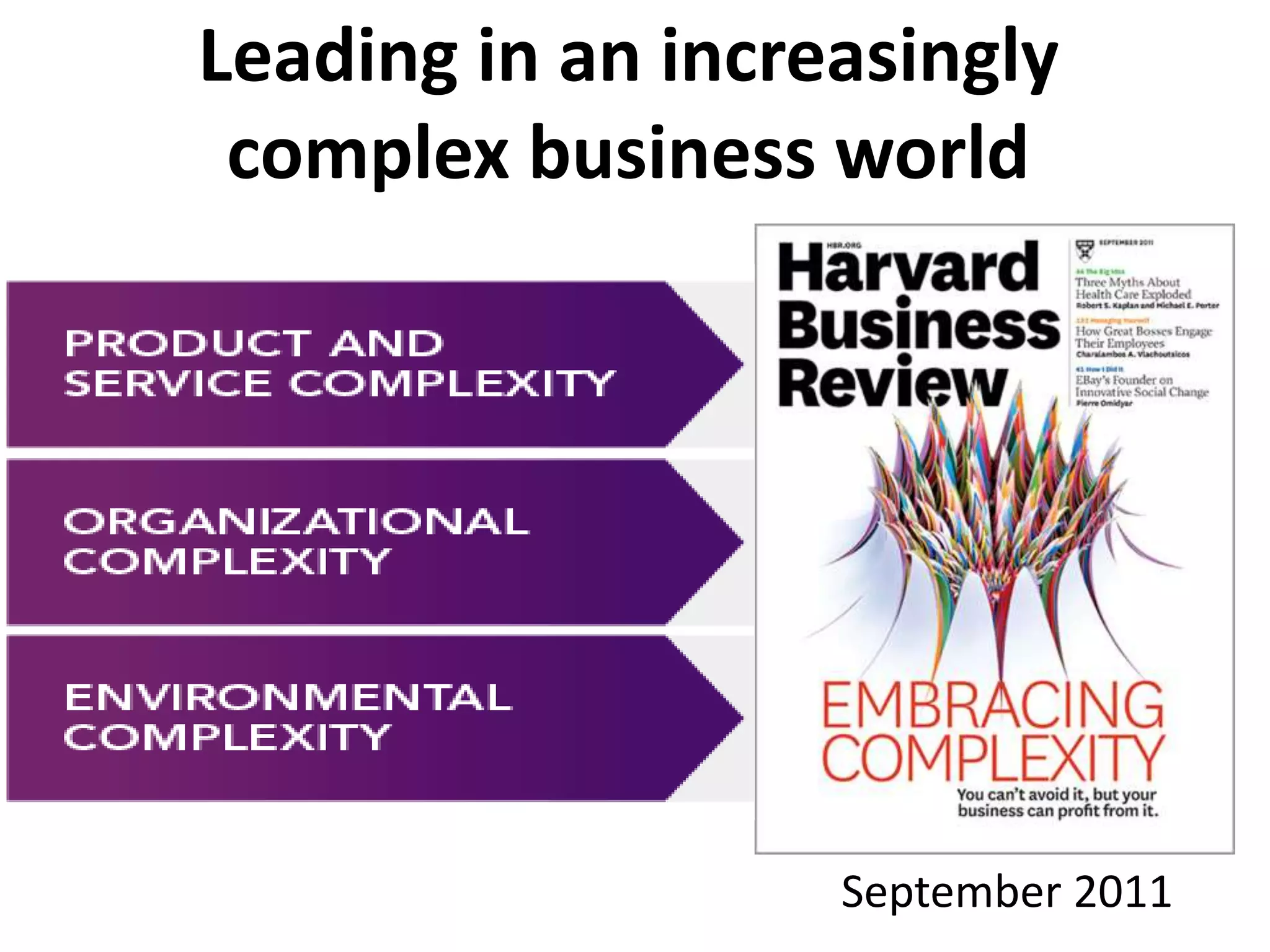
Leading in an increasingly
complex business world
September 2011
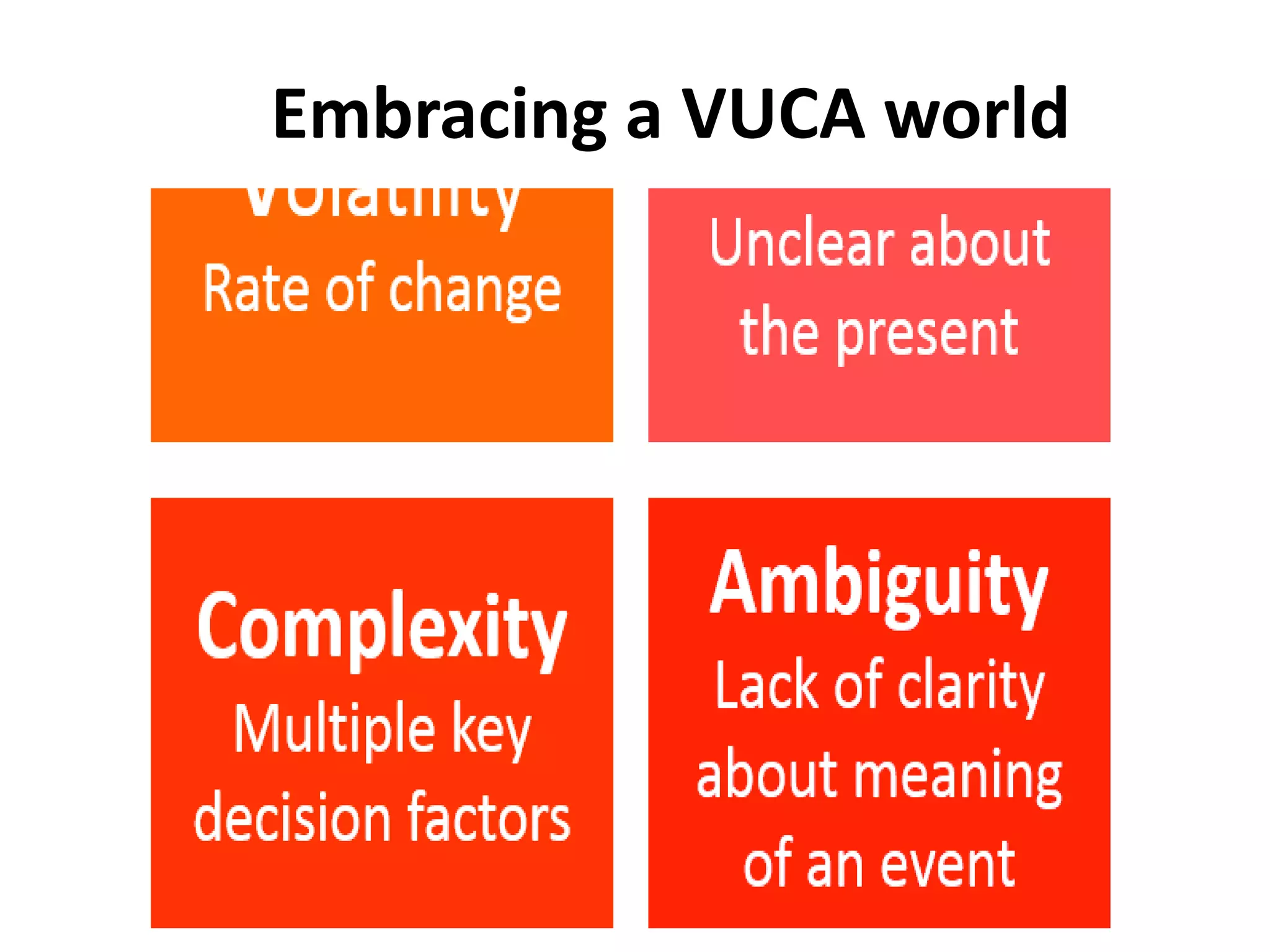
Embracing a VUCA world
Less than 10% of those assessed had
the appropriate strategic capabilities to
successfully lead through complexity
2015 Research Harthill Consulting/PWC
6,000 executives globally across business sectors
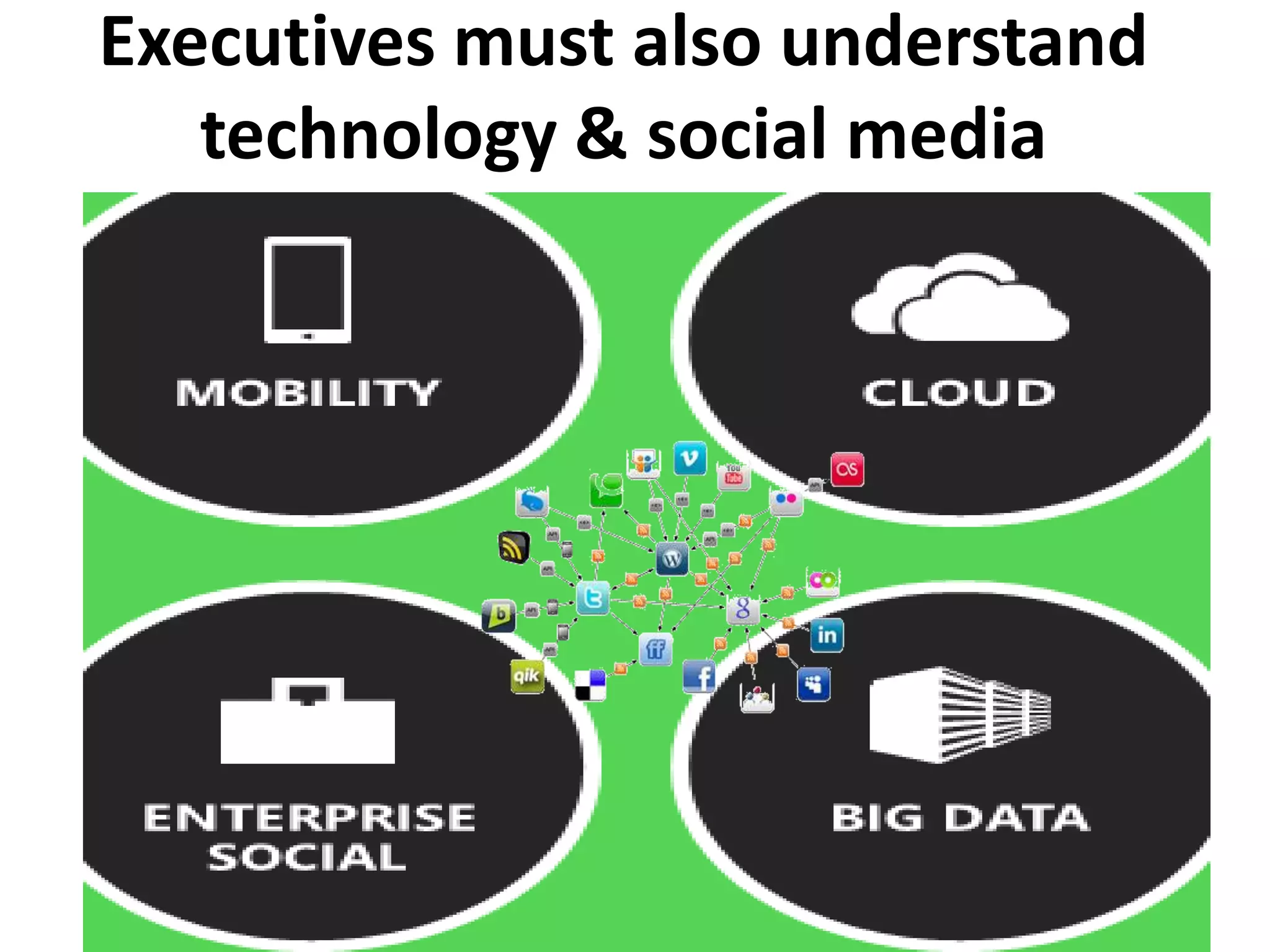
Executives must also understand
technology & social media
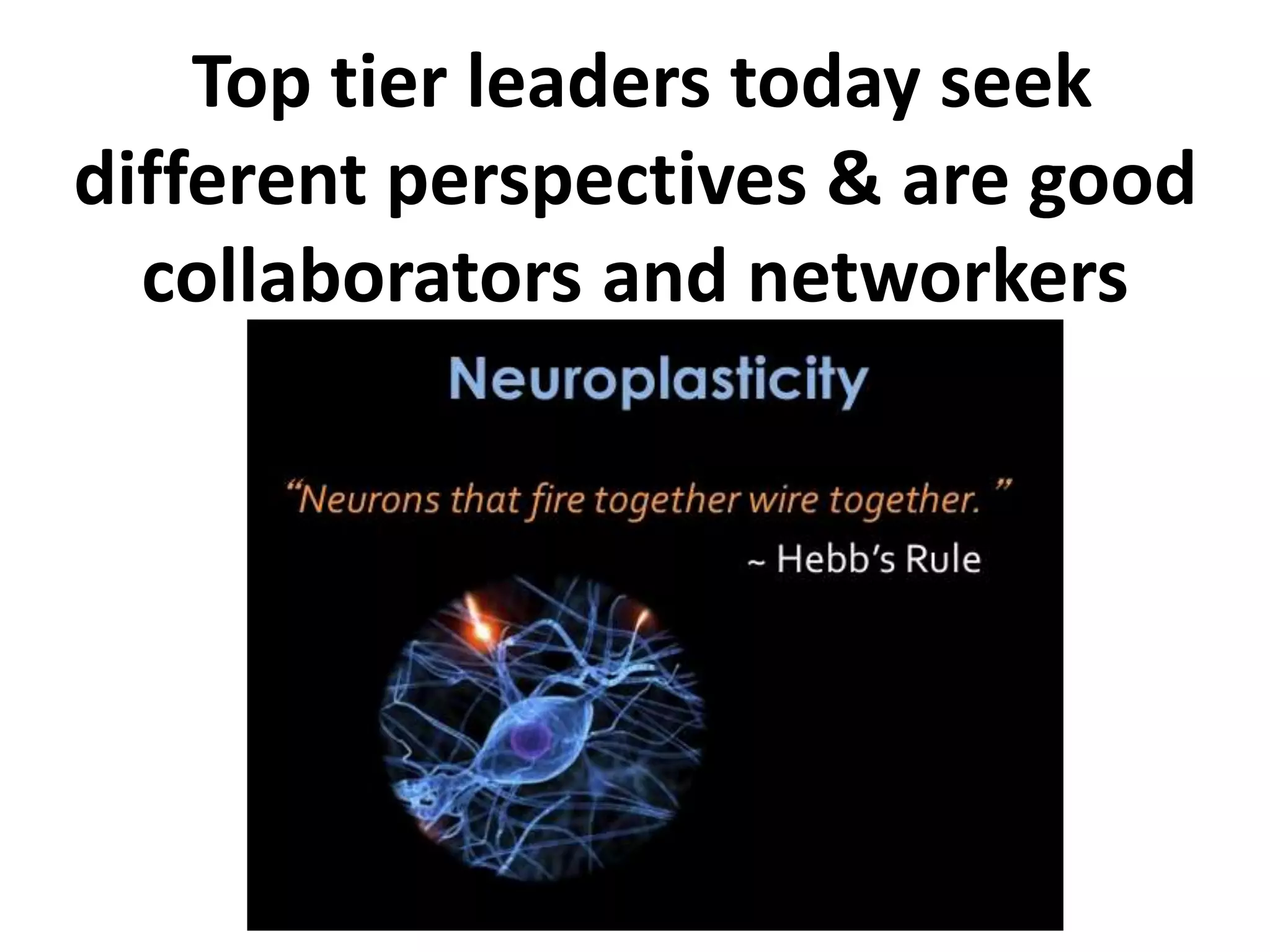
Top tier leaders today seek
different perspectives & are good
collaborators and networkers
Corporate Executive Board Research 2015
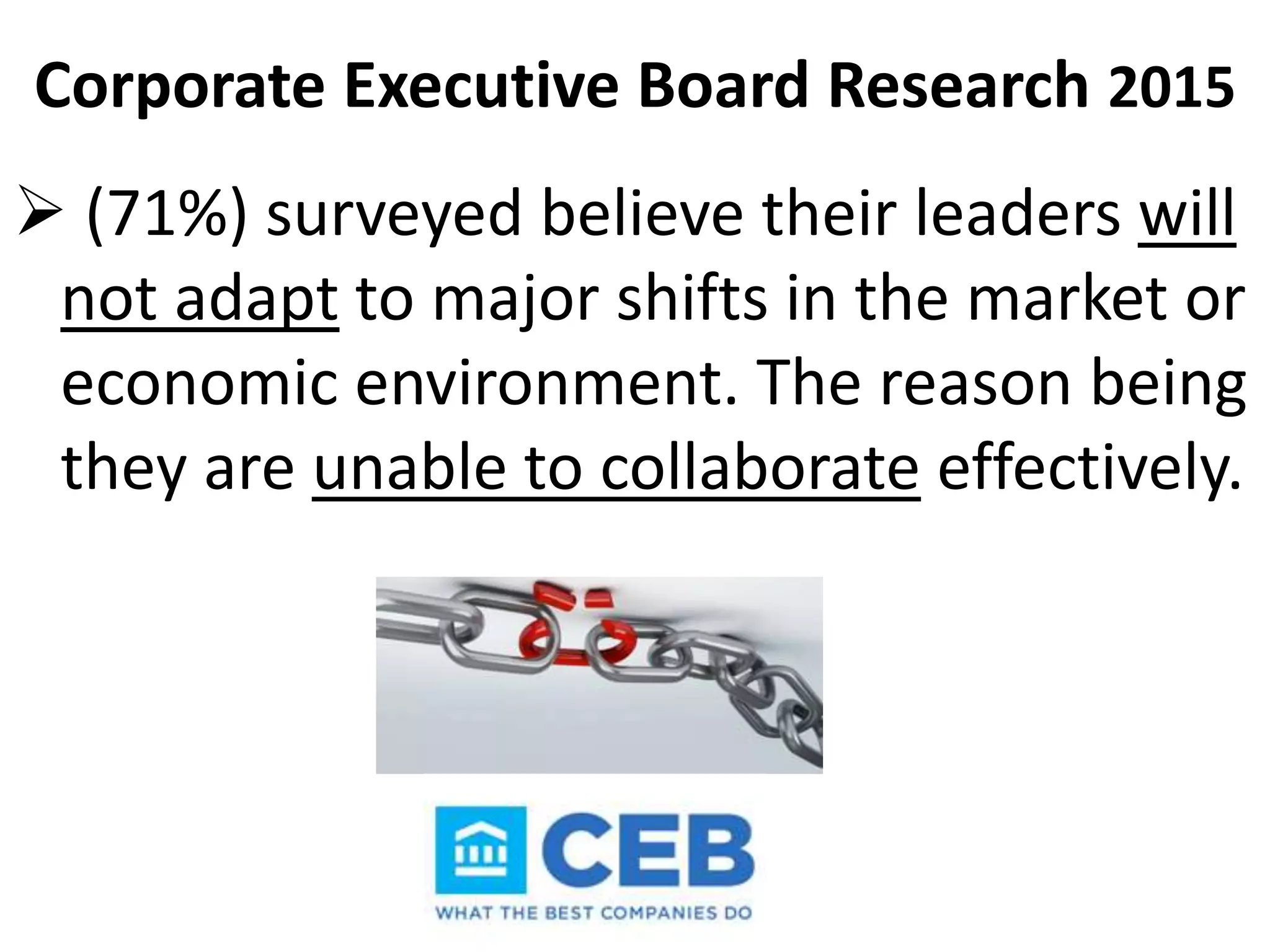
 (71%) surveyed believe their leaders will
not adapt to major shifts in the market or
economic environment. The reason being
they are unable to collaborate effectively.
Corporate Executive Board Research 2015
 (71%) surveyed believe their leaders will not adapt to major shifts in the market or
economic environment. The reason being they are unable to collaborate effectively.
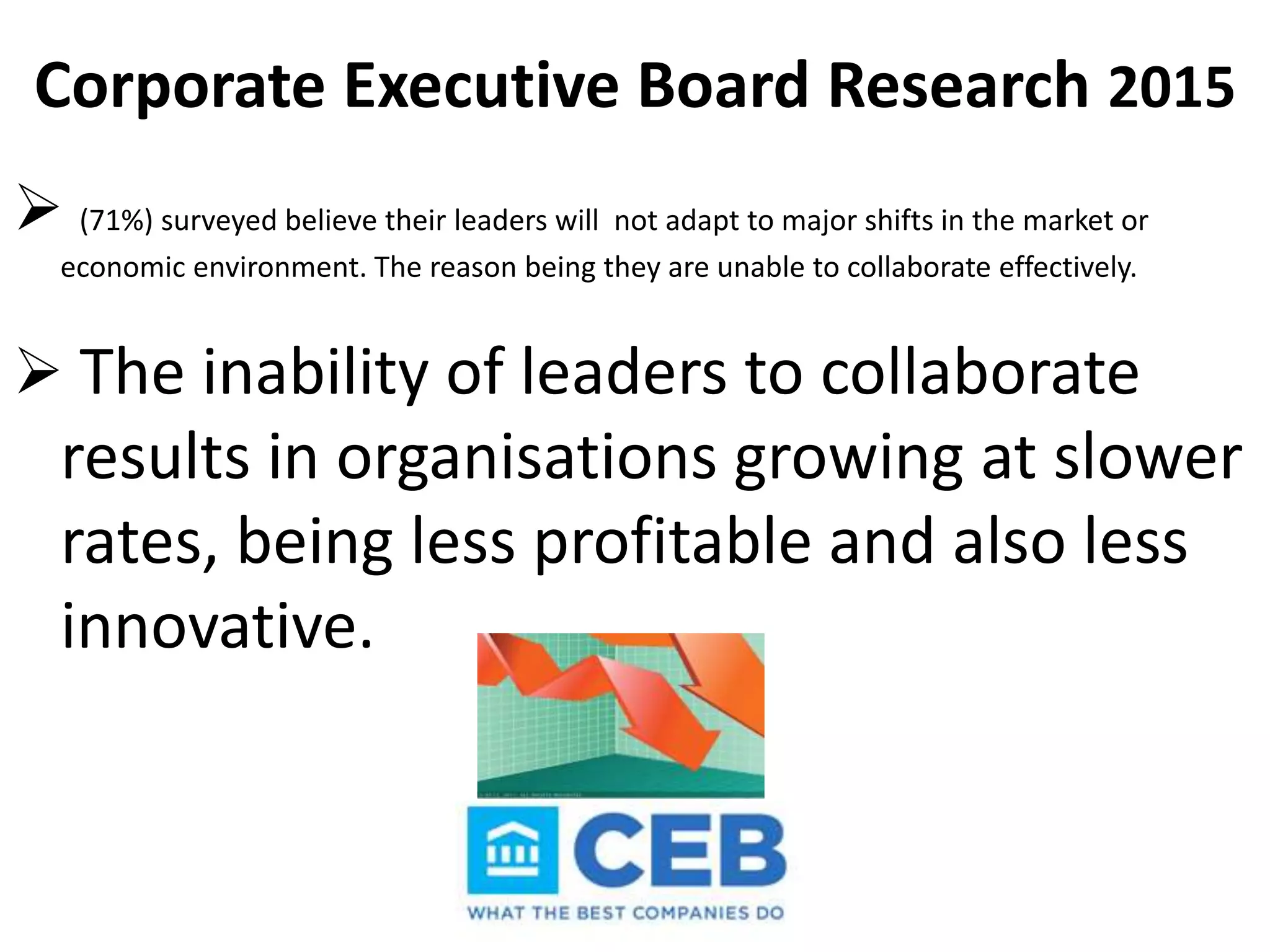
 The inability of leaders to collaborate
results in organisations growing at slower
rates, being less profitable and also less
innovative.
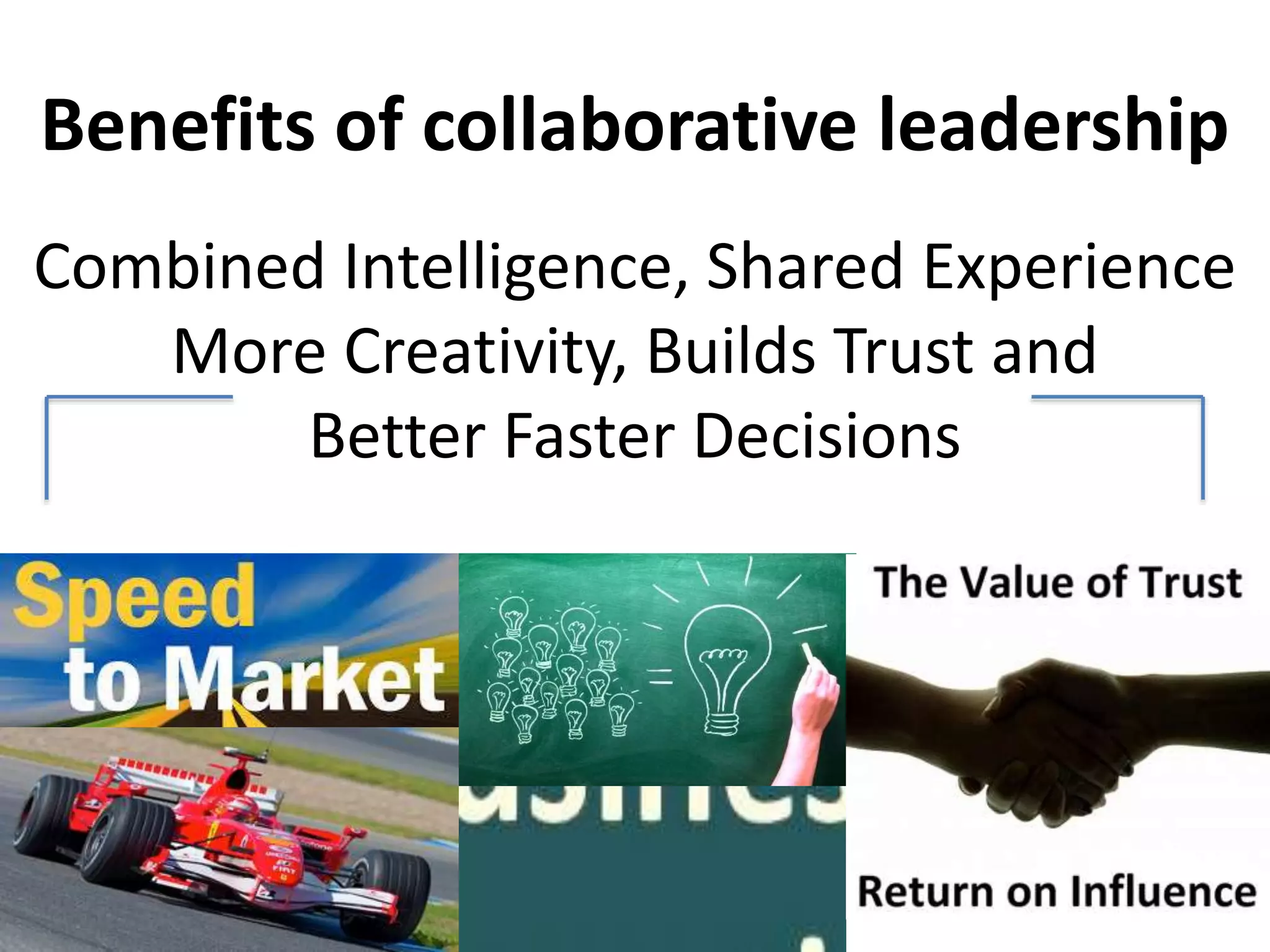
Benefits of collaborative leadership
Combined Intelligence, Shared Experience
More Creativity, Builds Trust and
Better Faster Decisions
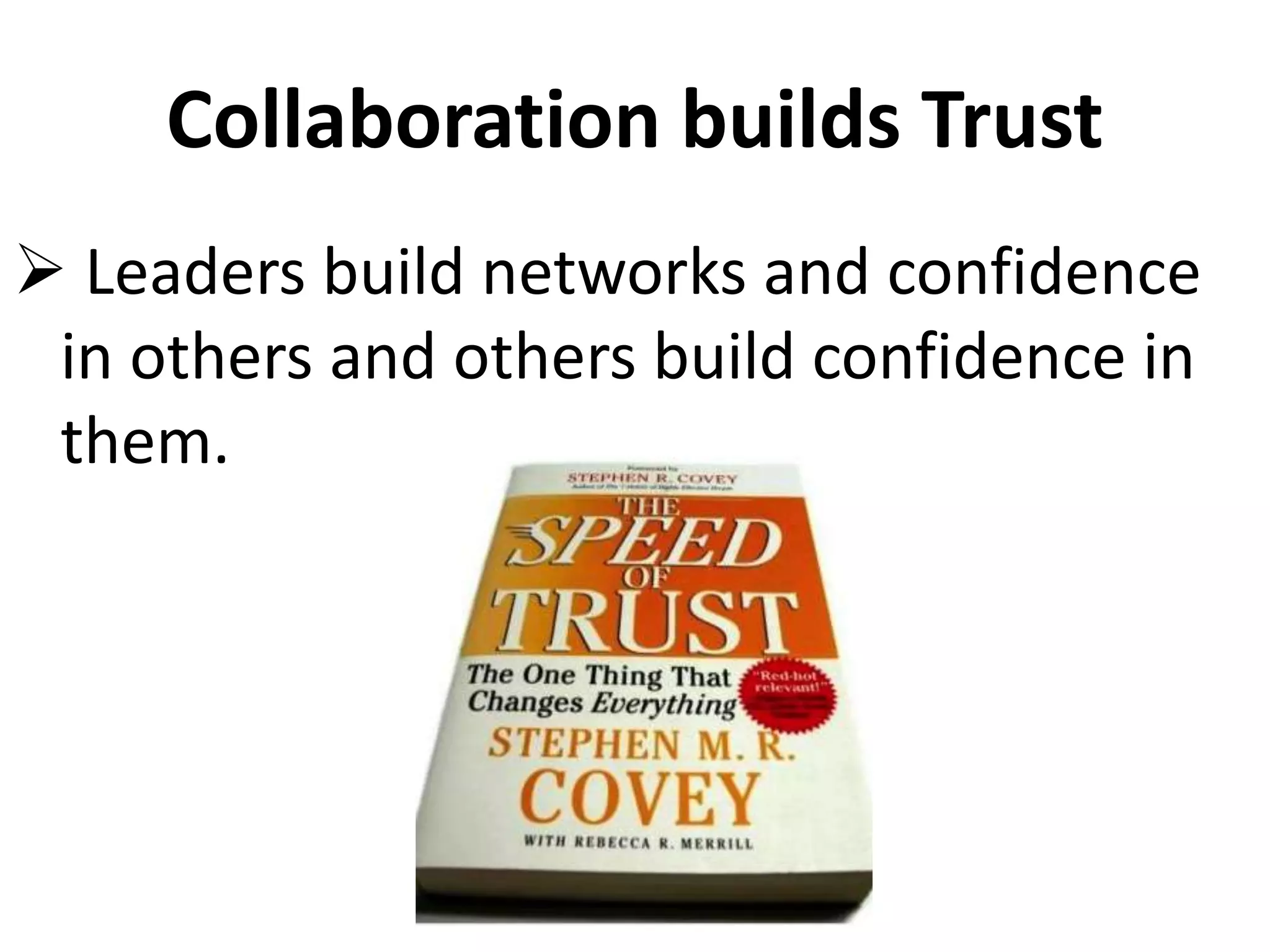
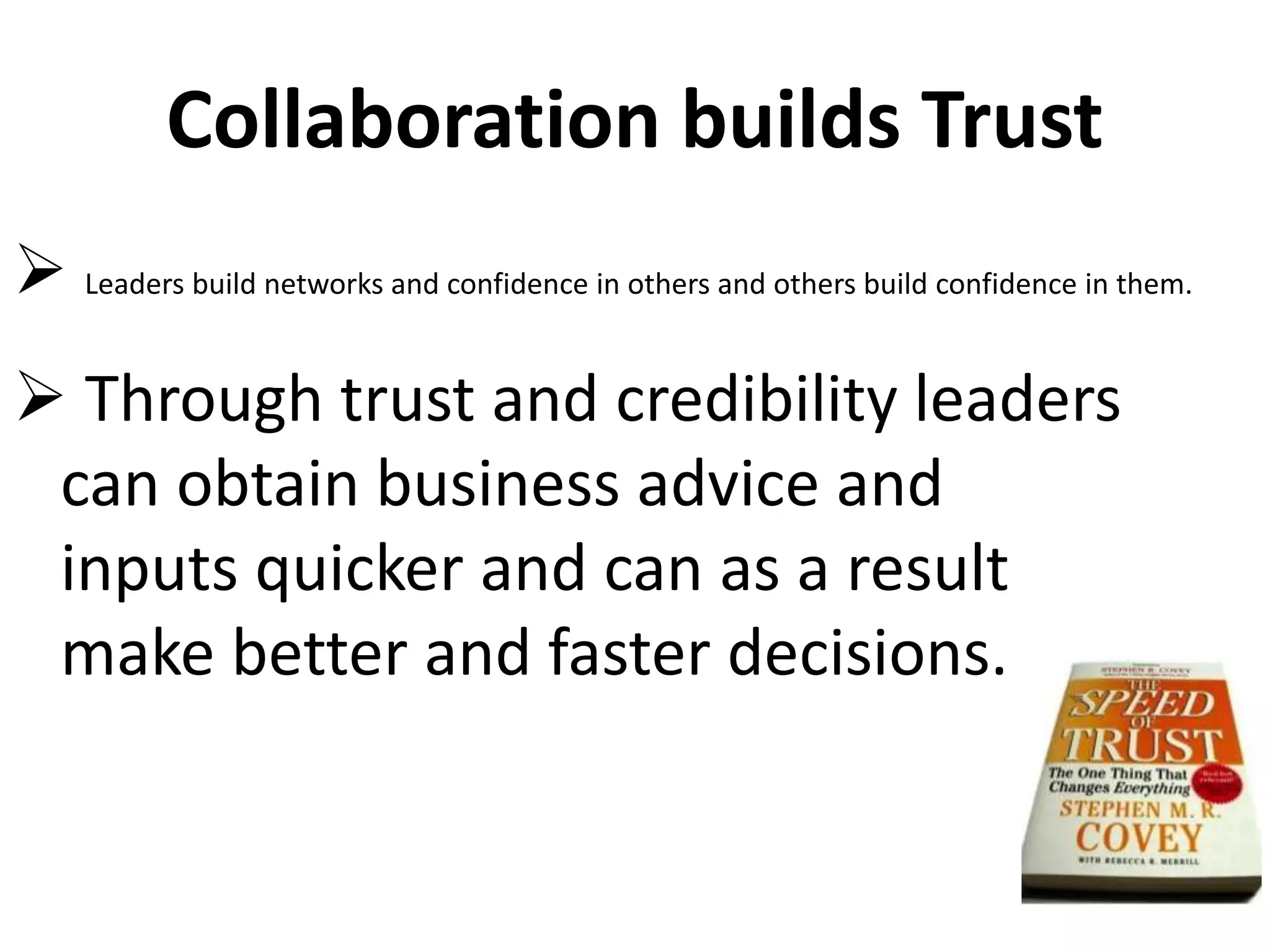
Collaboration builds Trust
 Leaders build networks and confidence
in others and others build confidence in
them.
Collaboration builds Trust
 Leaders build networks and confidence in others and others build confidence in them.
 Through trust and credibility leaders
can obtain business advice and
inputs quicker and can as a result
make better and faster decisions.
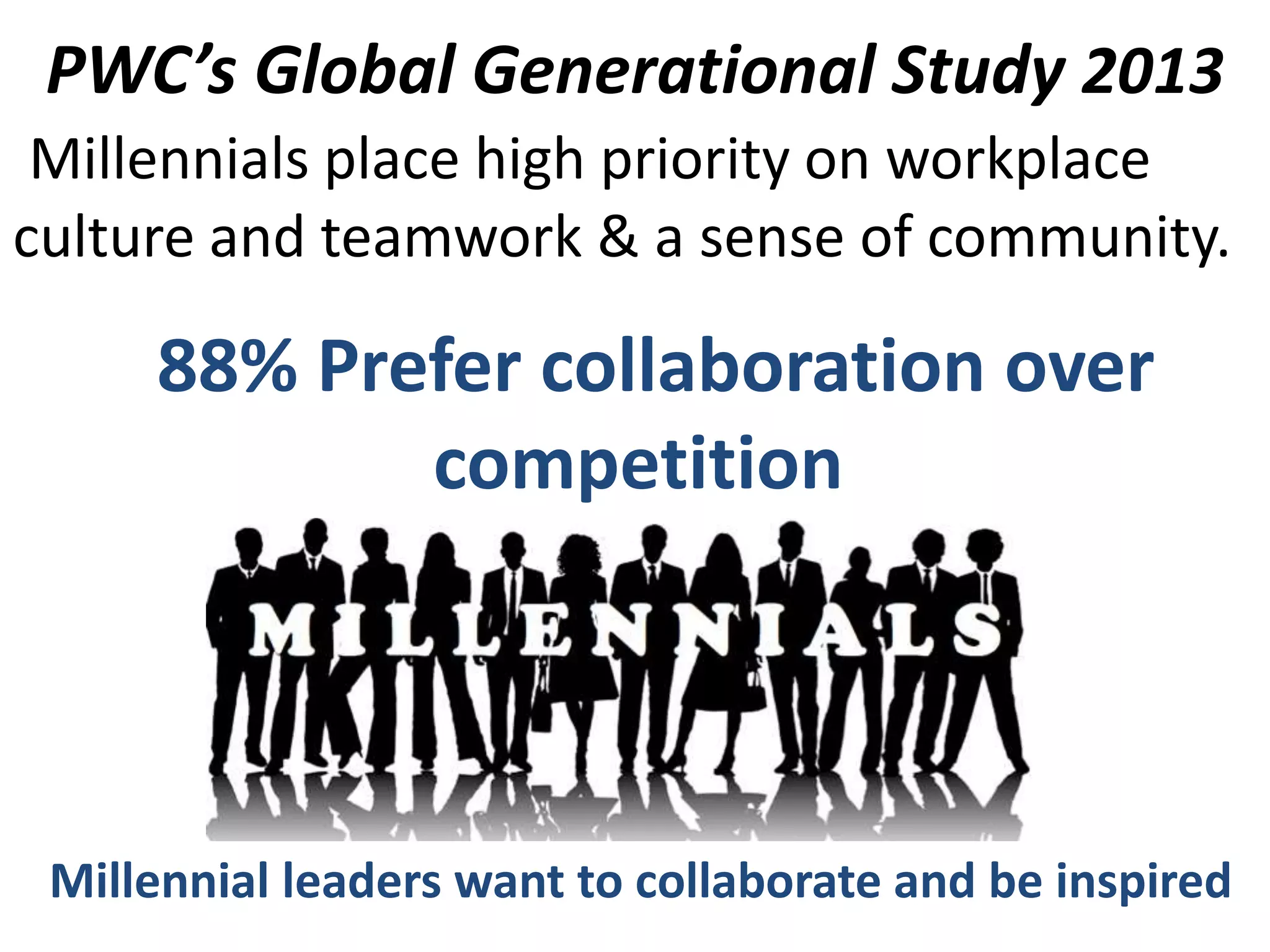
PWC’s Global Generational Study 2013
Millennials place high priority on workplace
culture and teamwork & a sense of community.
88% Prefer collaboration over
competition
Millennial leaders want to collaborate and be inspired
Millennials also seek greater
purpose in their work
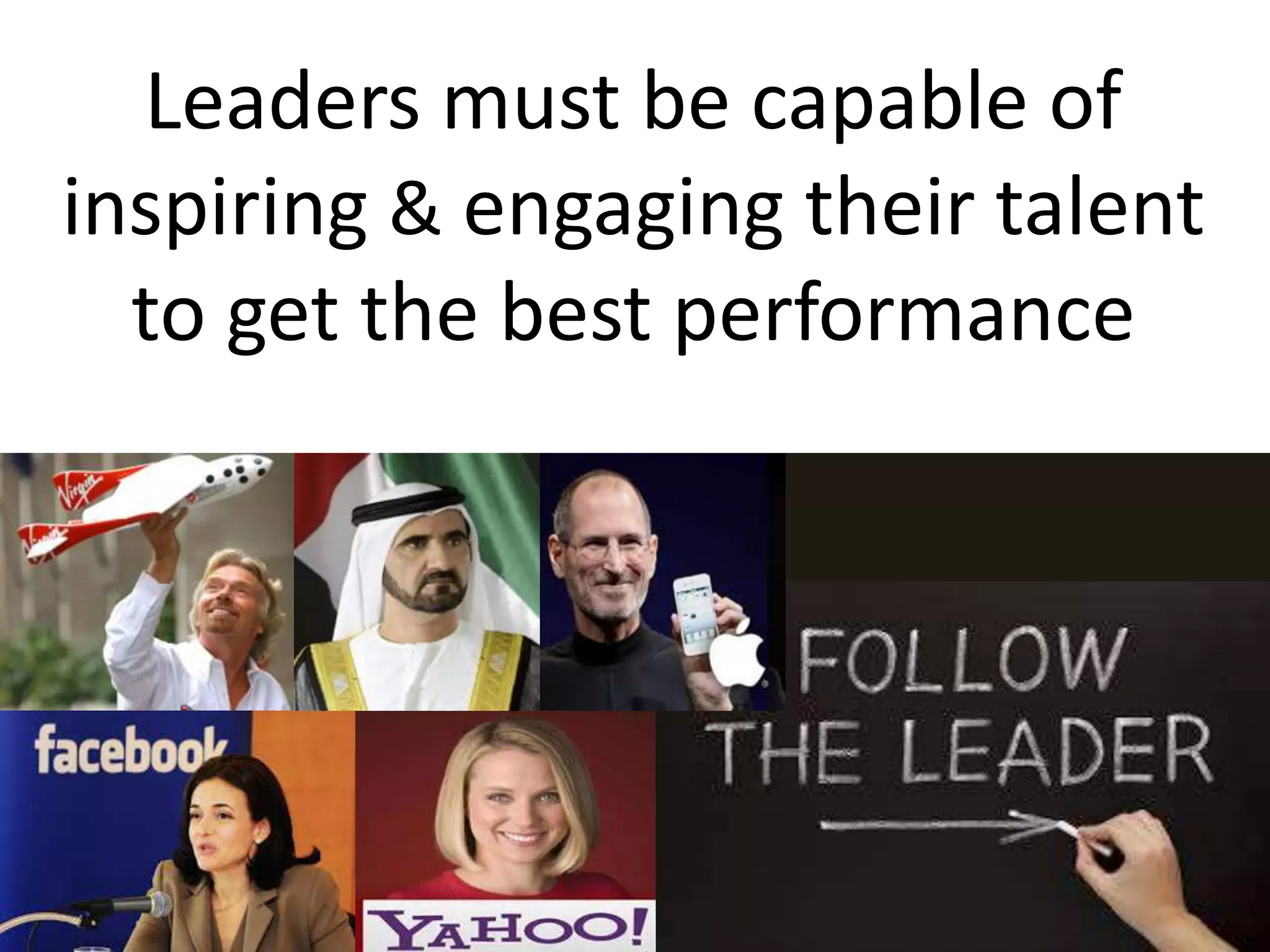
Leaders must be capable of
inspiring & engaging their talent
to get the best performance
Deloitte’s Global Human Capital Trends
3,300 business from 106 countries – 2015 Survey
“Organisations are recognising the need
to focus on culture and dramatically
improve employee engagement”.
#1 Top trend was Culture & Engagement
“A strong sense of purpose is also
closely linked to positive
organisational performance”
Deloitte’s Core beliefs culture survey
So
Neuro-leadership
Leaders emotions and behaviours impact
on the motivation and engagement of their
people and on their organisation’s success.
confirms the impact that engagement has
on an employee’s ability to:
Solve problems - Make decisions - Stay cool
under pressure - Collaborate with others
and Deal with change.
Neuro-Leadership scientifically
Self-awareness and
Emotional Intelligence
EQ
Leaders managing their
emotions and the emotions
of others have the greatest
impact engaging with their
employees
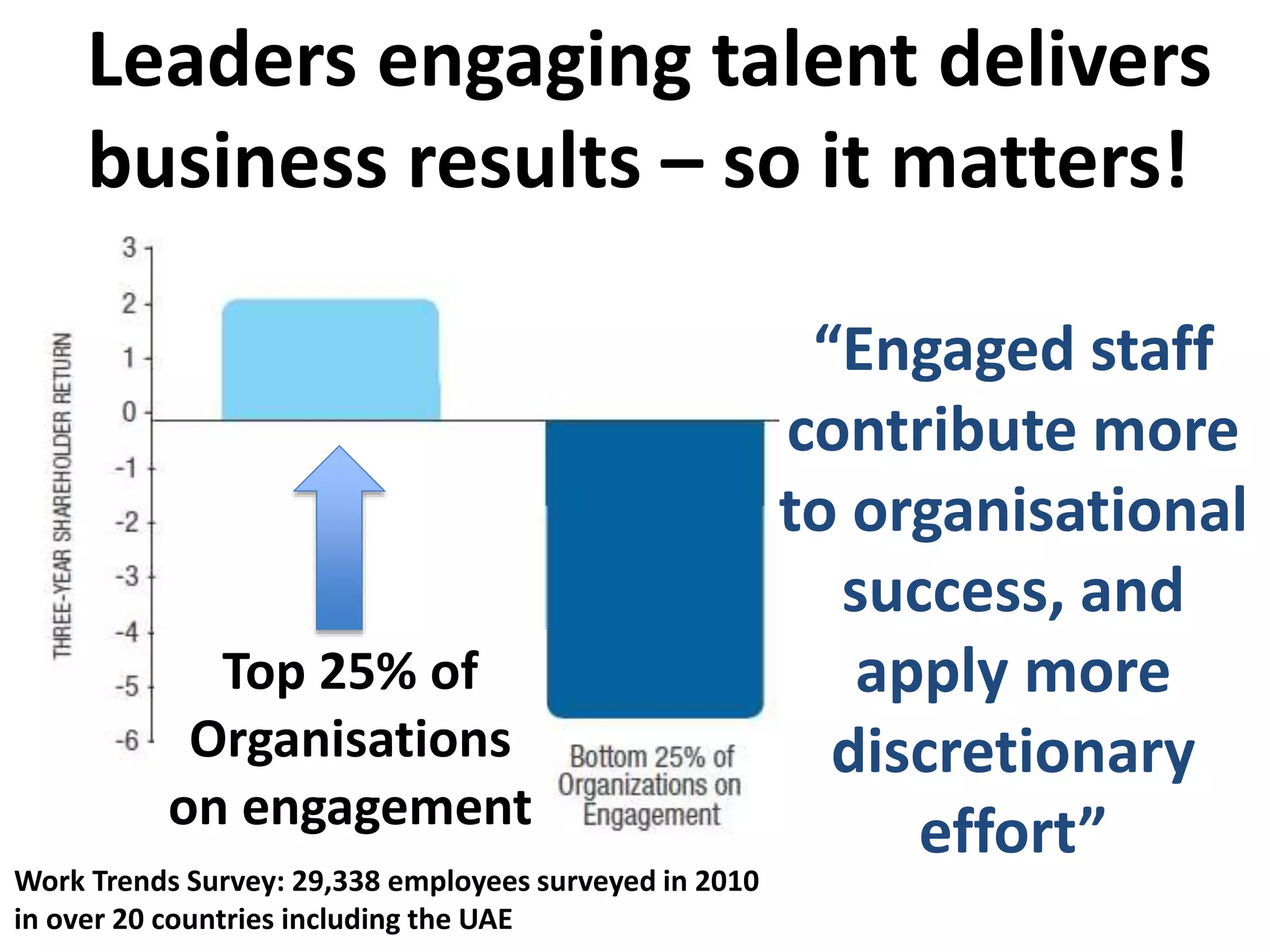
“Engaged staff
contribute more
to organisational
success, and
apply more
discretionary
effort”
Leaders engaging talent delivers
business results – so it matters!
Work Trends Survey: 29,338 employees surveyed in 2010
in over 20 countries including the UAE
Top 25% of
Organisations
on engagement
Energising Employees
Unlocking discretionary effort
I fit – a sense of belonging
I’m clear - clarity and security
I’m supported - Encourage & empower
I’m valued - Recognise contribution
I’m inspired - Give ‘The Why’ the purpose
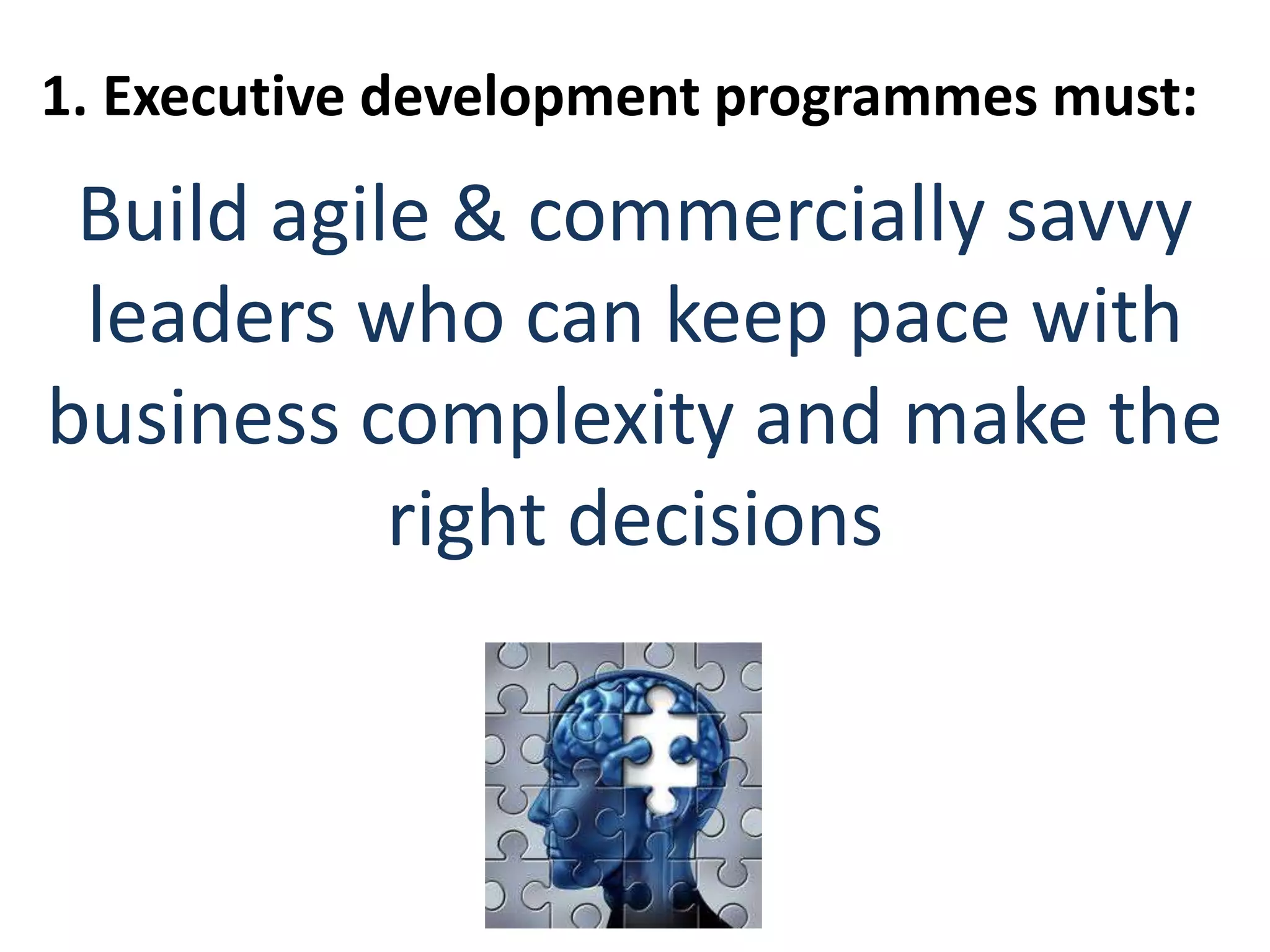
1. Executive development programmes must:
Build agile & commercially savvy
leaders who can keep pace with
business complexity and make the
right decisions
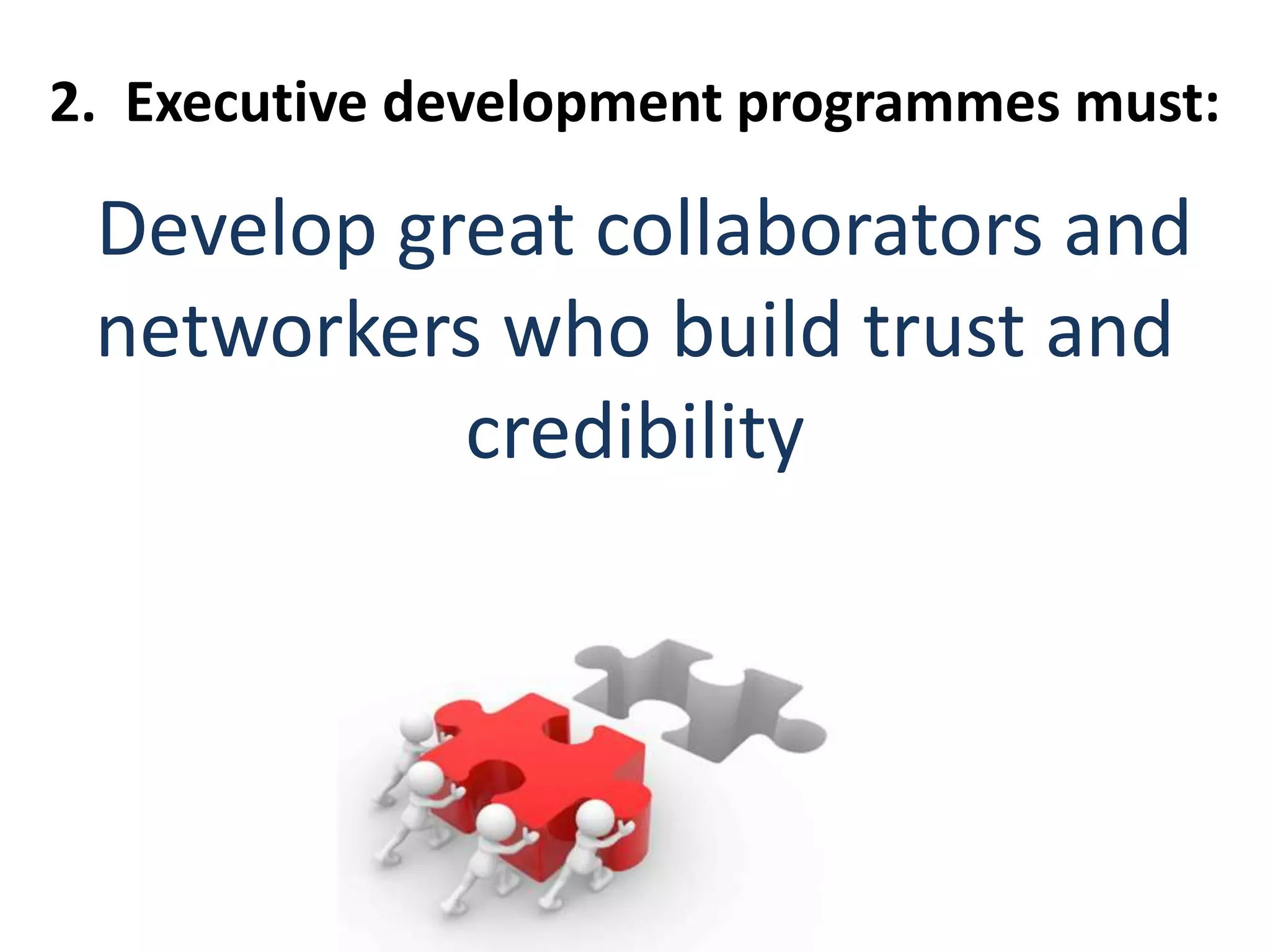
2. Executive development programmes must:
Develop great collaborators and
networkers who build trust and
credibility
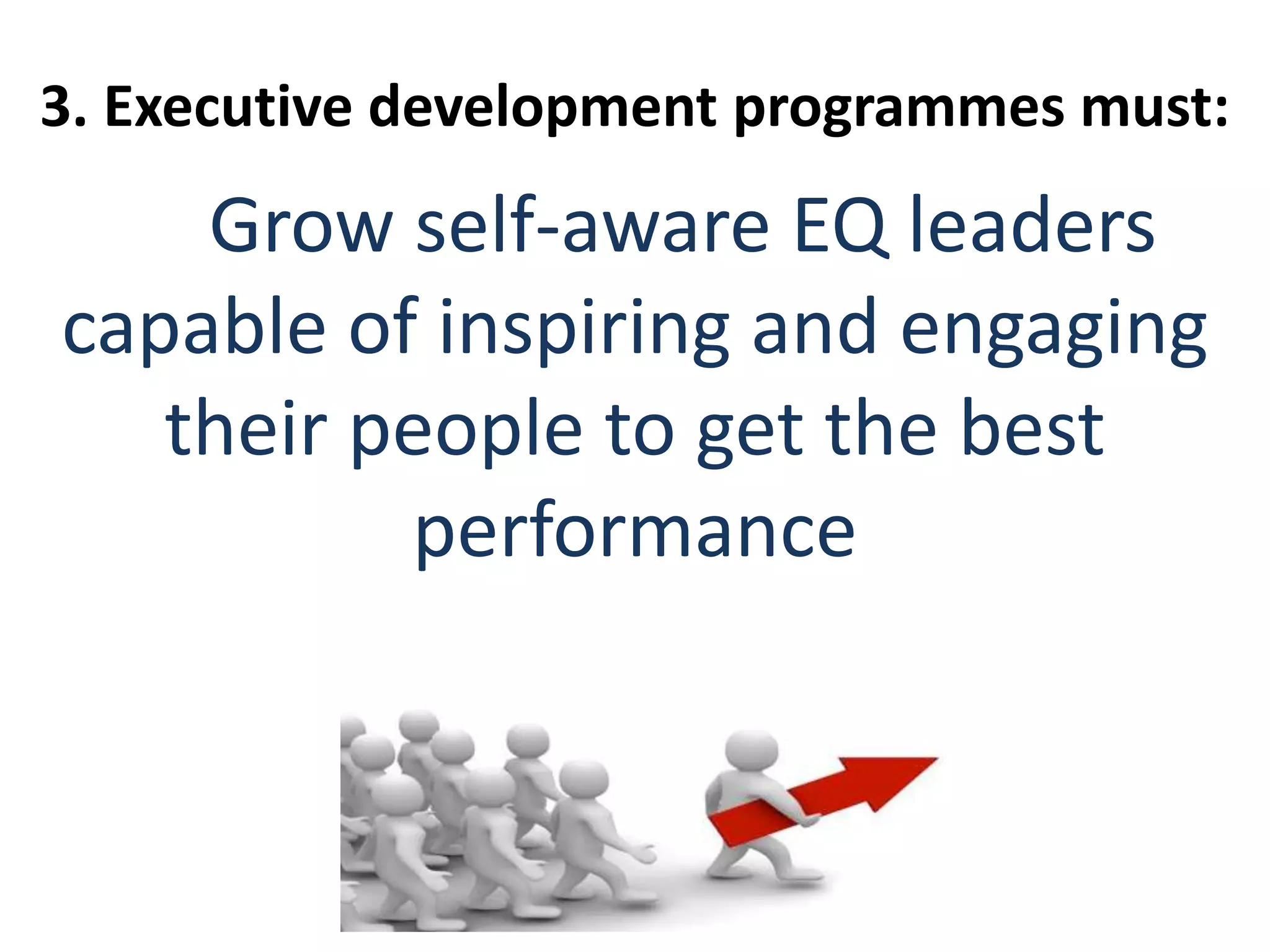
3. Executive development programmes must:
Grow self-aware EQ leaders
capable of inspiring and engaging
their people to get the best
performance
We all know 70% of learning
happens in the workplace
Therefore …..
Focus on high-impact business
relevant executive leadership
development activities
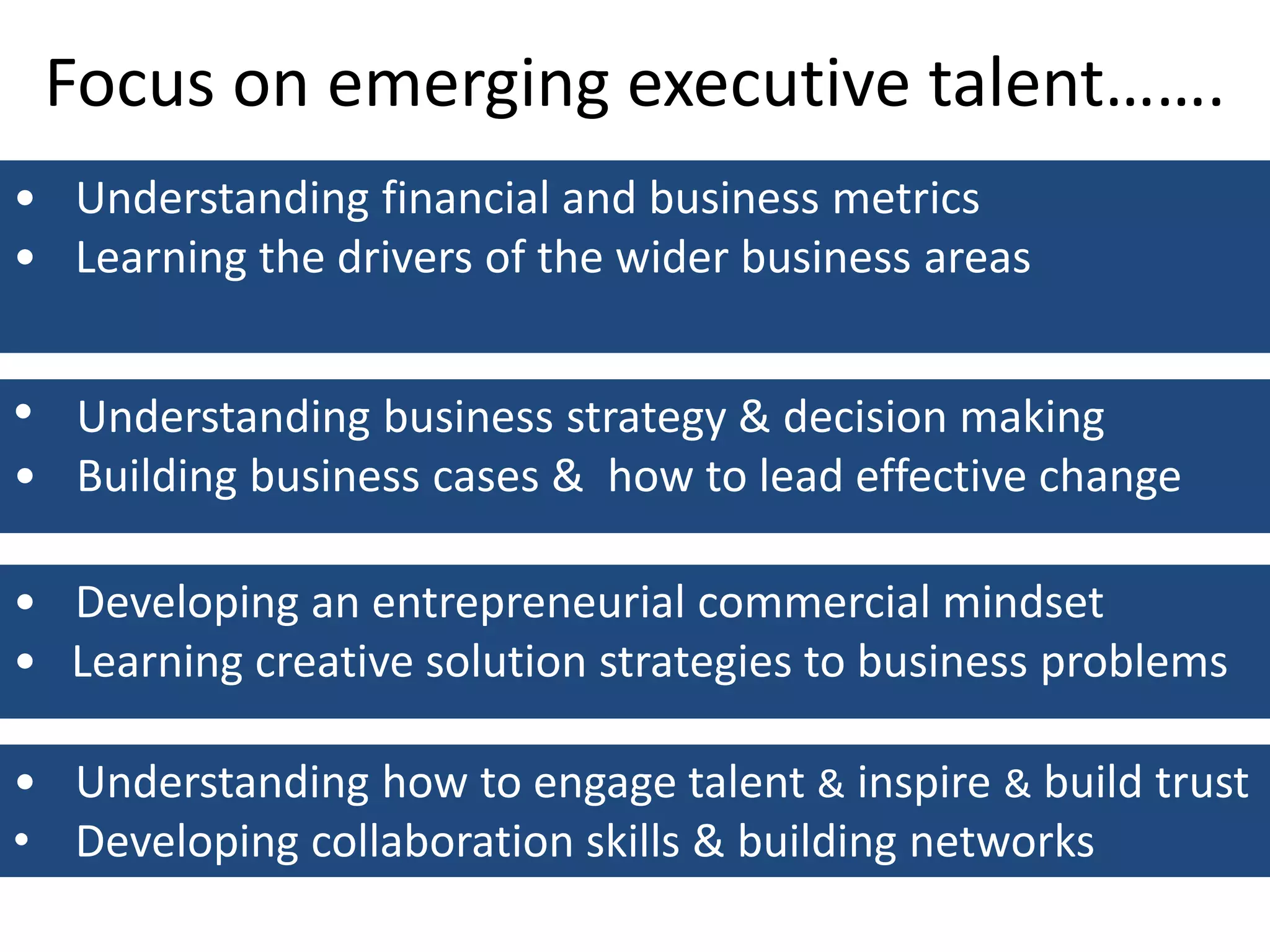
Focus on emerging executive talent…….
• Understanding financial and business metrics
• Learning the drivers of the wider business areas
• Understanding business strategy & decision making
• Building business cases & how to lead effective change
• Developing an entrepreneurial commercial mindset
• Learning creative solution strategies to business problems
• Understanding how to engage talent & inspire & build trust
• Developing collaboration skills & building networks
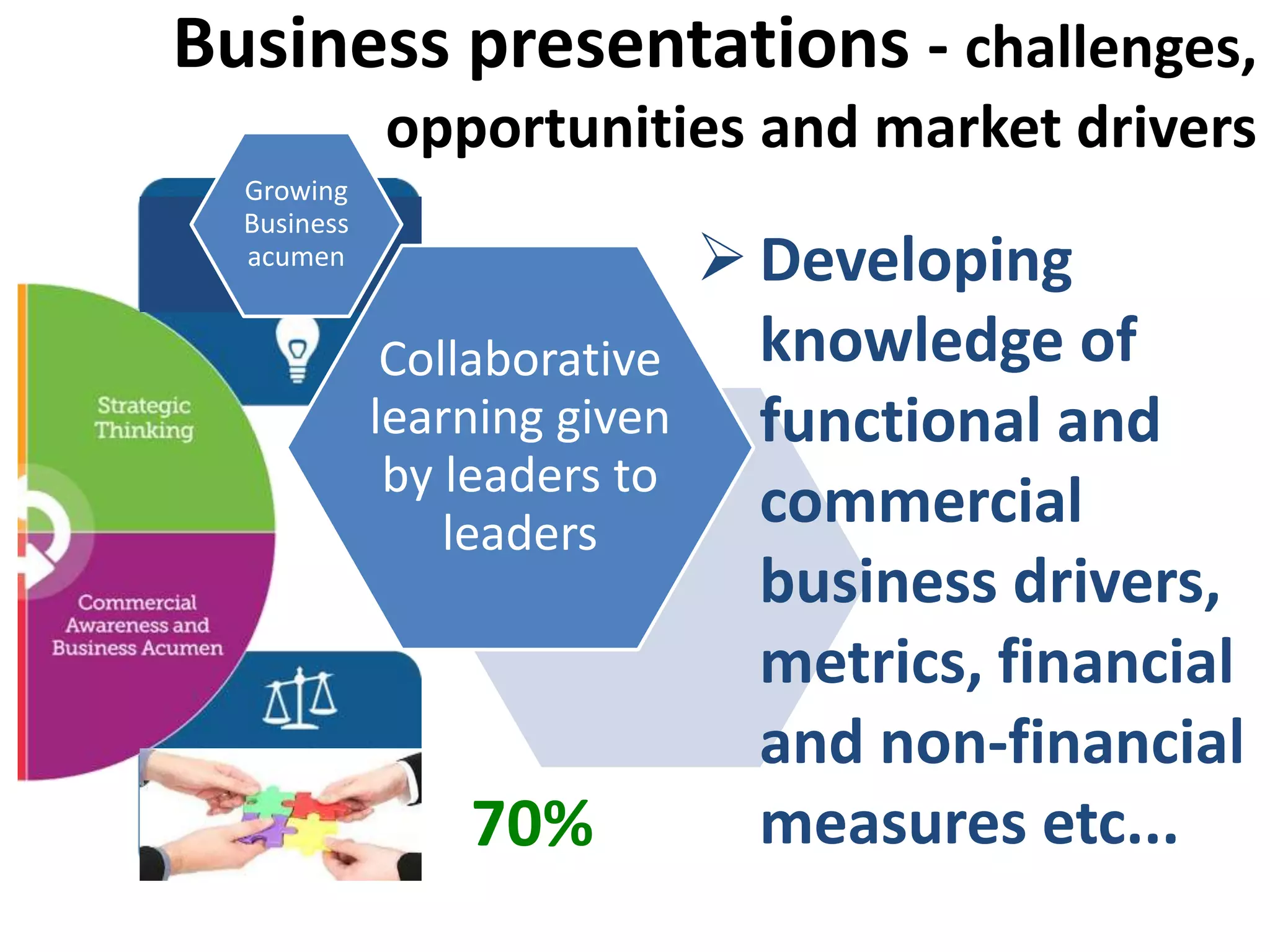
Business presentations - challenges,
opportunities and market drivers
Growing
Business
acumen
Collaborative
learning given
by leaders to
leaders
 Developing
knowledge of
functional and
commercial
business drivers,
metrics, financial
and non-financial
measures etc...70%
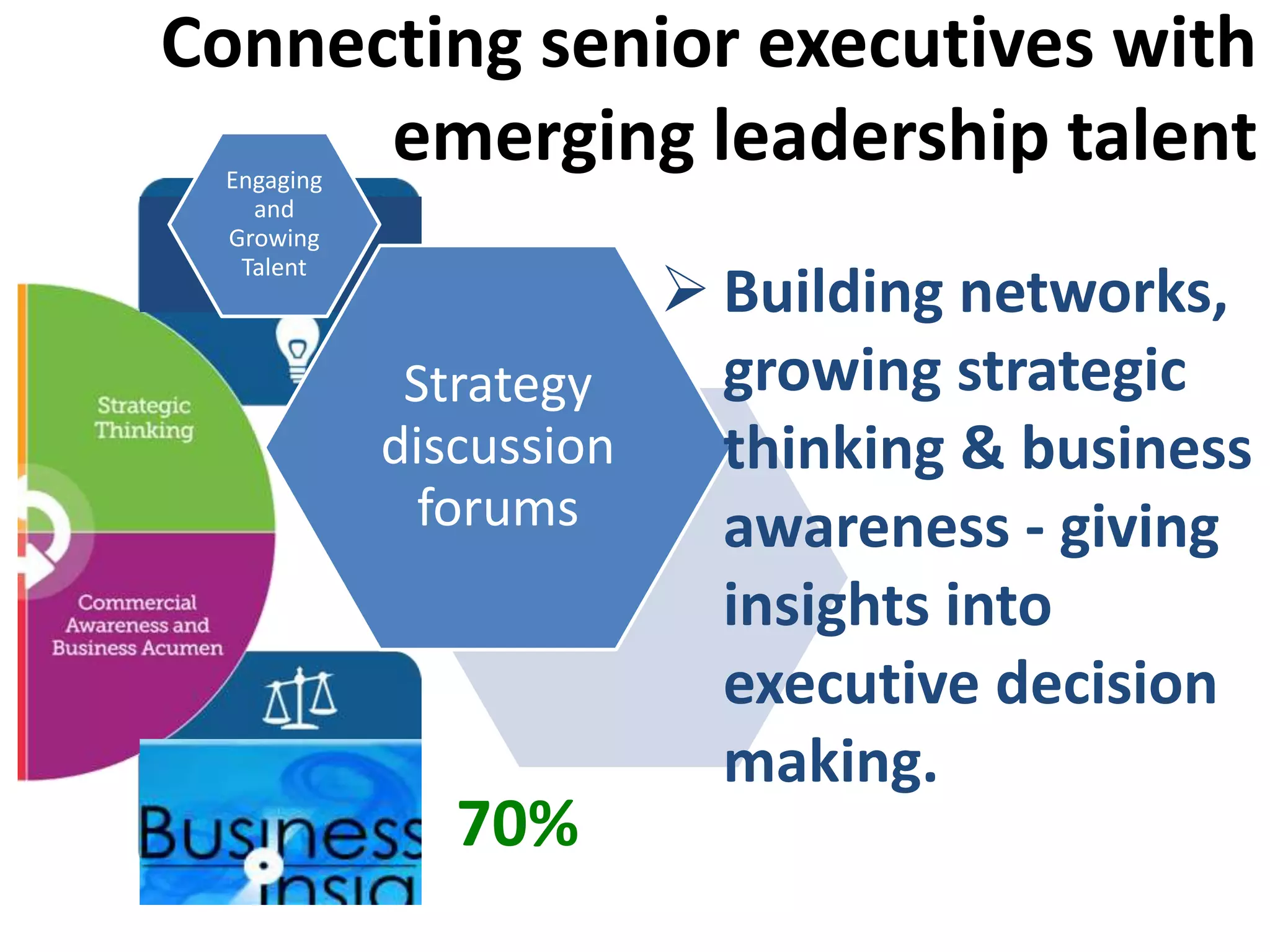
Connecting senior executives with
emerging leadership talentEngaging
and
Growing
Talent
Strategy
discussion
forums
 Building networks,
growing strategic
thinking & business
awareness - giving
insights into
executive decision
making.
70%
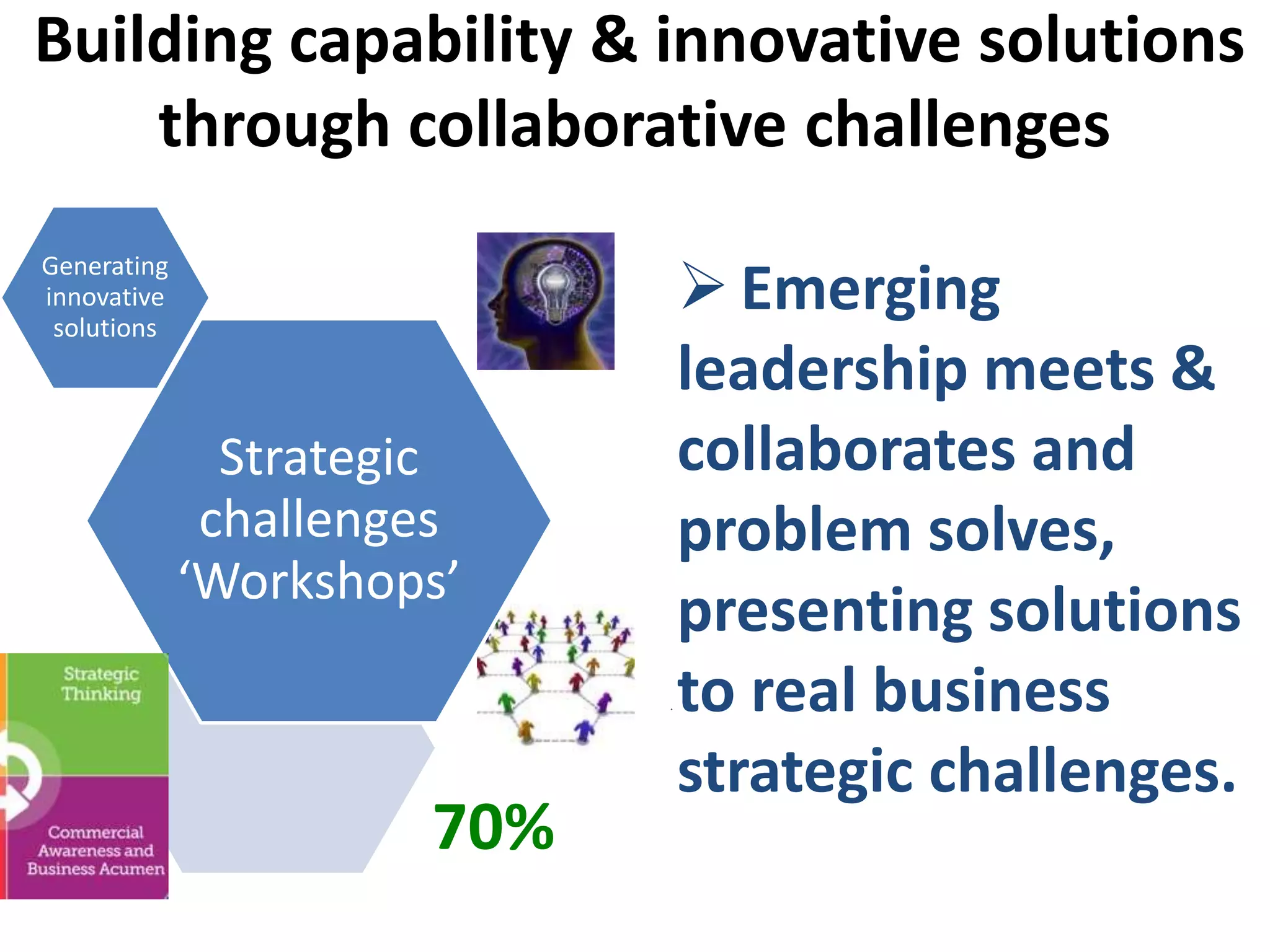
Building capability & innovative solutions
through collaborative challenges
Generating
innovative
solutions
Strategic
challenges
‘Workshops’
 Emerging
leadership meets &
collaborates and
problem solves,
presenting solutions
to real business
strategic challenges.
.
70%
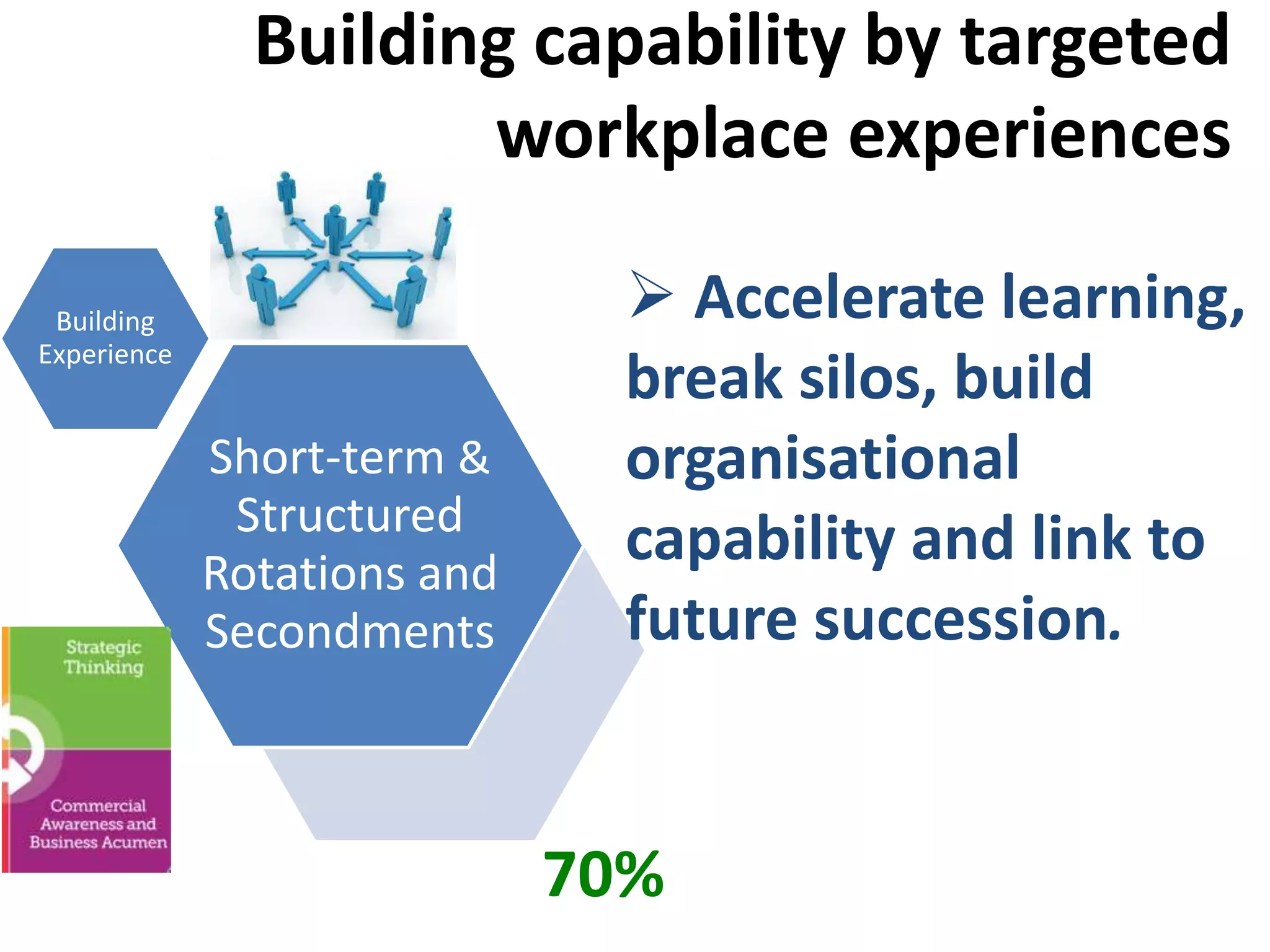
Building capability by targeted
workplace experiences
Building
Experience
Short-term &
Structured
Rotations and
Secondments
 Accelerate learning,
break silos, build
organisational
capability and link to
future succession.
70%
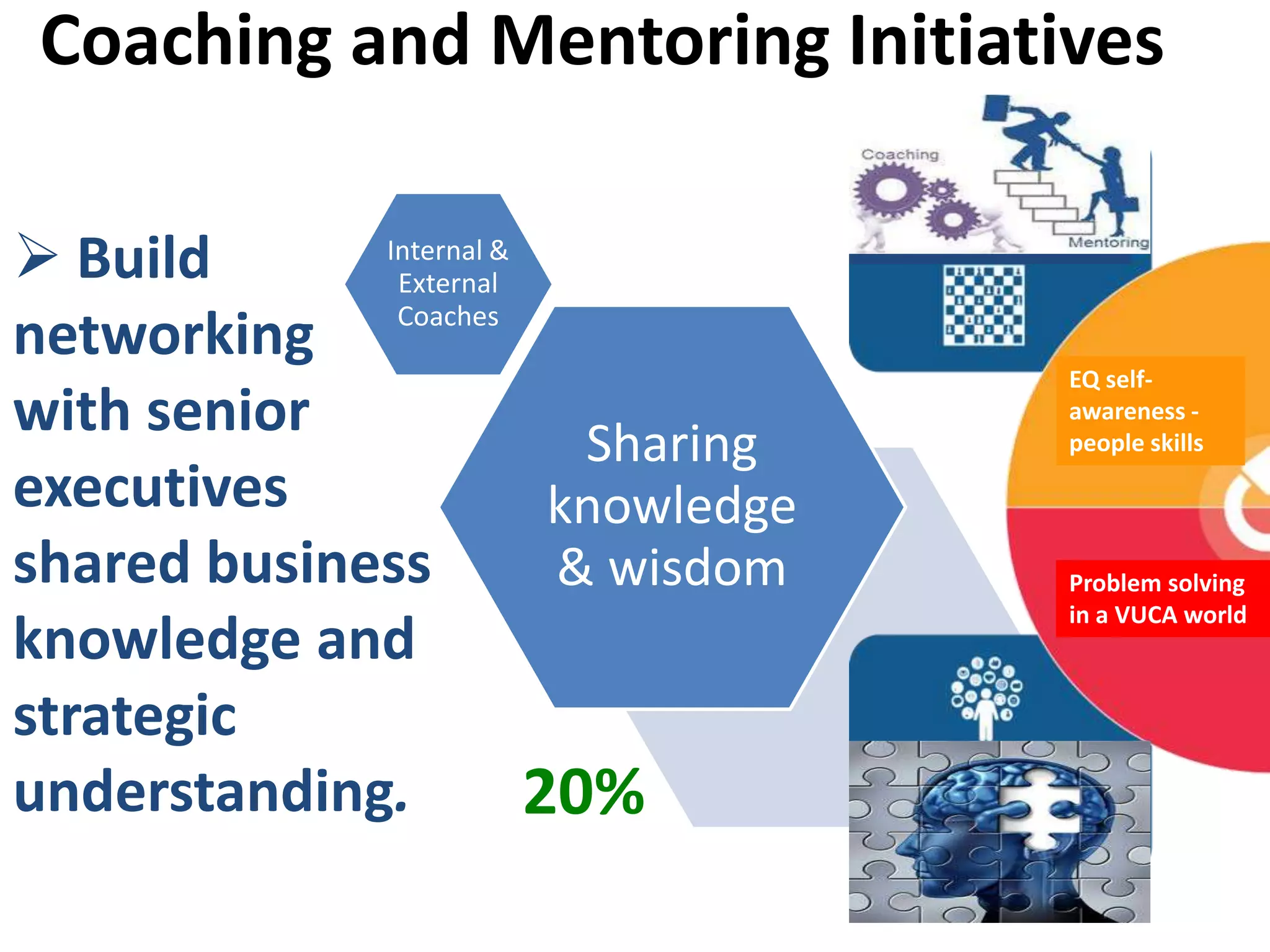
Coaching and Mentoring Initiatives
Internal &
External
Coaches
Sharing
knowledge
& wisdom
 Build
networking
with senior
executives
shared business
knowledge and
strategic
understanding. 20%
EQ self-
awareness -
people skills
Problem solving
in a VUCA world
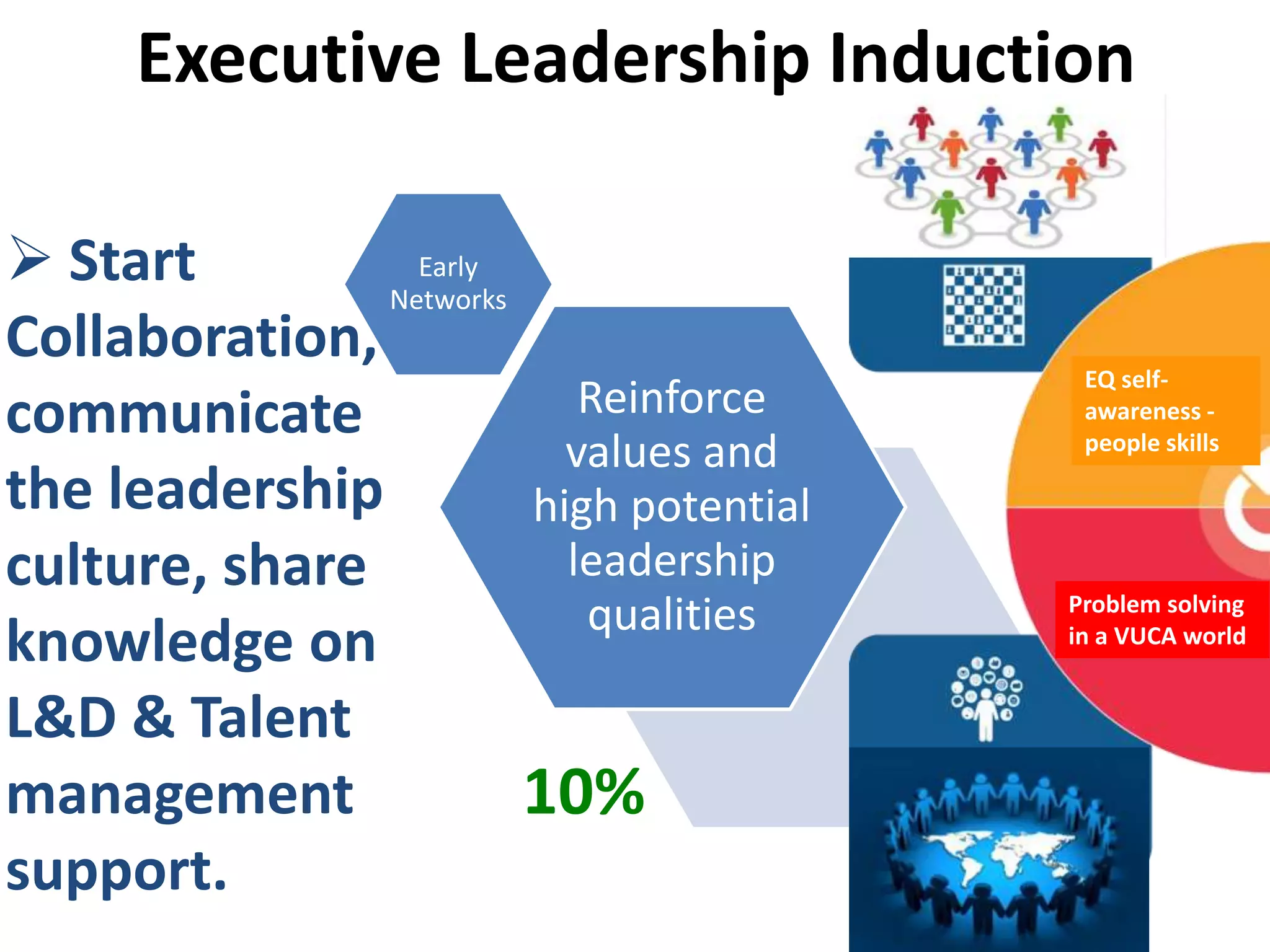
Executive Leadership Induction
 Start
Collaboration,
communicate
the leadership
culture, share
knowledge on
L&D & Talent
management
support.
10%
EQ self-
awareness -
people skills
Problem solving
in a VUCA world
Early
Networks
Reinforce
values and
high potential
leadership
qualities
EQ self-
awareness -
people skills
Problem solving
in a VUCA world
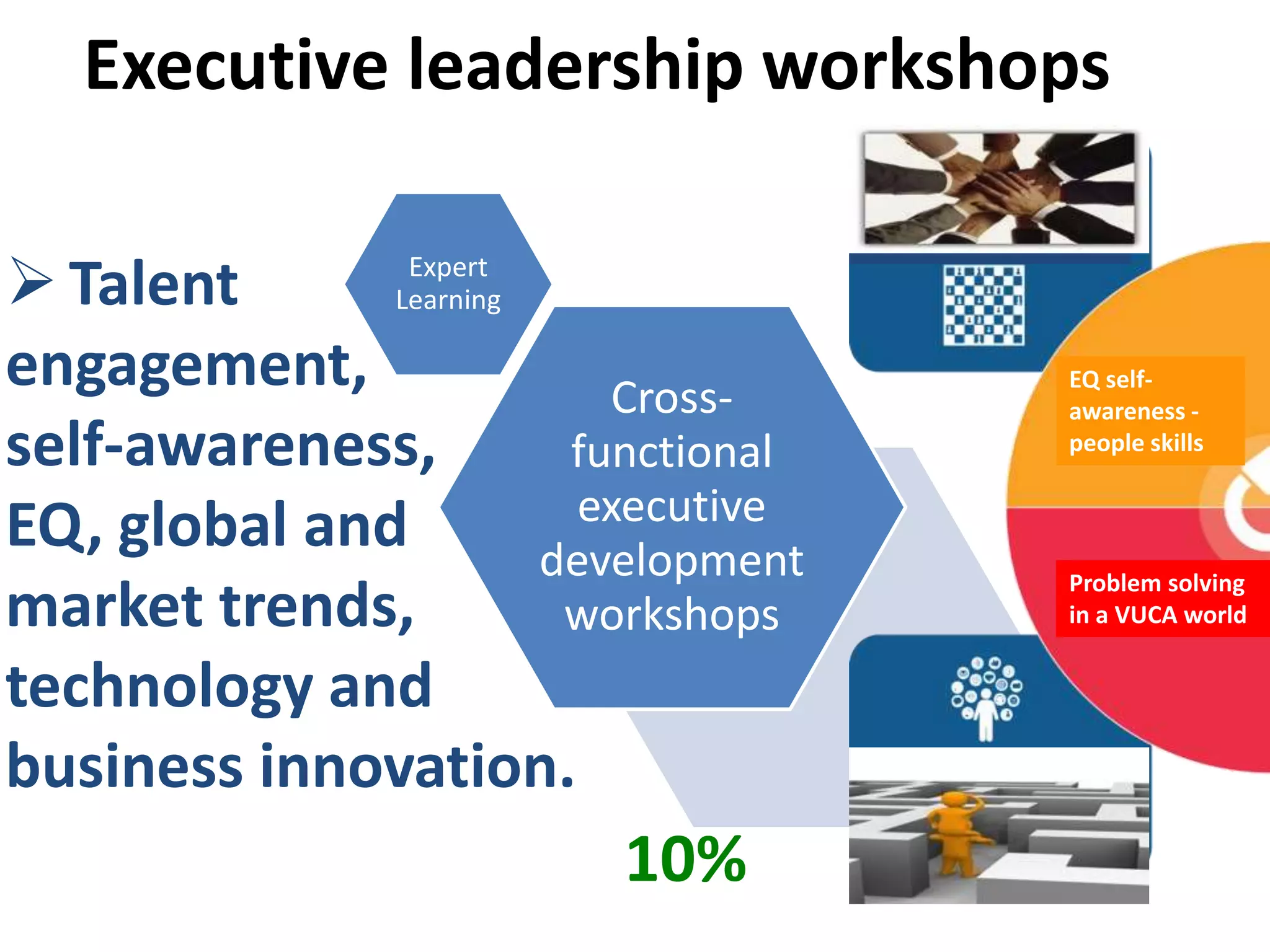
Executive leadership workshops
Expert
Learning
Cross-
functional
executive
development
workshops
 Talent
engagement,
self-awareness,
EQ, global and
market trends,
technology and
business innovation.
10%
EQ self-
awareness -
people skills
Problem solving
in a VUCA world
Reinforce, Update & Complement
With bite-sized, on-demand, digital
learning resources, social learning -
articles, economic updates etc..
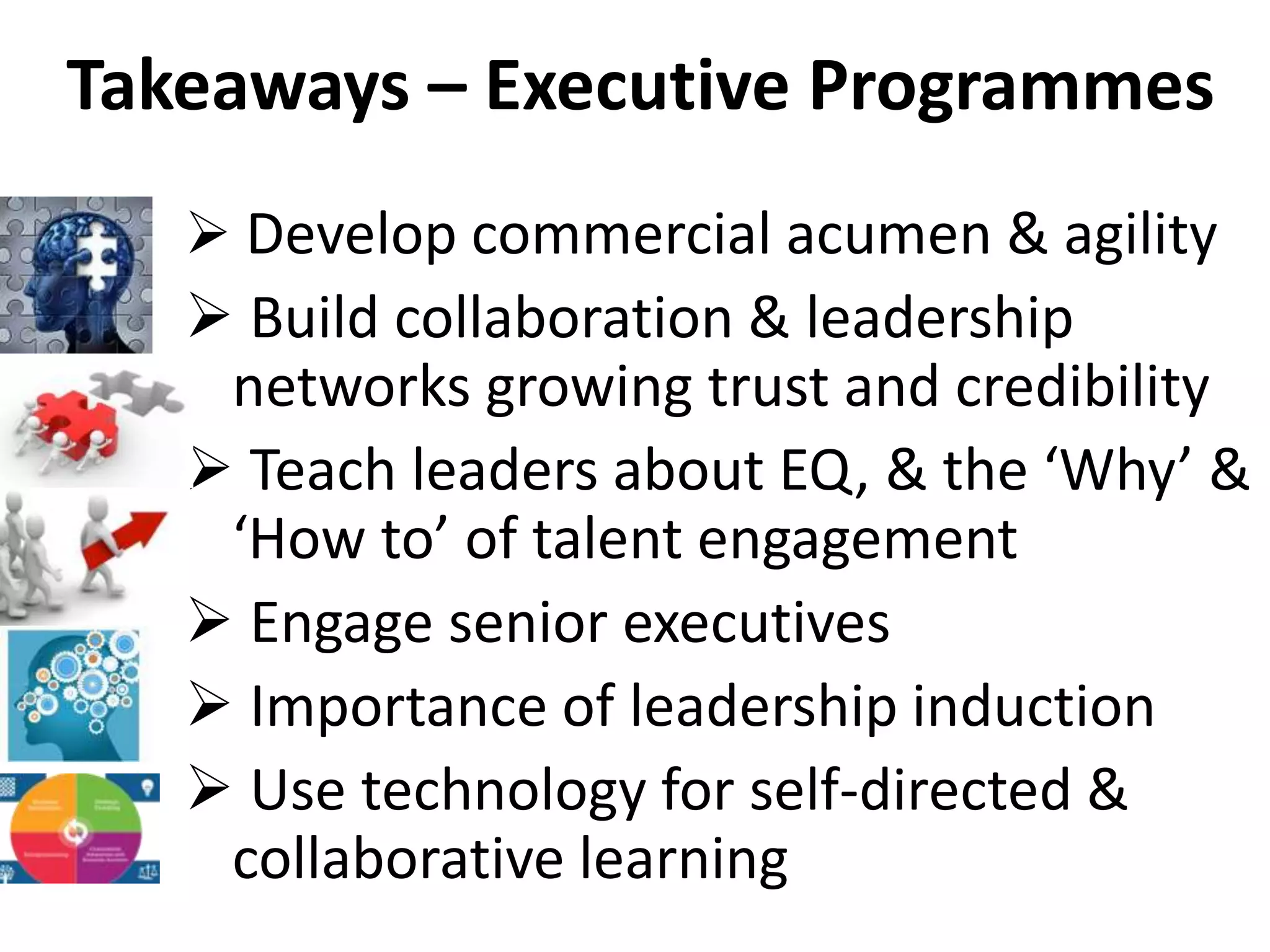
Takeaways – Executive Programmes
 Develop commercial acumen & agility
 Build collaboration & leadership
networks growing trust and credibility
 Teach leaders about EQ, & the ‘Why’ &
‘How to’ of talent engagement
 Engage senior executives
 Importance of leadership induction
 Use technology for self-directed &
collaborative learning
Rick Helliwell

High Impact Executive Development - Rick Helliwell

  • 1.
    Insight into themost effective executive leadership development programmes Dubai International Summit: 7 – 8 September 2015 – Rick Helliwell
  • 2.
     Saying youneed effective executive leadership is like saying that you have to make a profit to stay in business.  McKinsey research has consistently shown that effective leadership is a critical part of organisational health and is a driver of shareholder returns. LEADERSHIP CAPABILITY
  • 3.
  • 4.
    ROI • Relevant, impactfuland reinforceable • Supported from the top. • Consistent with values and behaviours • Measurable, linked to business results
  • 5.
    50% more revenue 80% CorporateLeadership Council Top-tier leadership teams deliver significantly better financial results
  • 6.
    Bloomberg Business-Week/Hay Group Thetop 20 businesses for leadership acumen (blue) significantly outperformed the S&P 500 (green).
  • 7.
    So, where shouldthe focus be in executive leadership development ?
  • 8.
    -Solve problems effectively- make good decisions McKinsey Global Research – 2015 189,000 people in 81 organisations globally High-quality leadership teams displayed 4 key behaviours
  • 9.
    -Operate with astrong results orientation McKinsey Global Research – 2015 High-quality leadership teams displayed 4 key behaviours -Solve problems effectively - make good decisions
  • 10.
    -Solve problems effectively- make good decisions -Operate with a strong results orientation -Seek different perspectives & encourage employees to contribute ideas to improve performance McKinsey Global Research – 2015 High-quality leadership teams displayed 4 key behaviours
  • 11.
    -Solve problems effectively- make good decisions -Operate with a strong results orientation -Seek different perspectives & encourage employees to contribute ideas that could improve performance -Support others with empathy, authenticity, building trust & inspiring colleagues McKinsey Global Research – 2015 High-quality leadership teams displayed 4 key behaviours
  • 12.
    Leading in anincreasingly complex business world September 2011
  • 13.
  • 14.
    Less than 10%of those assessed had the appropriate strategic capabilities to successfully lead through complexity 2015 Research Harthill Consulting/PWC 6,000 executives globally across business sectors
  • 15.
    Executives must alsounderstand technology & social media
  • 16.
    Top tier leaderstoday seek different perspectives & are good collaborators and networkers
  • 17.
    Corporate Executive BoardResearch 2015  (71%) surveyed believe their leaders will not adapt to major shifts in the market or economic environment. The reason being they are unable to collaborate effectively.
  • 18.
    Corporate Executive BoardResearch 2015  (71%) surveyed believe their leaders will not adapt to major shifts in the market or economic environment. The reason being they are unable to collaborate effectively.  The inability of leaders to collaborate results in organisations growing at slower rates, being less profitable and also less innovative.
  • 19.
    Benefits of collaborativeleadership Combined Intelligence, Shared Experience More Creativity, Builds Trust and Better Faster Decisions
  • 20.
    Collaboration builds Trust Leaders build networks and confidence in others and others build confidence in them.
  • 21.
    Collaboration builds Trust Leaders build networks and confidence in others and others build confidence in them.  Through trust and credibility leaders can obtain business advice and inputs quicker and can as a result make better and faster decisions.
  • 22.
    PWC’s Global GenerationalStudy 2013 Millennials place high priority on workplace culture and teamwork & a sense of community. 88% Prefer collaboration over competition Millennial leaders want to collaborate and be inspired
  • 23.
    Millennial leaders wantto collaborate and be inspired Millennials also seek greater purpose in their work
  • 24.
    Leaders must becapable of inspiring & engaging their talent to get the best performance
  • 25.
    Deloitte’s Global HumanCapital Trends 3,300 business from 106 countries – 2015 Survey “Organisations are recognising the need to focus on culture and dramatically improve employee engagement”. #1 Top trend was Culture & Engagement
  • 26.
    “A strong senseof purpose is also closely linked to positive organisational performance” Deloitte’s Core beliefs culture survey
  • 27.
  • 28.
    Neuro-leadership Leaders emotions andbehaviours impact on the motivation and engagement of their people and on their organisation’s success.
  • 29.
    confirms the impactthat engagement has on an employee’s ability to: Solve problems - Make decisions - Stay cool under pressure - Collaborate with others and Deal with change. Neuro-Leadership scientifically
  • 30.
    Self-awareness and Emotional Intelligence EQ Leadersmanaging their emotions and the emotions of others have the greatest impact engaging with their employees
  • 31.
    “Engaged staff contribute more toorganisational success, and apply more discretionary effort” Leaders engaging talent delivers business results – so it matters! Work Trends Survey: 29,338 employees surveyed in 2010 in over 20 countries including the UAE Top 25% of Organisations on engagement
  • 32.
    Energising Employees Unlocking discretionaryeffort I fit – a sense of belonging I’m clear - clarity and security I’m supported - Encourage & empower I’m valued - Recognise contribution I’m inspired - Give ‘The Why’ the purpose
  • 33.
    1. Executive developmentprogrammes must: Build agile & commercially savvy leaders who can keep pace with business complexity and make the right decisions
  • 34.
    2. Executive developmentprogrammes must: Develop great collaborators and networkers who build trust and credibility
  • 35.
    3. Executive developmentprogrammes must: Grow self-aware EQ leaders capable of inspiring and engaging their people to get the best performance
  • 36.
    We all know70% of learning happens in the workplace Therefore ….. Focus on high-impact business relevant executive leadership development activities
  • 37.
    Focus on emergingexecutive talent……. • Understanding financial and business metrics • Learning the drivers of the wider business areas • Understanding business strategy & decision making • Building business cases & how to lead effective change • Developing an entrepreneurial commercial mindset • Learning creative solution strategies to business problems • Understanding how to engage talent & inspire & build trust • Developing collaboration skills & building networks
  • 38.
    Business presentations -challenges, opportunities and market drivers Growing Business acumen Collaborative learning given by leaders to leaders  Developing knowledge of functional and commercial business drivers, metrics, financial and non-financial measures etc...70%
  • 39.
    Connecting senior executiveswith emerging leadership talentEngaging and Growing Talent Strategy discussion forums  Building networks, growing strategic thinking & business awareness - giving insights into executive decision making. 70%
  • 40.
    Building capability &innovative solutions through collaborative challenges Generating innovative solutions Strategic challenges ‘Workshops’  Emerging leadership meets & collaborates and problem solves, presenting solutions to real business strategic challenges. . 70%
  • 41.
    Building capability bytargeted workplace experiences Building Experience Short-term & Structured Rotations and Secondments  Accelerate learning, break silos, build organisational capability and link to future succession. 70%
  • 42.
    Coaching and MentoringInitiatives Internal & External Coaches Sharing knowledge & wisdom  Build networking with senior executives shared business knowledge and strategic understanding. 20% EQ self- awareness - people skills Problem solving in a VUCA world
  • 43.
    Executive Leadership Induction Start Collaboration, communicate the leadership culture, share knowledge on L&D & Talent management support. 10% EQ self- awareness - people skills Problem solving in a VUCA world Early Networks Reinforce values and high potential leadership qualities EQ self- awareness - people skills Problem solving in a VUCA world
  • 44.
    Executive leadership workshops Expert Learning Cross- functional executive development workshops Talent engagement, self-awareness, EQ, global and market trends, technology and business innovation. 10% EQ self- awareness - people skills Problem solving in a VUCA world
  • 45.
    Reinforce, Update &Complement With bite-sized, on-demand, digital learning resources, social learning - articles, economic updates etc..
  • 46.
    Takeaways – ExecutiveProgrammes  Develop commercial acumen & agility  Build collaboration & leadership networks growing trust and credibility  Teach leaders about EQ, & the ‘Why’ & ‘How to’ of talent engagement  Engage senior executives  Importance of leadership induction  Use technology for self-directed & collaborative learning
  • 47.

Editor's Notes

  • #2 Welcome, it’s a pleasure to be here today to share my experience and some recent research and concepts on executive leadership development. * I only have 30 minutes so my aim today is to leave with you some clear direction on what I believe is important in an executive leadership development programme and some practical initiatives you can implement to achieve them.
  • #3 * There is so much information out there on leadership that you need to really be focused on what makes the difference in an executive leadership role. * In business successful executive leaders must make profits and improve profitability year on year, deliver shareholder returns, grow their brands and services, to be successful. * Having effective leadership is critical to business success, and the hard research confirms this.
  • #4 As I mentioned earlier, my thoughts today also reference recent quantifiable research and studies on leadership and its importance, which provides the support to you when designing your programmes for CEO sign-off.
  • #6 Numbers and metrics are the language of business. The CLC, a global consultancy, researched across their membership which includes most of the world’s top performing businesses and showed convincingly that those with top tier leadership teams deliver more revenues and profits, and significantly more.
  • #7 Bloomberg, Business Week and Hay Group also showed that the top 20 businesses as measured for having the best leadership acumen outperformed the rest of the S&P 500 companies.
  • #8 But with so many books, internet articles etc etc where should the focus be to develop executive leadership?
  • #9 McKinsey’s 2015 global study identified that high quality leadership teams consistently displayed 4 key behaviours. They solve problems effectively and make good decisions as a result They operate with a strong results focus They actively seek different perspectives, encouraging the contribution of ideas from all levels And they support people across the business, being empathetic, leading with authenticity, building trust and inspiring their people
  • #10 McKinsey’s 2015 global study identified that high quality leadership teams consistently displayed 4 key behaviours. They solve problems effectively and make good decisions as a result They operate with a strong results focus They actively seek different perspectives, encouraging the contribution of ideas from all levels And they support people across the business, being empathetic, leading with authenticity, building trust and inspiring their people
  • #11 McKinsey’s 2015 global study identified that high quality leadership teams consistently displayed 4 key behaviours. They solve problems effectively and make good decisions as a result They operate with a strong results focus They actively seek different perspectives, encouraging the contribution of ideas from all levels And they support people across the business, being empathetic, leading with authenticity, building trust and inspiring their people
  • #12 McKinsey’s 2015 global study identified that high quality leadership teams consistently displayed 4 key behaviours. They solve problems effectively and make good decisions as a result They operate with a strong results focus They actively seek different perspectives, encouraging the contribution of ideas from all levels And they support people across the business, being empathetic, leading with authenticity, building trust and inspiring their people
  • #13 All these 4 behaviours are magnified in importance today as every area of business and operations is becoming more complex, areas leaders can impact and those areas outside their control too. Embracing complexity, is something that is essential today for senior leaders to be comfortable and capable of doing.
  • #14 In fact executives have to be resilient, confident and capable enough to lead in a VUCA world And the rate of change and volatility is only going to accelerate.
  • #16 And if leaders don’t have at least a thresh-hold understanding of technology and social media they will struggle to be competitive against others in their industry.
  • #17 As the McKinsey study proved, top-tier leaders look to get the best ideas out of their people, and are great collaborators and networkers.
  • #18 But many leaders are not encouraging and collaborative. The 2015 CEB research showed 71% of businesses surveyed believe their leaders are unable to collaborate effectively and that as a result their businesses will not adapt to changing market conditions. The inability to collaborate means those leadership teams will see their organisations grow at a slower rate, be less profitable than before, and become less innovative.
  • #19 But many leaders are not encouraging and collaborative. The 2015 CEB research showed 71% of businesses surveyed believe their leaders are unable to collaborate effectively and that as a result their businesses will not adapt to changing market conditions. The inability to collaborate means those leadership teams will see their organisations grow at a slower rate, be less profitable than before, and become less innovative.
  • #20 So in fiercely competitive markets in a VUCA world the successful executive leadership teams are building cultures of collaboration that get the best performance and ideas out of their people.
  • #21  Collaboration also builds trust and confidence, and builds credibility and mutual respect within executive teams. It leads to better and faster decisions which in today’s VUCA world is essential for competitive advantage.
  • #22  Collaboration also builds trust and confidence, and builds credibility and mutual respect within executive teams. It leads to better and faster decisions which in today’s VUCA world is essential for competitive advantage.
  • #23 PWC’s global study 2 years ago reinforced this too, with most of the new generation work force seeking collaborative businesses to work for where there is a clear vision and a shared purpose.
  • #24 PWC’s global study 2 years ago reinforced this too, with most of the new generation work force seeking collaborative businesses to work for where there is a clear vision and a shared purpose.
  • #25 Communicating the vision and creating the shared purpose to inspire and engage their talent in a culture of collaboration is important for leaders to drive performance and business results – again what we’re all here for.
  • #26 Deloitte’s recent 2015 global study found that the #1 trend seen as most important from 106 countries was focusing on culture and engagement, linking this to future business success.
  • #27 So again, quantifiable research shows leaders must create cultures that communicate and build a sense of purpose and a strong level of engagement - as this links to organisational performance.
  • #28 Executive leadership programmes must grow leaders who can communicate the Why and inspire their work force.
  • #29 Executive leaders need to understand how their people are motivated, engaged, and inspired and how as leaders they can use this to build high performance engaged cultures.
  • #30 Neuro-leadership provides insights into this so exposing leaders to these principles is very important.
  • #32 More research from WorkTrends confirms the importance of engaged and motivated employees to delivering business results, as these employees give more discretionary effort and better utilise their capabilities to achieve results.
  • #33 Juice Inc give an excellent explanation of how leaders can engage their talent and create the culture that will build high performance and employee satisfaction
  • #34 So summarising the 3 focus areas for executive leadership development……