













The document provides a comprehensive guide on Hibernate performance tuning, covering topics such as measuring performance, optimizing JDBC connections, and utilizing various fetching strategies. It suggests best practices like using native queries, effective batching, and managing entity states to enhance performance. Additionally, it offers links to resources, tools, and further readings for developers looking to improve their understanding and implementation of Hibernate.
Introduction to Hibernate performance tuning presented by Mikalai Alimenkou and Igor Dmitriev. Personal experience disclaimer and code samples available on GitHub.
Introduction to Hibernate performance tuning presented by Mikalai Alimenkou and Igor Dmitriev. Personal experience disclaimer and code samples available on GitHub.
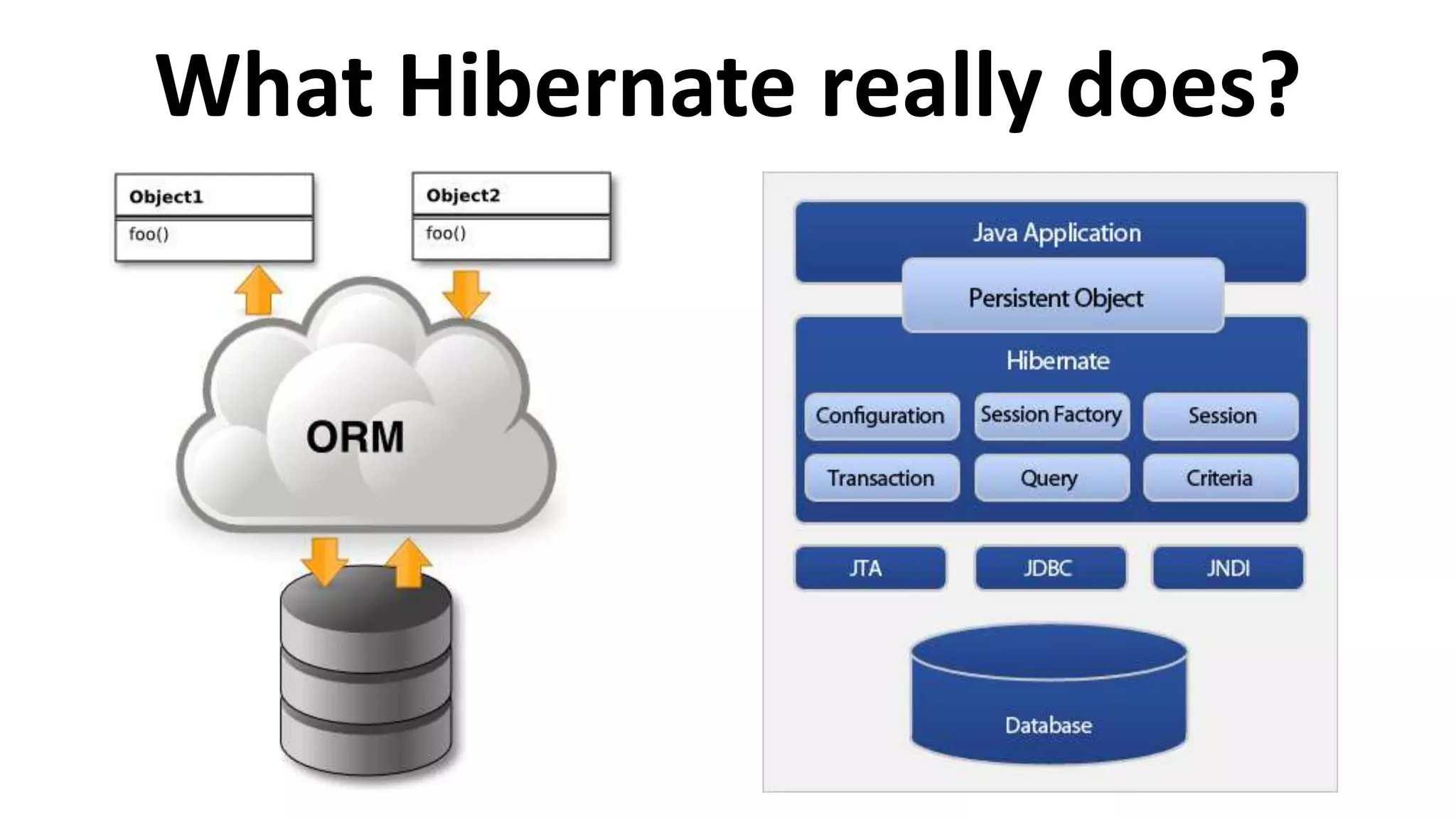
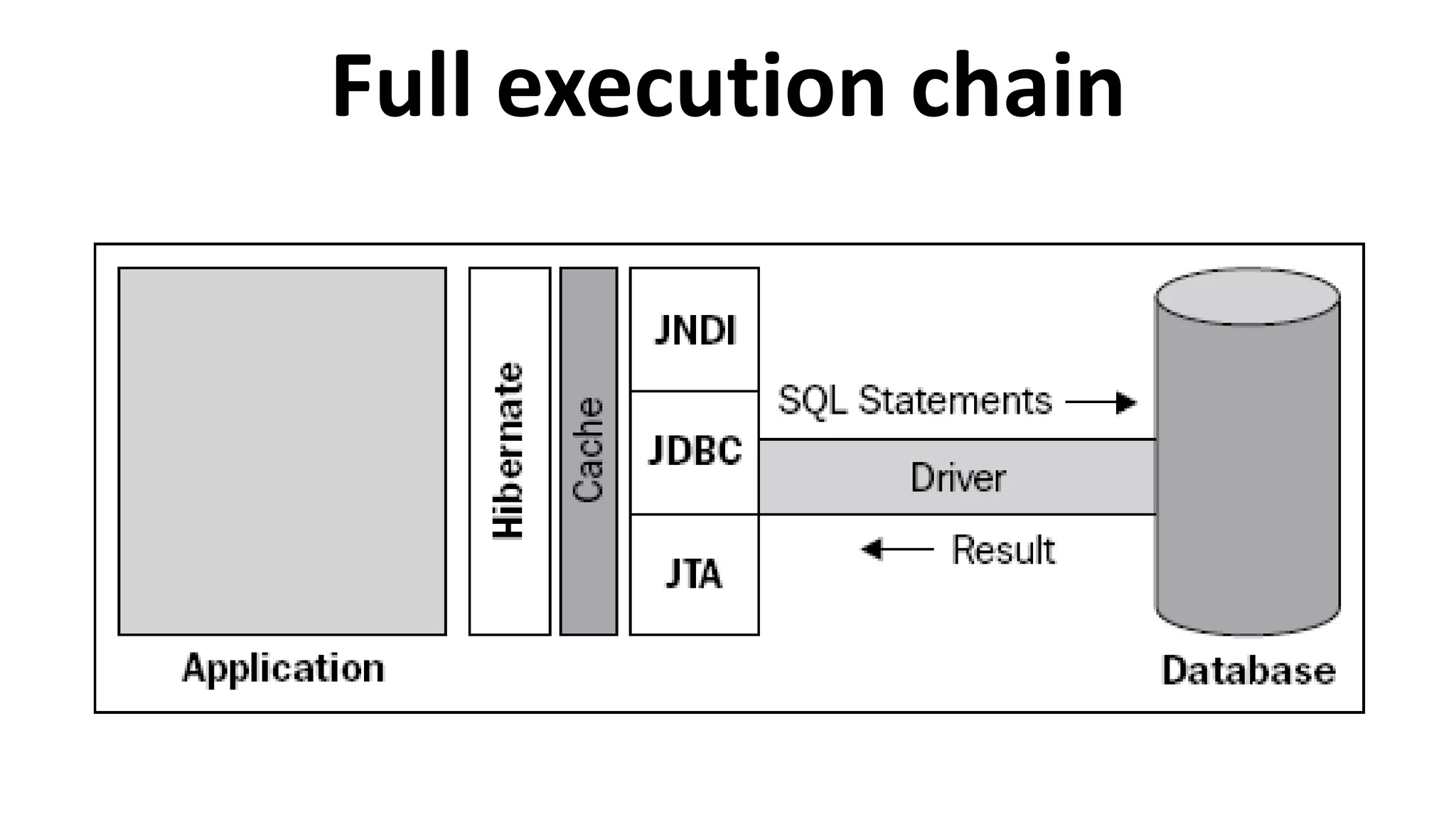
Insights into what Hibernate does and its full execution chain are discussed, setting the foundation for performance tuning.
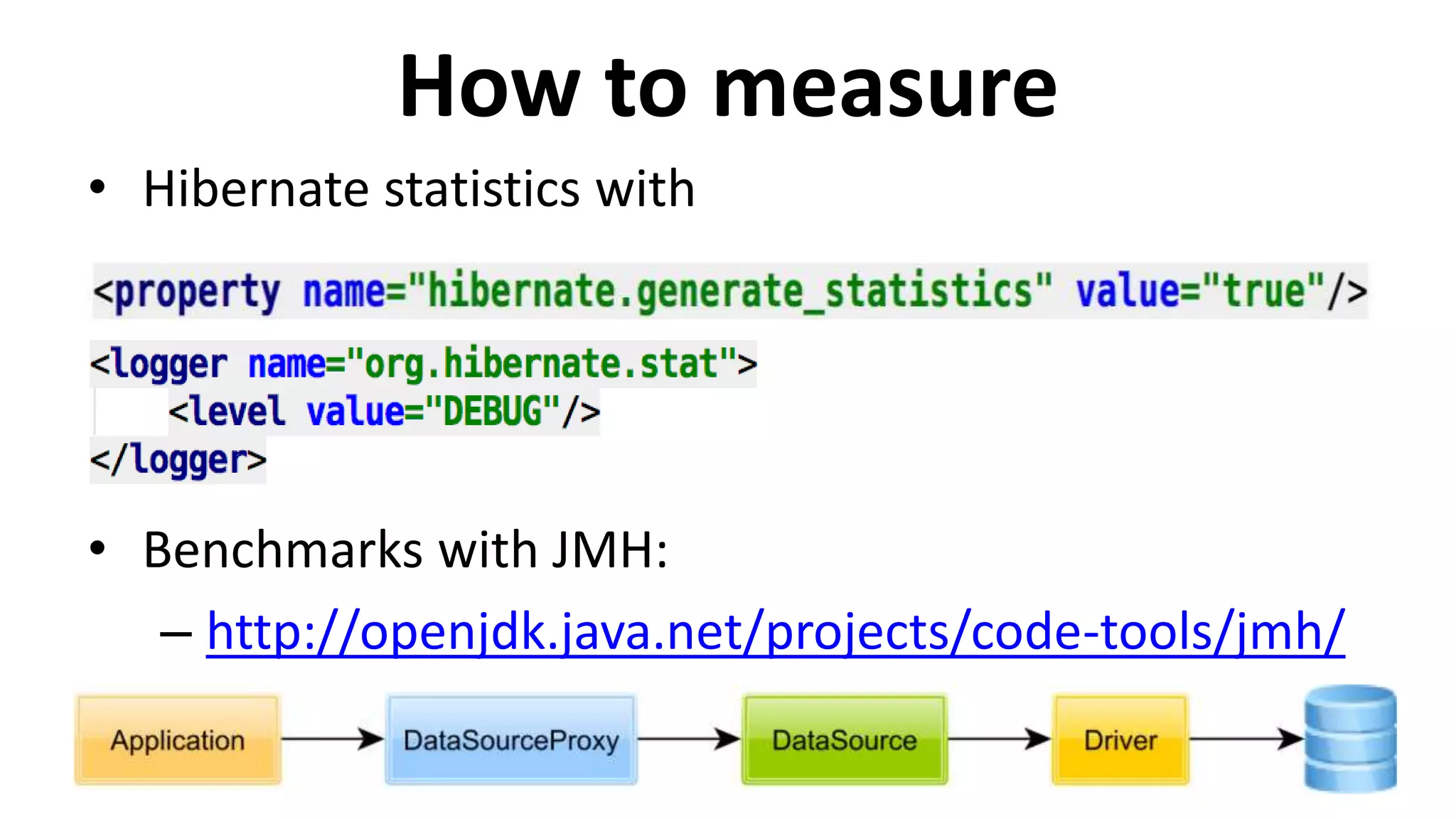
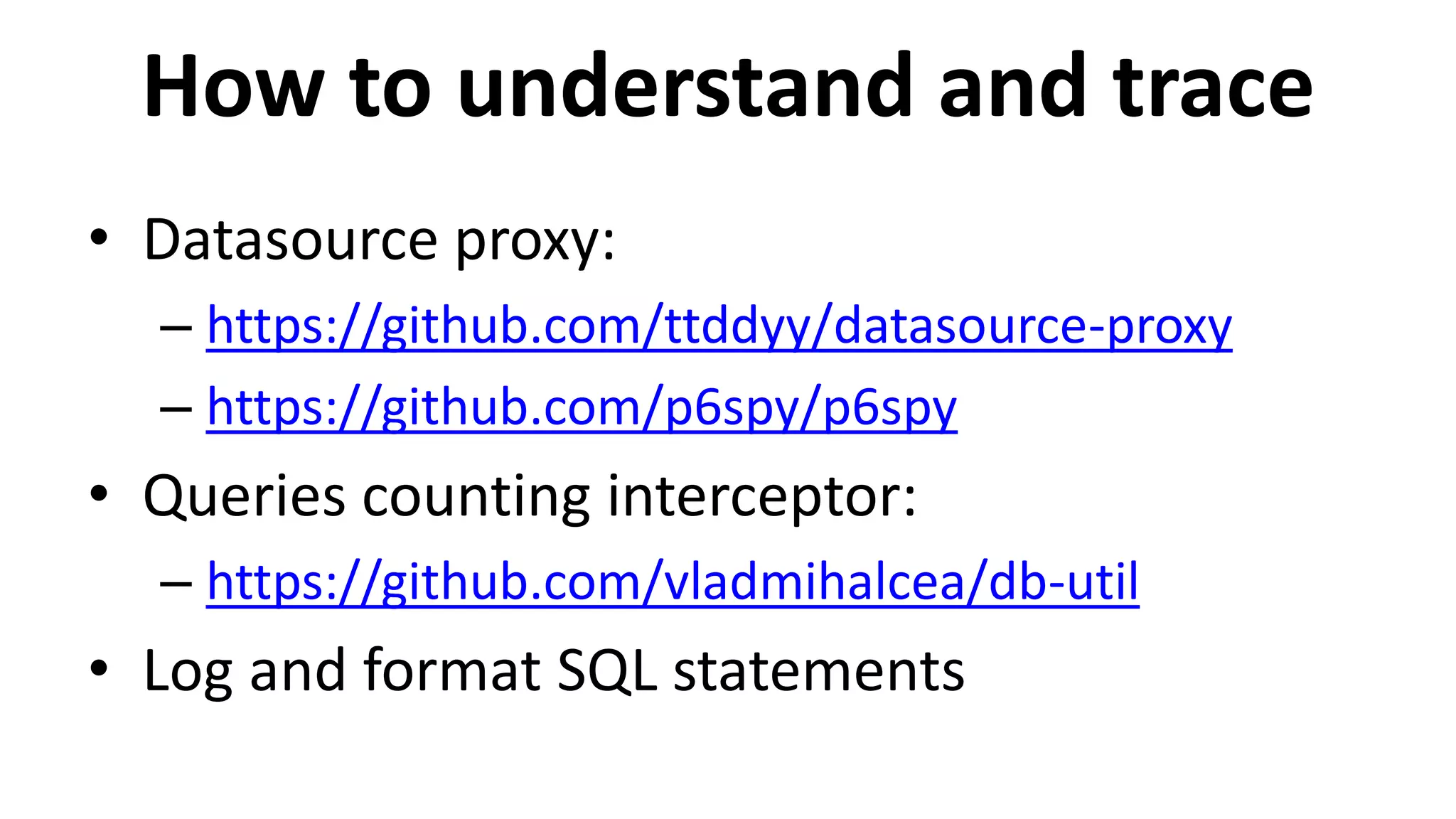
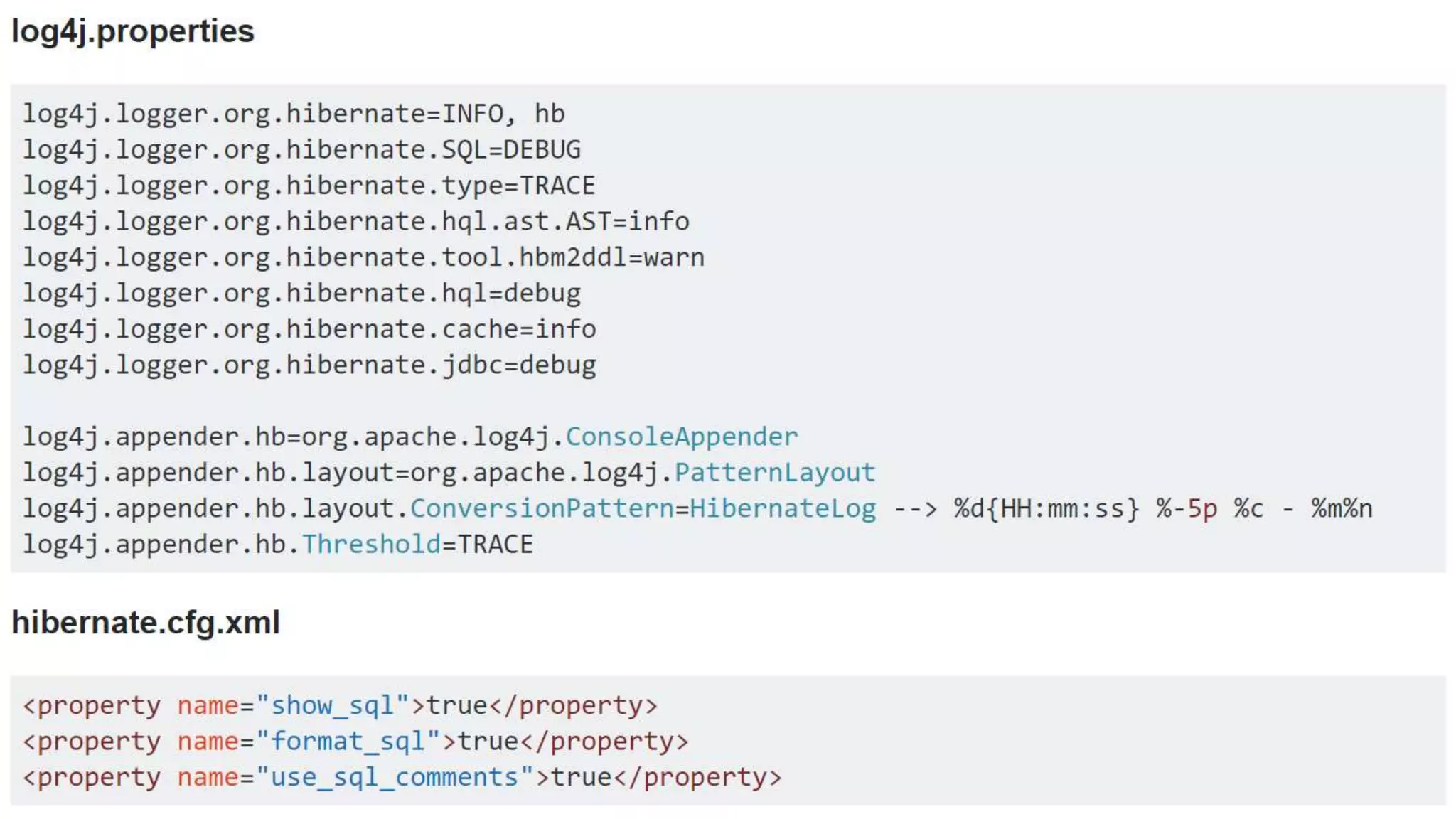
Measuring performance using Hibernate statistics and benchmarks with JMH. Understanding and tracing through datasource proxies and SQL logging are key techniques.
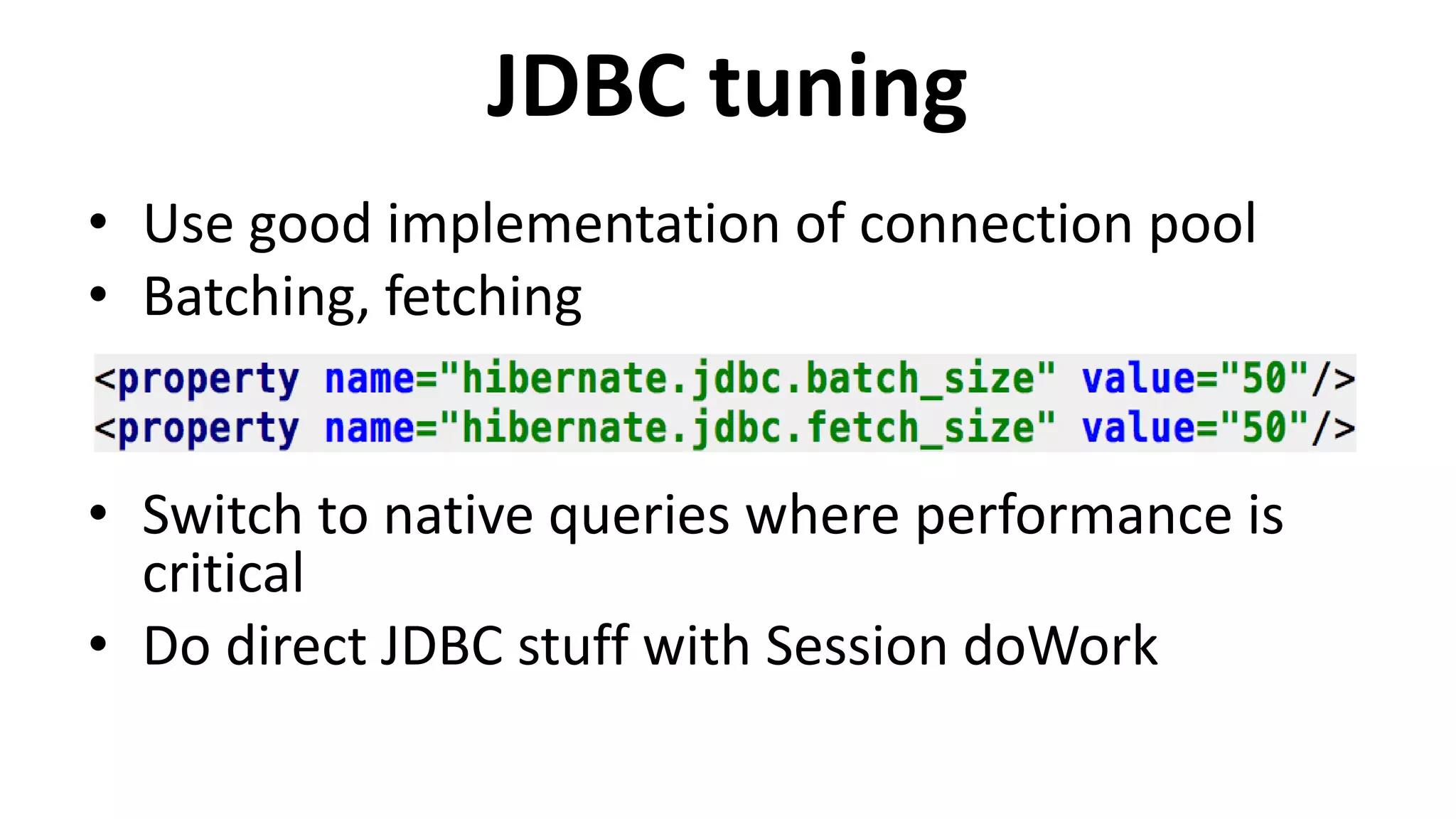
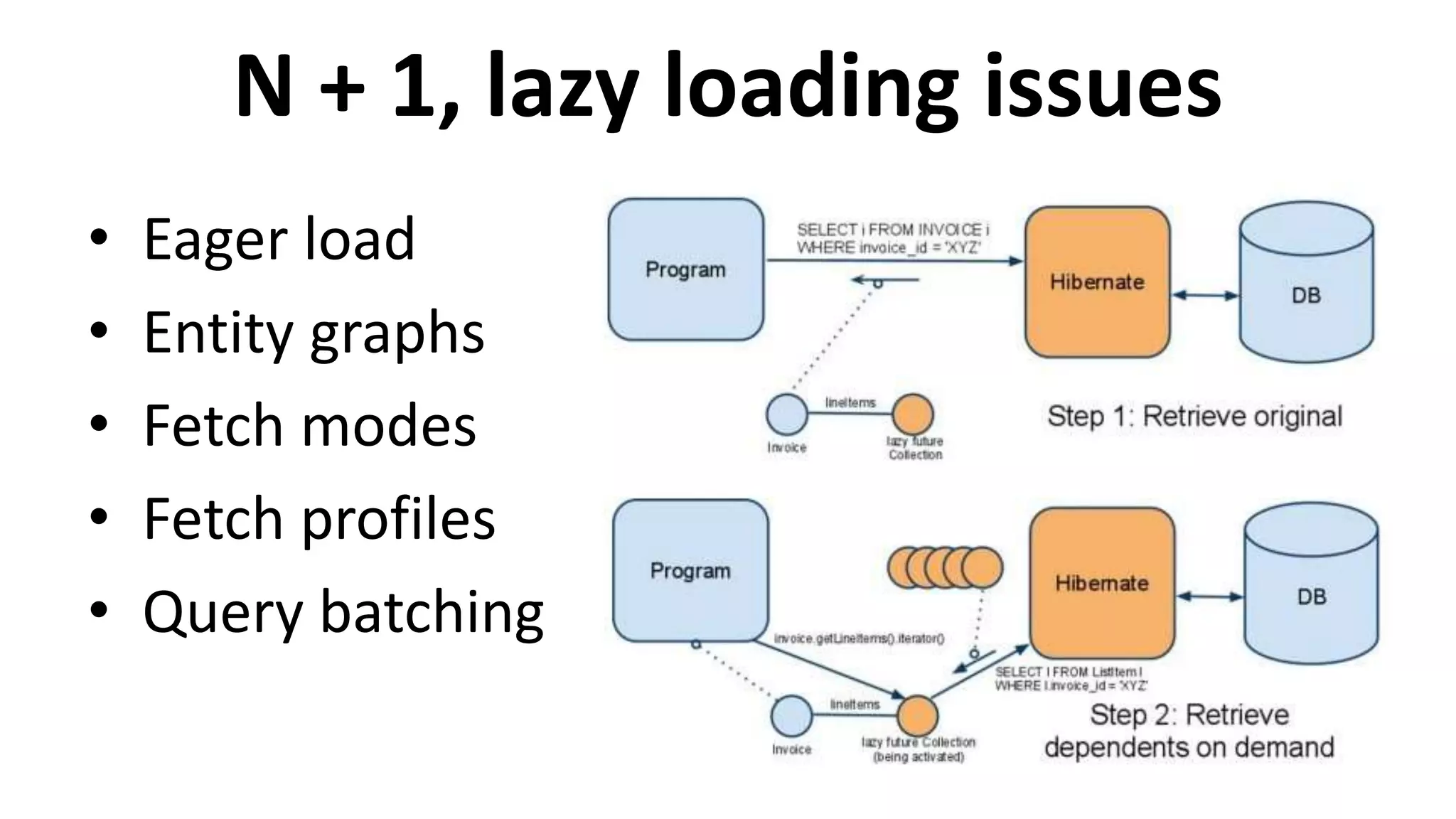
Tips for JDBC tuning include using a robust connection pool and addressing N + 1 lazy loading issues with various fetching strategies.
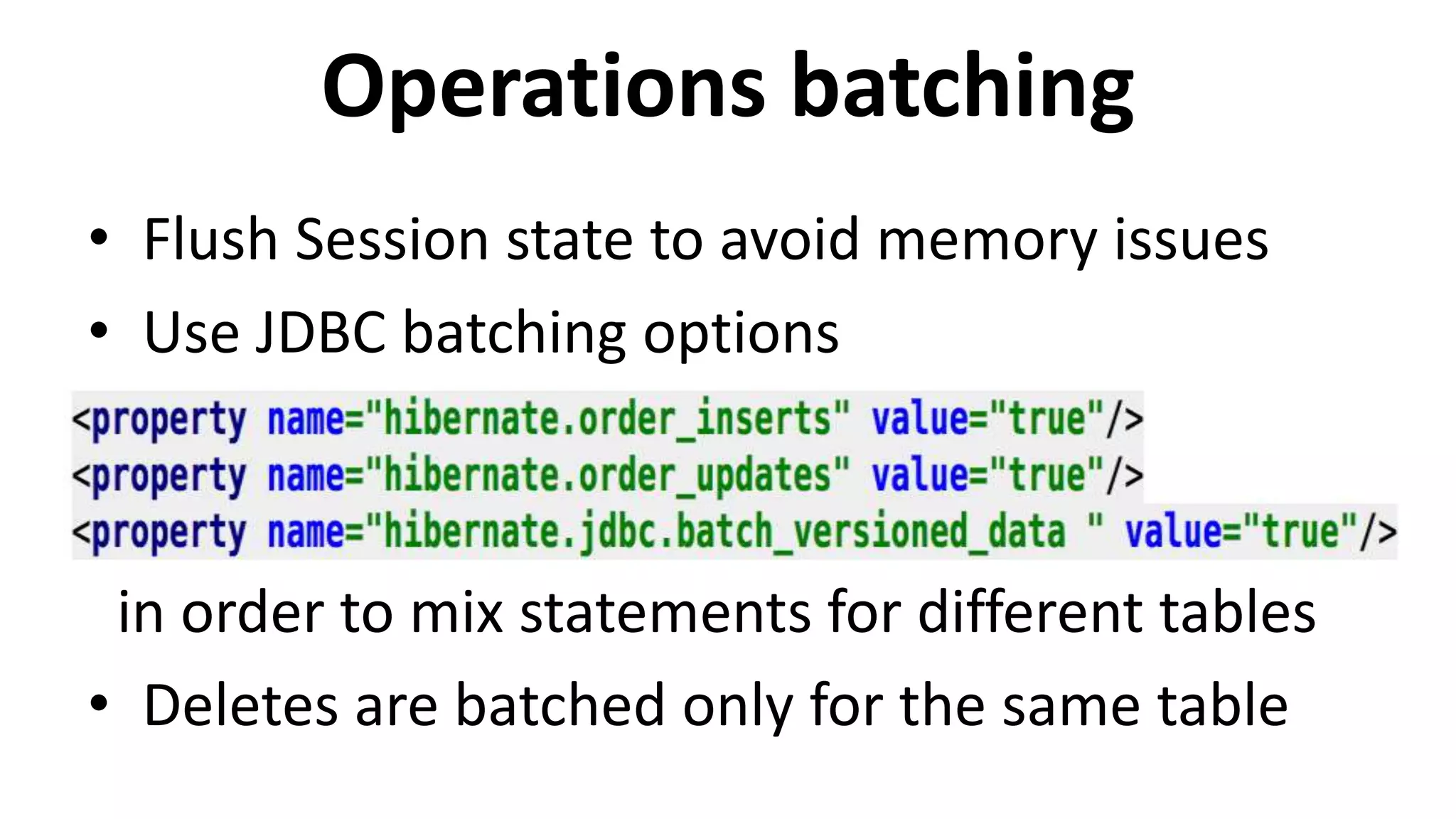
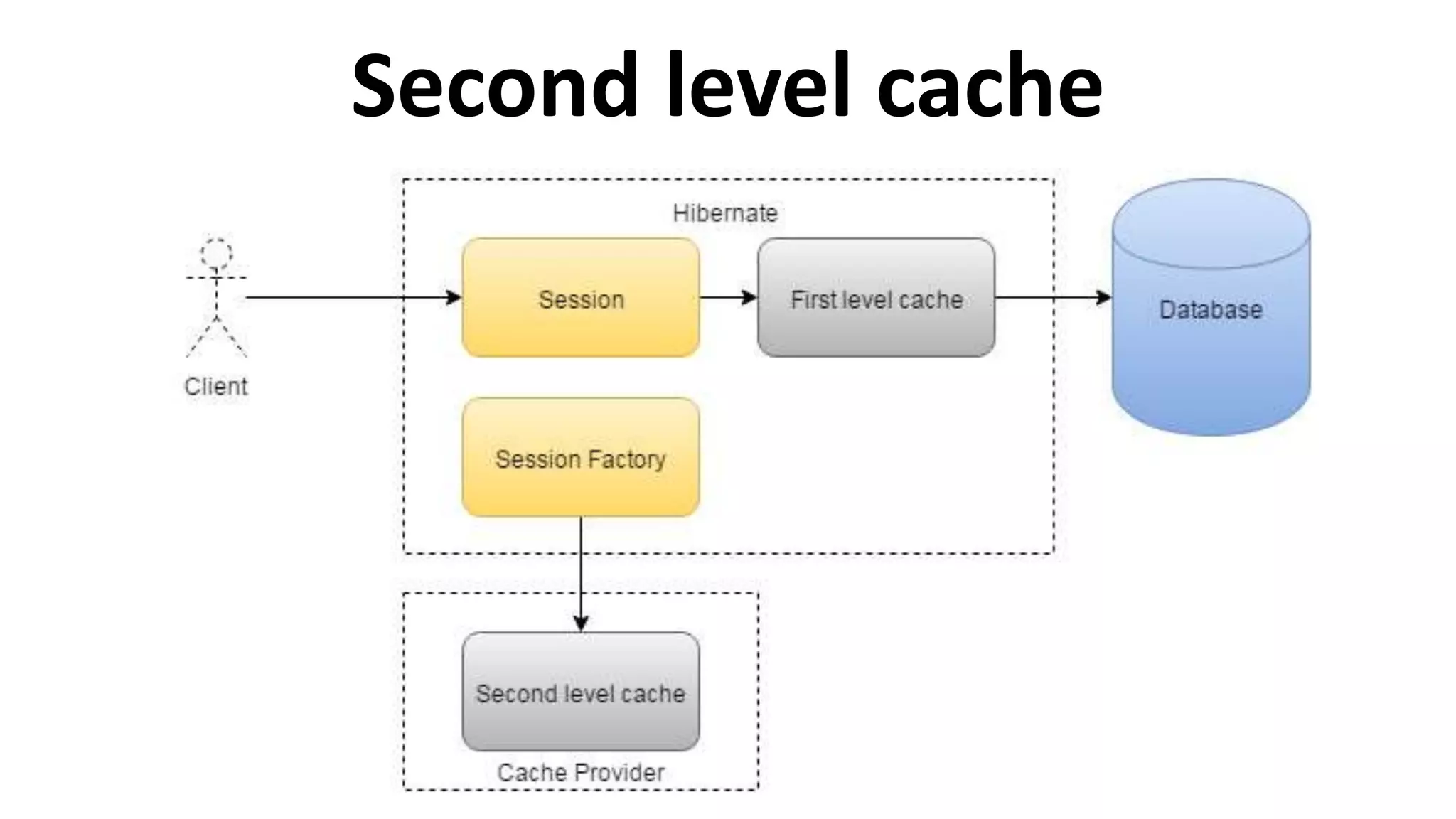
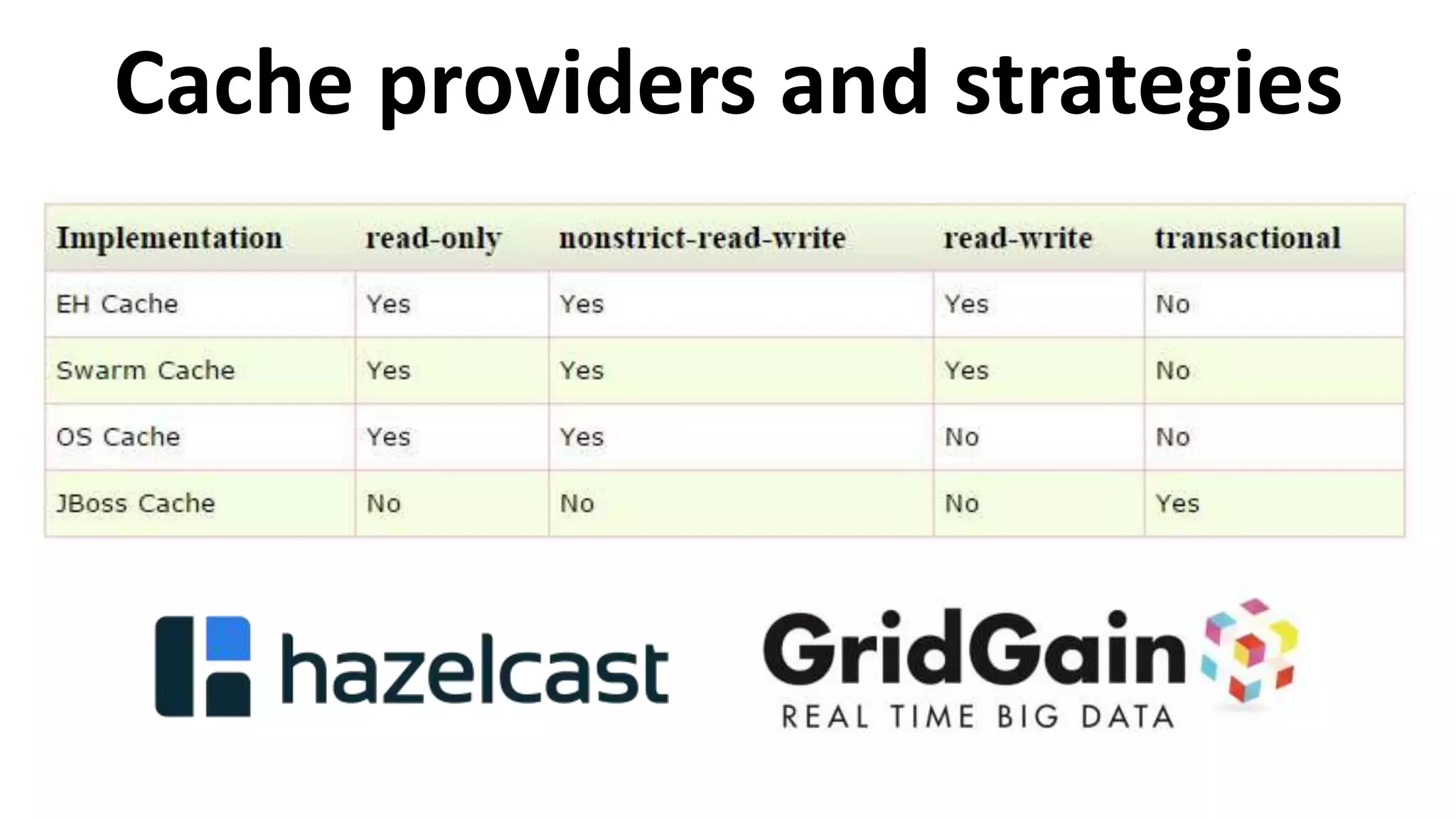
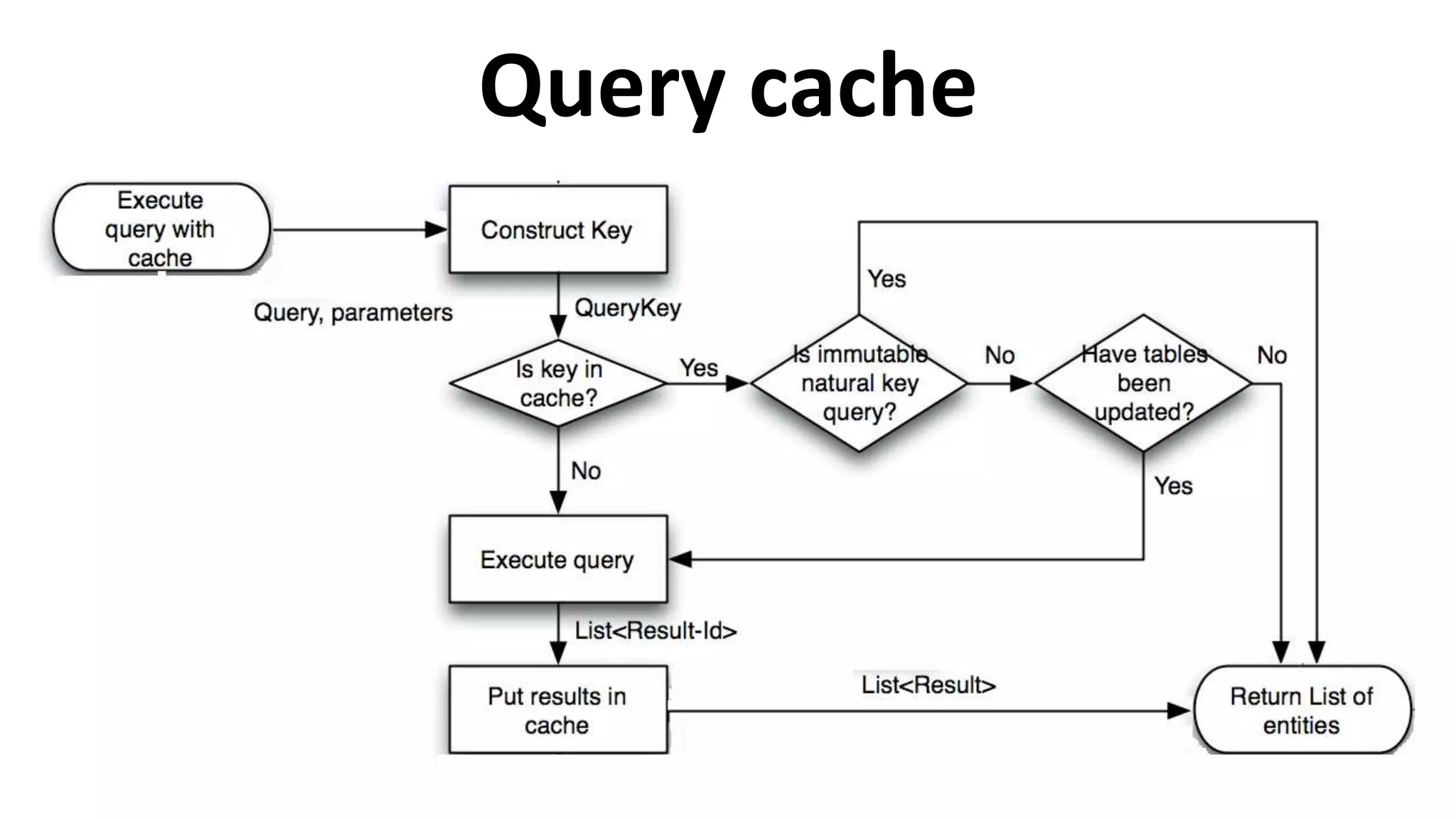
Batching operations to manage memory and enhance performance, leveraging the second-level cache, and discussing cache strategies is essential.
Batching operations to manage memory and enhance performance, leveraging the second-level cache, and discussing cache strategies is essential.
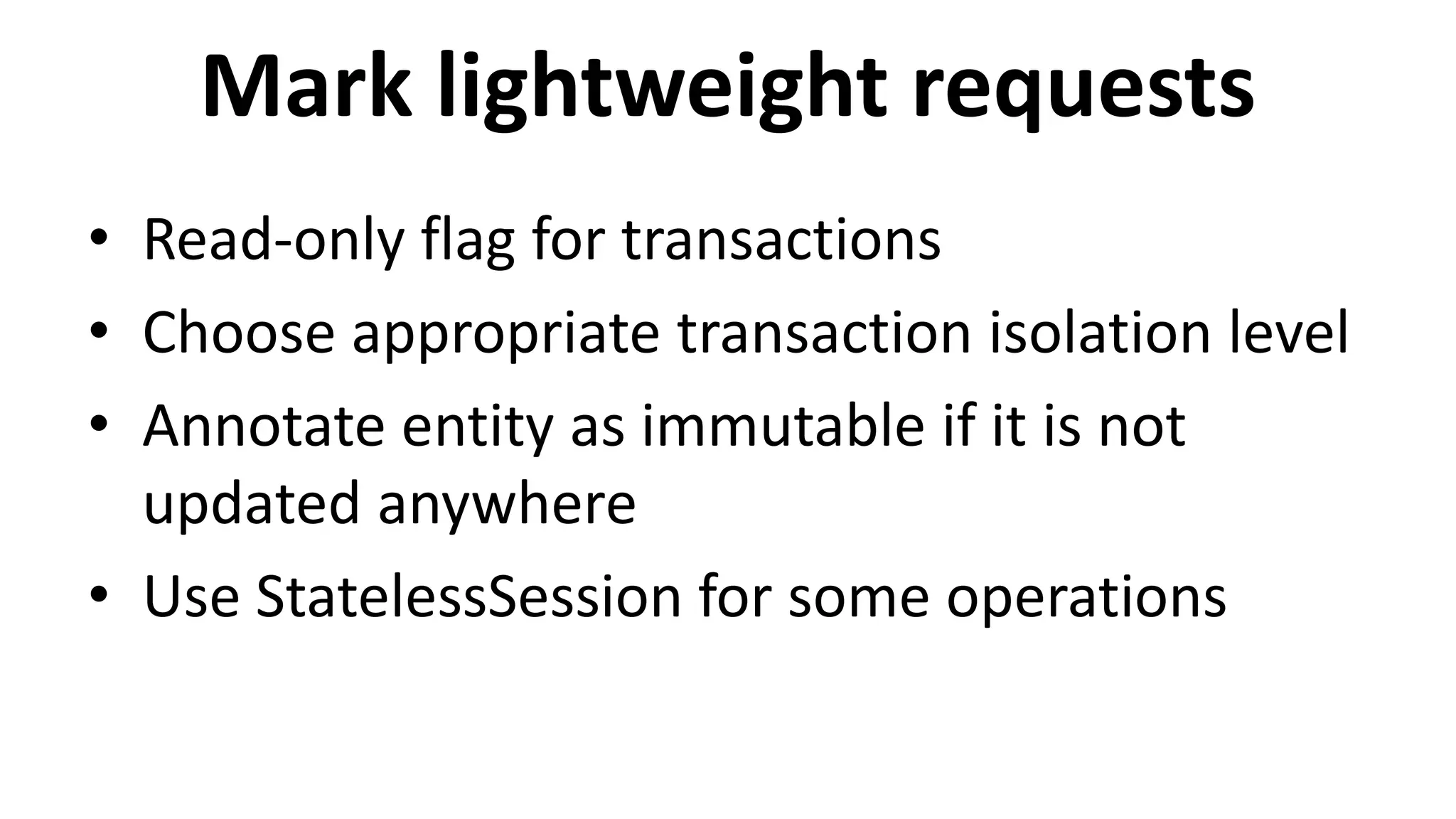
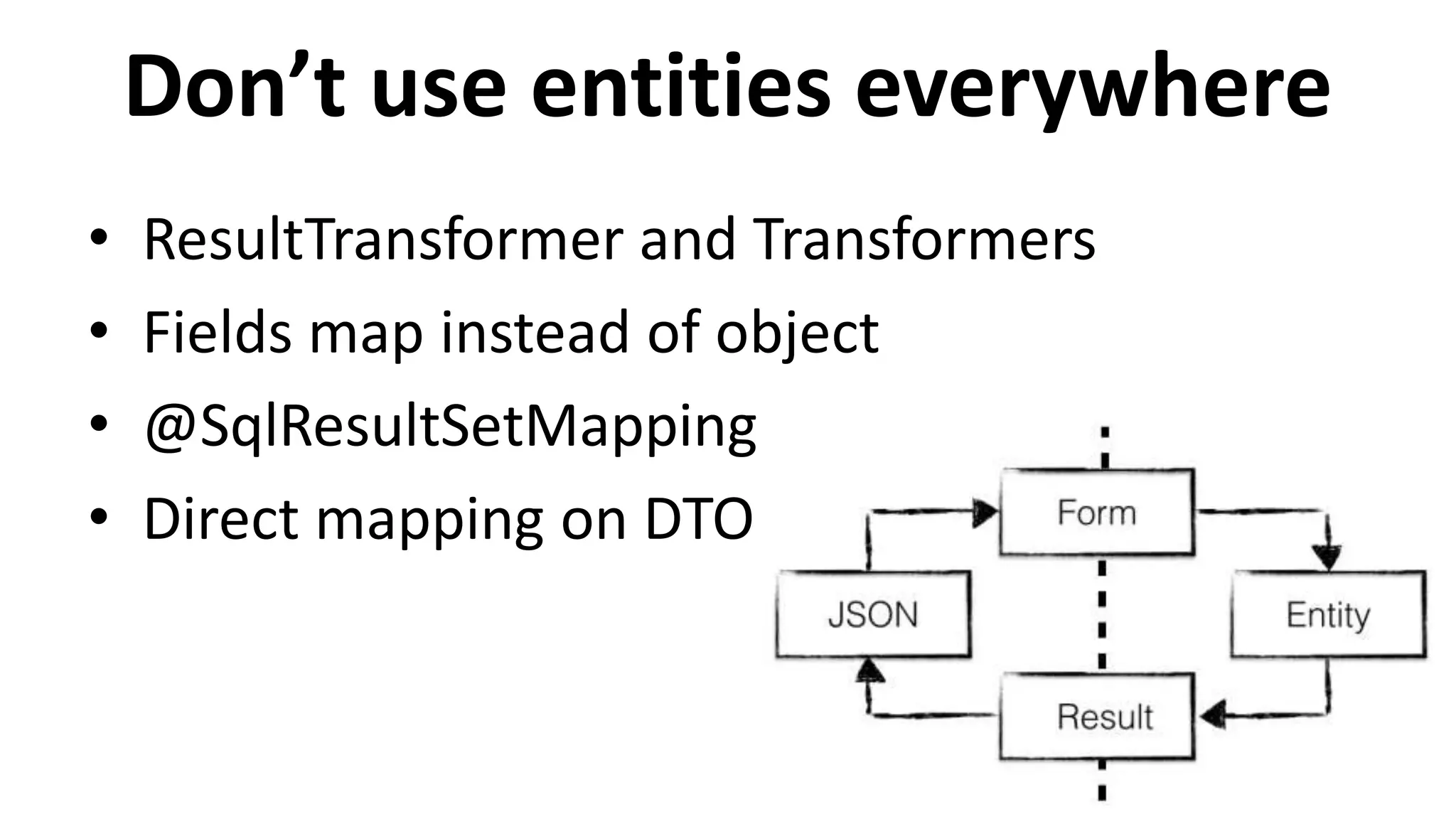
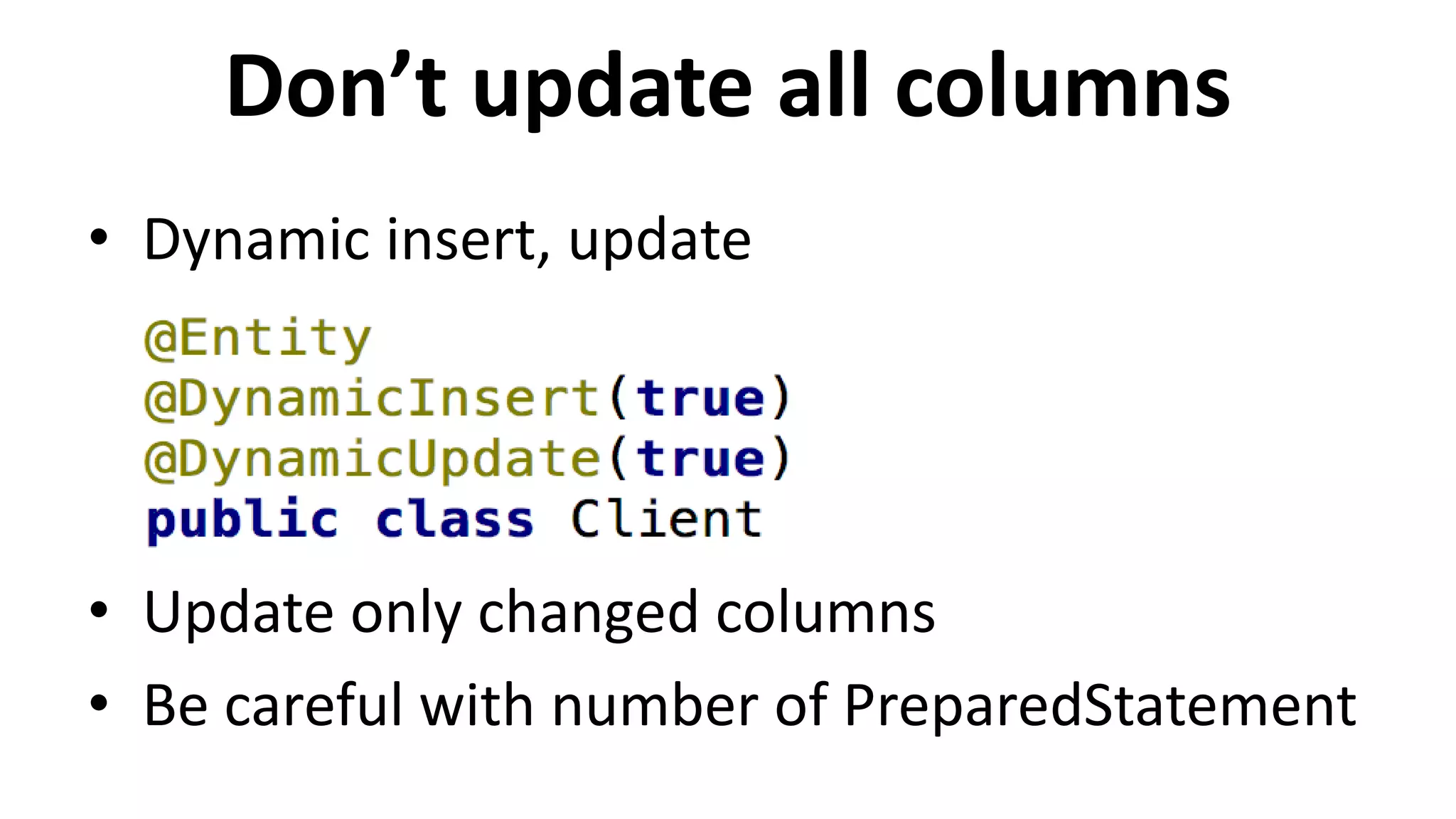
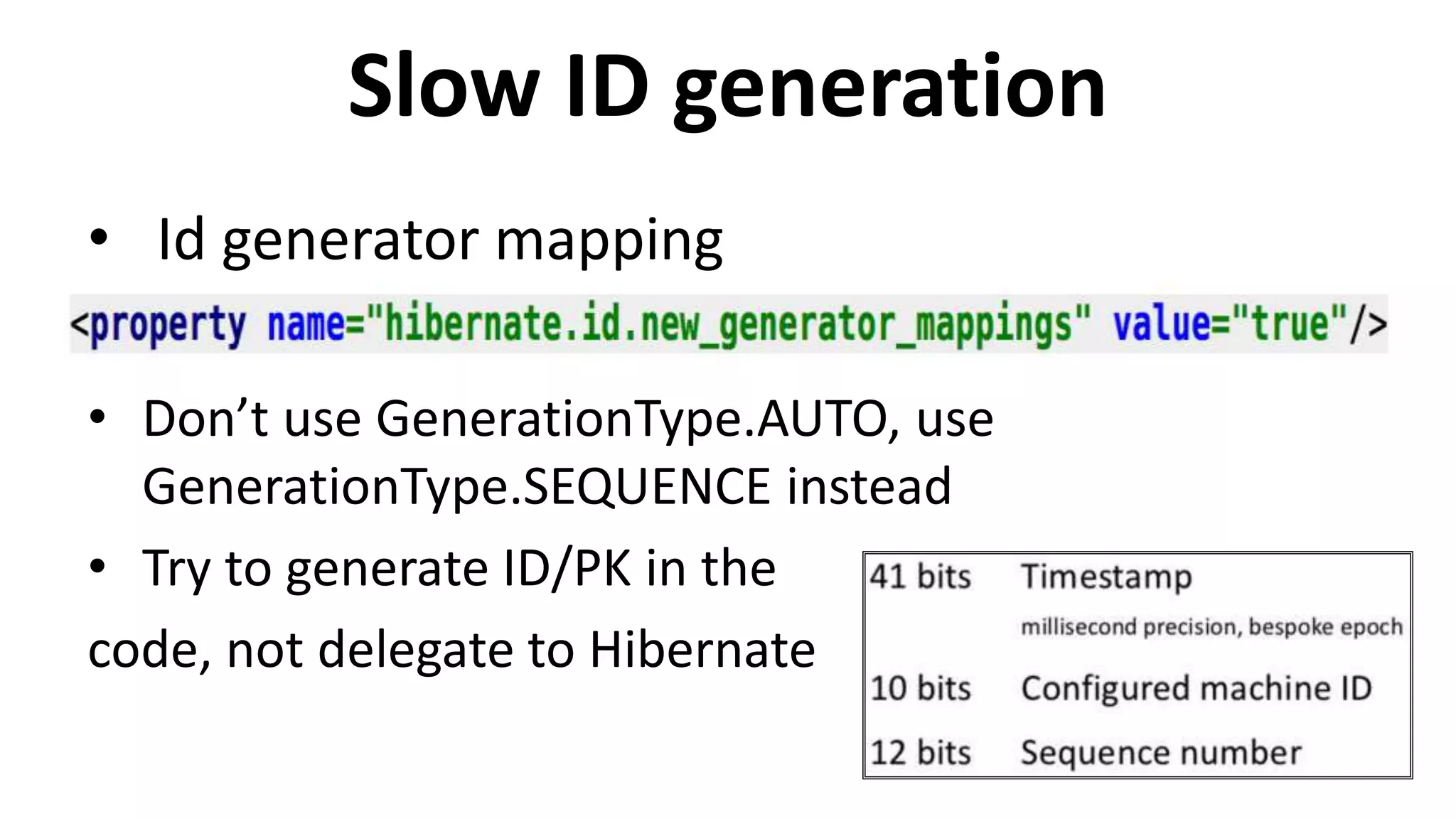
Strategies for optimizing transactions include marking requests appropriately and using DTOs. Avoid updating all columns and managing ID generation effectively.
Strategies for optimizing transactions include marking requests appropriately and using DTOs. Avoid updating all columns and managing ID generation effectively.
Strategies for optimizing transactions include marking requests appropriately and using DTOs. Avoid updating all columns and managing ID generation effectively.
Strategies for optimizing transactions include marking requests appropriately and using DTOs. Avoid updating all columns and managing ID generation effectively.
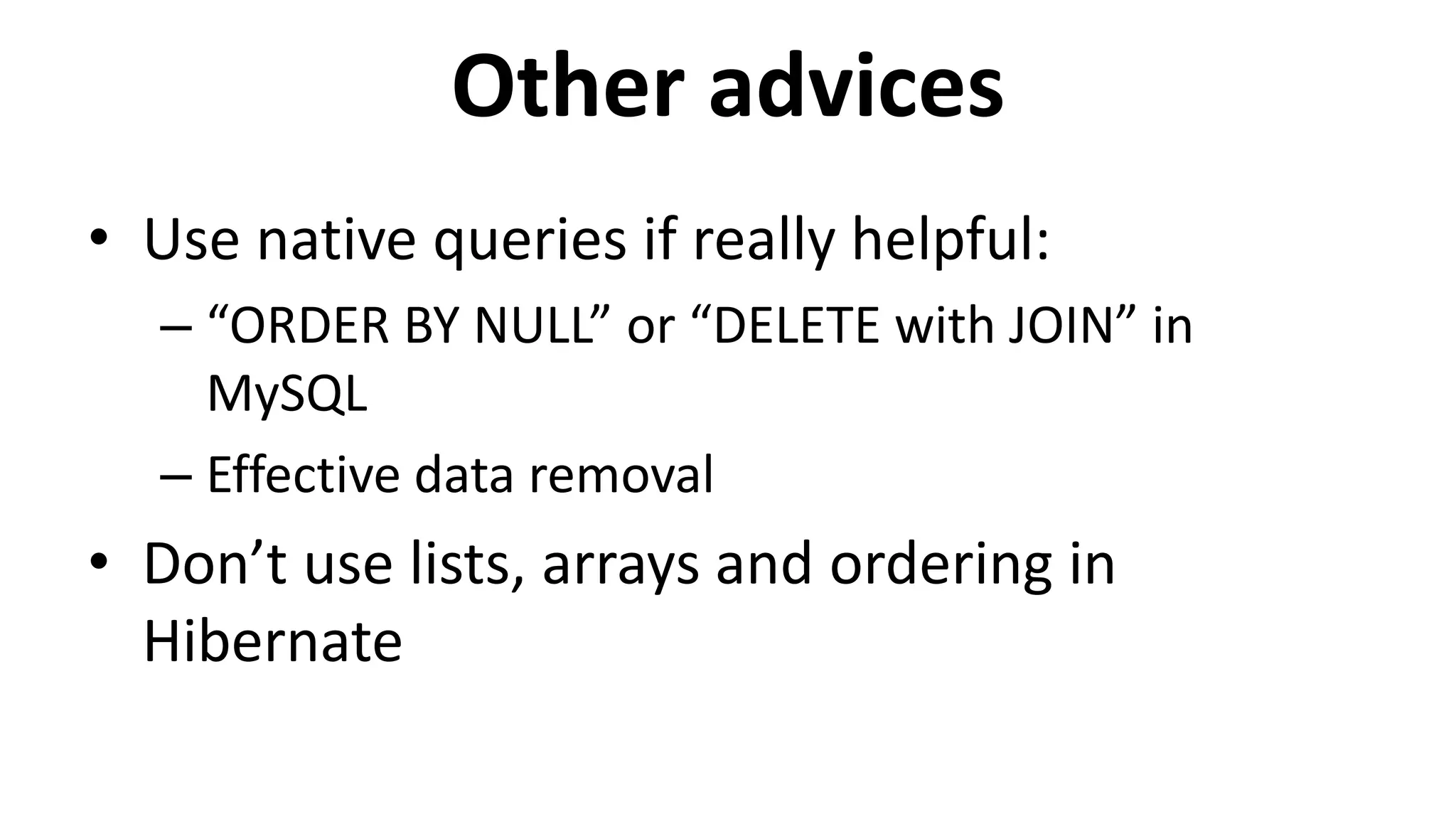
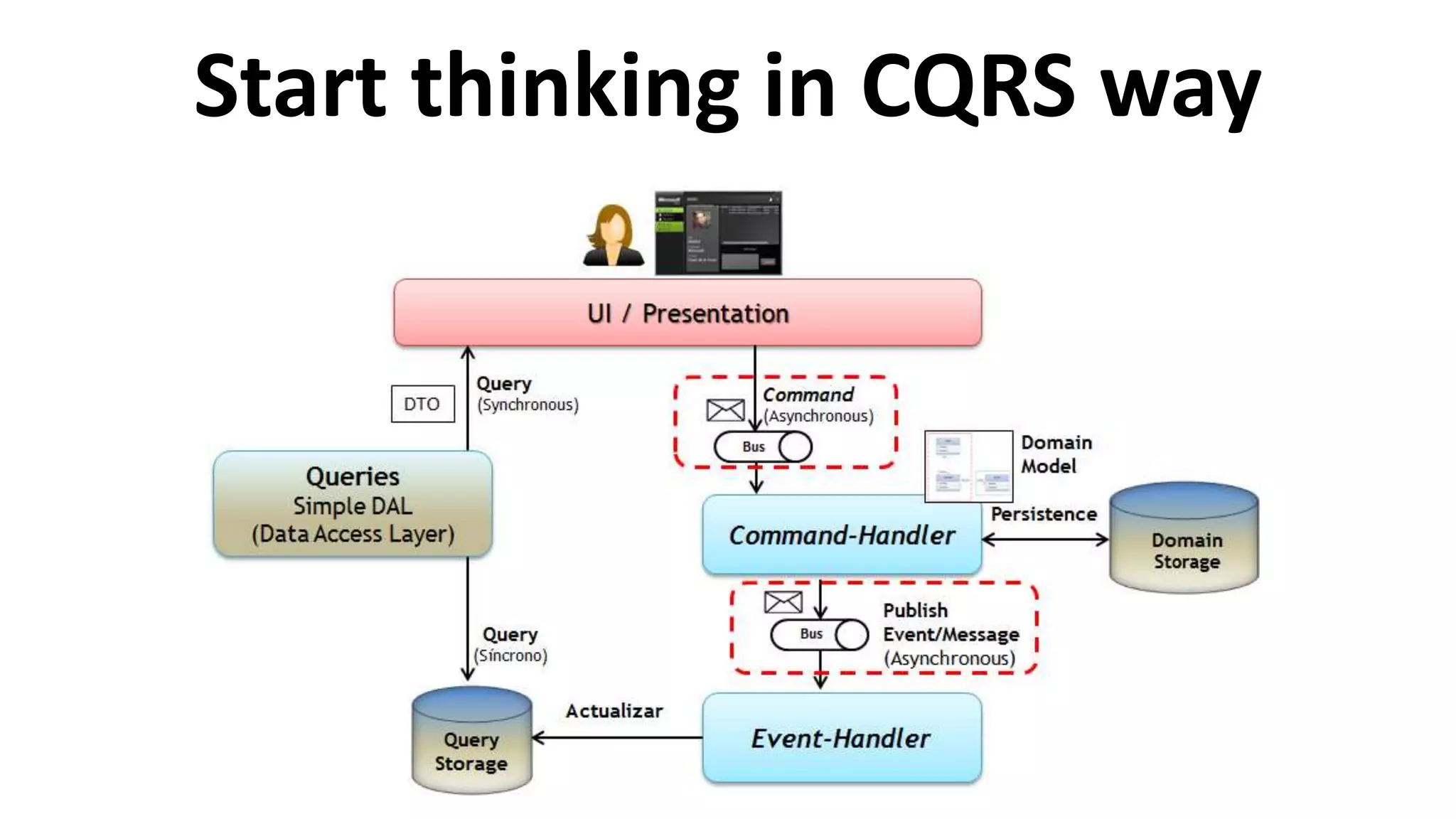
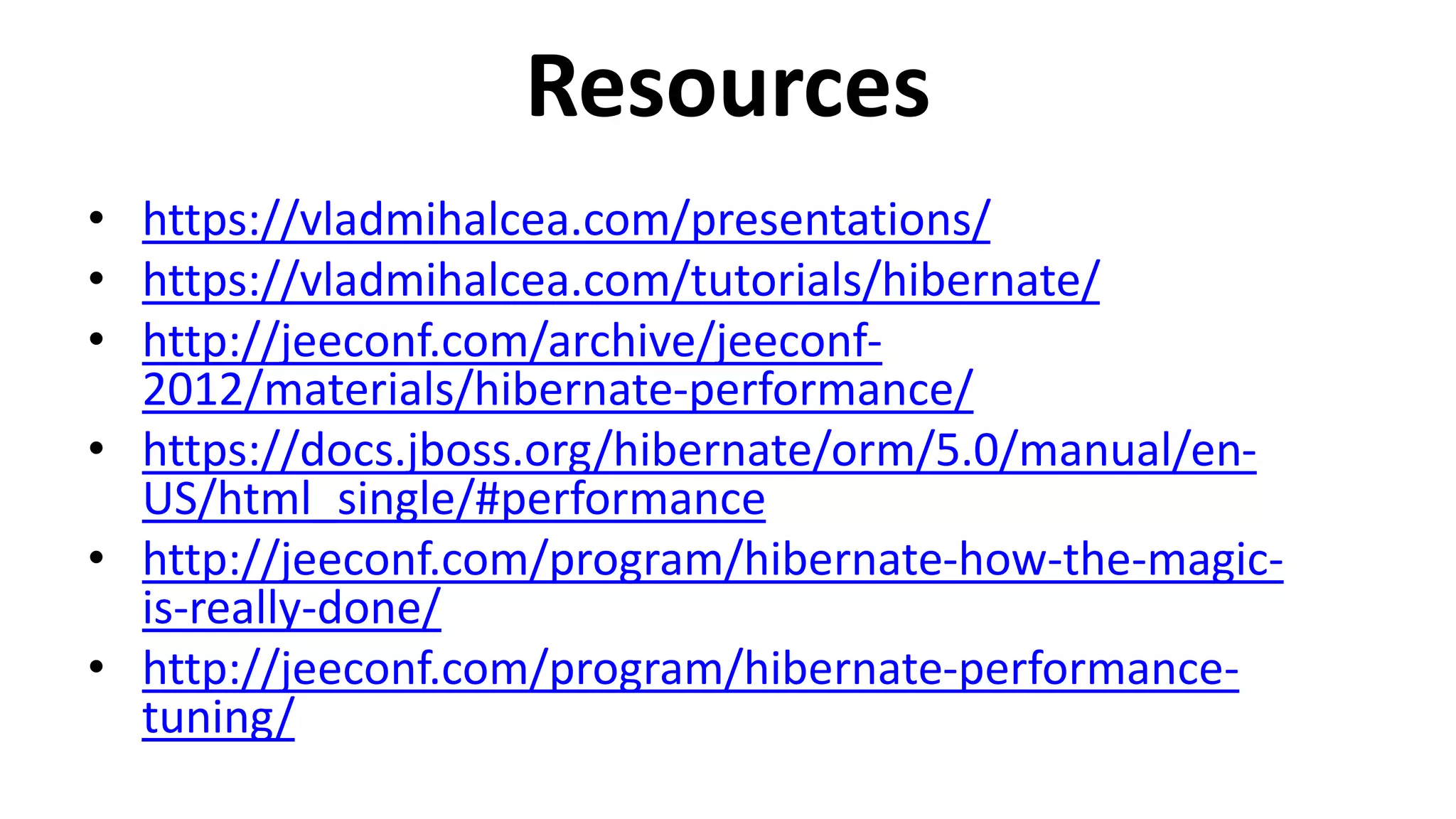
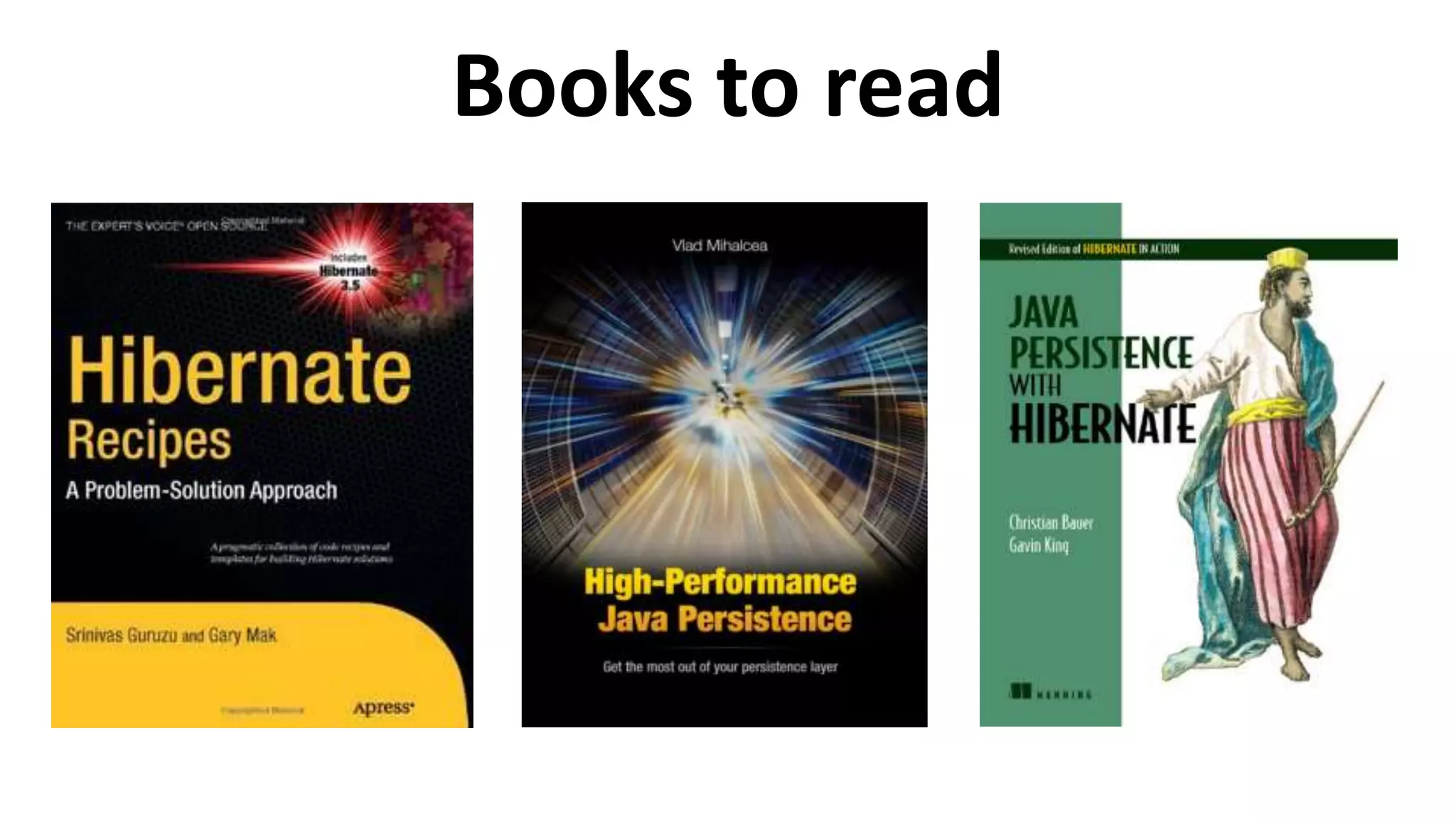
Recommendations for using native queries strategically, implementing CQRS, and additional resources and reading materials to further explore Hibernate performance.
Recommendations for using native queries strategically, implementing CQRS, and additional resources and reading materials to further explore Hibernate performance.


![Hexagonal architecture with Spring Boot [EPAM Java online conference]](https://cdn.slidesharecdn.com/ss_thumbnails/hexagonalarchitecturewithspringboot-180925151506-thumbnail.jpg?width=640&height=640&fit=bounds)
![Bro, manage test data like a pro! [QA Fest 2018]](https://cdn.slidesharecdn.com/ss_thumbnails/bromanagetestdatalikeapro-180922193659-thumbnail.jpg?width=640&height=640&fit=bounds)


![Vibe Coding vs. Spec-Driven Development [Free Meetup]](https://cdn.slidesharecdn.com/ss_thumbnails/vibecodingvsspecdrivendevelopment-251209105622-43f455e7-thumbnail.jpg?width=640&height=640&fit=bounds)


