HUMAN GROWTH AND DEVELOPMENT
SSYM 1023
HEREDITERY
INFLUENCES ON
DEVELOPMENT
PRINCIPLES OF HEREDITERY
TRANSMISSION
We must start at conception to understand the
working of hereditery.

 Ovum released by a women’s ovary and on its way to
the uterus via the fallapion tube .
 Then fertilized by a man’s sperm.
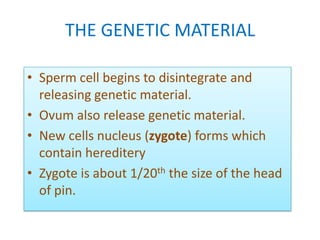
THE GENETIC MATERIAL
• Sperm cell begins to disintegrate and
releasing genetic material.
• Ovum also release genetic material.
• New cells nucleus (zygote) forms which
contain hereditery
• Zygote is about 1/20th the size of the head
of pin.
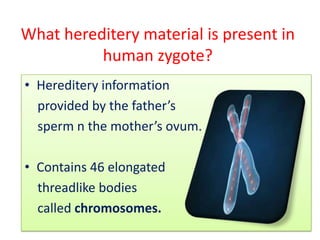
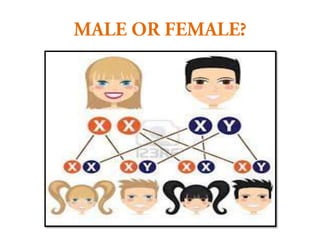
What hereditery material is present in
human zygote?
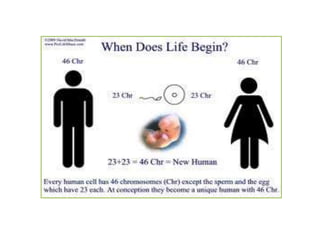
• Hereditery information
provided by the father’s
sperm n the mother’s ovum.

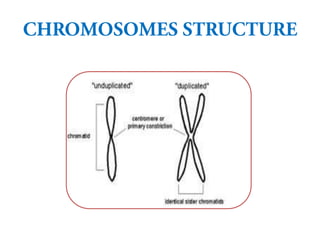
• Contains 46 elongated
threadlike bodies
called chromosomes.
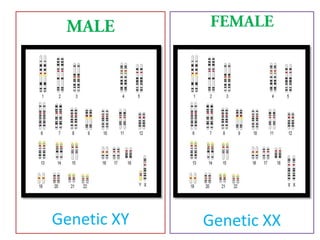
M

Genetic XY

Genetic XX
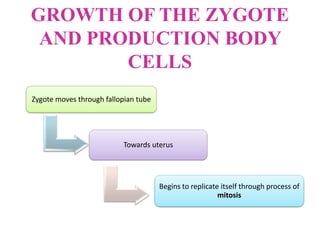
GROWTH OF THE ZYGOTE
AND PRODUCTION BODY
CELLS
Zygote moves through fallopian tube

Towards uterus

Begins to replicate itself through process of
mitosis
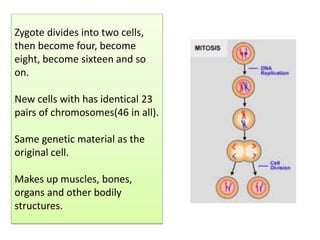
Zygote divides into two cells,
then become four, become
eight, become sixteen and so
on.
New cells with has identical 23
pairs of chromosomes(46 in all).

Same genetic material as the
original cell.
Makes up muscles, bones,
organs and other bodily
structures.
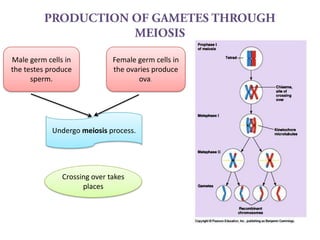
Male germ cells in
the testes produce
sperm.

Female germ cells in
the ovaries produce
ova.

Undergo meiosis process.

Crossing over takes
places
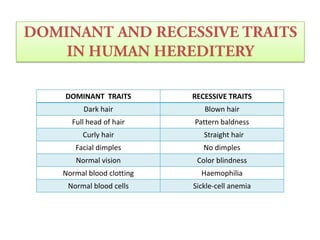
DOMINANT TRAITS

RECESSIVE TRAITS

Dark hair

Blown hair

Full head of hair

Pattern baldness

Curly hair

Straight hair

Facial dimples

No dimples

Normal vision

Color blindness

Normal blood clotting

Haemophilia

Normal blood cells

Sickle-cell anemia
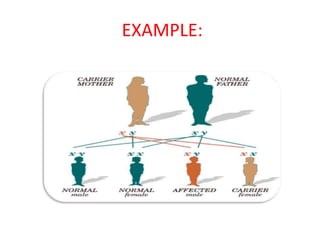
EXAMPLE:
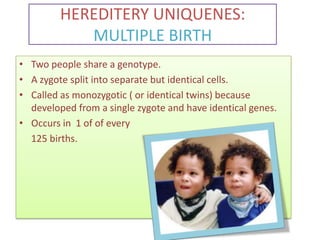
HEREDITERY UNIQUENES:
MULTIPLE BIRTH
• Two people share a genotype.
• A zygote split into separate but identical cells.
• Called as monozygotic ( or identical twins) because
developed from a single zygote and have identical genes.
• Occurs in 1 of of every
125 births.
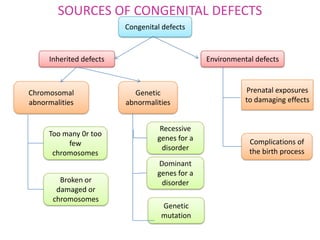
SOURCES OF CONGENITAL DEFECTS
Congenital defects

Inherited defects

Chromosomal
abnormalities

Too many 0r too
few
chromosomes
Broken or
damaged or
chromosomes

Environmental defects

Genetic
abnormalities
Recessive
genes for a
disorder
Dominant
genes for a
disorder
Genetic
mutation

Prenatal exposures
to damaging effects

Complications of
the birth process
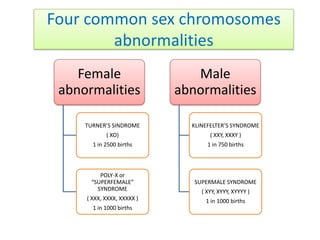
Four common sex chromosomes
abnormalities
Female
abnormalities

Male
abnormalities

TURNER’S SINDROME

KLINEFELTER’S SYNDROME

( XO)

( XXY, XXXY )

1 in 2500 births

1 in 750 births

POLY-X or
“SUPERFEMALE”
SYNDROME

SUPERMALE SYNDROME

( XXX, XXXX, XXXXX )

1 in 1000 births

1 in 1000 births

( XYY, XYYY, XYYYY )
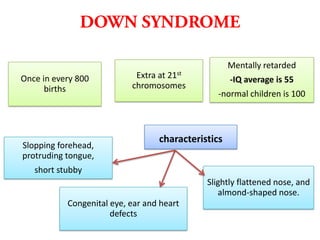
Mentally retarded
Once in every 800
births

Slopping forehead,
protruding tongue,

Extra at 21st
chromosomes

-IQ average is 55
-normal children is 100

characteristics

short stubby
Slightly flattened nose, and
almond-shaped nose.
Congenital eye, ear and heart
defects
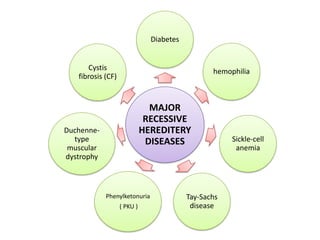
Diabetes

Cystis
fibrosis (CF)

hemophilia

MAJOR
RECESSIVE
HEREDITERY
DISEASES

Duchennetype
muscular
dystrophy

Phenylketonuria
( PKU )

Tay-Sachs
disease

Sickle-cell
anemia

Hereditary influences on development

  • 1.
    HUMAN GROWTH ANDDEVELOPMENT SSYM 1023
  • 2.
  • 3.
    PRINCIPLES OF HEREDITERY TRANSMISSION Wemust start at conception to understand the working of hereditery.  Ovum released by a women’s ovary and on its way to the uterus via the fallapion tube .  Then fertilized by a man’s sperm.
  • 4.
    THE GENETIC MATERIAL •Sperm cell begins to disintegrate and releasing genetic material. • Ovum also release genetic material. • New cells nucleus (zygote) forms which contain hereditery • Zygote is about 1/20th the size of the head of pin.
  • 5.
    What hereditery materialis present in human zygote? • Hereditery information provided by the father’s sperm n the mother’s ovum. • Contains 46 elongated threadlike bodies called chromosomes.
  • 9.
  • 10.
    GROWTH OF THEZYGOTE AND PRODUCTION BODY CELLS Zygote moves through fallopian tube Towards uterus Begins to replicate itself through process of mitosis
  • 11.
    Zygote divides intotwo cells, then become four, become eight, become sixteen and so on. New cells with has identical 23 pairs of chromosomes(46 in all). Same genetic material as the original cell. Makes up muscles, bones, organs and other bodily structures.
  • 12.
    Male germ cellsin the testes produce sperm. Female germ cells in the ovaries produce ova. Undergo meiosis process. Crossing over takes places
  • 13.
    DOMINANT TRAITS RECESSIVE TRAITS Darkhair Blown hair Full head of hair Pattern baldness Curly hair Straight hair Facial dimples No dimples Normal vision Color blindness Normal blood clotting Haemophilia Normal blood cells Sickle-cell anemia
  • 14.
  • 15.
    HEREDITERY UNIQUENES: MULTIPLE BIRTH •Two people share a genotype. • A zygote split into separate but identical cells. • Called as monozygotic ( or identical twins) because developed from a single zygote and have identical genes. • Occurs in 1 of of every 125 births.
  • 16.
    SOURCES OF CONGENITALDEFECTS Congenital defects Inherited defects Chromosomal abnormalities Too many 0r too few chromosomes Broken or damaged or chromosomes Environmental defects Genetic abnormalities Recessive genes for a disorder Dominant genes for a disorder Genetic mutation Prenatal exposures to damaging effects Complications of the birth process
  • 17.
    Four common sexchromosomes abnormalities Female abnormalities Male abnormalities TURNER’S SINDROME KLINEFELTER’S SYNDROME ( XO) ( XXY, XXXY ) 1 in 2500 births 1 in 750 births POLY-X or “SUPERFEMALE” SYNDROME SUPERMALE SYNDROME ( XXX, XXXX, XXXXX ) 1 in 1000 births 1 in 1000 births ( XYY, XYYY, XYYYY )
  • 18.
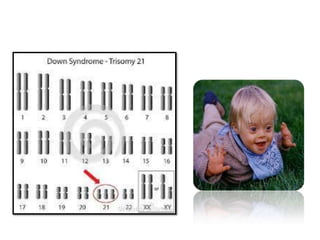
    Mentally retarded Once inevery 800 births Slopping forehead, protruding tongue, Extra at 21st chromosomes -IQ average is 55 -normal children is 100 characteristics short stubby Slightly flattened nose, and almond-shaped nose. Congenital eye, ear and heart defects
  • 20.