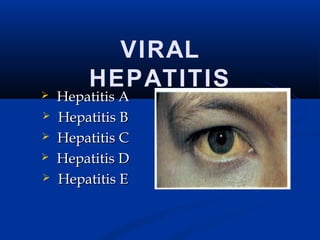
VIRAL
HEPATITIS
 Hepatitis AHepatitis A
 Hepatitis BHepatitis B
 Hepatitis CHepatitis C
 Hepatitis DHepatitis D
 Hepatitis EHepatitis E
Viral HepatitisViral Hepatitis
Inflammatory liver disease, characterized by
jaundice, abdominal pain, and anorexia due
to viral infection caused by viruses A, B, C, D
and E, alcohol abuse, or various toxins.
Caused by acute viral infection, toxicity,Caused by acute viral infection, toxicity,
or drug inducedor drug induced
Liver is enlarged and congestedLiver is enlarged and congested
Distortion of lobular patternDistortion of lobular pattern
Results in increased portal circulation pressureResults in increased portal circulation pressure
Circulation then decreased to liverCirculation then decreased to liver
Edema of biliary channelsEdema of biliary channels
Results in obstructive jaundiceResults in obstructive jaundice
Pathophysiology of HepatitisPathophysiology of Hepatitis
Types of HepatitisTypes of Hepatitis
Hepatitis A – Infectious hepatitisHepatitis A – Infectious hepatitis
Hepatitis B – Serum hepatitisHepatitis B – Serum hepatitis
Hepatitis C – Non-A non-B or PostHepatitis C – Non-A non-B or Post
transfusion hepatitistransfusion hepatitis
Hepatitis D – with Hep BHepatitis D – with Hep B
Hepatitis E - Epidemic hepatitisHepatitis E - Epidemic hepatitis
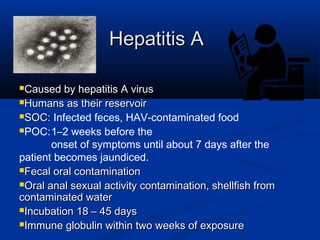
Hepatitis AHepatitis A
Caused by hepatitis A virusCaused by hepatitis A virus
Humans as their reservoirHumans as their reservoir
SOC:SOC: Infected feces, HAV-contaminated food
POC:1–2 weeks before the
onset of symptoms until about 7 days after the
patient becomes jaundiced.
Fecal oral contaminationFecal oral contamination
Oral anal sexual activity contamination, shellfish fromOral anal sexual activity contamination, shellfish from
contaminated watercontaminated water
Incubation 18 – 45 daysIncubation 18 – 45 days
Immune globulin within two weeks of exposureImmune globulin within two weeks of exposure
Hepatitis AHepatitis A
SIGNS AND SYMPTOMS
•Most are anicteric and asymptomatic
•Flu-like URTI with low-grade fever
•Anorexia
•Indigestion
•nausea
•Aversion to cigarette smoke and other
strong odors
•May or may not be jaundiced
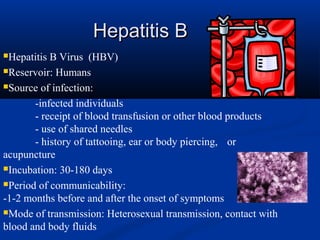
Hepatitis BHepatitis B
Hepatitis B Virus (HBV)
Reservoir: Humans
Source of infection:
-infected individuals
- receipt of blood transfusion or other blood products
- use of shared needles
- history of tattooing, ear or body piercing, or
acupuncture
Incubation: 30-180 days
Period of communicability:
-1-2 months before and after the onset of symptoms
Mode of transmission: Heterosexual transmission, contact with
blood and body fluids
Hepatitis BHepatitis B
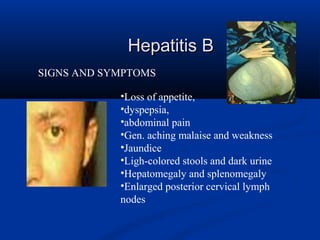
SIGNS AND SYMPTOMS
•Loss of appetite,
•dyspepsia,
•abdominal pain
•Gen. aching malaise and weakness
•Jaundice
•Ligh-colored stools and dark urine
•Hepatomegaly and splenomegaly
•Enlarged posterior cervical lymph
nodes
Hepatitis CHepatitis C
Hepatitis C Virus (HCV)
Source of infection:
-Parenteral drug, needlestick injuries, Blood transfusion
-High-risk sexual contact (multiple partners, history of other
STDs, anal sex, etc.)
Incubation: 15-160 days
Contact with blood and body fluids: transfusion of blood and blood
products
Period of communicability:
-one or more weeks before onset of symptoms and persists in
most persons
Hepatitis CHepatitis C
SIGNS AND SYMPTOMS
•Asymptomatic or experience
mild symptoms
•Fatigue
•Abdominal pain and poor
appetite
•Jaundice
•Headaches
•joint aches
•muscle aches
•nausea
Hepatitis DHepatitis D
Hepatitis D Virus (HDV)
Reservoir: humans
Animals: chimpanzee and pigs
Source of infection: same as Hepa-B
Incubation: 30-180 days
Period of communicability: not been yet determined,
but virus excretion in stool has been demonstrated up to 14
days after onset of illness
Co-infects with hepatitis B, close personal contact
Hepatitis DHepatitis D
SIGNS AND SYMPTOMS
•Similar to those with hepatitis B
•May progress to chronic active
hepatitis and cirrhosis
•always associated with a
coexistent hepatitis B virus
infection, either simultaneous
new infections (co- infection) or
a chronic hepatitis B infection
(superinfection)
Hepatitis EHepatitis E
Hepatitis E Virus (HEV)
Reservoir: Infected Humans and Animals: wild and domestic esp.
swine
Incubation: 14-60 days
Period of Communicability:
-Not known.
- Hepa-E virus has been detected in stools 14 days after the onset of
jaundice and approximately 4 weeks after ingestion of contaminated
food or water and persists for about 2 weeks.
Source of infection:
- Contaminated water in areas of poor sanitation
-household member,sex partners, shared injection
equipment
S/S: JAUNDICE is almost always present

Hepatitis abcde.ppt

  • 1.
    VIRAL HEPATITIS  Hepatitis AHepatitisA  Hepatitis BHepatitis B  Hepatitis CHepatitis C  Hepatitis DHepatitis D  Hepatitis EHepatitis E
  • 2.
    Viral HepatitisViral Hepatitis Inflammatoryliver disease, characterized by jaundice, abdominal pain, and anorexia due to viral infection caused by viruses A, B, C, D and E, alcohol abuse, or various toxins.
  • 3.
    Caused by acuteviral infection, toxicity,Caused by acute viral infection, toxicity, or drug inducedor drug induced Liver is enlarged and congestedLiver is enlarged and congested Distortion of lobular patternDistortion of lobular pattern Results in increased portal circulation pressureResults in increased portal circulation pressure Circulation then decreased to liverCirculation then decreased to liver Edema of biliary channelsEdema of biliary channels Results in obstructive jaundiceResults in obstructive jaundice Pathophysiology of HepatitisPathophysiology of Hepatitis
  • 5.
    Types of HepatitisTypesof Hepatitis Hepatitis A – Infectious hepatitisHepatitis A – Infectious hepatitis Hepatitis B – Serum hepatitisHepatitis B – Serum hepatitis Hepatitis C – Non-A non-B or PostHepatitis C – Non-A non-B or Post transfusion hepatitistransfusion hepatitis Hepatitis D – with Hep BHepatitis D – with Hep B Hepatitis E - Epidemic hepatitisHepatitis E - Epidemic hepatitis
  • 6.
    Hepatitis AHepatitis A Causedby hepatitis A virusCaused by hepatitis A virus Humans as their reservoirHumans as their reservoir SOC:SOC: Infected feces, HAV-contaminated food POC:1–2 weeks before the onset of symptoms until about 7 days after the patient becomes jaundiced. Fecal oral contaminationFecal oral contamination Oral anal sexual activity contamination, shellfish fromOral anal sexual activity contamination, shellfish from contaminated watercontaminated water Incubation 18 – 45 daysIncubation 18 – 45 days Immune globulin within two weeks of exposureImmune globulin within two weeks of exposure
  • 7.
    Hepatitis AHepatitis A SIGNSAND SYMPTOMS •Most are anicteric and asymptomatic •Flu-like URTI with low-grade fever •Anorexia •Indigestion •nausea •Aversion to cigarette smoke and other strong odors •May or may not be jaundiced
  • 8.
    Hepatitis BHepatitis B HepatitisB Virus (HBV) Reservoir: Humans Source of infection: -infected individuals - receipt of blood transfusion or other blood products - use of shared needles - history of tattooing, ear or body piercing, or acupuncture Incubation: 30-180 days Period of communicability: -1-2 months before and after the onset of symptoms Mode of transmission: Heterosexual transmission, contact with blood and body fluids
  • 9.
    Hepatitis BHepatitis B SIGNSAND SYMPTOMS •Loss of appetite, •dyspepsia, •abdominal pain •Gen. aching malaise and weakness •Jaundice •Ligh-colored stools and dark urine •Hepatomegaly and splenomegaly •Enlarged posterior cervical lymph nodes
  • 10.
    Hepatitis CHepatitis C HepatitisC Virus (HCV) Source of infection: -Parenteral drug, needlestick injuries, Blood transfusion -High-risk sexual contact (multiple partners, history of other STDs, anal sex, etc.) Incubation: 15-160 days Contact with blood and body fluids: transfusion of blood and blood products Period of communicability: -one or more weeks before onset of symptoms and persists in most persons
  • 11.
    Hepatitis CHepatitis C SIGNSAND SYMPTOMS •Asymptomatic or experience mild symptoms •Fatigue •Abdominal pain and poor appetite •Jaundice •Headaches •joint aches •muscle aches •nausea
  • 13.
    Hepatitis DHepatitis D HepatitisD Virus (HDV) Reservoir: humans Animals: chimpanzee and pigs Source of infection: same as Hepa-B Incubation: 30-180 days Period of communicability: not been yet determined, but virus excretion in stool has been demonstrated up to 14 days after onset of illness Co-infects with hepatitis B, close personal contact
  • 14.
    Hepatitis DHepatitis D SIGNSAND SYMPTOMS •Similar to those with hepatitis B •May progress to chronic active hepatitis and cirrhosis •always associated with a coexistent hepatitis B virus infection, either simultaneous new infections (co- infection) or a chronic hepatitis B infection (superinfection)
  • 15.
    Hepatitis EHepatitis E HepatitisE Virus (HEV) Reservoir: Infected Humans and Animals: wild and domestic esp. swine Incubation: 14-60 days Period of Communicability: -Not known. - Hepa-E virus has been detected in stools 14 days after the onset of jaundice and approximately 4 weeks after ingestion of contaminated food or water and persists for about 2 weeks. Source of infection: - Contaminated water in areas of poor sanitation -household member,sex partners, shared injection equipment S/S: JAUNDICE is almost always present