Helyn Jane A. Domingo
BsPharmacy-3
1
Hepatitis A
It is an acute liver disease caused by the

hepatitis A virus(HAV).

lasting from a few weeks to several months
The most famous sign of Hepatitis is Jaundice
 It does not lead to chronic infection.
2
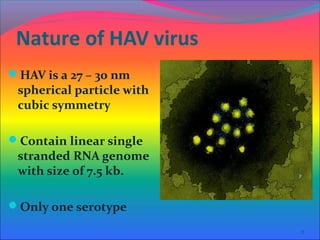
Nature of HAV virus
HAV is a 27 – 30 nm

spherical particle with
cubic symmetry

Contain linear single

stranded RNA genome
with size of 7.5 kb.

Only one serotype
3
HAV characteristics
HAV are stable to treatment with 20% ether acid
The virus are destroyed by: autoclaving at 1210c
Treatment with chlorine 1 ppm
Heating food > 850c

4
Epidemiology
A major communicable disease in the developing

world.

Well cooked food and sanitary water supply will

protect the individual living.

Community hygiene is important in schools, hostels

and jails, as overcrowding and poor sanitation favor
the spread.
5
SYMPTOMS
Fatigue
Fever
Sore muscles
Headache
Nausea
6
SYMPTOMS
Pain on the right side of the body
Yellowing of the skin and eyes
Dark urine
Diarrhea

7
8
Hepatitis A Virus Transmission
Close personal contact
Contaminated food or water

Blood exposure

9
Pathogenesis
HAV invade into human body by mouth and

cause viremia.

After one week, the HAV reach liver cells

replicate within.

Then enter intestine with bile and appear in

feces.

After HAV replicating and discharging, liver cells

damage begin

10
DIAGNOSIS
Doctors usually need a blood test to diagnose hepatitis

A

 though, they can also use a combination of signs,

symptoms and known exposure to someone who has
hepatitis A.

When the hepatitis A virus infects a liver, the body's

immune system begins producing special antibodies
called HAV IgM

The body also produces another type of antibody, HAV

IgG, which appears much later in the infection.

11
MANAGEMENT
Hepatitis A is a self-limited infection and

does not cause chronic disease. This means
that the body's immune system will clear
itself of the infection, usually in a couple of
weeks. Medical care is usually limited to
education about the disease and relieving
discomfort from symptoms. However, in rare
cases, complications might develop from
hepatitis A infection and will require further
medical care.
12
Clinical Manifestations
Incubation period 2 – 6 weeks
May be asymptomatic
Overt illness in 5%
Present as two stages:

1
2

Preicteric
Icteric
13
Treatment
No specific antiviral drug is available
Treatment is symptomatic
Specific passive prophylaxis by pooled normal

human immunoglobulin given before exposure
or in early incubation period can prevent or
attenuate clinical illness.

14
Clinical Complications



Complications:



Chronic sequel:

-Fulminant hepatitis
-Cholestatic hepatitis
-Relapsing hepatitis
None

15
Vaccination for HAV
Hepatitis A vaccination is recommended for all children

starting at age 1 year, travellers to certain countries, and
others at risk.

A safe and effective formalin inactivated alum conjugated

vaccine containing HAV grown in human diploid cell
culture is available

A full course containing two intramuscular injections of

the vaccine

Protection starts after 4 weeks after injection and lasts for

10 – 20 years

16
Vaccination Strategies
Epidemiologic Considerations
Many cases occur in community-wide

outbreaks

no risk factor identified for most cases
 highest attack rates in 5-14 year olds
 children serve as reservoir of infection


Persons at increased risk of infection
travelers
homosexual men
injecting drug users
17
Hepatitis A Prevention – Immune Globulin
Pre-exposure
travelers to intermediate and high

HAV-endemic regions

Post-exposure (within 14 days)

Routine
household and other intimate contacts
institutions
common source exposure
18
Preventing Hepatitis A
Hygiene
Sanitation
Hepatitis A vaccine
Immune globulin
19
20

Hepatitis A

  • 1.
    Helyn Jane A.Domingo BsPharmacy-3 1
  • 2.
    Hepatitis A It isan acute liver disease caused by the hepatitis A virus(HAV). lasting from a few weeks to several months The most famous sign of Hepatitis is Jaundice  It does not lead to chronic infection. 2
  • 3.
    Nature of HAVvirus HAV is a 27 – 30 nm spherical particle with cubic symmetry Contain linear single stranded RNA genome with size of 7.5 kb. Only one serotype 3
  • 4.
    HAV characteristics HAV arestable to treatment with 20% ether acid The virus are destroyed by: autoclaving at 1210c Treatment with chlorine 1 ppm Heating food > 850c 4
  • 5.
    Epidemiology A major communicabledisease in the developing world. Well cooked food and sanitary water supply will protect the individual living. Community hygiene is important in schools, hostels and jails, as overcrowding and poor sanitation favor the spread. 5
  • 6.
  • 7.
    SYMPTOMS Pain on theright side of the body Yellowing of the skin and eyes Dark urine Diarrhea 7
  • 8.
  • 9.
    Hepatitis A VirusTransmission Close personal contact Contaminated food or water Blood exposure 9
  • 10.
    Pathogenesis HAV invade intohuman body by mouth and cause viremia. After one week, the HAV reach liver cells replicate within. Then enter intestine with bile and appear in feces. After HAV replicating and discharging, liver cells damage begin 10
  • 11.
    DIAGNOSIS Doctors usually needa blood test to diagnose hepatitis A  though, they can also use a combination of signs, symptoms and known exposure to someone who has hepatitis A. When the hepatitis A virus infects a liver, the body's immune system begins producing special antibodies called HAV IgM The body also produces another type of antibody, HAV IgG, which appears much later in the infection. 11
  • 12.
    MANAGEMENT Hepatitis A isa self-limited infection and does not cause chronic disease. This means that the body's immune system will clear itself of the infection, usually in a couple of weeks. Medical care is usually limited to education about the disease and relieving discomfort from symptoms. However, in rare cases, complications might develop from hepatitis A infection and will require further medical care. 12
  • 13.
    Clinical Manifestations Incubation period2 – 6 weeks May be asymptomatic Overt illness in 5% Present as two stages: 1 2 Preicteric Icteric 13
  • 14.
    Treatment No specific antiviraldrug is available Treatment is symptomatic Specific passive prophylaxis by pooled normal human immunoglobulin given before exposure or in early incubation period can prevent or attenuate clinical illness. 14
  • 15.
    Clinical Complications  Complications:  Chronic sequel: -Fulminanthepatitis -Cholestatic hepatitis -Relapsing hepatitis None 15
  • 16.
    Vaccination for HAV HepatitisA vaccination is recommended for all children starting at age 1 year, travellers to certain countries, and others at risk. A safe and effective formalin inactivated alum conjugated vaccine containing HAV grown in human diploid cell culture is available A full course containing two intramuscular injections of the vaccine Protection starts after 4 weeks after injection and lasts for 10 – 20 years 16
  • 17.
    Vaccination Strategies Epidemiologic Considerations Manycases occur in community-wide outbreaks no risk factor identified for most cases  highest attack rates in 5-14 year olds  children serve as reservoir of infection  Persons at increased risk of infection travelers homosexual men injecting drug users 17
  • 18.
    Hepatitis A Prevention– Immune Globulin Pre-exposure travelers to intermediate and high HAV-endemic regions Post-exposure (within 14 days) Routine household and other intimate contacts institutions common source exposure 18
  • 19.
  • 20.