HAEMATINICS
INTRODUCTION..
• Haematinics are those substances which provide
the suitable condition for blood component formation
and support the blood formation (Erythropoiesis).
• Its generally contains the iron/ferrous containing
compounds, which are the essential substances
required for the blood metabolism and provide the
prevention against the deficiency syndrome of
iron or ferrous.
• In haematinics also include the supporting elements
for blood formation and maturation.
• They are used in the treatment of anaemias
Anaemia: a condition in which there is a deficiency of
red cells or haemoglobin in the blood, resulting in
pallor and weariness.
Balance between production and destruction of RBCs
are disturbed:
– Blood Loss (acute or chronic)
– Impaired cell formation due to
• Deficiency of essential factors – Iron, Vit. B12 and Folic acid
• Bone marrow depression (hypoplastic), erythropoietin deficiency
– Increased cell destruction (haemolytic)
•
•
Cont..
• Bone marrow : is the area/zone of blood
components formation (RBC, WBC, &
PLATELETS).
• By the combination effects of blood substances
provide the immunity against any disease.
• Hemoglobin : is the iron rich red color protein
which presents in the RBC and carry the
oxygen from one place to another in the body.
Classification of the
Haematinics
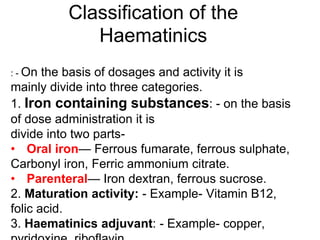
: - On the basis of dosages and activity it is
mainly divide into three categories.
1. Iron containing substances: - on the basis
of dose administration it is
divide into two parts-
• Oral iron— Ferrous fumarate, ferrous sulphate,
Carbonyl iron, Ferric ammonium citrate.
• Parenteral— Iron dextran, ferrous sucrose.
2. Maturation activity: - Example- Vitamin B12,
folic acid.
3. Haematinics adjuvant: - Example- copper,
Iron
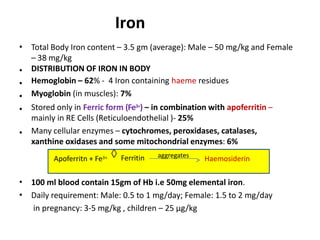
• Total Body Iron content – 3.5 gm (average): Male – 50 mg/kg and Female
– 38 mg/kg
DISTRIBUTION OF IRON IN BODY
Hemoglobin – 62% - 4 Iron containing haeme residues
Myoglobin (in muscles): 7%
Stored only in Ferric form (Fe3+) – in combination with apoferritin –
mainly in RE Cells (Reticuloendothelial )- 25%
Many cellular enzymes – cytochromes, peroxidases, catalases,
xanthine oxidases and some mitochondrial enzymes: 6%
•
•
•
•
•
•
•
100 ml blood contain 15gm of Hb i.e 50mg elemental iron.
Daily requirement: Male: 0.5 to 1 mg/day; Female: 1.5 to 2 mg/day
in pregnancy: 3-5 mg/kg , children – 25 µg/kg
Apoferritn + Fe3+ Haemosiderin
 Ferritin aggregates
Dietary source
• Rich : liver, egg yolk, dry fruits, legumes,
broccoli, spinach
• Medium : Meat , chicken , fish , banana
,mulberry
• Poor : milk and its product.
Absorption of iron
• Iron is called as one way substance, because it is
absorbed and excreted from small intestine.
• Iron is absorbed from upper small intestine.
• Iron is absorbed in three forms: (1) ferrous iron (2) ferric
iron (3) heme iron.
• Iron is absorbed mainly in the ferrous form
• Ferric ions are reduced with ascorbic acid & glutathione
of food to more soluble ferrous (Fe2+) form which is
more readily absorbed than Fe3+
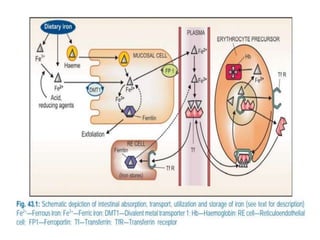
• After taken up by the intestinal mucosa, iron is either
stored in the form of ferritin in the mucosal cells or
transported across the mucosal cells to the plasma in the
form of transferrin.
Iron Absorption
• Diet – 10 to 20 mg – absorbed from all over the Intestine (more
from upper part- duodenum)
2 forms – haeme and Inorganic
– Haeme – minor form of dietary Iron but absorbed better without any
transporter
– Inorganic – in ferric form but absorbs lesser – converted to ferrous
form in Intestine for absorption – needs transporter
– Divalent metal transporter (DMT1) and Ferroportin (FP)
Factors increasing absorption – acid, reducing substances – ascorbic
acid, amino acid etc. and meat
Factors impending absorption – alkali (antacids), Phosphates,
, tetracycline and presence of other food
Mucosal block: from mucosal cell – transported to plasma or
remains stored in mucosal cell by forming ferritin - Ferritin curtain
– Balance between those two – detremines how much Iron to enter
body - by haematopoietic transcription factor
•
•
•
•
Transport
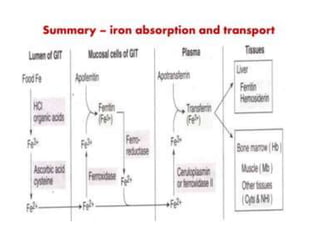
• Iron in the mucosal cells:
• The iron (Fe2+) entering the mucosal
cells by absorption is oxidized to ferric
form (Fe3+) by the enzyme ferroxidase
(ferroxidase activity of ceruloplasmin)
• Major sources of iron in the plasma is
from degraded erythrocytes.
• Fe3+ combines with apoferritin to form
ferritin, which the temporary storage form
of iron
From the mucosal cells, iron may enter the blood
stream.
• Transport of iron in the plasma:
• Iron enters plasma in ferrous state.
• It is oxidized to ferric form by a copper containing
protein, ceruloplasmin - ferroxidase activity.
• Ferric iron binds with a specific iron binding protein-
transferrin or siderophilin.
• Transport form of iron is transferrin.
• It is a glycoprotein, synthesized in liver
Storage
• Iron is stored in liver, spleen & bone marrow in the
form of ferritin.
• In the mucosal cells, ferritin is the temporary
storage form of iron.
• Ferritin contains about 23% iron.
• Ferritin in plasma level is elevated in iron over load.
Hemosiderin:
• It is another iron storage protein, which can hold
about 35% of iron by weight.
• Hemosiderin accumulates when iron levels are
increased
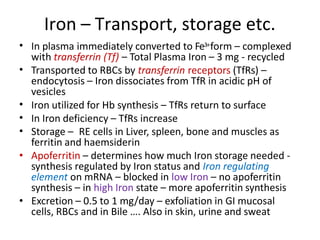
Iron – Transport, storage etc.
• In plasma immediately converted to Fe3+form – complexed
with transferrin (Tf) – Total Plasma Iron – 3 mg - recycled
Transported to RBCs by transferrin receptors (TfRs) –
endocytosis – Iron dissociates from TfR in acidic pH of
vesicles
Iron utilized for Hb synthesis – TfRs return to surface
In Iron deficiency – TfRs increase
Storage – RE cells in Liver, spleen, bone and muscles as
ferritin and haemsiderin
Apoferritin – determines how much Iron storage needed -
synthesis regulated by Iron status and Iron regulating
element on mRNA – blocked in low Iron – no apoferritin
synthesis – in high Iron state – more apoferritin synthesis
Excretion – 0.5 to 1 mg/day – exfoliation in GI mucosal
cells, RBCs and in Bile …. Also in skin, urine and sweat
•
•
•
•
•
•
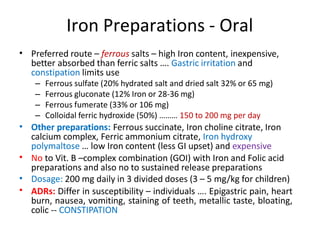
Iron Preparations - Oral
• Preferred route – ferrous salts – high Iron content, inexpensive,
better absorbed than ferric salts …. Gastric irritation and
constipation limits use
– Ferrous sulfate (20% hydrated salt and dried salt 32% or 65 mg)
– Ferrous gluconate (12% Iron or 28-36 mg)
– Ferrous fumerate (33% or 106 mg)
– Colloidal ferric hydroxide (50%) ……… 150 to 200 mg per day
Other preparations: Ferrous succinate, Iron choline citrate, Iron
calcium complex, Ferric ammonium citrate, Iron hydroxy
polymaltose … low Iron content (less GI upset) and expensive
No to Vit. B –complex combination (GOI) with Iron and Folic acid
preparations and also no to sustained release preparations
Dosage: 200 mg daily in 3 divided doses (3 – 5 mg/kg for children)
ADRs: Differ in susceptibility – individuals …. Epigastric pain, heart
burn, nausea, vomiting, staining of teeth, metallic taste, bloating,
colic -- CONSTIPATION
•
•
•
•
Iron Preparations - Parenteral
• Indications:
– Failure to absorb oral Iron – malabsorption, inflammatory bowel
disease (proximal small bowel)
– Post gastrectomy conditions
– Severe deficiency with chronic bleeding
– Either intolerance and non-compliance to oral Iron
– With erythropoietin
Calculation: 4.4 X body weight (kg) X Hb deficit (g/dl)
Not faster absorption than oral but stores replenish faster
Preparations: Iron-dextran (colloidal solution) 50 mg/ml
Iron and Iron-sorbitol-citric acid complex and Sodium ferric
gluconate complex in sucrose
•
•
•
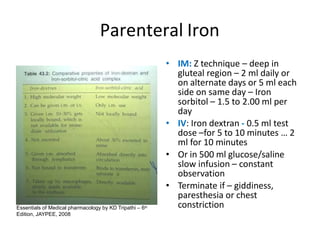
Parenteral Iron
• IM: Z technique – deep in
gluteal region – 2 ml daily or
on alternate days or 5 ml each
side on same day – Iron
sorbitol – 1.5 to 2.00 ml per
day
• IV: Iron dextran - 0.5 ml test
dose –for 5 to 10 minutes … 2
ml for 10 minutes
• Or in 500 ml glucose/saline
slow infusion – constant
observation
• Terminate if – giddiness,
paresthesia or chest
constriction
Essentials of Medical pharmacology by KD Tripathi – 6th
Edition, JAYPEE, 2008
Iron – contd.
• ADRs:
– Local: Pain in IM injection, pigmentation of skin, sterile abscess
– Systemic: Fever, headache, joint pain, flushing, palpitation, chest pain,
dyspnoea, lymph node enlargement
• Metallic taste with sorbitol
• Anaphylactoid reaction – Kidney diseases (no sorbitol)
• Uses:
– Iron deficiency anaemia: Nutritional deficiency, chronic blood loss (GIT
ulcers and hook worm)
• Oral Iron preferred : Target – 0.5 to 1 g/dl per week – 1 to 3 months therapy
plus 2 to 3 months afterwards
• Prophylaxis: Ceiling on Iron absorption - = 3 mg/day ….. Pregnancy and
infancy to be taken care of well in advance
– Megaloblastic anaemia
– As astringent: Ferric chloride
Acute Iron Poisoning
•
•
Infants and children – 10 to 20 tablets (60 mg/kg Iron)
Symptoms: Vomiting, abdominal pain, haematemesis, diarrhoea,
lethargy, cyanosis, dehydration, acidosis, convulsion, CVS collapse
and death (12 – 36 Hours)
– Haemorrhage and inflammation of gut, hepatic necrosis and brain
damage
Treatment:
– Prevent further absorption: Induce vomitingor gastric lavage with
NaHCO3 – to render Iron insoluble …… and also Egg yolk and Milk orally
– Antidote: Desferrioxamine: 0.5 to 1.00 gm IM repeated 4 – 12 Hourly
or IV 10 – 15 mg/kg/Hour (max 75 mg/day) till serum levels fall
– DTPA and Calcium edetate
– Supportive: Fluid and electrolyte, correction of acidosis and Diazepam
•
VITAMIN – B12
Intro
• Vitamin B12, also known as cobalamin, is a water-
soluble vitamin involved in metabolism,
• Vitamin B12 is a coordination complex of cobalt
• It is imp. in the circulatory system in the maturation of red blood cells in
the bone marrow.
• This collection of compounds, of which vitamin B12 is one member, are
often referred to as "cobalamins“
• The two bioactive forms of
vitamin B are methylcobalamin in cytosol and adenosylcobalamin in mit
ochondria.
• Cyanocobalamin is the most common form used in dietary supplements
and food fortification because cyanide stabilizes the molecule against
degradation.
• Methylcobalamin is also offered as a dietary supplement
• Hydroxycobalamine can be injected intramuscularly to treat vitamin
B12 deficiency
Vit. B12 - Metabolic functions
• Linked with folic acid metabolism – megaloblastic anaemia
indistinguishable
Two active forms - Deoxy-adenosyl-cobalamin (DAB12) and methyl-
cobalamin (methyl-B12)
•
1) Vit. B12 needed for conversion of homocysteine to methionine – methionine
is methyl group donor in metabolic reactions – also critical for making THFA
available
2) Purine and pyrymidine synthesis is affected – folate trap – non availability
of thymidylate for DNA synthesis
3) Malonic acid Succinic acid - important for propionic acid
metabolism (Carbohydrate and lipid metabolism) – linked to demyelination
in Vit. B12 deficiency
4) Methionine S-adenosyl methionine – neurological
damage
5) Vit. B12 is needed for cell growth and multiplications
Vit. B12 - Kinetics
• Absorption: Present in food as protein conjugates – released
by cooking/proteolysis
– IF forms a complex with Vit. B12 – attaches to specific receptor in
mucosa – absorbed by active transport
Transport: In combination with transcobalamin II (TCII) –
congenital absence/abnormal protein (liver disease and BM
disease) – defective supply to tissues
Storage: In liver – 4/5th of Body`s Vit.B12
Degradation: Not degraded in body – excreted mainly in Bile –
enterohepatic circulation ….. absence of IF and malabsorption
Vs Nutritional deficiency
Parenteral – completely absorbed -IM and SC administration
– excreted via urine
•
•
•
•
Deficiency - Vit. B12
• Deficiency: Addisonian pernicious anaemia (destruction of
parietal cells), gastric mucosal damage, damaged intestinal
mucosa, consumption by abnormal flora (blind loop syndrome
& fish tape worm), nutritional deficiency, increased demand
Manifestations: Megaloblastic anaemia,
glossitis(inflammation on tongue), GI disturbance,
degeneration of spinal cord and peripheral neuritis –
diminished vibration and position sense, paresthesia,
depressed reflexes and mental changes
Preparations: Cyanocobalamin Injection, Hydroxocobalamin
Injection and Methylcobalamin Tablets
•
•
Vit. B12 – Uses and ADRs
• Prophylactically in diabetics and alcoholics – to prevent
peripheral neuritis – 1.5 mg/day
Treatment of deficiency states: Add Folic acid and Iron
– Very quick response – appetite increases, patient feel better, mucosal
lesions heal, neurological parameters improve
– If due to IF factor lacking – IM or SC (not IV) – necessary to by pass
defective absor scheduleption – daily-weekly-monthly
Mega doses: in neuropathies, psychiatric disorders,
cutaneous sarcoid
Tobacco amblyopia – cyanide to cyanocobalamin
ADRs: Safe – allergic reactions due to contaminants
•
•
•
•
FOLIC ACID
Introduction
• Folate is also known as vitamin B9 and Folacin, isone type of B
vitamin
FA which is converted into folate by the body is used as dietary
supplement.
Folate is required for RNA and DNA synthesis and metabolise
amino acid for cell division
Physical: Yellow crystals, Pteroyl glutamic acid
(PGA) – pteridine + paraminobenzoic acids + glutamic acid
Daily requirement: 0.2 mg per day (0.8 mg in pregnancy and
lactation)
•
•
Kinetics:
– Absorption: As polyglutamates in food – glutamates split off and
absorbed in upper intestine ….. Reduction to DHFA(dihyfolic acid) and
methylation also occurs at same site
– Transport: as methyl-THFA – partly bound to plasma protein
– Store: tissues extract FA rapidly and store as polyglutamates in cells.
Liver takes up major portion – releases methyl-THFA – enterohepatic
circulation (alcohol interferes)
– Excretion:– excreted in Urine
Folic acid – Metabolic function
• Conversion of homocysteine to methionine
• Conversion of serine to glycine
• The biological activity of folate in the body
depends upon dihydrofolate reductase
action in the liver which converts folate
into tetrahydrofolate (THF).
Deficiency - Folic acid
• Deficiency: Inadequate dietary intake, Malabsorption (upper
GIT – coeliac disease, tropical sprue etc.), biliary fistula,
chronic alcoholism, drug induced (phenytoin,
phenobarbitone etc.)
Manifestations: Megaloblastic anaemia (body store lasts for
2-3 months), epithelial damage (glossitis, enteritis, diarrhoea),
neural tube defects (spina bifida), general disability
(weakness, loss weight, sterility)
Preparations: Folic acid tablets and Folinic acid Injections
(Calcium leucovorin)
•
•
Folic acid – Uses and ADRs
• Megaloblastic anaemia: due to nutritional deficiency,
pregnancy, pernicious anaemia (adjuvant role with
Vit. B12), malabsorption syndromes, antiepileptic
therapy
Prophylaxis: 1 mg per day routinly in pregnancy
Methotrexate toxicity: Folinic acid, citrovorum factor
Citrovorum rescue: within 3 hours
ADRs: Non toxic orally, sensitivity by injections rarely
•
•
•
•
Introduction
•
•
•
•
Sialoglycoprotein hormone – produced by peritubular cells of Kidney
Recombinant human erythropoietin (Epoetin α, β) – administerd IV or SC
Half life: 6 – 10 Hours
Required for erythropoiesis: anaemia and hypoxia sensed by kidney cells –
EPO secretes and acts on marrow:
–
–
–
Stimulates proliferation of colony forming cells of erythroid series
Induces Hb formation and erythroblast maturation
Release of reticulocytes ( slightly immature RBC)
• MOA: Binds to specific EPO receptor (JAK-STAT-kinase) – alters
phosphorylation of intracellular proteins and activates transcription
factors to regulate gene expression – erythropoiesis
Erythropoietin – Uses and ADRs
• Anaemia of chronic renal failure – 25 – 100 U/kg SC or IV 3
times a day – concomitant Iron therapy
Anaemia with AIDS patients treated with zidovudine
Cancer chemotherapy induced anaemia
Preoperative increased blood production – autologous
transfusion
ADRs: Nonimmunogenic, ----- ADRs occur due to increase in
haematocrit, viscosity and peripheral resistance – increased
clot formation , hypertensive episodes, seizure, flu like
symptoms
•
•
•
•

haematinics-160713185907.pptx

  • 1.
  • 2.
    INTRODUCTION.. • Haematinics arethose substances which provide the suitable condition for blood component formation and support the blood formation (Erythropoiesis). • Its generally contains the iron/ferrous containing compounds, which are the essential substances required for the blood metabolism and provide the prevention against the deficiency syndrome of iron or ferrous. • In haematinics also include the supporting elements for blood formation and maturation.
  • 3.
    • They areused in the treatment of anaemias Anaemia: a condition in which there is a deficiency of red cells or haemoglobin in the blood, resulting in pallor and weariness. Balance between production and destruction of RBCs are disturbed: – Blood Loss (acute or chronic) – Impaired cell formation due to • Deficiency of essential factors – Iron, Vit. B12 and Folic acid • Bone marrow depression (hypoplastic), erythropoietin deficiency – Increased cell destruction (haemolytic) • •
  • 4.
    Cont.. • Bone marrow: is the area/zone of blood components formation (RBC, WBC, & PLATELETS). • By the combination effects of blood substances provide the immunity against any disease. • Hemoglobin : is the iron rich red color protein which presents in the RBC and carry the oxygen from one place to another in the body.
  • 5.
    Classification of the Haematinics :- On the basis of dosages and activity it is mainly divide into three categories. 1. Iron containing substances: - on the basis of dose administration it is divide into two parts- • Oral iron— Ferrous fumarate, ferrous sulphate, Carbonyl iron, Ferric ammonium citrate. • Parenteral— Iron dextran, ferrous sucrose. 2. Maturation activity: - Example- Vitamin B12, folic acid. 3. Haematinics adjuvant: - Example- copper,
  • 7.
    Iron • Total BodyIron content – 3.5 gm (average): Male – 50 mg/kg and Female – 38 mg/kg DISTRIBUTION OF IRON IN BODY Hemoglobin – 62% - 4 Iron containing haeme residues Myoglobin (in muscles): 7% Stored only in Ferric form (Fe3+) – in combination with apoferritin – mainly in RE Cells (Reticuloendothelial )- 25% Many cellular enzymes – cytochromes, peroxidases, catalases, xanthine oxidases and some mitochondrial enzymes: 6% • • • • • • • 100 ml blood contain 15gm of Hb i.e 50mg elemental iron. Daily requirement: Male: 0.5 to 1 mg/day; Female: 1.5 to 2 mg/day in pregnancy: 3-5 mg/kg , children – 25 µg/kg Apoferritn + Fe3+ Haemosiderin  Ferritin aggregates
  • 8.
    Dietary source • Rich: liver, egg yolk, dry fruits, legumes, broccoli, spinach • Medium : Meat , chicken , fish , banana ,mulberry • Poor : milk and its product.
  • 9.
    Absorption of iron •Iron is called as one way substance, because it is absorbed and excreted from small intestine. • Iron is absorbed from upper small intestine. • Iron is absorbed in three forms: (1) ferrous iron (2) ferric iron (3) heme iron. • Iron is absorbed mainly in the ferrous form • Ferric ions are reduced with ascorbic acid & glutathione of food to more soluble ferrous (Fe2+) form which is more readily absorbed than Fe3+ • After taken up by the intestinal mucosa, iron is either stored in the form of ferritin in the mucosal cells or transported across the mucosal cells to the plasma in the form of transferrin.
  • 10.
    Iron Absorption • Diet– 10 to 20 mg – absorbed from all over the Intestine (more from upper part- duodenum) 2 forms – haeme and Inorganic – Haeme – minor form of dietary Iron but absorbed better without any transporter – Inorganic – in ferric form but absorbs lesser – converted to ferrous form in Intestine for absorption – needs transporter – Divalent metal transporter (DMT1) and Ferroportin (FP) Factors increasing absorption – acid, reducing substances – ascorbic acid, amino acid etc. and meat Factors impending absorption – alkali (antacids), Phosphates, , tetracycline and presence of other food Mucosal block: from mucosal cell – transported to plasma or remains stored in mucosal cell by forming ferritin - Ferritin curtain – Balance between those two – detremines how much Iron to enter body - by haematopoietic transcription factor • • • •
  • 11.
    Transport • Iron inthe mucosal cells: • The iron (Fe2+) entering the mucosal cells by absorption is oxidized to ferric form (Fe3+) by the enzyme ferroxidase (ferroxidase activity of ceruloplasmin) • Major sources of iron in the plasma is from degraded erythrocytes. • Fe3+ combines with apoferritin to form ferritin, which the temporary storage form of iron
  • 12.
    From the mucosalcells, iron may enter the blood stream. • Transport of iron in the plasma: • Iron enters plasma in ferrous state. • It is oxidized to ferric form by a copper containing protein, ceruloplasmin - ferroxidase activity. • Ferric iron binds with a specific iron binding protein- transferrin or siderophilin. • Transport form of iron is transferrin. • It is a glycoprotein, synthesized in liver
  • 13.
    Storage • Iron isstored in liver, spleen & bone marrow in the form of ferritin. • In the mucosal cells, ferritin is the temporary storage form of iron. • Ferritin contains about 23% iron. • Ferritin in plasma level is elevated in iron over load. Hemosiderin: • It is another iron storage protein, which can hold about 35% of iron by weight. • Hemosiderin accumulates when iron levels are increased
  • 14.
    Iron – Transport,storage etc. • In plasma immediately converted to Fe3+form – complexed with transferrin (Tf) – Total Plasma Iron – 3 mg - recycled Transported to RBCs by transferrin receptors (TfRs) – endocytosis – Iron dissociates from TfR in acidic pH of vesicles Iron utilized for Hb synthesis – TfRs return to surface In Iron deficiency – TfRs increase Storage – RE cells in Liver, spleen, bone and muscles as ferritin and haemsiderin Apoferritin – determines how much Iron storage needed - synthesis regulated by Iron status and Iron regulating element on mRNA – blocked in low Iron – no apoferritin synthesis – in high Iron state – more apoferritin synthesis Excretion – 0.5 to 1 mg/day – exfoliation in GI mucosal cells, RBCs and in Bile …. Also in skin, urine and sweat • • • • • •
  • 17.
    Iron Preparations -Oral • Preferred route – ferrous salts – high Iron content, inexpensive, better absorbed than ferric salts …. Gastric irritation and constipation limits use – Ferrous sulfate (20% hydrated salt and dried salt 32% or 65 mg) – Ferrous gluconate (12% Iron or 28-36 mg) – Ferrous fumerate (33% or 106 mg) – Colloidal ferric hydroxide (50%) ……… 150 to 200 mg per day Other preparations: Ferrous succinate, Iron choline citrate, Iron calcium complex, Ferric ammonium citrate, Iron hydroxy polymaltose … low Iron content (less GI upset) and expensive No to Vit. B –complex combination (GOI) with Iron and Folic acid preparations and also no to sustained release preparations Dosage: 200 mg daily in 3 divided doses (3 – 5 mg/kg for children) ADRs: Differ in susceptibility – individuals …. Epigastric pain, heart burn, nausea, vomiting, staining of teeth, metallic taste, bloating, colic -- CONSTIPATION • • • •
  • 18.
    Iron Preparations -Parenteral • Indications: – Failure to absorb oral Iron – malabsorption, inflammatory bowel disease (proximal small bowel) – Post gastrectomy conditions – Severe deficiency with chronic bleeding – Either intolerance and non-compliance to oral Iron – With erythropoietin Calculation: 4.4 X body weight (kg) X Hb deficit (g/dl) Not faster absorption than oral but stores replenish faster Preparations: Iron-dextran (colloidal solution) 50 mg/ml Iron and Iron-sorbitol-citric acid complex and Sodium ferric gluconate complex in sucrose • • •
  • 19.
    Parenteral Iron • IM:Z technique – deep in gluteal region – 2 ml daily or on alternate days or 5 ml each side on same day – Iron sorbitol – 1.5 to 2.00 ml per day • IV: Iron dextran - 0.5 ml test dose –for 5 to 10 minutes … 2 ml for 10 minutes • Or in 500 ml glucose/saline slow infusion – constant observation • Terminate if – giddiness, paresthesia or chest constriction Essentials of Medical pharmacology by KD Tripathi – 6th Edition, JAYPEE, 2008
  • 20.
    Iron – contd. •ADRs: – Local: Pain in IM injection, pigmentation of skin, sterile abscess – Systemic: Fever, headache, joint pain, flushing, palpitation, chest pain, dyspnoea, lymph node enlargement • Metallic taste with sorbitol • Anaphylactoid reaction – Kidney diseases (no sorbitol) • Uses: – Iron deficiency anaemia: Nutritional deficiency, chronic blood loss (GIT ulcers and hook worm) • Oral Iron preferred : Target – 0.5 to 1 g/dl per week – 1 to 3 months therapy plus 2 to 3 months afterwards • Prophylaxis: Ceiling on Iron absorption - = 3 mg/day ….. Pregnancy and infancy to be taken care of well in advance – Megaloblastic anaemia – As astringent: Ferric chloride
  • 21.
    Acute Iron Poisoning • • Infantsand children – 10 to 20 tablets (60 mg/kg Iron) Symptoms: Vomiting, abdominal pain, haematemesis, diarrhoea, lethargy, cyanosis, dehydration, acidosis, convulsion, CVS collapse and death (12 – 36 Hours) – Haemorrhage and inflammation of gut, hepatic necrosis and brain damage Treatment: – Prevent further absorption: Induce vomitingor gastric lavage with NaHCO3 – to render Iron insoluble …… and also Egg yolk and Milk orally – Antidote: Desferrioxamine: 0.5 to 1.00 gm IM repeated 4 – 12 Hourly or IV 10 – 15 mg/kg/Hour (max 75 mg/day) till serum levels fall – DTPA and Calcium edetate – Supportive: Fluid and electrolyte, correction of acidosis and Diazepam •
  • 22.
  • 23.
    Intro • Vitamin B12,also known as cobalamin, is a water- soluble vitamin involved in metabolism, • Vitamin B12 is a coordination complex of cobalt • It is imp. in the circulatory system in the maturation of red blood cells in the bone marrow. • This collection of compounds, of which vitamin B12 is one member, are often referred to as "cobalamins“ • The two bioactive forms of vitamin B are methylcobalamin in cytosol and adenosylcobalamin in mit ochondria. • Cyanocobalamin is the most common form used in dietary supplements and food fortification because cyanide stabilizes the molecule against degradation. • Methylcobalamin is also offered as a dietary supplement • Hydroxycobalamine can be injected intramuscularly to treat vitamin B12 deficiency
  • 24.
    Vit. B12 -Metabolic functions • Linked with folic acid metabolism – megaloblastic anaemia indistinguishable Two active forms - Deoxy-adenosyl-cobalamin (DAB12) and methyl- cobalamin (methyl-B12) • 1) Vit. B12 needed for conversion of homocysteine to methionine – methionine is methyl group donor in metabolic reactions – also critical for making THFA available 2) Purine and pyrymidine synthesis is affected – folate trap – non availability of thymidylate for DNA synthesis 3) Malonic acid Succinic acid - important for propionic acid metabolism (Carbohydrate and lipid metabolism) – linked to demyelination in Vit. B12 deficiency 4) Methionine S-adenosyl methionine – neurological damage 5) Vit. B12 is needed for cell growth and multiplications
  • 25.
    Vit. B12 -Kinetics • Absorption: Present in food as protein conjugates – released by cooking/proteolysis – IF forms a complex with Vit. B12 – attaches to specific receptor in mucosa – absorbed by active transport Transport: In combination with transcobalamin II (TCII) – congenital absence/abnormal protein (liver disease and BM disease) – defective supply to tissues Storage: In liver – 4/5th of Body`s Vit.B12 Degradation: Not degraded in body – excreted mainly in Bile – enterohepatic circulation ….. absence of IF and malabsorption Vs Nutritional deficiency Parenteral – completely absorbed -IM and SC administration – excreted via urine • • • •
  • 26.
    Deficiency - Vit.B12 • Deficiency: Addisonian pernicious anaemia (destruction of parietal cells), gastric mucosal damage, damaged intestinal mucosa, consumption by abnormal flora (blind loop syndrome & fish tape worm), nutritional deficiency, increased demand Manifestations: Megaloblastic anaemia, glossitis(inflammation on tongue), GI disturbance, degeneration of spinal cord and peripheral neuritis – diminished vibration and position sense, paresthesia, depressed reflexes and mental changes Preparations: Cyanocobalamin Injection, Hydroxocobalamin Injection and Methylcobalamin Tablets • •
  • 27.
    Vit. B12 –Uses and ADRs • Prophylactically in diabetics and alcoholics – to prevent peripheral neuritis – 1.5 mg/day Treatment of deficiency states: Add Folic acid and Iron – Very quick response – appetite increases, patient feel better, mucosal lesions heal, neurological parameters improve – If due to IF factor lacking – IM or SC (not IV) – necessary to by pass defective absor scheduleption – daily-weekly-monthly Mega doses: in neuropathies, psychiatric disorders, cutaneous sarcoid Tobacco amblyopia – cyanide to cyanocobalamin ADRs: Safe – allergic reactions due to contaminants • • • •
  • 28.
  • 29.
    Introduction • Folate isalso known as vitamin B9 and Folacin, isone type of B vitamin FA which is converted into folate by the body is used as dietary supplement. Folate is required for RNA and DNA synthesis and metabolise amino acid for cell division Physical: Yellow crystals, Pteroyl glutamic acid (PGA) – pteridine + paraminobenzoic acids + glutamic acid Daily requirement: 0.2 mg per day (0.8 mg in pregnancy and lactation) • •
  • 30.
    Kinetics: – Absorption: Aspolyglutamates in food – glutamates split off and absorbed in upper intestine ….. Reduction to DHFA(dihyfolic acid) and methylation also occurs at same site – Transport: as methyl-THFA – partly bound to plasma protein – Store: tissues extract FA rapidly and store as polyglutamates in cells. Liver takes up major portion – releases methyl-THFA – enterohepatic circulation (alcohol interferes) – Excretion:– excreted in Urine
  • 31.
    Folic acid –Metabolic function • Conversion of homocysteine to methionine • Conversion of serine to glycine • The biological activity of folate in the body depends upon dihydrofolate reductase action in the liver which converts folate into tetrahydrofolate (THF).
  • 32.
    Deficiency - Folicacid • Deficiency: Inadequate dietary intake, Malabsorption (upper GIT – coeliac disease, tropical sprue etc.), biliary fistula, chronic alcoholism, drug induced (phenytoin, phenobarbitone etc.) Manifestations: Megaloblastic anaemia (body store lasts for 2-3 months), epithelial damage (glossitis, enteritis, diarrhoea), neural tube defects (spina bifida), general disability (weakness, loss weight, sterility) Preparations: Folic acid tablets and Folinic acid Injections (Calcium leucovorin) • •
  • 33.
    Folic acid –Uses and ADRs • Megaloblastic anaemia: due to nutritional deficiency, pregnancy, pernicious anaemia (adjuvant role with Vit. B12), malabsorption syndromes, antiepileptic therapy Prophylaxis: 1 mg per day routinly in pregnancy Methotrexate toxicity: Folinic acid, citrovorum factor Citrovorum rescue: within 3 hours ADRs: Non toxic orally, sensitivity by injections rarely • • • •
  • 35.
    Introduction • • • • Sialoglycoprotein hormone –produced by peritubular cells of Kidney Recombinant human erythropoietin (Epoetin α, β) – administerd IV or SC Half life: 6 – 10 Hours Required for erythropoiesis: anaemia and hypoxia sensed by kidney cells – EPO secretes and acts on marrow: – – – Stimulates proliferation of colony forming cells of erythroid series Induces Hb formation and erythroblast maturation Release of reticulocytes ( slightly immature RBC) • MOA: Binds to specific EPO receptor (JAK-STAT-kinase) – alters phosphorylation of intracellular proteins and activates transcription factors to regulate gene expression – erythropoiesis
  • 36.
    Erythropoietin – Usesand ADRs • Anaemia of chronic renal failure – 25 – 100 U/kg SC or IV 3 times a day – concomitant Iron therapy Anaemia with AIDS patients treated with zidovudine Cancer chemotherapy induced anaemia Preoperative increased blood production – autologous transfusion ADRs: Nonimmunogenic, ----- ADRs occur due to increase in haematocrit, viscosity and peripheral resistance – increased clot formation , hypertensive episodes, seizure, flu like symptoms • • • •