Helping Hands
Presented by
Anthony Micheni
On Friday 29th January 2016.
Background
 Solution to healthcare challenges faced by sick,
terminally ill, and elderly people.
 Hybrid social enterprise that tackles the needs of both
the rich and the poor.
 From an idea to a problem-solving entity.
 In 5 years, Helping Hands will be fully equipped, with
an established centre, and able to fund the foundation.
The problem
 Only 3 out of 10 terminally ill Kenyans are able to
comfortably access quality home healthcare.
 65% of Kenyan families do not have the time or
resources to adequately give care to their elderly
parents or grandparents.
Our solution
 Through Helping Hands Home HealthCare we
connect Kenyans with licensed nurses and trained
caregivers who provide adequate support and comfort
to terminally ill, elderly and disabled persons. 50% of
the profits support poor elderly and terminally ill
people.
 Through Helping Hands foundation, we identify and
carefully select the most vulnerable poor elderly and
terminally ill people to be cared for and supported at
no cost.
Product-market fit
 Increased terminal illnesses.
Alternative healthcare management.
Support for poor elderly and terminally ill persons.
Job creation.
Alternatives and competition
 Homecare agencies
 Medical practitioners
 Private caregivers
 Hospitals/Health centers
 Family support
 Helping hands is the ONLY social enterprise in Kenya
with a model that has home healthcare solutions for
both the rich and the poor.
Social impact
Increased number of terminally ill people access
quality healthcare at home.
Continued support and care for poor elderly people.
Employment opportunities.
Improved health.
Dignified living and comfort for sick people at home.
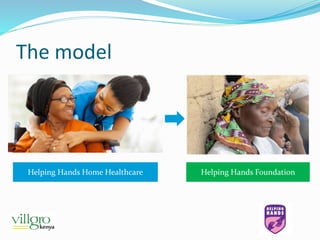
The model
Helping Hands Home Healthcare Helping Hands Foundation
Customer segment
 Families with sick and terminally ill people considering home based care.
 Families with elderly people looking for caregivers to provide care and
companionship.
 Families with disabled persons looking for daily support.
 Hospitalized patients requiring personalized care.
 Families considering taking sick, terminally ill, and elderly persons for
palliative care in a nursing home.
Channels…
 Caregivers and nurses.
 Physiotherapists
 Doctors
 volunteers.
 Hospitals
 Home nursing care facility.
Value proposition
 Cost-effectiveness (reduced cost).
 Assured, reliable, quality and professional healthcare.
 Family members continue with their normal lives.
 Home environment hence quick health improvement.
 Treatment comes near home thus reduced movement.
Market survey…
 Study of behaviors of aged and terminally ill people at home.
 The most preferred place or environment for nursing care.
Pricing unit…
One patient – ksh. 10.000 – 20,000 Per month
One Nurse – ksh 15,000 – 30,000 per month
Market size
 Over 4 million people are terminally ill.
 5.5 million elderly persons (60 years and above).
Testimonial
“Fast, friendly and holistic services that have helped
improve the health of our father. Helping Hands
indeed. We won’t mind to recommend you to friends.
Thank you.” – Jane Mwende
Progress
 Created impact to 26 terminally ill and elderly people.
 Provided job opportunities to 6 nurses and 35 nurse
assistants(caregivers).
 Health improvement.
Funds raised…
14,076 $ - Revenue generated(clients)
170$ grant - Registration with nursing council of Kenya.
Funding requirements
10,000$ – the next 12months
 Purchase of all necessary home healthcare equipments.
 Extensive marketing.
50,000$ - 3 years
 Establishment of a home nursing care facility.
 Training school for caregivers.
Match fundraising plans;
 Increased business, investors, donations, well wishers, venture
capital.
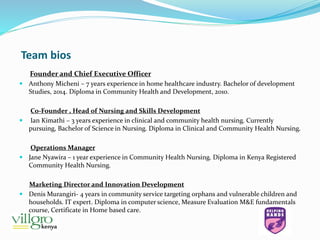
Team bios
Founder and Chief Executive Officer
 Anthony Micheni – 7 years experience in home healthcare industry. Bachelor of development
Studies, 2014. Diploma in Community Health and Development, 2010.
Co-Founder , Head of Nursing and Skills Development
 Ian Kimathi – 3 years experience in clinical and community health nursing. Currently
pursuing, Bachelor of Science in Nursing. Diploma in Clinical and Community Health Nursing.
Operations Manager
 Jane Nyawira – 1 year experience in Community Health Nursing. Diploma in Kenya Registered
Community Health Nursing.
Marketing Director and Innovation Development
 Denis Murangiri- 4 years in community service targeting orphans and vulnerable children and
households. IT expert. Diploma in computer science, Measure Evaluation M&E fundamentals
course, Certificate in Home based care.
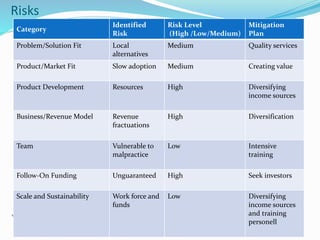
Category
Identified
Risk
Risk Level
(High /Low/Medium)
Mitigation
Plan
Problem/Solution Fit Local
alternatives
Medium Quality services
Product/Market Fit Slow adoption Medium Creating value
Product Development Resources High Diversifying
income sources
Business/Revenue Model Revenue
fractuations
High Diversification
Team Vulnerable to
malpractice
Low Intensive
training
Follow-On Funding Unguaranteed High Seek investors
Scale and Sustainability Work force and
funds
Low Diversifying
income sources
and training
personell
Risks
Thank you!

Helping hands presentation villgro kenya

  • 1.
    Helping Hands Presented by AnthonyMicheni On Friday 29th January 2016.
  • 2.
    Background  Solution tohealthcare challenges faced by sick, terminally ill, and elderly people.  Hybrid social enterprise that tackles the needs of both the rich and the poor.  From an idea to a problem-solving entity.  In 5 years, Helping Hands will be fully equipped, with an established centre, and able to fund the foundation.
  • 3.
    The problem  Only3 out of 10 terminally ill Kenyans are able to comfortably access quality home healthcare.  65% of Kenyan families do not have the time or resources to adequately give care to their elderly parents or grandparents.
  • 4.
    Our solution  ThroughHelping Hands Home HealthCare we connect Kenyans with licensed nurses and trained caregivers who provide adequate support and comfort to terminally ill, elderly and disabled persons. 50% of the profits support poor elderly and terminally ill people.  Through Helping Hands foundation, we identify and carefully select the most vulnerable poor elderly and terminally ill people to be cared for and supported at no cost.
  • 5.
    Product-market fit  Increasedterminal illnesses. Alternative healthcare management. Support for poor elderly and terminally ill persons. Job creation.
  • 6.
    Alternatives and competition Homecare agencies  Medical practitioners  Private caregivers  Hospitals/Health centers  Family support  Helping hands is the ONLY social enterprise in Kenya with a model that has home healthcare solutions for both the rich and the poor.
  • 7.
    Social impact Increased numberof terminally ill people access quality healthcare at home. Continued support and care for poor elderly people. Employment opportunities. Improved health. Dignified living and comfort for sick people at home.
  • 8.
    The model Helping HandsHome Healthcare Helping Hands Foundation
  • 9.
    Customer segment  Familieswith sick and terminally ill people considering home based care.  Families with elderly people looking for caregivers to provide care and companionship.  Families with disabled persons looking for daily support.  Hospitalized patients requiring personalized care.  Families considering taking sick, terminally ill, and elderly persons for palliative care in a nursing home. Channels…  Caregivers and nurses.  Physiotherapists  Doctors  volunteers.  Hospitals  Home nursing care facility.
  • 10.
    Value proposition  Cost-effectiveness(reduced cost).  Assured, reliable, quality and professional healthcare.  Family members continue with their normal lives.  Home environment hence quick health improvement.  Treatment comes near home thus reduced movement. Market survey…  Study of behaviors of aged and terminally ill people at home.  The most preferred place or environment for nursing care. Pricing unit… One patient – ksh. 10.000 – 20,000 Per month One Nurse – ksh 15,000 – 30,000 per month
  • 11.
    Market size  Over4 million people are terminally ill.  5.5 million elderly persons (60 years and above). Testimonial “Fast, friendly and holistic services that have helped improve the health of our father. Helping Hands indeed. We won’t mind to recommend you to friends. Thank you.” – Jane Mwende
  • 12.
    Progress  Created impactto 26 terminally ill and elderly people.  Provided job opportunities to 6 nurses and 35 nurse assistants(caregivers).  Health improvement. Funds raised… 14,076 $ - Revenue generated(clients) 170$ grant - Registration with nursing council of Kenya.
  • 13.
    Funding requirements 10,000$ –the next 12months  Purchase of all necessary home healthcare equipments.  Extensive marketing. 50,000$ - 3 years  Establishment of a home nursing care facility.  Training school for caregivers. Match fundraising plans;  Increased business, investors, donations, well wishers, venture capital.
  • 14.
    Team bios Founder andChief Executive Officer  Anthony Micheni – 7 years experience in home healthcare industry. Bachelor of development Studies, 2014. Diploma in Community Health and Development, 2010. Co-Founder , Head of Nursing and Skills Development  Ian Kimathi – 3 years experience in clinical and community health nursing. Currently pursuing, Bachelor of Science in Nursing. Diploma in Clinical and Community Health Nursing. Operations Manager  Jane Nyawira – 1 year experience in Community Health Nursing. Diploma in Kenya Registered Community Health Nursing. Marketing Director and Innovation Development  Denis Murangiri- 4 years in community service targeting orphans and vulnerable children and households. IT expert. Diploma in computer science, Measure Evaluation M&E fundamentals course, Certificate in Home based care.
  • 15.
    Category Identified Risk Risk Level (High /Low/Medium) Mitigation Plan Problem/SolutionFit Local alternatives Medium Quality services Product/Market Fit Slow adoption Medium Creating value Product Development Resources High Diversifying income sources Business/Revenue Model Revenue fractuations High Diversification Team Vulnerable to malpractice Low Intensive training Follow-On Funding Unguaranteed High Seek investors Scale and Sustainability Work force and funds Low Diversifying income sources and training personell Risks
  • 16.