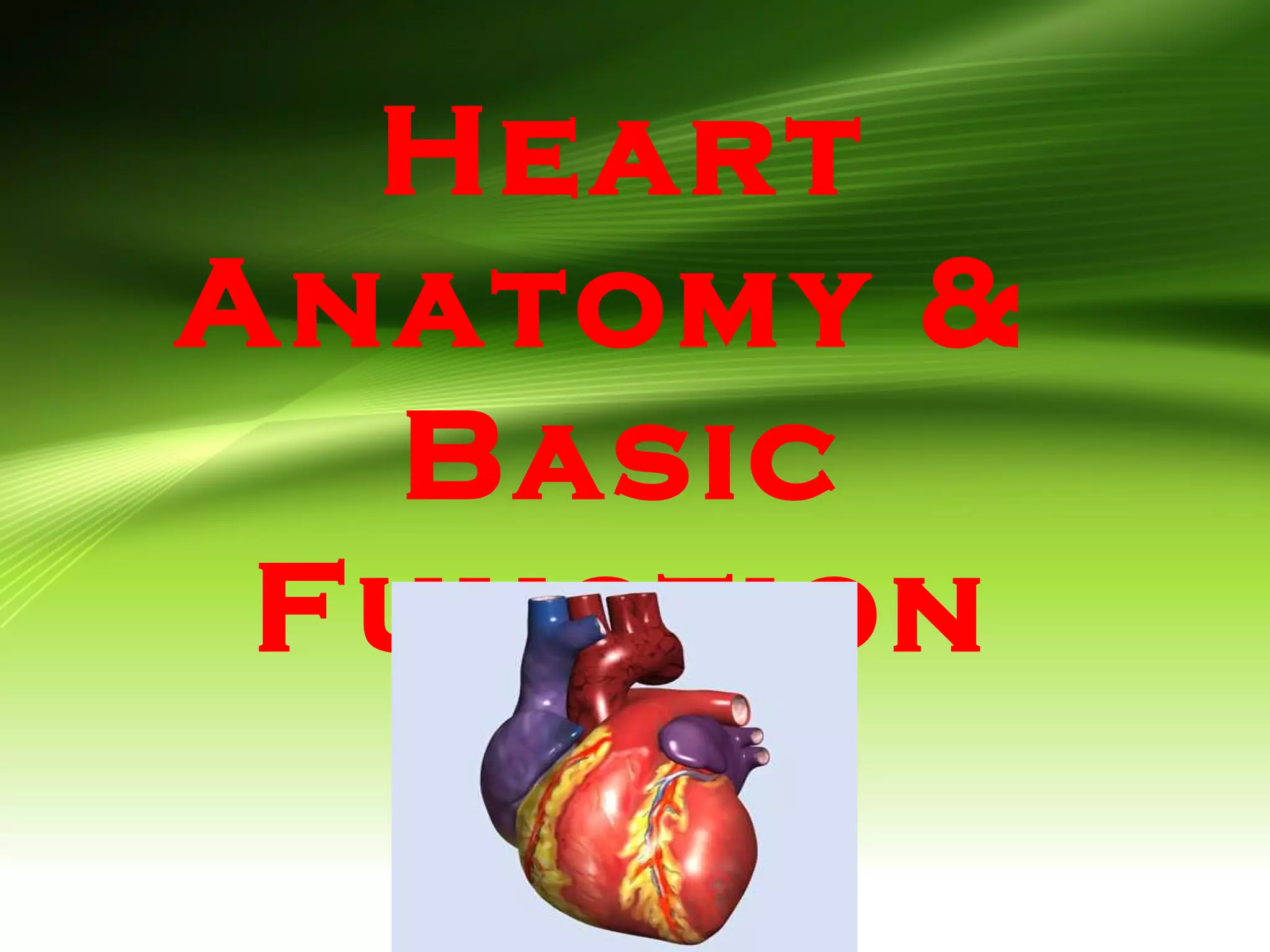

Heart
Anatomy &
Basic
Function
HEART
• Pumping organ
• Muscular organ
• Pump Blood
– Size, Location, and Orientation
– 12cm in length, 8cm wide and 6cm thick
– weight about 200-425gm
– Average heart beat (10,0000 time one
day)
– Pump 7.571L. blood
– Located near lungs and slight left of the
breast bone
– 4 compartments (LA, RA, LV, RV)
Heart Anatomy
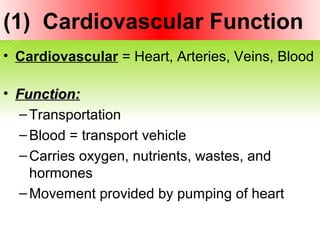
(1) Cardiovascular Function
• Cardiovascular = Heart, Arteries, Veins, Blood
• Function:Function:
–Transportation
–Blood = transport vehicle
–Carries oxygen, nutrients, wastes, and
hormones
–Movement provided by pumping of heart
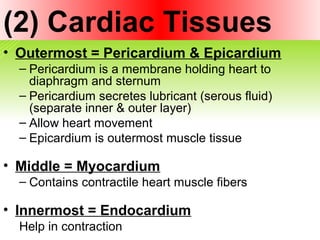
(2) Cardiac Tissues
• Outermost = Pericardium & Epicardium
– Pericardium is a membrane holding heart to
diaphragm and sternum
– Pericardium secretes lubricant (serous fluid)
(separate inner & outer layer)
– Allow heart movement
– Epicardium is outermost muscle tissue
• Middle = Myocardium
– Contains contractile heart muscle fibers
• Innermost = Endocardium
Help in contraction
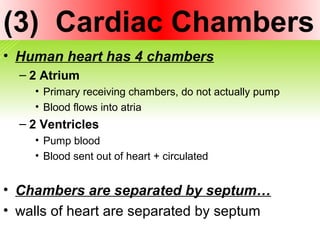
(3) Cardiac Chambers
• Human heart has 4 chambers
– 2 Atrium
• Primary receiving chambers, do not actually pump
• Blood flows into atria
– 2 Ventricles
• Pump blood
• Blood sent out of heart + circulated
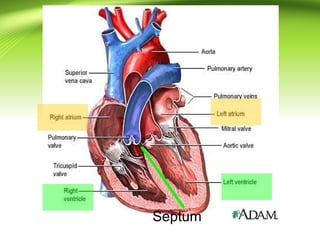
• Chambers are separated by septum…
• walls of heart are separated by septum
Septum
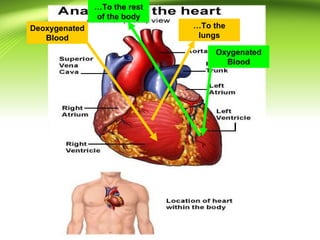
Deoxygenated
Blood
…To the
lungs
Oxygenated
Blood
…To the rest
of the body
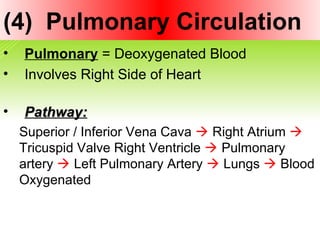
(4) Pulmonary Circulation
• Pulmonary = Deoxygenated Blood
• Involves Right Side of Heart
• Pathway:Pathway:
Superior / Inferior Vena Cava  Right Atrium 
Tricuspid Valve Right Ventricle  Pulmonary
artery  Left Pulmonary Artery  Lungs  Blood
Oxygenated
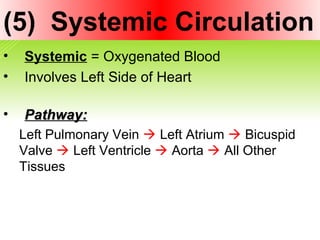
(5) Systemic Circulation
• Systemic = Oxygenated Blood
• Involves Left Side of Heart
• Pathway:Pathway:
Left Pulmonary Vein  Left Atrium  Bicuspid
Valve  Left Ventricle  Aorta  All Other
Tissues
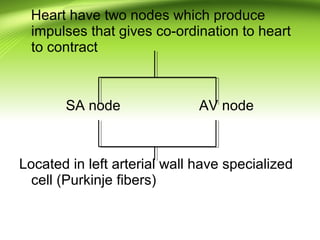
Heart have two nodes which produce
impulses that gives co-ordination to heart
to contract
SA node AV node
Located in left arterial wall have specialized
cell (Purkinje fibers)
• Heart tissue are permanent tissue that
does not heal or regenerate when damage
PROBLEMS RELATED TO
CARDIOVASCULAR SYSTEM
• Hypertension
• Congestive Heart failure
• Ischemic Heart disease
Hypertension
• Also called “High Blood Pressure”
• Blood pressure is the force, which the
blood put against the walls of arteries as it
flows through them.
• Uncontrolled blood flow can damage heart
in many ways such as:
• Coronary artery disease:
Hypertension gradually increases the pressure of blood flowing
through your arteries. When arteries don't allow blood to flow
freely through your coronary arteries, you can experience chest
pain, a heart attack or irregular heart rhythms.
• Enlarged left heart
High blood pressure forces your heart to work harder than
necessary, this causes the left ventricle to thicken or stiffen
which limit the ventricle's ability to pump blood to your body.
This condition increases your risk of heart attack, heart failure
and sudden cardiac death.
• Heart failure
The stress on your heart caused by hypertension can cause your
heart muscle to weaken and work less efficiently. Eventually,
your stressed heart simply begins to bear out and fail. Damage
from heart attacks adds to this problem.
Congestive Heart failure
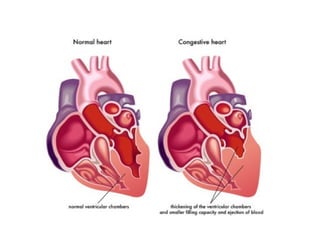
In Congestive Heart failure heart's pumping
power is weaker than normal. In heart
failure, blood moves through the heart and
body at a slower rate, and pressure in the
heart increases. As a result, the heart
cannot pump enough oxygen and nutrients
to meet the body's needs. Abnormalities of
the heart structure and rhythm are also
responsible for left ventricular congestive
heart failure.
Ischemic Heart disease
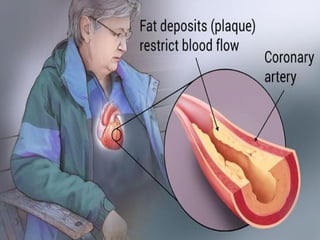
Ischemic heart disease (coronary artery
disease) is often caused by atherosclerosis,
fatty plaque deposits that narrow artery
walls leading to the heart and reduce blood
flow. When a clogged artery completely
blocks blood flow, a heart attack occurs.
Heart Anatomy & Basic Function

Heart Anatomy & Basic Function

  • 1.
  • 2.
    HEART • Pumping organ •Muscular organ • Pump Blood
  • 3.
    – Size, Location,and Orientation – 12cm in length, 8cm wide and 6cm thick – weight about 200-425gm – Average heart beat (10,0000 time one day) – Pump 7.571L. blood – Located near lungs and slight left of the breast bone – 4 compartments (LA, RA, LV, RV) Heart Anatomy
  • 4.
    (1) Cardiovascular Function •Cardiovascular = Heart, Arteries, Veins, Blood • Function:Function: –Transportation –Blood = transport vehicle –Carries oxygen, nutrients, wastes, and hormones –Movement provided by pumping of heart
  • 5.
    (2) Cardiac Tissues •Outermost = Pericardium & Epicardium – Pericardium is a membrane holding heart to diaphragm and sternum – Pericardium secretes lubricant (serous fluid) (separate inner & outer layer) – Allow heart movement – Epicardium is outermost muscle tissue • Middle = Myocardium – Contains contractile heart muscle fibers • Innermost = Endocardium Help in contraction
  • 6.
    (3) Cardiac Chambers •Human heart has 4 chambers – 2 Atrium • Primary receiving chambers, do not actually pump • Blood flows into atria – 2 Ventricles • Pump blood • Blood sent out of heart + circulated • Chambers are separated by septum… • walls of heart are separated by septum
  • 7.
  • 8.
  • 9.
    (4) Pulmonary Circulation •Pulmonary = Deoxygenated Blood • Involves Right Side of Heart • Pathway:Pathway: Superior / Inferior Vena Cava  Right Atrium  Tricuspid Valve Right Ventricle  Pulmonary artery  Left Pulmonary Artery  Lungs  Blood Oxygenated
  • 10.
    (5) Systemic Circulation •Systemic = Oxygenated Blood • Involves Left Side of Heart • Pathway:Pathway: Left Pulmonary Vein  Left Atrium  Bicuspid Valve  Left Ventricle  Aorta  All Other Tissues
  • 11.
    Heart have twonodes which produce impulses that gives co-ordination to heart to contract SA node AV node Located in left arterial wall have specialized cell (Purkinje fibers)
  • 12.
    • Heart tissueare permanent tissue that does not heal or regenerate when damage
  • 13.
    PROBLEMS RELATED TO CARDIOVASCULARSYSTEM • Hypertension • Congestive Heart failure • Ischemic Heart disease
  • 14.
    Hypertension • Also called“High Blood Pressure” • Blood pressure is the force, which the blood put against the walls of arteries as it flows through them. • Uncontrolled blood flow can damage heart in many ways such as:
  • 15.
    • Coronary arterydisease: Hypertension gradually increases the pressure of blood flowing through your arteries. When arteries don't allow blood to flow freely through your coronary arteries, you can experience chest pain, a heart attack or irregular heart rhythms. • Enlarged left heart High blood pressure forces your heart to work harder than necessary, this causes the left ventricle to thicken or stiffen which limit the ventricle's ability to pump blood to your body. This condition increases your risk of heart attack, heart failure and sudden cardiac death. • Heart failure The stress on your heart caused by hypertension can cause your heart muscle to weaken and work less efficiently. Eventually, your stressed heart simply begins to bear out and fail. Damage from heart attacks adds to this problem.
  • 16.
    Congestive Heart failure InCongestive Heart failure heart's pumping power is weaker than normal. In heart failure, blood moves through the heart and body at a slower rate, and pressure in the heart increases. As a result, the heart cannot pump enough oxygen and nutrients to meet the body's needs. Abnormalities of the heart structure and rhythm are also responsible for left ventricular congestive heart failure.
  • 18.
    Ischemic Heart disease Ischemicheart disease (coronary artery disease) is often caused by atherosclerosis, fatty plaque deposits that narrow artery walls leading to the heart and reduce blood flow. When a clogged artery completely blocks blood flow, a heart attack occurs.