How your hearts work?
Your heart is roughly the size of a fist and sits in the middle of your chest, slightly to the left. It’s the
muscle at the of your circulation system. It pumps blood around your body as your heart beats. This
blood sends oxygen and nutrients to all parts of your body, and carries away unwanted carbon dioxide
and waste products.
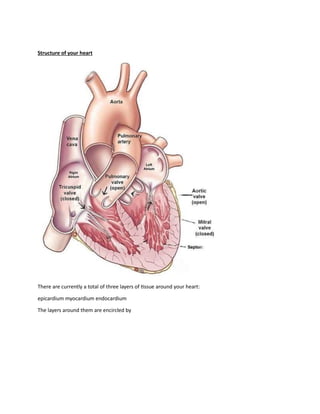
Structure of your heart
Your heart is made up of 3 layers of tissue:
Epicardium, myocardium ,endocardium
These layers are surrounded by the pericardium, a thin outer lining protecting your heart.
There are 4 chambers that make up the heart – 2 on the left side and 2 on the right.
The 2 small upper chambers are the atria. The 2 larger lower chambers are the ventricles. These left and
right sides of the heart are separated by a wall of muscle called the septum.
Circulatory system
heart pumps blood around the body all the time - about 5 liters (8 pints) of it. This is called circulation.
Your heart, blood and blood vessels together make up your cardiovascular system (or heart and
circulatory system).
The right side of the heart receives blood that is low in oxygen because most has been used up by the
brain and body. It pumps this to your lungs, where it picks up a fresh supply of oxygen. The blood then
returns to the left side of the heart, ready to be pumped back out to the brain and the rest of your body.
Blood vessels
Your blood is pumped around your body through a network of blood vessels:
arteries – they carry oxygen-rich blood from your heart to all parts of your body, getting smaller as they
get further away from the heart
capillaries – they connect the smallest arteries to the smallest veins, and help exchange water, oxygen,
carbon dioxide and other nutrients and waste substances between the blood and the tissues around
them
veins – they carry blood, lacking in oxygen, back towards your heart, and get bigger as they get nearer
your heart
Blood vessels are able to widen or narrow depending on how much blood each part of your body
requires. This action is partly controlled by hormones.
Valves
Your heart has 4 valves:
aortic valve – on the left side
mitral valve – on the left side
pulmonary valve – on the right side
tricuspid valve – on the right side
These act like gates, keeping the blood moving in the right direction.
Electrical system
For your heart to keep pumping regularly, it needs electrical signals which are sent to the heart muscle
telling it when to contract and relax.
The electrical signal starts in the right atrium where your heart’s natural pacemaker (the sino–atrial
node) is. This signal crosses the atria, making them contract. Blood is pumped through the valves into
the ventricles.
Where the atria meet the ventricles, there is an area of special cells (called the atrio-ventricular node)
which pass the electrical signals throughout your heart muscle by a system of electrical pathways, known
as the conducting system.
The muscles of the ventricles then contract, and blood is pumped through the pulmonary and aortic
valves into the main arteries.The heart’s natural ‘pacemaker’ (the sino-atrial node) produces another
electrical signal, and the cycle starts again.
Blood pressure
Blood pressure is the measurement of the pressure within the arteries. It plays a vital role in the way
your heart delivers fresh blood to all your blood vessels. For blood to travel throughout your body
quickly enough, it has to be under pressure. This is created by the relationship between 3 things:
your heart’s pumping action
the size and stretchiness of your blood vessels the thickness of the blood itself
One heartbeat is a single cycle in which your heart contracts and relaxes to pump blood. At rest, the
normal heart beats approximately 60 to 100 times every minute, and it increases when you exercise.To
ensure an adequate blood supply around your body, the 4 chambers of your heart have to pump
regularly and in the right sequence.
There are 2 phases to your heart’s pumping cycle:
systole – this is when your heart contracts, pushing blood out of the chambers
diastole – this is the period between contractions when the muscle of your heart (myocardium) relaxes
and the chambers fill with blood
How does a healthy heart work?
Watch this British Heart Foundation clip on how a healthy heart works. Further information on how the
heart works.
What can go wrong with heart function?
Structure
Some people are born with a heart that has not developed properly in the womb before birth. This is
called congenital heart disease. Sometimes you can inherit a heart condition from your family.
Cardiovascular system
Problems with your heart and circulation system included heart attack angina stroke.Heart disease can
happen when your coronary arteries become narrowed by a gradual build-up of fatty material - called
atheroma.
If your coronary arteries are narrowed or blocked, the blood supply to your heart will be impaired. This is
the most common form of heart disease, known as coronary heart disease (sometimes called coronary
artery disease or ischemic heart disease).
Eventually, your arteries may become so narrow they can’t deliver enough blood to your heart. This can
cause angina - a pain or discomfort in your chest, arm, neck, stomach or jaw. If the fatty material breaks
off or ruptures, a blood clot will form. This can cause heart attack (or stroke, if the artery affected is
carrying blood to your brain).
Electrical system
Normally your heart will beat between 60 to 100 times per minute. This regular rhythmic beating is
dependent upon electrical signals being conducted throughout your heart.
If the electrical signals within your heart are interrupted, your heart can beat:
too quickly (tachycardia) too slowly (bradycardia) in an irregular way
This is called arrhythmia.
Ok Further information on arrhythmia Conditions affecting the pumping of your heart
There are some conditions that can damage your heart muscle. This makes it weak and unable to pump
as efficiently as before. These conditions include:
heart attack
high blood pressure (hypertension)
heart valve problems
cardiomyopathy – this is a general term for diseases of the heart muscle. Sometimes these diseases are
inherited from your family. Sometimes they are caused by other things, like viral infections.
There are also conditions like high blood pressure (hypertension). This means your heart has to work
harder.
When your heart muscle can’t meet your body’s demands for blood and oxygen, you can develop
various symptoms, like: breathlessness ,extreme tiredness,ankle swelling
This is called heart failure because of the failure of your heart to pump blood around the body and work
efficiently.
Valves
Your heart can’t function normally if the heart valves aren't working properly, as it can affect the flow of
blood through the heart.
There are 2 main ways that the valves can be affected:
valves can leak - this is called valve regurgitation or valve incompetence
valves can narrow and stiffen - this is called valve stenosis.
going to the main content Rapidly access NHS Inform, a reliable source of health information.
Mechanics of the heart
The size of a fist, your heart is located in the centre of your chest, leaning slightly to the left.It is the
muscle that controls your circulatory system's core. Your heart beats as it distributes blood throughout
your body. All of your body's parts receive nourishment and oxygen from this blood, which also removes
contaminants and excess carbon dioxide.
Structure of your heart
There are currently a total of three layers of tissue around your heart:
epicardium myocardium endocardium
The layers around them are encircled by

heart.docx

  • 1.
    How your heartswork? Your heart is roughly the size of a fist and sits in the middle of your chest, slightly to the left. It’s the muscle at the of your circulation system. It pumps blood around your body as your heart beats. This blood sends oxygen and nutrients to all parts of your body, and carries away unwanted carbon dioxide and waste products. Structure of your heart Your heart is made up of 3 layers of tissue: Epicardium, myocardium ,endocardium These layers are surrounded by the pericardium, a thin outer lining protecting your heart. There are 4 chambers that make up the heart – 2 on the left side and 2 on the right. The 2 small upper chambers are the atria. The 2 larger lower chambers are the ventricles. These left and right sides of the heart are separated by a wall of muscle called the septum. Circulatory system heart pumps blood around the body all the time - about 5 liters (8 pints) of it. This is called circulation. Your heart, blood and blood vessels together make up your cardiovascular system (or heart and circulatory system). The right side of the heart receives blood that is low in oxygen because most has been used up by the brain and body. It pumps this to your lungs, where it picks up a fresh supply of oxygen. The blood then returns to the left side of the heart, ready to be pumped back out to the brain and the rest of your body. Blood vessels Your blood is pumped around your body through a network of blood vessels: arteries – they carry oxygen-rich blood from your heart to all parts of your body, getting smaller as they get further away from the heart capillaries – they connect the smallest arteries to the smallest veins, and help exchange water, oxygen, carbon dioxide and other nutrients and waste substances between the blood and the tissues around them veins – they carry blood, lacking in oxygen, back towards your heart, and get bigger as they get nearer your heart Blood vessels are able to widen or narrow depending on how much blood each part of your body requires. This action is partly controlled by hormones.
  • 2.
    Valves Your heart has4 valves: aortic valve – on the left side mitral valve – on the left side pulmonary valve – on the right side tricuspid valve – on the right side These act like gates, keeping the blood moving in the right direction. Electrical system For your heart to keep pumping regularly, it needs electrical signals which are sent to the heart muscle telling it when to contract and relax. The electrical signal starts in the right atrium where your heart’s natural pacemaker (the sino–atrial node) is. This signal crosses the atria, making them contract. Blood is pumped through the valves into the ventricles. Where the atria meet the ventricles, there is an area of special cells (called the atrio-ventricular node) which pass the electrical signals throughout your heart muscle by a system of electrical pathways, known as the conducting system. The muscles of the ventricles then contract, and blood is pumped through the pulmonary and aortic valves into the main arteries.The heart’s natural ‘pacemaker’ (the sino-atrial node) produces another electrical signal, and the cycle starts again. Blood pressure Blood pressure is the measurement of the pressure within the arteries. It plays a vital role in the way your heart delivers fresh blood to all your blood vessels. For blood to travel throughout your body quickly enough, it has to be under pressure. This is created by the relationship between 3 things: your heart’s pumping action the size and stretchiness of your blood vessels the thickness of the blood itself
  • 3.
    One heartbeat isa single cycle in which your heart contracts and relaxes to pump blood. At rest, the normal heart beats approximately 60 to 100 times every minute, and it increases when you exercise.To ensure an adequate blood supply around your body, the 4 chambers of your heart have to pump regularly and in the right sequence. There are 2 phases to your heart’s pumping cycle: systole – this is when your heart contracts, pushing blood out of the chambers diastole – this is the period between contractions when the muscle of your heart (myocardium) relaxes and the chambers fill with blood How does a healthy heart work? Watch this British Heart Foundation clip on how a healthy heart works. Further information on how the heart works. What can go wrong with heart function? Structure Some people are born with a heart that has not developed properly in the womb before birth. This is called congenital heart disease. Sometimes you can inherit a heart condition from your family. Cardiovascular system Problems with your heart and circulation system included heart attack angina stroke.Heart disease can happen when your coronary arteries become narrowed by a gradual build-up of fatty material - called atheroma. If your coronary arteries are narrowed or blocked, the blood supply to your heart will be impaired. This is the most common form of heart disease, known as coronary heart disease (sometimes called coronary artery disease or ischemic heart disease). Eventually, your arteries may become so narrow they can’t deliver enough blood to your heart. This can cause angina - a pain or discomfort in your chest, arm, neck, stomach or jaw. If the fatty material breaks off or ruptures, a blood clot will form. This can cause heart attack (or stroke, if the artery affected is carrying blood to your brain). Electrical system Normally your heart will beat between 60 to 100 times per minute. This regular rhythmic beating is dependent upon electrical signals being conducted throughout your heart. If the electrical signals within your heart are interrupted, your heart can beat: too quickly (tachycardia) too slowly (bradycardia) in an irregular way
  • 4.
    This is calledarrhythmia. Ok Further information on arrhythmia Conditions affecting the pumping of your heart There are some conditions that can damage your heart muscle. This makes it weak and unable to pump as efficiently as before. These conditions include: heart attack high blood pressure (hypertension) heart valve problems cardiomyopathy – this is a general term for diseases of the heart muscle. Sometimes these diseases are inherited from your family. Sometimes they are caused by other things, like viral infections. There are also conditions like high blood pressure (hypertension). This means your heart has to work harder. When your heart muscle can’t meet your body’s demands for blood and oxygen, you can develop various symptoms, like: breathlessness ,extreme tiredness,ankle swelling This is called heart failure because of the failure of your heart to pump blood around the body and work efficiently. Valves Your heart can’t function normally if the heart valves aren't working properly, as it can affect the flow of blood through the heart. There are 2 main ways that the valves can be affected: valves can leak - this is called valve regurgitation or valve incompetence valves can narrow and stiffen - this is called valve stenosis. going to the main content Rapidly access NHS Inform, a reliable source of health information. Mechanics of the heart The size of a fist, your heart is located in the centre of your chest, leaning slightly to the left.It is the muscle that controls your circulatory system's core. Your heart beats as it distributes blood throughout your body. All of your body's parts receive nourishment and oxygen from this blood, which also removes contaminants and excess carbon dioxide.
  • 5.
    Structure of yourheart There are currently a total of three layers of tissue around your heart: epicardium myocardium endocardium The layers around them are encircled by