Health
Proteins, healthy fats and meal planning
Learninggoals
 You will understand what calories are used for
 Understand where to get calories from
 Understand the recommended calories for a 12 year old
boy
 Understand the role of proteins in your body
 Understand the role of ‘healthy’ fats in your body
 Plan a days worth of meals for a 12 year old boy
What arecalories
usedfor?
&
Wheredoyou get
calories?
 Your body needs calories to operate
 Calories provide you with energy
 Calories keep your heart beating and lungs breathing
 Calories allow you to do activities by providing you
with energy
 Calories are found in carbohydrates, calories are found
in any and all food and drink
Whatdictates
calorieintake?
 The calories any person needs can be dictated by the
following factors
 Age
 Gender
 How active you are
 If you work at a desk all week
 If you work on a job sight
 If you go to the gym often
 If you do no physical activity
 Calorie burn is dictated (more) by physical activity
 Calorie intake is also dictated by age and gender
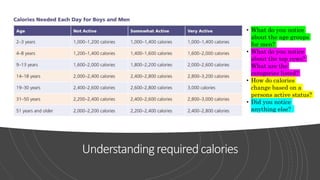
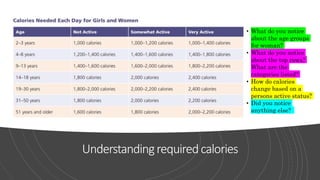
Understandingrequiredcalories
• What do you notice
about the age groups
for men?
• What do you notice
about the top rows?
What are the
categories listed?
• How do calories
change based on a
persons active status?
• Did you notice
anything else?
Understandingrequiredcalories
• What do you notice
about the age groups
for woman?
• What do you notice
about the top rows?
What are the
categories listed?
• How do calories
change based on a
persons active status?
• Did you notice
anything else?
Activity1
 You will create 3 simple health nutrition profiles for 3
different people
 Your profiles must have
 A first name and sir name
 Date of birth (based on the age you chose)
 Give the person a job or activity that justifies their active
status
 Calories needed, based on the persons active status,
gender and age
 Any dietary needs?
 Brainstorm some food groups you recommend they add to
their diet, i.e. nuts, fruit, legumes
 Bonus: Draw the individual for each profile
 Make sure the profiles are neat, you will show them to
your peers
Healthvideo
 https://www.youtube.com/watch?v=inEPlZZ_SfA
 2.26 protein and fats to carbs
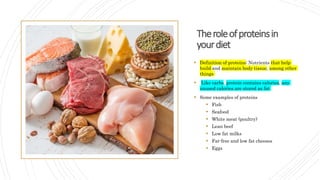
Theroleofproteinsin
yourdiet
 Definition of proteins: Nutrients that help
build and maintain body tissue, among other
things
 Like carbs, protein contains calories, any
unused calories are stored as fat
 Some examples of proteins
 Fish
 Seafood
 White meat (poultry)
 Lean beef
 Low fat milks
 Fat-free and low fat cheeses
 Eggs
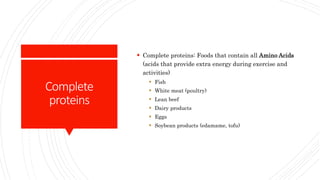
Complete
proteins
 Complete proteins: Foods that contain all Amino Acids
(acids that provide extra energy during exercise and
activities)
 Fish
 White meat (poultry)
 Lean beef
 Dairy products
 Eggs
 Soybean products (edamame, tofu)
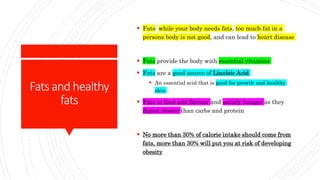
Fatsandhealthy
fats
 Fats: while your body needs fats, too much fat in a
persons body is not good, and can lead to heart disease
 Fats provide the body with essential vitamins
 Fats are a good source of Linoleic Acid
 An essential acid that is good for growth and healthy
skin
 Fats in food add flavour and satisfy hunger as they
digest slower than carbs and protein
 No more than 30% of calorie intake should come from
fats, more than 30% will put you at risk of developing
obesity
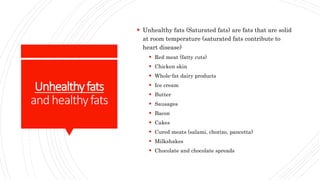
Unhealthyfats
andhealthyfats
 Unhealthy fats (Saturated fats) are fats that are solid
at room temperature (saturated fats contribute to
heart disease)
 Red meat (fatty cuts)
 Chicken skin
 Whole-fat dairy products
 Ice cream
 Butter
 Sausages
 Bacon
 Cakes
 Cured meats (salami, chorizo, pancetta)
 Milkshakes
 Chocolate and chocolate spreads
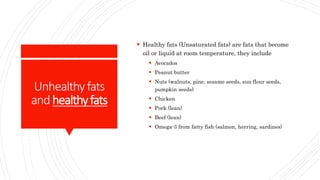
Unhealthyfats
andhealthyfats
 Healthy fats (Unsaturated fats) are fats that become
oil or liquid at room temperature, they include
 Avocados
 Peanut butter
 Nuts (walnuts, pine, sesame seeds, sun flour seeds,
pumpkin seeds)
 Chicken
 Pork (lean)
 Beef (lean)
 Omega-3 from fatty fish (salmon, herring, sardines)
Activity2
 Using the day meal planner you will plan a meal for a
12 year old student
 You will plan meals for
 Breakfast
 Morning break
 Lunch
 Afternoon break
 Evening meal
 Evening snack
 The meals you plan must be healthy, however you can
include a snack
 You need to list what ingredients you will use for each
meal you make (legumes, poultry, spinach ect.)
 Make this work neat as it will be displayed

Health week 4

  • 1.
  • 2.
    Learninggoals  You willunderstand what calories are used for  Understand where to get calories from  Understand the recommended calories for a 12 year old boy  Understand the role of proteins in your body  Understand the role of ‘healthy’ fats in your body  Plan a days worth of meals for a 12 year old boy
  • 3.
    What arecalories usedfor? & Wheredoyou get calories? Your body needs calories to operate  Calories provide you with energy  Calories keep your heart beating and lungs breathing  Calories allow you to do activities by providing you with energy  Calories are found in carbohydrates, calories are found in any and all food and drink
  • 4.
    Whatdictates calorieintake?  The caloriesany person needs can be dictated by the following factors  Age  Gender  How active you are  If you work at a desk all week  If you work on a job sight  If you go to the gym often  If you do no physical activity  Calorie burn is dictated (more) by physical activity  Calorie intake is also dictated by age and gender
  • 5.
    Understandingrequiredcalories • What doyou notice about the age groups for men? • What do you notice about the top rows? What are the categories listed? • How do calories change based on a persons active status? • Did you notice anything else?
  • 6.
    Understandingrequiredcalories • What doyou notice about the age groups for woman? • What do you notice about the top rows? What are the categories listed? • How do calories change based on a persons active status? • Did you notice anything else?
  • 7.
    Activity1  You willcreate 3 simple health nutrition profiles for 3 different people  Your profiles must have  A first name and sir name  Date of birth (based on the age you chose)  Give the person a job or activity that justifies their active status  Calories needed, based on the persons active status, gender and age  Any dietary needs?  Brainstorm some food groups you recommend they add to their diet, i.e. nuts, fruit, legumes  Bonus: Draw the individual for each profile  Make sure the profiles are neat, you will show them to your peers
  • 8.
  • 9.
    Theroleofproteinsin yourdiet  Definition ofproteins: Nutrients that help build and maintain body tissue, among other things  Like carbs, protein contains calories, any unused calories are stored as fat  Some examples of proteins  Fish  Seafood  White meat (poultry)  Lean beef  Low fat milks  Fat-free and low fat cheeses  Eggs
  • 10.
    Complete proteins  Complete proteins:Foods that contain all Amino Acids (acids that provide extra energy during exercise and activities)  Fish  White meat (poultry)  Lean beef  Dairy products  Eggs  Soybean products (edamame, tofu)
  • 11.
    Fatsandhealthy fats  Fats: whileyour body needs fats, too much fat in a persons body is not good, and can lead to heart disease  Fats provide the body with essential vitamins  Fats are a good source of Linoleic Acid  An essential acid that is good for growth and healthy skin  Fats in food add flavour and satisfy hunger as they digest slower than carbs and protein  No more than 30% of calorie intake should come from fats, more than 30% will put you at risk of developing obesity
  • 12.
    Unhealthyfats andhealthyfats  Unhealthy fats(Saturated fats) are fats that are solid at room temperature (saturated fats contribute to heart disease)  Red meat (fatty cuts)  Chicken skin  Whole-fat dairy products  Ice cream  Butter  Sausages  Bacon  Cakes  Cured meats (salami, chorizo, pancetta)  Milkshakes  Chocolate and chocolate spreads
  • 13.
    Unhealthyfats andhealthyfats  Healthy fats(Unsaturated fats) are fats that become oil or liquid at room temperature, they include  Avocados  Peanut butter  Nuts (walnuts, pine, sesame seeds, sun flour seeds, pumpkin seeds)  Chicken  Pork (lean)  Beef (lean)  Omega-3 from fatty fish (salmon, herring, sardines)
  • 14.
    Activity2  Using theday meal planner you will plan a meal for a 12 year old student  You will plan meals for  Breakfast  Morning break  Lunch  Afternoon break  Evening meal  Evening snack  The meals you plan must be healthy, however you can include a snack  You need to list what ingredients you will use for each meal you make (legumes, poultry, spinach ect.)  Make this work neat as it will be displayed