Nutrition
A RUSHED Report of
      Batch 1
Nutrition
  Nutrition is the process of
getting food into your body and
 using it as raw materials for
 growth, fuel for energy, and
  vitamins and minerals that
 keep your body healthy and
      functioning properly.
What is a Nutrient?
   A nutrient is a source of nourishment, an
           ingredient in a food, e.g.
 protein, carbohydrate, fat, vitamin, mineral,
fiber and water. Macronutrients are nutrients
          we need in relatively large
  quantities. Micronutrients are nutrients we
      need in relatively small quantities.
The Major Nutrients
Nutrients
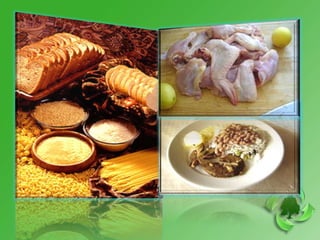
• Carbohydrates
• Fats
• Protein
• Fibre
• Soya
• Five portions of fruit and veg
Carbohydrates,
  Fats, and
   Protein
Carbohydrates
  • Your body has the easiest time digesting
      carbohydrates like sugar and starch.
Carbohydrates are broken down into individual
glucose, fructose or galactose units. Glucose is
your body's favorite form of energy. If you don't
get enough carbohydrates, your body can make
 glucose from protein or fat -- and if you get too
many carbohydrates, your body is very good at
              storing them as fat.
Protein
• Good nutrition provides raw materials.
  Protein in the foods you eat is broken
  down into individual amino acids. Your
  body uses the amino acids to build and
  repair the various parts of your body. Your
  muscles contain lots of protein, and you
  need to replenish that protein through your
  diet. Your body also needs protein for
  components of your immune system,
  hormones, nervous system, and organs.
Fats
• Your body also needs fats to
   be healthy. Membranes that
   contain fats surround all the
  cells of your body. Your brain
   has fatty acids, and fats are
      also needed to signal
            hormones.
Vitamins and
  Minerals
The vitamins and minerals you get
from your diet are just as important
as carbohydrates, protein and fats,
even though you only need them in
    small amounts. They usually
   function as co-enzymes, which
   means they help some of your
body's chemical reactions happen a
              lot faster.
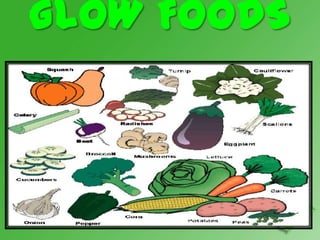
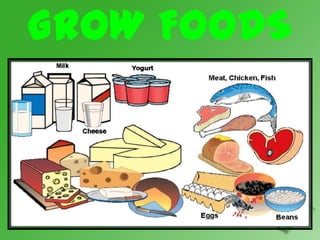
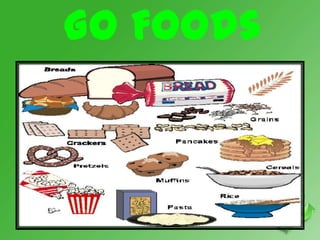
Groups of Food
• GO or Energy-Giving
  Foods
• Grow or Body-
  Building Foods
• Glow or
GLOW FOODS
GROW FOODS
GO Foods
THE END

Nutrition

  • 1.
  • 2.
    Nutrition Nutritionis the process of getting food into your body and using it as raw materials for growth, fuel for energy, and vitamins and minerals that keep your body healthy and functioning properly.
  • 3.
    What is aNutrient? A nutrient is a source of nourishment, an ingredient in a food, e.g. protein, carbohydrate, fat, vitamin, mineral, fiber and water. Macronutrients are nutrients we need in relatively large quantities. Micronutrients are nutrients we need in relatively small quantities.
  • 4.
    The Major Nutrients Nutrients •Carbohydrates • Fats • Protein • Fibre • Soya • Five portions of fruit and veg
  • 5.
  • 7.
    Carbohydrates •Your body has the easiest time digesting carbohydrates like sugar and starch. Carbohydrates are broken down into individual glucose, fructose or galactose units. Glucose is your body's favorite form of energy. If you don't get enough carbohydrates, your body can make glucose from protein or fat -- and if you get too many carbohydrates, your body is very good at storing them as fat.
  • 8.
    Protein • Good nutritionprovides raw materials. Protein in the foods you eat is broken down into individual amino acids. Your body uses the amino acids to build and repair the various parts of your body. Your muscles contain lots of protein, and you need to replenish that protein through your diet. Your body also needs protein for components of your immune system, hormones, nervous system, and organs.
  • 9.
    Fats • Your bodyalso needs fats to be healthy. Membranes that contain fats surround all the cells of your body. Your brain has fatty acids, and fats are also needed to signal hormones.
  • 10.
    Vitamins and Minerals
  • 11.
    The vitamins andminerals you get from your diet are just as important as carbohydrates, protein and fats, even though you only need them in small amounts. They usually function as co-enzymes, which means they help some of your body's chemical reactions happen a lot faster.
  • 12.
    Groups of Food •GO or Energy-Giving Foods • Grow or Body- Building Foods • Glow or
  • 13.
  • 14.
  • 15.
  • 16.