Health system strengthening – what
is it, how should we assess it, and
does it work?
Sophie Witter, Natasha Palmer,
Dina Balabanova, Sandra Mounier-Jack,
Tim Martineau, Anna Klicpera,
Charity Jensen, Miguel Pugliese Garcia
and Lucy Gilson
Objectives
• To support strategic planning work within DFID by
identifying evidence on effective health system
strengthening approaches in different contexts;
• To support advocacy activities by helping DFID
Advisers make the case for investment in HSS as a
route to achieving improvements in health; and
• To help DFID Health Advisers make sense of the
large volume of evidence on HSS and sign-post
health advisers to key pieces of evidence on
health system strengthening.
Methods
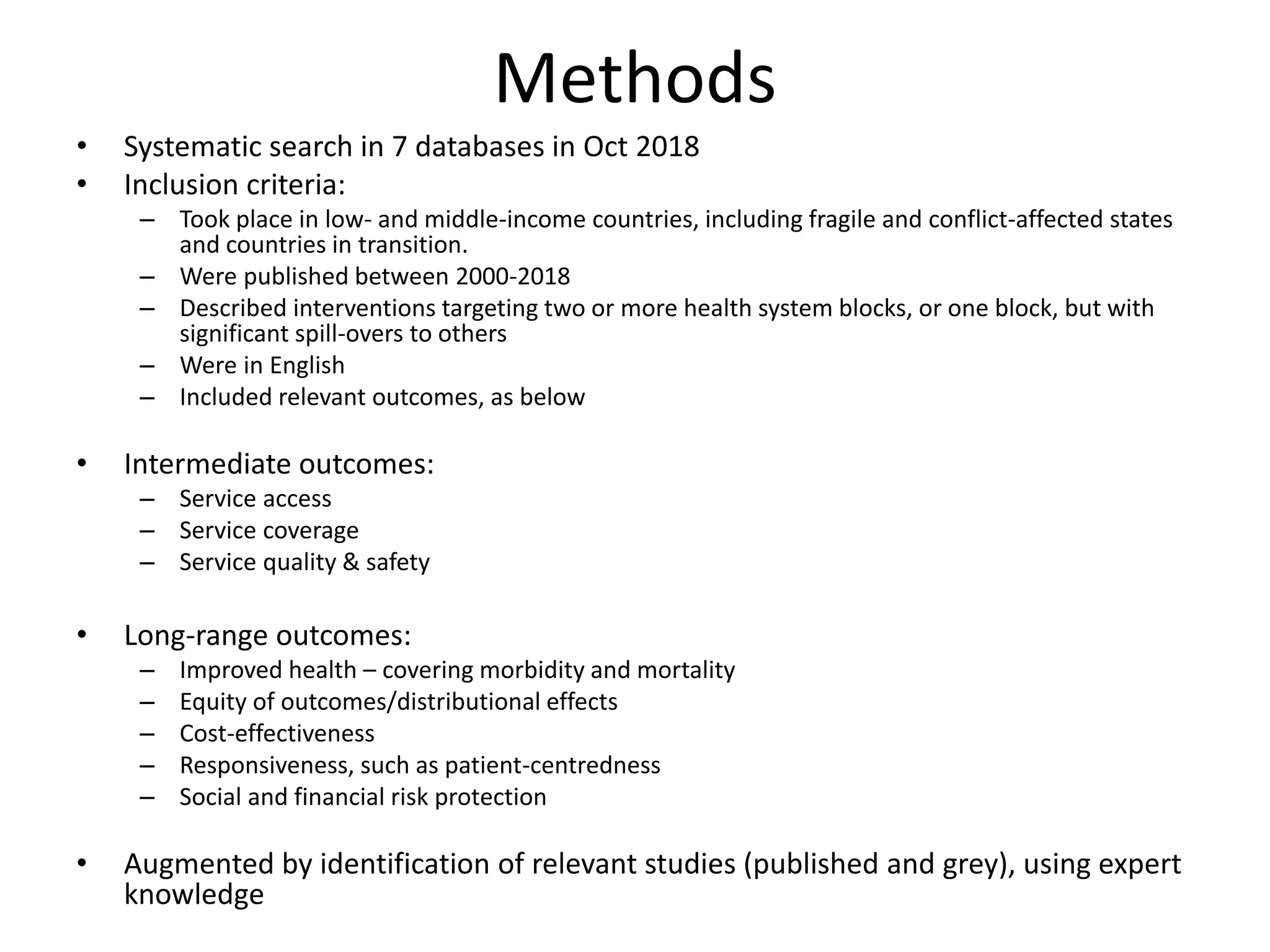
• Systematic search in 7 databases in Oct 2018
• Inclusion criteria:
– Took place in low- and middle-income countries, including fragile and conflict-affected states
and countries in transition.
– Were published between 2000-2018
– Described interventions targeting two or more health system blocks, or one block, but with
significant spill-overs to others
– Were in English
– Included relevant outcomes, as below
• Intermediate outcomes:
– Service access
– Service coverage
– Service quality & safety
• Long-range outcomes:
– Improved health – covering morbidity and mortality
– Equity of outcomes/distributional effects
– Cost-effectiveness
– Responsiveness, such as patient-centredness
– Social and financial risk protection
• Augmented by identification of relevant studies (published and grey), using expert
knowledge
Included studies
• 193 studies were
identified as meeting our
criteria.
• Most studies were
reviews, including both
systematic and non-
systematic/literature
reviews (n=64),
quantitative (n=47), and
mixed methods studies
(n=21).
• A majority of studies were
from low income contexts.
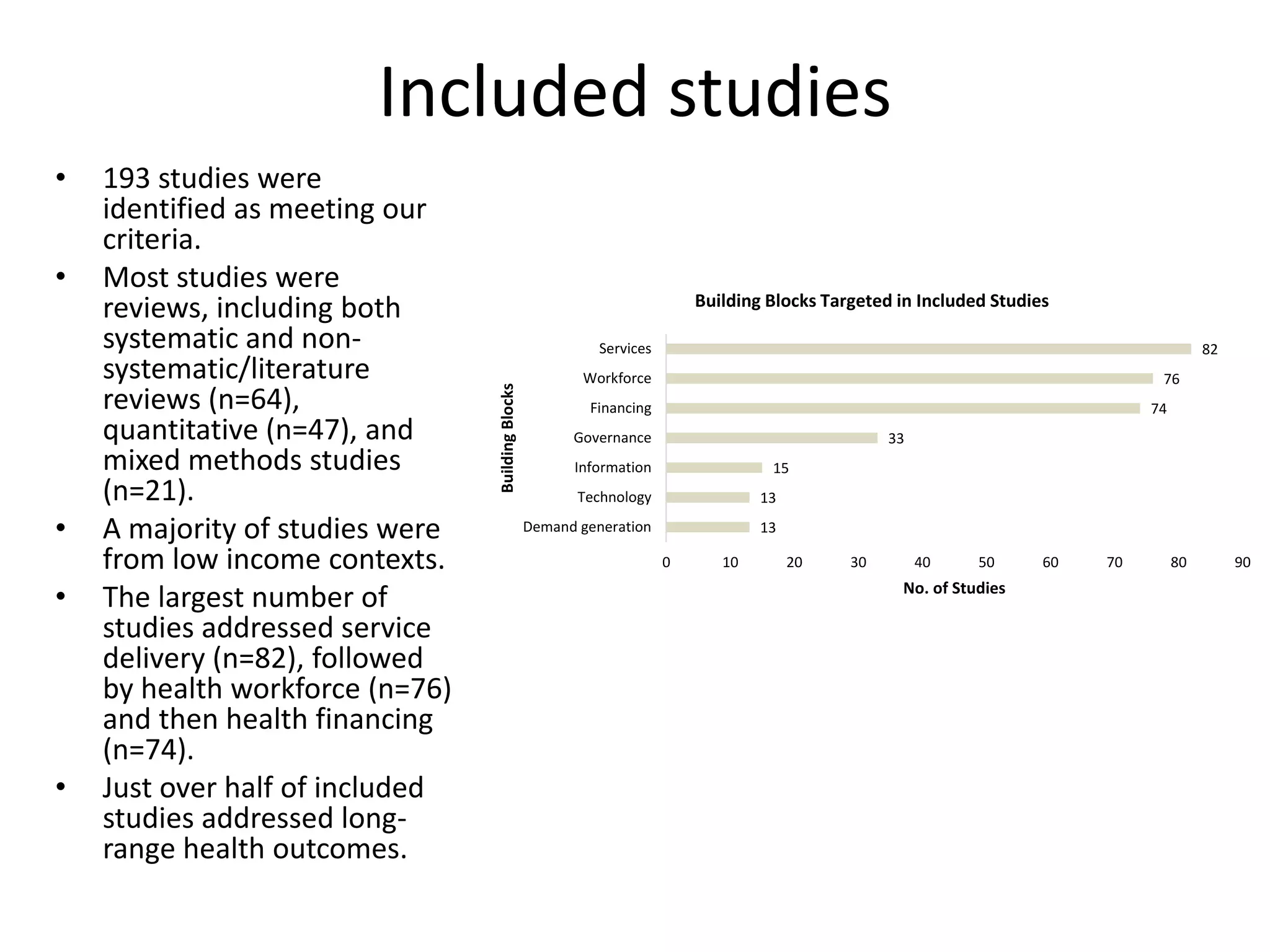
• The largest number of
studies addressed service
delivery (n=82), followed
by health workforce (n=76)
and then health financing
(n=74).
• Just over half of included
studies addressed long-
range health outcomes.
13
13
15
33
74
76
82
0 10 20 30 40 50 60 70 80 90
Demand generation
Technology
Information
Governance
Financing
Workforce
Services
No. of Studies
BuildingBlocks
Building Blocks Targeted in Included Studies
First challenge: HSS definitions
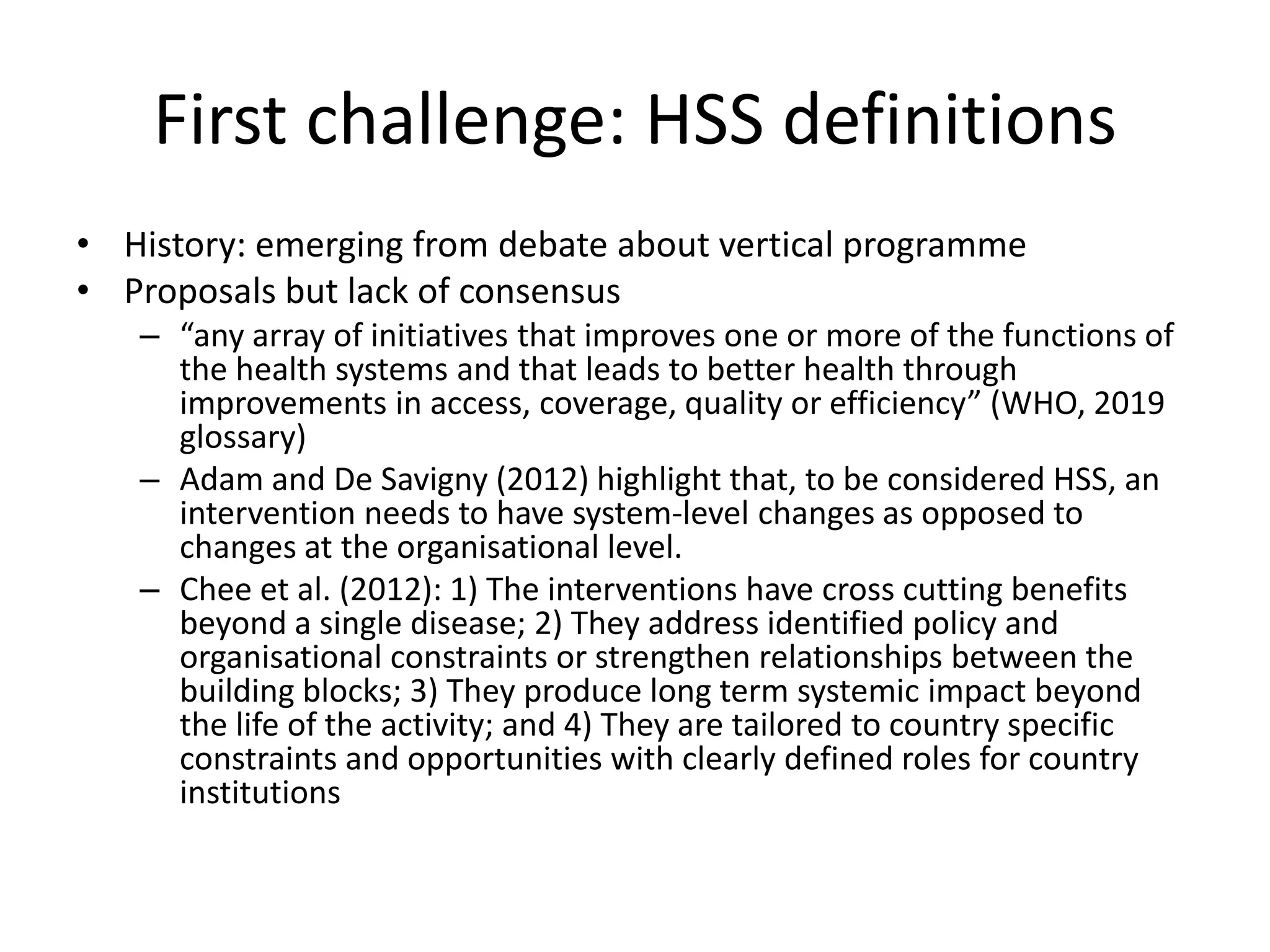
• History: emerging from debate about vertical programme
• Proposals but lack of consensus
– “any array of initiatives that improves one or more of the functions of
the health systems and that leads to better health through
improvements in access, coverage, quality or efficiency” (WHO, 2019
glossary)
– Adam and De Savigny (2012) highlight that, to be considered HSS, an
intervention needs to have system-level changes as opposed to
changes at the organisational level.
– Chee et al. (2012): 1) The interventions have cross cutting benefits
beyond a single disease; 2) They address identified policy and
organisational constraints or strengthen relationships between the
building blocks; 3) They produce long term systemic impact beyond
the life of the activity; and 4) They are tailored to country specific
constraints and opportunities with clearly defined roles for country
institutions
DFID definition
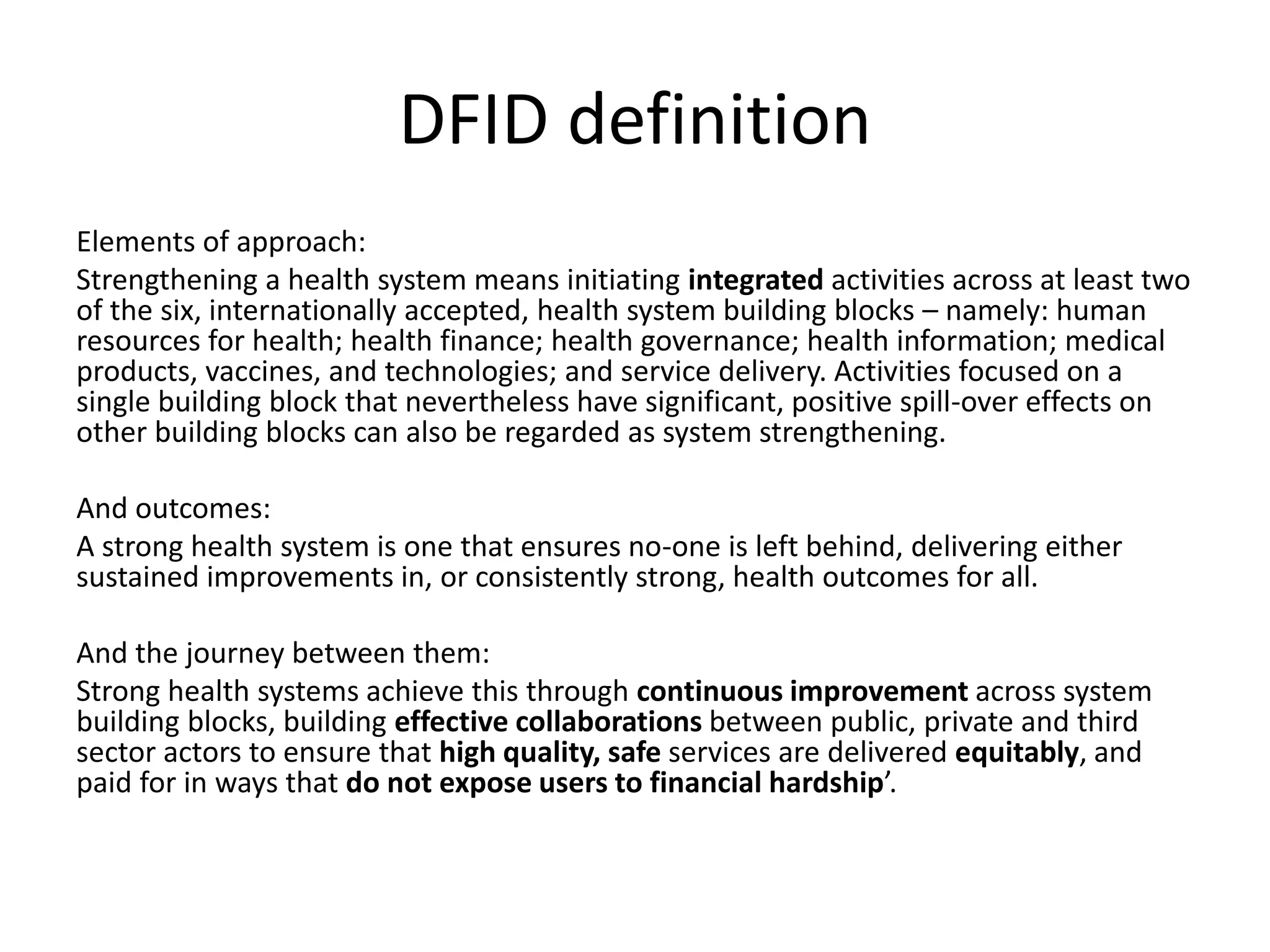
Elements of approach:
Strengthening a health system means initiating integrated activities across at least two
of the six, internationally accepted, health system building blocks – namely: human
resources for health; health finance; health governance; health information; medical
products, vaccines, and technologies; and service delivery. Activities focused on a
single building block that nevertheless have significant, positive spill-over effects on
other building blocks can also be regarded as system strengthening.
And outcomes:
A strong health system is one that ensures no-one is left behind, delivering either
sustained improvements in, or consistently strong, health outcomes for all.
And the journey between them:
Strong health systems achieve this through continuous improvement across system
building blocks, building effective collaborations between public, private and third
sector actors to ensure that high quality, safe services are delivered equitably, and
paid for in ways that do not expose users to financial hardship’.
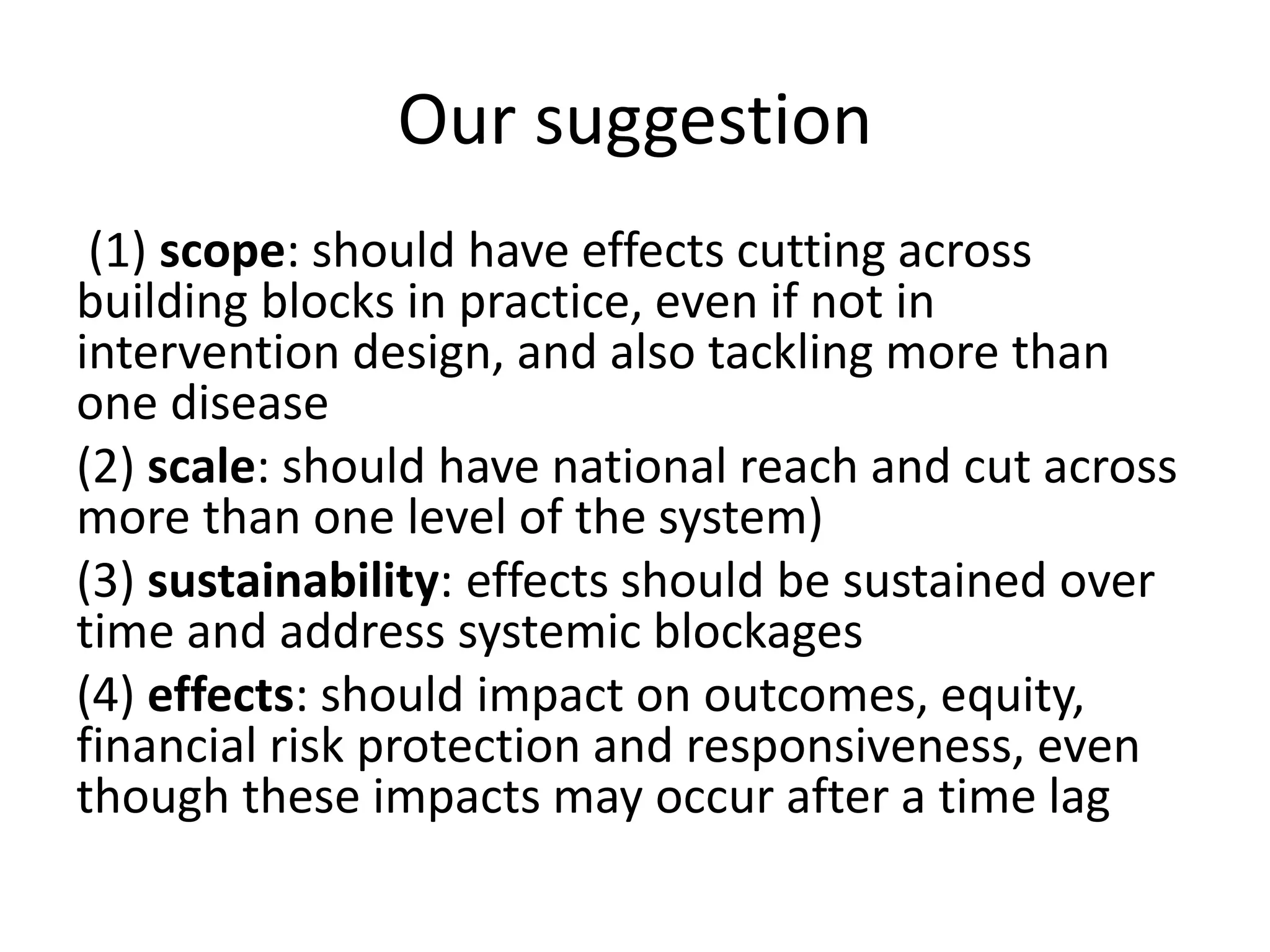
Our suggestion
(1) scope: should have effects cutting across
building blocks in practice, even if not in
intervention design, and also tackling more than
one disease
(2) scale: should have national reach and cut across
more than one level of the system)
(3) sustainability: effects should be sustained over
time and address systemic blockages
(4) effects: should impact on outcomes, equity,
financial risk protection and responsiveness, even
though these impacts may occur after a time lag
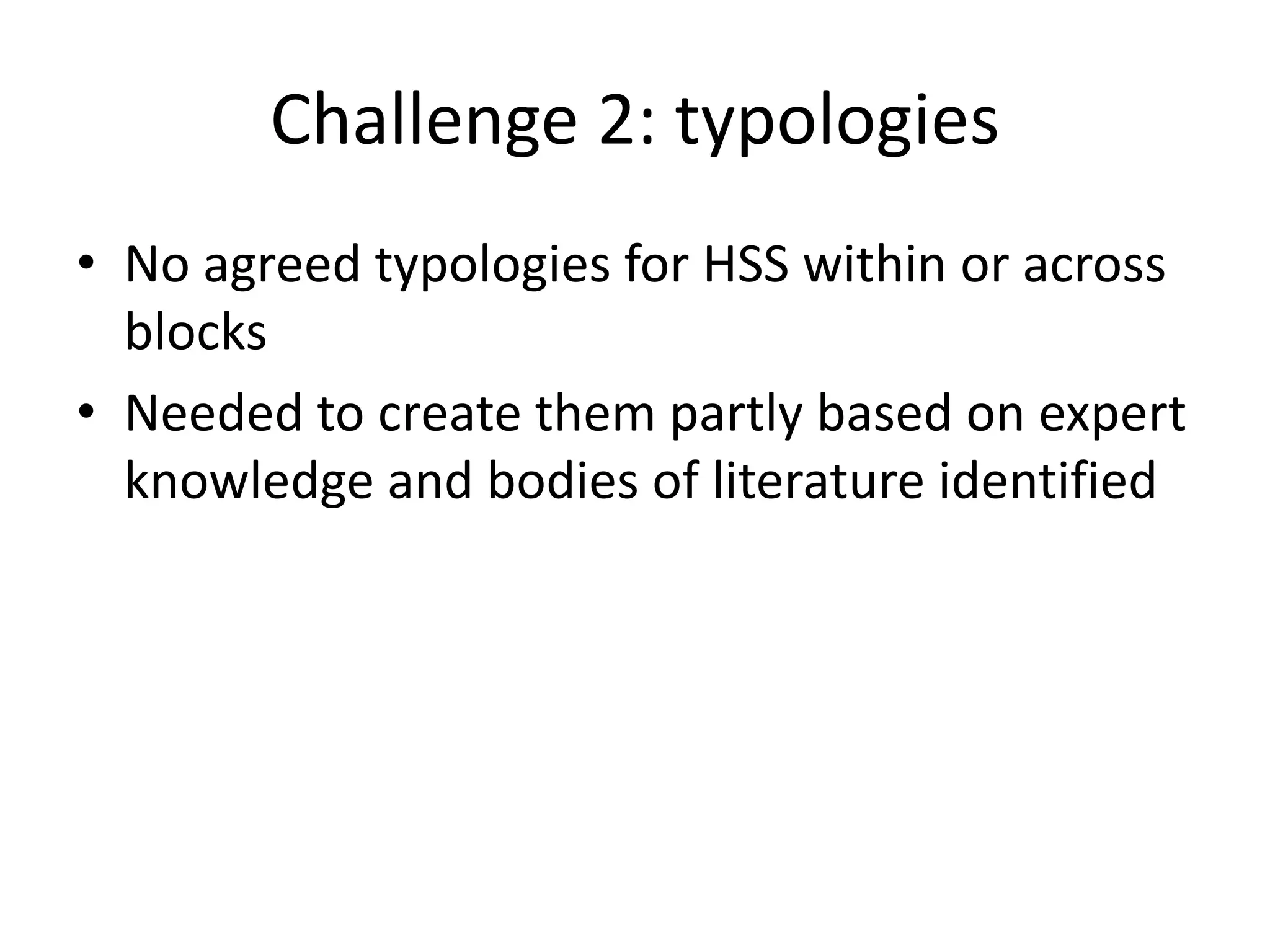
Challenge 2: typologies
• No agreed typologies for HSS within or across
blocks
• Needed to create them partly based on expert
knowledge and bodies of literature identified
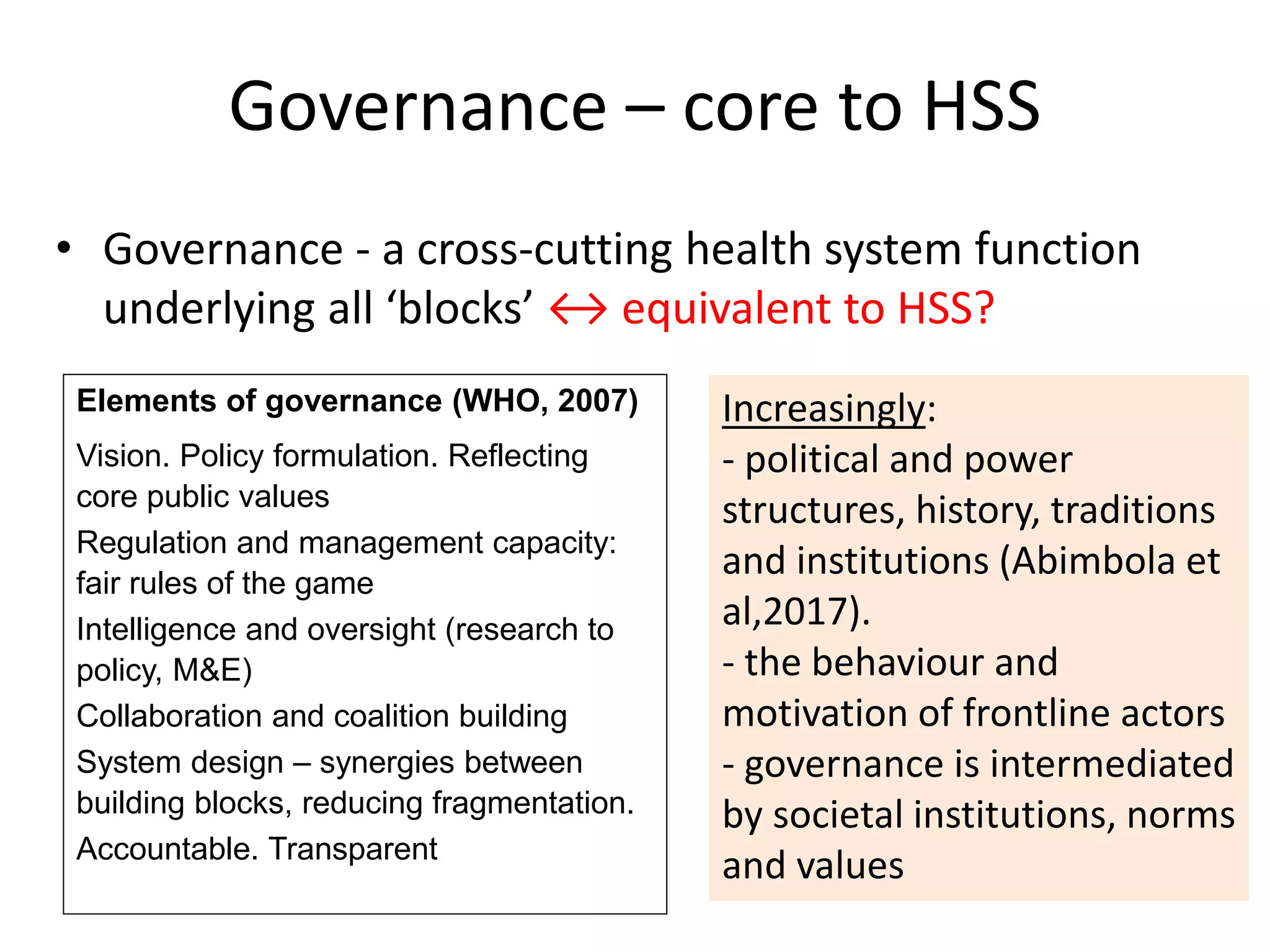
Governance – core to HSS
• Governance - a cross-cutting health system function
underlying all ‘blocks’ ↔ equivalent to HSS?
Elements of governance (WHO, 2007)
Vision. Policy formulation. Reflecting
core public values
Regulation and management capacity:
fair rules of the game
Intelligence and oversight (research to
policy, M&E)
Collaboration and coalition building
System design – synergies between
building blocks, reducing fragmentation.
Accountable. Transparent
Increasingly:
- political and power
structures, history, traditions
and institutions (Abimbola et
al,2017).
- the behaviour and
motivation of frontline actors
- governance is intermediated
by societal institutions, norms
and values
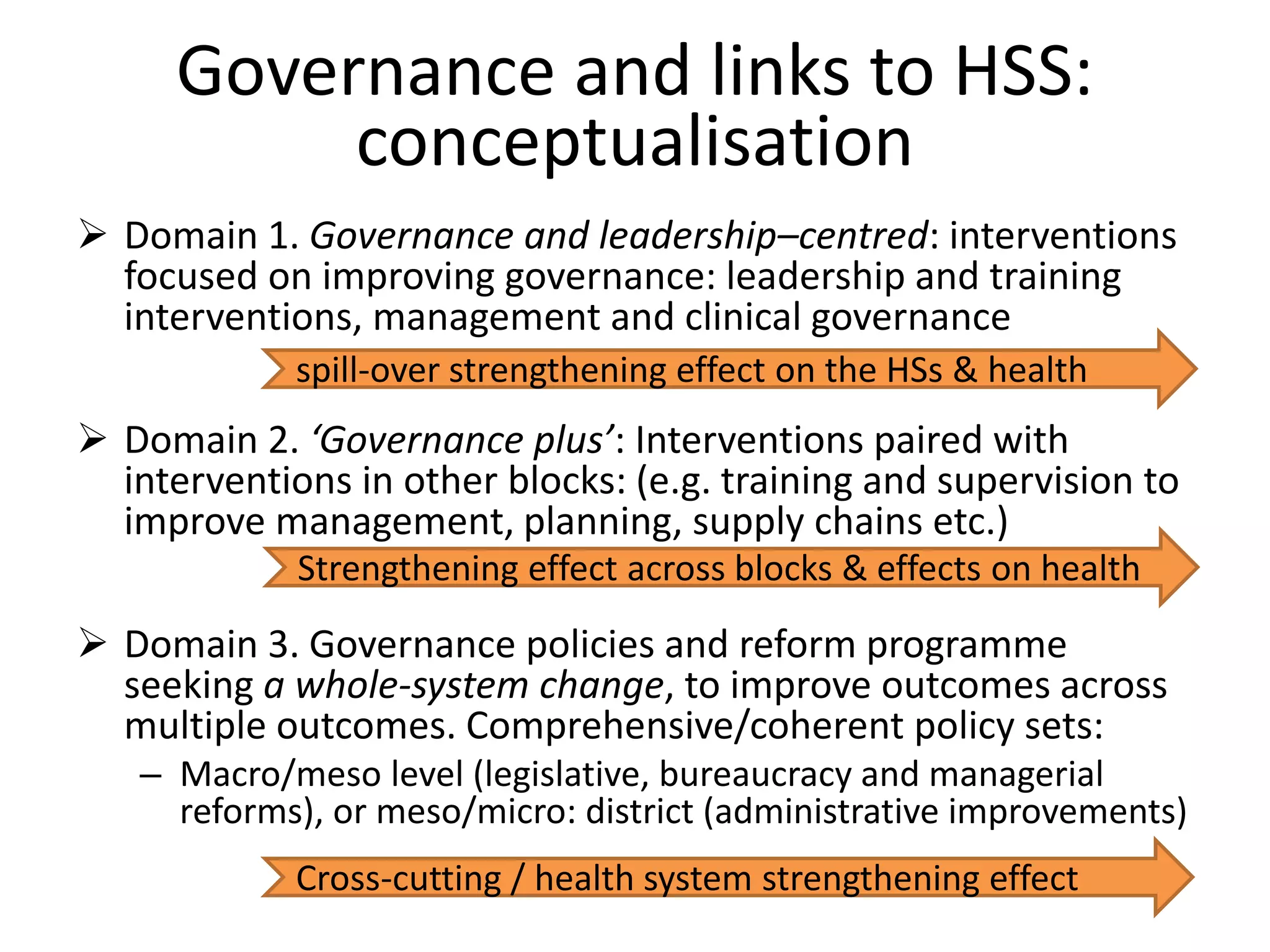
Governance and links to HSS:
conceptualisation
 Domain 1. Governance and leadership–centred: interventions
focused on improving governance: leadership and training
interventions, management and clinical governance
 Domain 2. ‘Governance plus’: Interventions paired with
interventions in other blocks: (e.g. training and supervision to
improve management, planning, supply chains etc.)
 Domain 3. Governance policies and reform programme
seeking a whole-system change, to improve outcomes across
multiple outcomes. Comprehensive/coherent policy sets:
– Macro/meso level (legislative, bureaucracy and managerial
reforms), or meso/micro: district (administrative improvements)
spill-over strengthening effect on the HSs & health
Strengthening effect across blocks & effects on health
Cross-cutting / health system strengthening effect
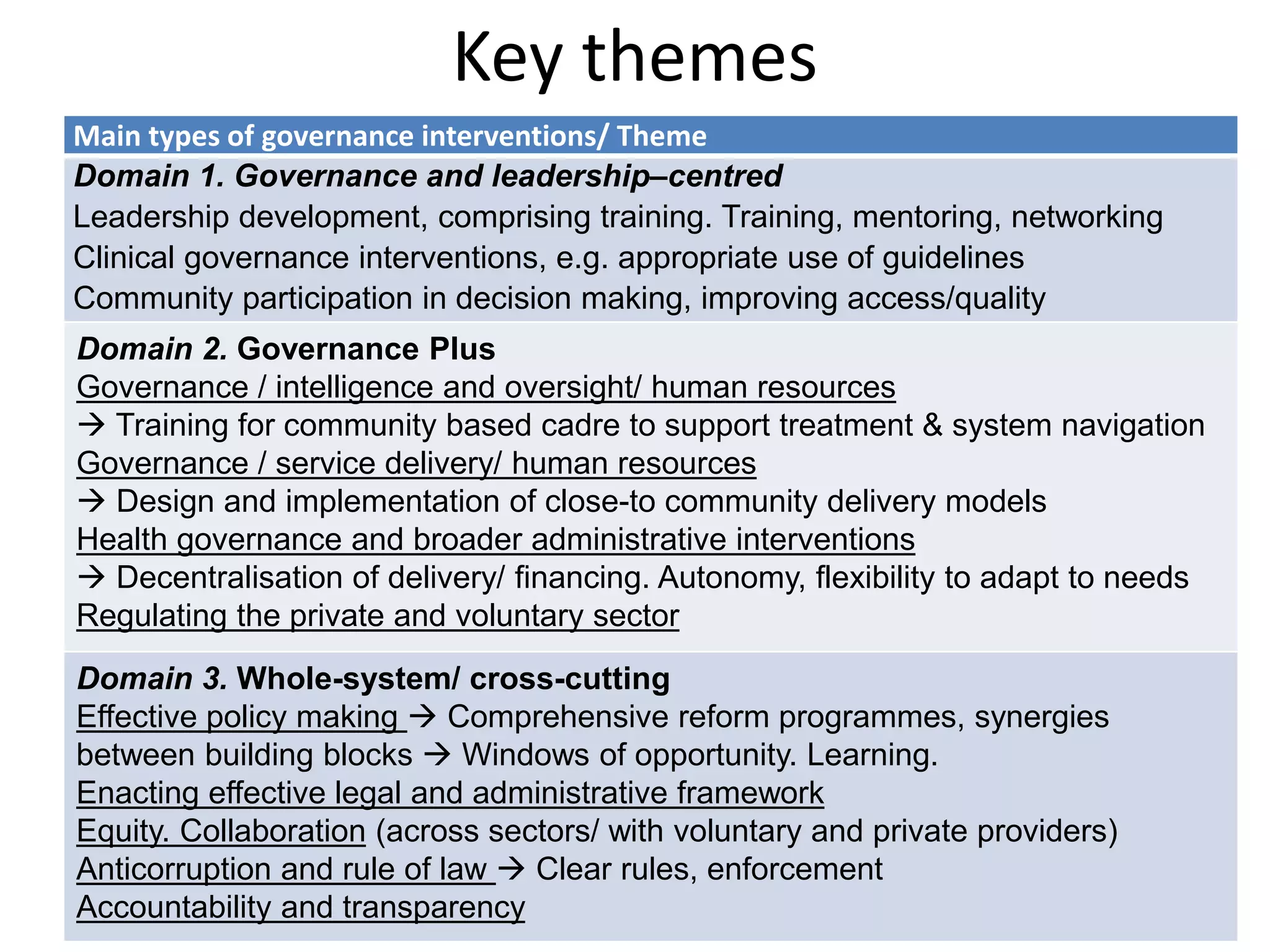
Key themes
Main types of governance interventions/ Theme
Domain 1. Governance and leadership–centred
Leadership development, comprising training. Training, mentoring, networking
Clinical governance interventions, e.g. appropriate use of guidelines
Community participation in decision making, improving access/quality
Domain 2. Governance Plus
Governance / intelligence and oversight/ human resources
 Training for community based cadre to support treatment & system navigation
Governance / service delivery/ human resources
 Design and implementation of close-to community delivery models
Health governance and broader administrative interventions
 Decentralisation of delivery/ financing. Autonomy, flexibility to adapt to needs
Regulating the private and voluntary sector
Domain 3. Whole-system/ cross-cutting
Effective policy making  Comprehensive reform programmes, synergies
between building blocks  Windows of opportunity. Learning.
Enacting effective legal and administrative framework
Equity. Collaboration (across sectors/ with voluntary and private providers)
Anticorruption and rule of law  Clear rules, enforcement
Accountability and transparency
Governance: selected findings
• Whole-system change: comprehensive HSS identify good
governance within complex, system-wide reform programmes 
achieve impact across outcomes [7 studies, e.g. the Good Health at Low
Cost study)
– collaborative working, long-term strategic reforms across all levels of the
health system, using windows of opportunity
• Governance-focused interventions (civil participation and engaging
community members with health service structures)  improve
health, uptake and quality of care (e.g. MCH)
• Leadership programmes blending skills development, mentoring
and teamwork  improve service quality, management
competence and motivation [Bhoma, effect but sustained]
• Mixed evidence on decentralisation: can be promoting or
obstructing depending on the quality of management and
wider political processes
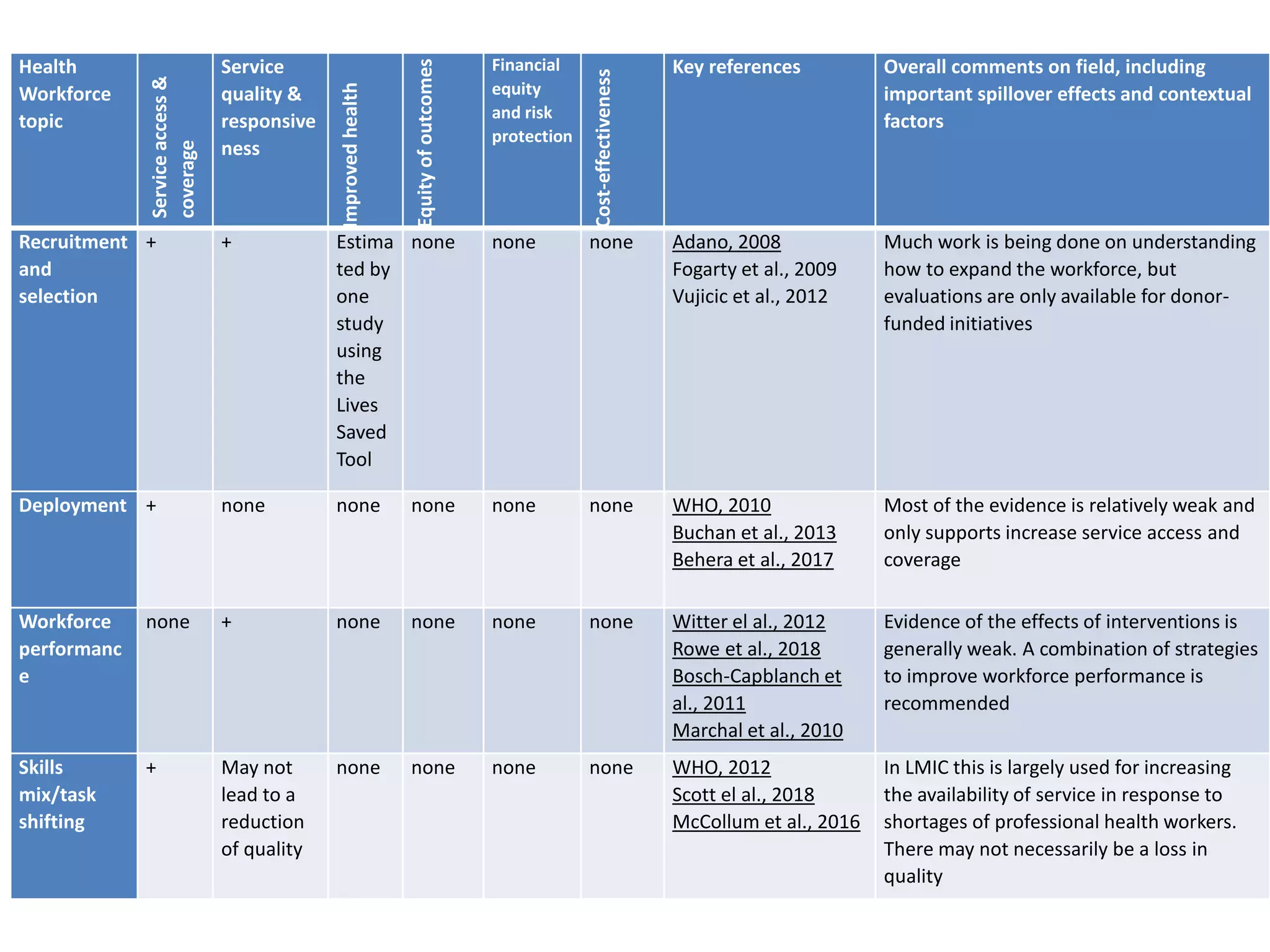
Health
Workforce
topic
Serviceaccess&
coverage
Service
quality &
responsive
ness
Improvedhealth
Equityofoutcomes
Financial
equity
and risk
protection
Cost-effectiveness
Key references Overall comments on field, including
important spillover effects and contextual
factors
Recruitment
and
selection
+ + Estima
ted by
one
study
using
the
Lives
Saved
Tool
none none none Adano, 2008
Fogarty et al., 2009
Vujicic et al., 2012
Much work is being done on understanding
how to expand the workforce, but
evaluations are only available for donor-
funded initiatives
Deployment + none none none none none WHO, 2010
Buchan et al., 2013
Behera et al., 2017
Most of the evidence is relatively weak and
only supports increase service access and
coverage
Workforce
performanc
e
none + none none none none Witter el al., 2012
Rowe et al., 2018
Bosch-Capblanch et
al., 2011
Marchal et al., 2010
Evidence of the effects of interventions is
generally weak. A combination of strategies
to improve workforce performance is
recommended
Skills
mix/task
shifting
+ May not
lead to a
reduction
of quality
none none none none WHO, 2012
Scott el al., 2018
McCollum et al., 2016
In LMIC this is largely used for increasing
the availability of service in response to
shortages of professional health workers.
There may not necessarily be a loss in
quality
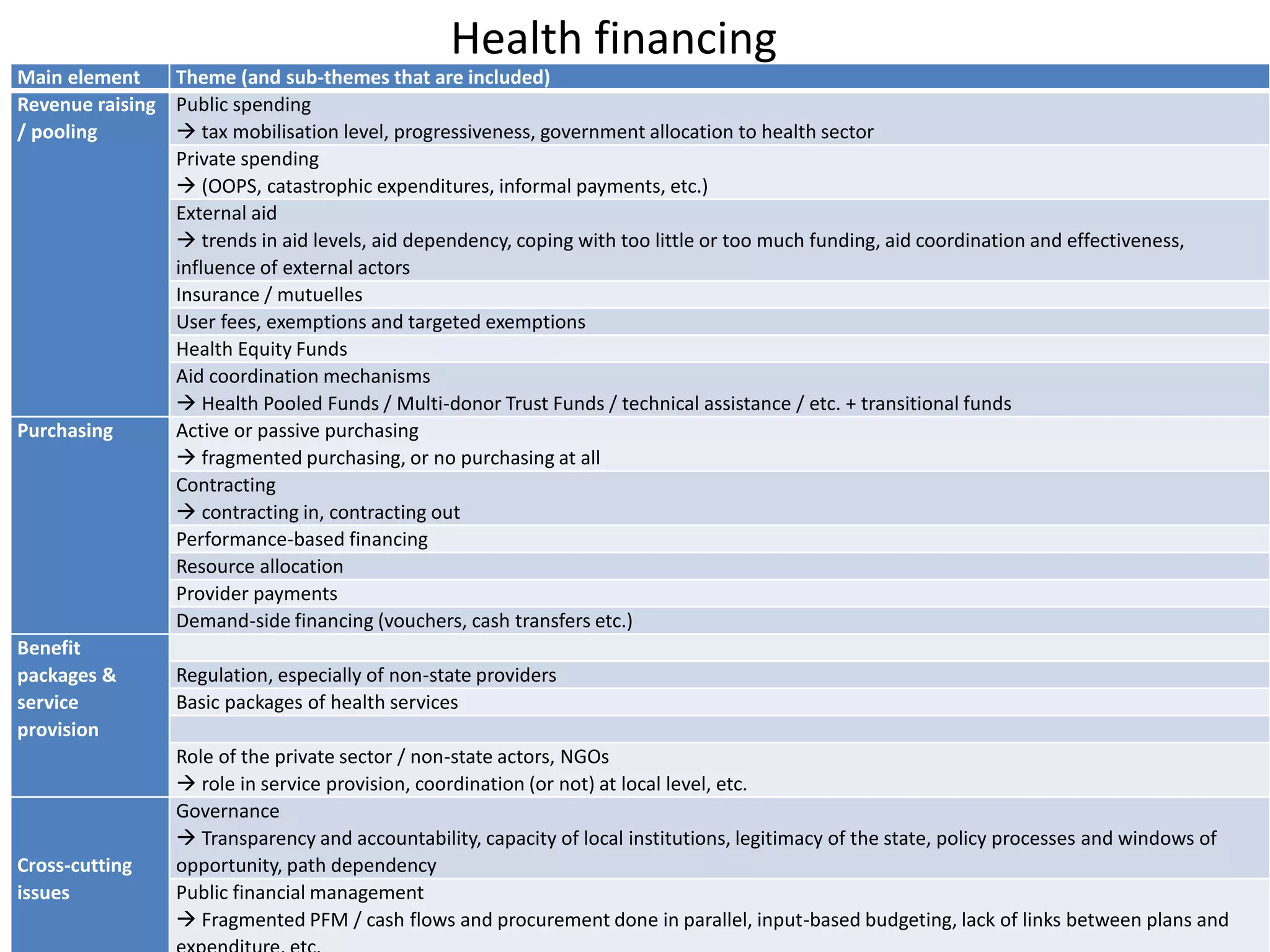
Main element Theme (and sub-themes that are included)
Revenue raising
/ pooling
Public spending
 tax mobilisation level, progressiveness, government allocation to health sector
Private spending
 (OOPS, catastrophic expenditures, informal payments, etc.)
External aid
 trends in aid levels, aid dependency, coping with too little or too much funding, aid coordination and effectiveness,
influence of external actors
Insurance / mutuelles
User fees, exemptions and targeted exemptions
Health Equity Funds
Aid coordination mechanisms
 Health Pooled Funds / Multi-donor Trust Funds / technical assistance / etc. + transitional funds
Purchasing Active or passive purchasing
 fragmented purchasing, or no purchasing at all
Contracting
 contracting in, contracting out
Performance-based financing
Resource allocation
Provider payments
Demand-side financing (vouchers, cash transfers etc.)
Benefit
packages &
service
provision
Regulation, especially of non-state providers
Basic packages of health services
Role of the private sector / non-state actors, NGOs
 role in service provision, coordination (or not) at local level, etc.
Cross-cutting
issues
Governance
 Transparency and accountability, capacity of local institutions, legitimacy of the state, policy processes and windows of
opportunity, path dependency
Public financial management
 Fragmented PFM / cash flows and procurement done in parallel, input-based budgeting, lack of links between plans and
Health financing
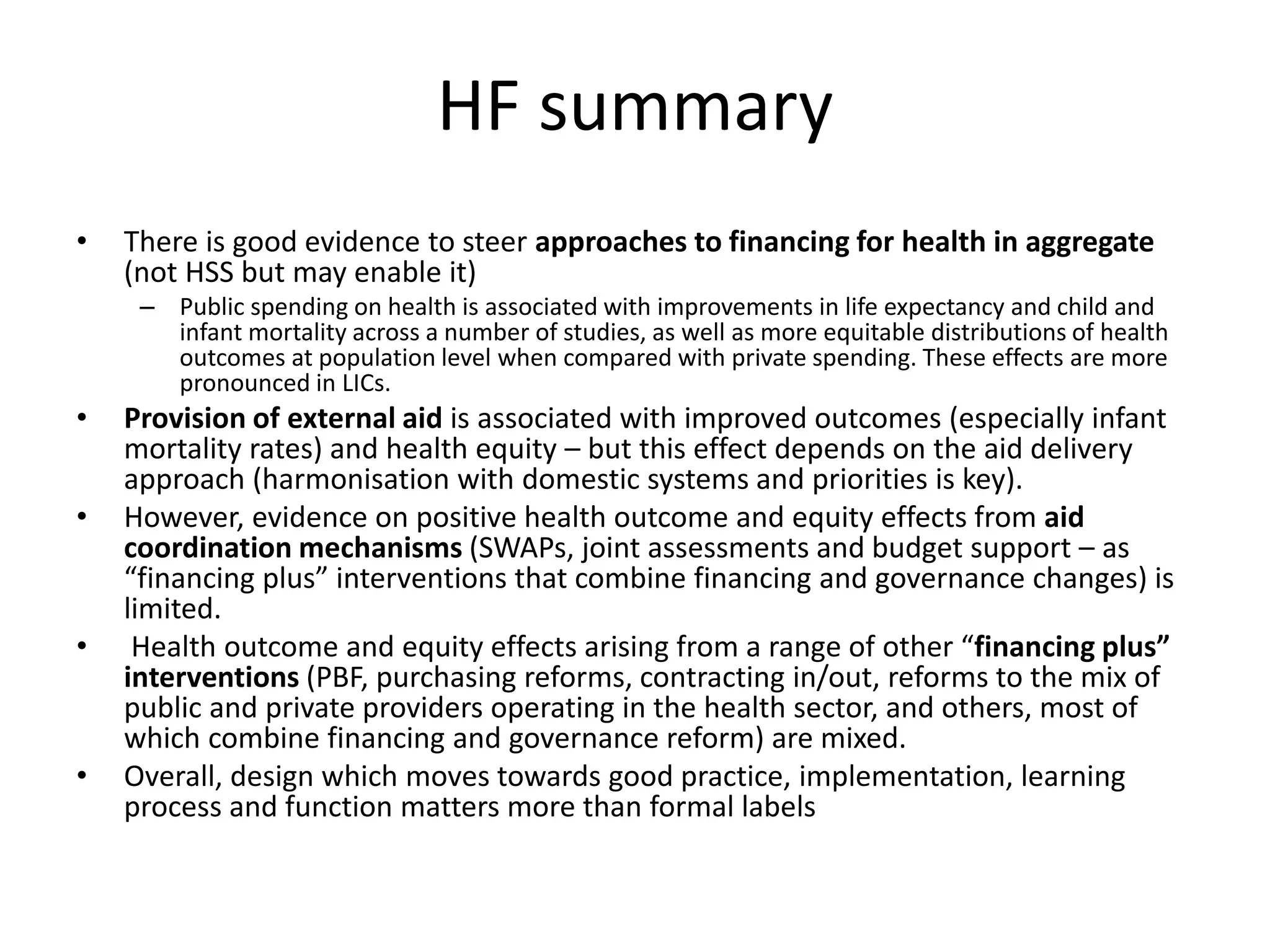
HF summary
• There is good evidence to steer approaches to financing for health in aggregate
(not HSS but may enable it)
– Public spending on health is associated with improvements in life expectancy and child and
infant mortality across a number of studies, as well as more equitable distributions of health
outcomes at population level when compared with private spending. These effects are more
pronounced in LICs.
• Provision of external aid is associated with improved outcomes (especially infant
mortality rates) and health equity – but this effect depends on the aid delivery
approach (harmonisation with domestic systems and priorities is key).
• However, evidence on positive health outcome and equity effects from aid
coordination mechanisms (SWAPs, joint assessments and budget support – as
“financing plus” interventions that combine financing and governance changes) is
limited.
• Health outcome and equity effects arising from a range of other “financing plus”
interventions (PBF, purchasing reforms, contracting in/out, reforms to the mix of
public and private providers operating in the health sector, and others, most of
which combine financing and governance reform) are mixed.
• Overall, design which moves towards good practice, implementation, learning
process and function matters more than formal labels
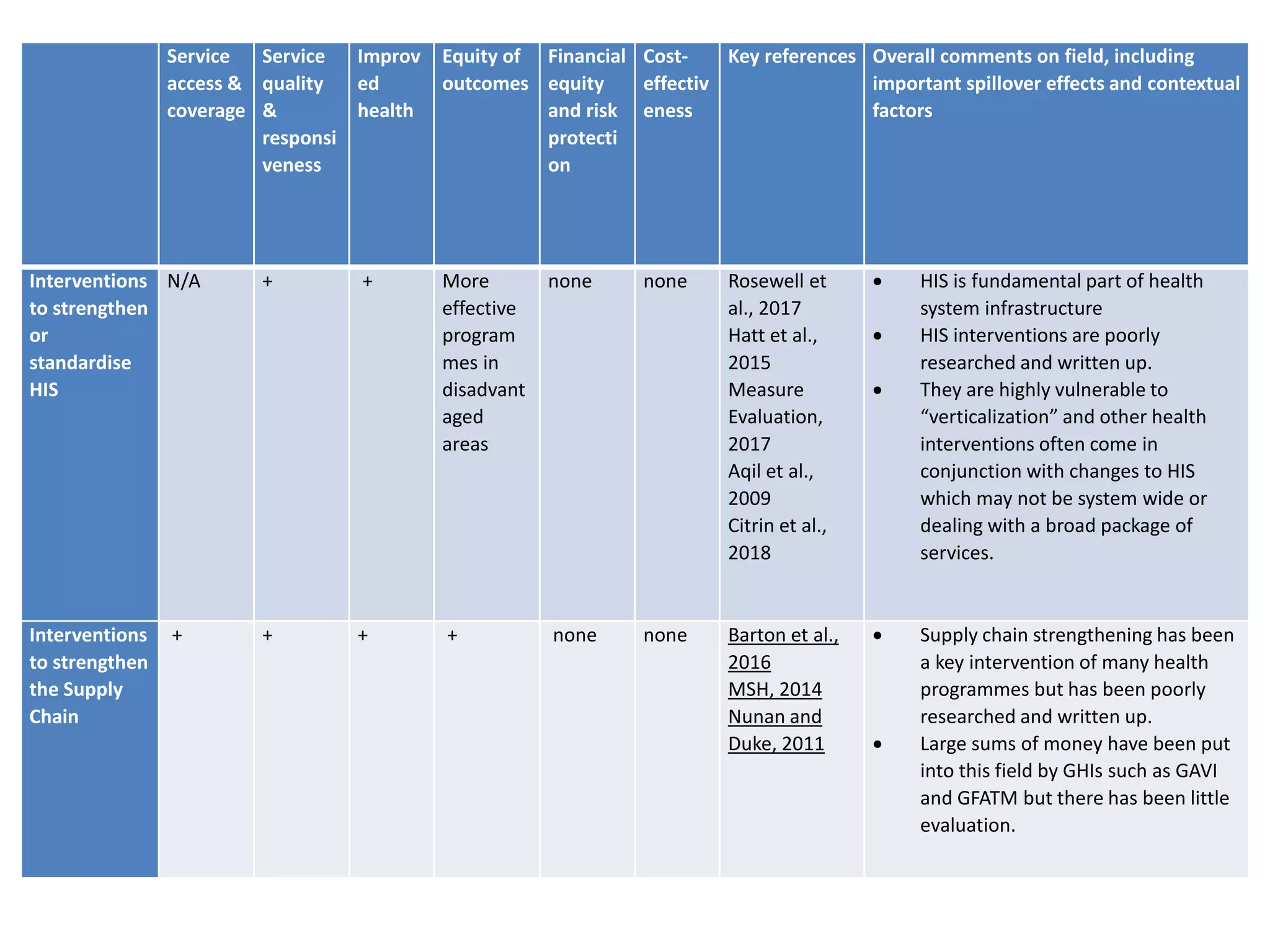
Service
access &
coverage
Service
quality
&
responsi
veness
Improv
ed
health
Equity of
outcomes
Financial
equity
and risk
protecti
on
Cost-
effectiv
eness
Key references Overall comments on field, including
important spillover effects and contextual
factors
Interventions
to strengthen
or
standardise
HIS
N/A + + More
effective
program
mes in
disadvant
aged
areas
none none Rosewell et
al., 2017
Hatt et al.,
2015
Measure
Evaluation,
2017
Aqil et al.,
2009
Citrin et al.,
2018
 HIS is fundamental part of health
system infrastructure
 HIS interventions are poorly
researched and written up.
 They are highly vulnerable to
“verticalization” and other health
interventions often come in
conjunction with changes to HIS
which may not be system wide or
dealing with a broad package of
services.
Interventions
to strengthen
the Supply
Chain
+ + + + none none Barton et al.,
2016
MSH, 2014
Nunan and
Duke, 2011
 Supply chain strengthening has been
a key intervention of many health
programmes but has been poorly
researched and written up.
 Large sums of money have been put
into this field by GHIs such as GAVI
and GFATM but there has been little
evaluation.
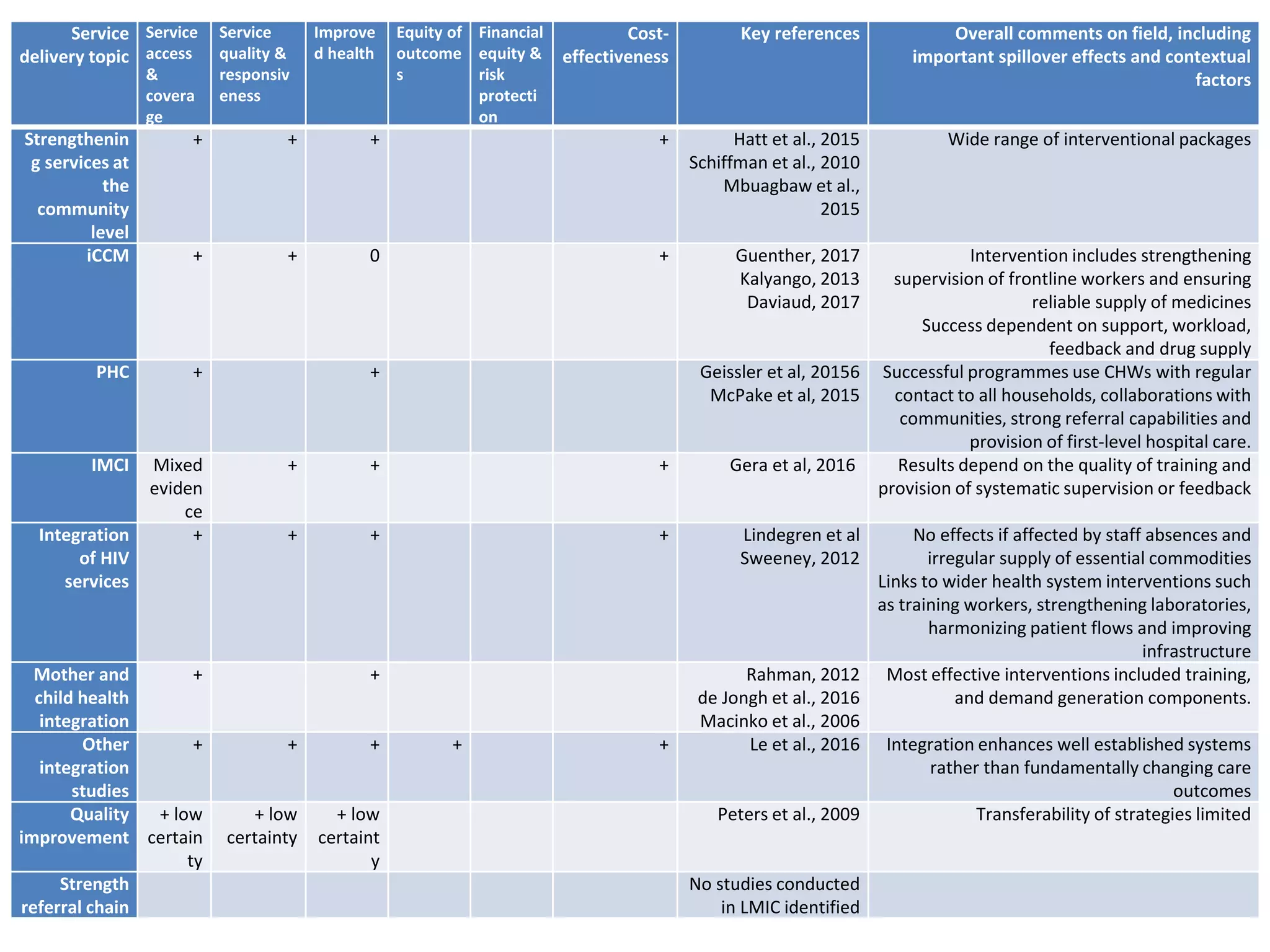
Service
delivery topic
Service
access
&
covera
ge
Service
quality &
responsiv
eness
Improve
d health
Equity of
outcome
s
Financial
equity &
risk
protecti
on
Cost-
effectiveness
Key references Overall comments on field, including
important spillover effects and contextual
factors
Strengthenin
g services at
the
community
level
+ + + + Hatt et al., 2015
Schiffman et al., 2010
Mbuagbaw et al.,
2015
Wide range of interventional packages
iCCM + + 0 + Guenther, 2017
Kalyango, 2013
Daviaud, 2017
Intervention includes strengthening
supervision of frontline workers and ensuring
reliable supply of medicines
Success dependent on support, workload,
feedback and drug supply
PHC + + Geissler et al, 20156
McPake et al, 2015
Successful programmes use CHWs with regular
contact to all households, collaborations with
communities, strong referral capabilities and
provision of first-level hospital care.
IMCI Mixed
eviden
ce
+ + + Gera et al, 2016 Results depend on the quality of training and
provision of systematic supervision or feedback
Integration
of HIV
services
+ + + + Lindegren et al
Sweeney, 2012
No effects if affected by staff absences and
irregular supply of essential commodities
Links to wider health system interventions such
as training workers, strengthening laboratories,
harmonizing patient flows and improving
infrastructure
Mother and
child health
integration
+ + Rahman, 2012
de Jongh et al., 2016
Macinko et al., 2006
Most effective interventions included training,
and demand generation components.
Other
integration
studies
+ + + + + Le et al., 2016 Integration enhances well established systems
rather than fundamentally changing care
outcomes
Quality
improvement
+ low
certain
ty
+ low
certainty
+ low
certaint
y
Peters et al., 2009 Transferability of strategies limited
Strength
referral chain
No studies conducted
in LMIC identified
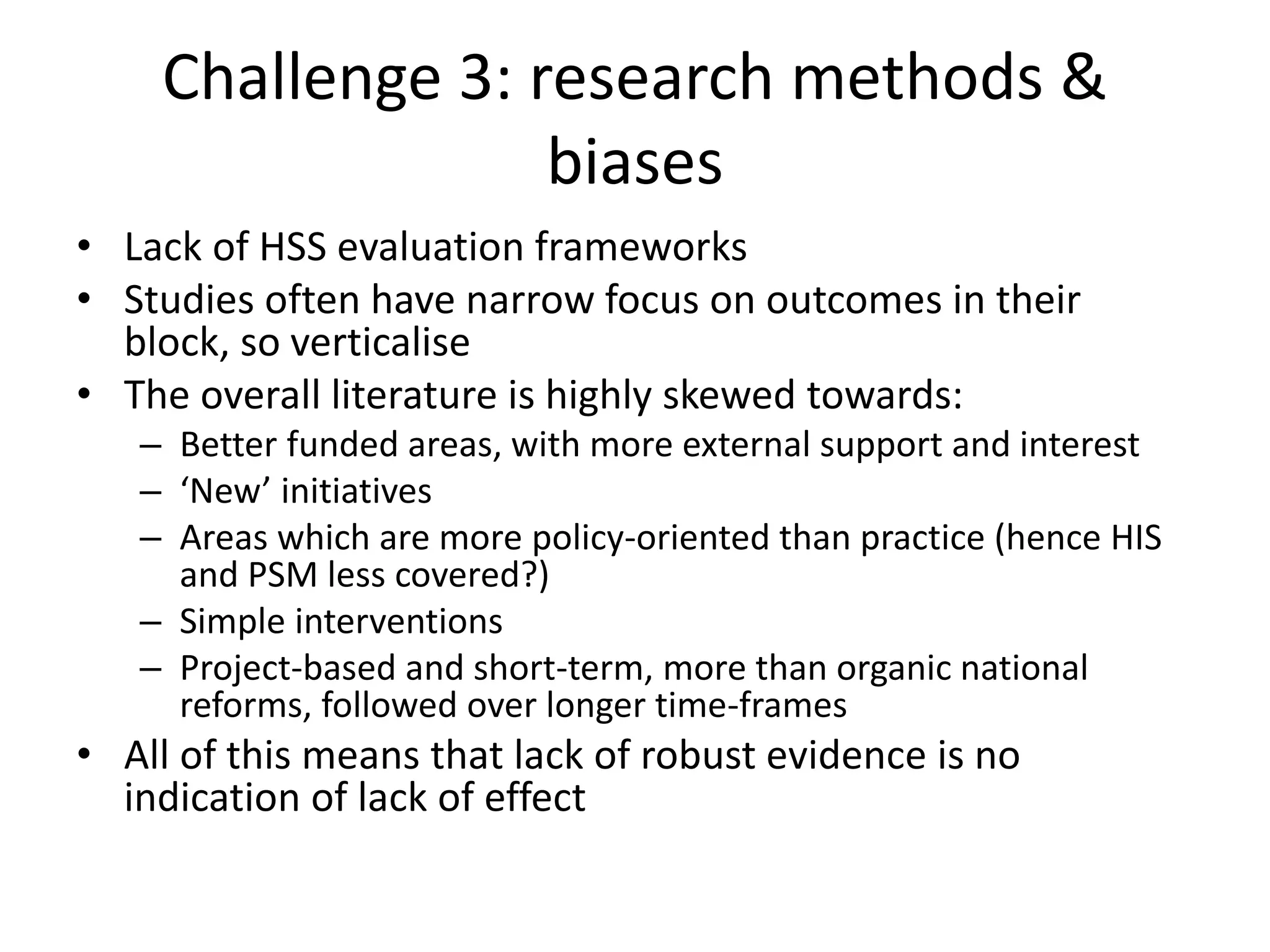
Challenge 3: research methods &
biases
• Lack of HSS evaluation frameworks
• Studies often have narrow focus on outcomes in their
block, so verticalise
• The overall literature is highly skewed towards:
– Better funded areas, with more external support and interest
– ‘New’ initiatives
– Areas which are more policy-oriented than practice (hence HIS
and PSM less covered?)
– Simple interventions
– Project-based and short-term, more than organic national
reforms, followed over longer time-frames
• All of this means that lack of robust evidence is no
indication of lack of effect
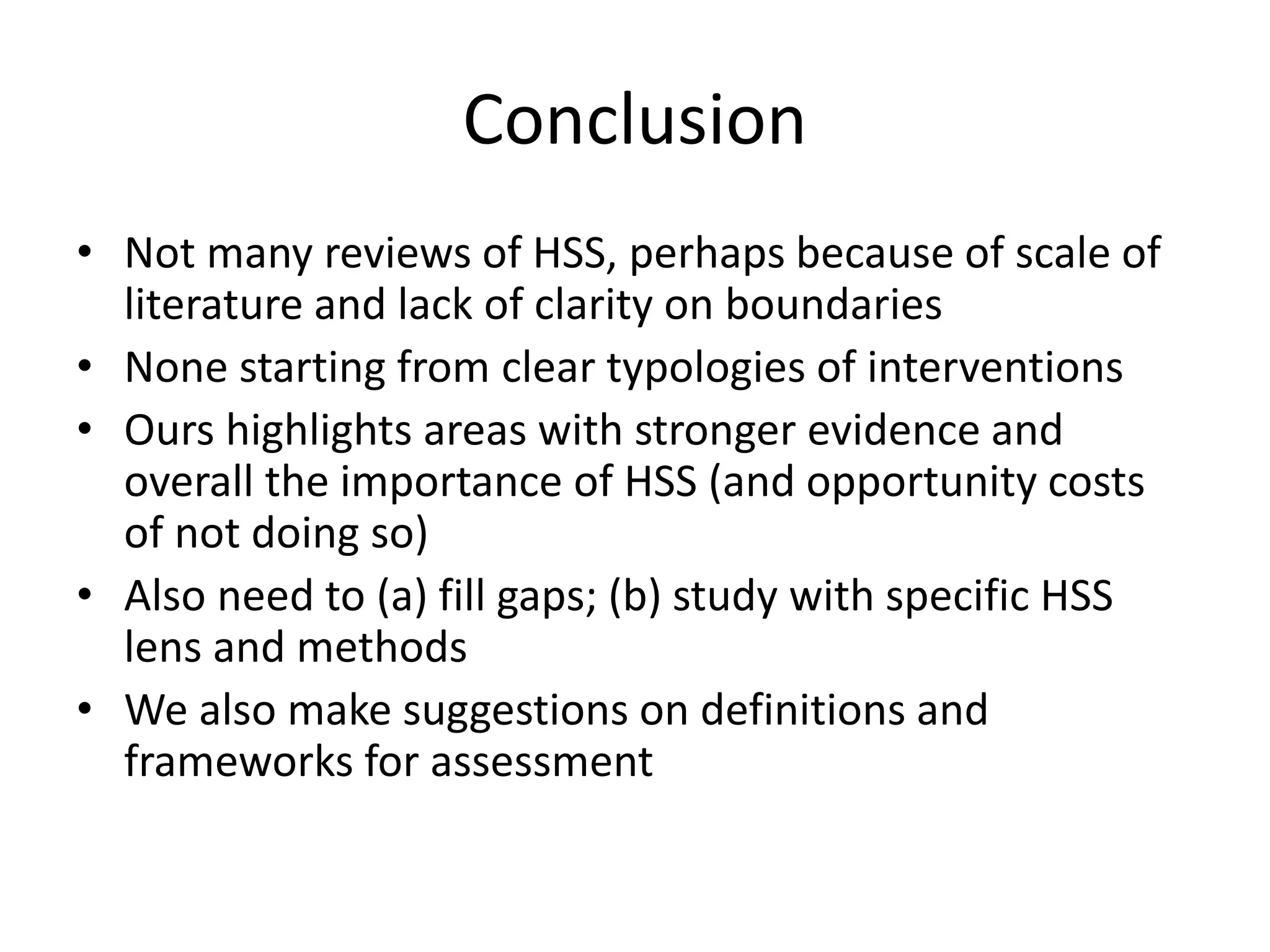
Conclusion
• Not many reviews of HSS, perhaps because of scale of
literature and lack of clarity on boundaries
• None starting from clear typologies of interventions
• Ours highlights areas with stronger evidence and
overall the importance of HSS (and opportunity costs
of not doing so)
• Also need to (a) fill gaps; (b) study with specific HSS
lens and methods
• We also make suggestions on definitions and
frameworks for assessment
Conclusion (2)
Given role of context in determining effects, we cannot look at effects in isolation from an
understanding of processes and mechanisms of change
Factors highlighted across the studies which are likely to increase HSS success include:
– political commitment to a process
– shared societal values
– taking advantage of windows of opportunity
– sustained commitment
– coherent reform programmes
– quality of implementation
– iterative learning and adaptation.
– community engagement in the design and implementation of the interventions
– individual and organisational capacity development and mentoring
This suggests that the implementation process might be as important as the specifics of intervention
design in HSS
System strengthening entails concern for how a specific intervention is adapted to and
institutionalised within the existing system, not only to ensure its long term sustainability but also to
support, rather than undermine, system resilience
Hence importance of paying attention to system software and history
Practical implications
• Define health systems as social systems animated by actors
– Understanding actor behaviours and inceptives (e.g. people’s reasons not to seek
care), as well as institutional and human interactions that shape the HSS policies
• Move beyond HSS conceptualisations that seek simple impacts
– Expand the definition of success beyond outcomes, e.g. to system receptivity to
change, changed mindsets
– Account for long-time lags and interactions between blocks (drawing on
complexity sciences)
– Unpack the HSS process, to identify mechanisms & triggers for change
– Make explicit dependencies and interactions of focused interventions with
wider health system
• Champion the purpose and power of HSS and HSR, and invest in
them over the long-term to support learning health systems

Health system strengthening – what is it, how should we assess it, and does it work?

  • 1.
    Health system strengthening– what is it, how should we assess it, and does it work? Sophie Witter, Natasha Palmer, Dina Balabanova, Sandra Mounier-Jack, Tim Martineau, Anna Klicpera, Charity Jensen, Miguel Pugliese Garcia and Lucy Gilson
  • 2.
    Objectives • To supportstrategic planning work within DFID by identifying evidence on effective health system strengthening approaches in different contexts; • To support advocacy activities by helping DFID Advisers make the case for investment in HSS as a route to achieving improvements in health; and • To help DFID Health Advisers make sense of the large volume of evidence on HSS and sign-post health advisers to key pieces of evidence on health system strengthening.
  • 3.
    Methods • Systematic searchin 7 databases in Oct 2018 • Inclusion criteria: – Took place in low- and middle-income countries, including fragile and conflict-affected states and countries in transition. – Were published between 2000-2018 – Described interventions targeting two or more health system blocks, or one block, but with significant spill-overs to others – Were in English – Included relevant outcomes, as below • Intermediate outcomes: – Service access – Service coverage – Service quality & safety • Long-range outcomes: – Improved health – covering morbidity and mortality – Equity of outcomes/distributional effects – Cost-effectiveness – Responsiveness, such as patient-centredness – Social and financial risk protection • Augmented by identification of relevant studies (published and grey), using expert knowledge
  • 4.
    Included studies • 193studies were identified as meeting our criteria. • Most studies were reviews, including both systematic and non- systematic/literature reviews (n=64), quantitative (n=47), and mixed methods studies (n=21). • A majority of studies were from low income contexts. • The largest number of studies addressed service delivery (n=82), followed by health workforce (n=76) and then health financing (n=74). • Just over half of included studies addressed long- range health outcomes. 13 13 15 33 74 76 82 0 10 20 30 40 50 60 70 80 90 Demand generation Technology Information Governance Financing Workforce Services No. of Studies BuildingBlocks Building Blocks Targeted in Included Studies
  • 5.
    First challenge: HSSdefinitions • History: emerging from debate about vertical programme • Proposals but lack of consensus – “any array of initiatives that improves one or more of the functions of the health systems and that leads to better health through improvements in access, coverage, quality or efficiency” (WHO, 2019 glossary) – Adam and De Savigny (2012) highlight that, to be considered HSS, an intervention needs to have system-level changes as opposed to changes at the organisational level. – Chee et al. (2012): 1) The interventions have cross cutting benefits beyond a single disease; 2) They address identified policy and organisational constraints or strengthen relationships between the building blocks; 3) They produce long term systemic impact beyond the life of the activity; and 4) They are tailored to country specific constraints and opportunities with clearly defined roles for country institutions
  • 6.
    DFID definition Elements ofapproach: Strengthening a health system means initiating integrated activities across at least two of the six, internationally accepted, health system building blocks – namely: human resources for health; health finance; health governance; health information; medical products, vaccines, and technologies; and service delivery. Activities focused on a single building block that nevertheless have significant, positive spill-over effects on other building blocks can also be regarded as system strengthening. And outcomes: A strong health system is one that ensures no-one is left behind, delivering either sustained improvements in, or consistently strong, health outcomes for all. And the journey between them: Strong health systems achieve this through continuous improvement across system building blocks, building effective collaborations between public, private and third sector actors to ensure that high quality, safe services are delivered equitably, and paid for in ways that do not expose users to financial hardship’.
  • 7.
    Our suggestion (1) scope:should have effects cutting across building blocks in practice, even if not in intervention design, and also tackling more than one disease (2) scale: should have national reach and cut across more than one level of the system) (3) sustainability: effects should be sustained over time and address systemic blockages (4) effects: should impact on outcomes, equity, financial risk protection and responsiveness, even though these impacts may occur after a time lag
  • 8.
    Challenge 2: typologies •No agreed typologies for HSS within or across blocks • Needed to create them partly based on expert knowledge and bodies of literature identified
  • 9.
    Governance – coreto HSS • Governance - a cross-cutting health system function underlying all ‘blocks’ ↔ equivalent to HSS? Elements of governance (WHO, 2007) Vision. Policy formulation. Reflecting core public values Regulation and management capacity: fair rules of the game Intelligence and oversight (research to policy, M&E) Collaboration and coalition building System design – synergies between building blocks, reducing fragmentation. Accountable. Transparent Increasingly: - political and power structures, history, traditions and institutions (Abimbola et al,2017). - the behaviour and motivation of frontline actors - governance is intermediated by societal institutions, norms and values
  • 10.
    Governance and linksto HSS: conceptualisation  Domain 1. Governance and leadership–centred: interventions focused on improving governance: leadership and training interventions, management and clinical governance  Domain 2. ‘Governance plus’: Interventions paired with interventions in other blocks: (e.g. training and supervision to improve management, planning, supply chains etc.)  Domain 3. Governance policies and reform programme seeking a whole-system change, to improve outcomes across multiple outcomes. Comprehensive/coherent policy sets: – Macro/meso level (legislative, bureaucracy and managerial reforms), or meso/micro: district (administrative improvements) spill-over strengthening effect on the HSs & health Strengthening effect across blocks & effects on health Cross-cutting / health system strengthening effect
  • 11.
    Key themes Main typesof governance interventions/ Theme Domain 1. Governance and leadership–centred Leadership development, comprising training. Training, mentoring, networking Clinical governance interventions, e.g. appropriate use of guidelines Community participation in decision making, improving access/quality Domain 2. Governance Plus Governance / intelligence and oversight/ human resources  Training for community based cadre to support treatment & system navigation Governance / service delivery/ human resources  Design and implementation of close-to community delivery models Health governance and broader administrative interventions  Decentralisation of delivery/ financing. Autonomy, flexibility to adapt to needs Regulating the private and voluntary sector Domain 3. Whole-system/ cross-cutting Effective policy making  Comprehensive reform programmes, synergies between building blocks  Windows of opportunity. Learning. Enacting effective legal and administrative framework Equity. Collaboration (across sectors/ with voluntary and private providers) Anticorruption and rule of law  Clear rules, enforcement Accountability and transparency
  • 12.
    Governance: selected findings •Whole-system change: comprehensive HSS identify good governance within complex, system-wide reform programmes  achieve impact across outcomes [7 studies, e.g. the Good Health at Low Cost study) – collaborative working, long-term strategic reforms across all levels of the health system, using windows of opportunity • Governance-focused interventions (civil participation and engaging community members with health service structures)  improve health, uptake and quality of care (e.g. MCH) • Leadership programmes blending skills development, mentoring and teamwork  improve service quality, management competence and motivation [Bhoma, effect but sustained] • Mixed evidence on decentralisation: can be promoting or obstructing depending on the quality of management and wider political processes
  • 13.
    Health Workforce topic Serviceaccess& coverage Service quality & responsive ness Improvedhealth Equityofoutcomes Financial equity and risk protection Cost-effectiveness Keyreferences Overall comments on field, including important spillover effects and contextual factors Recruitment and selection + + Estima ted by one study using the Lives Saved Tool none none none Adano, 2008 Fogarty et al., 2009 Vujicic et al., 2012 Much work is being done on understanding how to expand the workforce, but evaluations are only available for donor- funded initiatives Deployment + none none none none none WHO, 2010 Buchan et al., 2013 Behera et al., 2017 Most of the evidence is relatively weak and only supports increase service access and coverage Workforce performanc e none + none none none none Witter el al., 2012 Rowe et al., 2018 Bosch-Capblanch et al., 2011 Marchal et al., 2010 Evidence of the effects of interventions is generally weak. A combination of strategies to improve workforce performance is recommended Skills mix/task shifting + May not lead to a reduction of quality none none none none WHO, 2012 Scott el al., 2018 McCollum et al., 2016 In LMIC this is largely used for increasing the availability of service in response to shortages of professional health workers. There may not necessarily be a loss in quality
  • 14.
    Main element Theme(and sub-themes that are included) Revenue raising / pooling Public spending  tax mobilisation level, progressiveness, government allocation to health sector Private spending  (OOPS, catastrophic expenditures, informal payments, etc.) External aid  trends in aid levels, aid dependency, coping with too little or too much funding, aid coordination and effectiveness, influence of external actors Insurance / mutuelles User fees, exemptions and targeted exemptions Health Equity Funds Aid coordination mechanisms  Health Pooled Funds / Multi-donor Trust Funds / technical assistance / etc. + transitional funds Purchasing Active or passive purchasing  fragmented purchasing, or no purchasing at all Contracting  contracting in, contracting out Performance-based financing Resource allocation Provider payments Demand-side financing (vouchers, cash transfers etc.) Benefit packages & service provision Regulation, especially of non-state providers Basic packages of health services Role of the private sector / non-state actors, NGOs  role in service provision, coordination (or not) at local level, etc. Cross-cutting issues Governance  Transparency and accountability, capacity of local institutions, legitimacy of the state, policy processes and windows of opportunity, path dependency Public financial management  Fragmented PFM / cash flows and procurement done in parallel, input-based budgeting, lack of links between plans and Health financing
  • 15.
    HF summary • Thereis good evidence to steer approaches to financing for health in aggregate (not HSS but may enable it) – Public spending on health is associated with improvements in life expectancy and child and infant mortality across a number of studies, as well as more equitable distributions of health outcomes at population level when compared with private spending. These effects are more pronounced in LICs. • Provision of external aid is associated with improved outcomes (especially infant mortality rates) and health equity – but this effect depends on the aid delivery approach (harmonisation with domestic systems and priorities is key). • However, evidence on positive health outcome and equity effects from aid coordination mechanisms (SWAPs, joint assessments and budget support – as “financing plus” interventions that combine financing and governance changes) is limited. • Health outcome and equity effects arising from a range of other “financing plus” interventions (PBF, purchasing reforms, contracting in/out, reforms to the mix of public and private providers operating in the health sector, and others, most of which combine financing and governance reform) are mixed. • Overall, design which moves towards good practice, implementation, learning process and function matters more than formal labels
  • 16.
    Service access & coverage Service quality & responsi veness Improv ed health Equity of outcomes Financial equity andrisk protecti on Cost- effectiv eness Key references Overall comments on field, including important spillover effects and contextual factors Interventions to strengthen or standardise HIS N/A + + More effective program mes in disadvant aged areas none none Rosewell et al., 2017 Hatt et al., 2015 Measure Evaluation, 2017 Aqil et al., 2009 Citrin et al., 2018  HIS is fundamental part of health system infrastructure  HIS interventions are poorly researched and written up.  They are highly vulnerable to “verticalization” and other health interventions often come in conjunction with changes to HIS which may not be system wide or dealing with a broad package of services. Interventions to strengthen the Supply Chain + + + + none none Barton et al., 2016 MSH, 2014 Nunan and Duke, 2011  Supply chain strengthening has been a key intervention of many health programmes but has been poorly researched and written up.  Large sums of money have been put into this field by GHIs such as GAVI and GFATM but there has been little evaluation.
  • 17.
    Service delivery topic Service access & covera ge Service quality & responsiv eness Improve dhealth Equity of outcome s Financial equity & risk protecti on Cost- effectiveness Key references Overall comments on field, including important spillover effects and contextual factors Strengthenin g services at the community level + + + + Hatt et al., 2015 Schiffman et al., 2010 Mbuagbaw et al., 2015 Wide range of interventional packages iCCM + + 0 + Guenther, 2017 Kalyango, 2013 Daviaud, 2017 Intervention includes strengthening supervision of frontline workers and ensuring reliable supply of medicines Success dependent on support, workload, feedback and drug supply PHC + + Geissler et al, 20156 McPake et al, 2015 Successful programmes use CHWs with regular contact to all households, collaborations with communities, strong referral capabilities and provision of first-level hospital care. IMCI Mixed eviden ce + + + Gera et al, 2016 Results depend on the quality of training and provision of systematic supervision or feedback Integration of HIV services + + + + Lindegren et al Sweeney, 2012 No effects if affected by staff absences and irregular supply of essential commodities Links to wider health system interventions such as training workers, strengthening laboratories, harmonizing patient flows and improving infrastructure Mother and child health integration + + Rahman, 2012 de Jongh et al., 2016 Macinko et al., 2006 Most effective interventions included training, and demand generation components. Other integration studies + + + + + Le et al., 2016 Integration enhances well established systems rather than fundamentally changing care outcomes Quality improvement + low certain ty + low certainty + low certaint y Peters et al., 2009 Transferability of strategies limited Strength referral chain No studies conducted in LMIC identified
  • 18.
    Challenge 3: researchmethods & biases • Lack of HSS evaluation frameworks • Studies often have narrow focus on outcomes in their block, so verticalise • The overall literature is highly skewed towards: – Better funded areas, with more external support and interest – ‘New’ initiatives – Areas which are more policy-oriented than practice (hence HIS and PSM less covered?) – Simple interventions – Project-based and short-term, more than organic national reforms, followed over longer time-frames • All of this means that lack of robust evidence is no indication of lack of effect
  • 20.
    Conclusion • Not manyreviews of HSS, perhaps because of scale of literature and lack of clarity on boundaries • None starting from clear typologies of interventions • Ours highlights areas with stronger evidence and overall the importance of HSS (and opportunity costs of not doing so) • Also need to (a) fill gaps; (b) study with specific HSS lens and methods • We also make suggestions on definitions and frameworks for assessment
  • 21.
    Conclusion (2) Given roleof context in determining effects, we cannot look at effects in isolation from an understanding of processes and mechanisms of change Factors highlighted across the studies which are likely to increase HSS success include: – political commitment to a process – shared societal values – taking advantage of windows of opportunity – sustained commitment – coherent reform programmes – quality of implementation – iterative learning and adaptation. – community engagement in the design and implementation of the interventions – individual and organisational capacity development and mentoring This suggests that the implementation process might be as important as the specifics of intervention design in HSS System strengthening entails concern for how a specific intervention is adapted to and institutionalised within the existing system, not only to ensure its long term sustainability but also to support, rather than undermine, system resilience Hence importance of paying attention to system software and history
  • 22.
    Practical implications • Definehealth systems as social systems animated by actors – Understanding actor behaviours and inceptives (e.g. people’s reasons not to seek care), as well as institutional and human interactions that shape the HSS policies • Move beyond HSS conceptualisations that seek simple impacts – Expand the definition of success beyond outcomes, e.g. to system receptivity to change, changed mindsets – Account for long-time lags and interactions between blocks (drawing on complexity sciences) – Unpack the HSS process, to identify mechanisms & triggers for change – Make explicit dependencies and interactions of focused interventions with wider health system • Champion the purpose and power of HSS and HSR, and invest in them over the long-term to support learning health systems