Download as PDF, PPTX



![HelloWorld
public class HelloWorld {
public static void main (String[] args) {
System.out.println(“Hello World”);
}
}](https://image.slidesharecdn.com/headfirstjavachapter1-160504013829/85/Head-First-Java-Chapter-1-10-320.jpg)


![NameLoop.java
public class NameLoop {
public static void main (String[] args) {
int x = 1;
while (x < 10) {
System.out.println(“My name is Tom!”)
}
}](https://image.slidesharecdn.com/headfirstjavachapter1-160504013829/85/Head-First-Java-Chapter-1-17-320.jpg)
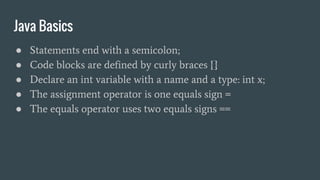


The document discusses the basics of Java including: - How Java code is compiled from source code by a compiler into bytecode that runs on a virtual machine. - The structure of Java code including classes and methods. - Using the Eclipse integrated development environment to write and run Java code. - Examples of Java statements, loops, branching, and boolean tests.


