ct;s

HDPE PIPE LAYING
The simplicity of laying pipes made fronr- HDPE

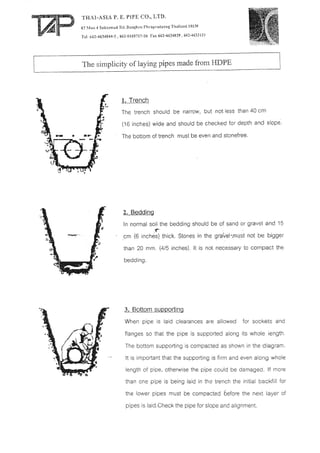
1. Trench
The trench should be nanow, but not less than 40 cm
(16 inches) wide and should be checked for depth and slope'
The bottom of

trench must be even and stonefree.

2. Bedding
ln normal soil the bedding should be of sand or gravel and

r'

15

cm (6 inches) thick. Stones in the graUel:must not be bigger
than 20 mm. (415 inches). It is not necessary to compact the
bedding.

3. Bottom supporting
When pipe is laid clearances are allowed for sockets and
flanges so that the pipe is supported along its whole iength.
The bottom supporting is compacted as shown in the diagram.

It is important that the supporting is finn and even along whole
length of pipe, otherwse the pipe could be darnaged. lf more

than one pipe is being iaid in the trench the initial backfill for

the lower pipes must be compacted 6efore the next layer of
pipes is laid.Check the pipe for slope and alignment.
ww t#,j:-,

C

,,,:.:,.,:;r,:=,;:,1

::: ;:::1,,,

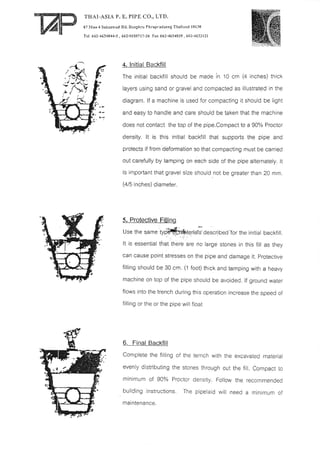
4-lnitial_ Bagkfill
The initial backfill should be made in 10 cm (4 inches) thick
layers using sand or gravel and compacted as illustrated in the

diagram. lf a machine is used for compacting it should be light
and easy to handle and care should be taken that the machine
does not contact the top of the pipe.Compact to a 90% Proctor

density.

lt is this initial backfill that supports the pipe

and

protects if from deformation so that compacting must be carried
out carefully by tamping on each side of the pipe altemately. lt
is important that gravel size should.not be greater than 20 mm.
(4/5 inches)diameter.

5, Prp.tecjive
.. Use

Fl|Jir.rg

the same

s'

described'for the initial backfill.
,'B-

It is essential that thbre are no large stones in this fill as they
can cause point stresses on the pipe and damage it. protective
filling should be 30 cm. (t foot) thick and tamping with a heavy
machine on top of the pipe should be avoided. lf ground water

flows into the trench during ihis operation increase the speed of
filling or the or the pipe wilt ftoat

6.

Final. Backfill

complete the filling of the temch with the excavated materiar
evenly distributing the stones through out ihe fill. compact to
minimum

of g0% Proclor density. Foilow the

building instructions. The pipelaid will need
maintenance.

recommended

a

minimum of

Li;-

Hdpe pipe laying วิธีฝักกลบท่อ hdpe

  • 1.
  • 2.
    The simplicity oflaying pipes made fronr- HDPE 1. Trench The trench should be nanow, but not less than 40 cm (16 inches) wide and should be checked for depth and slope' The bottom of trench must be even and stonefree. 2. Bedding ln normal soil the bedding should be of sand or gravel and r' 15 cm (6 inches) thick. Stones in the graUel:must not be bigger than 20 mm. (415 inches). It is not necessary to compact the bedding. 3. Bottom supporting When pipe is laid clearances are allowed for sockets and flanges so that the pipe is supported along its whole iength. The bottom supporting is compacted as shown in the diagram. It is important that the supporting is finn and even along whole length of pipe, otherwse the pipe could be darnaged. lf more than one pipe is being iaid in the trench the initial backfill for the lower pipes must be compacted 6efore the next layer of pipes is laid.Check the pipe for slope and alignment.
  • 3.
    ww t#,j:-, C ,,,:.:,.,:;r,:=,;:,1 ::: ;:::1,,, 4-lnitial_Bagkfill The initial backfill should be made in 10 cm (4 inches) thick layers using sand or gravel and compacted as illustrated in the diagram. lf a machine is used for compacting it should be light and easy to handle and care should be taken that the machine does not contact the top of the pipe.Compact to a 90% Proctor density. lt is this initial backfill that supports the pipe and protects if from deformation so that compacting must be carried out carefully by tamping on each side of the pipe altemately. lt is important that gravel size should.not be greater than 20 mm. (4/5 inches)diameter. 5, Prp.tecjive .. Use Fl|Jir.rg the same s' described'for the initial backfill. ,'B- It is essential that thbre are no large stones in this fill as they can cause point stresses on the pipe and damage it. protective filling should be 30 cm. (t foot) thick and tamping with a heavy machine on top of the pipe should be avoided. lf ground water flows into the trench during ihis operation increase the speed of filling or the or the pipe wilt ftoat 6. Final. Backfill complete the filling of the temch with the excavated materiar evenly distributing the stones through out ihe fill. compact to minimum of g0% Proclor density. Foilow the building instructions. The pipelaid will need maintenance. recommended a minimum of Li;-