Ang susunod na
programa ay
rated
HAZARDOUS
AND
TOXIC WASTES
Hazardous wastes
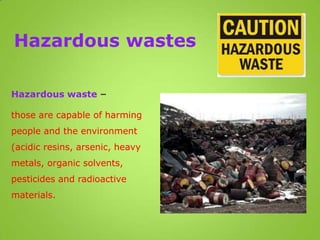
Hazardous waste –
those are capable of harming
people and the environment
(acidic resins, arsenic, heavy
metals, organic solvents,
pesticides and radioactive
materials.
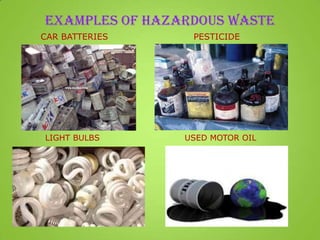
EXAMPLES OF HAZARDOUS WASTE
CAR BATTERIES PESTICIDE
LIGHT BULBS USED MOTOR OIL
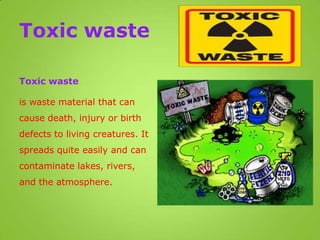
Toxic waste
Toxic waste
is waste material that can
cause death, injury or birth
defects to living creatures. It
spreads quite easily and can
contaminate lakes, rivers,
and the atmosphere.
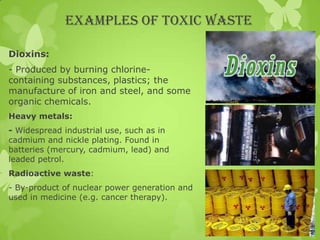
EXAMPLES OF TOXIC WASTE
Dioxins:
- Produced by burning chlorine-
containing substances, plastics; the
manufacture of iron and steel, and some
organic chemicals.
Heavy metals:
- Widespread industrial use, such as in
cadmium and nickle plating. Found in
batteries (mercury, cadmium, lead) and
leaded petrol.
Radioactive waste:
- By-product of nuclear power generation and
used in medicine (e.g. cancer therapy).
Methods of disposal
3 - Recycling
1 - Landfill
2 - Incineration
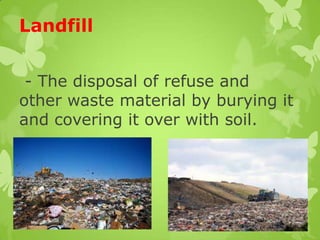
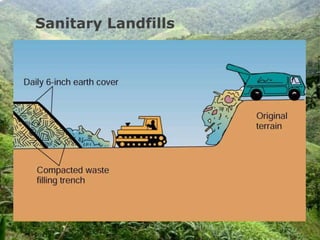
Landfill
- The disposal of refuse and
other waste material by burying it
and covering it over with soil.
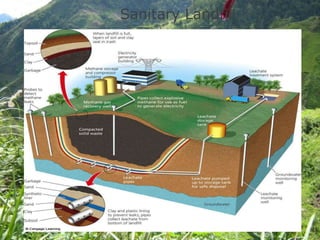
Sanitary Landfills
Sanitary Landfill
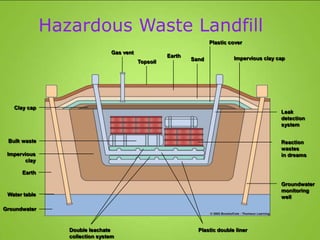
Hazardous Waste Landfill
Bulk waste
Impervious
clay
Earth
Water table
Groundwater
Clay cap
Gas vent
Topsoil
Earth
Sand
Plastic cover
Impervious clay cap
Leak
detection
system
Reaction
wastes
in dreams
Double leachate
collection system
Plastic double liner
Groundwater
monitoring
well
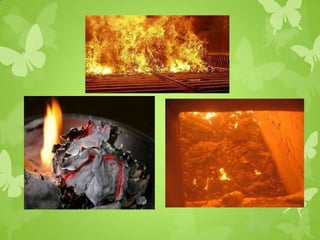
Incineration
Incineration is a disposal method in which solid
organic wastes are subjected to combustion so as
to convert them into residue and gaseous
products. This method is useful for disposal of
residue of both solid waste management and solid
residue from waste water management. This
process reduces the volumes of solid waste to 20 to
30 percent of the original volume. Incineration and
other high temperature waste treatment systems
are sometimes described as "thermal treatment".
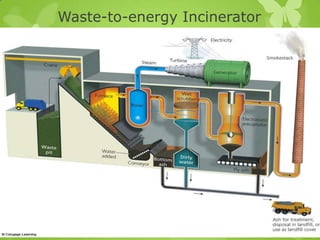
Incinerators convert waste materials
into heat, gas,steam and ash.
Waste-to-energy Incinerator
Recycling
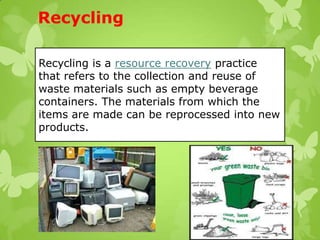
Recycling is a resource recovery practice
that refers to the collection and reuse of
waste materials such as empty beverage
containers. The materials from which the
items are made can be reprocessed into new
products.
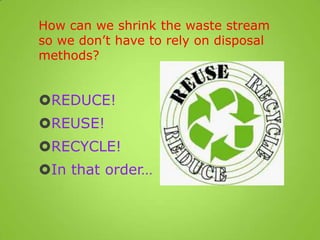
How can we shrink the waste stream
so we don’t have to rely on disposal
methods?
REDUCE!
REUSE!
RECYCLE!
In that order…
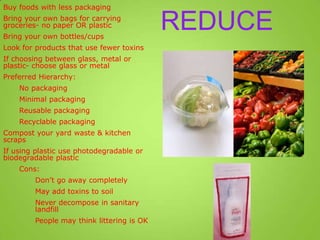
REDUCE
Buy foods with less packaging
Bring your own bags for carrying
groceries- no paper OR plastic
Bring your own bottles/cups
Look for products that use fewer toxins
If choosing between glass, metal or
plastic- choose glass or metal
Preferred Hierarchy:
No packaging
Minimal packaging
Reusable packaging
Recyclable packaging
Compost your yard waste & kitchen
scraps
If using plastic use photodegradable or
biodegradable plastic
Cons:
Don’t go away completely
May add toxins to soil
Never decompose in sanitary
landfill
People may think littering is OK
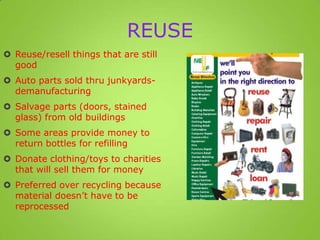
REUSE
 Reuse/resell things that are still
good
 Auto parts sold thru junkyards-
demanufacturing
 Salvage parts (doors, stained
glass) from old buildings
 Some areas provide money to
return bottles for refilling
 Donate clothing/toys to charities
that will sell them for money
 Preferred over recycling because
material doesn’t have to be
reprocessed
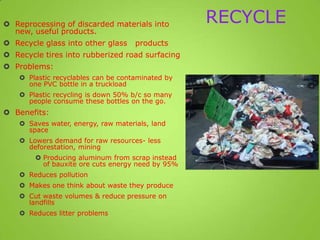
RECYCLE Reprocessing of discarded materials into
new, useful products.
 Recycle glass into other glass products
 Recycle tires into rubberized road surfacing
 Problems:
 Plastic recyclables can be contaminated by
one PVC bottle in a truckload
 Plastic recycling is down 50% b/c so many
people consume these bottles on the go.
 Benefits:
 Saves water, energy, raw materials, land
space
 Lowers demand for raw resources- less
deforestation, mining
 Producing aluminum from scrap instead
of bauxite ore cuts energy need by 95%
 Reduces pollution
 Makes one think about waste they produce
 Cut waste volumes & reduce pressure on
landfills
 Reduces litter problems
Why Is Reusing and Recycling
Materials So Important?
 Reusing items decreases the use of matter
and energy resources and reduces
pollution and natural capital degradation;
recycling does so to a lesser degree.
THE END
THANK YOU !
Hazardous and Toxic Waste

Hazardous and Toxic Waste

  • 1.
  • 2.
  • 4.
    Hazardous wastes Hazardous waste– those are capable of harming people and the environment (acidic resins, arsenic, heavy metals, organic solvents, pesticides and radioactive materials.
  • 5.
    EXAMPLES OF HAZARDOUSWASTE CAR BATTERIES PESTICIDE LIGHT BULBS USED MOTOR OIL
  • 6.
    Toxic waste Toxic waste iswaste material that can cause death, injury or birth defects to living creatures. It spreads quite easily and can contaminate lakes, rivers, and the atmosphere.
  • 7.
    EXAMPLES OF TOXICWASTE Dioxins: - Produced by burning chlorine- containing substances, plastics; the manufacture of iron and steel, and some organic chemicals. Heavy metals: - Widespread industrial use, such as in cadmium and nickle plating. Found in batteries (mercury, cadmium, lead) and leaded petrol. Radioactive waste: - By-product of nuclear power generation and used in medicine (e.g. cancer therapy).
  • 8.
    Methods of disposal 3- Recycling 1 - Landfill 2 - Incineration
  • 9.
    Landfill - The disposalof refuse and other waste material by burying it and covering it over with soil.
  • 10.
  • 11.
  • 12.
    Hazardous Waste Landfill Bulkwaste Impervious clay Earth Water table Groundwater Clay cap Gas vent Topsoil Earth Sand Plastic cover Impervious clay cap Leak detection system Reaction wastes in dreams Double leachate collection system Plastic double liner Groundwater monitoring well
  • 13.
    Incineration Incineration is adisposal method in which solid organic wastes are subjected to combustion so as to convert them into residue and gaseous products. This method is useful for disposal of residue of both solid waste management and solid residue from waste water management. This process reduces the volumes of solid waste to 20 to 30 percent of the original volume. Incineration and other high temperature waste treatment systems are sometimes described as "thermal treatment". Incinerators convert waste materials into heat, gas,steam and ash.
  • 15.
  • 16.
    Recycling Recycling is aresource recovery practice that refers to the collection and reuse of waste materials such as empty beverage containers. The materials from which the items are made can be reprocessed into new products.
  • 17.
    How can weshrink the waste stream so we don’t have to rely on disposal methods? REDUCE! REUSE! RECYCLE! In that order…
  • 18.
    REDUCE Buy foods withless packaging Bring your own bags for carrying groceries- no paper OR plastic Bring your own bottles/cups Look for products that use fewer toxins If choosing between glass, metal or plastic- choose glass or metal Preferred Hierarchy: No packaging Minimal packaging Reusable packaging Recyclable packaging Compost your yard waste & kitchen scraps If using plastic use photodegradable or biodegradable plastic Cons: Don’t go away completely May add toxins to soil Never decompose in sanitary landfill People may think littering is OK
  • 19.
    REUSE  Reuse/resell thingsthat are still good  Auto parts sold thru junkyards- demanufacturing  Salvage parts (doors, stained glass) from old buildings  Some areas provide money to return bottles for refilling  Donate clothing/toys to charities that will sell them for money  Preferred over recycling because material doesn’t have to be reprocessed
  • 20.
    RECYCLE Reprocessing ofdiscarded materials into new, useful products.  Recycle glass into other glass products  Recycle tires into rubberized road surfacing  Problems:  Plastic recyclables can be contaminated by one PVC bottle in a truckload  Plastic recycling is down 50% b/c so many people consume these bottles on the go.  Benefits:  Saves water, energy, raw materials, land space  Lowers demand for raw resources- less deforestation, mining  Producing aluminum from scrap instead of bauxite ore cuts energy need by 95%  Reduces pollution  Makes one think about waste they produce  Cut waste volumes & reduce pressure on landfills  Reduces litter problems
  • 21.
    Why Is Reusingand Recycling Materials So Important?  Reusing items decreases the use of matter and energy resources and reduces pollution and natural capital degradation; recycling does so to a lesser degree.
  • 22.
  • 23.