Hazard Risk Management
An Overview
Introduction to Hazard Risk
Management
• Hazard Risk Management involves identifying,
assessing, and controlling risks arising from
operational hazards to minimize the impact on
people, property, and the environment.
Types of Hazards
• - Physical Hazards: such as noise, radiation, or
extreme temperatures.
• - Chemical Hazards: such as toxic chemicals,
flammable materials, or explosives.
• - Biological Hazards: such as viruses, bacteria,
or other pathogens.
• - Ergonomic Hazards: such as repetitive strain
injuries or improper workstation design.
• - Psychosocial Hazards: such as stress,
violence, or harassment.
Risk Assessment Process
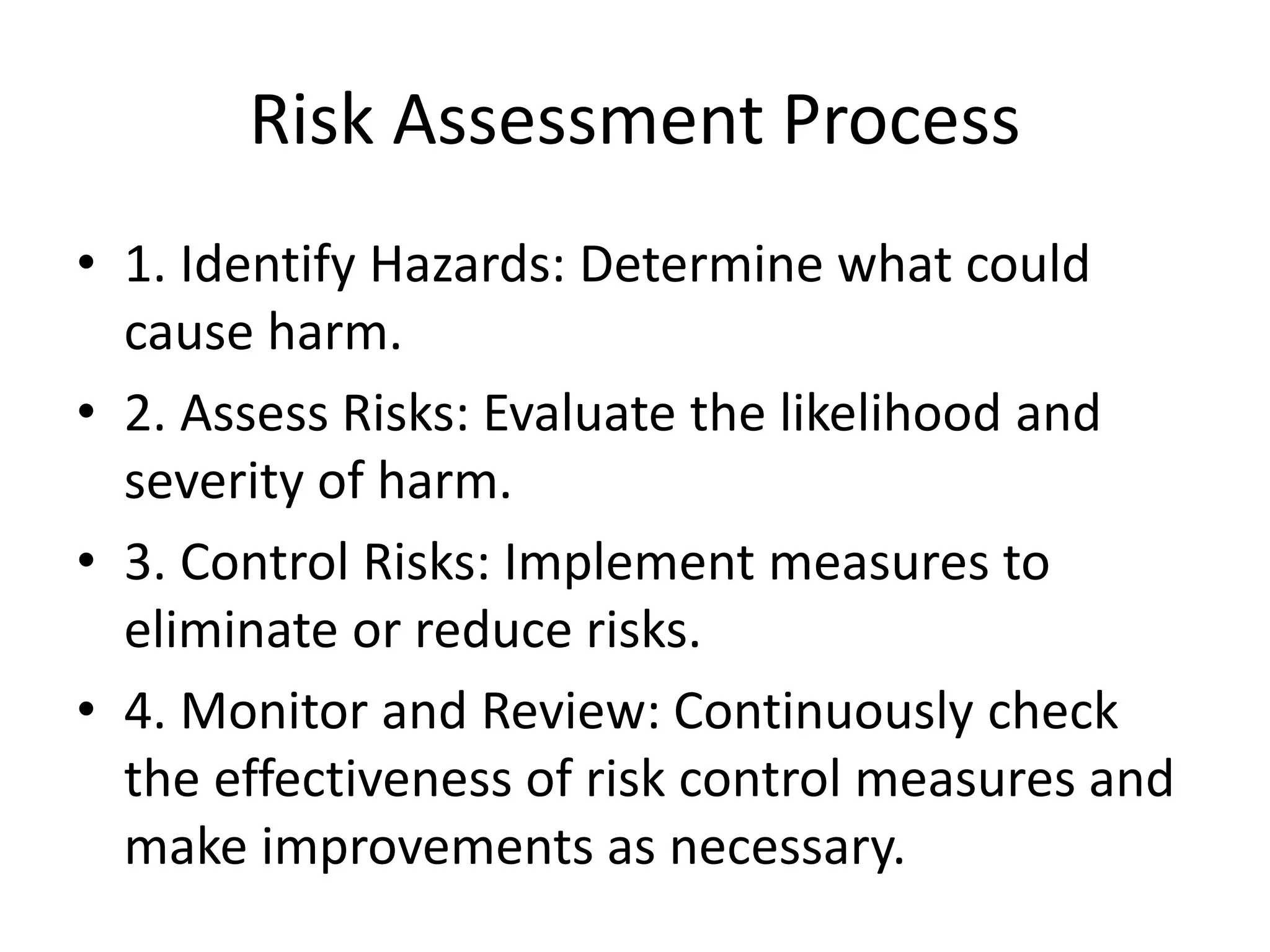
• 1. Identify Hazards: Determine what could
cause harm.
• 2. Assess Risks: Evaluate the likelihood and
severity of harm.
• 3. Control Risks: Implement measures to
eliminate or reduce risks.
• 4. Monitor and Review: Continuously check
the effectiveness of risk control measures and
make improvements as necessary.
Risk Mitigation Strategies
• - Elimination: Remove the hazard entirely.
• - Substitution: Replace the hazard with a less
dangerous one.
• - Engineering Controls: Isolate people from
the hazard.
• - Administrative Controls: Change the way
people work.
• - Personal Protective Equipment (PPE): Protect
workers with appropriate gear.
Case Studies or Examples
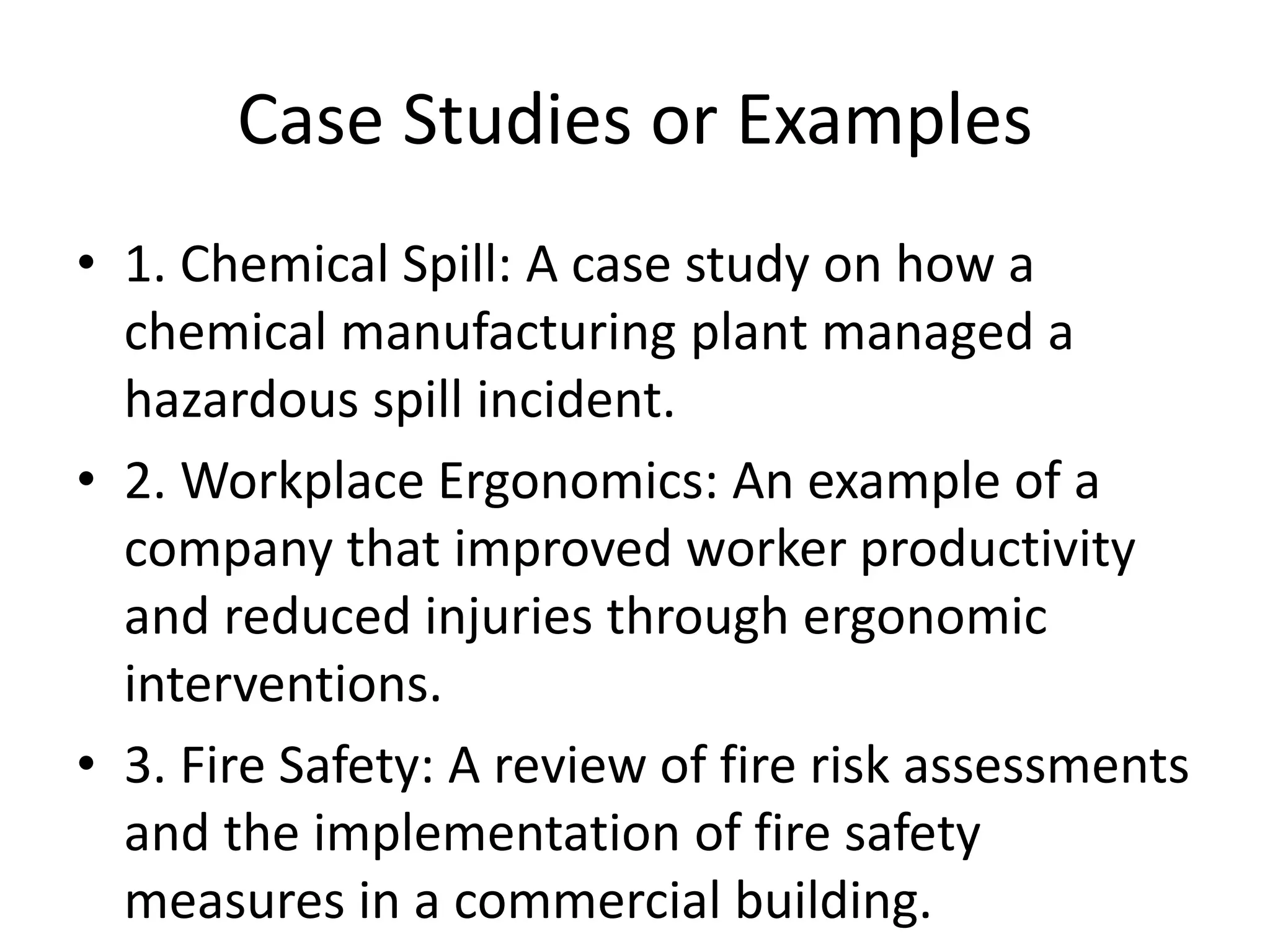
• 1. Chemical Spill: A case study on how a
chemical manufacturing plant managed a
hazardous spill incident.
• 2. Workplace Ergonomics: An example of a
company that improved worker productivity
and reduced injuries through ergonomic
interventions.
• 3. Fire Safety: A review of fire risk assessments
and the implementation of fire safety
measures in a commercial building.
Conclusion
• Effective Hazard Risk Management is crucial
for ensuring the safety and well-being of
workers, protecting property, and minimizing
environmental impact. By systematically
identifying, assessing, and controlling risks,
organizations can create a safer and more
productive work environment.

Hazard_Risk_Management_Presentation.pptx

  • 1.
  • 2.
    Introduction to HazardRisk Management • Hazard Risk Management involves identifying, assessing, and controlling risks arising from operational hazards to minimize the impact on people, property, and the environment.
  • 3.
    Types of Hazards •- Physical Hazards: such as noise, radiation, or extreme temperatures. • - Chemical Hazards: such as toxic chemicals, flammable materials, or explosives. • - Biological Hazards: such as viruses, bacteria, or other pathogens. • - Ergonomic Hazards: such as repetitive strain injuries or improper workstation design. • - Psychosocial Hazards: such as stress, violence, or harassment.
  • 4.
    Risk Assessment Process •1. Identify Hazards: Determine what could cause harm. • 2. Assess Risks: Evaluate the likelihood and severity of harm. • 3. Control Risks: Implement measures to eliminate or reduce risks. • 4. Monitor and Review: Continuously check the effectiveness of risk control measures and make improvements as necessary.
  • 5.
    Risk Mitigation Strategies •- Elimination: Remove the hazard entirely. • - Substitution: Replace the hazard with a less dangerous one. • - Engineering Controls: Isolate people from the hazard. • - Administrative Controls: Change the way people work. • - Personal Protective Equipment (PPE): Protect workers with appropriate gear.
  • 6.
    Case Studies orExamples • 1. Chemical Spill: A case study on how a chemical manufacturing plant managed a hazardous spill incident. • 2. Workplace Ergonomics: An example of a company that improved worker productivity and reduced injuries through ergonomic interventions. • 3. Fire Safety: A review of fire risk assessments and the implementation of fire safety measures in a commercial building.
  • 7.
    Conclusion • Effective HazardRisk Management is crucial for ensuring the safety and well-being of workers, protecting property, and minimizing environmental impact. By systematically identifying, assessing, and controlling risks, organizations can create a safer and more productive work environment.