
Crafting Your
Business Model
       Marty Kaszubowski
       President, General Ideas
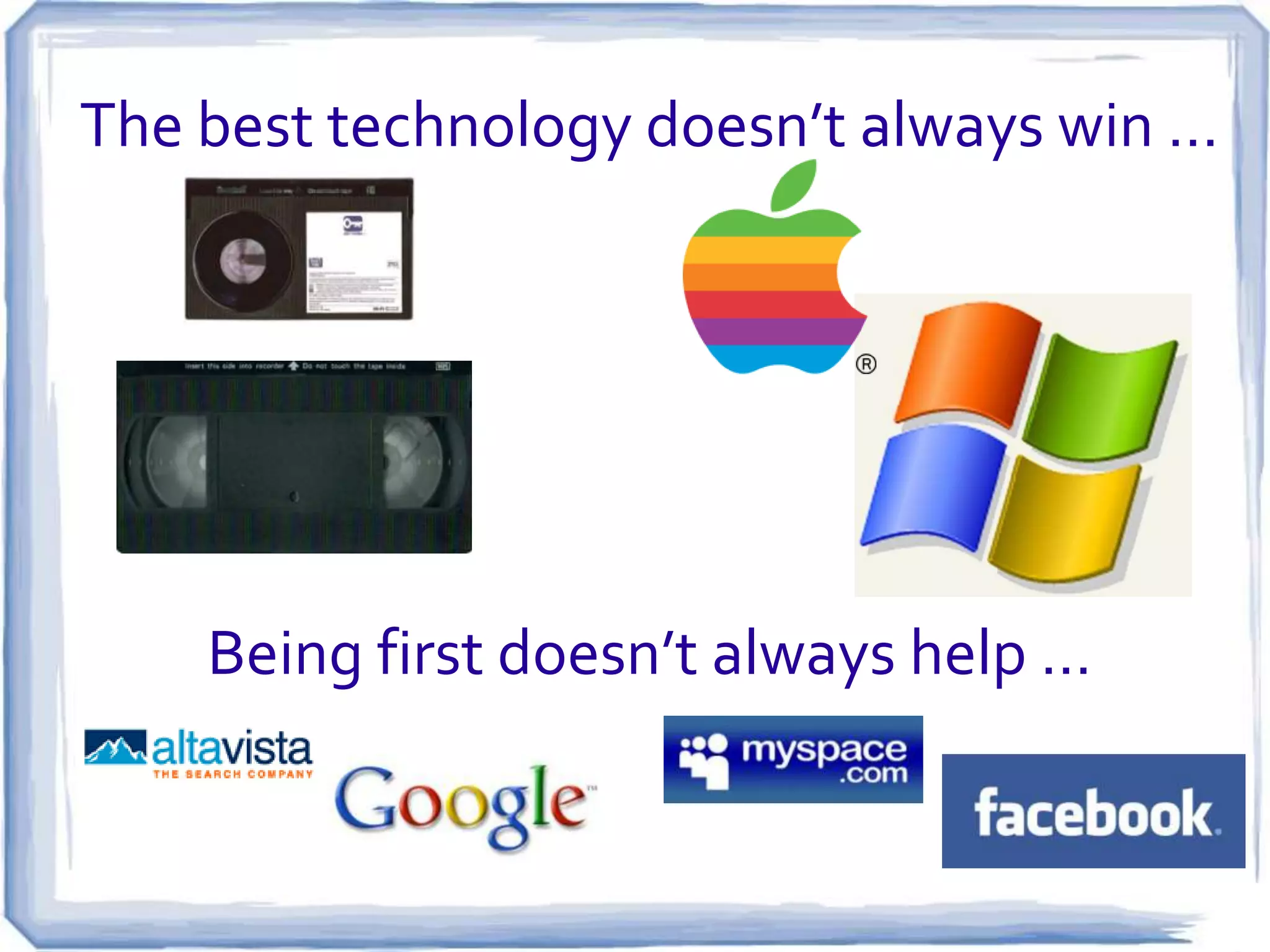
The best technology doesn’t always win …


    Being first doesn’t always help …
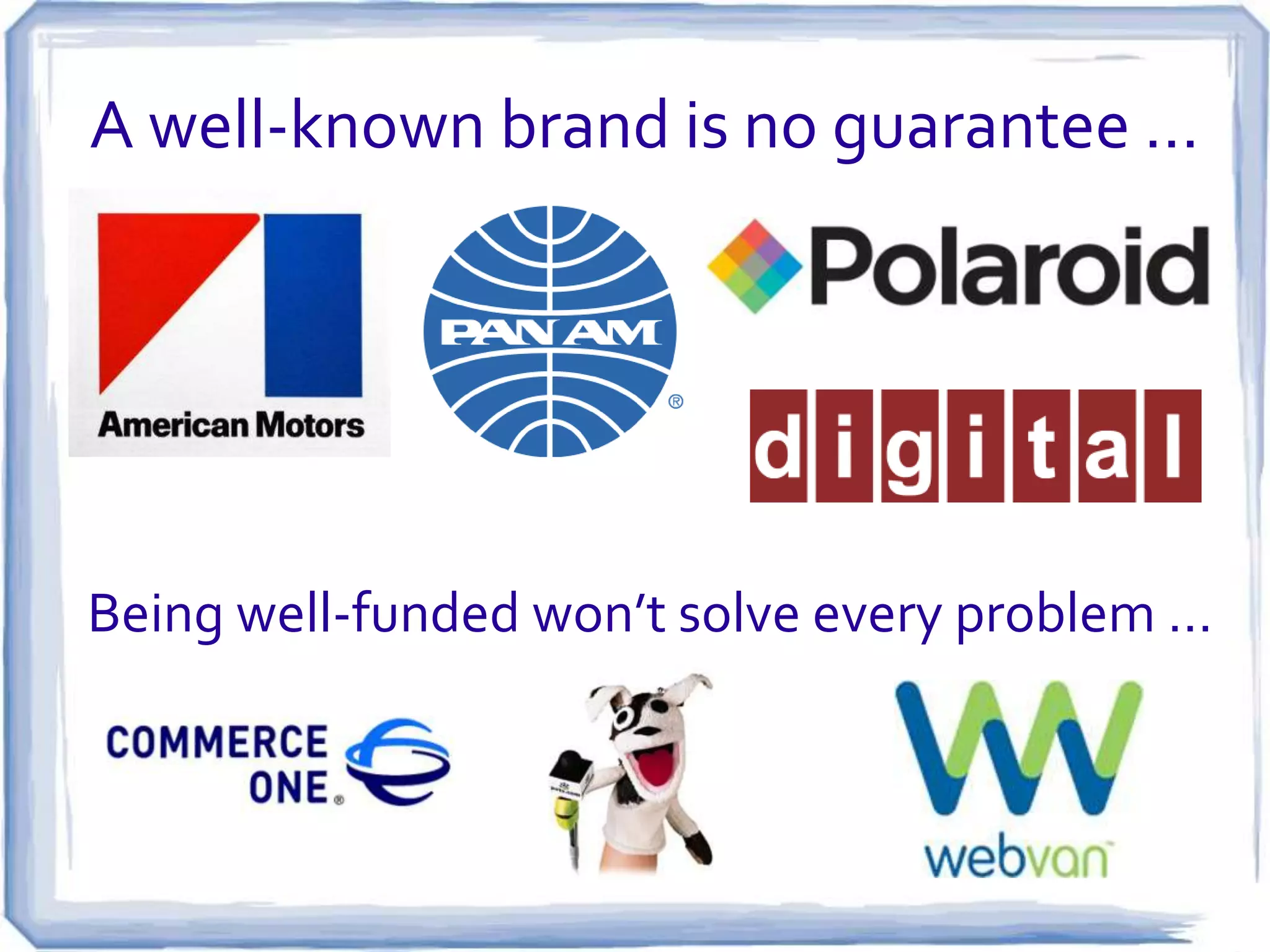
A well-known brand is no guarantee …


Being well-funded won’t solve every problem …
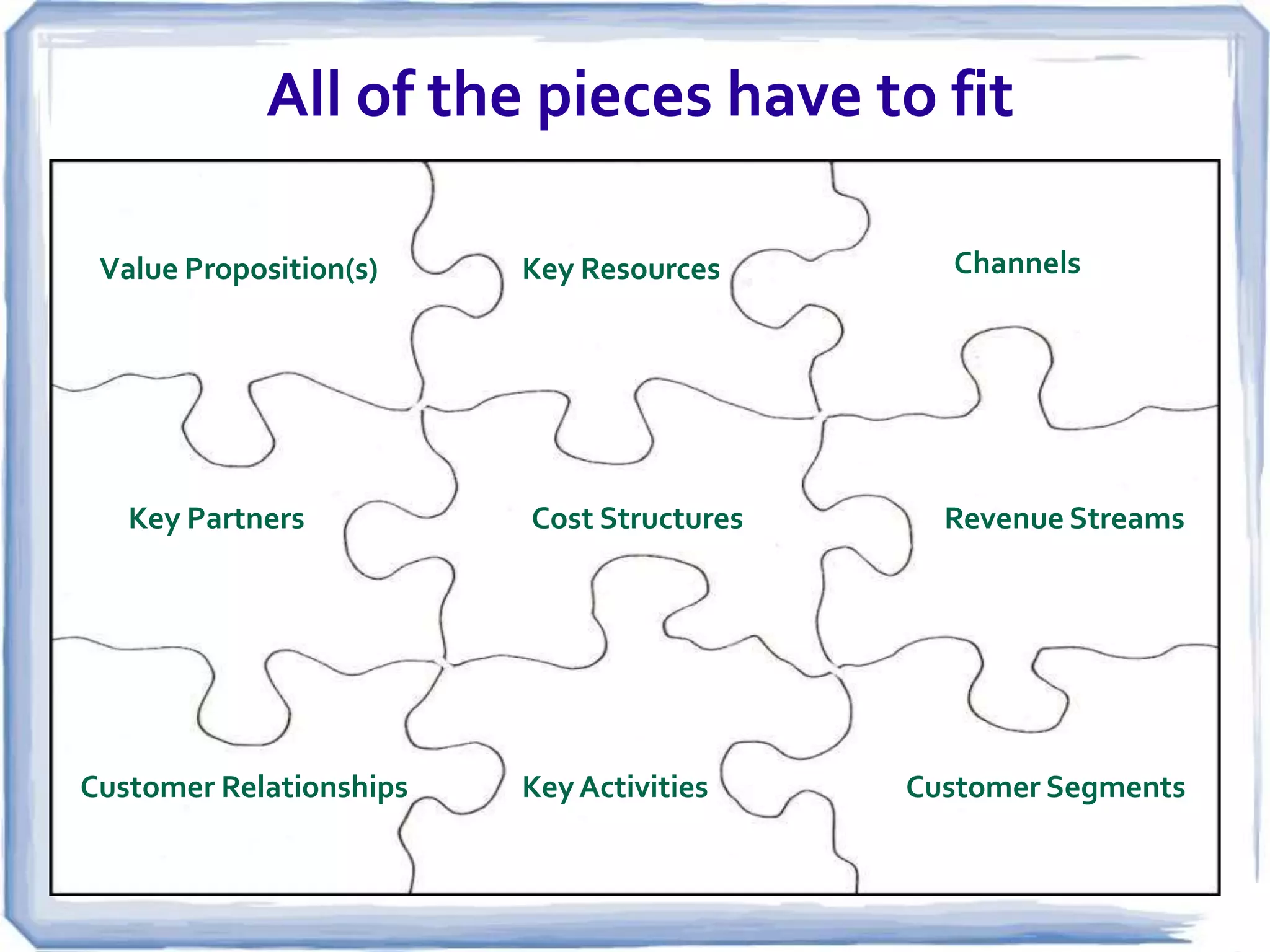
All of the pieces have to fit

 Value Proposition(s)    Key Resources       Channels


   Key Partners          Cost Structures     Revenue Streams


Customer Relationships   Key Activities    Customer Segments
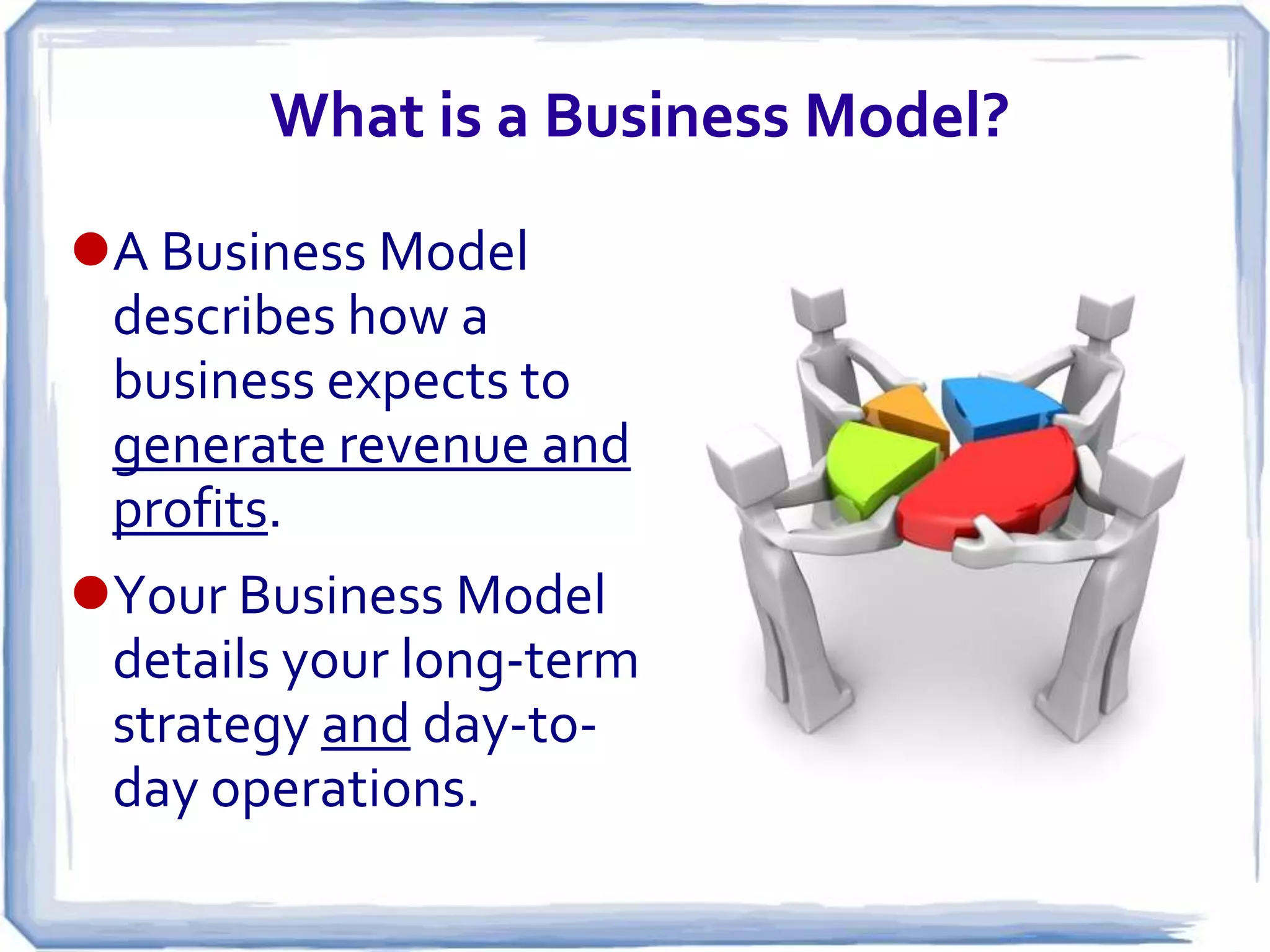
What is a Business Model?

A Business Model
 describes how a
 business expects to
 generate revenue and
 profits.
Your Business Model
 details your long-term
 strategy and day-to-
 day operations.
What is a Business Model?

A Business Model is an opportunity to
 innovate just as you do in your products.
A Business Model will evolve as you gain
 experience and as your market changes.
Like your products, it will probably take
 several versions to get your business
 model right.
You get better with practice.
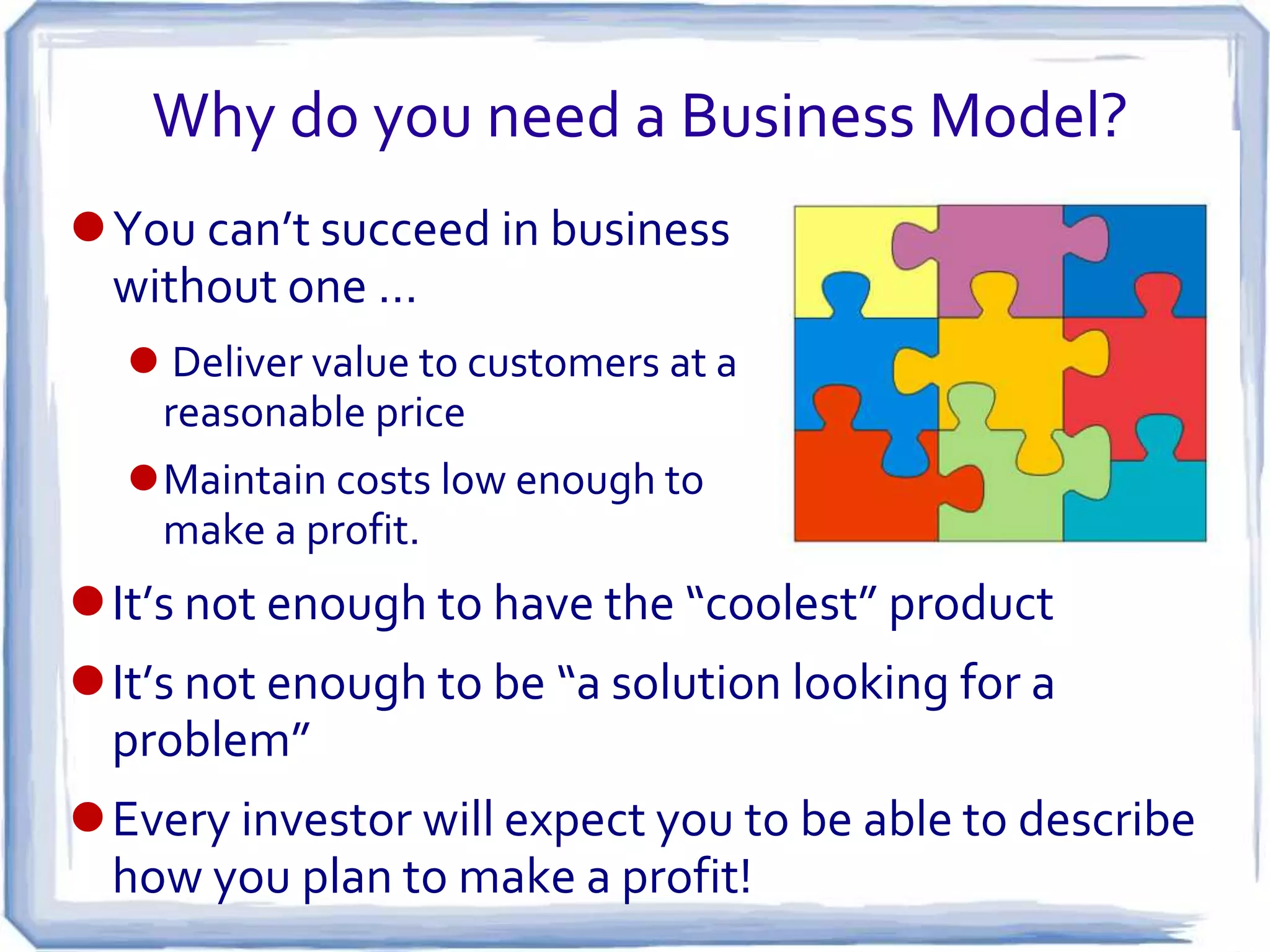
Why do you need a Business Model?
You can’t succeed in business
 without one …
   Deliver value to customers at a
   reasonable price
  Maintain costs low enough to
   make a profit.
It’s not enough to have the “coolest” product
It’s not enough to be “a solution looking for a
 problem”
Every investor will expect you to be able to describe
 how you plan to make a profit!
A Business Model
describes the rationale
of how an organization
 creates, delivers, and
    captures value
Without a viable
 business model, your
startup is just a dream.
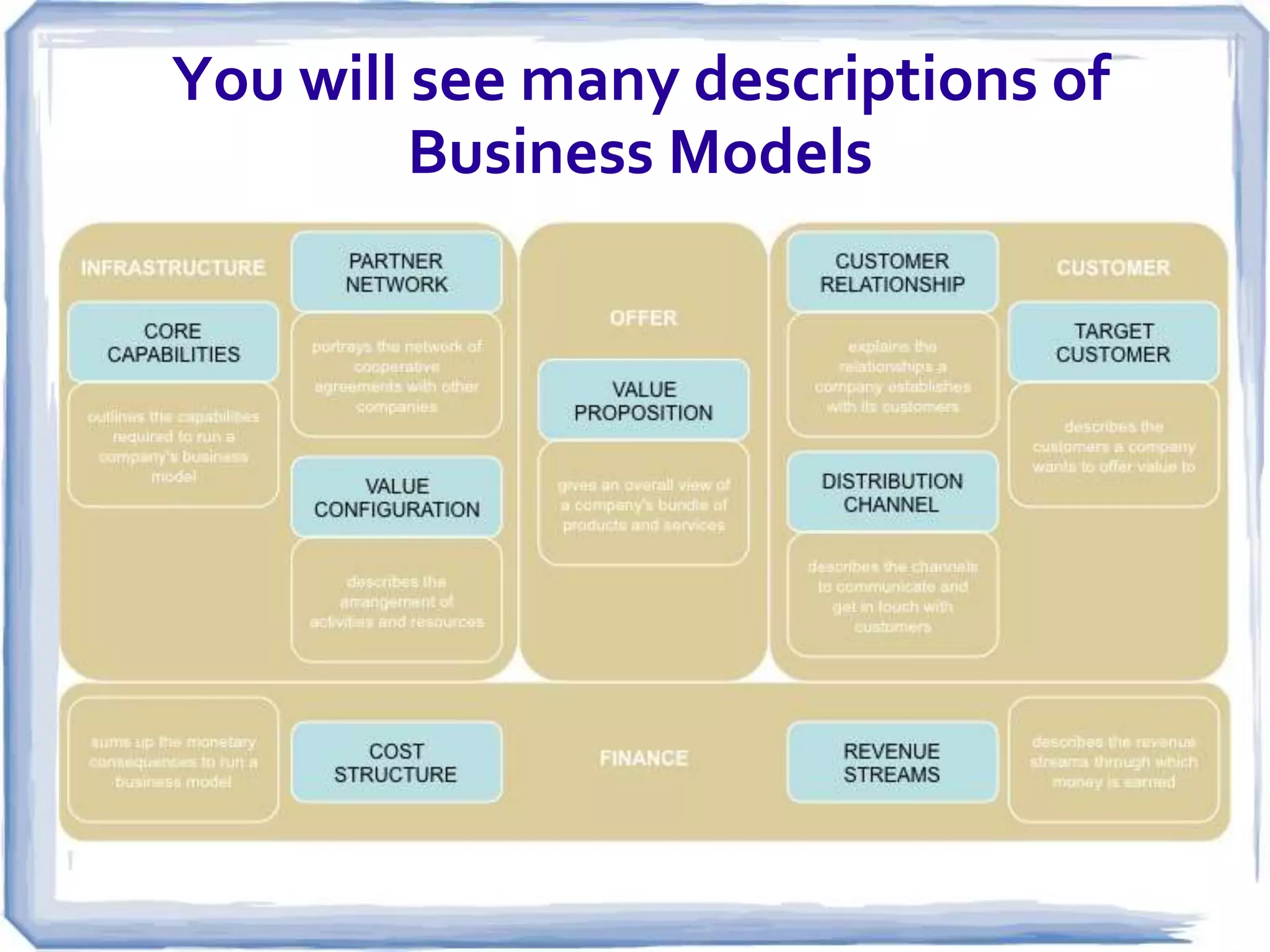
You will see many descriptions of
         Business Models
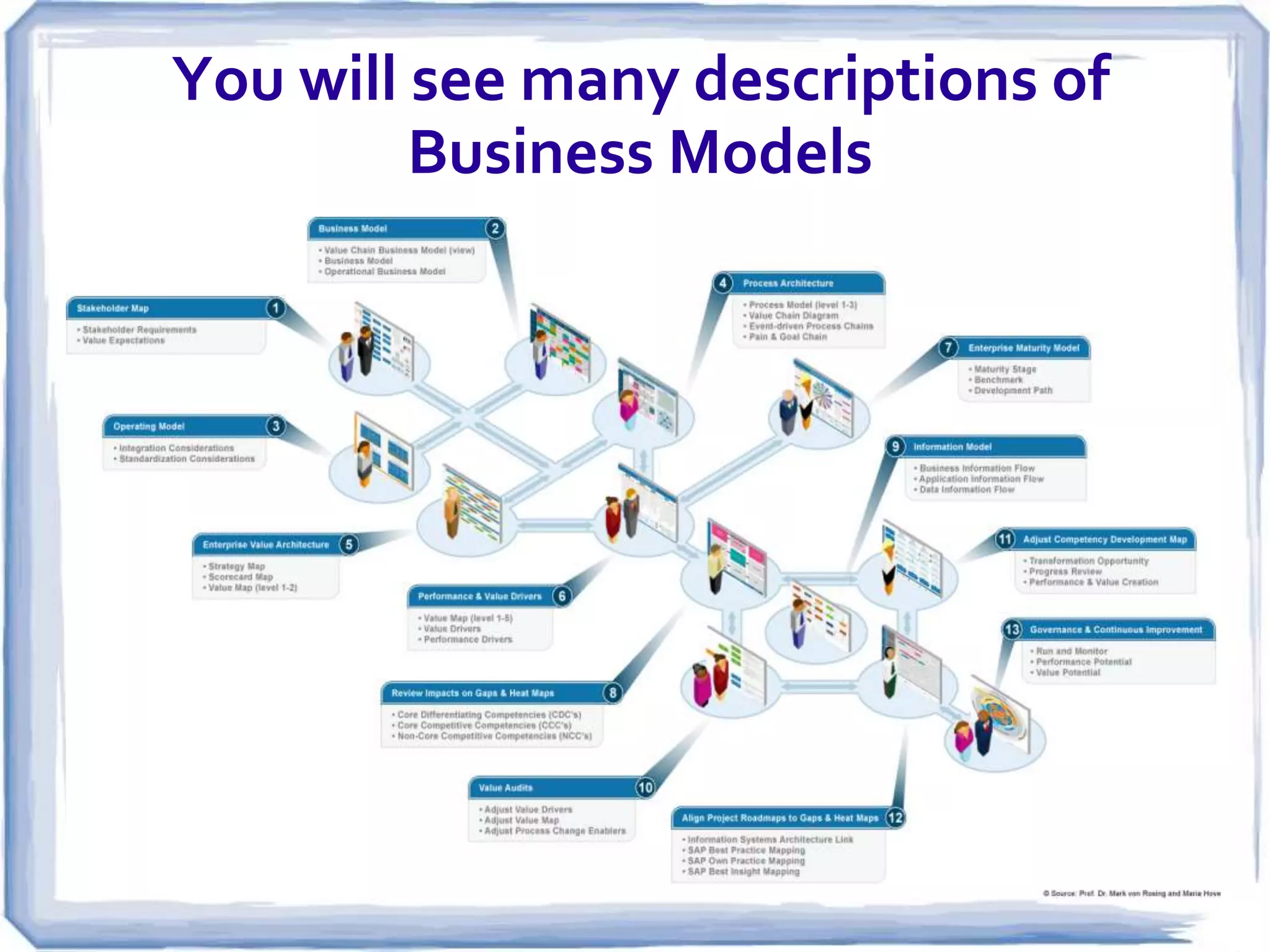
You will see many descriptions of
         Business Models
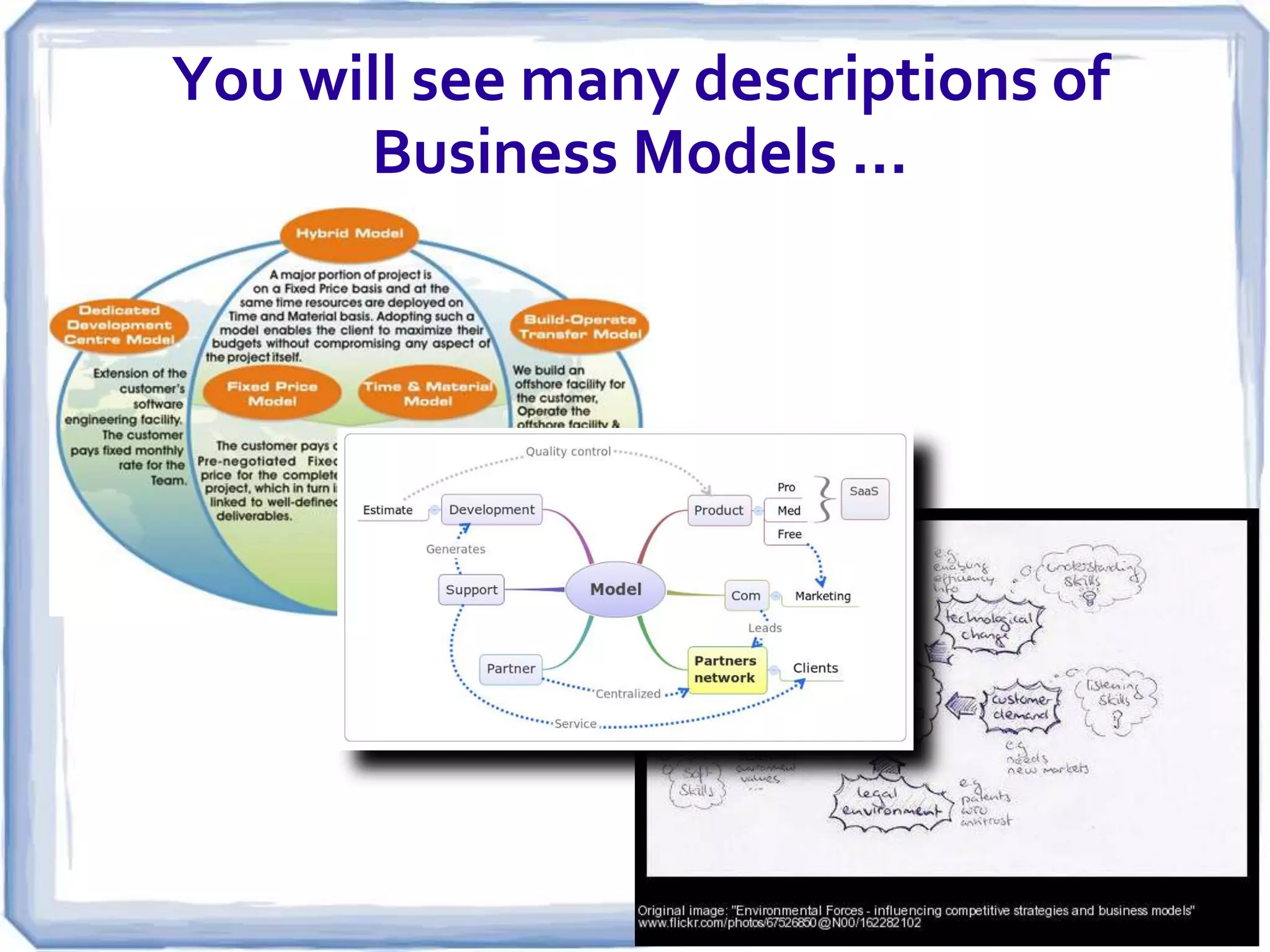
You will see many descriptions of
      Business Models …
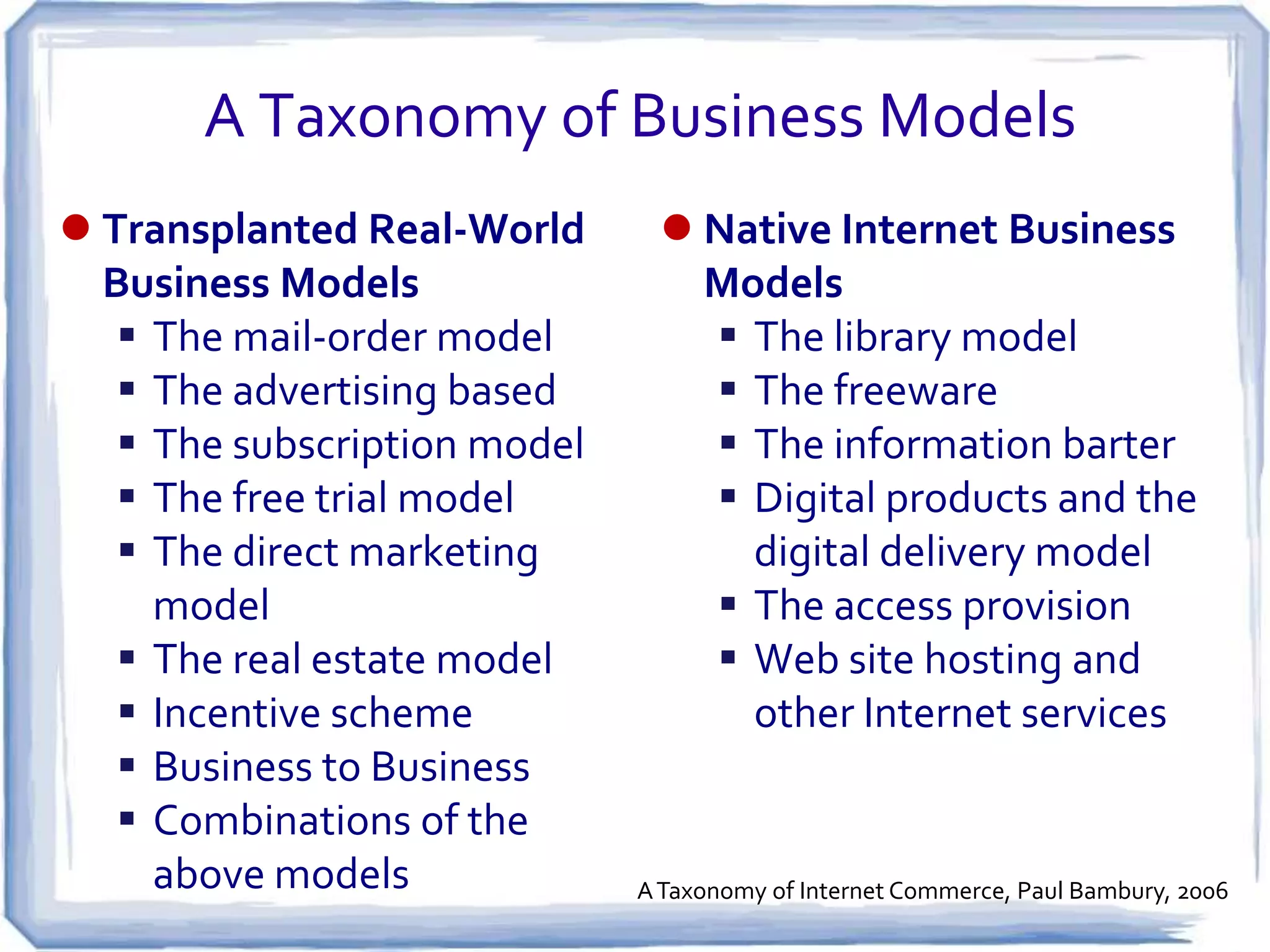
A Taxonomy of Business Models
 Transplanted Real-World        Native Internet Business
  Business Models                 Models
    The mail-order model          The library model
    The advertising based         The freeware
    The subscription model        The information barter
    The free trial model          Digital products and the
    The direct marketing           digital delivery model
     model                         The access provision
    The real estate model         Web site hosting and
    Incentive scheme               other Internet services
    Business to Business
    Combinations of the
     above models             A Taxonomy of Internet Commerce, Paul Bambury, 2006
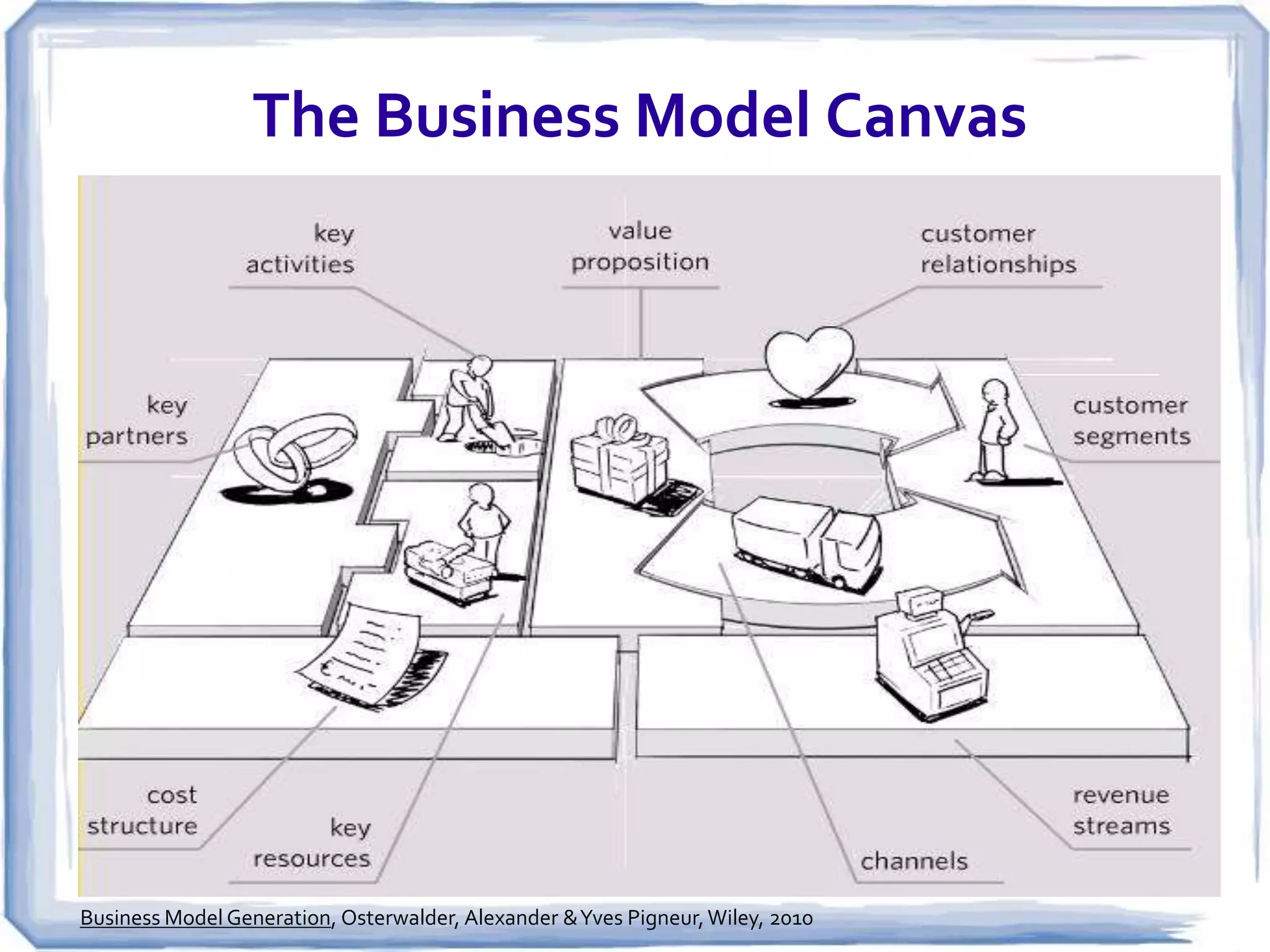
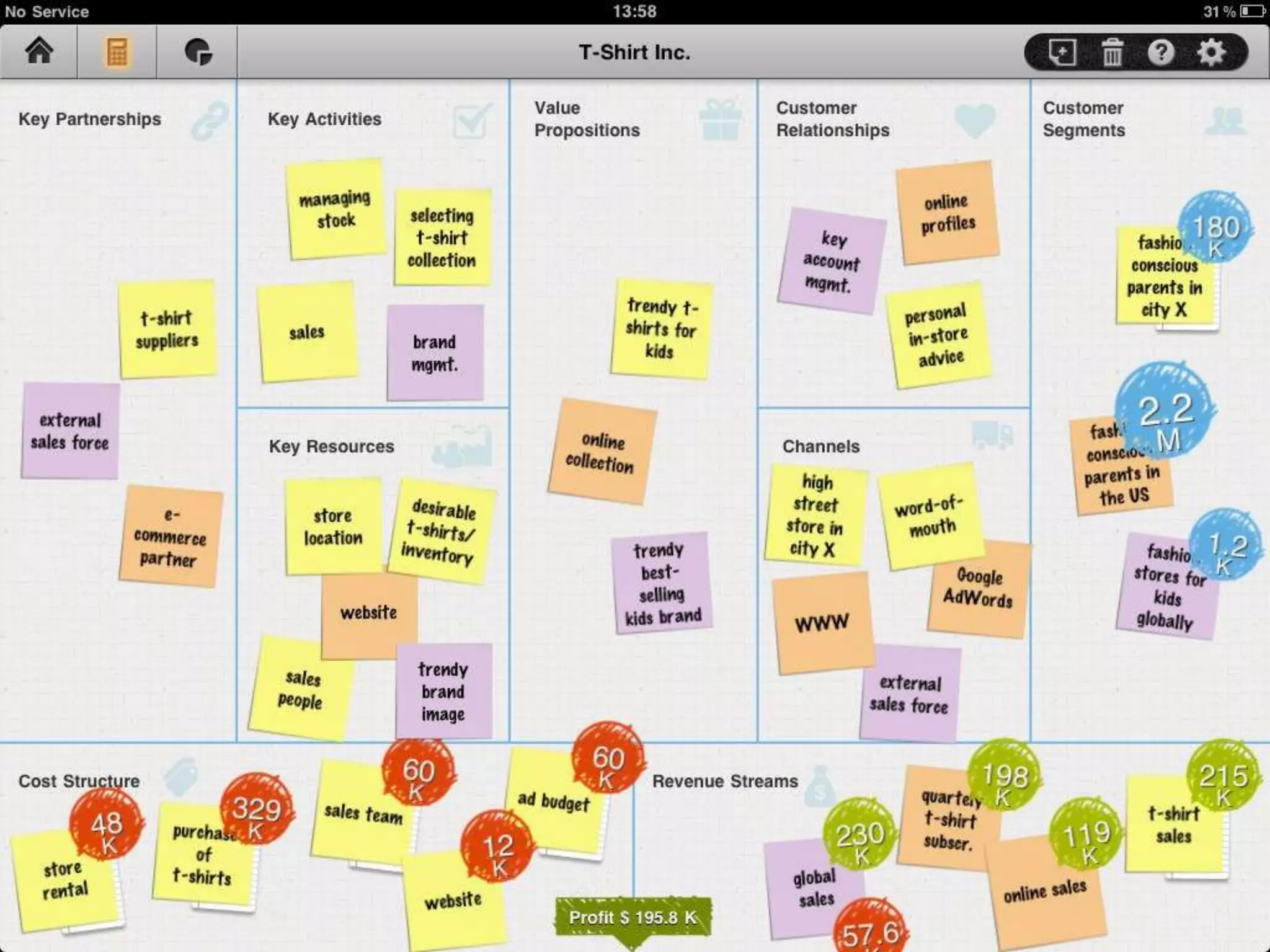
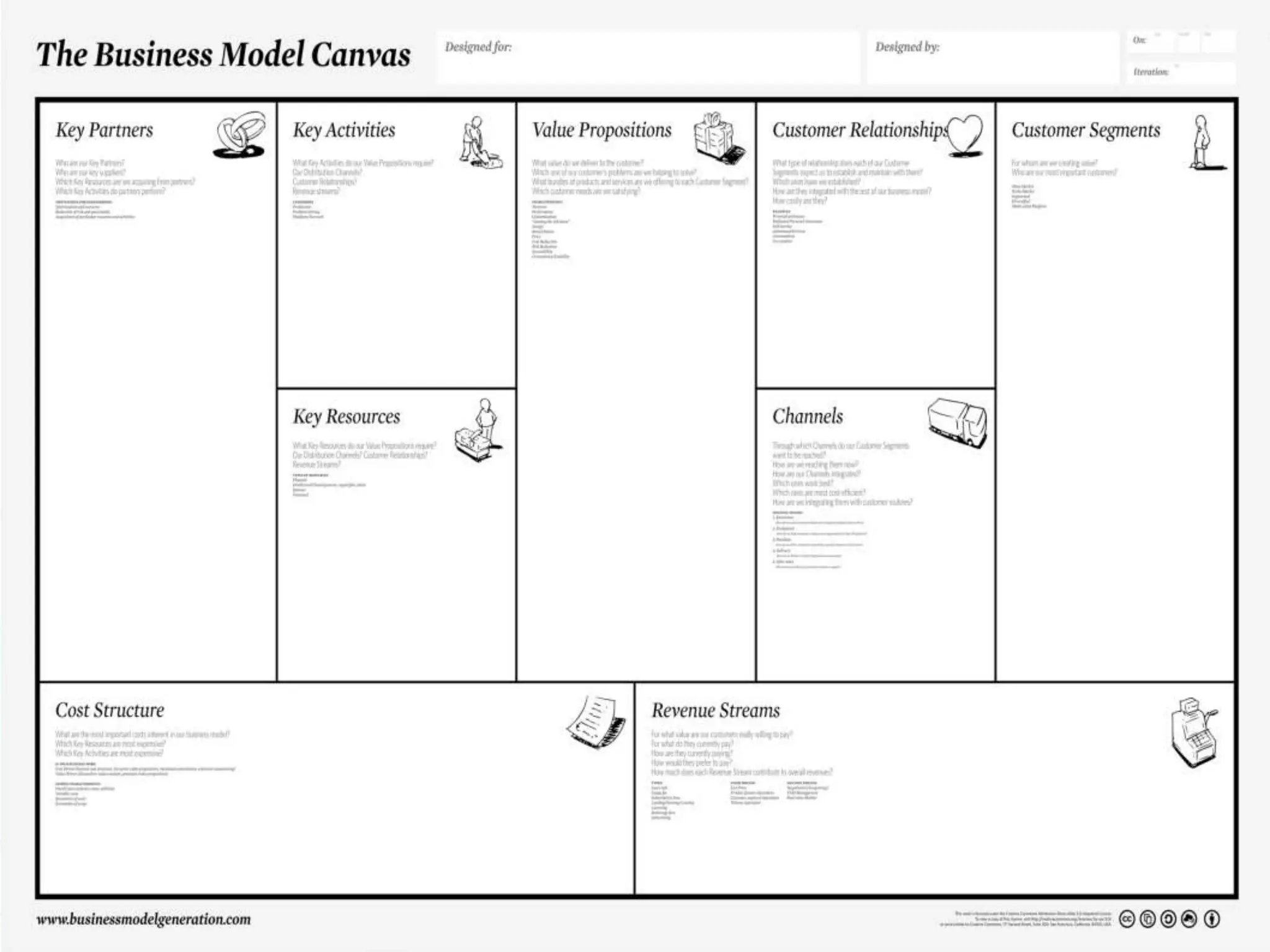
The Business Model Canvas


Business Model Generation, Osterwalder, Alexander & Yves Pigneur, Wiley, 2010
9 Elements of a Business Model
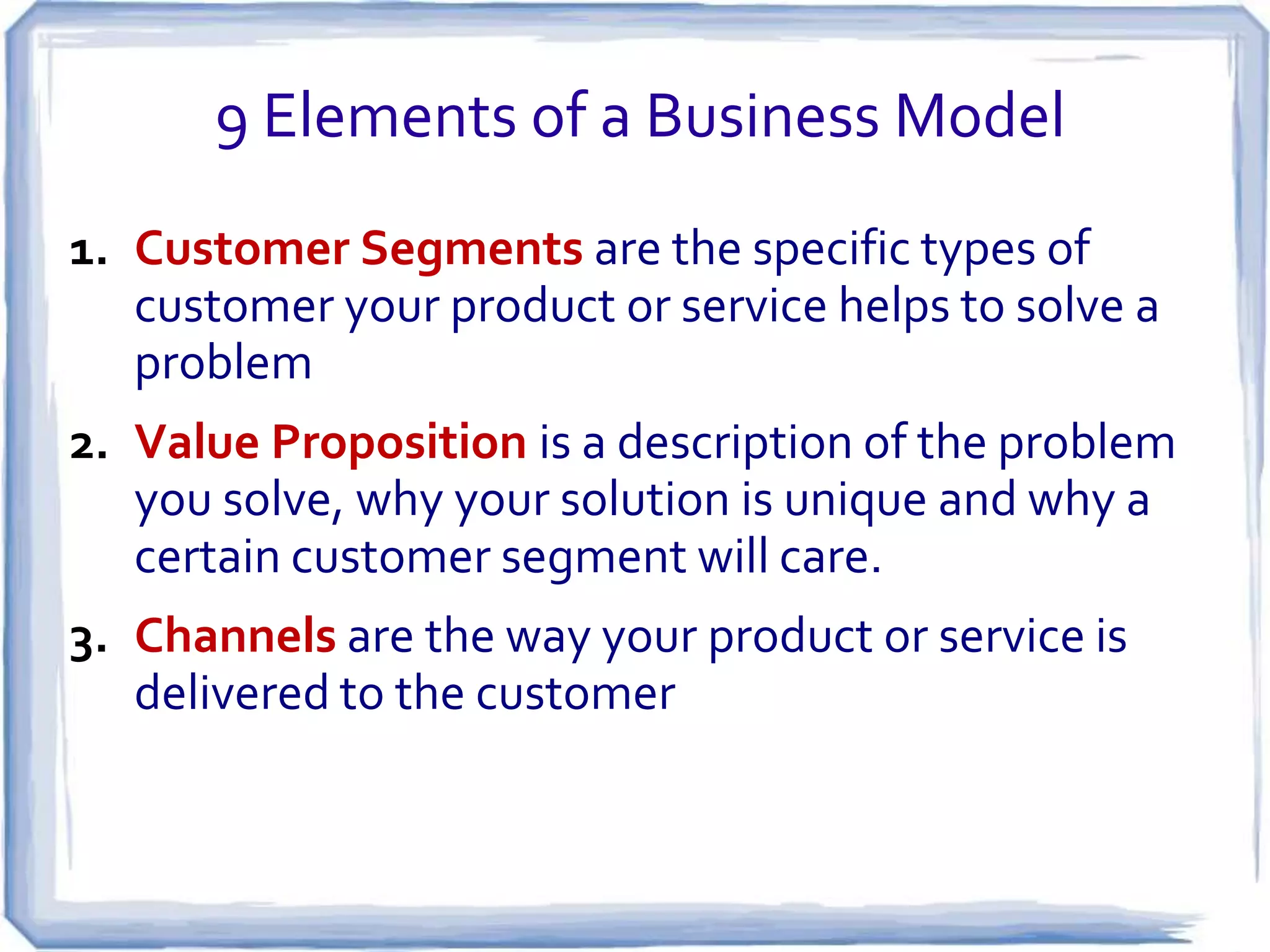
1. Customer Segments are the specific types of
   customer your product or service helps to solve a
   problem
2. Value Proposition is a description of the problem
   you solve, why your solution is unique and why a
   certain customer segment will care.
3. Channels are the way your product or service is
   delivered to the customer
9 Elements of a Business Model
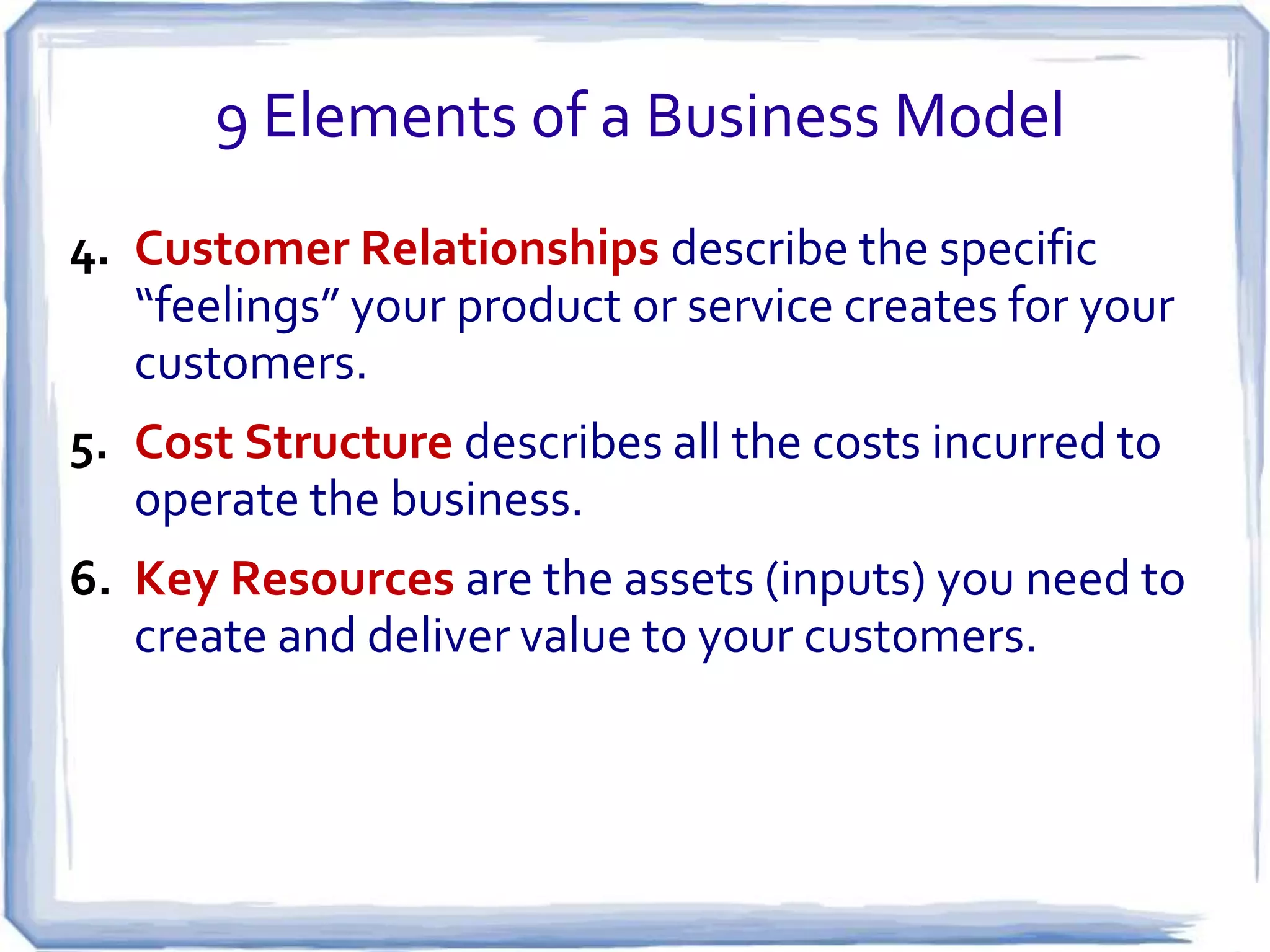
4. Customer Relationships describe the specific
   “feelings” your product or service creates for your
   customers.
5. Cost Structure describes all the costs incurred to
   operate the business.
6. Key Resources are the assets (inputs) you need to
   create and deliver value to your customers.
9 Elements of a Business Model
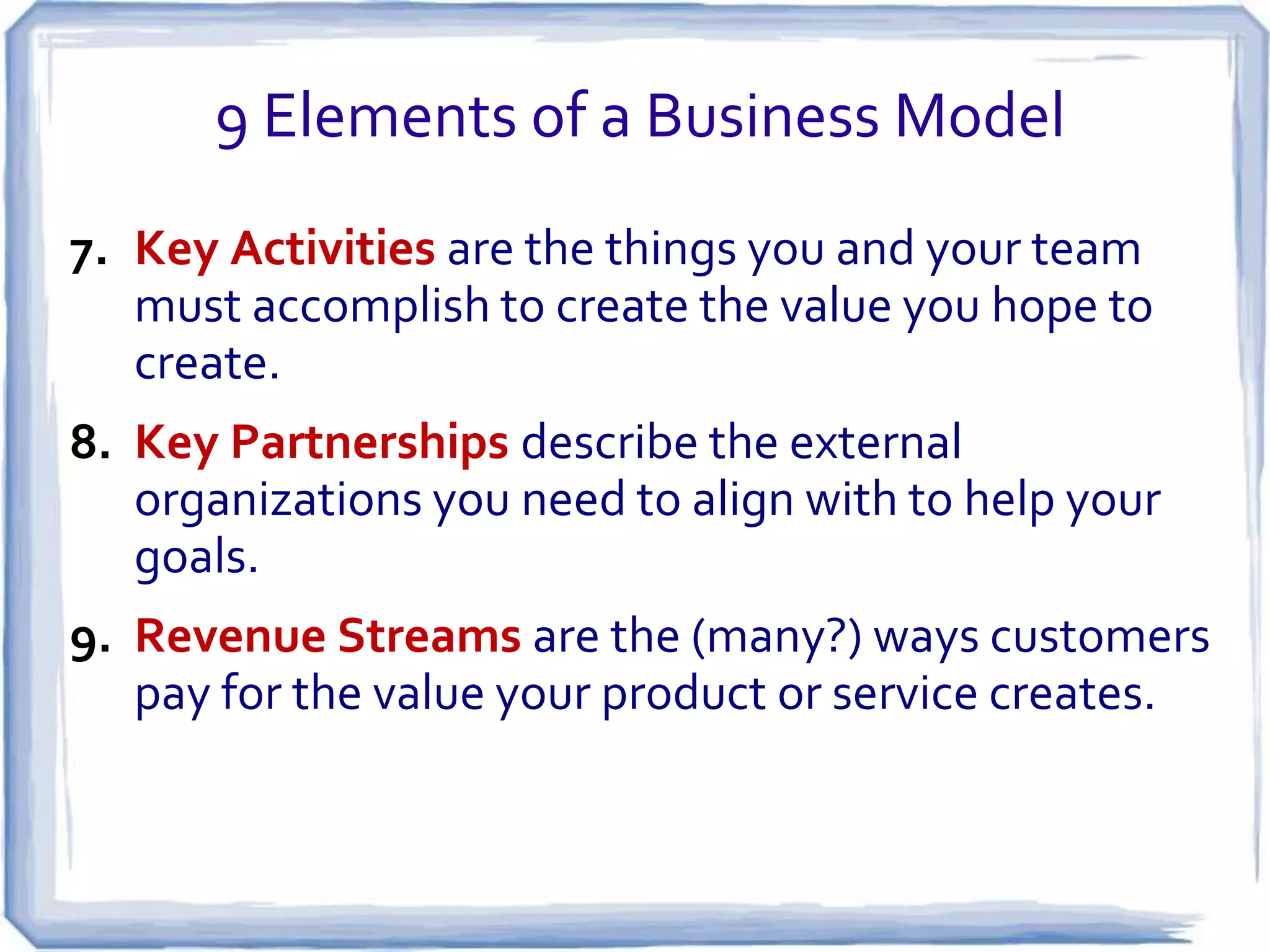
7. Key Activities are the things you and your team
   must accomplish to create the value you hope to
   create.
8. Key Partnerships describe the external
   organizations you need to align with to help your
   goals.
9. Revenue Streams are the (many?) ways customers
   pay for the value your product or service creates.
Focus – The Revenue Model
There are a (seemingly) infinite number of ways a company
can make money, but they really all fit into eight categories:

1. Unit sales: Sell a product or service to customers.
2. Advertising fees: Sell others the opportunities to distribute
   their message on your space.
3. Franchise fees: Sell the right for someone else to operate a
   version of your business.
4. Utility fees: Sell goods and services on a per-use or as-
   consumed basis.
Focus – The Revenue Model
5. Subscription fees: Charge a fixed price for access to services
   for a set period of time.
6. Transaction fees: Charge a fee for referring, enabling, or
   executing a transaction between parties.
7. Professional fees: Provide professional services on a time-
   and-materials contract.
8. License fees: Sell the rights to use intellectual property.
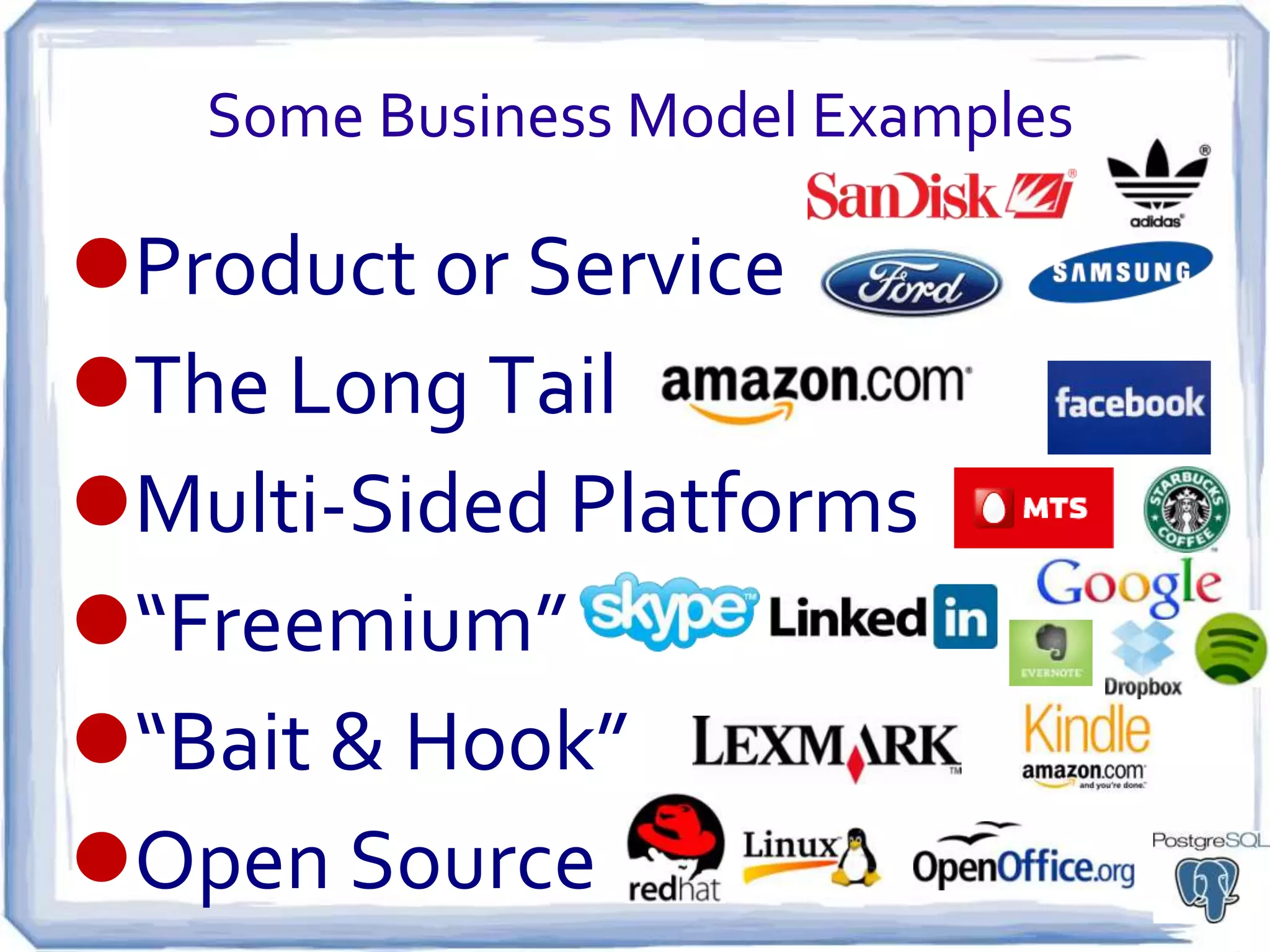
Some Business Model Examples

Product or Service
The Long Tail
Multi-Sided Platforms
“Freemium”
“Bait & Hook”
Open Source
You will see many descriptions of
         Business Models
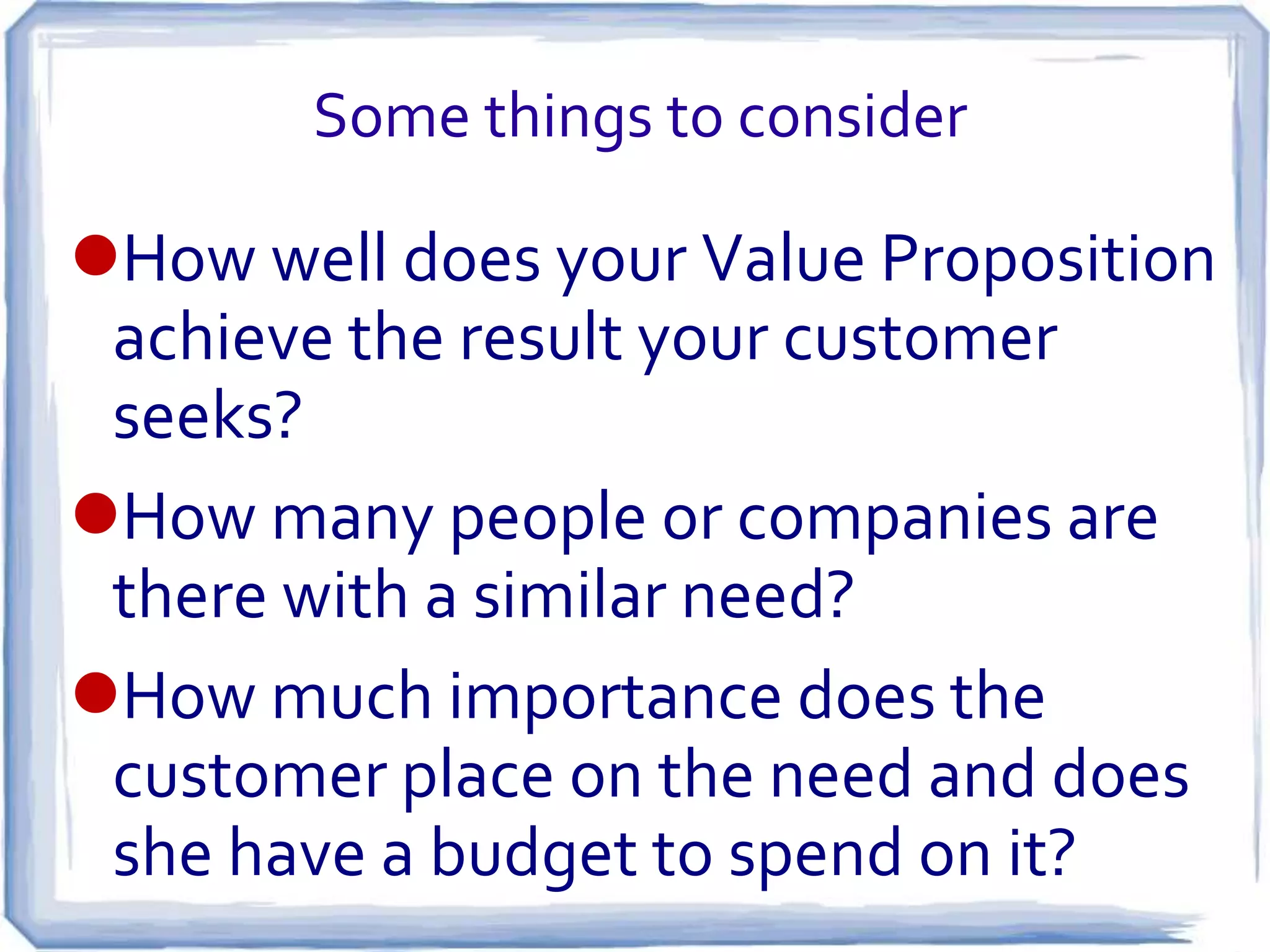
Some things to consider

How well does your Value Proposition
 achieve the result your customer
 seeks?
How many people or companies are
 there with a similar need?
How much importance does the
 customer place on the need and does
 she have a budget to spend on it?
Some Questions to Ask Yourself
 How much do switching costs prevent your customers
  from leaving?
 How scalable is your business model?
 Does your business model produce recurring revenues?
 Do you earn before you spend?
 How much do you get others to do the work?
 Does your business model provide built-in protection
  from competition?
 Is your business model based on a game changing cost
  structure?
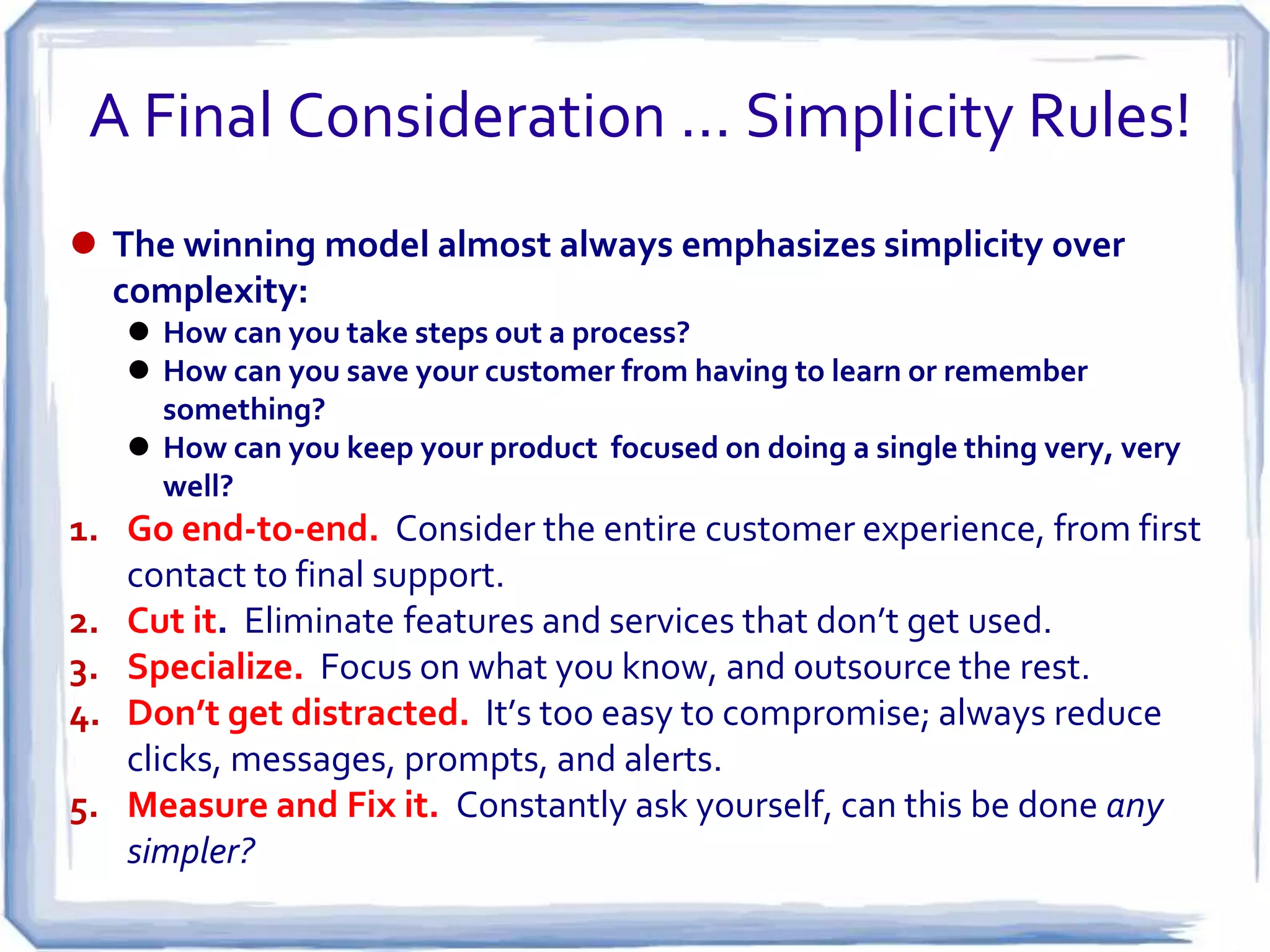
A Final Consideration … Simplicity Rules!
 The winning model almost always emphasizes simplicity over
  complexity:
    How can you take steps out a process?
    How can you save your customer from having to learn or remember
     something?
    How can you keep your product focused on doing a single thing very, very
     well?
1. Go end-to-end. Consider the entire customer experience, from first
   contact to final support.
2. Cut it. Eliminate features and services that don’t get used.
3. Specialize. Focus on what you know, and outsource the rest.
4. Don’t get distracted. It’s too easy to compromise; always reduce
   clicks, messages, prompts, and alerts.
5. Measure and Fix it. Constantly ask yourself, can this be done any
   simpler?
Questions?

HatchConf Business Model Workshop

  • 1.
    Crafting Your Business Model Marty Kaszubowski President, General Ideas
  • 2.
    The best technologydoesn’t always win … Being first doesn’t always help …
  • 3.
    A well-known brandis no guarantee … Being well-funded won’t solve every problem …
  • 4.
    All of thepieces have to fit Value Proposition(s) Key Resources Channels Key Partners Cost Structures Revenue Streams Customer Relationships Key Activities Customer Segments
  • 5.
    What is aBusiness Model? A Business Model describes how a business expects to generate revenue and profits. Your Business Model details your long-term strategy and day-to- day operations.
  • 6.
    What is aBusiness Model? A Business Model is an opportunity to innovate just as you do in your products. A Business Model will evolve as you gain experience and as your market changes. Like your products, it will probably take several versions to get your business model right. You get better with practice.
  • 7.
    Why do youneed a Business Model? You can’t succeed in business without one …  Deliver value to customers at a reasonable price Maintain costs low enough to make a profit. It’s not enough to have the “coolest” product It’s not enough to be “a solution looking for a problem” Every investor will expect you to be able to describe how you plan to make a profit!
  • 8.
    A Business Model describesthe rationale of how an organization creates, delivers, and captures value
  • 9.
    Without a viable business model, your startup is just a dream.
  • 10.
    You will seemany descriptions of Business Models
  • 11.
    You will seemany descriptions of Business Models
  • 12.
    You will seemany descriptions of Business Models …
  • 13.
    A Taxonomy ofBusiness Models  Transplanted Real-World  Native Internet Business Business Models Models  The mail-order model  The library model  The advertising based  The freeware  The subscription model  The information barter  The free trial model  Digital products and the  The direct marketing digital delivery model model  The access provision  The real estate model  Web site hosting and  Incentive scheme other Internet services  Business to Business  Combinations of the above models A Taxonomy of Internet Commerce, Paul Bambury, 2006
  • 14.
    The Business ModelCanvas Business Model Generation, Osterwalder, Alexander & Yves Pigneur, Wiley, 2010
  • 15.
    9 Elements ofa Business Model 1. Customer Segments are the specific types of customer your product or service helps to solve a problem 2. Value Proposition is a description of the problem you solve, why your solution is unique and why a certain customer segment will care. 3. Channels are the way your product or service is delivered to the customer
  • 16.
    9 Elements ofa Business Model 4. Customer Relationships describe the specific “feelings” your product or service creates for your customers. 5. Cost Structure describes all the costs incurred to operate the business. 6. Key Resources are the assets (inputs) you need to create and deliver value to your customers.
  • 17.
    9 Elements ofa Business Model 7. Key Activities are the things you and your team must accomplish to create the value you hope to create. 8. Key Partnerships describe the external organizations you need to align with to help your goals. 9. Revenue Streams are the (many?) ways customers pay for the value your product or service creates.
  • 18.
    Focus – TheRevenue Model There are a (seemingly) infinite number of ways a company can make money, but they really all fit into eight categories: 1. Unit sales: Sell a product or service to customers. 2. Advertising fees: Sell others the opportunities to distribute their message on your space. 3. Franchise fees: Sell the right for someone else to operate a version of your business. 4. Utility fees: Sell goods and services on a per-use or as- consumed basis.
  • 19.
    Focus – TheRevenue Model 5. Subscription fees: Charge a fixed price for access to services for a set period of time. 6. Transaction fees: Charge a fee for referring, enabling, or executing a transaction between parties. 7. Professional fees: Provide professional services on a time- and-materials contract. 8. License fees: Sell the rights to use intellectual property.
  • 20.
    Some Business ModelExamples Product or Service The Long Tail Multi-Sided Platforms “Freemium” “Bait & Hook” Open Source
  • 21.
    You will seemany descriptions of Business Models
  • 24.
    Some things toconsider How well does your Value Proposition achieve the result your customer seeks? How many people or companies are there with a similar need? How much importance does the customer place on the need and does she have a budget to spend on it?
  • 25.
    Some Questions toAsk Yourself  How much do switching costs prevent your customers from leaving?  How scalable is your business model?  Does your business model produce recurring revenues?  Do you earn before you spend?  How much do you get others to do the work?  Does your business model provide built-in protection from competition?  Is your business model based on a game changing cost structure?
  • 26.
    A Final Consideration… Simplicity Rules!  The winning model almost always emphasizes simplicity over complexity:  How can you take steps out a process?  How can you save your customer from having to learn or remember something?  How can you keep your product focused on doing a single thing very, very well? 1. Go end-to-end. Consider the entire customer experience, from first contact to final support. 2. Cut it. Eliminate features and services that don’t get used. 3. Specialize. Focus on what you know, and outsource the rest. 4. Don’t get distracted. It’s too easy to compromise; always reduce clicks, messages, prompts, and alerts. 5. Measure and Fix it. Constantly ask yourself, can this be done any simpler?
  • 27.