























Business Model
(Ob-)Ses sion
What we are talking about
today…
What we are NOT talking
about today…
What else is important to
know?
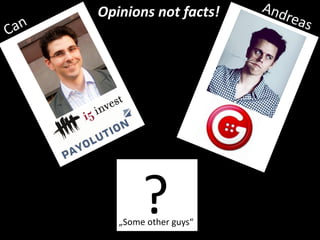
Opinions not facts!


        ?
   „Some other guys“
What is a Business Model?
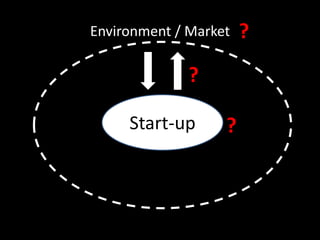
Environment / Market   ?
              ?

     Start-up      ?
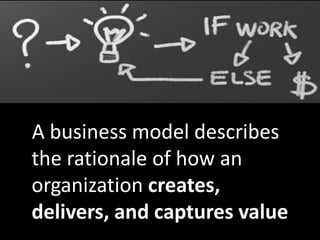
A business model describes
the rationale of how an
organization creates,
delivers, and captures value
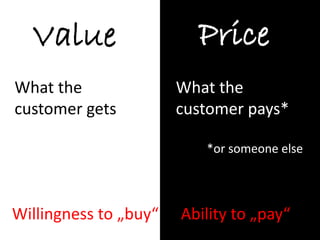
Value                  Price
What the               What the
customer gets          customer pays*

                          *or someone else


Willingness to „buy“   Ability to „pay“
How does your business
    make money?
Why you should personally
         care!
DEADPOOL
Let‘s get started…
Right idea, right hands, right time = Luck
F. O. C. U. S.
„If something is everything, it is nothing“

   If you try to do everything, you will
   probably end up achieving nothing
Back to business (model)
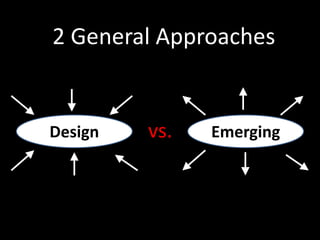
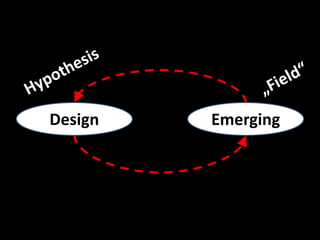
2 General Approaches


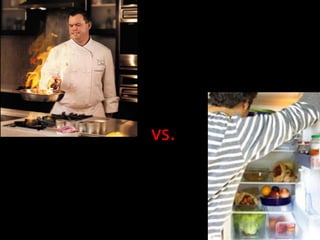
Design   vs.   Emerging
vs.
Design   Emerging
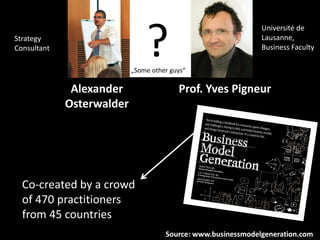
?
                                                              Université de
Strategy                                                      Lausanne,
Consultant                                                    Business Faculty

                           „Some other guys“

              Alexander                  Prof. Yves Pigneur
             Osterwalder


  Co-created by a crowd
  of 470 practitioners
  from 45 countries
                                     Source: www.businessmodelgeneration.com
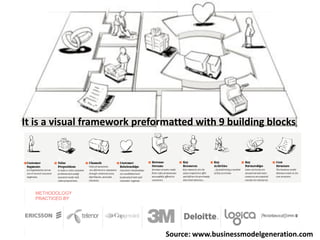
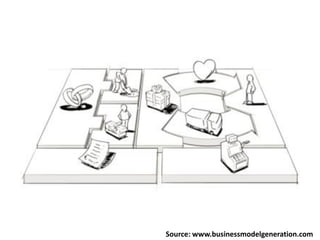
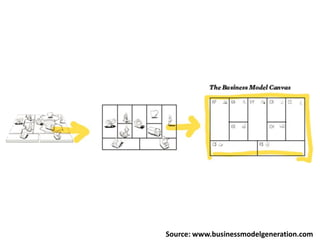
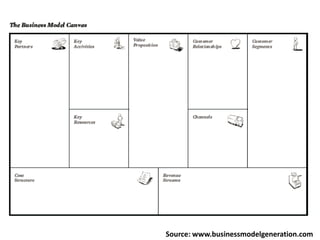
It is a visual framework preformatted with 9 building blocks


                               Source: www.businessmodelgeneration.com
The 9 Blocks
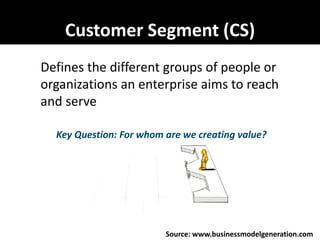
Customer Segment (CS)
Defines the different groups of people or
organizations an enterprise aims to reach
and serve

  Key Question: For whom are we creating value?


                         Source: www.businessmodelgeneration.com
The cinema is little more than a
fad. It’s canned drama. What
audiences really want to see is
flesh and blood on the stage.”

               – Charlie Chaplin
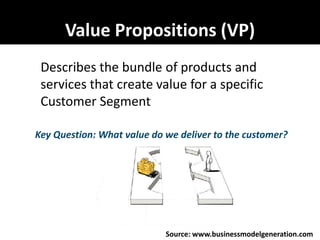
Value Propositions (VP)
 Describes the bundle of products and
 services that create value for a specific
 Customer Segment

Key Question: What value do we deliver to the customer?


                            Source: www.businessmodelgeneration.com
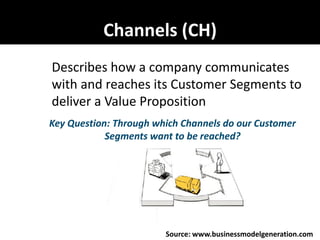
Channels (CH)
Describes how a company communicates
with and reaches its Customer Segments to
deliver a Value Proposition
Key Question: Through which Channels do our Customer
            Segments want to be reached?


                        Source: www.businessmodelgeneration.com
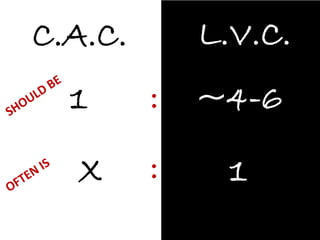
C.A.C.       L.V.C.
  1      :   ~4-6

  X      :     1
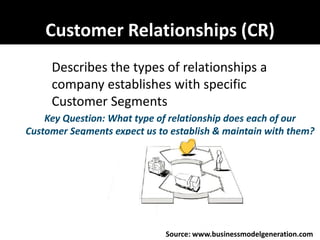
Customer Relationships (CR)
     Describes the types of relationships a
     company establishes with specific
     Customer Segments
    Key Question: What type of relationship does each of our
Customer Segments expect us to establish & maintain with them?


                              Source: www.businessmodelgeneration.com
Revenue Streams (RS)
    Represents the cash a company generates
    from each Customer Segment (revenues –
    costs = earnings)
Key Question: For what value are our customers really willing to
                            pay?


                                Source: www.businessmodelgeneration.com
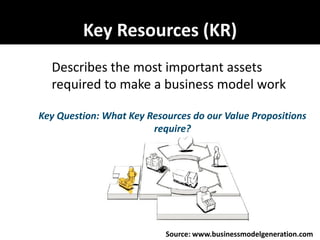
Key Resources (KR)
  Describes the most important assets
  required to make a business model work

Key Question: What Key Resources do our Value Propositions
                        require?


                           Source: www.businessmodelgeneration.com
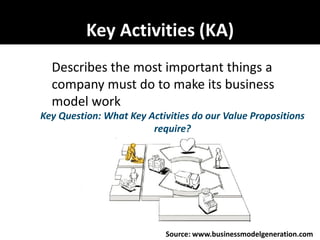
Key Activities (KA)
  Describes the most important things a
  company must do to make its business
  model work
Key Question: What Key Activities do our Value Propositions
                        require?


                           Source: www.businessmodelgeneration.com
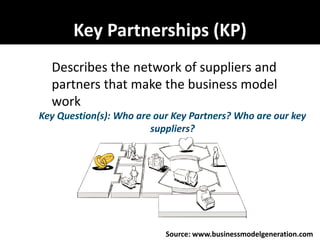
Key Partnerships (KP)
  Describes the network of suppliers and
  partners that make the business model
  work
Key Question(s): Who are our Key Partners? Who are our key
                        suppliers?


                           Source: www.businessmodelgeneration.com
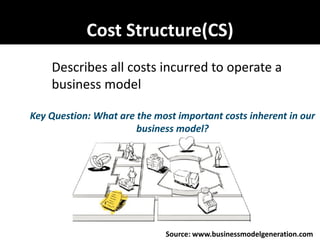
Cost Structure(CS)
    Describes all costs incurred to operate a
    business model

Key Question: What are the most important costs inherent in our
                       business model?


                              Source: www.businessmodelgeneration.com
It wanted to be the „next Facebook“, before Facebook even existed
Source: www.businessmodelgeneration.com
Prishtina,
5.6. 2010
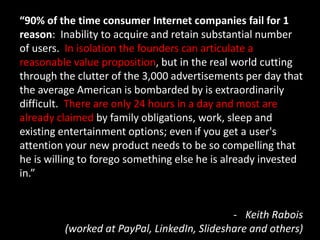
“90% of the time consumer Internet companies fail for 1
reason: Inability to acquire and retain substantial number
of users. In isolation the founders can articulate a
reasonable value proposition, but in the real world cutting
through the clutter of the 3,000 advertisements per day that
the average American is bombarded by is extraordinarily
difficult. There are only 24 hours in a day and most are
already claimed by family obligations, work, sleep and
existing entertainment options; even if you get a user's
attention your new product needs to be so compelling that
he is willing to forego something else he is already invested
in.”


                                             - Keith Rabois
         (worked at PayPal, LinkedIn, Slideshare and others)
Generate cash flows a.s.a.p.

                          „Traction“ & Speed = key

Keep „burn rate“ low


                               (Pre-)Seed: bottom-up

Think but don‘t over-analyze

                         Find „wrong paths“ quickly
„Falor, ergo sum“

I err, therefore I am

              - St. Augustine
Hopefully
you now
understahd
why I did
chose the
failure
approach
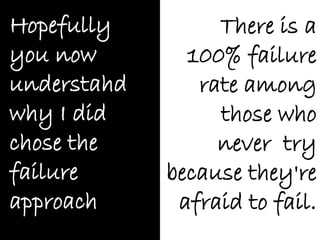
Hopefully         There is a
you now        100% failure
understahd      rate among
why I did         those who
chose the         never try
failure      because they're
approach      afraid to fail.
Maybe you
now also
understood
why the colour
theme is black
(death) and
white (life)
The single most important
trait of entrepreneurs?
The single most important
trait of entrepreneurs?


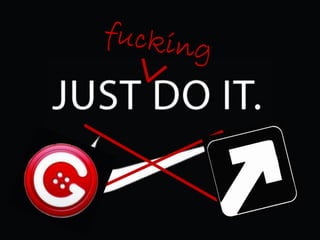
         THEY TAKE ACTION!
Business Model Canvas session @ STARTup Live Vienna #5

Business Model Canvas session @ STARTup Live Vienna #5

  • 1.
  • 2.
    What we aretalking about today…
  • 4.
    What we areNOT talking about today…
  • 6.
    What else isimportant to know?
  • 7.
    Opinions not facts! ? „Some other guys“
  • 8.
    What is aBusiness Model?
  • 10.
    Environment / Market ? ? Start-up ?
  • 11.
    A business modeldescribes the rationale of how an organization creates, delivers, and captures value
  • 12.
    Value Price What the What the customer gets customer pays* *or someone else Willingness to „buy“ Ability to „pay“
  • 13.
    How does yourbusiness make money?
  • 14.
    Why you shouldpersonally care!
  • 16.
  • 17.
  • 21.
    Right idea, righthands, right time = Luck
  • 22.
    F. O. C.U. S. „If something is everything, it is nothing“ If you try to do everything, you will probably end up achieving nothing
  • 23.
  • 24.
  • 25.
  • 26.
    Design Emerging
  • 27.
    ? Université de Strategy Lausanne, Consultant Business Faculty „Some other guys“ Alexander Prof. Yves Pigneur Osterwalder Co-created by a crowd of 470 practitioners from 45 countries Source: www.businessmodelgeneration.com
  • 28.
    It is avisual framework preformatted with 9 building blocks Source: www.businessmodelgeneration.com
  • 30.
  • 31.
    Customer Segment (CS) Definesthe different groups of people or organizations an enterprise aims to reach and serve Key Question: For whom are we creating value? Source: www.businessmodelgeneration.com
  • 33.
    The cinema islittle more than a fad. It’s canned drama. What audiences really want to see is flesh and blood on the stage.” – Charlie Chaplin
  • 34.
    Value Propositions (VP) Describes the bundle of products and services that create value for a specific Customer Segment Key Question: What value do we deliver to the customer? Source: www.businessmodelgeneration.com
  • 36.
    Channels (CH) Describes howa company communicates with and reaches its Customer Segments to deliver a Value Proposition Key Question: Through which Channels do our Customer Segments want to be reached? Source: www.businessmodelgeneration.com
  • 38.
    C.A.C. L.V.C. 1 : ~4-6 X : 1
  • 39.
    Customer Relationships (CR) Describes the types of relationships a company establishes with specific Customer Segments Key Question: What type of relationship does each of our Customer Segments expect us to establish & maintain with them? Source: www.businessmodelgeneration.com
  • 41.
    Revenue Streams (RS) Represents the cash a company generates from each Customer Segment (revenues – costs = earnings) Key Question: For what value are our customers really willing to pay? Source: www.businessmodelgeneration.com
  • 43.
    Key Resources (KR) Describes the most important assets required to make a business model work Key Question: What Key Resources do our Value Propositions require? Source: www.businessmodelgeneration.com
  • 45.
    Key Activities (KA) Describes the most important things a company must do to make its business model work Key Question: What Key Activities do our Value Propositions require? Source: www.businessmodelgeneration.com
  • 47.
    Key Partnerships (KP) Describes the network of suppliers and partners that make the business model work Key Question(s): Who are our Key Partners? Who are our key suppliers? Source: www.businessmodelgeneration.com
  • 49.
    Cost Structure(CS) Describes all costs incurred to operate a business model Key Question: What are the most important costs inherent in our business model? Source: www.businessmodelgeneration.com
  • 50.
    It wanted tobe the „next Facebook“, before Facebook even existed
  • 51.
  • 52.
  • 53.
  • 54.
  • 55.
  • 57.
    “90% of thetime consumer Internet companies fail for 1 reason: Inability to acquire and retain substantial number of users. In isolation the founders can articulate a reasonable value proposition, but in the real world cutting through the clutter of the 3,000 advertisements per day that the average American is bombarded by is extraordinarily difficult. There are only 24 hours in a day and most are already claimed by family obligations, work, sleep and existing entertainment options; even if you get a user's attention your new product needs to be so compelling that he is willing to forego something else he is already invested in.” - Keith Rabois (worked at PayPal, LinkedIn, Slideshare and others)
  • 58.
    Generate cash flowsa.s.a.p. „Traction“ & Speed = key Keep „burn rate“ low (Pre-)Seed: bottom-up Think but don‘t over-analyze Find „wrong paths“ quickly
  • 59.
    „Falor, ergo sum“ Ierr, therefore I am - St. Augustine
  • 61.
    Hopefully you now understahd why Idid chose the failure approach
  • 62.
    Hopefully There is a you now 100% failure understahd rate among why I did those who chose the never try failure because they're approach afraid to fail.
  • 63.
    Maybe you now also understood whythe colour theme is black (death) and white (life)
  • 64.
    The single mostimportant trait of entrepreneurs?
  • 65.
    The single mostimportant trait of entrepreneurs? THEY TAKE ACTION!