Morten Gade
     ITU Concept Development with Industry, Feb 15


Business
Models
Today, in two parts
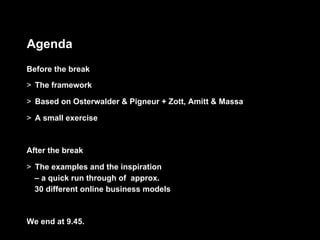
Agenda
Before the break
>  The framework

>  Based on Osterwalder & Pigneur + Zott, Amitt & Massa

>  A small exercise


After the break

>  The examples and the inspiration
   – a quick run through of approx.
   30 different online business models


We end at 9.45.
Business
Model
Canvas
So, first… What do we
mean by “business model”
Zott, Amitt & Massa (2010*)
>  Literature review of 103 articles, books etc.
>  Fairly new concept (1990’s)

>  No common definition


>  Highly recommendable article, also for inspiration on different
   business models


*) The Business Model: Theoretical Roots, Recent Developments and Future Research
   http://www.iese.edu/research/pdfs/DI-0862-E.pdf
Magretta

“stories that explain how enterprises work. A good
business model answers Peter Drucker’s age old
questions: Who is the customer? And what does
the customer value? It also answers the
fundamental questions every manager must ask:
How do we make money in this business? What is
the underlying economic logic that explains how we
can deliver value to customers at an appropriate
cost?”
Timmers

“an architecture of the product, service and
information flows, including a description of the
various business actors and their roles; a
description of the potential benefits for the various
business actors; a description of the sources of
revenues”
Osterwalder & Pigneur


“The rationale of how an organization creates,
delivers and captures value.”
Osterwalder & Pigneur


> Customers

> Offer

> Infrastructure

> Financial Viability
1. Customer Segments
>  What customer group is the business trying to reach
>  Many customers aren’t necessarily better than few: There are
   businesses thriving with 1, 2 or 3 customers

>  However, businesses with few customers have a different risk
   profile than those with many customers
>  Niche markets have become easier because of the internet,
   however still customs etc.

>  For a well functioning business model, it can be a good idea to….
  >  Develop segments where entry is easy, or…
  >  Develop segments where retention is easy
2. Value Propositions
>  Why should the customers use your product instead of the
   competition?

>  You want to understand and address the customer’s need better
   than the competition
  >  Price (e.g. MetroXpress)
  >  Perceived quality/features (e.g. Apple)
  >  Ease of use (e.g. Telmore)
  >  Accessibility/Just in time/right place (e.g. mobile (or the ITU
     canteen))

>  Price sensitivity is very different in different markets

>  You need a very strong value proposition, even if your product is
   free (still competing for attention, time etc.)
3. Channels
>  You need to have a channel strategy, that reaches your customer
   with the right value proposition at the right time

>  E.g. Heineken (indirect, direct), Dell (direct)

>  Also goes for media, e.g. direct models such as Politiken, indirect
   such as Ritzau, combined models such as Avisen.dk (if we see the
   end user as the customer)

>  There is less risk in scaling a model with indirect partner sales fast

>  Most organizations have a business model with a mix of different
   channels
4. Customer relationships
>  The relationship with the customer can be very personal (e.g. an
   attorney) or the opposite (e.g. Google)

>  Personal service can be seen as a luxury – but so can online
   interaction for some: Who is your customer segment?

>  Many companies only have relationships with resellers and never
   meet the end users

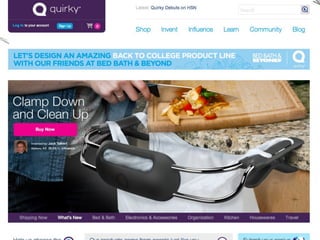
>  In the last couple of years, we have seen a development towards a
   new kind of customer relationship online, e.g. Quirky.com, where
   you cocreate products or Threadless.com, where you codesign t-
   shirts

>  If you try working with communities and co design, you need to
   address the incentive for the user, as well as for business
5. Revenue streams
>  The relationship with the customer can be very automated (e.g.
   newspaper subscription) or one off interactions (e.g. a coffee table
   book)

>  There is a major difference in a business model, whether you’re
   working on one off interactions or many interactions.
  >  One off interactions need to have a substantially larger profit margin
     (pricing)
  >  Long relationships need to continue adding value for customer

>  One is not “better” than the other
  >  razor blades: Long interaction, not automated, low entry barriers,
     habitual
  >  Lock in (hard to change supplier, e.g. high entry barriers)
  >  Risk

>  Depends on value proposition and customer segment
6. Key Ressources
>  What do you need to deliver value to the customer?


>  Virtual goods scale extremely well (1 copy and 1.000.000 copies
   cost virtually the same)

>  Physical goods may require mass production to scale – but can
   still be hard – logistics, distribution, storage etc., etc.

>  Intellectual ressources can be hard to protect

>  Many of your concepts will probably require a lot of human capital
   (the right people –those are often hard to get, and may be
   expensive, esp. if you lose them)

>  Financial capital – “Why didn’t anyone invent a decent digital
   bank?”
7. Key Activities
>  What is it actually, that the people employed in your business do?


>  They might produce something (goods, information, knowledge…),
   facilitate something (processes) or keep something afloat (a
   platform)
>  E.g.: Key activities at Facebook is to keep servers buzzing, develop
   new functionality, sell ads

>  At a supermarket: Define goods and market, run logistics, keep
   store open and filled with goods, marketing

>  At a consultancy: Help customers define what they need, deliver
   processes or products by specification, keep knowledge up to date
8. Key Partnerships
>  No business is an island.
>  Many of your activities can be performed cheaper by other
   organizations or in cooperation with other organizations


>  E.g.:
  >  Organizations with shared activities (e.g. competition)
  >  Organizations with complimentary activities (e.g. joint ventures)
  >  Organizations in other customer segments
  >  Organizations with different pricing
  >  Organizations willing to partner to reduce risk for all involved
9. Cost Structure (or economic theory 101)
>  You can define your pricing based on your costs
>  Or you can define your costs based on your pricing

>  In all business models, you will have fixed costs and variable costs
  >  Fixed costs: Costs that you will have with 1 or 1000 customers
  >  Variable costs: Costs that you have “per customer”

>  Economies of scale = Low variable costs, or variable costs
   deteriorating with more customers à reductions in average cost
   (Lars Larsen: Making 1 kr on 1.000 customers or 1.000 kr on 1
   customer)
>  Economies of scope = If your organization produces more than
   one good, you might share activities, e.g. marketing, sales -
   product diversification is efficient if it is based on the common and
   recurrent use of knowhow or on an indivisible physical asset
A small exercise
>  Use the time until the break to talk to the person next to you about
   a case

>  Try to apply the 9 factors of the business model canvas to the case

>  (Beware, they have many business models in one business)
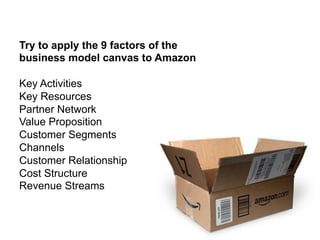
Try to apply the 9 factors of the
business model canvas to Amazon

Key Activities
Key Resources
Partner Network
Value Proposition
Customer Segments
Channels
Customer Relationship
Cost Structure
Revenue Streams
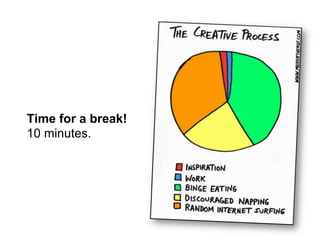
Time for a break!
10 minutes.
Examples,
examples,
examples,
Try to apply the 9 factors of the
business model canvas to Amazon

Key Activities
Key Resources
Partner Network
Value Proposition
Customer Segments
Channels
Customer Relationship
Cost Structure
Revenue Streams
OK,
In the first part, we (mostly) talked business models in general. Now,
we will focus exclusively on online business models.

In the remainder of the class, I will give you a number of examples on
different online business models.
Sales
Finding new customer segments or value propositions online.
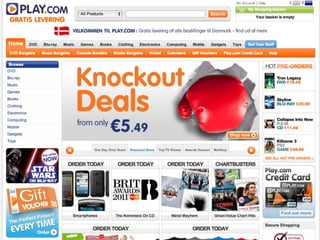
Direct sale
A clear value proposition is needed.
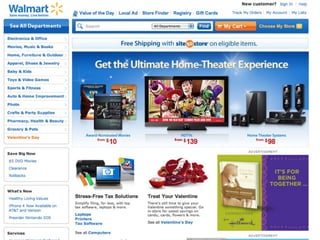
Combined Model
Both online sale and marketing of traditional stores.
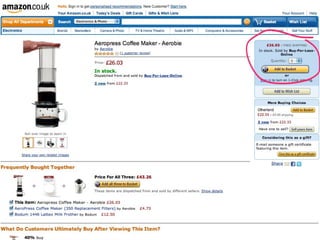
Re-selling
Being the middle man for other agents, who handle logistics.
Sales of services
Selling memberships, subscriptions and other services online.
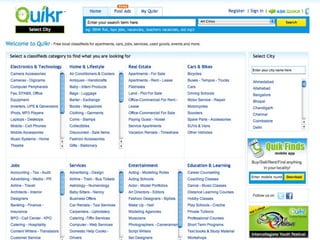
Broker
Where the platform is the key activity of the business.
Auction
One of the most common examples.
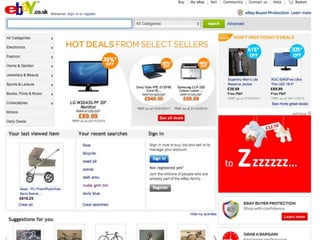
Used goods
As old as time itself, but now with larger customer segments.
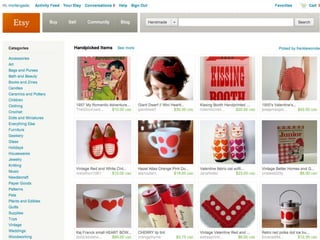
Virtual marketplaces
Niche oriented platforms with both buyer and seller as customer
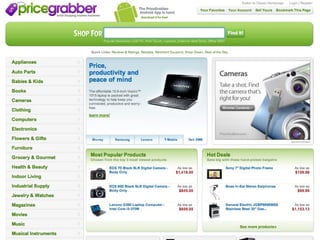
Price comparison
Both buyer and seller as customer, price is value proposition.
Contact broker/mass market
Connecting the world and taking your share of the profit.
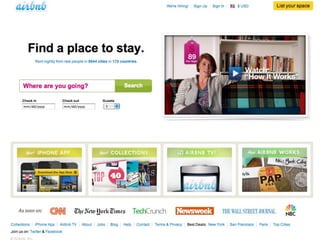
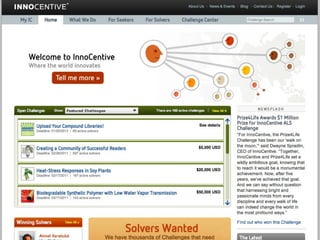
Contact broker/specialists
Connecting specialist users and acting as platform.
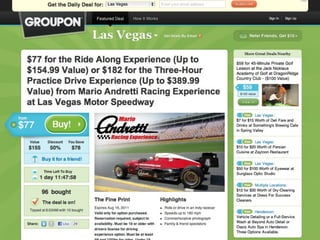
Groups buying/brokerage
Clear value proposition to both end user and business.
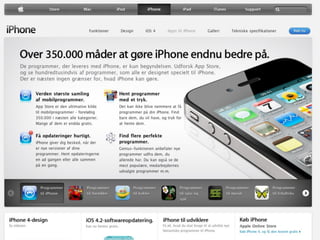
App Store
Reducing transaction costs for the developer and the end user.
Advertising
Display advertising and other models.
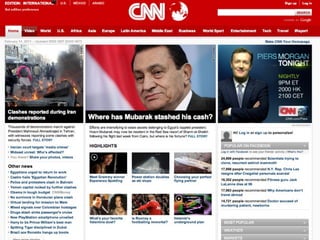
Content rich, heavy traffic
Low pricing, huge supply.
Niche-sites
Relatively high pricing, lower supply.
Heavy on page views
Focused purely on display advertising.
Online tools
Software as a service – fulfilling a need with huge economies of scale.
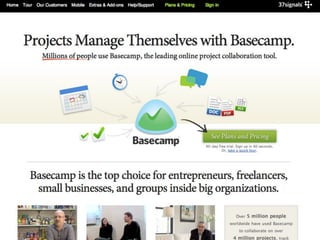
Subscription based
Subscriptions make for a long term revenue stream.
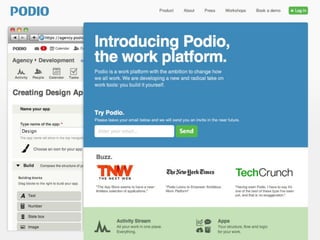
Freemium
Letting the user become the marketer – to themselves and others.
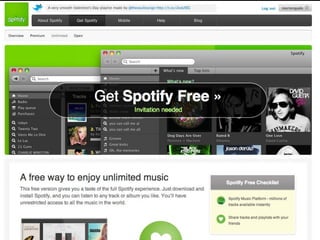
Adbased
Product as medium for advertising.
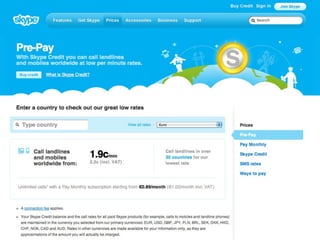
Consumption based
Pay as you go , usage fee revenue stream.
Reselling data
Servicing one group in order to generate a product to another.
Subscription
Subscriptions for information, services or entertainment.
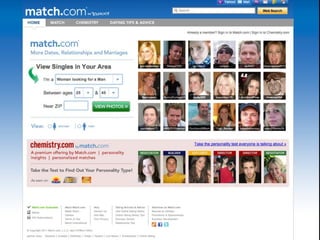
Community-sites & dating
Subscribing for other people.
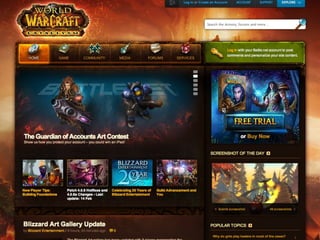
Games
Subscribing for entertainment and immersion.
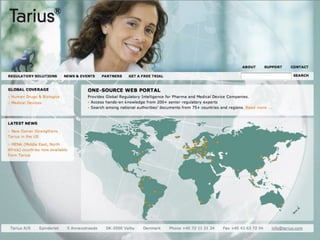
Niche-oriented specialist knowledge
Subscribing for low transaction costs, making your job easier
Affiliate
Yet another way making money making people meet.
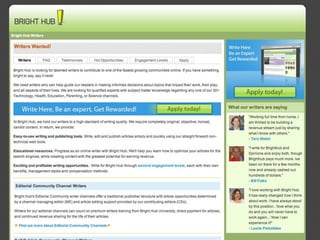
Revenue sharing
Tight economical connection to the producer of content.
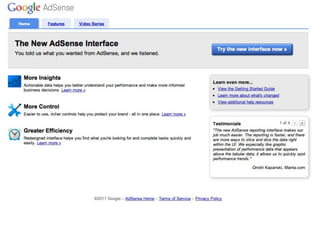
Pay per click
Great economies of scale, where business is platform.
Stakeholder management
Addressing other stakeholder needs.
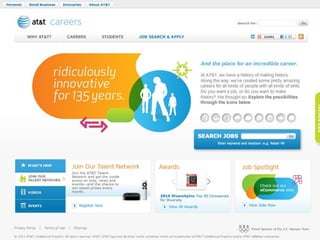
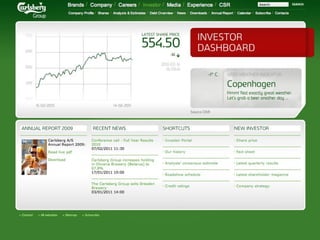
E.g. employer branding
Attracting key resources online
Or investor relations
Attracting key resources online
Knowledge sharing
Making internal and external processes easier.
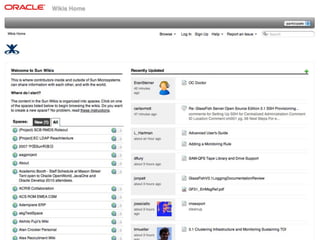
E.g. intranet, wiki, e-learning, EDRMS…
Supporting key processes in the organization
Digital processes
Optimizing processes with customers, partners and other stakeholders.
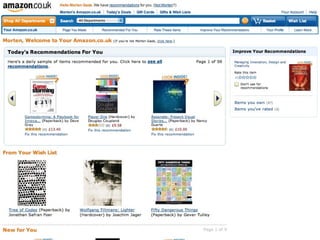
Upselling
Making lifetime value of customer higher.
Better service
Making customer acquisition and retention easier
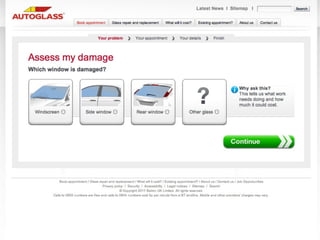
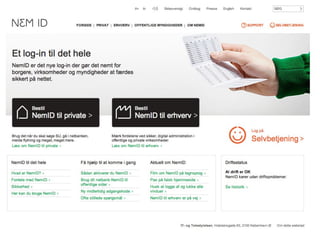
Reduced cost
Making key processes easier, creating economies of scale
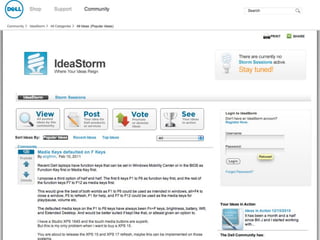
Co-creation
Development of ideas, products or businesses
Of ideas
Creating new value propositions,
strengthening relationship to customers and partners.
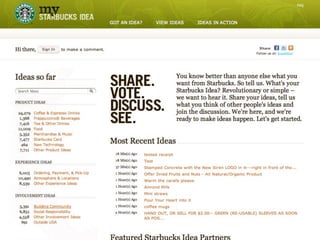
Of products
Creating new value propositions,
strengthening relationship to customers and partners.
Of relationships
Creating new value propositions, as well as creating a new kind of
open partner strategy enabling easier handling of many partners.
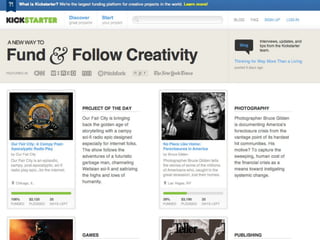
Or even businesses
Being the platform for key processes of other businesses.
mortengade.dk


                                                                                twitter.com/mortengade
                                                                                   delicious.com/morten

MORTEN GADE                                                          flickr.com/photos/mortengade

www.mortengade.dk                                                        linkedin.com/in/mortengade

m@mortengade.dk                                      kommunikationsforum.dk/morten-gade

tlf. 30 91 92 18                                                      mitkbh.dk/profile.php?user=2


                                                  Fotos: flickr.com mm. Credits på den enkelte slide.
       Udgivet under Creative Commons-licens: http://creativecommons.org/licenses/by-sa/3.0/deed.da

Business Models

  • 1.
    Morten Gade ITU Concept Development with Industry, Feb 15 Business Models
  • 2.
  • 3.
    Agenda Before the break > The framework >  Based on Osterwalder & Pigneur + Zott, Amitt & Massa >  A small exercise After the break >  The examples and the inspiration – a quick run through of approx. 30 different online business models We end at 9.45.
  • 4.
  • 5.
    So, first… Whatdo we mean by “business model”
  • 6.
    Zott, Amitt &Massa (2010*) >  Literature review of 103 articles, books etc. >  Fairly new concept (1990’s) >  No common definition >  Highly recommendable article, also for inspiration on different business models *) The Business Model: Theoretical Roots, Recent Developments and Future Research http://www.iese.edu/research/pdfs/DI-0862-E.pdf
  • 7.
    Magretta “stories that explainhow enterprises work. A good business model answers Peter Drucker’s age old questions: Who is the customer? And what does the customer value? It also answers the fundamental questions every manager must ask: How do we make money in this business? What is the underlying economic logic that explains how we can deliver value to customers at an appropriate cost?”
  • 8.
    Timmers “an architecture ofthe product, service and information flows, including a description of the various business actors and their roles; a description of the potential benefits for the various business actors; a description of the sources of revenues”
  • 9.
    Osterwalder & Pigneur “Therationale of how an organization creates, delivers and captures value.”
  • 10.
  • 11.
    1. Customer Segments > What customer group is the business trying to reach >  Many customers aren’t necessarily better than few: There are businesses thriving with 1, 2 or 3 customers >  However, businesses with few customers have a different risk profile than those with many customers >  Niche markets have become easier because of the internet, however still customs etc. >  For a well functioning business model, it can be a good idea to…. >  Develop segments where entry is easy, or… >  Develop segments where retention is easy
  • 12.
    2. Value Propositions > Why should the customers use your product instead of the competition? >  You want to understand and address the customer’s need better than the competition >  Price (e.g. MetroXpress) >  Perceived quality/features (e.g. Apple) >  Ease of use (e.g. Telmore) >  Accessibility/Just in time/right place (e.g. mobile (or the ITU canteen)) >  Price sensitivity is very different in different markets >  You need a very strong value proposition, even if your product is free (still competing for attention, time etc.)
  • 14.
    3. Channels >  Youneed to have a channel strategy, that reaches your customer with the right value proposition at the right time >  E.g. Heineken (indirect, direct), Dell (direct) >  Also goes for media, e.g. direct models such as Politiken, indirect such as Ritzau, combined models such as Avisen.dk (if we see the end user as the customer) >  There is less risk in scaling a model with indirect partner sales fast >  Most organizations have a business model with a mix of different channels
  • 15.
    4. Customer relationships > The relationship with the customer can be very personal (e.g. an attorney) or the opposite (e.g. Google) >  Personal service can be seen as a luxury – but so can online interaction for some: Who is your customer segment? >  Many companies only have relationships with resellers and never meet the end users >  In the last couple of years, we have seen a development towards a new kind of customer relationship online, e.g. Quirky.com, where you cocreate products or Threadless.com, where you codesign t- shirts >  If you try working with communities and co design, you need to address the incentive for the user, as well as for business
  • 16.
    5. Revenue streams > The relationship with the customer can be very automated (e.g. newspaper subscription) or one off interactions (e.g. a coffee table book) >  There is a major difference in a business model, whether you’re working on one off interactions or many interactions. >  One off interactions need to have a substantially larger profit margin (pricing) >  Long relationships need to continue adding value for customer >  One is not “better” than the other >  razor blades: Long interaction, not automated, low entry barriers, habitual >  Lock in (hard to change supplier, e.g. high entry barriers) >  Risk >  Depends on value proposition and customer segment
  • 17.
    6. Key Ressources > What do you need to deliver value to the customer? >  Virtual goods scale extremely well (1 copy and 1.000.000 copies cost virtually the same) >  Physical goods may require mass production to scale – but can still be hard – logistics, distribution, storage etc., etc. >  Intellectual ressources can be hard to protect >  Many of your concepts will probably require a lot of human capital (the right people –those are often hard to get, and may be expensive, esp. if you lose them) >  Financial capital – “Why didn’t anyone invent a decent digital bank?”
  • 18.
    7. Key Activities > What is it actually, that the people employed in your business do? >  They might produce something (goods, information, knowledge…), facilitate something (processes) or keep something afloat (a platform) >  E.g.: Key activities at Facebook is to keep servers buzzing, develop new functionality, sell ads >  At a supermarket: Define goods and market, run logistics, keep store open and filled with goods, marketing >  At a consultancy: Help customers define what they need, deliver processes or products by specification, keep knowledge up to date
  • 19.
    8. Key Partnerships > No business is an island. >  Many of your activities can be performed cheaper by other organizations or in cooperation with other organizations >  E.g.: >  Organizations with shared activities (e.g. competition) >  Organizations with complimentary activities (e.g. joint ventures) >  Organizations in other customer segments >  Organizations with different pricing >  Organizations willing to partner to reduce risk for all involved
  • 20.
    9. Cost Structure(or economic theory 101) >  You can define your pricing based on your costs >  Or you can define your costs based on your pricing >  In all business models, you will have fixed costs and variable costs >  Fixed costs: Costs that you will have with 1 or 1000 customers >  Variable costs: Costs that you have “per customer” >  Economies of scale = Low variable costs, or variable costs deteriorating with more customers à reductions in average cost (Lars Larsen: Making 1 kr on 1.000 customers or 1.000 kr on 1 customer) >  Economies of scope = If your organization produces more than one good, you might share activities, e.g. marketing, sales - product diversification is efficient if it is based on the common and recurrent use of knowhow or on an indivisible physical asset
  • 21.
    A small exercise > Use the time until the break to talk to the person next to you about a case >  Try to apply the 9 factors of the business model canvas to the case >  (Beware, they have many business models in one business)
  • 22.
    Try to applythe 9 factors of the business model canvas to Amazon Key Activities Key Resources Partner Network Value Proposition Customer Segments Channels Customer Relationship Cost Structure Revenue Streams
  • 23.
    Time for abreak! 10 minutes.
  • 24.
  • 25.
    Try to applythe 9 factors of the business model canvas to Amazon Key Activities Key Resources Partner Network Value Proposition Customer Segments Channels Customer Relationship Cost Structure Revenue Streams
  • 26.
    OK, In the firstpart, we (mostly) talked business models in general. Now, we will focus exclusively on online business models. In the remainder of the class, I will give you a number of examples on different online business models.
  • 27.
    Sales Finding new customersegments or value propositions online.
  • 28.
    Direct sale A clearvalue proposition is needed.
  • 30.
    Combined Model Both onlinesale and marketing of traditional stores.
  • 32.
    Re-selling Being the middleman for other agents, who handle logistics.
  • 34.
    Sales of services Sellingmemberships, subscriptions and other services online.
  • 36.
    Broker Where the platformis the key activity of the business.
  • 37.
    Auction One of themost common examples.
  • 39.
    Used goods As oldas time itself, but now with larger customer segments.
  • 41.
    Virtual marketplaces Niche orientedplatforms with both buyer and seller as customer
  • 43.
    Price comparison Both buyerand seller as customer, price is value proposition.
  • 45.
    Contact broker/mass market Connectingthe world and taking your share of the profit.
  • 47.
  • 49.
    Groups buying/brokerage Clear valueproposition to both end user and business.
  • 51.
    App Store Reducing transactioncosts for the developer and the end user.
  • 53.
  • 54.
    Content rich, heavytraffic Low pricing, huge supply.
  • 56.
  • 58.
    Heavy on pageviews Focused purely on display advertising.
  • 60.
    Online tools Software asa service – fulfilling a need with huge economies of scale.
  • 61.
    Subscription based Subscriptions makefor a long term revenue stream.
  • 63.
    Freemium Letting the userbecome the marketer – to themselves and others.
  • 65.
    Adbased Product as mediumfor advertising.
  • 67.
    Consumption based Pay asyou go , usage fee revenue stream.
  • 69.
    Reselling data Servicing onegroup in order to generate a product to another.
  • 71.
  • 72.
  • 74.
  • 76.
    Niche-oriented specialist knowledge Subscribingfor low transaction costs, making your job easier
  • 78.
    Affiliate Yet another waymaking money making people meet.
  • 79.
    Revenue sharing Tight economicalconnection to the producer of content.
  • 81.
    Pay per click Greateconomies of scale, where business is platform.
  • 83.
  • 84.
  • 86.
  • 88.
    Knowledge sharing Making internaland external processes easier.
  • 89.
    E.g. intranet, wiki,e-learning, EDRMS… Supporting key processes in the organization
  • 91.
    Digital processes Optimizing processeswith customers, partners and other stakeholders.
  • 92.
  • 94.
    Better service Making customeracquisition and retention easier
  • 96.
    Reduced cost Making keyprocesses easier, creating economies of scale
  • 98.
    Co-creation Development of ideas,products or businesses
  • 99.
    Of ideas Creating newvalue propositions, strengthening relationship to customers and partners.
  • 101.
    Of products Creating newvalue propositions, strengthening relationship to customers and partners.
  • 103.
    Of relationships Creating newvalue propositions, as well as creating a new kind of open partner strategy enabling easier handling of many partners.
  • 105.
    Or even businesses Beingthe platform for key processes of other businesses.
  • 107.
    mortengade.dk twitter.com/mortengade delicious.com/morten MORTEN GADE flickr.com/photos/mortengade www.mortengade.dk linkedin.com/in/mortengade m@mortengade.dk kommunikationsforum.dk/morten-gade tlf. 30 91 92 18 mitkbh.dk/profile.php?user=2 Fotos: flickr.com mm. Credits på den enkelte slide. Udgivet under Creative Commons-licens: http://creativecommons.org/licenses/by-sa/3.0/deed.da