“Harlem Renaissance:
Political Issues and Major
Players”
By: LaTonya Harris
Atiyah Sanders
Robkeerah Sampson
Michael Jimenez
Ken Ignacio
“The Emancipation Proclamation”
• Emancipation ended slavery, but not its legacy.
• Abraham Lincoln issued it but at first his main concern was to
save the Union.
• “Central Act of my administration, greatest event in 19th
century
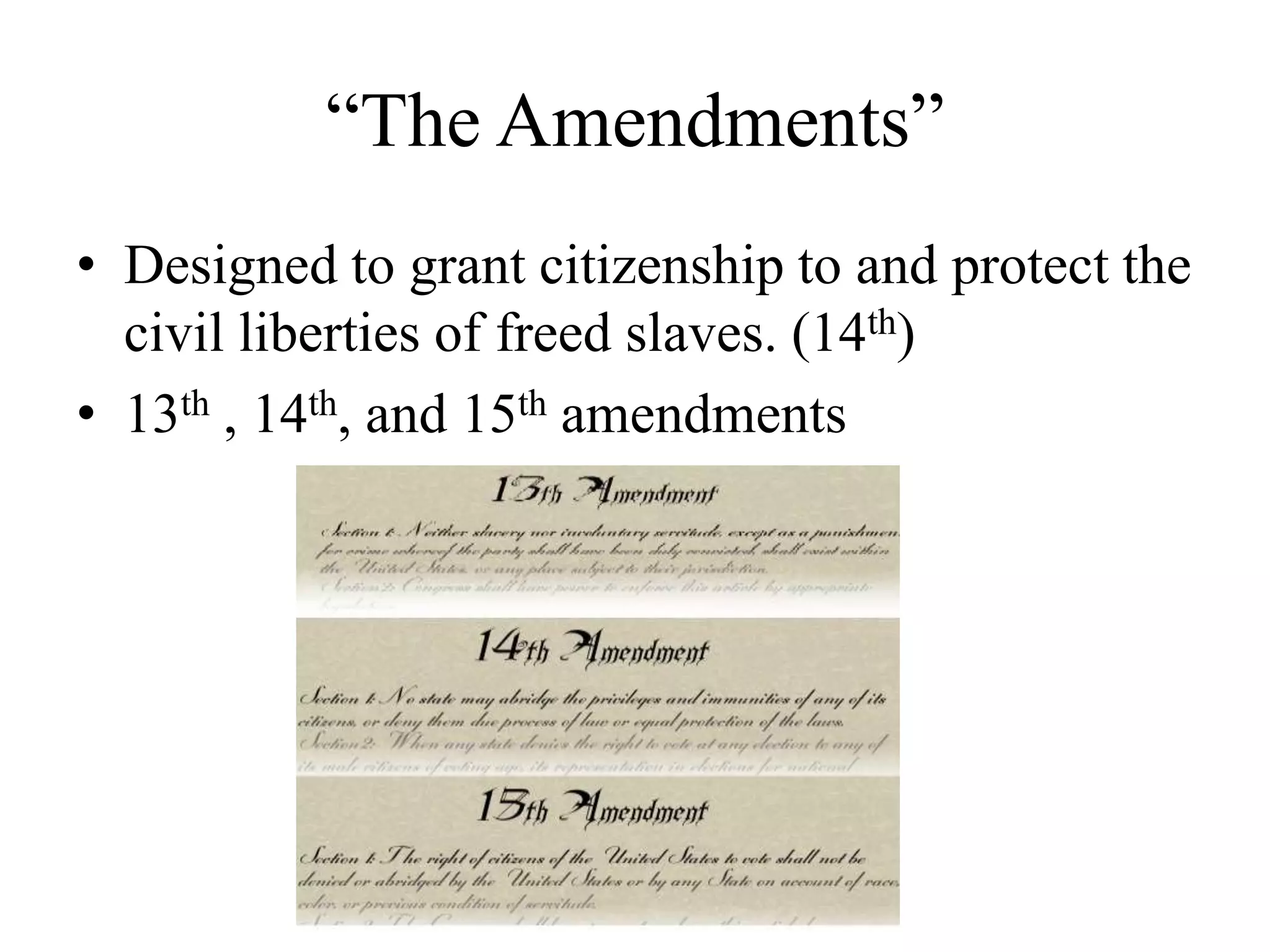
“The Amendments”
• Designed to grant citizenship to and protect the
civil liberties of freed slaves. (14th)
• 13th , 14th, and 15th amendments
So now everyone is equal...
Right?
Not exactly.
Jim Crow Era(1876-mid 1960s)
• Jim Crow was the name of the racial caste
system which operated primarily, but not
exclusively in southern and border states.
• Not just a series of anti-black laws, but a way
of life.
“The Great Migration”
• Estimated 5 million blacks migrated from the south.
• Whites in the South feared that blacks would migrate to the North
• Opened a new beginning for blacks.
• Blacks saw the exodus as a fulfillment of God’s promise.
“The National Association for the Advancement
of Colored People” (NAACP) and The Crisis
• Formed to help blacks start a new life and
fought for equality.
• Organized local branches.
• Created The Crisis magazine.
• W.E.B Du Bois.
“Red Summer”
• The Summer of 1919 saw a National racial frenzy of clashes,
massacres, and lynching.
• Blacks fought back.
• Mini civil war
“The Harlem Renaissance”
• During this period Harlem was the Mecca to
which black writers, artists, musicians,
photographers, poets, and scholars traveled.”

Harlem Renaissance Politics and Culture

  • 1.
    “Harlem Renaissance: Political Issuesand Major Players” By: LaTonya Harris Atiyah Sanders Robkeerah Sampson Michael Jimenez Ken Ignacio
  • 2.
    “The Emancipation Proclamation” •Emancipation ended slavery, but not its legacy. • Abraham Lincoln issued it but at first his main concern was to save the Union. • “Central Act of my administration, greatest event in 19th century
  • 3.
    “The Amendments” • Designedto grant citizenship to and protect the civil liberties of freed slaves. (14th) • 13th , 14th, and 15th amendments
  • 4.
    So now everyoneis equal... Right?
  • 5.
    Not exactly. Jim CrowEra(1876-mid 1960s) • Jim Crow was the name of the racial caste system which operated primarily, but not exclusively in southern and border states. • Not just a series of anti-black laws, but a way of life.
  • 6.
    “The Great Migration” •Estimated 5 million blacks migrated from the south. • Whites in the South feared that blacks would migrate to the North • Opened a new beginning for blacks. • Blacks saw the exodus as a fulfillment of God’s promise.
  • 7.
    “The National Associationfor the Advancement of Colored People” (NAACP) and The Crisis • Formed to help blacks start a new life and fought for equality. • Organized local branches. • Created The Crisis magazine. • W.E.B Du Bois.
  • 8.
    “Red Summer” • TheSummer of 1919 saw a National racial frenzy of clashes, massacres, and lynching. • Blacks fought back. • Mini civil war
  • 9.
    “The Harlem Renaissance” •During this period Harlem was the Mecca to which black writers, artists, musicians, photographers, poets, and scholars traveled.”