Harlem Renaissance
AN OVERVIEW
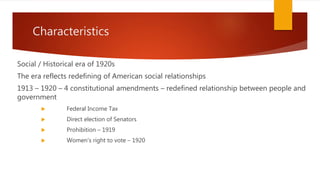
Characteristics
Social / Historical era of 1920s
The era reflects redefining of American social relationships
1913 – 1920 – 4 constitutional amendments – redefined relationship between people and
government
 Federal Income Tax
 Direct election of Senators
 Prohibition – 1919
 Women’s right to vote – 1920
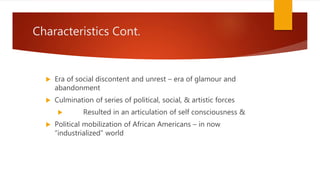
Characteristics Cont.
 Era of social discontent and unrest – era of glamour and
abandonment
 Culmination of series of political, social, & artistic forces
 Resulted in an articulation of self consciousness &
 Political mobilization of African Americans – in now
“industrialized” world
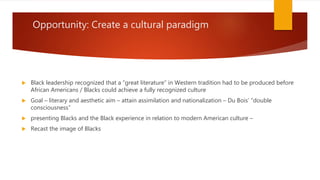
Opportunity: Create a cultural paradigm
 Black leadership recognized that a “great literature” in Western tradition had to be produced before
African Americans / Blacks could achieve a fully recognized culture
 Goal – literary and aesthetic aim – attain assimilation and nationalization – Du Bois’ “double
consciousness”
 presenting Blacks and the Black experience in relation to modern American culture –
 Recast the image of Blacks
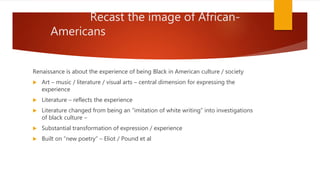
Recast the image of African-
Americans
Renaissance is about the experience of being Black in American culture / society
 Art – music / literature / visual arts – central dimension for expressing the
experience
 Literature – reflects the experience
 Literature changed from being an “imitation of white writing” into investigations
of black culture –
 Substantial transformation of expression / experience
 Built on “new poetry” – Eliot / Pound et al
Built on Black traditions
Found voice in short story and the poem
 African American short story serves as a vehicle for making short,
to-the-point statements:
 social, cultural, economic, political, or otherwise.
 the short story deals primarily with racial pride and oppression, it
also celebrates survival and deliverance.
 As genre, the African American short-story represents a range of
styles, events, and experiences and draws upon the diversity of
black lives within American history.

Harlem renaissance

  • 1.
  • 2.
    Characteristics Social / Historicalera of 1920s The era reflects redefining of American social relationships 1913 – 1920 – 4 constitutional amendments – redefined relationship between people and government  Federal Income Tax  Direct election of Senators  Prohibition – 1919  Women’s right to vote – 1920
  • 3.
    Characteristics Cont.  Eraof social discontent and unrest – era of glamour and abandonment  Culmination of series of political, social, & artistic forces  Resulted in an articulation of self consciousness &  Political mobilization of African Americans – in now “industrialized” world
  • 4.
    Opportunity: Create acultural paradigm  Black leadership recognized that a “great literature” in Western tradition had to be produced before African Americans / Blacks could achieve a fully recognized culture  Goal – literary and aesthetic aim – attain assimilation and nationalization – Du Bois’ “double consciousness”  presenting Blacks and the Black experience in relation to modern American culture –  Recast the image of Blacks
  • 5.
    Recast the imageof African- Americans Renaissance is about the experience of being Black in American culture / society  Art – music / literature / visual arts – central dimension for expressing the experience  Literature – reflects the experience  Literature changed from being an “imitation of white writing” into investigations of black culture –  Substantial transformation of expression / experience  Built on “new poetry” – Eliot / Pound et al
  • 6.
    Built on Blacktraditions Found voice in short story and the poem  African American short story serves as a vehicle for making short, to-the-point statements:  social, cultural, economic, political, or otherwise.  the short story deals primarily with racial pride and oppression, it also celebrates survival and deliverance.  As genre, the African American short-story represents a range of styles, events, and experiences and draws upon the diversity of black lives within American history.