



Bipolar Disorder: A Moving Target
with A Moving Treatment
Prof. Hani Hamed Dessoki, M.D.Psychiatry
Acting Dean, Faculty of Nursing
Prof. Psychiatry
Founder of Psychiatry Depart., Beni Suef University
Supervisor of Psychiatry Depart., El-Fayoum University
Treasurer of Egyptian Psychiatric Association
APA member
2019
Towards A Moving Target
By
Tarek Molokhia
Prof.Psychiatry Alexandria university
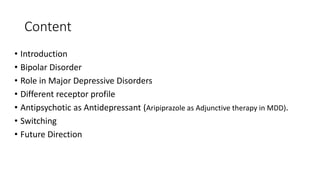
Content
• Introduction
• Bipolar Disorder
• Role in Major Depressive Disorders
• Different receptor profile
• Antipsychotic as Antidepressant (Aripiprazole as Adjunctive therapy in MDD).
• Switching
• Future Direction
Aripiprazole in Bipolar Disorder
The Moving Target
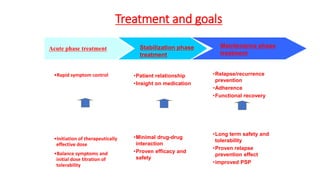
Acute phase treatment Stabilization phase
treatment
Maintenance phase
treatment
Treatment and goals
•Rapid symptom control
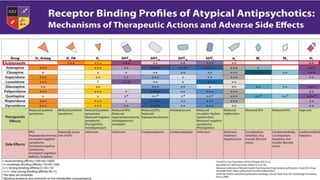
•Initiation of therapeutically
effective dose
•Balance symptoms and
initial dose titration of
tolerability
•Patient relationship
•Insight on medication
•Minimal drug-drug
interaction
•Proven efficacy and
safety
•Relapse/recurrence
prevention
•Adherence
•Functional recovery
•Long term safety and
tolerability
•Proven relapse
prevention effect
•improved PSP
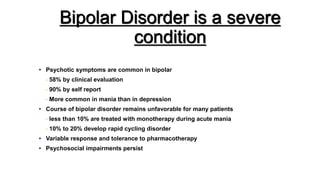
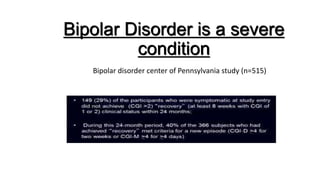
Bipolar Disorder is a severe
condition
• Psychotic symptoms are common in bipolar
- 58% by clinical evaluation
- 90% by self report
- More common in mania than in depression
• Course of bipolar disorder remains unfavorable for many patients
- less than 10% are treated with monotherapy during acute mania
- 10% to 20% develop rapid cycling disorder
• Variable response and tolerance to pharmacotherapy
• Psychosocial impairments persist
Bipolar Disorder is a severe
condition
Bipolar disorder center of Pennsylvania study (n=515)
Aripiprazole in Bipolar Disorder
Invest for the long Term
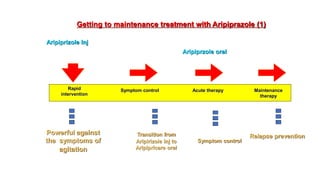
Getting to maintenance treatment with Aripiprazole (1)
Powerful against
the symptoms of
agitation
Transition from
Aripirizole Inj to
Aripipricare oral
Relapse prevention
Rapid
intervention
Acute therapySymptom control Maintenance
therapy
Aripiprizole Inj
Aripiprzole oral
Symptom control
Adwiprazole In MDD
Introduction (burden of mental disease)
• Mental disorders are a major public health concern.
• The global lifetime prevalence of mental disorders in adults is estimated
to be between 12.2% and 48.6%.
Introduction (burden of mental disease)
• Mental disorders are also a leading contributor to the global disease
burden: in 2013, 5.4% of global disability-adjusted life years and 17.4% of
global years lived with disability were due to mental disorders.
• However, current treatment is suboptimal, especially in severe mental
disorders such as depressive disorder and schizophrenia.
Epidemiology of Depression
Information on the current prevalence of major depressive disorder comes
from two large community surveys, the National Comorbidity Survey
Replication (NCS-R) study and the National Epidemiologic Survey of
Alcoholism and Related Conditions (NESARC) .
In the NCS-R, the lifetime prevalence of major depressive disorder among
the 9,090 adult participants was 16.2%, with a 12-month prevalence of
6.6%.
The NESARC, which included more than 43,000 adults found slightly lower
prevalence rates than the NCS-R (13.25% lifetime and 5.28% 12-month).
MDD
• Depression is a leading cause of disease burden.
• Remission is an important goal in treating patients with major depressive disorder
(MDD).
• Augmentation is one treatment strategy for achieving remission.
• Effective management of MDD continues to be a challenging task for psychiatrists.
• 60% of patients are not achieving adequate response following ADT.
• Adwiprazole is pharmacologically distinct from other Antipsychotics acting as a
Partial Agonist at Dopamine D2, D3, and Serotonin 5-HT1A receptors and as an
Antagonist at 5-HT2A receptors.
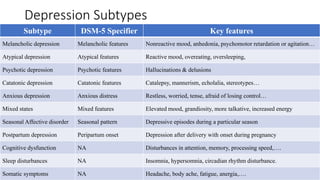
Depression Subtypes
Subtype DSM-5 Specifier Key features
Melancholic depression Melancholic features Nonreactive mood, anhedonia, psychomotor retardation or agitation…
Atypical depression Atypical features Reactive mood, overeating, oversleeping,
Psychotic depression Psychotic features Hallucinations & delusions
Catatonic depression Catatonic features Catalepsy, mannerism, echolalia, stereotypes…
Anxious depression Anxious distress Restless, worried, tense, afraid of losing control…
Mixed states Mixed features Elevated mood, grandiosity, more talkative, increased energy
Seasonal Affective disorder Seasonal pattern Depressive episodes during a particular season
Postpartum depression Peripartum onset Depression after delivery with onset during pregnancy
Cognitive dysfunction NA Disturbances in attention, memory, processing speed,….
Sleep disturbances NA Insomnia, hypersomnia, circadian rhythm disturbance.
Somatic symptoms NA Headache, body ache, fatigue, anergia,….
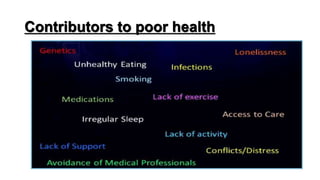
Contributors to poor health
The DSM-IV-TR criteria for major depressive episode
and major depressive disorder (DISEASE DEFINITION)
The cardinal feature of a major depressive episode is either a depressed mood or loss of
interest or pleasure in usual activities that persists over a period of at least 2 weeks and
is accompanied by a constellation of depressive symptoms such as changes in eating or
sleeping patterns , fatigue, difficulty concentrating, indecision, thoughts of death or
suicide, or feelings of worthlessness, helplessness, or hopelessness.
It is important to note that these symptoms must represent a change from the
individual’s usual self and cause clinically significant distress or impairment.
DSM-5 Changes: Depression & Depressive Disorders
By JOHN M. GROHOL, PSY.D.
• The DSM-5 has a number of important updates and changes made to major depression (also
known as clinical depression) and depressive disorders.
• The major changes to these conditions, including the introduction of two new disorders: -
Disruptive Mood Dysregulation Disorder and Premenstrual Dysphoric Disorder.
• Dysthymia is gone, replaced with something called “Persistent Depressive Disorder.”
The new condition includes both chronic major depressive disorder and the previous
dysthymic disorder.
No Remission
• Despite the availability of large number of antidepressants of different
classes, significant portion of patients do not achieve remission and
treatment resistance is common.
Use of antipsychotics in the treatment of
depressive disorders
• Many antidepressant medications have been developed over the last
couple of decades but the mechanism of action of these drugs
remains unclear.
• Only 60%–70% of patients with depression respond to
antidepressant therapy.
• The complete resolution of all the symptoms of depression may
require the use of multiple medications that have different
mechanisms of action.
Antipsychotics in the treatment of depressive
disorders
• In fact, the practice of using antipsychotics as an adjunct therapy has
nearly doubled from the mid-1990s to the late 2000s.
Aripirazole FDA approved Indications
Aripiprazole was initially approved to treat Schizophrenia and
later approved for Bipolar Mania, as a monotherapy and an
adjunctive therapy (manic or mixed episodes), and as adjunctive
therapy in MDD.
Antidepressant Effect
• There is abundant evidence of the antidepressant effect of some of the
atypical antipsychotics.
• Food and Drug Administration (USFDA) has approved the use of aripiprazole
(5-10 mg/d, maximum dosage 15 mg/d) as an adjunctive medication in the
treatment of depressive disorders.
Adwiprazole Pharmacology
Pharmacokinetics
• Tmax : 3 hrs
• Bioavailability: 85%
• T 1/2 : 80 hrs
• Steady state: 14 days
• Elimination is mainly by the hepatic cytochrome P450 CYP 3A4 &
CYP 2D6
• Partial agonist at dopamine D2 and D3 receptors .
• Partial agonist at serotonin 5-HT1A receptors .
• Antagonist at 5-HT2A receptors.
• Moderate affinity for D4, 5-HT2c ,5-HT7, α1-adrenergic ,H1receptors
• No affinity to muscarinic (M1,M2) receptors.
Adwiprazole Pharmacology
ARIPIPRAZOLE
Mechanism of Action
• Aripiprazole is a partial agonist at dopamine D2, D3 and serotonin 5-
HT1A receptors, and is an antagonist at 5-HT2A receptors.
• Aripiprazole binds to D2 receptors with high affinity and acts as
functional antagonist in hyper-dopaminergic state.
• It also acts as functional agonist in the hypo-dopaminergic state.
• This unique profile may confer the advantage of lower liability to
EPS and Hyper prolactinaemia.
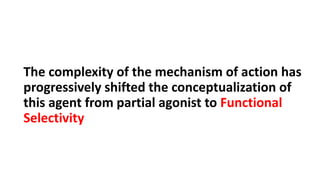
The complexity of the mechanism of action has
progressively shifted the conceptualization of
this agent from partial agonist to Functional
Selectivity
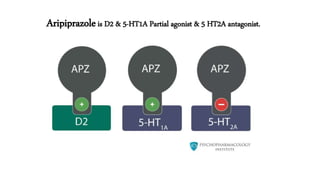
Aripiprazoleis D2 & 5-HT1A Partial agonist & 5 HT2A antagonist.
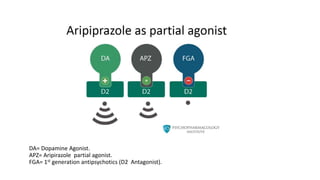
DA= Dopamine Agonist.
APZ= Aripirazole partial agonist.
FGA= 1st generation antipsychotics (D2 Antagonist).
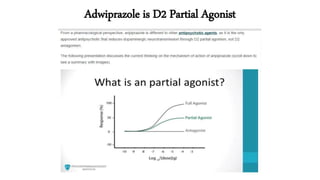
Adwiprazole is D2 Partial Agonist
Adwiprazole has a unique
pharmacological profile that provides
“adaptive pharmacological activity”
Role of Adwiprazole in Depression
• SSRIs exert their therapeutic effects via activation of pre-synaptic 5HT1A autoreceptors.
• 5HT2A receptors play a major role in the pathophysiology of depression &
schizophrenia.
• The blockade of 5HT2A receptors improves the clinical effects of SSRIs.
• Adwiprazole 5HT2A blockade improves the function of PFC circuits, which underlies
the beneficial effects of the addition of AAPs to SSRIs in treatment-resistant
patients (Aripiprazole is 5HT2A receptor antagonist).
Role of Adwiprazole in Depression
• The addition of Adwiprazole to Antidepressants leads to better regulation &
precise control of the 3 neurotransmitters (dopamine, norepinephrine & serotonin)
that causes better remission rates.
• This is achieved through the adaptive pharmacological activity of Adwiprazole.
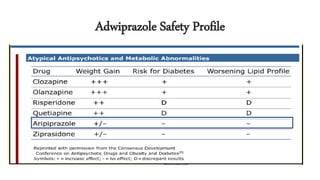
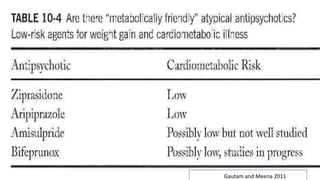
Adwiprazole Safety Profile
• Adwiprazole is generally well tolerated.
• Tolerability profile of Adwiprazole is broadly similar to that of
placebo.
• The most frequent side effects of Adwiprazole include:
1. Akathesia
2. Anxiety
Adwiprazole Safety Profile
GG‫ألأل‬Gautam and Meena 2011
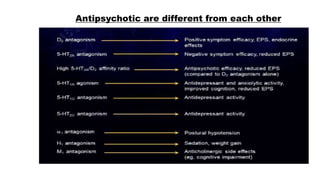
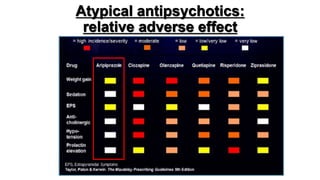
Antipsychotic are different from each other
Atypical antipsychotics:
relative adverse effect
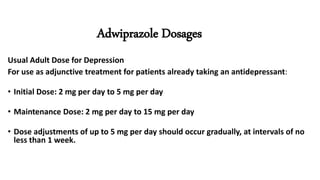
Adwiprazole Dosages
Usual Adult Dose for Depression
For use as adjunctive treatment for patients already taking an antidepressant:
• Initial Dose: 2 mg per day to 5 mg per day
• Maintenance Dose: 2 mg per day to 15 mg per day
• Dose adjustments of up to 5 mg per day should occur gradually, at intervals of no
less than 1 week.
Guidelines
According to the 2016 FDA Medication Guide (FDA
Medication Guide [PDF], 2016). ARIPIPRAZOLE is used to
treat:
• Schizophrenia
• Bipolar I disorder with mania or mixed episodes
• Major depressive disorder (MDD) when used with antidepressant
medicines
• Irritability associated with autistic disorder
• Tourette’s disorder
NICE
Combining and augmenting antidepressants
If a person with depression is informed about, and prepared to
tolerate, the increased side-effect burden, consider combining or
augmenting an antidepressant with:
• lithium or
• an antipsychotic such as aripiprazole*, olanzapine*, quetiapine* or
risperidone* or
• another antidepressant such as mirtazapine or mianserin.
• Second-generation antipsychotic – In choosing a second-generation
antipsychotic as augmentation for treatment resistant depression, our
general order of preference is as follows, based upon the evidence of
benefits and harms, as well as formulary
availability: aripiprazole or brexpiprazole, quetiapine, risperidone, and
more rarely, ziprasidone or olanzapine [30,34,39,41-43].
Aripiprazole Augmentation in Major Depressive Disorder:-
A Double-Blind, Placebo-Controlled Study in Patients
with Inadequate Response to Antidepressants
Robert M. Berman et al.
CNS Spectr. 2009
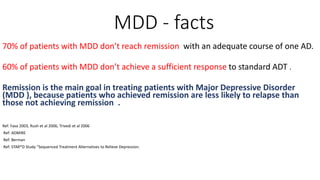
MDD - facts
70% of patients with MDD don’t reach remission with an adequate course of one AD.
60% of patients with MDD don’t achieve a sufficient response to standard ADT .
Remission is the main goal in treating patients with Major Depressive Disorder
(MDD ), because patients who achieved remission are less likely to relapse than
those not achieving remission .
Ref: Fava 2003, Rush et al 2006, Trivedi et al 2006
Ref: ADMIRE
Ref: Berman
Ref: STAR*D Study “Sequenced Treatment Alternatives to Relieve Depression.
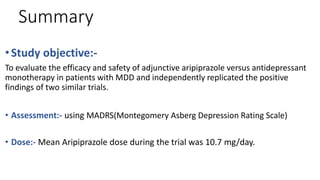
Summary
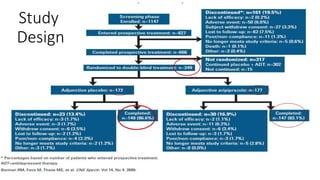
•Study objective:-
To evaluate the efficacy and safety of adjunctive aripiprazole versus antidepressant
monotherapy in patients with MDD and independently replicated the positive
findings of two similar trials.
• Assessment:- using MADRS(Montegomery Asberg Depression Rating Scale)
• Dose:- Mean Aripiprazole dose during the trial was 10.7 mg/day.
Study
Design
Results
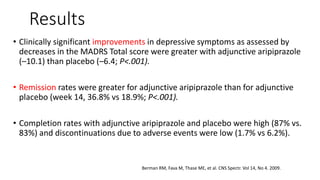
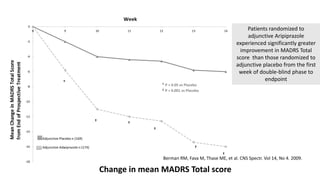
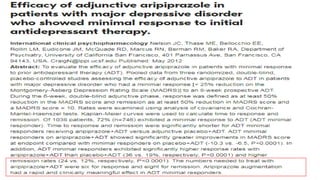
• Clinically significant improvements in depressive symptoms as assessed by
decreases in the MADRS Total score were greater with adjunctive aripiprazole
(–10.1) than placebo (–6.4; P<.001).
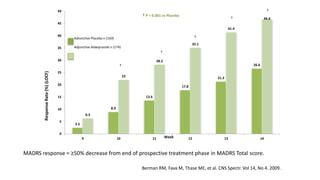
• Remission rates were greater for adjunctive aripiprazole than for adjunctive
placebo (week 14, 36.8% vs 18.9%; P<.001).
• Completion rates with adjunctive aripiprazole and placebo were high (87% vs.
83%) and discontinuations due to adverse events were low (1.7% vs 6.2%).
Berman RM, Fava M, Thase ME, et al. CNS Spectr. Vol 14, No 4. 2009.
-18
-16
-14
-12
-10
-8
-6
-4
-2
0
8 9 10 11 12 13 14
†
†
†
†
†
*
* P < 0.05 vs Placebo
† P < 0.001 vs Placebo
Adjunctive Placebo n (169)
Adjunctive Adwiprazole n (174)
Change in mean MADRS Total score
Patients randomized to
adjunctive Aripiprazole
experienced significantly greater
improvement in MADRS Total
score than those randomized to
adjunctive placebo from the first
week of double-blind phase to
endpoint
Berman RM, Fava M, Thase ME, et al. CNS Spectr. Vol 14, No 4. 2009.
MADRS response = ≥50% decrease from end of prospective treatment phase in MADRS Total score.
2.5
8.9
13.6
17.8
21.3
26.6
6.3
22
28.2
35.1
41.4
46.6
0
5
10
15
20
25
30
35
40
45
50
9 10 11 12 13 14
†
†
†
†
†
ResponseRate(%)(LOCF)
† P < 0.001 vs Placebo
Week
Adiunctive Placebo n (169)
Adjunctive Adwiprazole n (174)
Berman RM, Fava M, Thase ME, et al. CNS Spectr. Vol 14, No 4. 2009.
Third generation antipsychotics
in the treatment of bipolar
depression
Aripiprazole in Mood Disorder
The switch
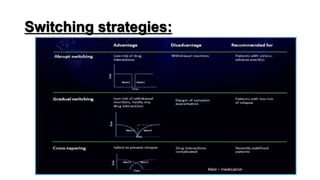
Switching strategies:
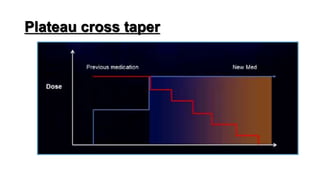
Plateau cross taper
How to Manage Inadequate Response to an Antidepressant?
• Switching
• Combination
• Augmentation
Each treatment option has different pros & cons according to the
patients’ clinical status, & there is no clear evidence supporting the
superiority of one treatment modality over another.
How to choose a Treatment strategy?
• For Combination Strategy:
• Stewart et al, the most recent large RCT of combination therapy & CO-MED a recent large practical clinical
trial completely failed to show any superiority of combination therapy over monotherapy in terms of
timing of remission or the remission rate.
• For Augmentation Strategy:
• Augmentation therapy is preferred for Partial Responders.
• For Switching strategy:
• Switching non-responders to another ADT results in good response & remission rates.
• The remission rates after switching therapy ranged from 10% to 80%.
• The value of switching between classes or within classes of ADTs remains
controversial.
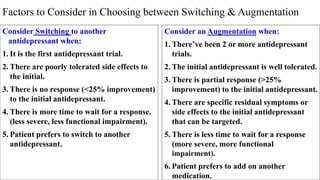
Factors to Consider in Choosing between Switching & Augmentation
Consider Switching to another
antidepressant when:
1. It is the first antidepressant trial.
2. There are poorly tolerated side effects to
the initial.
3. There is no response (<25% improvement)
to the initial antidepressant.
4. There is more time to wait for a response.
(less severe, less functional impairment).
5. Patient prefers to switch to another
antidepressant.
Consider an Augmentation when:
1. There’ve been 2 or more antidepressant
trials.
2. The initial antidepressant is well tolerated.
3. There is partial response (>25%
improvement) to the initial antidepressant.
4. There are specific residual symptoms or
side effects to the initial antidepressant
that can be targeted.
5. There is less time to wait for a response
(more severe, more functional
impairment).
6. Patient prefers to add on another
medication.
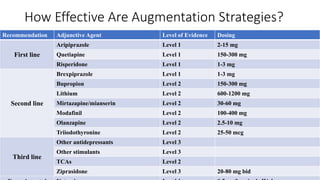
How Effective Are Augmentation Strategies?
Recommendation Adjunctive Agent Level of Evidence Dosing
First line
Aripiprazole Level 1 2-15 mg
Quetiapine Level 1 150-300 mg
Risperidone Level 1 1-3 mg
Second line
Brexpiprazole Level 1 1-3 mg
Bupropion Level 2 150-300 mg
Lithium Level 2 600-1200 mg
Mirtazapine/mianserin Level 2 30-60 mg
Modafinil Level 2 100-400 mg
Olanzapine Level 2 2.5-10 mg
Triiodothyronine Level 2 25-50 mcg
Third line
Other antidepressants Level 3
Other stimulants Level 3
TCAs Level 2
Ziprasidone Level 3 20-80 mg bid
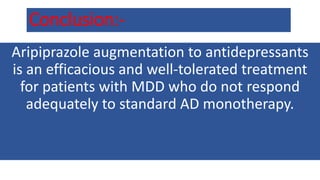
Conclusion:-
Aripiprazole augmentation to antidepressants
is an efficacious and well-tolerated treatment
for patients with MDD who do not respond
adequately to standard AD monotherapy.
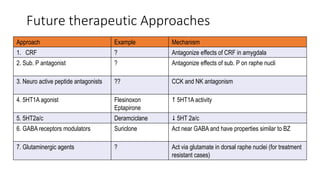
Future therapeutic Approaches
Approach Example Mechanism
1. CRF ? Antagonize effects of CRF in amygdala
2. Sub. P antagonist ? Antagonize effects of sub. P on raphe nucli
3. Neuro active peptide antagonists ?? CCK and NK antagonism
4. 5HT1A agonist Flesinoxon
Eptapirone
 5HT1A activity
5. 5HT2a/c Deramciclane  5HT 2a/c
6. GABA receptors modulators Suriclone Act near GABA and have properties similar to BZ
7. Glutaminergic agents ? Act via glutamate in dorsal raphe nuclei (for treatment
resistant cases)
Hanipsych, aripiprazole as antidepressant

Hanipsych, aripiprazole as antidepressant

  • 3.
    Bipolar Disorder: AMoving Target with A Moving Treatment Prof. Hani Hamed Dessoki, M.D.Psychiatry Acting Dean, Faculty of Nursing Prof. Psychiatry Founder of Psychiatry Depart., Beni Suef University Supervisor of Psychiatry Depart., El-Fayoum University Treasurer of Egyptian Psychiatric Association APA member 2019
  • 4.
    Towards A MovingTarget By Tarek Molokhia Prof.Psychiatry Alexandria university
  • 5.
    Content • Introduction • BipolarDisorder • Role in Major Depressive Disorders • Different receptor profile • Antipsychotic as Antidepressant (Aripiprazole as Adjunctive therapy in MDD). • Switching • Future Direction
  • 6.
    Aripiprazole in BipolarDisorder The Moving Target
  • 7.
    Acute phase treatmentStabilization phase treatment Maintenance phase treatment Treatment and goals •Rapid symptom control •Initiation of therapeutically effective dose •Balance symptoms and initial dose titration of tolerability •Patient relationship •Insight on medication •Minimal drug-drug interaction •Proven efficacy and safety •Relapse/recurrence prevention •Adherence •Functional recovery •Long term safety and tolerability •Proven relapse prevention effect •improved PSP
  • 8.
    Bipolar Disorder isa severe condition • Psychotic symptoms are common in bipolar - 58% by clinical evaluation - 90% by self report - More common in mania than in depression • Course of bipolar disorder remains unfavorable for many patients - less than 10% are treated with monotherapy during acute mania - 10% to 20% develop rapid cycling disorder • Variable response and tolerance to pharmacotherapy • Psychosocial impairments persist
  • 9.
    Bipolar Disorder isa severe condition Bipolar disorder center of Pennsylvania study (n=515)
  • 10.
    Aripiprazole in BipolarDisorder Invest for the long Term
  • 11.
    Getting to maintenancetreatment with Aripiprazole (1) Powerful against the symptoms of agitation Transition from Aripirizole Inj to Aripipricare oral Relapse prevention Rapid intervention Acute therapySymptom control Maintenance therapy Aripiprizole Inj Aripiprzole oral Symptom control
  • 12.
  • 13.
    Introduction (burden ofmental disease) • Mental disorders are a major public health concern. • The global lifetime prevalence of mental disorders in adults is estimated to be between 12.2% and 48.6%.
  • 14.
    Introduction (burden ofmental disease) • Mental disorders are also a leading contributor to the global disease burden: in 2013, 5.4% of global disability-adjusted life years and 17.4% of global years lived with disability were due to mental disorders. • However, current treatment is suboptimal, especially in severe mental disorders such as depressive disorder and schizophrenia.
  • 15.
    Epidemiology of Depression Informationon the current prevalence of major depressive disorder comes from two large community surveys, the National Comorbidity Survey Replication (NCS-R) study and the National Epidemiologic Survey of Alcoholism and Related Conditions (NESARC) . In the NCS-R, the lifetime prevalence of major depressive disorder among the 9,090 adult participants was 16.2%, with a 12-month prevalence of 6.6%. The NESARC, which included more than 43,000 adults found slightly lower prevalence rates than the NCS-R (13.25% lifetime and 5.28% 12-month).
  • 16.
    MDD • Depression isa leading cause of disease burden. • Remission is an important goal in treating patients with major depressive disorder (MDD). • Augmentation is one treatment strategy for achieving remission. • Effective management of MDD continues to be a challenging task for psychiatrists. • 60% of patients are not achieving adequate response following ADT. • Adwiprazole is pharmacologically distinct from other Antipsychotics acting as a Partial Agonist at Dopamine D2, D3, and Serotonin 5-HT1A receptors and as an Antagonist at 5-HT2A receptors.
  • 17.
    Depression Subtypes Subtype DSM-5Specifier Key features Melancholic depression Melancholic features Nonreactive mood, anhedonia, psychomotor retardation or agitation… Atypical depression Atypical features Reactive mood, overeating, oversleeping, Psychotic depression Psychotic features Hallucinations & delusions Catatonic depression Catatonic features Catalepsy, mannerism, echolalia, stereotypes… Anxious depression Anxious distress Restless, worried, tense, afraid of losing control… Mixed states Mixed features Elevated mood, grandiosity, more talkative, increased energy Seasonal Affective disorder Seasonal pattern Depressive episodes during a particular season Postpartum depression Peripartum onset Depression after delivery with onset during pregnancy Cognitive dysfunction NA Disturbances in attention, memory, processing speed,…. Sleep disturbances NA Insomnia, hypersomnia, circadian rhythm disturbance. Somatic symptoms NA Headache, body ache, fatigue, anergia,….
  • 18.
  • 19.
    The DSM-IV-TR criteriafor major depressive episode and major depressive disorder (DISEASE DEFINITION) The cardinal feature of a major depressive episode is either a depressed mood or loss of interest or pleasure in usual activities that persists over a period of at least 2 weeks and is accompanied by a constellation of depressive symptoms such as changes in eating or sleeping patterns , fatigue, difficulty concentrating, indecision, thoughts of death or suicide, or feelings of worthlessness, helplessness, or hopelessness. It is important to note that these symptoms must represent a change from the individual’s usual self and cause clinically significant distress or impairment.
  • 20.
    DSM-5 Changes: Depression& Depressive Disorders By JOHN M. GROHOL, PSY.D. • The DSM-5 has a number of important updates and changes made to major depression (also known as clinical depression) and depressive disorders. • The major changes to these conditions, including the introduction of two new disorders: - Disruptive Mood Dysregulation Disorder and Premenstrual Dysphoric Disorder. • Dysthymia is gone, replaced with something called “Persistent Depressive Disorder.” The new condition includes both chronic major depressive disorder and the previous dysthymic disorder.
  • 21.
    No Remission • Despitethe availability of large number of antidepressants of different classes, significant portion of patients do not achieve remission and treatment resistance is common.
  • 22.
    Use of antipsychoticsin the treatment of depressive disorders • Many antidepressant medications have been developed over the last couple of decades but the mechanism of action of these drugs remains unclear. • Only 60%–70% of patients with depression respond to antidepressant therapy. • The complete resolution of all the symptoms of depression may require the use of multiple medications that have different mechanisms of action.
  • 23.
    Antipsychotics in thetreatment of depressive disorders • In fact, the practice of using antipsychotics as an adjunct therapy has nearly doubled from the mid-1990s to the late 2000s.
  • 24.
    Aripirazole FDA approvedIndications Aripiprazole was initially approved to treat Schizophrenia and later approved for Bipolar Mania, as a monotherapy and an adjunctive therapy (manic or mixed episodes), and as adjunctive therapy in MDD.
  • 25.
    Antidepressant Effect • Thereis abundant evidence of the antidepressant effect of some of the atypical antipsychotics. • Food and Drug Administration (USFDA) has approved the use of aripiprazole (5-10 mg/d, maximum dosage 15 mg/d) as an adjunctive medication in the treatment of depressive disorders.
  • 26.
    Adwiprazole Pharmacology Pharmacokinetics • Tmax: 3 hrs • Bioavailability: 85% • T 1/2 : 80 hrs • Steady state: 14 days • Elimination is mainly by the hepatic cytochrome P450 CYP 3A4 & CYP 2D6
  • 27.
    • Partial agonistat dopamine D2 and D3 receptors . • Partial agonist at serotonin 5-HT1A receptors . • Antagonist at 5-HT2A receptors. • Moderate affinity for D4, 5-HT2c ,5-HT7, α1-adrenergic ,H1receptors • No affinity to muscarinic (M1,M2) receptors. Adwiprazole Pharmacology
  • 28.
  • 29.
    Mechanism of Action •Aripiprazole is a partial agonist at dopamine D2, D3 and serotonin 5- HT1A receptors, and is an antagonist at 5-HT2A receptors. • Aripiprazole binds to D2 receptors with high affinity and acts as functional antagonist in hyper-dopaminergic state. • It also acts as functional agonist in the hypo-dopaminergic state. • This unique profile may confer the advantage of lower liability to EPS and Hyper prolactinaemia.
  • 30.
    The complexity ofthe mechanism of action has progressively shifted the conceptualization of this agent from partial agonist to Functional Selectivity
  • 31.
    Aripiprazoleis D2 &5-HT1A Partial agonist & 5 HT2A antagonist.
  • 32.
    DA= Dopamine Agonist. APZ=Aripirazole partial agonist. FGA= 1st generation antipsychotics (D2 Antagonist).
  • 33.
    Adwiprazole is D2Partial Agonist
  • 34.
    Adwiprazole has aunique pharmacological profile that provides “adaptive pharmacological activity”
  • 35.
    Role of Adwiprazolein Depression • SSRIs exert their therapeutic effects via activation of pre-synaptic 5HT1A autoreceptors. • 5HT2A receptors play a major role in the pathophysiology of depression & schizophrenia. • The blockade of 5HT2A receptors improves the clinical effects of SSRIs. • Adwiprazole 5HT2A blockade improves the function of PFC circuits, which underlies the beneficial effects of the addition of AAPs to SSRIs in treatment-resistant patients (Aripiprazole is 5HT2A receptor antagonist).
  • 36.
    Role of Adwiprazolein Depression • The addition of Adwiprazole to Antidepressants leads to better regulation & precise control of the 3 neurotransmitters (dopamine, norepinephrine & serotonin) that causes better remission rates. • This is achieved through the adaptive pharmacological activity of Adwiprazole.
  • 37.
    Adwiprazole Safety Profile •Adwiprazole is generally well tolerated. • Tolerability profile of Adwiprazole is broadly similar to that of placebo. • The most frequent side effects of Adwiprazole include: 1. Akathesia 2. Anxiety
  • 38.
  • 39.
  • 41.
  • 43.
  • 44.
    Adwiprazole Dosages Usual AdultDose for Depression For use as adjunctive treatment for patients already taking an antidepressant: • Initial Dose: 2 mg per day to 5 mg per day • Maintenance Dose: 2 mg per day to 15 mg per day • Dose adjustments of up to 5 mg per day should occur gradually, at intervals of no less than 1 week.
  • 46.
    Guidelines According to the2016 FDA Medication Guide (FDA Medication Guide [PDF], 2016). ARIPIPRAZOLE is used to treat: • Schizophrenia • Bipolar I disorder with mania or mixed episodes • Major depressive disorder (MDD) when used with antidepressant medicines • Irritability associated with autistic disorder • Tourette’s disorder
  • 47.
  • 48.
    Combining and augmentingantidepressants If a person with depression is informed about, and prepared to tolerate, the increased side-effect burden, consider combining or augmenting an antidepressant with: • lithium or • an antipsychotic such as aripiprazole*, olanzapine*, quetiapine* or risperidone* or • another antidepressant such as mirtazapine or mianserin.
  • 49.
    • Second-generation antipsychotic– In choosing a second-generation antipsychotic as augmentation for treatment resistant depression, our general order of preference is as follows, based upon the evidence of benefits and harms, as well as formulary availability: aripiprazole or brexpiprazole, quetiapine, risperidone, and more rarely, ziprasidone or olanzapine [30,34,39,41-43].
  • 50.
    Aripiprazole Augmentation inMajor Depressive Disorder:- A Double-Blind, Placebo-Controlled Study in Patients with Inadequate Response to Antidepressants Robert M. Berman et al. CNS Spectr. 2009
  • 51.
    MDD - facts 70%of patients with MDD don’t reach remission with an adequate course of one AD. 60% of patients with MDD don’t achieve a sufficient response to standard ADT . Remission is the main goal in treating patients with Major Depressive Disorder (MDD ), because patients who achieved remission are less likely to relapse than those not achieving remission . Ref: Fava 2003, Rush et al 2006, Trivedi et al 2006 Ref: ADMIRE Ref: Berman Ref: STAR*D Study “Sequenced Treatment Alternatives to Relieve Depression.
  • 52.
    Summary •Study objective:- To evaluatethe efficacy and safety of adjunctive aripiprazole versus antidepressant monotherapy in patients with MDD and independently replicated the positive findings of two similar trials. • Assessment:- using MADRS(Montegomery Asberg Depression Rating Scale) • Dose:- Mean Aripiprazole dose during the trial was 10.7 mg/day.
  • 53.
  • 54.
    Results • Clinically significantimprovements in depressive symptoms as assessed by decreases in the MADRS Total score were greater with adjunctive aripiprazole (–10.1) than placebo (–6.4; P<.001). • Remission rates were greater for adjunctive aripiprazole than for adjunctive placebo (week 14, 36.8% vs 18.9%; P<.001). • Completion rates with adjunctive aripiprazole and placebo were high (87% vs. 83%) and discontinuations due to adverse events were low (1.7% vs 6.2%). Berman RM, Fava M, Thase ME, et al. CNS Spectr. Vol 14, No 4. 2009.
  • 55.
    -18 -16 -14 -12 -10 -8 -6 -4 -2 0 8 9 1011 12 13 14 † † † † † * * P < 0.05 vs Placebo † P < 0.001 vs Placebo Adjunctive Placebo n (169) Adjunctive Adwiprazole n (174) Change in mean MADRS Total score Patients randomized to adjunctive Aripiprazole experienced significantly greater improvement in MADRS Total score than those randomized to adjunctive placebo from the first week of double-blind phase to endpoint Berman RM, Fava M, Thase ME, et al. CNS Spectr. Vol 14, No 4. 2009.
  • 56.
    MADRS response =≥50% decrease from end of prospective treatment phase in MADRS Total score. 2.5 8.9 13.6 17.8 21.3 26.6 6.3 22 28.2 35.1 41.4 46.6 0 5 10 15 20 25 30 35 40 45 50 9 10 11 12 13 14 † † † † † ResponseRate(%)(LOCF) † P < 0.001 vs Placebo Week Adiunctive Placebo n (169) Adjunctive Adwiprazole n (174) Berman RM, Fava M, Thase ME, et al. CNS Spectr. Vol 14, No 4. 2009.
  • 57.
    Third generation antipsychotics inthe treatment of bipolar depression
  • 58.
    Aripiprazole in MoodDisorder The switch
  • 61.
  • 62.
  • 63.
    How to ManageInadequate Response to an Antidepressant? • Switching • Combination • Augmentation Each treatment option has different pros & cons according to the patients’ clinical status, & there is no clear evidence supporting the superiority of one treatment modality over another.
  • 64.
    How to choosea Treatment strategy? • For Combination Strategy: • Stewart et al, the most recent large RCT of combination therapy & CO-MED a recent large practical clinical trial completely failed to show any superiority of combination therapy over monotherapy in terms of timing of remission or the remission rate. • For Augmentation Strategy: • Augmentation therapy is preferred for Partial Responders. • For Switching strategy: • Switching non-responders to another ADT results in good response & remission rates. • The remission rates after switching therapy ranged from 10% to 80%. • The value of switching between classes or within classes of ADTs remains controversial.
  • 65.
    Factors to Considerin Choosing between Switching & Augmentation Consider Switching to another antidepressant when: 1. It is the first antidepressant trial. 2. There are poorly tolerated side effects to the initial. 3. There is no response (<25% improvement) to the initial antidepressant. 4. There is more time to wait for a response. (less severe, less functional impairment). 5. Patient prefers to switch to another antidepressant. Consider an Augmentation when: 1. There’ve been 2 or more antidepressant trials. 2. The initial antidepressant is well tolerated. 3. There is partial response (>25% improvement) to the initial antidepressant. 4. There are specific residual symptoms or side effects to the initial antidepressant that can be targeted. 5. There is less time to wait for a response (more severe, more functional impairment). 6. Patient prefers to add on another medication.
  • 66.
    How Effective AreAugmentation Strategies? Recommendation Adjunctive Agent Level of Evidence Dosing First line Aripiprazole Level 1 2-15 mg Quetiapine Level 1 150-300 mg Risperidone Level 1 1-3 mg Second line Brexpiprazole Level 1 1-3 mg Bupropion Level 2 150-300 mg Lithium Level 2 600-1200 mg Mirtazapine/mianserin Level 2 30-60 mg Modafinil Level 2 100-400 mg Olanzapine Level 2 2.5-10 mg Triiodothyronine Level 2 25-50 mcg Third line Other antidepressants Level 3 Other stimulants Level 3 TCAs Level 2 Ziprasidone Level 3 20-80 mg bid
  • 67.
    Conclusion:- Aripiprazole augmentation toantidepressants is an efficacious and well-tolerated treatment for patients with MDD who do not respond adequately to standard AD monotherapy.
  • 68.
    Future therapeutic Approaches ApproachExample Mechanism 1. CRF ? Antagonize effects of CRF in amygdala 2. Sub. P antagonist ? Antagonize effects of sub. P on raphe nucli 3. Neuro active peptide antagonists ?? CCK and NK antagonism 4. 5HT1A agonist Flesinoxon Eptapirone  5HT1A activity 5. 5HT2a/c Deramciclane  5HT 2a/c 6. GABA receptors modulators Suriclone Act near GABA and have properties similar to BZ 7. Glutaminergic agents ? Act via glutamate in dorsal raphe nuclei (for treatment resistant cases)