Hand Hygiene
Hand Hygiene
Importance:
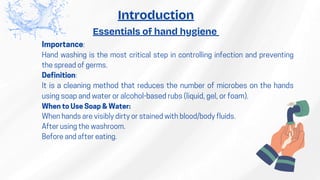
Hand washing is the most critical step in controlling infection and preventing
the spread of germs.
Definition:
It is a cleaning method that reduces the number of microbes on the hands
using soap and water or alcohol-based rubs (liquid, gel, or foam).
When to Use Soap & Water:
​
When hands are visibly dirty or stained with blood/body fluids.
​
After using the washroom.
​
Before and after eating.
Introduction
Essentials of hand hygiene
Common Agents Used:
​
Plain or non-medicated soap.
​
Alcohols (60-95% ethanol or isopropanol).
​
Antiseptics like Chlorhexidine, Chloroxylenol, or
Hexachlorophene.
How to Choose a Product:
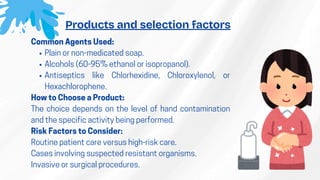
The choice depends on the level of hand contamination
and the specific activity being performed.
Risk Factors to Consider:
​
Routine patient care versus high-risk care.
​
Cases involving suspected resistant organisms.
​
Invasive or surgical procedures.
Products and selection factors
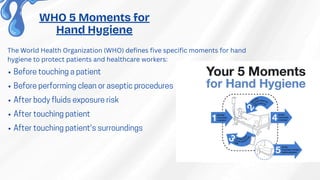
WHO 5 Moments for
Hand Hygiene
Before touching a patient
Before performing clean or aseptic procedures
After body fluids exposure risk
After touching patient
After touching patient's surroundings
The World Health Organization (WHO) defines five specific moments for hand
hygiene to protect patients and healthcare workers:
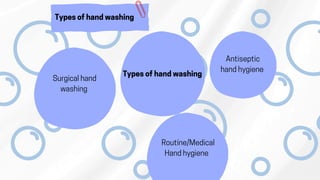
Types of hand washing
Antiseptic
hand hygiene
Routine/Medical
Hand hygiene
Surgical hand
washing
Types of hand washing
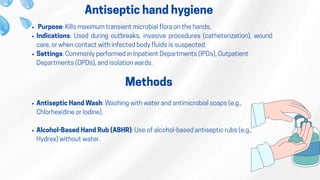
Antiseptic hand hygiene
Purpose: Kills maximum transient microbial flora on the hands.
​Indications: Used during outbreaks, invasive procedures (catheterization), wound
care, or when contact with infected body fluids is suspected.
​Settings: Commonly performed in Inpatient Departments (IPDs), Outpatient
Departments (OPDs), and isolation wards.
Methods
Antiseptic Hand Wash: Washing with water and antimicrobial soaps (e.g.,
Chlorhexidine or Iodine).
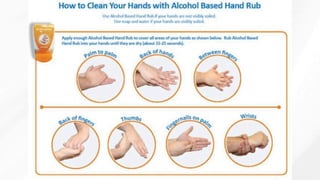
Alcohol-Based Hand Rub (ABHR): Use of alcohol-based antiseptic rubs (e.g.,
Hydrex) without water.
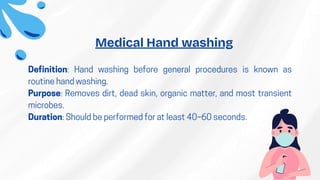
Definition: Hand washing before general procedures is known as
routine hand washing.
Purpose: Removes dirt, dead skin, organic matter, and most transient
microbes.
Duration: Should be performed for at least 40–60 seconds.
Medical Hand washing
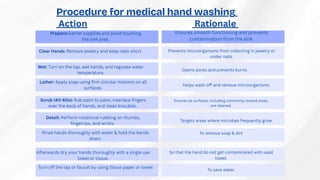
Procedure for medical hand washing
Action Rationale
Prepare:Gather supplies and avoid touching
the sink area.
Ensures smooth functioning and prevents
contamination from the sink.
Clear Hands: Remove jewelry and keep nails short. Prevents microorganisms from collecting in jewelry or
under nails.
Wet: Turn on the tap, wet hands, and regulate water
temperature.
Opens pores and prevents burns.
Lather: Apply soap using firm circular motions on all
surfaces.
Helps wash off and remove microorganisms.
Scrub (40-60s): Rub palm to palm, interlace fingers
over the back of hands, and clean knuckles.
Ensures all surfaces, including commonly missed areas,
are cleaned.
Detail: Perform rotational rubbing on thumbs,
fingertips, and wrists.
Targets areas where microbes frequently grow.
Rinse hands thoroughly with water & hold the hands
down.
To remove soap & dirt
Afterwards dry your hands thoroughly with a single use
towel or tissue.
So that the hand do not get contaminated with used
towel.
Turn off the tap or faucet by using tissue paper or towel
To save water.
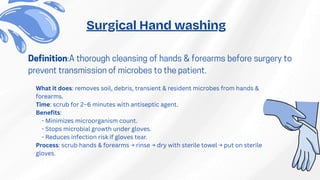
Surgical Hand washing
Definition:A thorough cleansing of hands & forearms before surgery to
prevent transmission of microbes to the patient.
What it does: removes soil, debris, transient & resident microbes from hands &
forearms.
Time: scrub for 2–6 minutes with antiseptic agent.
Benefits:
- Minimizes microorganism count.
- Stops microbial growth under gloves.
- Reduces infection risk if gloves tear.
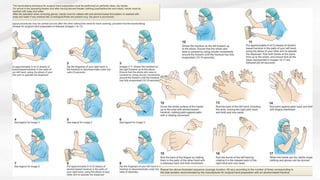
Process: scrub hands & forearms → rinse → dry with sterile towel → put on sterile
gloves.
Hand hygiene is a fundamental practice in medical settings,
encompassing routine medical washing, antiseptic hygiene, and
surgical scrubbing. Adhering to the correct procedures—whether
using soap and water for 40–60 seconds or alcohol-based hand
rubs for 20–30 seconds—is essential for removing transient
microbes and preventing the transmission of infection. By
following these standardized steps, healthcare providers ensure a
sterile environment and significantly minimize the risk of cross-
contamination for both patients and staff.
Conclusion
Reference
Singh, S. Hospital Infection Control
Guidelines: Principles and Practice. Jaypee
Brothers Medical Publishers.
World Health Organization (WHO). WHO
Guidelines on Hand Hygiene in Health Care.
www.who.int
Thank
Thank
You
You

Hand Hygiene Description And Practices.pdf

  • 1.
  • 2.
    Importance: Hand washing isthe most critical step in controlling infection and preventing the spread of germs. Definition: It is a cleaning method that reduces the number of microbes on the hands using soap and water or alcohol-based rubs (liquid, gel, or foam). When to Use Soap & Water: ​ When hands are visibly dirty or stained with blood/body fluids. ​ After using the washroom. ​ Before and after eating. Introduction Essentials of hand hygiene
  • 3.
    Common Agents Used: ​ Plainor non-medicated soap. ​ Alcohols (60-95% ethanol or isopropanol). ​ Antiseptics like Chlorhexidine, Chloroxylenol, or Hexachlorophene. How to Choose a Product: The choice depends on the level of hand contamination and the specific activity being performed. Risk Factors to Consider: ​ Routine patient care versus high-risk care. ​ Cases involving suspected resistant organisms. ​ Invasive or surgical procedures. Products and selection factors
  • 4.
    WHO 5 Momentsfor Hand Hygiene Before touching a patient Before performing clean or aseptic procedures After body fluids exposure risk After touching patient After touching patient's surroundings The World Health Organization (WHO) defines five specific moments for hand hygiene to protect patients and healthcare workers:
  • 5.
    Types of handwashing Antiseptic hand hygiene Routine/Medical Hand hygiene Surgical hand washing Types of hand washing
  • 6.
    Antiseptic hand hygiene Purpose:Kills maximum transient microbial flora on the hands. ​Indications: Used during outbreaks, invasive procedures (catheterization), wound care, or when contact with infected body fluids is suspected. ​Settings: Commonly performed in Inpatient Departments (IPDs), Outpatient Departments (OPDs), and isolation wards. Methods Antiseptic Hand Wash: Washing with water and antimicrobial soaps (e.g., Chlorhexidine or Iodine). Alcohol-Based Hand Rub (ABHR): Use of alcohol-based antiseptic rubs (e.g., Hydrex) without water.
  • 8.
    Definition: Hand washingbefore general procedures is known as routine hand washing. Purpose: Removes dirt, dead skin, organic matter, and most transient microbes. Duration: Should be performed for at least 40–60 seconds. Medical Hand washing
  • 9.
    Procedure for medicalhand washing Action Rationale Prepare:Gather supplies and avoid touching the sink area. Ensures smooth functioning and prevents contamination from the sink. Clear Hands: Remove jewelry and keep nails short. Prevents microorganisms from collecting in jewelry or under nails. Wet: Turn on the tap, wet hands, and regulate water temperature. Opens pores and prevents burns. Lather: Apply soap using firm circular motions on all surfaces. Helps wash off and remove microorganisms. Scrub (40-60s): Rub palm to palm, interlace fingers over the back of hands, and clean knuckles. Ensures all surfaces, including commonly missed areas, are cleaned. Detail: Perform rotational rubbing on thumbs, fingertips, and wrists. Targets areas where microbes frequently grow. Rinse hands thoroughly with water & hold the hands down. To remove soap & dirt Afterwards dry your hands thoroughly with a single use towel or tissue. So that the hand do not get contaminated with used towel. Turn off the tap or faucet by using tissue paper or towel To save water.
  • 10.
    Surgical Hand washing Definition:Athorough cleansing of hands & forearms before surgery to prevent transmission of microbes to the patient. What it does: removes soil, debris, transient & resident microbes from hands & forearms. Time: scrub for 2–6 minutes with antiseptic agent. Benefits: - Minimizes microorganism count. - Stops microbial growth under gloves. - Reduces infection risk if gloves tear. Process: scrub hands & forearms → rinse → dry with sterile towel → put on sterile gloves.
  • 12.
    Hand hygiene isa fundamental practice in medical settings, encompassing routine medical washing, antiseptic hygiene, and surgical scrubbing. Adhering to the correct procedures—whether using soap and water for 40–60 seconds or alcohol-based hand rubs for 20–30 seconds—is essential for removing transient microbes and preventing the transmission of infection. By following these standardized steps, healthcare providers ensure a sterile environment and significantly minimize the risk of cross- contamination for both patients and staff. Conclusion
  • 13.
    Reference Singh, S. HospitalInfection Control Guidelines: Principles and Practice. Jaypee Brothers Medical Publishers. World Health Organization (WHO). WHO Guidelines on Hand Hygiene in Health Care. www.who.int

  • 14.