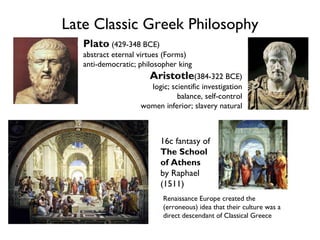
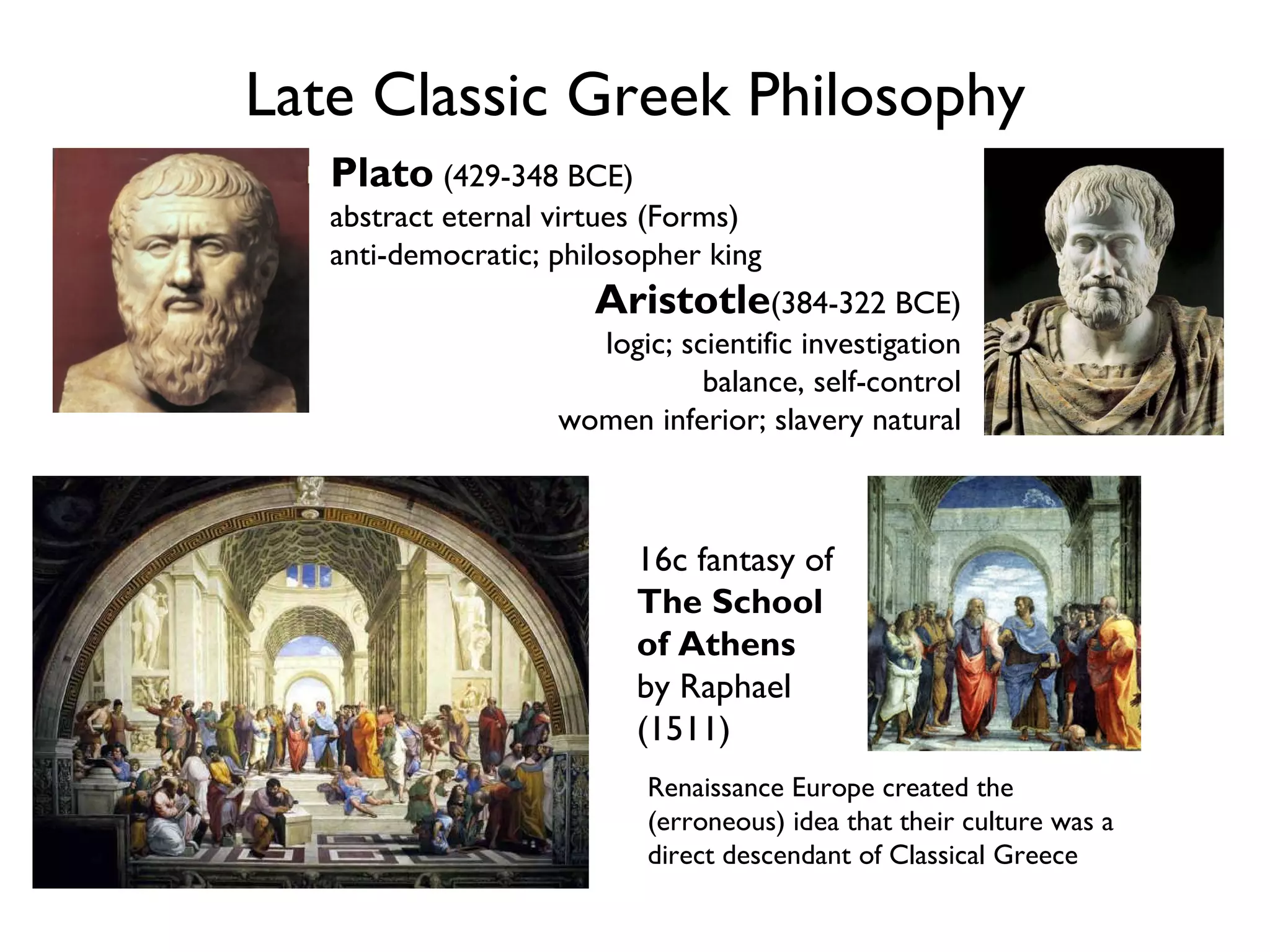
Late Classic Greek Philosophy Plato  (429-348 BCE) abstract eternal virtues (Forms) anti-democratic; philosopher king Aristotle (384-322 BCE) logic; scientific investigation balance, self-control women inferior; slavery natural 16c fantasy of The School  of Athens by Raphael (1511) Renaissance Europe created the (erroneous) idea that their culture was a direct descendant of Classical Greece
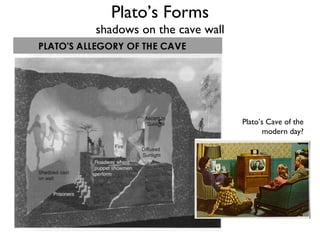
Plato’s Forms shadows on the cave wall c c Plato’s Cave of the modern day?
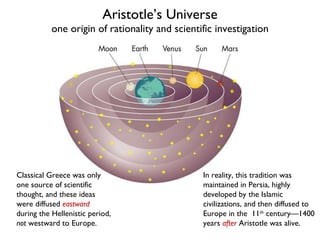
Aristotle’s Universe one origin of rationality and scientific investigation Classical Greece was only one source of scientific thought, and these ideas were diffused  eastward  during the Hellenistic period,  not  westward to Europe. In reality, this tradition was  maintained in Persia, highly developed by the Islamic civilizations, and then diffused to Europe in the  11 th  century—1400 years  after  Aristotle was alive.
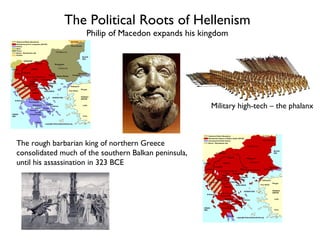
The Political Roots of Hellenism Philip of Macedon expands his kingdom The rough barbarian king of northern Greece consolidated much of the southern Balkan peninsula, until his assassination in 323 BCE Military high-tech – the phalanx
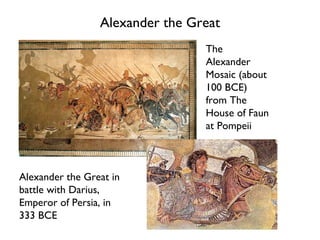
Alexander the Great The Alexander Mosaic (about 100 BCE) from The House of Faun at Pompeii Alexander the Great in battle with Darius, Emperor of Persia, in 333 BCE
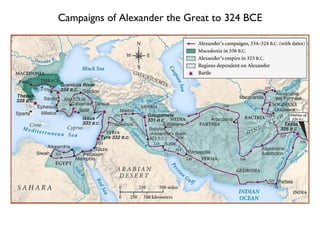
Campaigns of Alexander the Great to 324 BCE
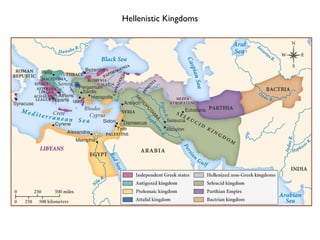
Hellenistic Kingdoms
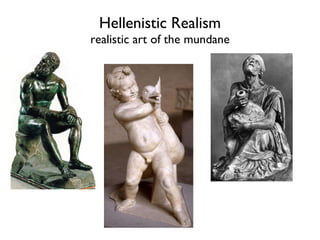
Hellenistic Realism realistic art of the mundane
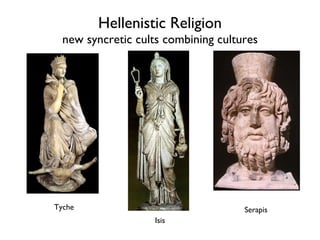
Hellenistic Religion new syncretic cults combining cultures Tyche Isis Serapis
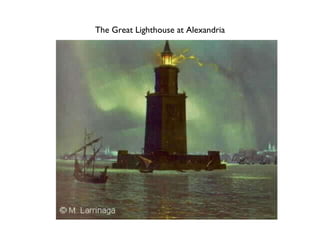
The Great Lighthouse at Alexandria
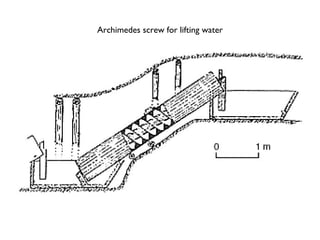
Archimedes screw for lifting water
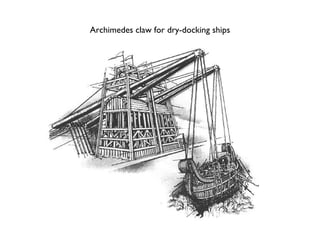
Archimedes claw for dry-docking ships
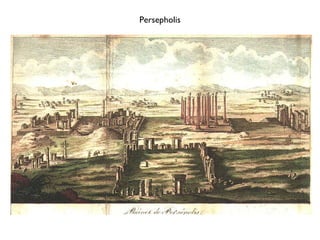
Persepholis
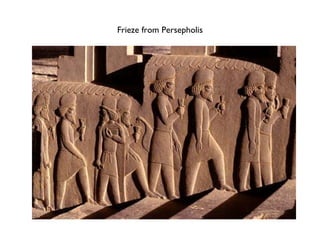
Frieze from Persepholis
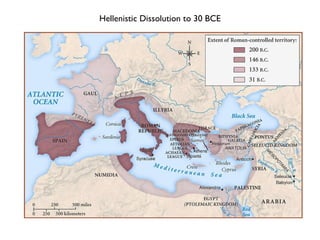
Hellenistic Dissolution to 30 BCE

H4 hellenistic world

  • 1.
    Late Classic GreekPhilosophy Plato (429-348 BCE) abstract eternal virtues (Forms) anti-democratic; philosopher king Aristotle (384-322 BCE) logic; scientific investigation balance, self-control women inferior; slavery natural 16c fantasy of The School of Athens by Raphael (1511) Renaissance Europe created the (erroneous) idea that their culture was a direct descendant of Classical Greece
  • 2.
    Plato’s Forms shadowson the cave wall c c Plato’s Cave of the modern day?
  • 3.
    Aristotle’s Universe oneorigin of rationality and scientific investigation Classical Greece was only one source of scientific thought, and these ideas were diffused eastward during the Hellenistic period, not westward to Europe. In reality, this tradition was maintained in Persia, highly developed by the Islamic civilizations, and then diffused to Europe in the 11 th century—1400 years after Aristotle was alive.
  • 4.
    The Political Rootsof Hellenism Philip of Macedon expands his kingdom The rough barbarian king of northern Greece consolidated much of the southern Balkan peninsula, until his assassination in 323 BCE Military high-tech – the phalanx
  • 5.
    Alexander the GreatThe Alexander Mosaic (about 100 BCE) from The House of Faun at Pompeii Alexander the Great in battle with Darius, Emperor of Persia, in 333 BCE
  • 6.
    Campaigns of Alexanderthe Great to 324 BCE
  • 7.
  • 8.
  • 9.
    Hellenistic Religion newsyncretic cults combining cultures Tyche Isis Serapis
  • 10.
    The Great Lighthouseat Alexandria
  • 11.
    Archimedes screw forlifting water
  • 12.
    Archimedes claw fordry-docking ships
  • 13.
  • 14.
  • 15.