



The digital future:
Who is driving the bus?


            follow @tjoosten
        slideshare.net/tjoosten
    Professorjoosten.blogspot.com
Who am I?
Recommendations
Drive the bus, manage the
          change


         Don’t get managed or driven
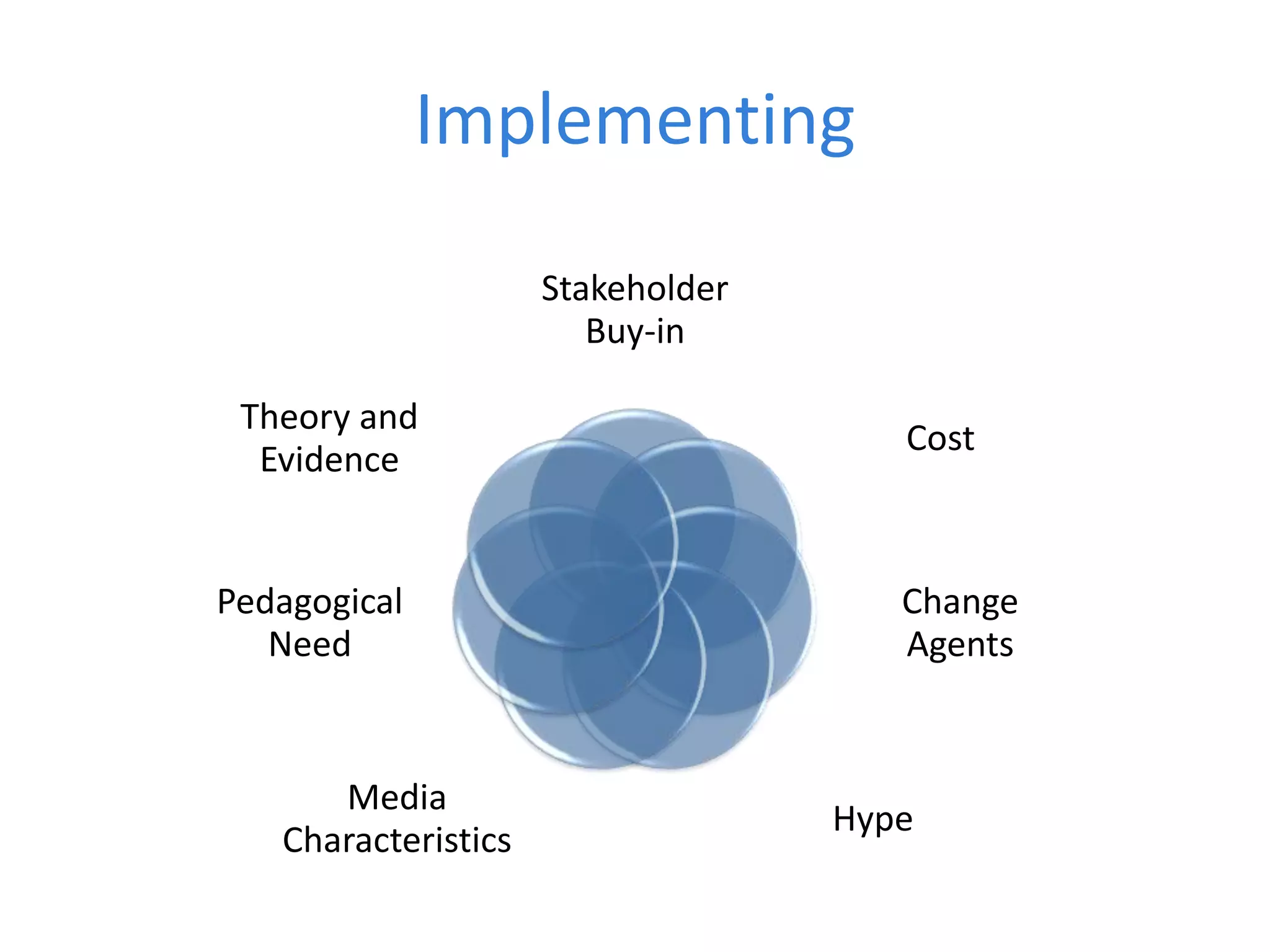
Implementing

                     Stakeholder
                        Buy-in

 Theory and
                                      Cost
  Evidence


Pedagogical                           Change
   Need                               Agents


      Media
                                   Hype
   Characteristics
Identify your pedagogical goals
      and students needs


                   Assess your needs
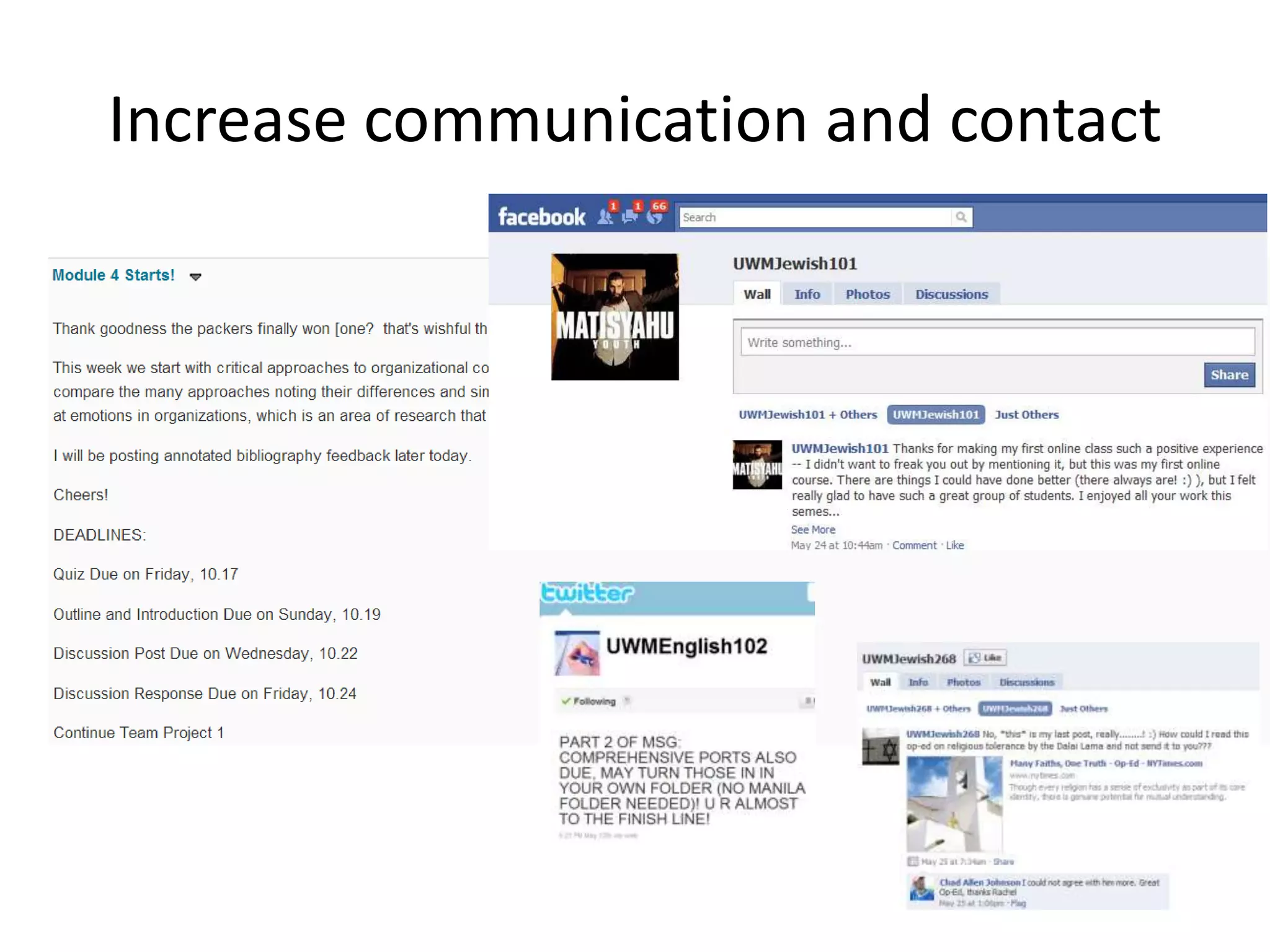
Increase communication and contact
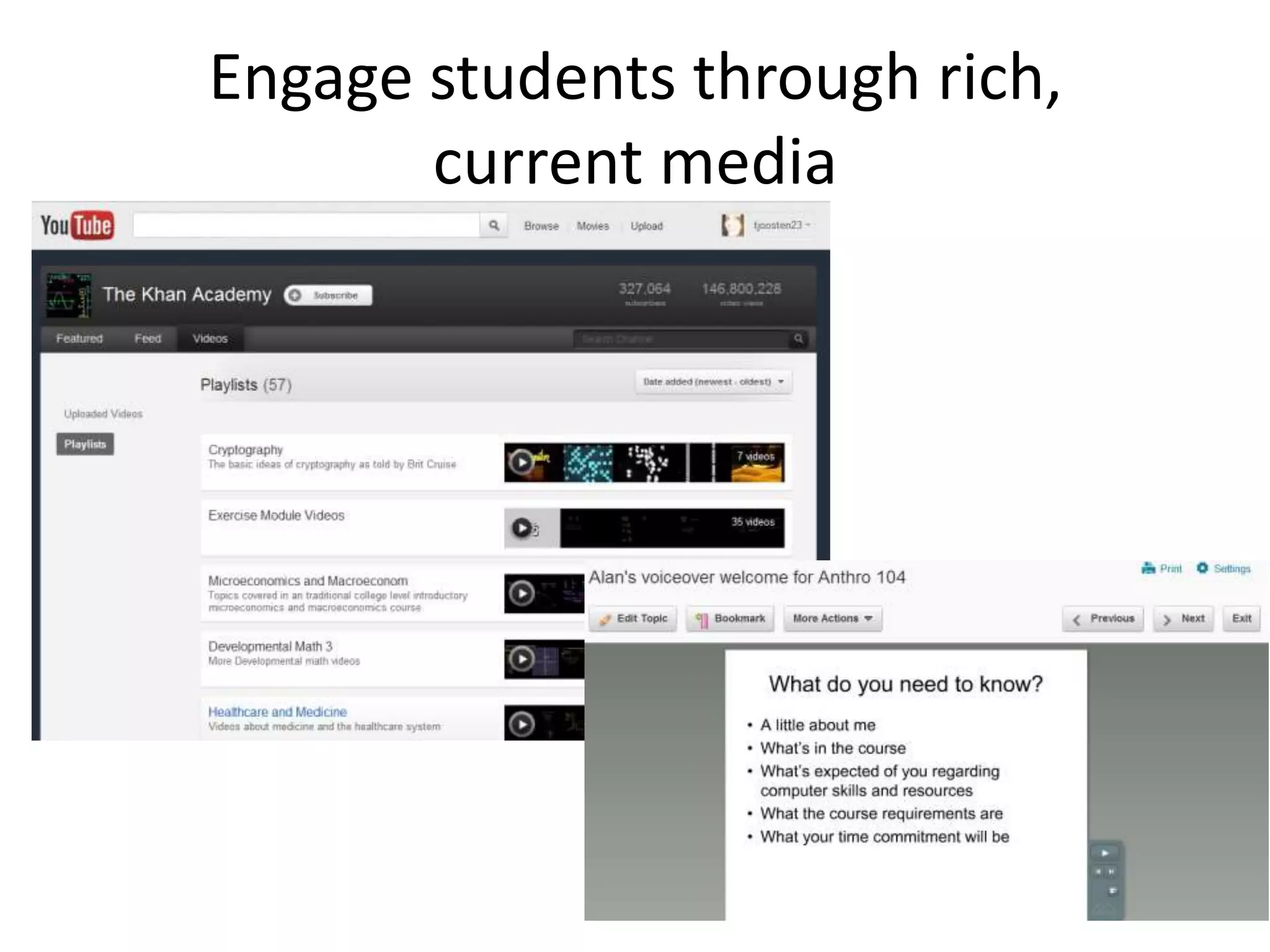
Engage students through rich,
       current media
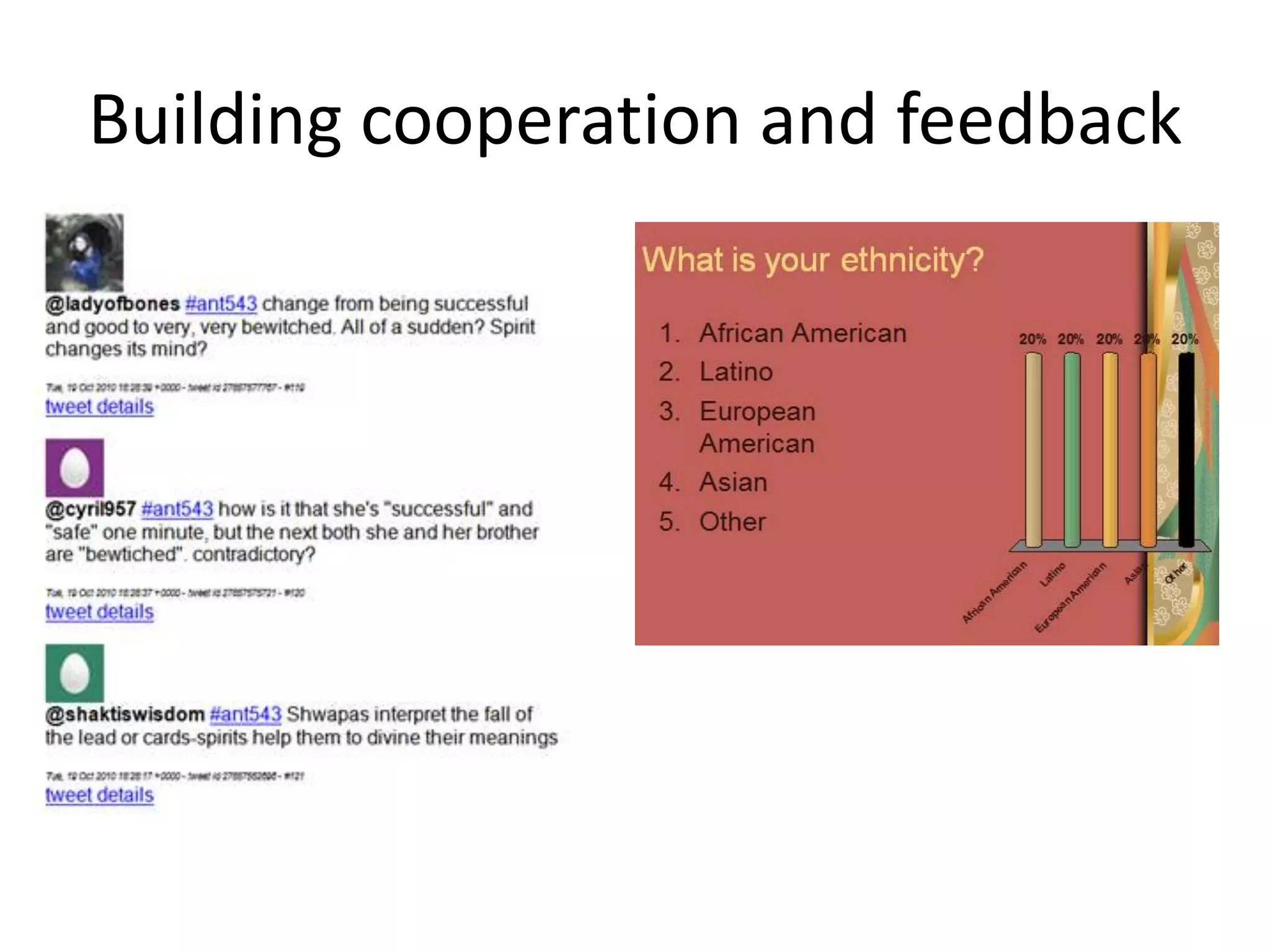
Building cooperation and feedback
Let the data drive your decisions


            Assess your students’ needs
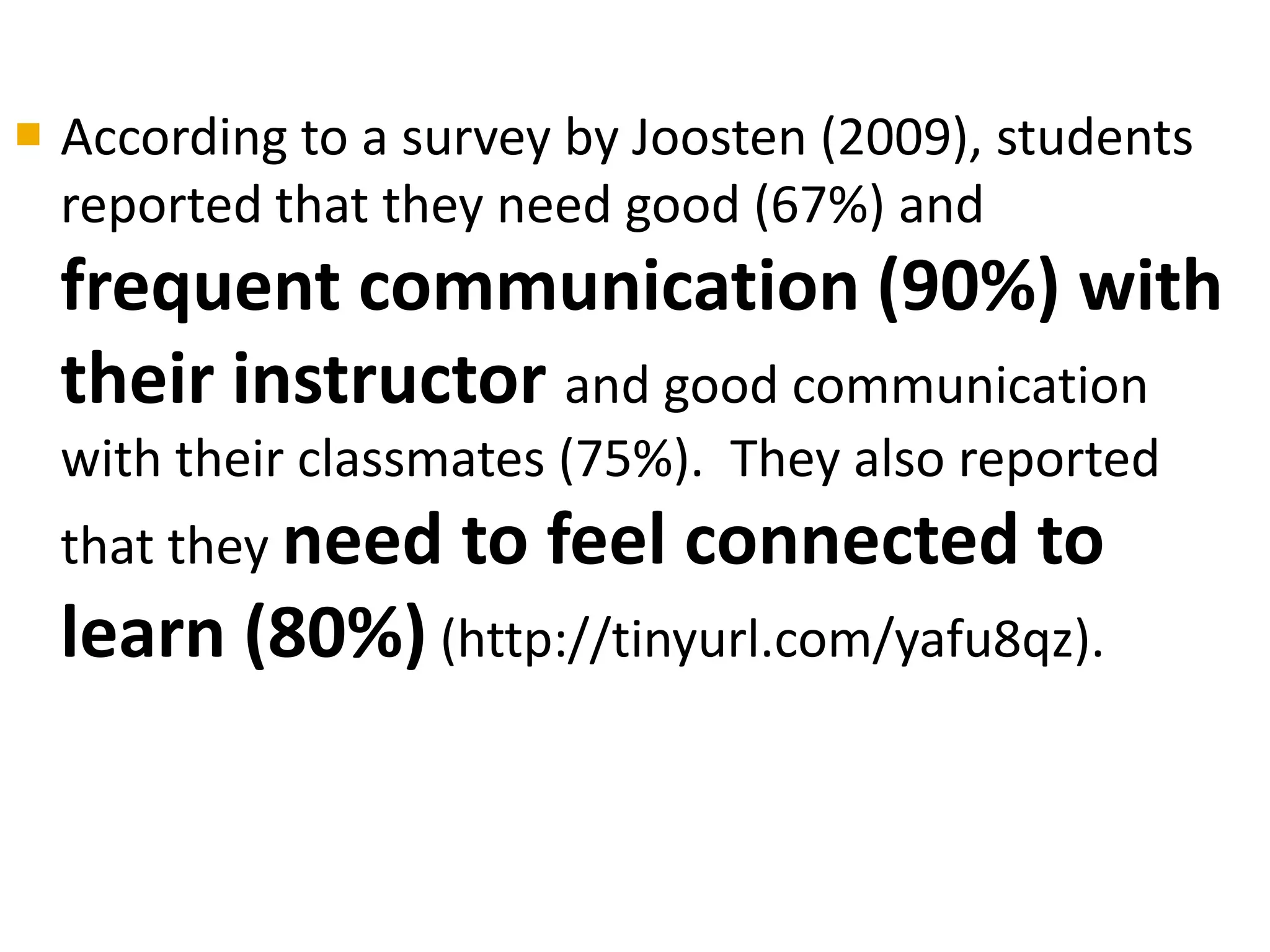
 According to a survey by Joosten (2009), students
  reported that they need good (67%) and
  frequent communication (90%) with
  their instructor and good communication
  with their classmates (75%). They also reported
  that they need   to feel connected to
  learn (80%) (http://tinyurl.com/yafu8qz).
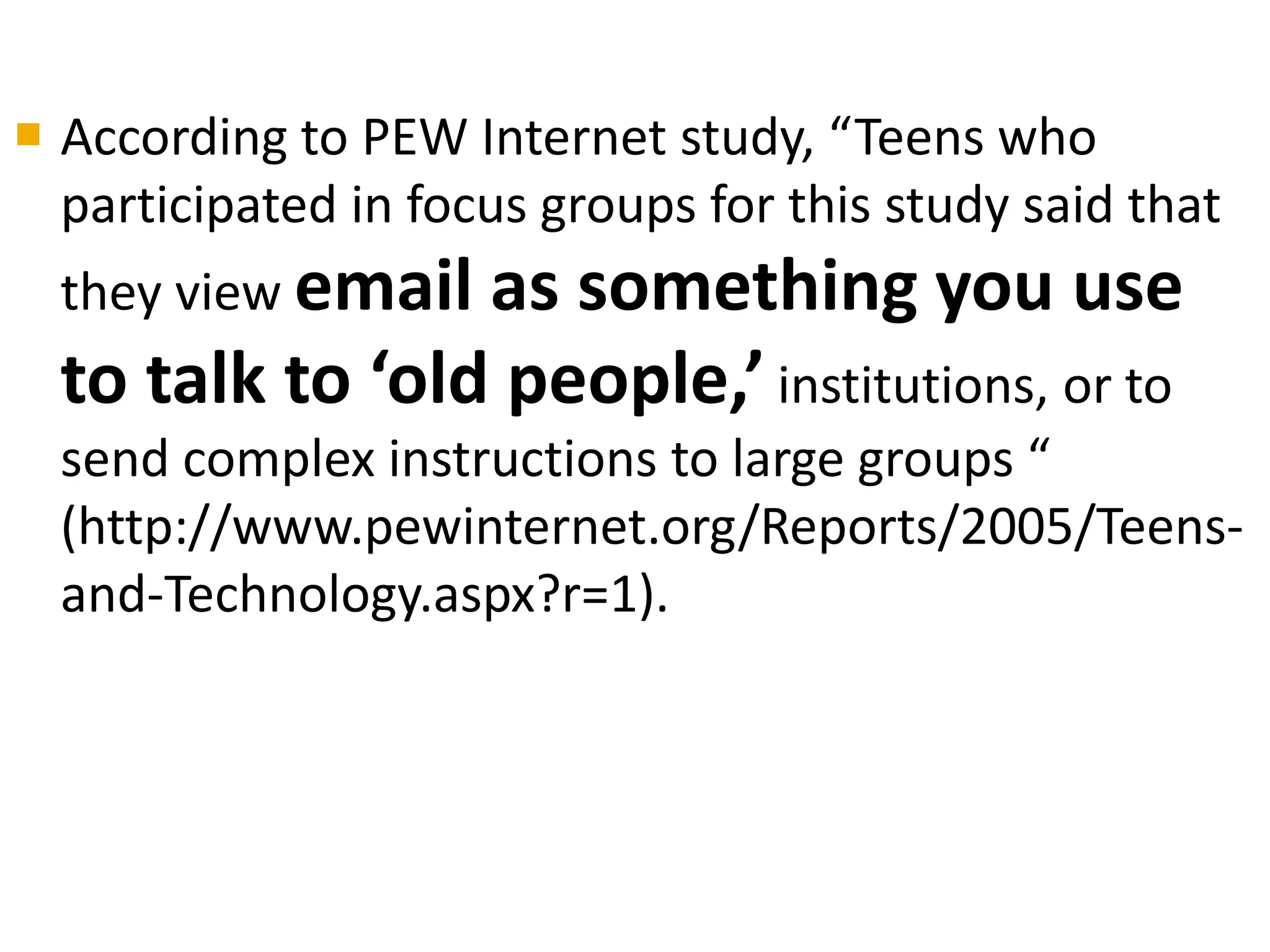
 According to PEW Internet study, “Teens who
  participated in focus groups for this study said that
  they view emailas something you use
  to talk to ‘old people,’ institutions, or to
  send complex instructions to large groups “
  (http://www.pewinternet.org/Reports/2005/Teens-
  and-Technology.aspx?r=1).
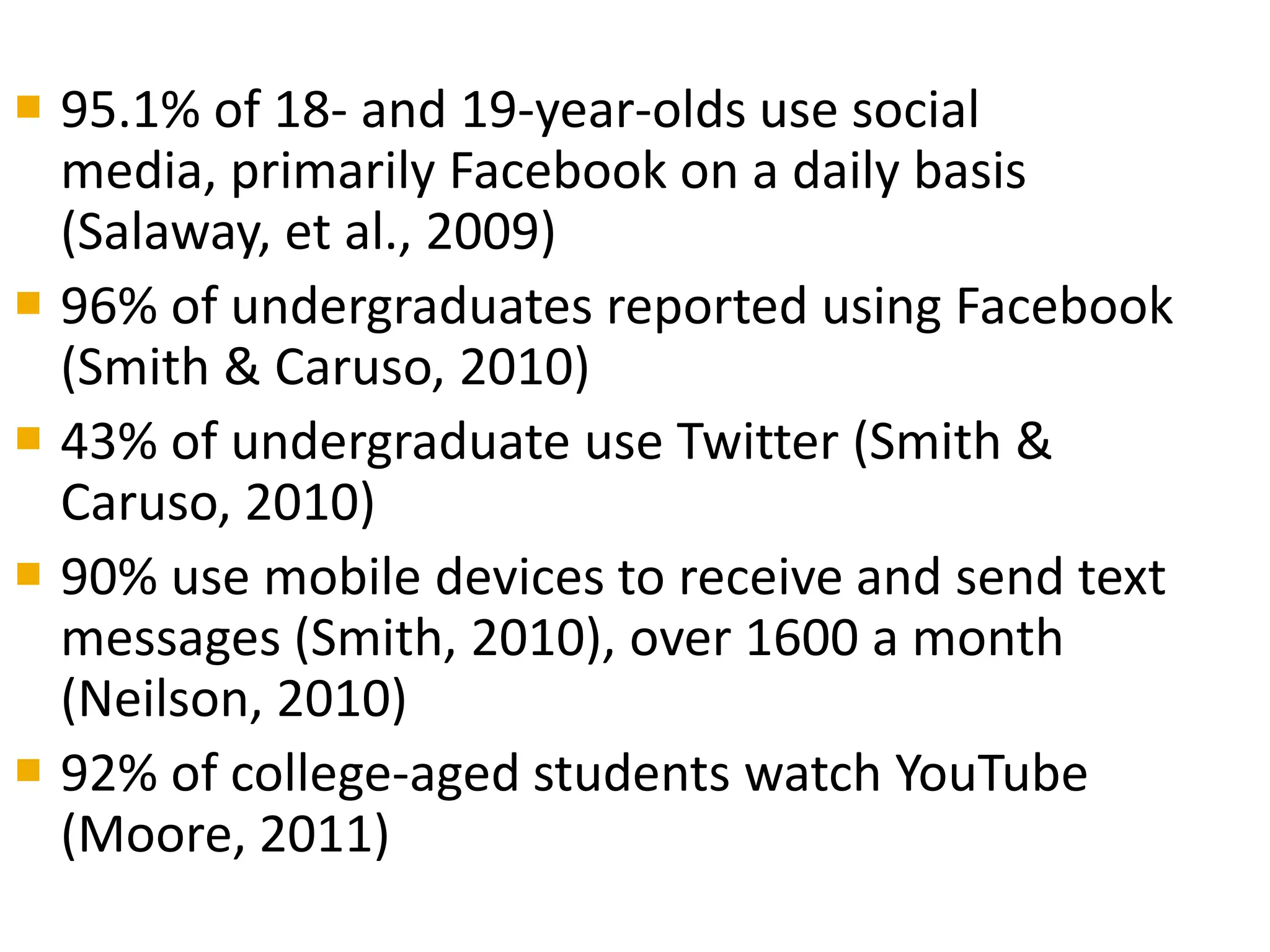
 95.1% of 18- and 19-year-olds use social
  media, primarily Facebook on a daily basis
  (Salaway, et al., 2009)
 96% of undergraduates reported using Facebook
  (Smith & Caruso, 2010)
 43% of undergraduate use Twitter (Smith &
  Caruso, 2010)
 90% use mobile devices to receive and send text
  messages (Smith, 2010), over 1600 a month
  (Neilson, 2010)
 92% of college-aged students watch YouTube
  (Moore, 2011)
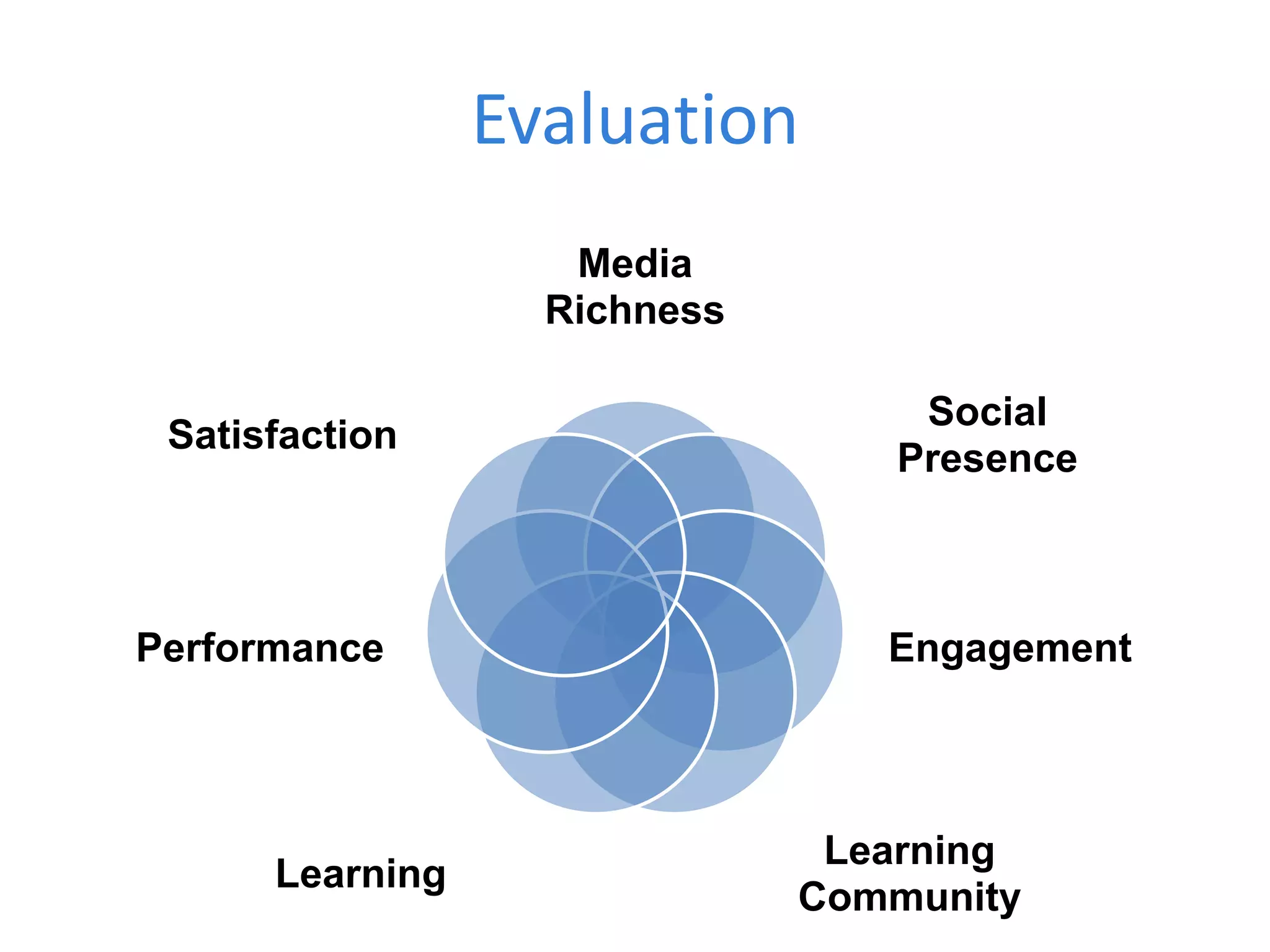
Evaluation
                    Media
                   Richness

                                  Social
 Satisfaction
                                 Presence


Performance                      Engagement


                               Learning
      Learning
                              Community
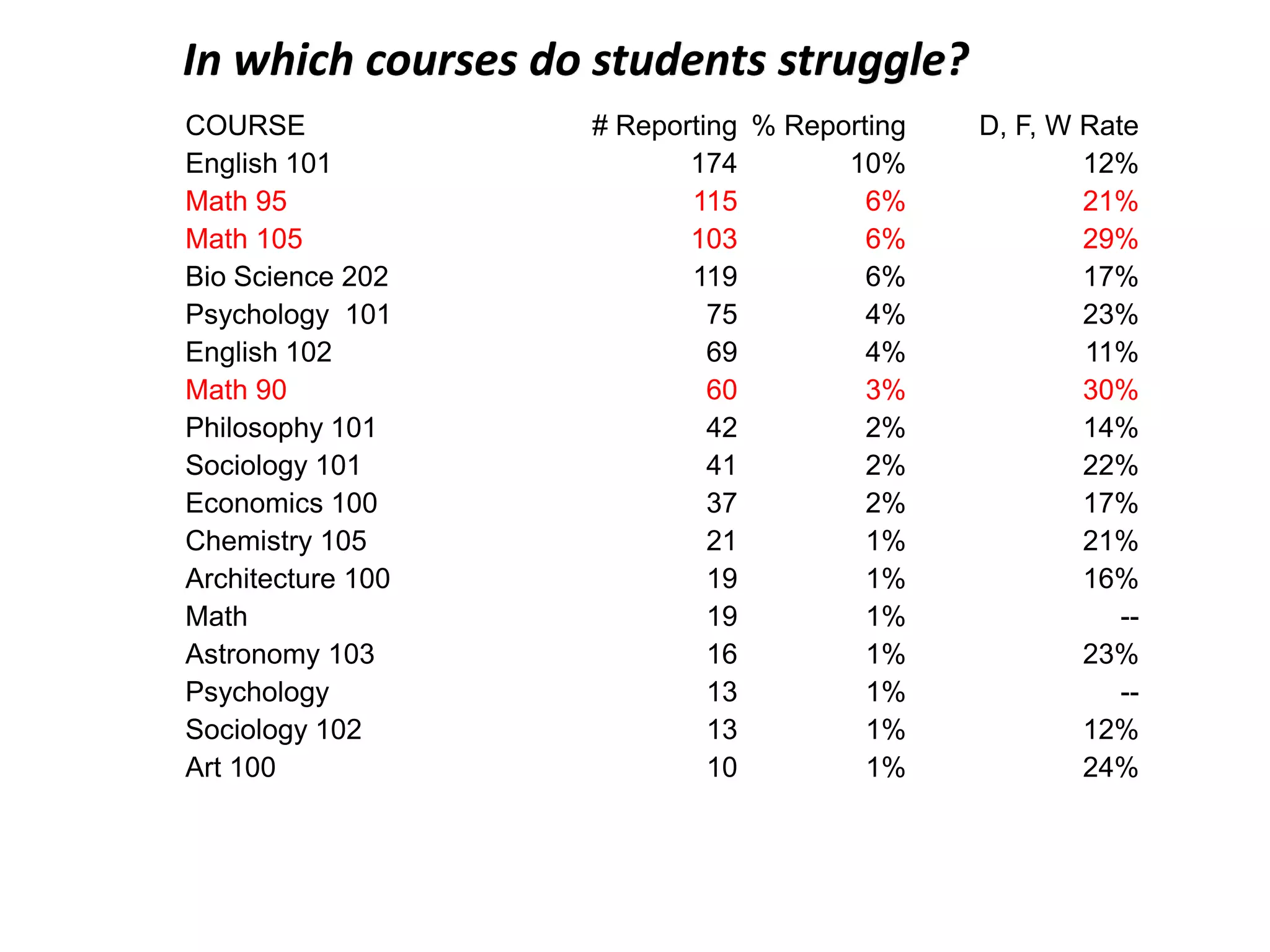
In which courses do students struggle?
COURSE             # Reporting % Reporting   D, F, W Rate
English 101               174        10%             12%
Math 95                   115          6%            21%
Math 105                  103          6%            29%
Bio Science 202           119          6%            17%
Psychology 101              75         4%            23%
English 102                 69         4%            11%
Math 90                     60         3%            30%
Philosophy 101              42         2%            14%
Sociology 101               41         2%            22%
Economics 100               37         2%            17%
Chemistry 105               21         1%            21%
Architecture 100            19         1%            16%
Math                        19         1%               --
Astronomy 103               16         1%            23%
Psychology                  13         1%               --
Sociology 102               13         1%            12%
Art 100                     10         1%            24%
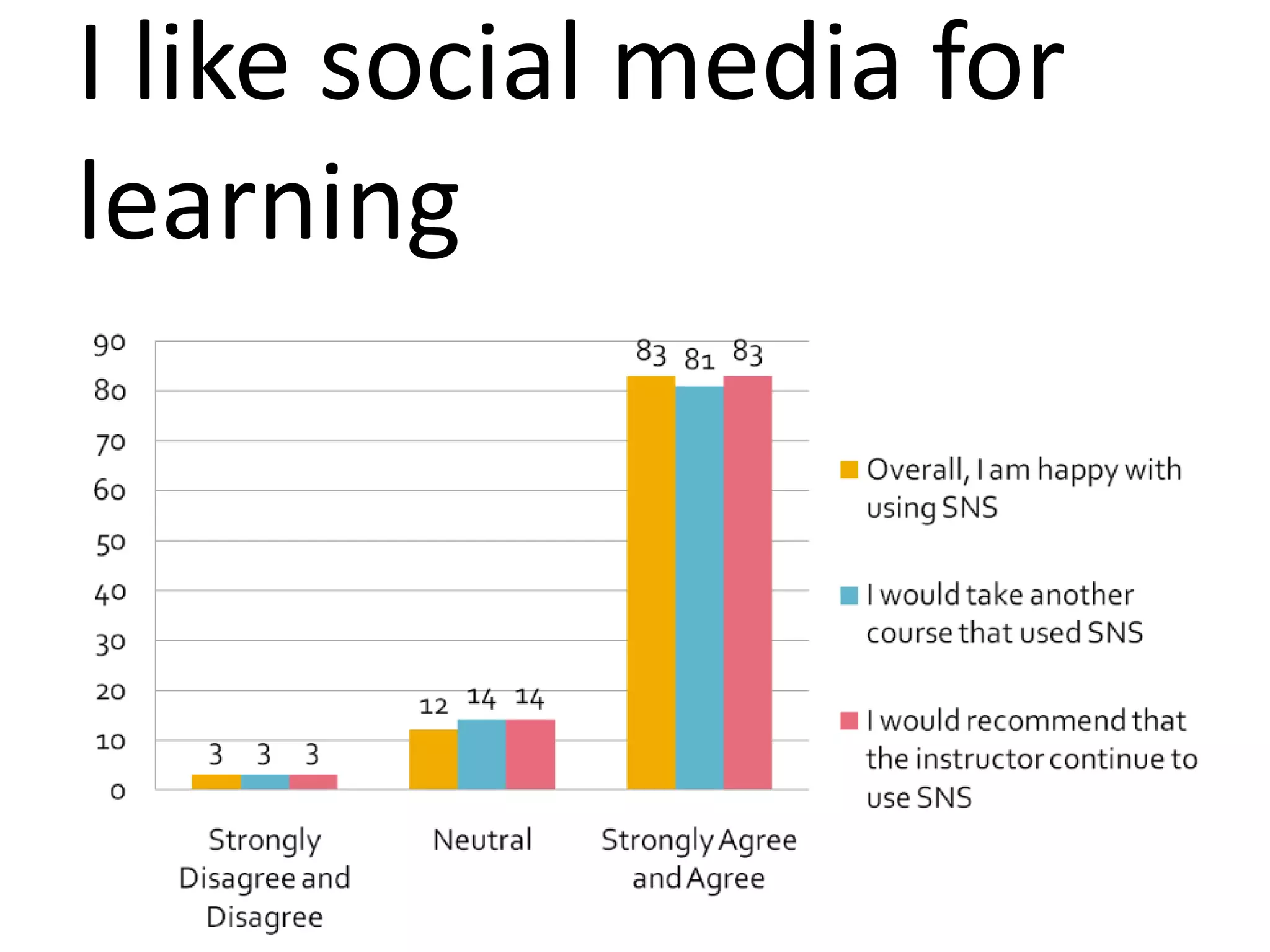
I like social media for
learning
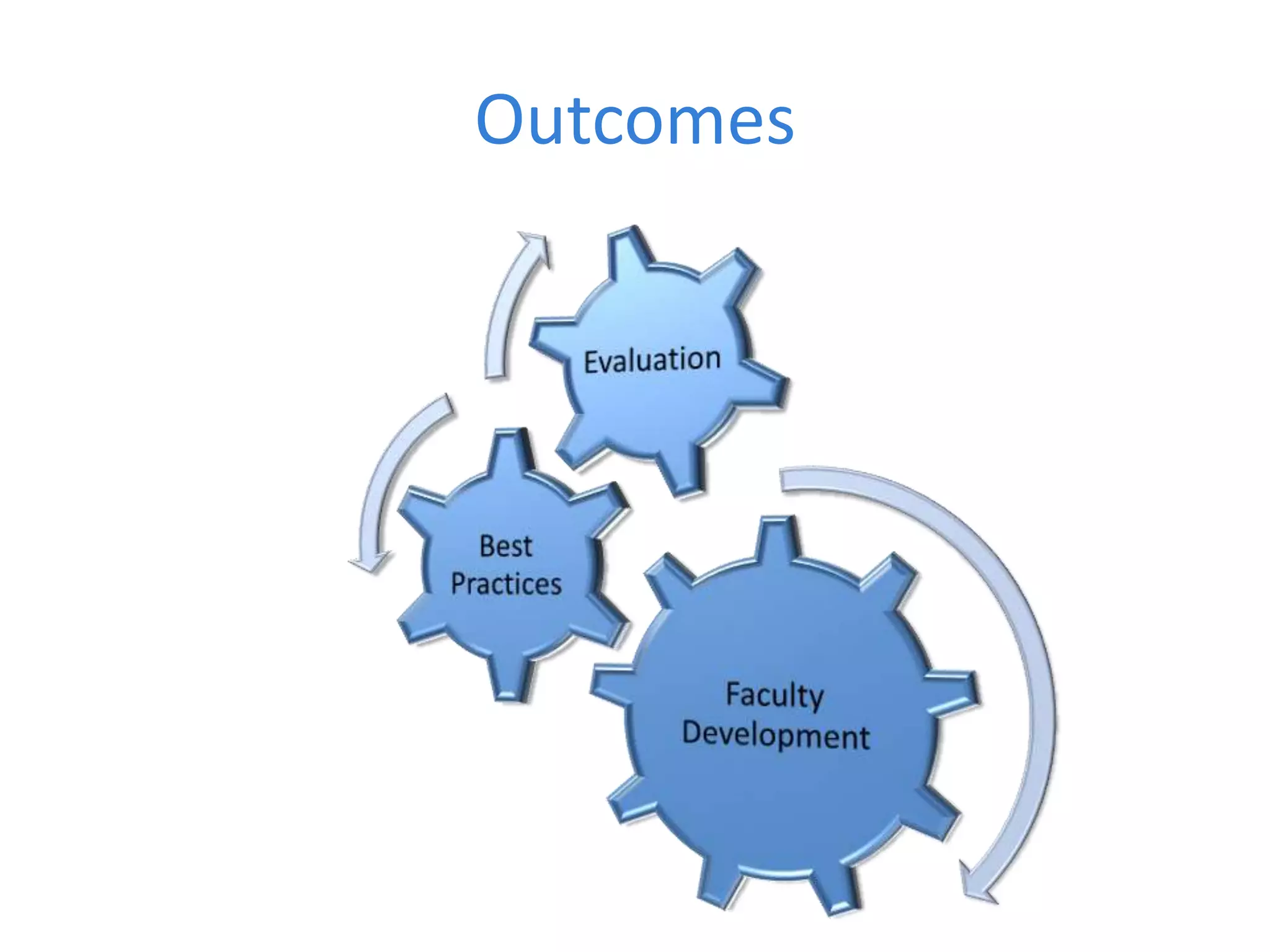
Outcomes
Let technology facilitate your
          strategy


             Don’t let it be your strategy
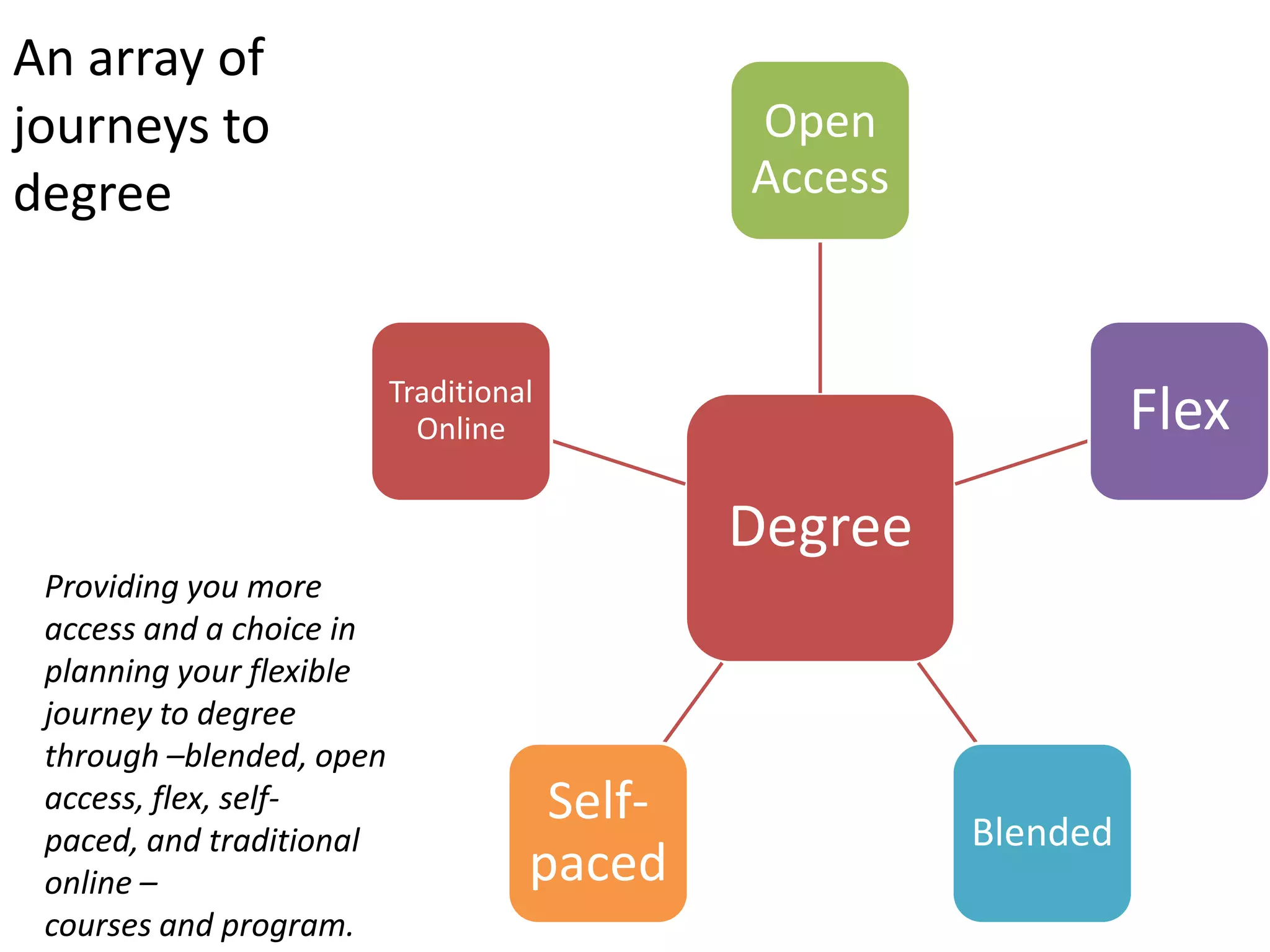
An array of
journeys to                                  Open
degree                                       Access


                          Traditional
                            Online                              Flex
                                             Degree
 Providing you more
 access and a choice in
 planning your flexible
 journey to degree
 through –blended, open
 access, flex, self-                 Self-            Blended
 paced, and traditional
 online –                           paced
 courses and program.
Support your students and your
          instructors


                  Open, collaborative
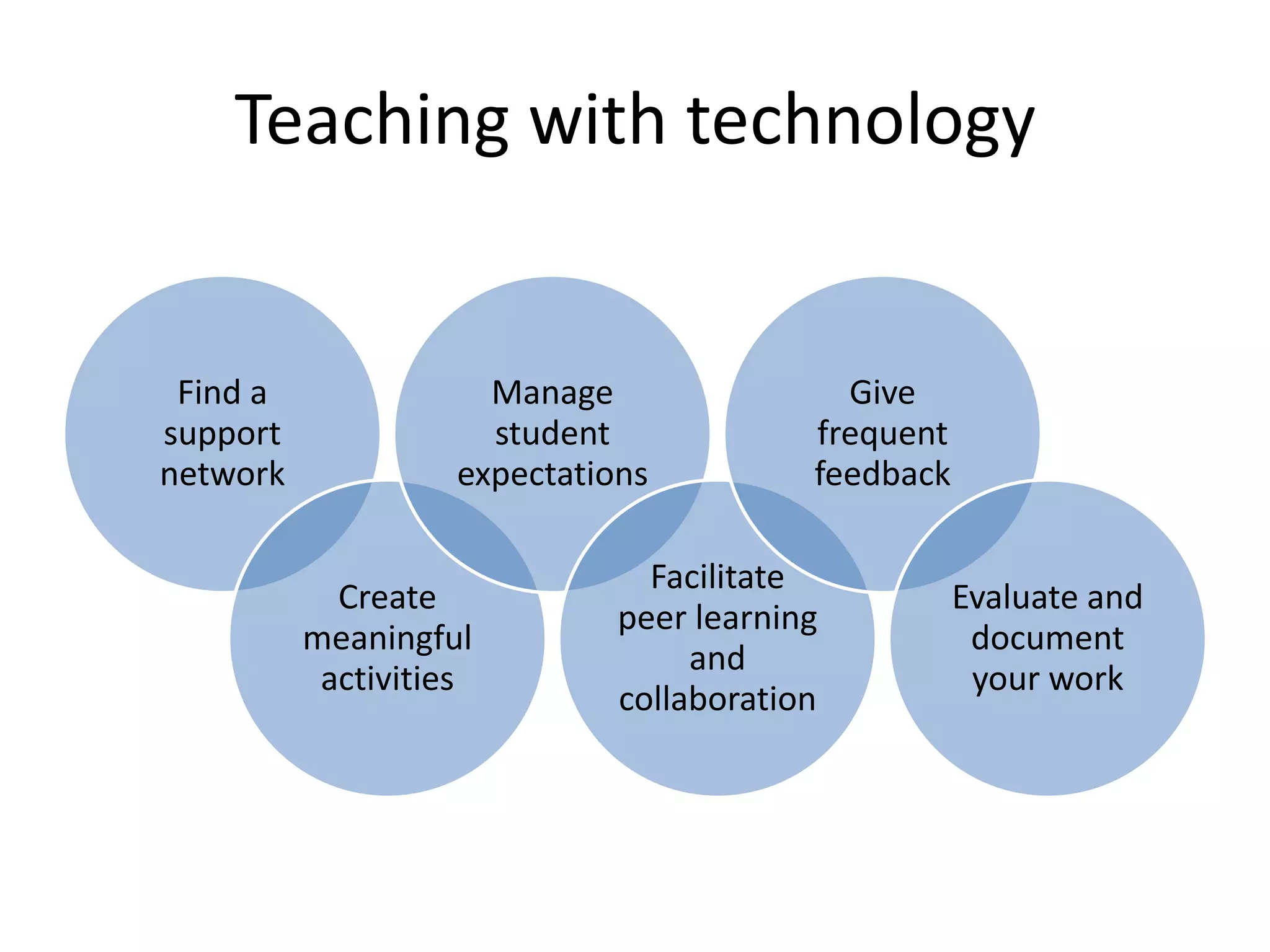
Teaching with technology


 Find a               Manage                Give
support               student             frequent
network             expectations          feedback

                                Facilitate
            Create                                   Evaluate and
                              peer learning
          meaningful                                  document
                                   and
           activities                                 your work
                              collaboration
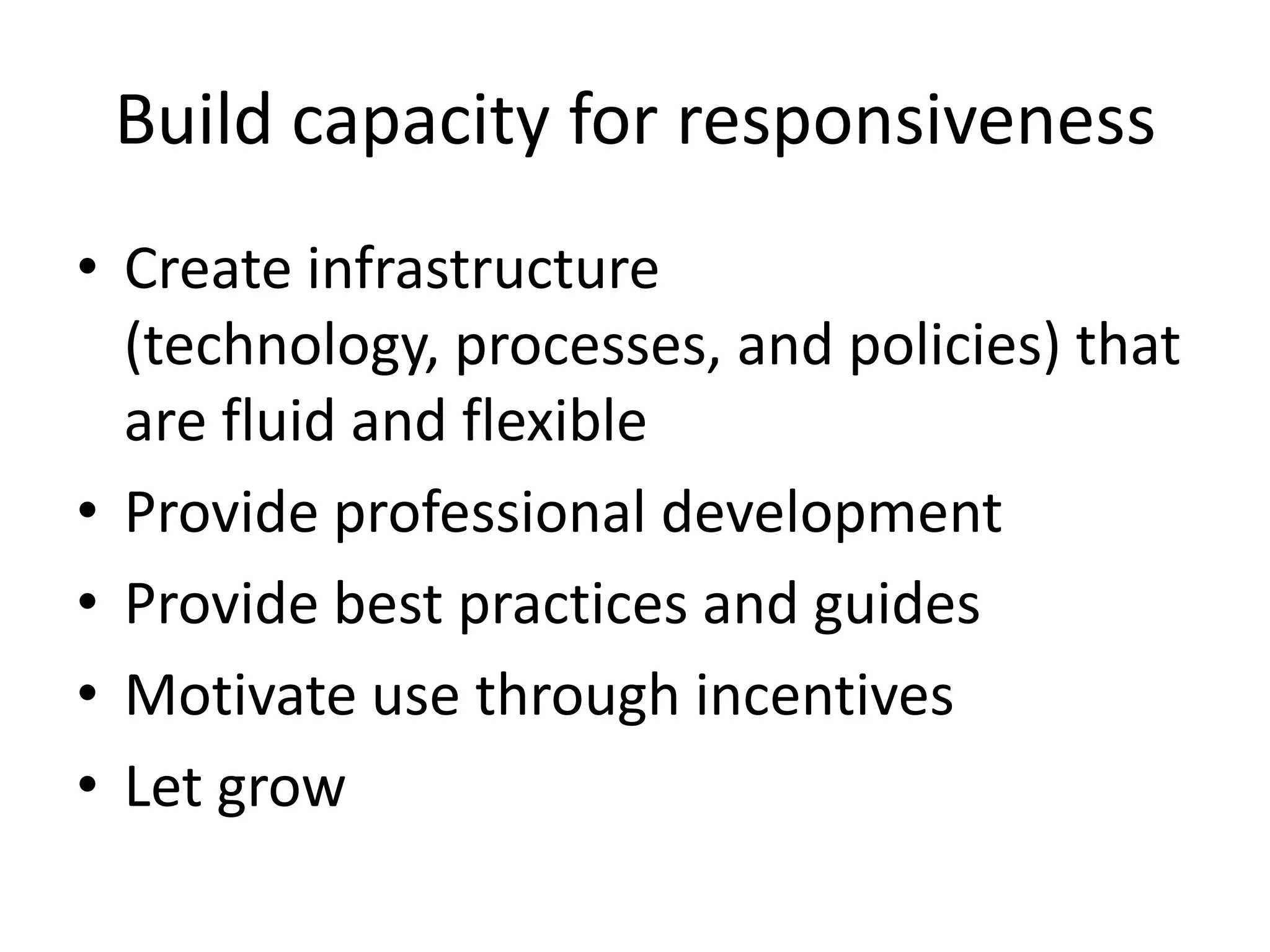
Build capacity for responsiveness
• Create infrastructure
  (technology, processes, and policies) that
  are fluid and flexible
• Provide professional development
• Provide best practices and guides
• Motivate use through incentives
• Let grow
Get it!
Connect w/me
• twitter.com/tjoosten

• linkedin.com/in/tjoosten

• facebook.com/tjoosten

• juice.gyoza@gmail.com | google+

• juice gyoza | second life

Who is driving the bus?

  • 1.
    The digital future: Whois driving the bus? follow @tjoosten slideshare.net/tjoosten Professorjoosten.blogspot.com
  • 2.
  • 10.
  • 11.
    Drive the bus,manage the change Don’t get managed or driven
  • 12.
    Implementing Stakeholder Buy-in Theory and Cost Evidence Pedagogical Change Need Agents Media Hype Characteristics
  • 13.
    Identify your pedagogicalgoals and students needs Assess your needs
  • 14.
  • 15.
    Engage students throughrich, current media
  • 16.
  • 17.
    Let the datadrive your decisions Assess your students’ needs
  • 18.
     According toa survey by Joosten (2009), students reported that they need good (67%) and frequent communication (90%) with their instructor and good communication with their classmates (75%). They also reported that they need to feel connected to learn (80%) (http://tinyurl.com/yafu8qz).
  • 19.
     According toPEW Internet study, “Teens who participated in focus groups for this study said that they view emailas something you use to talk to ‘old people,’ institutions, or to send complex instructions to large groups “ (http://www.pewinternet.org/Reports/2005/Teens- and-Technology.aspx?r=1).
  • 20.
     95.1% of18- and 19-year-olds use social media, primarily Facebook on a daily basis (Salaway, et al., 2009)  96% of undergraduates reported using Facebook (Smith & Caruso, 2010)  43% of undergraduate use Twitter (Smith & Caruso, 2010)  90% use mobile devices to receive and send text messages (Smith, 2010), over 1600 a month (Neilson, 2010)  92% of college-aged students watch YouTube (Moore, 2011)
  • 21.
    Evaluation Media Richness Social Satisfaction Presence Performance Engagement Learning Learning Community
  • 23.
    In which coursesdo students struggle? COURSE # Reporting % Reporting D, F, W Rate English 101 174 10% 12% Math 95 115 6% 21% Math 105 103 6% 29% Bio Science 202 119 6% 17% Psychology 101 75 4% 23% English 102 69 4% 11% Math 90 60 3% 30% Philosophy 101 42 2% 14% Sociology 101 41 2% 22% Economics 100 37 2% 17% Chemistry 105 21 1% 21% Architecture 100 19 1% 16% Math 19 1% -- Astronomy 103 16 1% 23% Psychology 13 1% -- Sociology 102 13 1% 12% Art 100 10 1% 24%
  • 24.
    I like socialmedia for learning
  • 25.
  • 26.
    Let technology facilitateyour strategy Don’t let it be your strategy
  • 29.
    An array of journeysto Open degree Access Traditional Online Flex Degree Providing you more access and a choice in planning your flexible journey to degree through –blended, open access, flex, self- Self- Blended paced, and traditional online – paced courses and program.
  • 30.
    Support your studentsand your instructors Open, collaborative
  • 33.
    Teaching with technology Find a Manage Give support student frequent network expectations feedback Facilitate Create Evaluate and peer learning meaningful document and activities your work collaboration
  • 39.
    Build capacity forresponsiveness • Create infrastructure (technology, processes, and policies) that are fluid and flexible • Provide professional development • Provide best practices and guides • Motivate use through incentives • Let grow
  • 40.
  • 41.
    Connect w/me • twitter.com/tjoosten •linkedin.com/in/tjoosten • facebook.com/tjoosten • juice.gyoza@gmail.com | google+ • juice gyoza | second life

Editor's Notes

  • #2 Higher education is undergoing a rapid transformation due to changes in societal interests and values. As educators, we must be responsive to these changes and look to develop strategies to best meet the needs of our students inside and outside of the classroom. We are bombarded with new technologies and practices to aid us in our efforts, including blended learning, learner analytics, MOOCs, open education resources (OER), mobile technologies, social media, gamification, and more. How do we decide what is right for us and our students? I will discuss considerations derived from these trends that will help us design our future.
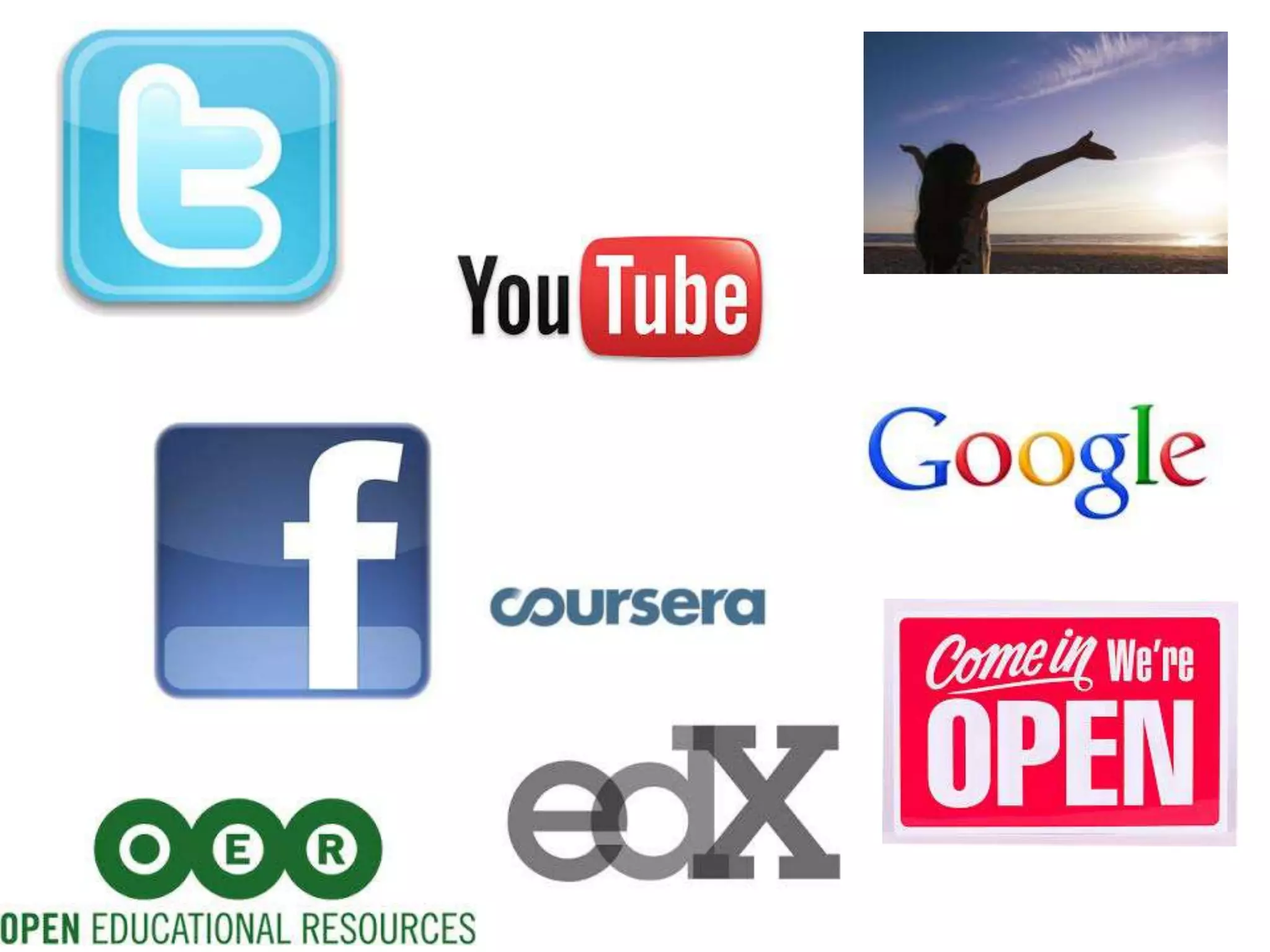
  • #4 OpenMOOCs, OERYouTube, Social MediaGoogleResources at our finger tips, in a instantEveryone has access to these techologies, to thee coursesStatus levelingDemocratizing
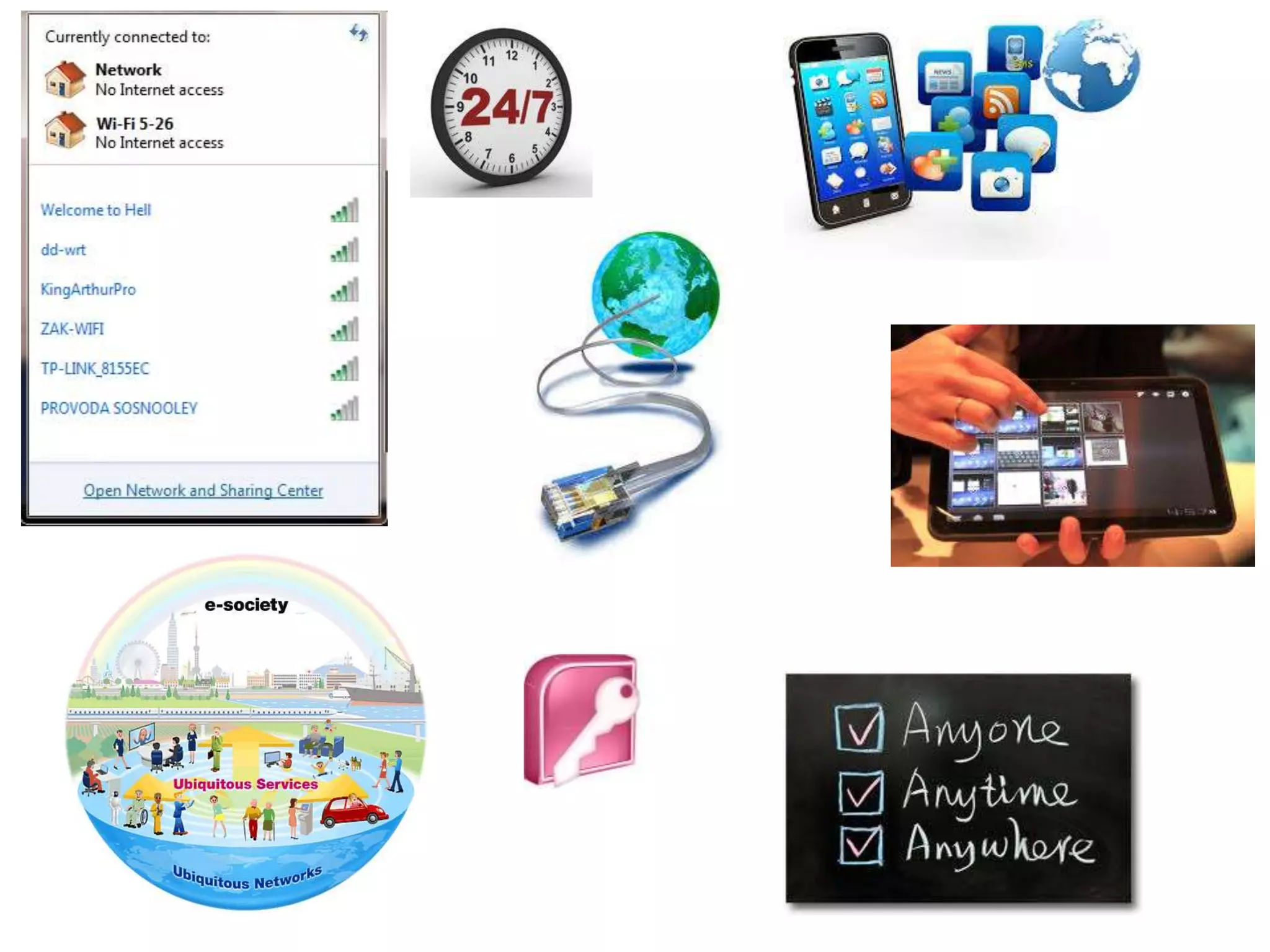
  • #5 Anytime, AnywhereUbiquitousMobileAccessBandwidthPhones, tablets, laptopsPush – instant – info, support, etcAll instructional materias -- ACCESS
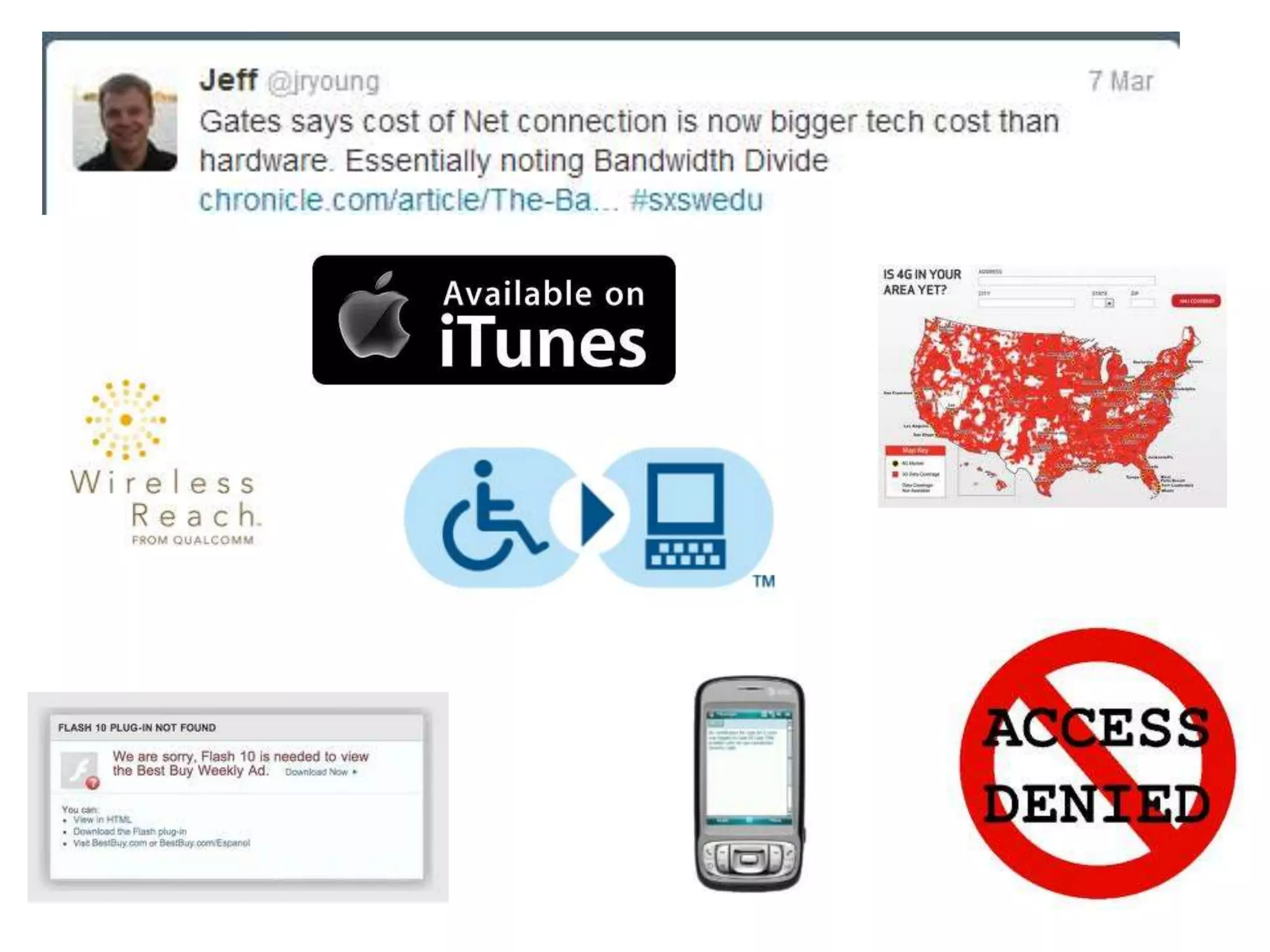
  • #6 AccessEvery campus process needs to be able to be completed on a mobile device, mobile web or appThis includes instructional materials need to be accessible depending on device, bandwidth, time, and disAbilitySupport needs to be able to be received from all units through multiple mediums and timesLibrary, IT Help, Tutoring, Advising
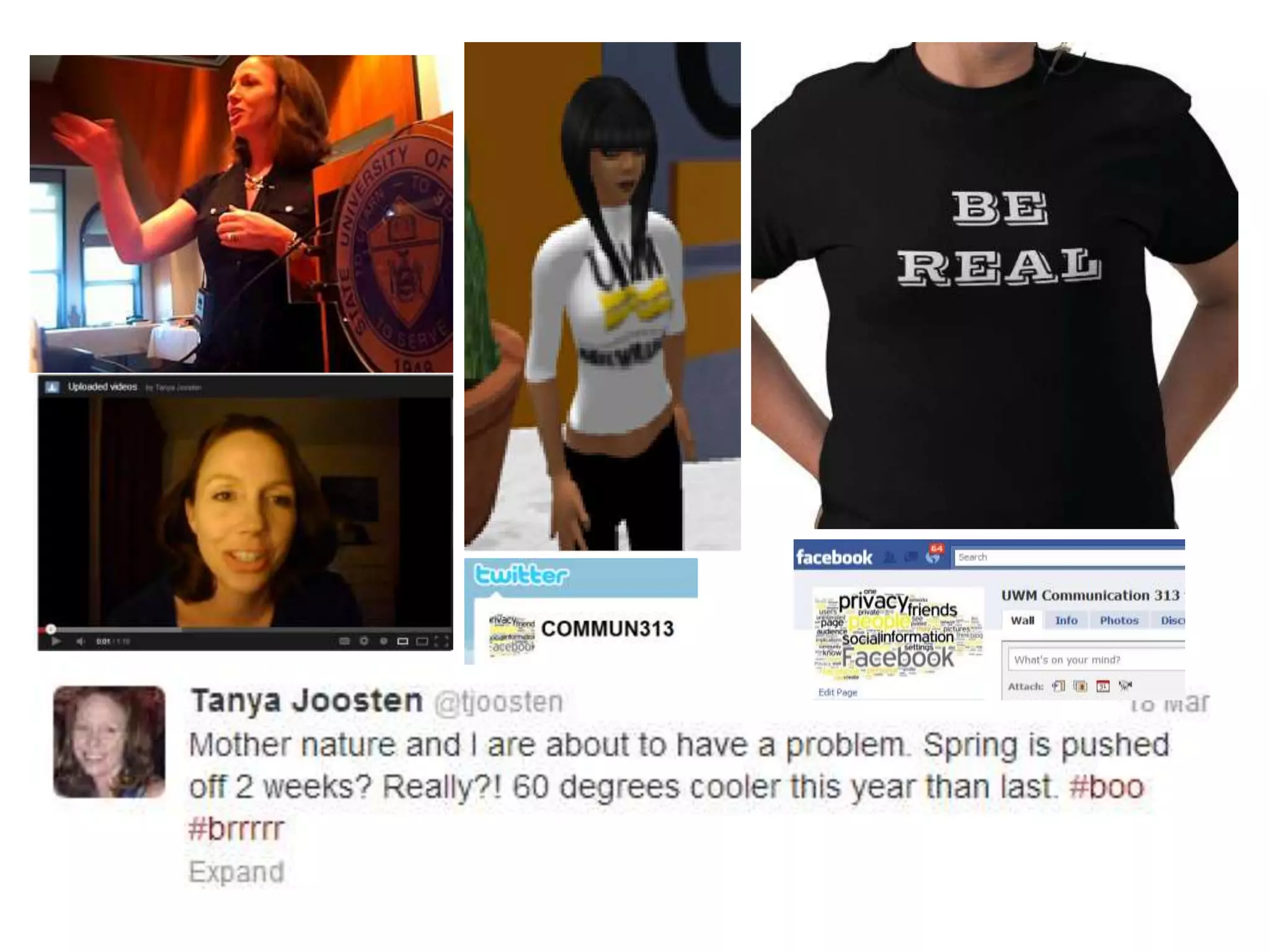
  • #7 Increase in use of social media and self-disclosure has led to an increase in the weight indivdiuals put on being real – being human, and being authenticEmotions are valued, emotional intelligence is valued over other intelligencesGreater need to develop an identify, express that identify, by building a strong culture and presence as an institution, and developing a voice as a teacher, teacher presence or social presenceThis is no longer the days of IBM corporate culture, no emotions, logic drives everything…
  • #8 ConnectedStudents want to feel connected – to their instructors, to their universities, to the worldWe must develop these strategies and choose the technologies that develop these connectionsWe must connect with k12, with employers, corporate partners, with global partners and studentsEngaged and ChallengesPedagogy is learner centeredActive learningNo more lecture-based, teacher-centered modelsEverything is blended or onlineInstructors are learning journey guides not just content expertsInstructors must be able to develop activities, not just contentStudents need to be engagedStudents need to be challengedThey need motivation and rewards beyond gradesThey need to understand the impact of their work and the link to their future, to society, They need do-oversThey need multiple livesBut, they need high expectationsLiteraciesGlobalTechnologicalDigitalInformation
  • #9 CollaborateWe must collaborate with each other on campus, faculty – faculty, faculty – student services, researchers, business operations, etcWe must collaborate with our studnets future employers in developing students who will get hired, interdisciplinary degrees that matterWe must collaborate with other institutions like ours to solve our problems.
  • #13 Pedagogical Need -- Media CharacteristicsNeed – can a need be met, clickers – increase engagement and retentionSecond Life -- offering richness to meet pedagogical needs not met by other technologiesHype -- Evidence – Do we have any data that it works? Not always…Theory – Based on the theories, social and learning, could it work? How do we know it works?Maybe we just did it wrong?
  • #15 Social Mobile –content deliveyr
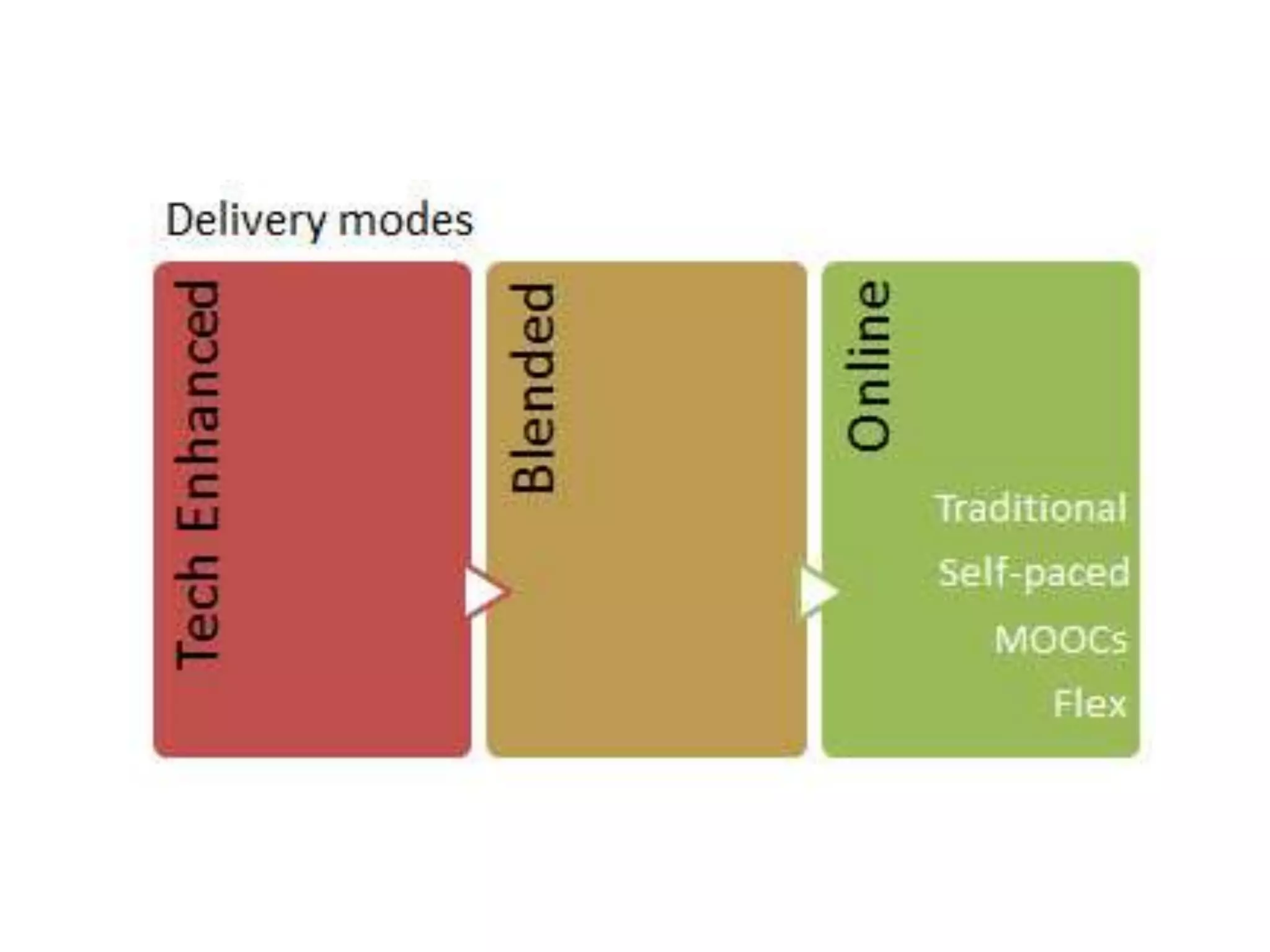
  • #28 UWM leads the state in the mediated delivery of courses and programs in tech-enhanced, blended, and online, including traditional and self-paces (UPACE). UWM will lead the state in flex programming and competency based education.UWM has received recognition for its efforts in blended faculty development and self-paced (UPACE) instruction.
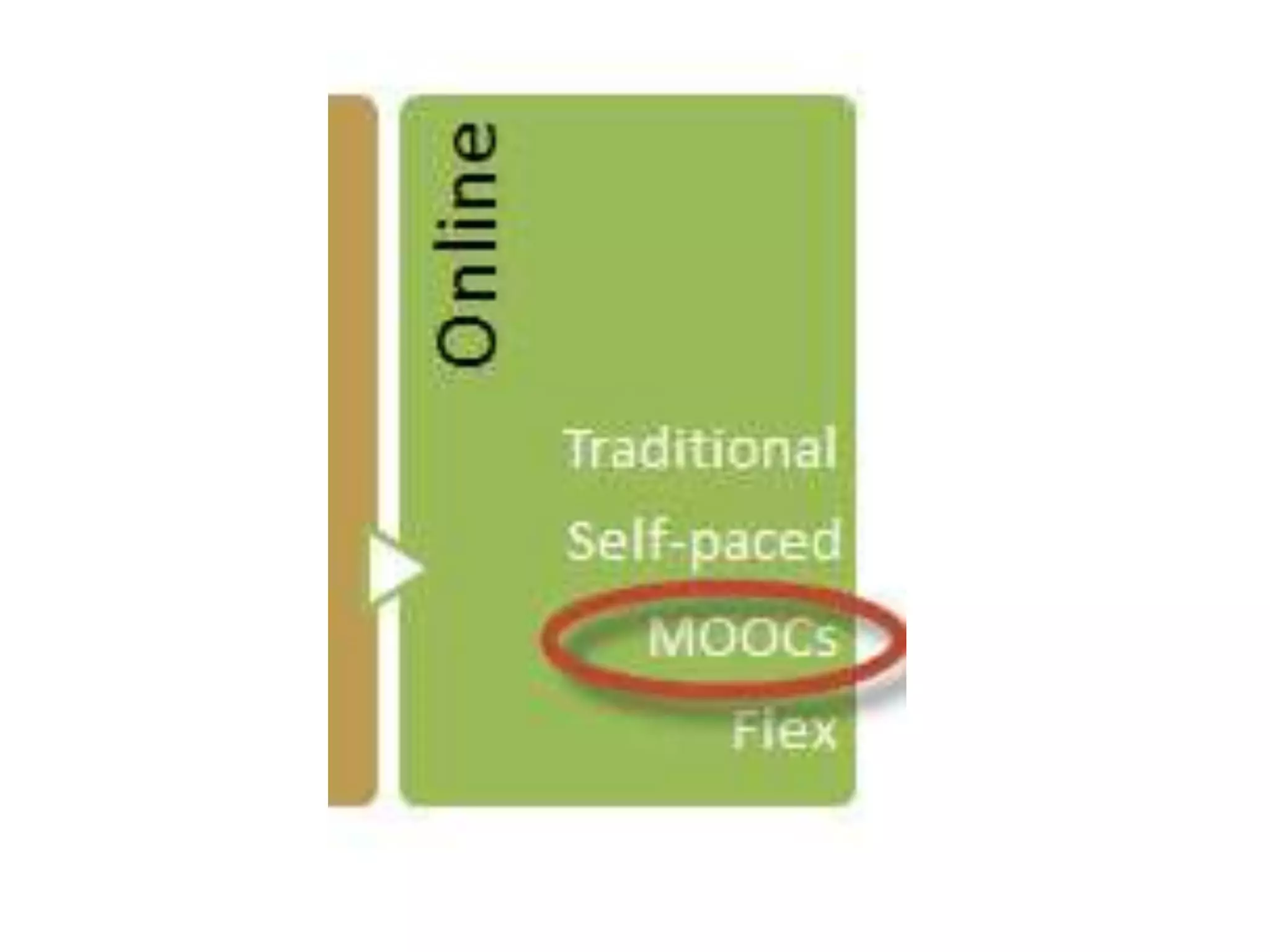
  • #29 GOAL: UWM will lead the state in MOOC delivery.The means to do this will be built off of the knowledge of blended and online faculty development and course design, upace model, and flex programming.
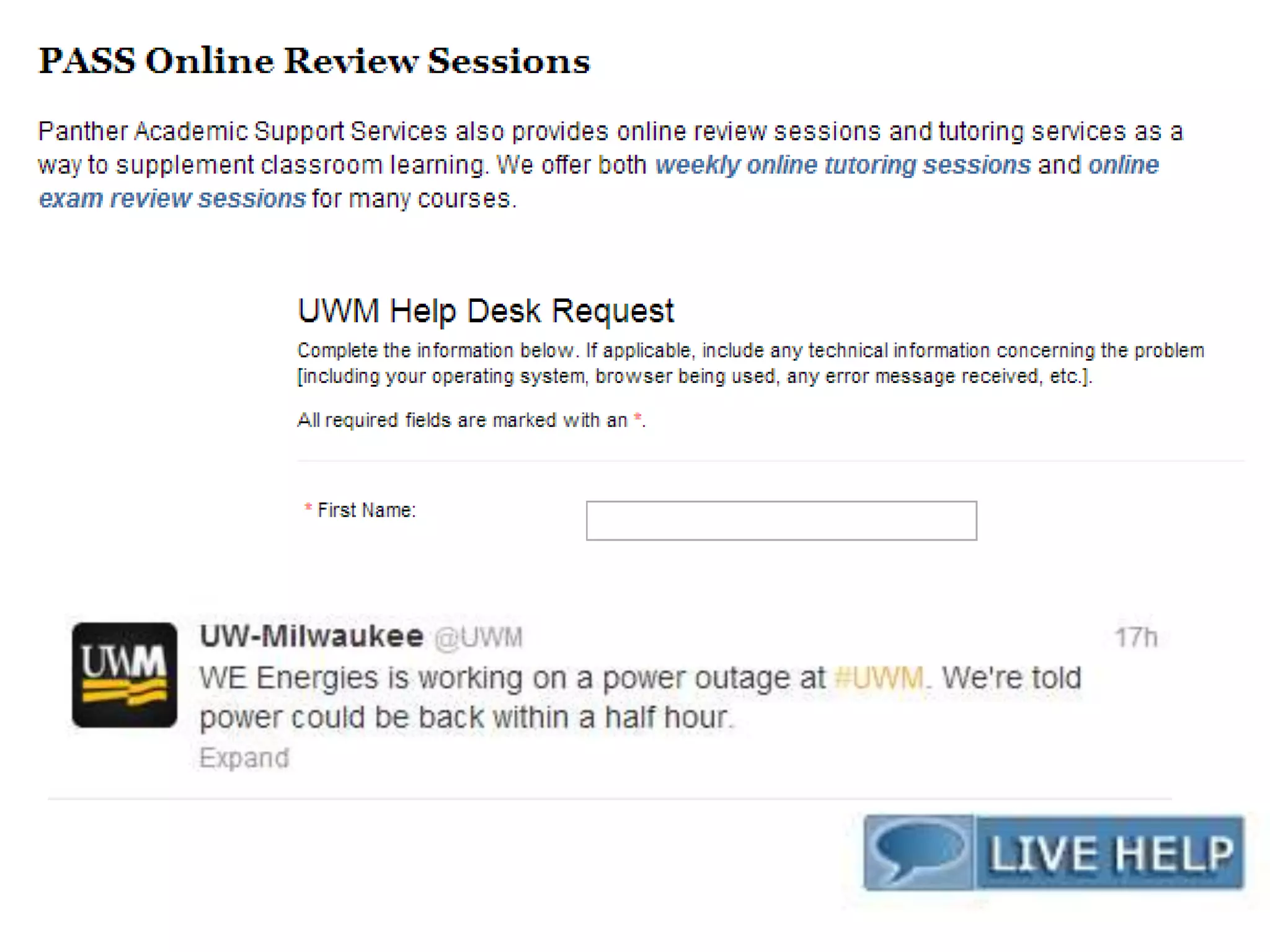
  • #31 Students:Learning, at our finger tips just in timeInstructor role change, content is already Googleable, what do you bring to the table as an instructorInstructional support, just in timeInstructional materials, Oer, MOOCs, how to find repurpose
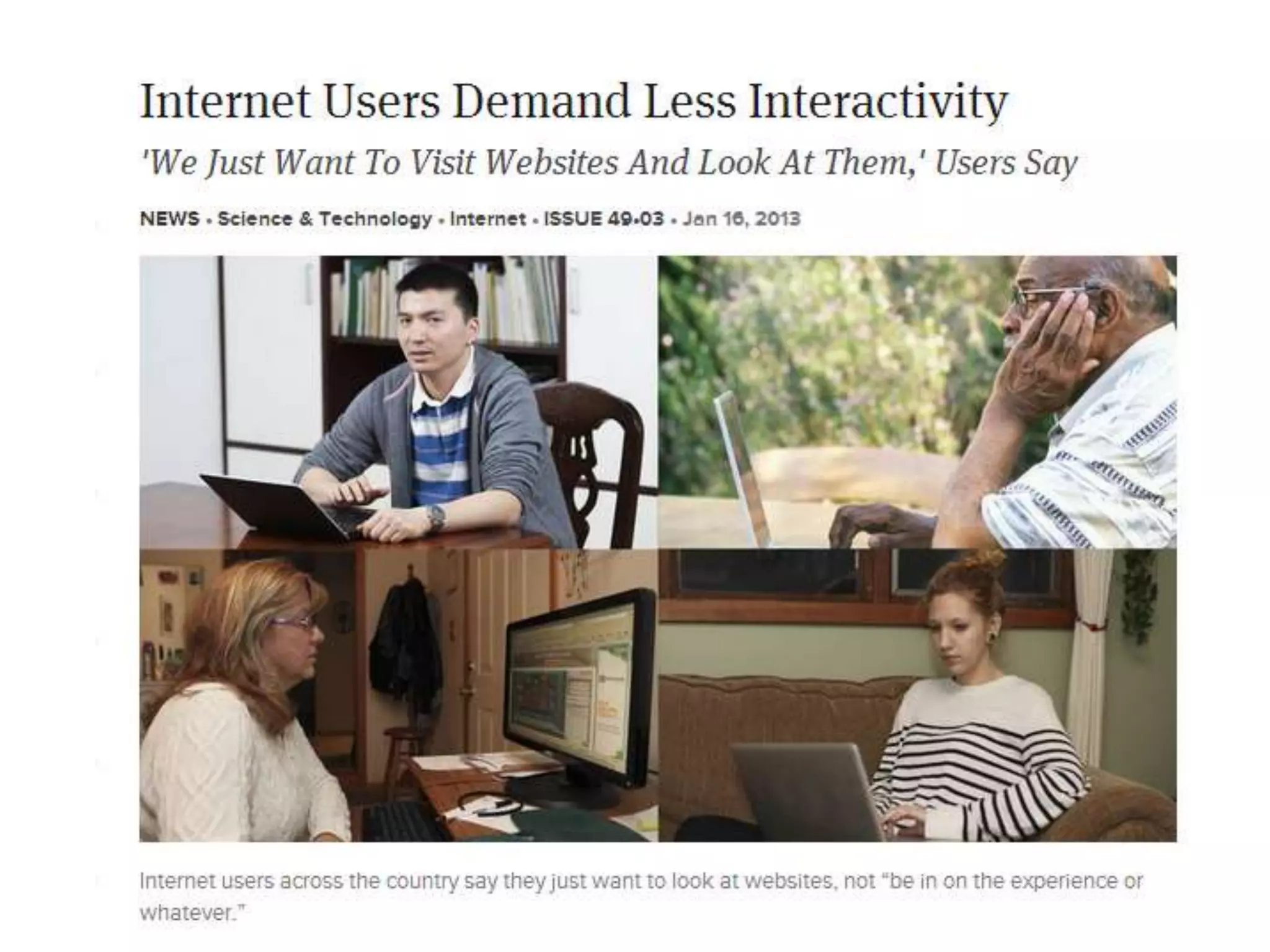
  • #33 http://www.theonion.com/articles/internet-users-demand-less-interactivity,30920/
  • #40 We must have business models and financial models that help us meet these needsWe need professional development and training for all organizational members on implementing these considerationsWe need to provide motivation to staff and faculty to participateWe need to provide human resources that focus on these initiatives, not one person, or part of a person