Orkustofnun
The National Energy Authority
Prof. Dr. Gudni A Jóhannesson
Director General
GEORG 25. Nov 2016
Role and Opportunities of
Geothermal in Smart
Energy Systems
1
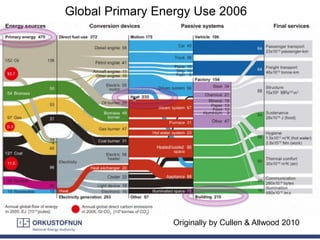
Originally by Cullen & Allwood 2010
Global Primary Energy Use 2006
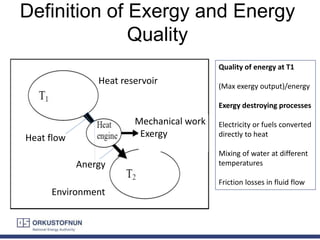
Definition of Exergy and Energy
Quality
Heat reservoir
Mechanical work
- ExergyHeat flow
Anergy
Environment
Quality of energy at T1
(Max exergy output)/energy
Exergy destroying processes
Electricity or fuels converted
directly to heat
Mixing of water at different
temperatures
Friction losses in fluid flow
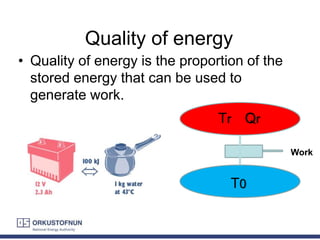
Quality of energy
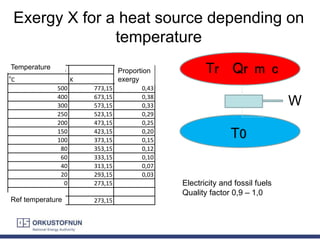
• Quality of energy is the proportion of the
stored energy that can be used to
generate work.
T0
Tr Qr
Work
Exergy X for a heat source depending on
temperature
T0
Tr Qr m cHitastig varmageymis Hlutfall
o
C K hágildisorku
500 773,15 0,43
400 673,15 0,38
300 573,15 0,33
250 523,15 0,29
200 473,15 0,25
150 423,15 0,20
100 373,15 0,15
80 353,15 0,12
60 333,15 0,10
40 313,15 0,07
20 293,15 0,03
0 273,15
Viðmiðunarhitastig 273,15
W
Temperature
Proportion
exergy
Ref temperature
Electricity and fossil fuels
Quality factor 0,9 – 1,0
How Smart is Smart
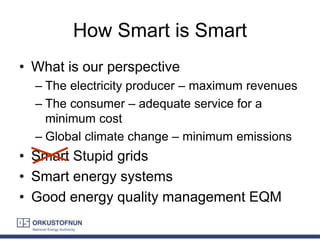
• What is our perspective
– The electricity producer – maximum revenues
– The consumer – adequate service for a
minimum cost
– Global climate change – minimum emissions
• Smart Stupid grids
• Smart energy systems
• Good energy quality management EQM
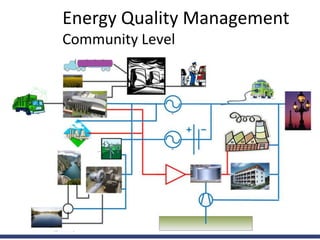
Energy Quality Management
Community Level
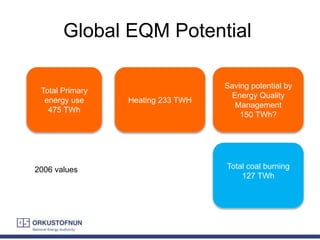
Global EQM Potential
Total Primary
energy use
475 TWh
Heating 233 TWH
Saving potential by
Energy Quality
Management
150 TWh?
Total coal burning
127 TWh
2006 values
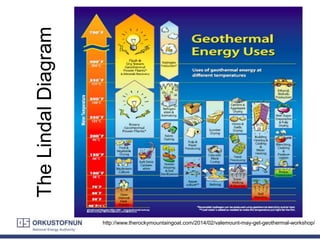
TheLindalDiagram
http://www.therockymountaingoat.com/2014/02/valemount-may-get-geothermal-workshop/
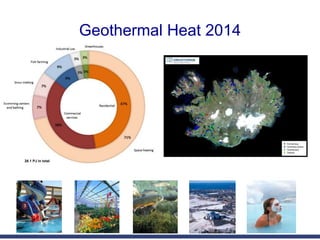
Geothermal Heat 2014
28.1 PJ in total
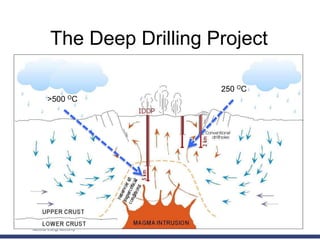
The Deep Drilling Project
>500 OC
250 OC
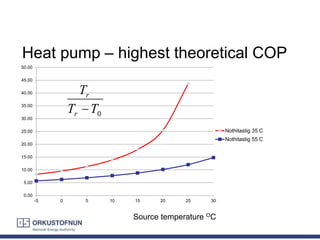
Heat pump – highest theoretical COP
0.00
5.00
10.00
15.00
20.00
25.00
30.00
35.00
40.00
45.00
50.00
-5 0 5 10 15 20 25 30
Nothitastig 35 C
Nothitastig 55 C
0TT
T
r
r

Source temperature OC
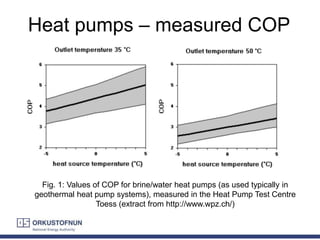
Heat pumps – measured COP
Fig. 1: Values of COP for brine/water heat pumps (as used typically in
geothermal heat pump systems), measured in the Heat Pump Test Centre
Toess (extract from http://www.wpz.ch/)
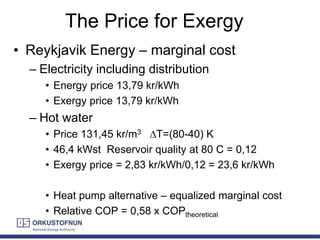
The Price for Exergy
• Reykjavik Energy – marginal cost
– Electricity including distribution
• Energy price 13,79 kr/kWh
• Exergy price 13,79 kr/kWh
– Hot water
• Price 131,45 kr/m3 DT=(80-40) K
• 46,4 kWst Reservoir quality at 80 C = 0,12
• Exergy price = 2,83 kr/kWh/0,12 = 23,6 kr/kWh
• Heat pump alternative – equalized marginal cost
• Relative COP = 0,58 x COPtheoretical
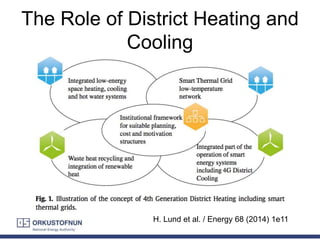
The Role of District Heating and
Cooling
H. Lund et al. / Energy 68 (2014) 1e11
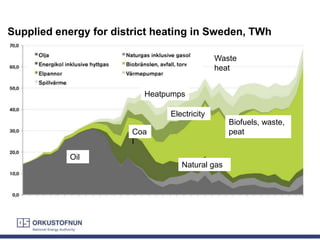
Supplied energy for district heating in Sweden, TWh
Oil
Biofuels, waste,
peat
Heatpumps
Waste
heat
Natural gas
Coa
l
Electricity
Increased market penetration
• Integration into the total energy system
• Increased penetration of district heating
and cooling networks
• New generation of networks - prosumers
• Industries
• Biocultures
• Absorptive and adsorptive cooling
• Improved public acceptance
• Deposition of gasses with reinjection
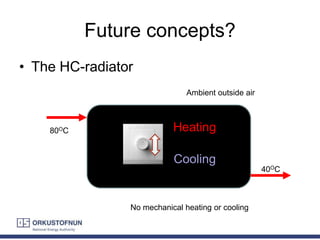
Future concepts?
• The HC-radiator
80OC
40OC
Heating
Cooling
No mechanical heating or cooling
Ambient outside air
Future Concept - Villa NOPOLI?
• Village with no powerlines
• District heating system with mixture of
water and ethanol
• Ethanol is evaporated and condensed on
house level for small electricity generation,
cooking and afternoon toddy.
• Combined with local generation with wind
or solar. (TESLA Powerwall?)
Guðni A. Jóhannesson – Plenary Session

Guðni A. Jóhannesson – Plenary Session

  • 1.
    Orkustofnun The National EnergyAuthority Prof. Dr. Gudni A Jóhannesson Director General GEORG 25. Nov 2016 Role and Opportunities of Geothermal in Smart Energy Systems
  • 2.
    1 Originally by Cullen& Allwood 2010 Global Primary Energy Use 2006
  • 3.
    Definition of Exergyand Energy Quality Heat reservoir Mechanical work - ExergyHeat flow Anergy Environment Quality of energy at T1 (Max exergy output)/energy Exergy destroying processes Electricity or fuels converted directly to heat Mixing of water at different temperatures Friction losses in fluid flow
  • 4.
    Quality of energy •Quality of energy is the proportion of the stored energy that can be used to generate work. T0 Tr Qr Work
  • 5.
    Exergy X fora heat source depending on temperature T0 Tr Qr m cHitastig varmageymis Hlutfall o C K hágildisorku 500 773,15 0,43 400 673,15 0,38 300 573,15 0,33 250 523,15 0,29 200 473,15 0,25 150 423,15 0,20 100 373,15 0,15 80 353,15 0,12 60 333,15 0,10 40 313,15 0,07 20 293,15 0,03 0 273,15 Viðmiðunarhitastig 273,15 W Temperature Proportion exergy Ref temperature Electricity and fossil fuels Quality factor 0,9 – 1,0
  • 6.
    How Smart isSmart • What is our perspective – The electricity producer – maximum revenues – The consumer – adequate service for a minimum cost – Global climate change – minimum emissions • Smart Stupid grids • Smart energy systems • Good energy quality management EQM
  • 7.
  • 8.
    Global EQM Potential TotalPrimary energy use 475 TWh Heating 233 TWH Saving potential by Energy Quality Management 150 TWh? Total coal burning 127 TWh 2006 values
  • 9.
  • 10.
  • 11.
    The Deep DrillingProject >500 OC 250 OC
  • 12.
    Heat pump –highest theoretical COP 0.00 5.00 10.00 15.00 20.00 25.00 30.00 35.00 40.00 45.00 50.00 -5 0 5 10 15 20 25 30 Nothitastig 35 C Nothitastig 55 C 0TT T r r  Source temperature OC
  • 13.
    Heat pumps –measured COP Fig. 1: Values of COP for brine/water heat pumps (as used typically in geothermal heat pump systems), measured in the Heat Pump Test Centre Toess (extract from http://www.wpz.ch/)
  • 14.
    The Price forExergy • Reykjavik Energy – marginal cost – Electricity including distribution • Energy price 13,79 kr/kWh • Exergy price 13,79 kr/kWh – Hot water • Price 131,45 kr/m3 DT=(80-40) K • 46,4 kWst Reservoir quality at 80 C = 0,12 • Exergy price = 2,83 kr/kWh/0,12 = 23,6 kr/kWh • Heat pump alternative – equalized marginal cost • Relative COP = 0,58 x COPtheoretical
  • 15.
    The Role ofDistrict Heating and Cooling H. Lund et al. / Energy 68 (2014) 1e11
  • 16.
    Supplied energy fordistrict heating in Sweden, TWh Oil Biofuels, waste, peat Heatpumps Waste heat Natural gas Coa l Electricity
  • 17.
    Increased market penetration •Integration into the total energy system • Increased penetration of district heating and cooling networks • New generation of networks - prosumers • Industries • Biocultures • Absorptive and adsorptive cooling • Improved public acceptance • Deposition of gasses with reinjection
  • 18.
    Future concepts? • TheHC-radiator 80OC 40OC Heating Cooling No mechanical heating or cooling Ambient outside air
  • 19.
    Future Concept -Villa NOPOLI? • Village with no powerlines • District heating system with mixture of water and ethanol • Ethanol is evaporated and condensed on house level for small electricity generation, cooking and afternoon toddy. • Combined with local generation with wind or solar. (TESLA Powerwall?)