GEORG Geothermal Workshop, Reykjavik, Iceland, November, 24-25 2016
Freysteinn Sigmundsson(1), John Eichelberger(2),
Paolo Papale(3), John N. Ludden(4), Donald Bruce
Dingwell(5), Charles Mandeville(6), Stephen Pye,
Sigurður Markússon(7), Knútur Árnason(8),
Hjalti Páll Ingólfsson(9)
Krafla
Magma
Testbed
(1) Nordvulk, Institute of
Earth Sciences, University of
Iceland
(2) University of Alaska at
Fairbanks, USA
(3) INGV, Italy
(4) British Geological
Survey, UK
(5) Ludwig-Maximilian
University, Munich,
Germany
(6) USGS Volcano Hazards
Programme, USA
(7) Landsvirkjun, Iceland
(8) ÍSOR, Iceland
(9) GEORG, Iceland
Fissure
swarm
Central
Volcano
Krafla
Iceland: Volcanic zones
Krafla
Magma
Testbed
Krafla rifting episode 1975-1984
• IDDP-1 well
• Krafla Magma Drilling Project
• Krafla Magma Testbed
• Conclusions
Overview
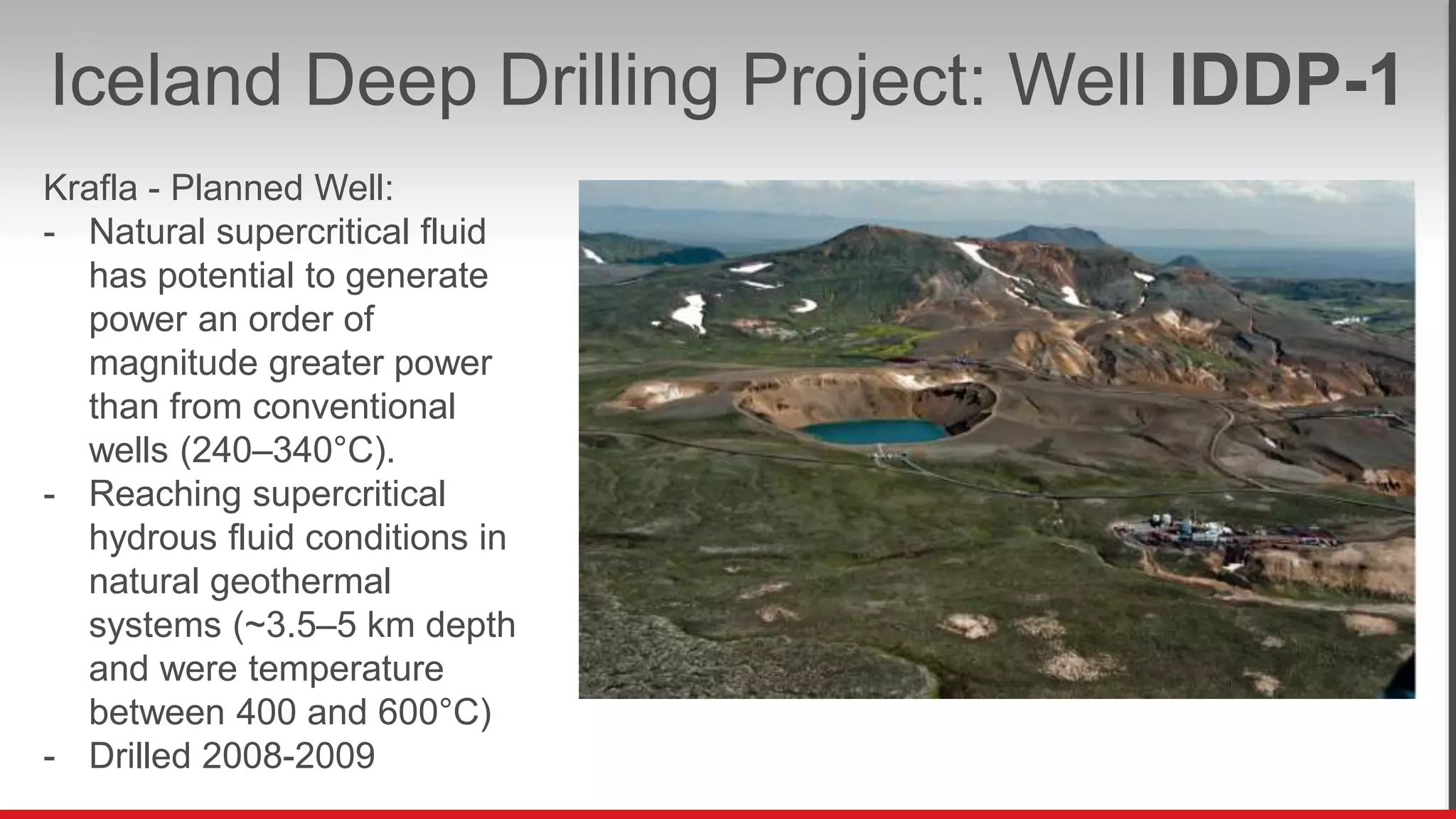
Iceland Deep Drilling Project: Well IDDP-1
Krafla - Planned Well:
- Natural supercritical fluid
has potential to generate
power an order of
magnitude greater power
than from conventional
wells (240–340°C).
- Reaching supercritical
hydrous fluid conditions in
natural geothermal
systems (~3.5–5 km depth
and were temperature
between 400 and 600°C)
- Drilled 2008-2009
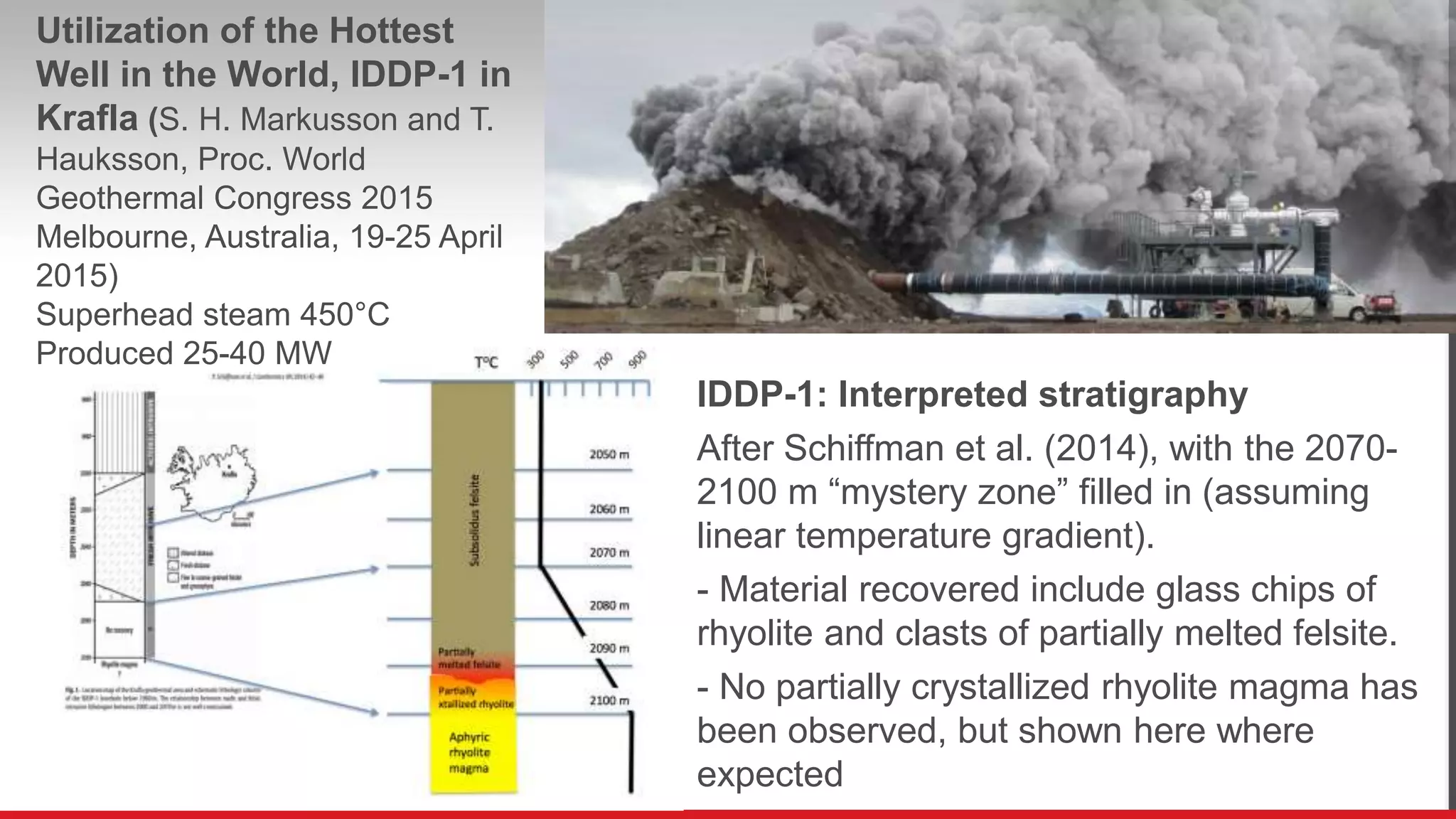
IDDP-1: Interpreted stratigraphy
After Schiffman et al. (2014), with the 2070-
2100 m “mystery zone” filled in (assuming
linear temperature gradient).
- Material recovered include glass chips of
rhyolite and clasts of partially melted felsite.
- No partially crystallized rhyolite magma has
been observed, but shown here where
expected
Utilization of the Hottest
Well in the World, IDDP-1 in
Krafla (S. H. Markusson and T.
Hauksson, Proc. World
Geothermal Congress 2015
Melbourne, Australia, 19-25 April
2015)
Superhead steam 450°C
Produced 25-40 MW
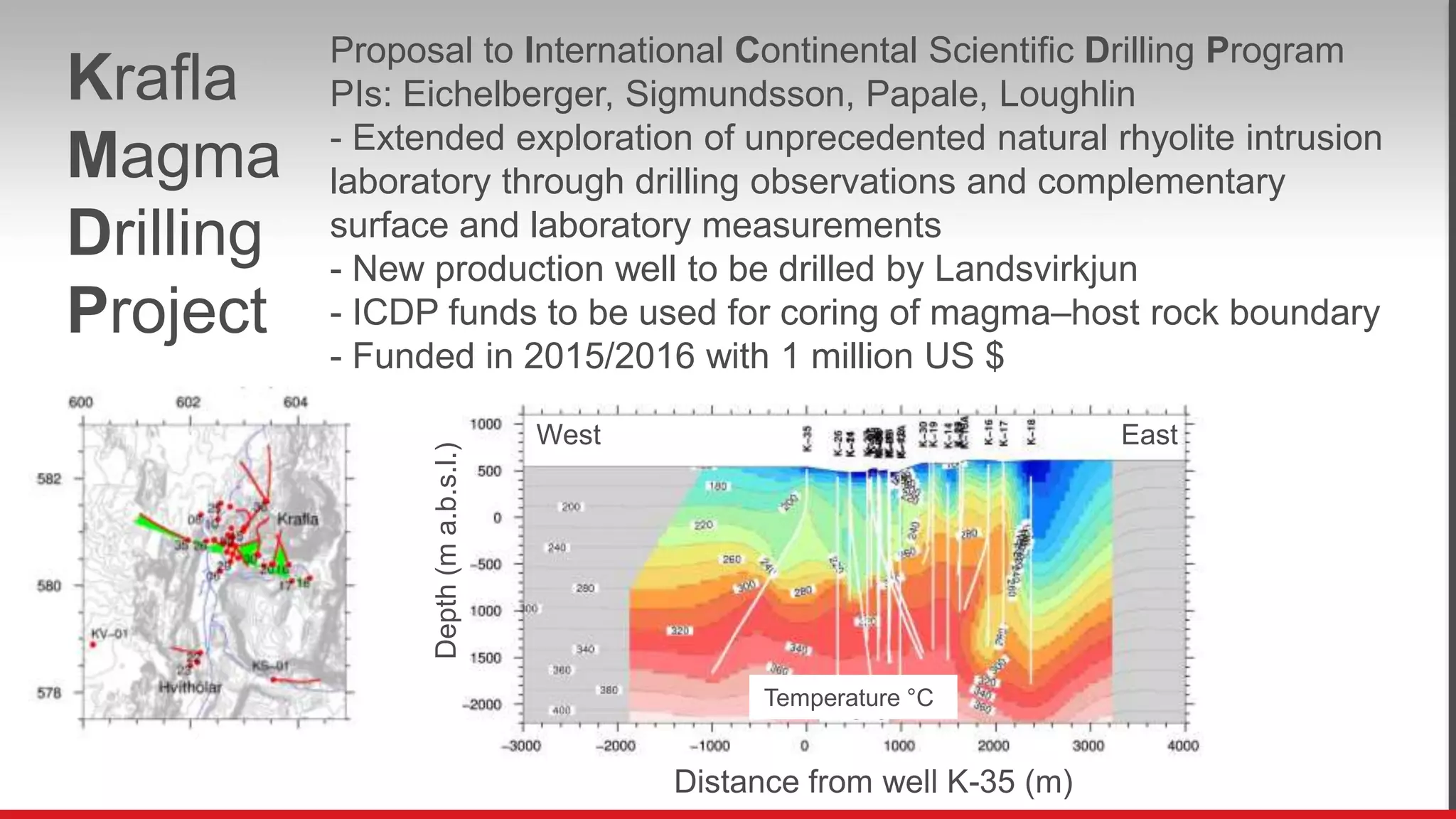
Krafla
Magma
Drilling
Project
Proposal to International Continental Scientific Drilling Program
PIs: Eichelberger, Sigmundsson, Papale, Loughlin
- Extended exploration of unprecedented natural rhyolite intrusion
laboratory through drilling observations and complementary
surface and laboratory measurements
- New production well to be drilled by Landsvirkjun
- ICDP funds to be used for coring of magma–host rock boundary
- Funded in 2015/2016 with 1 million US $
West East
Temperature °C
Distance from well K-35 (m)
Depth(ma.b.s.l.)
Schematic view of IDDP-1
findings: YouTube
“Magma well at Krafla:
Temperature World Record”
(Landsvirkjun)
The magma domain of Krafla: hypotheses
Krafla speculative North-South cross section
Not distorted vertically
Boreholes projected on cross sectional plane
(John Eichelberger and KMDP proposal)
• Closely observe, sample, and manipulate the
transition zone from host rock to magma in order to
rigorously test concepts of volcanic systems
• Develop improved or new monitoring techniques for
volcanology
• Push drilling and sensor technology to the crust’s high-
temperature maximum
• Explore the roots of geothermal systems and the
potential for direct energy extraction from magma —
the ultimate geothermal resource
KMDP Krafla Magma Testbed: Opportunities
Coordinated, multidisciplinary efforts encompassing:
• Dedicated research drill hole/holes
• borehole and sample observations coupled with large-
scale experimental studies
• linked surface geophysical and geochemical
observations
• advanced geothermal energy technology
• sensor development for extreme environments
• advanced volcanic eruption forecasting
Krafla Magma Testbed
Directly measuring conditions in magma
that threatens large cities
Krafla Magma Testbed Schematics of coupled
magma/hydrothermal
system
Krafla
Magma
Testbed
Fundamental
Earth
Science
Geothermal
Energy
Educa on
and Tourism
Innova on
Volcano Risk
Magma domain:
Jónasson, K., Rhyolite
volcanism at Krafla, Bull.
Volc. 1994
W.A. Elders et al., Origin of a rhyolite
that intruded a geothermal well while
drilling at the Krafla volcano, Iceland,
Geology, 2011
S. R. Guðjónsdóttir, Volume
of the superheated steam at
Krafla, LV Report 2015-044.
Inflation/deflation
curve during the Krafla
rifting episode 1975-
1984
Need a unified model from multiple constraints!
Some examples of constraints …
KMT: Where are we now
• The project has started
• 25 partners from 10
countries
• 20 MEUR short term
• 50-100 MEUR long term
• Positive impact on the local
community
• KMT has been endorsed
by the government of
Iceland
• Involvement of
governments and
international research
institutions
• Next steps: Seek funding
on multiple fronts
logos (incomplete list)
Conclusions
• IDDP1 KMDP Krafla Magma Testbed
• Next activities of the international KMT consortium
– New proposal to ICDP / Meeting in March for coordinating science and
proposals for funding
• Global benefits of KMT include:
– Increased use of low-CO2 continuous small-footprint renewable energy
– Facilities to study and experiment with magma in the roots of volcanoes
directly
– Holistic model of a volcano
– More reliable forecasts of eruption for populated volcanoes – Italy,
Japan, US, South America, New Zealand, Indonesia, etc.

C1 Freysteinn Sigmundsson

  • 1.
    GEORG Geothermal Workshop,Reykjavik, Iceland, November, 24-25 2016 Freysteinn Sigmundsson(1), John Eichelberger(2), Paolo Papale(3), John N. Ludden(4), Donald Bruce Dingwell(5), Charles Mandeville(6), Stephen Pye, Sigurður Markússon(7), Knútur Árnason(8), Hjalti Páll Ingólfsson(9) Krafla Magma Testbed (1) Nordvulk, Institute of Earth Sciences, University of Iceland (2) University of Alaska at Fairbanks, USA (3) INGV, Italy (4) British Geological Survey, UK (5) Ludwig-Maximilian University, Munich, Germany (6) USGS Volcano Hazards Programme, USA (7) Landsvirkjun, Iceland (8) ÍSOR, Iceland (9) GEORG, Iceland Fissure swarm Central Volcano Krafla Iceland: Volcanic zones
  • 2.
  • 3.
    • IDDP-1 well •Krafla Magma Drilling Project • Krafla Magma Testbed • Conclusions Overview
  • 4.
    Iceland Deep DrillingProject: Well IDDP-1 Krafla - Planned Well: - Natural supercritical fluid has potential to generate power an order of magnitude greater power than from conventional wells (240–340°C). - Reaching supercritical hydrous fluid conditions in natural geothermal systems (~3.5–5 km depth and were temperature between 400 and 600°C) - Drilled 2008-2009
  • 5.
    IDDP-1: Interpreted stratigraphy AfterSchiffman et al. (2014), with the 2070- 2100 m “mystery zone” filled in (assuming linear temperature gradient). - Material recovered include glass chips of rhyolite and clasts of partially melted felsite. - No partially crystallized rhyolite magma has been observed, but shown here where expected Utilization of the Hottest Well in the World, IDDP-1 in Krafla (S. H. Markusson and T. Hauksson, Proc. World Geothermal Congress 2015 Melbourne, Australia, 19-25 April 2015) Superhead steam 450°C Produced 25-40 MW
  • 6.
    Krafla Magma Drilling Project Proposal to InternationalContinental Scientific Drilling Program PIs: Eichelberger, Sigmundsson, Papale, Loughlin - Extended exploration of unprecedented natural rhyolite intrusion laboratory through drilling observations and complementary surface and laboratory measurements - New production well to be drilled by Landsvirkjun - ICDP funds to be used for coring of magma–host rock boundary - Funded in 2015/2016 with 1 million US $ West East Temperature °C Distance from well K-35 (m) Depth(ma.b.s.l.)
  • 7.
    Schematic view ofIDDP-1 findings: YouTube “Magma well at Krafla: Temperature World Record” (Landsvirkjun) The magma domain of Krafla: hypotheses Krafla speculative North-South cross section Not distorted vertically Boreholes projected on cross sectional plane (John Eichelberger and KMDP proposal)
  • 8.
    • Closely observe,sample, and manipulate the transition zone from host rock to magma in order to rigorously test concepts of volcanic systems • Develop improved or new monitoring techniques for volcanology • Push drilling and sensor technology to the crust’s high- temperature maximum • Explore the roots of geothermal systems and the potential for direct energy extraction from magma — the ultimate geothermal resource KMDP Krafla Magma Testbed: Opportunities
  • 9.
    Coordinated, multidisciplinary effortsencompassing: • Dedicated research drill hole/holes • borehole and sample observations coupled with large- scale experimental studies • linked surface geophysical and geochemical observations • advanced geothermal energy technology • sensor development for extreme environments • advanced volcanic eruption forecasting Krafla Magma Testbed
  • 10.
    Directly measuring conditionsin magma that threatens large cities
  • 11.
    Krafla Magma TestbedSchematics of coupled magma/hydrothermal system
  • 12.
  • 13.
    Magma domain: Jónasson, K.,Rhyolite volcanism at Krafla, Bull. Volc. 1994 W.A. Elders et al., Origin of a rhyolite that intruded a geothermal well while drilling at the Krafla volcano, Iceland, Geology, 2011 S. R. Guðjónsdóttir, Volume of the superheated steam at Krafla, LV Report 2015-044. Inflation/deflation curve during the Krafla rifting episode 1975- 1984 Need a unified model from multiple constraints! Some examples of constraints …
  • 14.
    KMT: Where arewe now • The project has started • 25 partners from 10 countries • 20 MEUR short term • 50-100 MEUR long term • Positive impact on the local community • KMT has been endorsed by the government of Iceland • Involvement of governments and international research institutions • Next steps: Seek funding on multiple fronts logos (incomplete list)
  • 15.
    Conclusions • IDDP1 KMDPKrafla Magma Testbed • Next activities of the international KMT consortium – New proposal to ICDP / Meeting in March for coordinating science and proposals for funding • Global benefits of KMT include: – Increased use of low-CO2 continuous small-footprint renewable energy – Facilities to study and experiment with magma in the roots of volcanoes directly – Holistic model of a volcano – More reliable forecasts of eruption for populated volcanoes – Italy, Japan, US, South America, New Zealand, Indonesia, etc.