



JAGADISH
PALB 3164
Sr. M.Sc.(Agri.)
Dept. of Agronomy
Sequence of presentation
Introduction
Potential of guar
Application of guar
Conclusion
Future line of work
Introduction
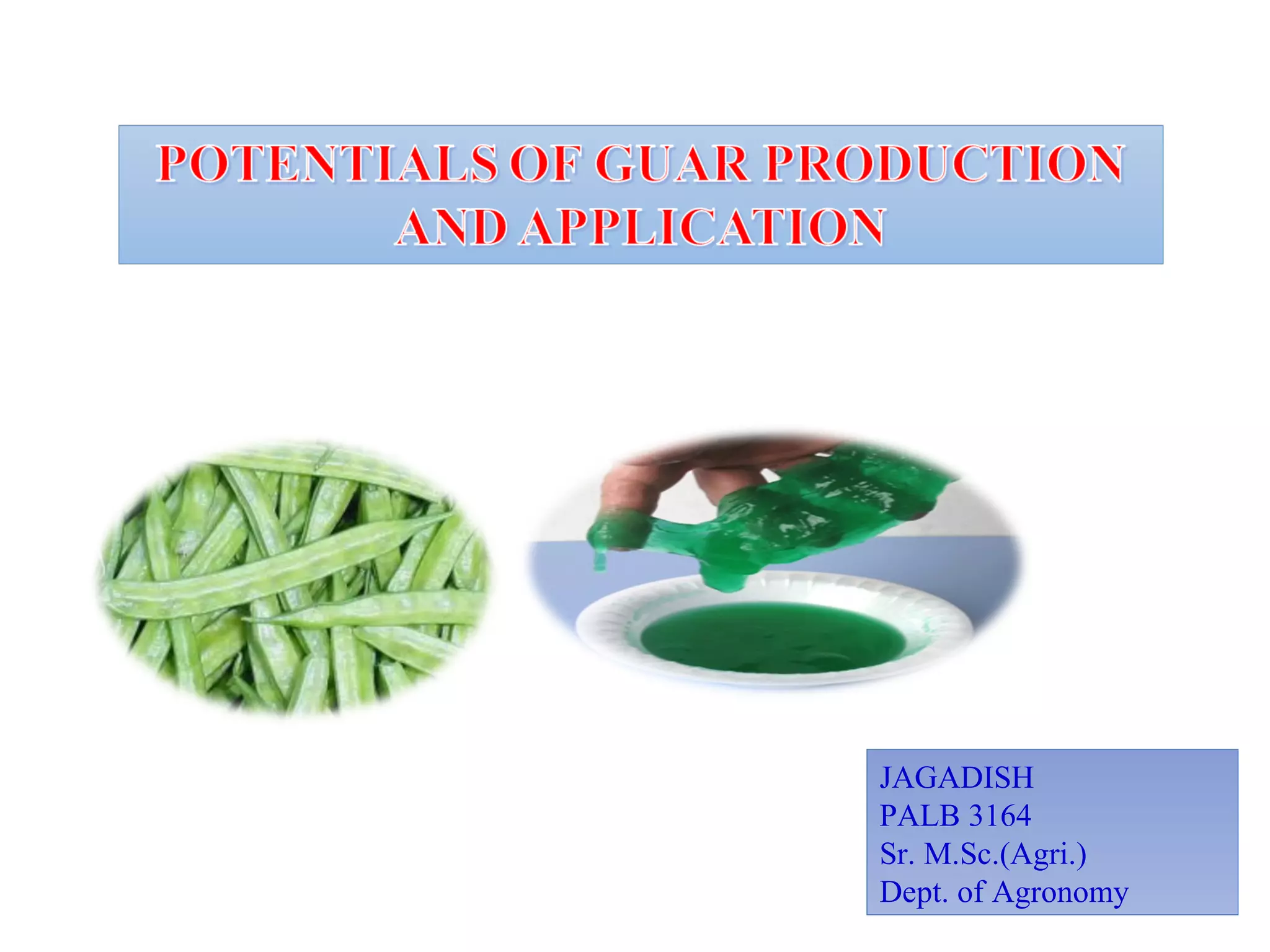
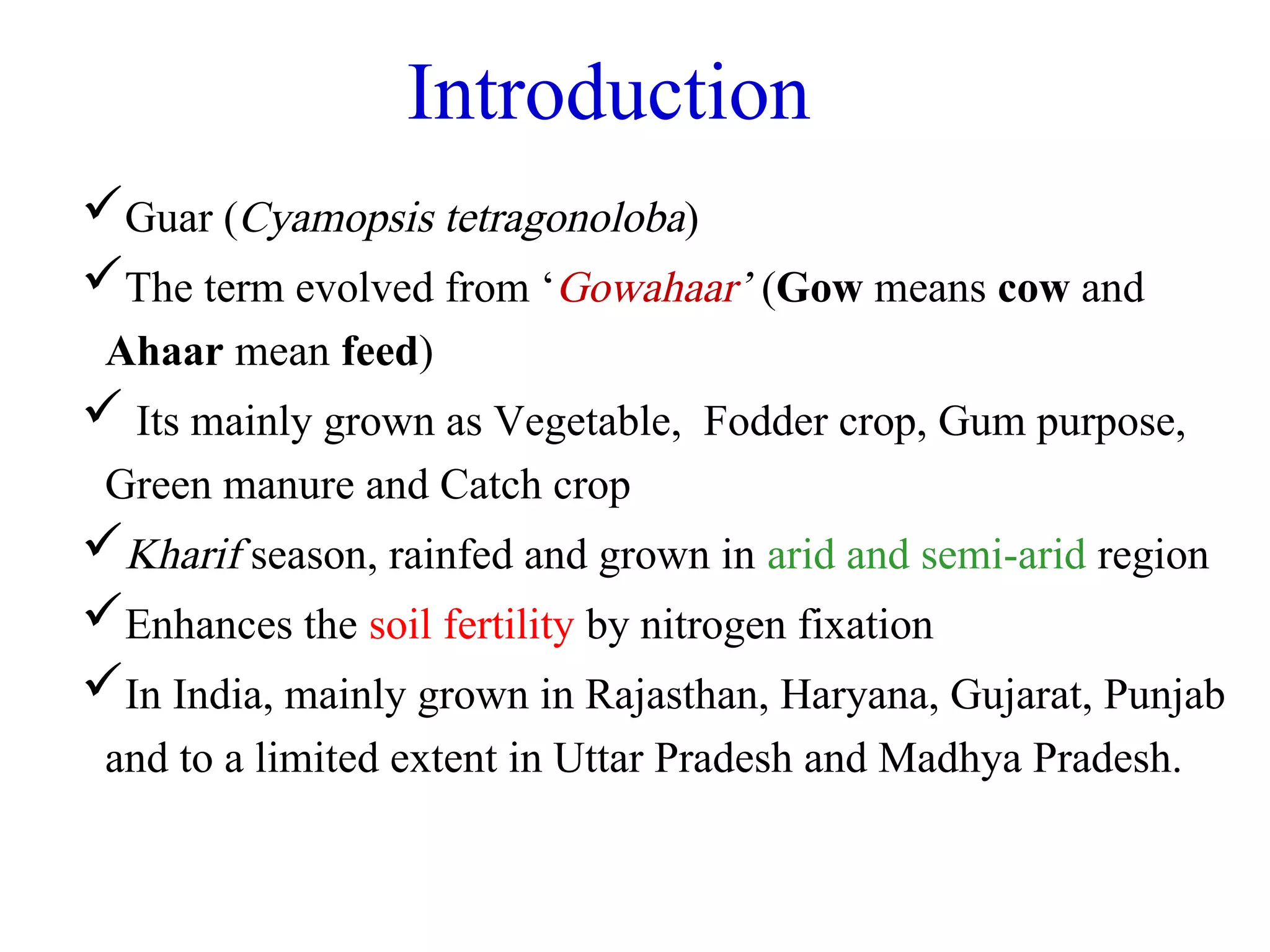
Guar (Cyamopsis tetragonoloba)
The term evolved from ‘Gowahaar’ (Gow means cow and
Ahaar mean feed)
 Its mainly grown as Vegetable, Fodder crop, Gum purpose,
Green manure and Catch crop
Kharif season, rainfed and grown in arid and semi-arid region
Enhances the soil fertility by nitrogen fixation
In India, mainly grown in Rajasthan, Haryana, Gujarat, Punjab
and to a limited extent in Uttar Pradesh and Madhya Pradesh.
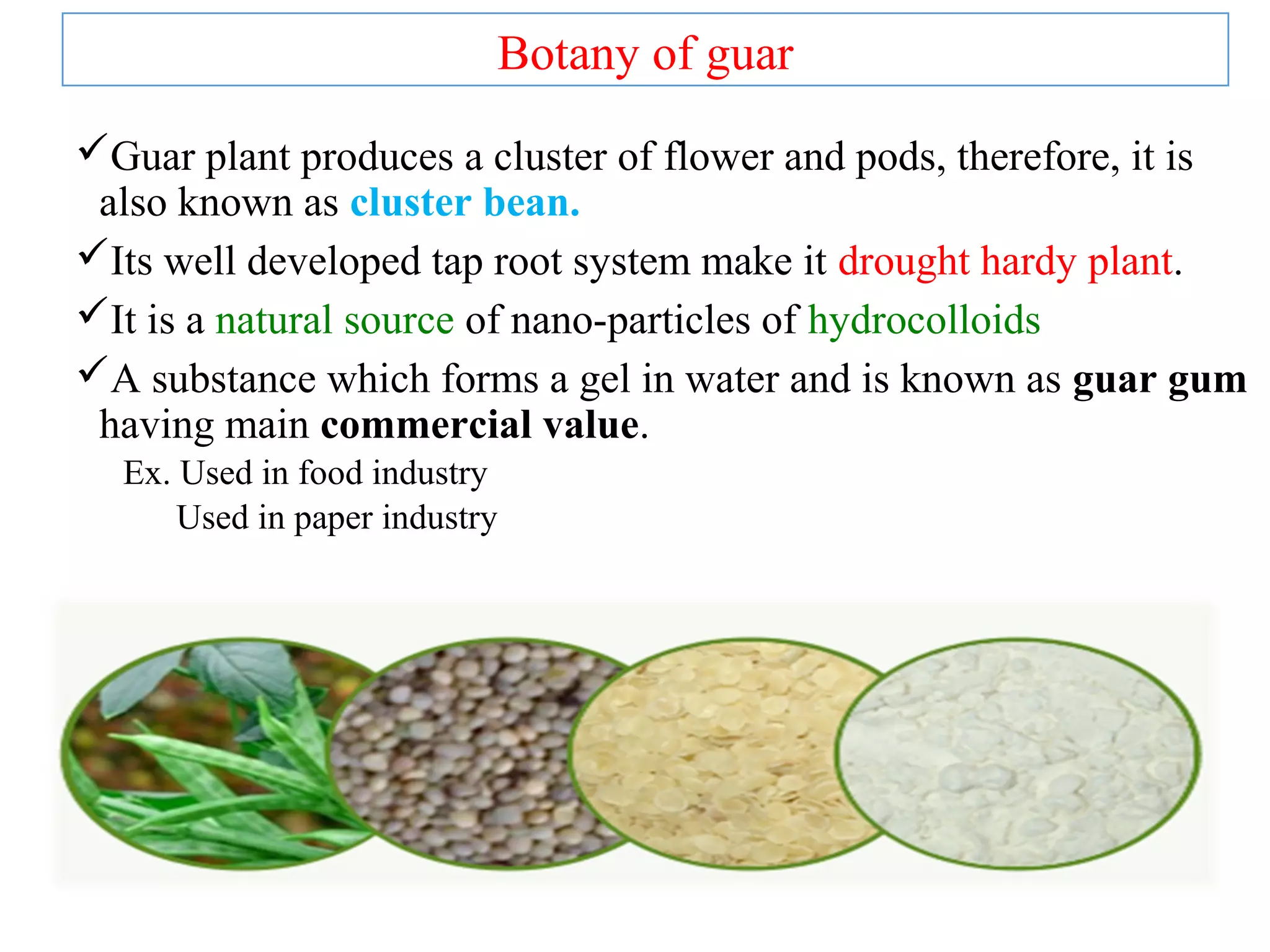
Guar plant produces a cluster of flower and pods, therefore, it is
also known as cluster bean.
Its well developed tap root system make it drought hardy plant.
It is a natural source of nano-particles of hydrocolloids
A substance which forms a gel in water and is known as guar gum
having main commercial value.
Ex. Used in food industry
Used in paper industry
Botany of guar
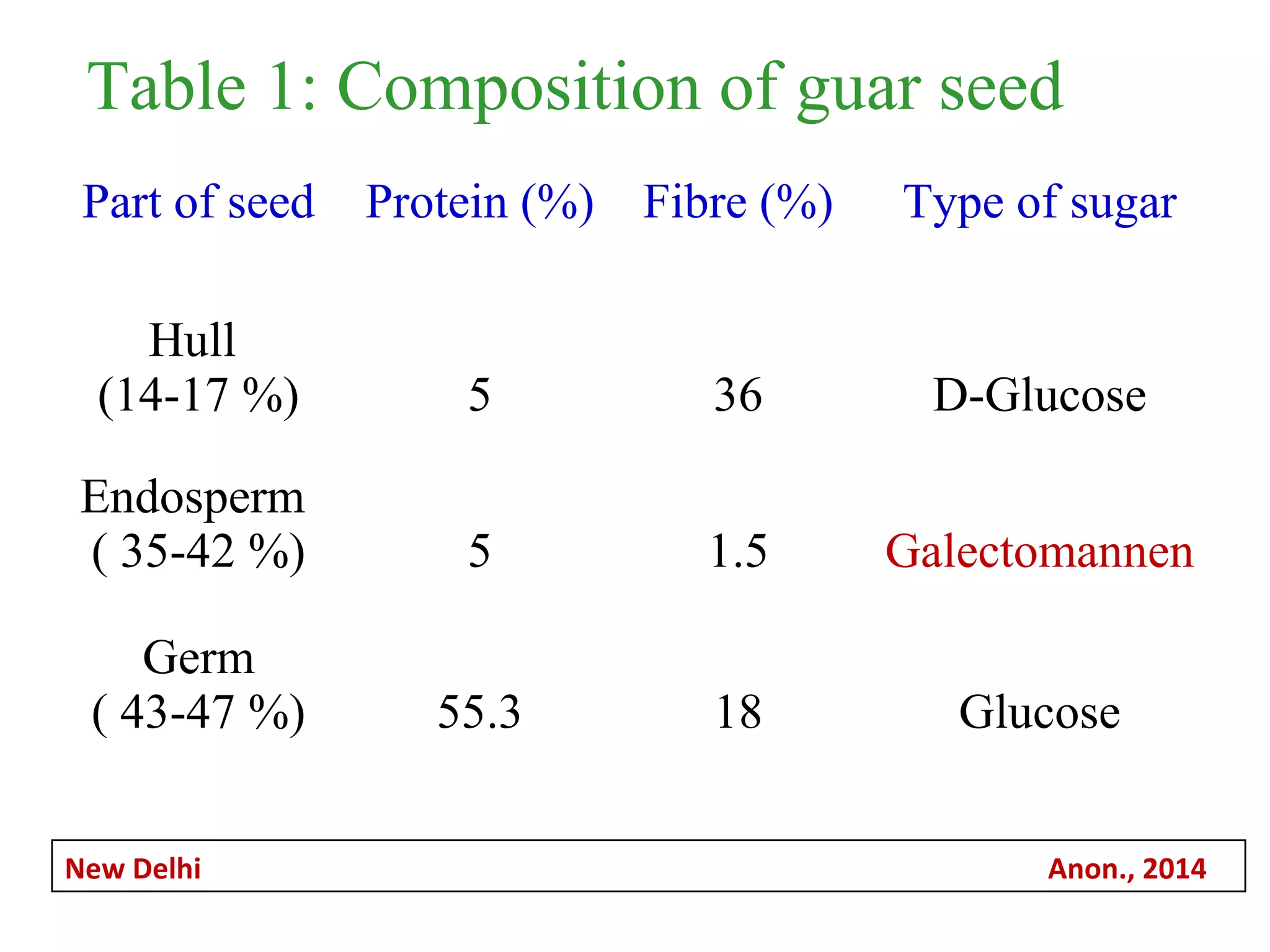
Table 1: Composition of guar seed
Part of seed Protein (%) Fibre (%) Type of sugar
Hull
(14-17 %) 5 36 D-Glucose
Endosperm
( 35-42 %) 5 1.5 Galectomannen
Germ
( 43-47 %) 55.3 18 Glucose
New Delhi Anon., 2014
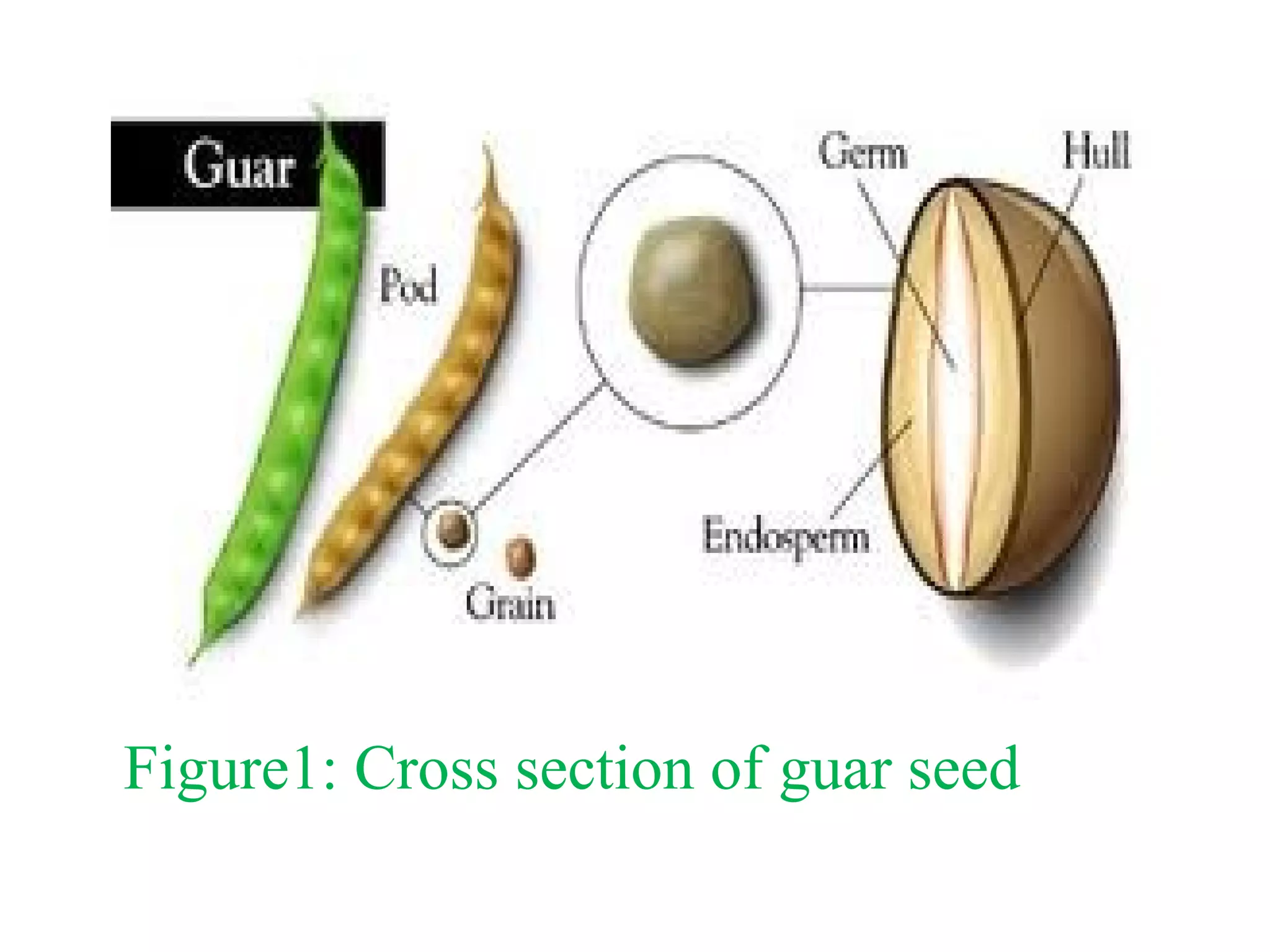
Figure1: Cross section of guar seed
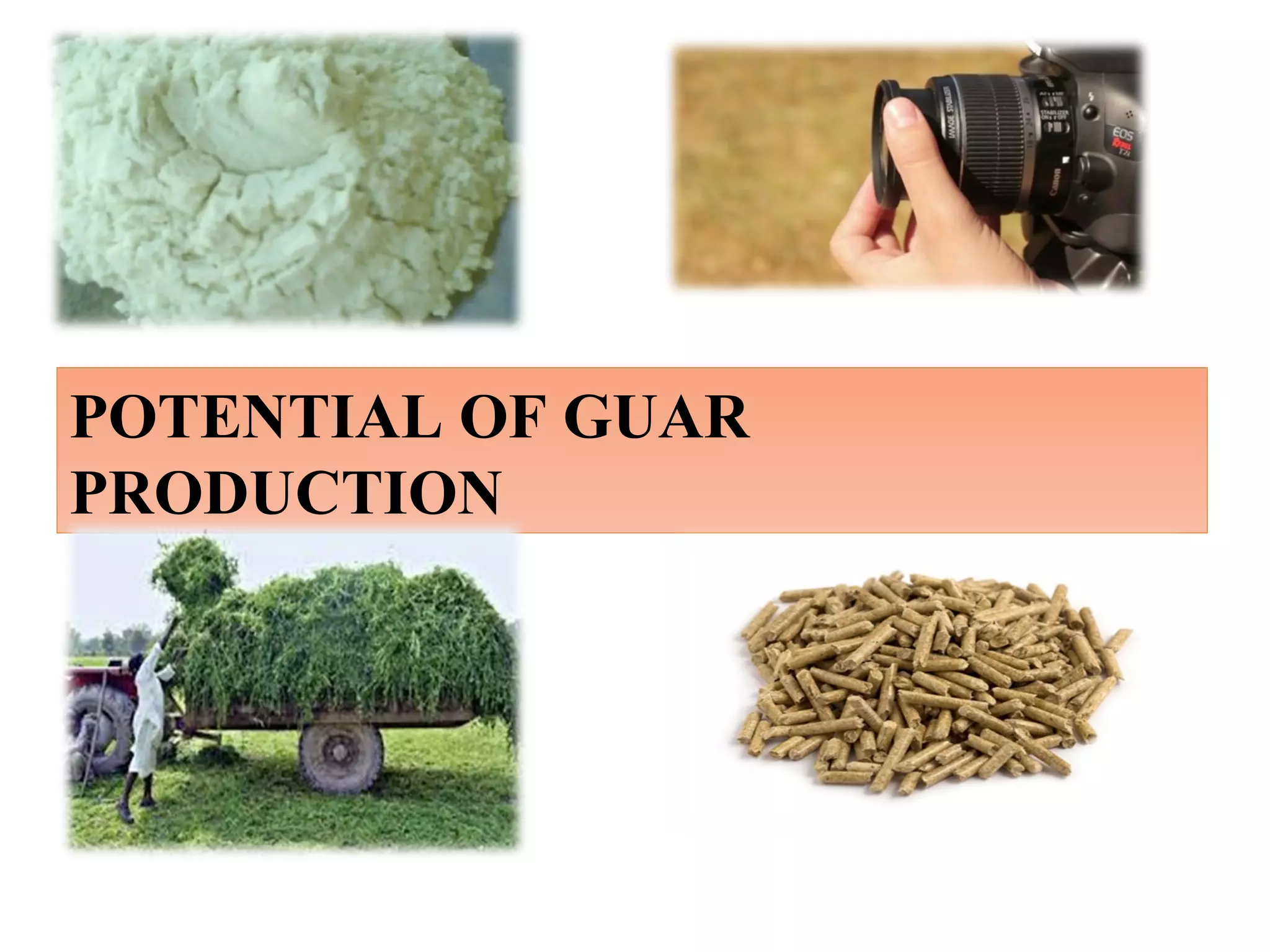
POTENTIAL OF GUAR
PRODUCTION
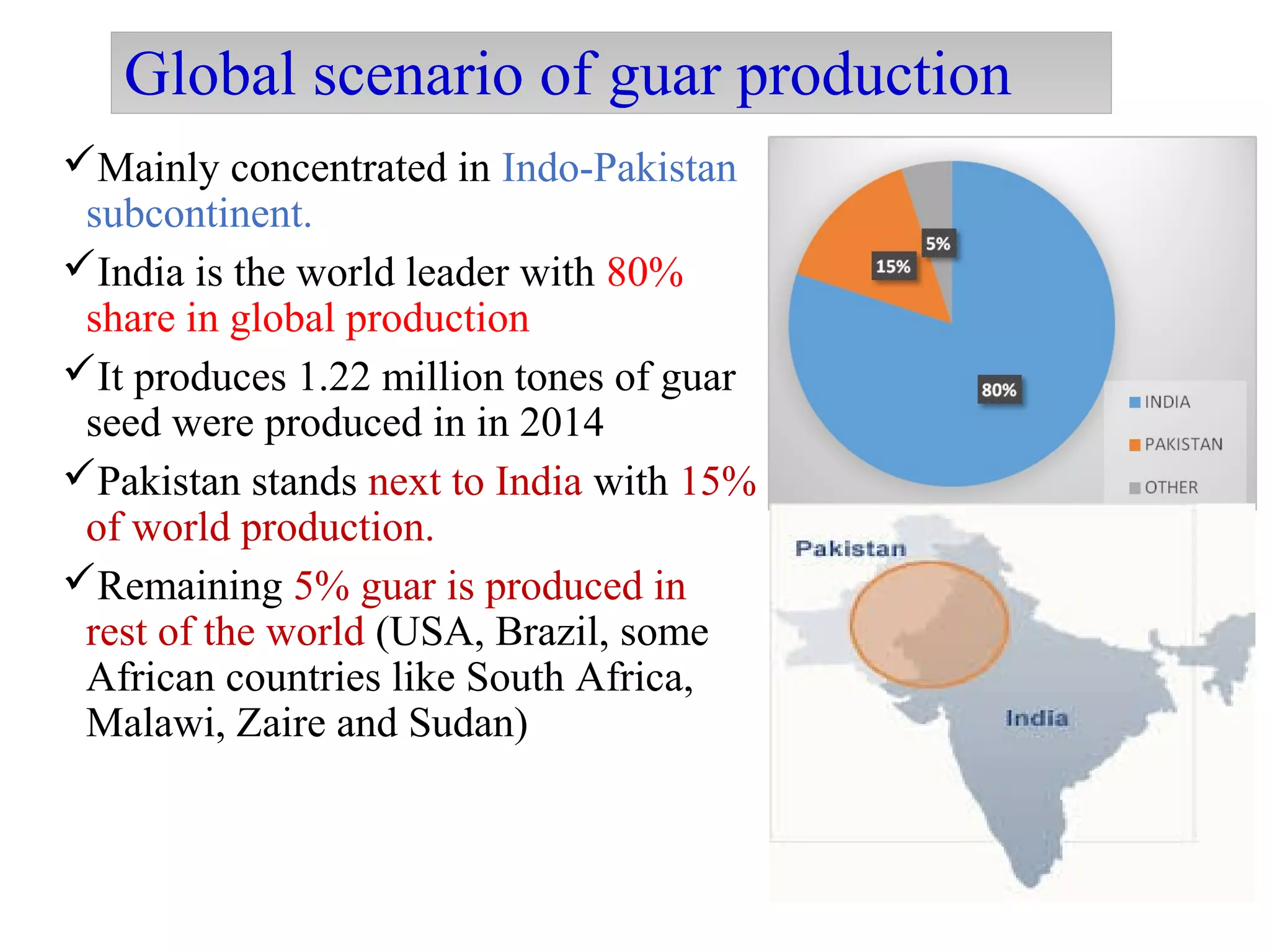
Global scenario of guar production
Mainly concentrated in Indo-Pakistan
subcontinent.
India is the world leader with 80%
share in global production
It produces 1.22 million tones of guar
seed were produced in in 2014
Pakistan stands next to India with 15%
of world production.
Remaining 5% guar is produced in
rest of the world (USA, Brazil, some
African countries like South Africa,
Malawi, Zaire and Sudan)
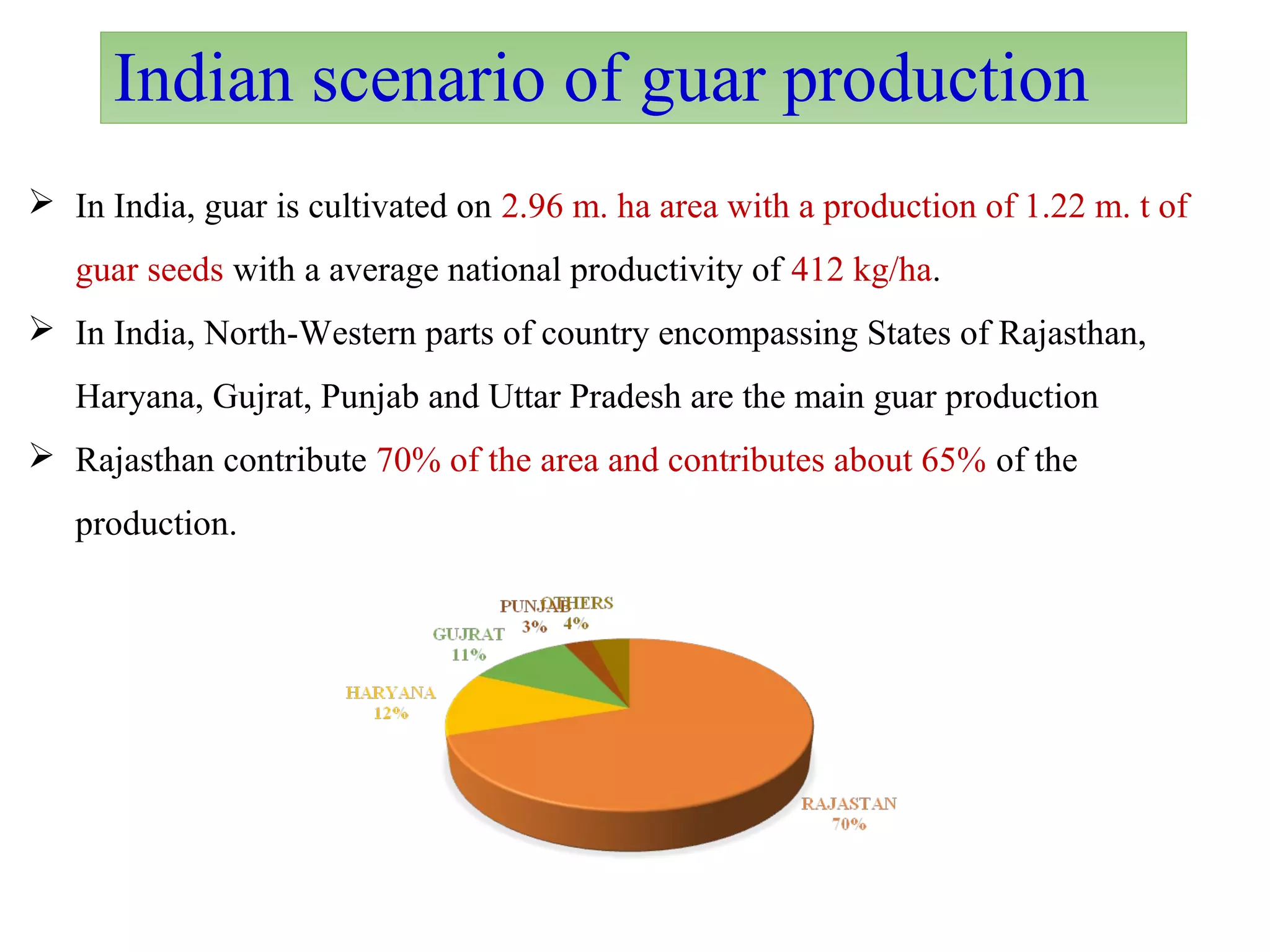
Indian scenario of guar production
 In India, guar is cultivated on 2.96 m. ha area with a production of 1.22 m. t of
guar seeds with a average national productivity of 412 kg/ha.
 In India, North-Western parts of country encompassing States of Rajasthan,
Haryana, Gujrat, Punjab and Uttar Pradesh are the main guar production
 Rajasthan contribute 70% of the area and contributes about 65% of the
production.
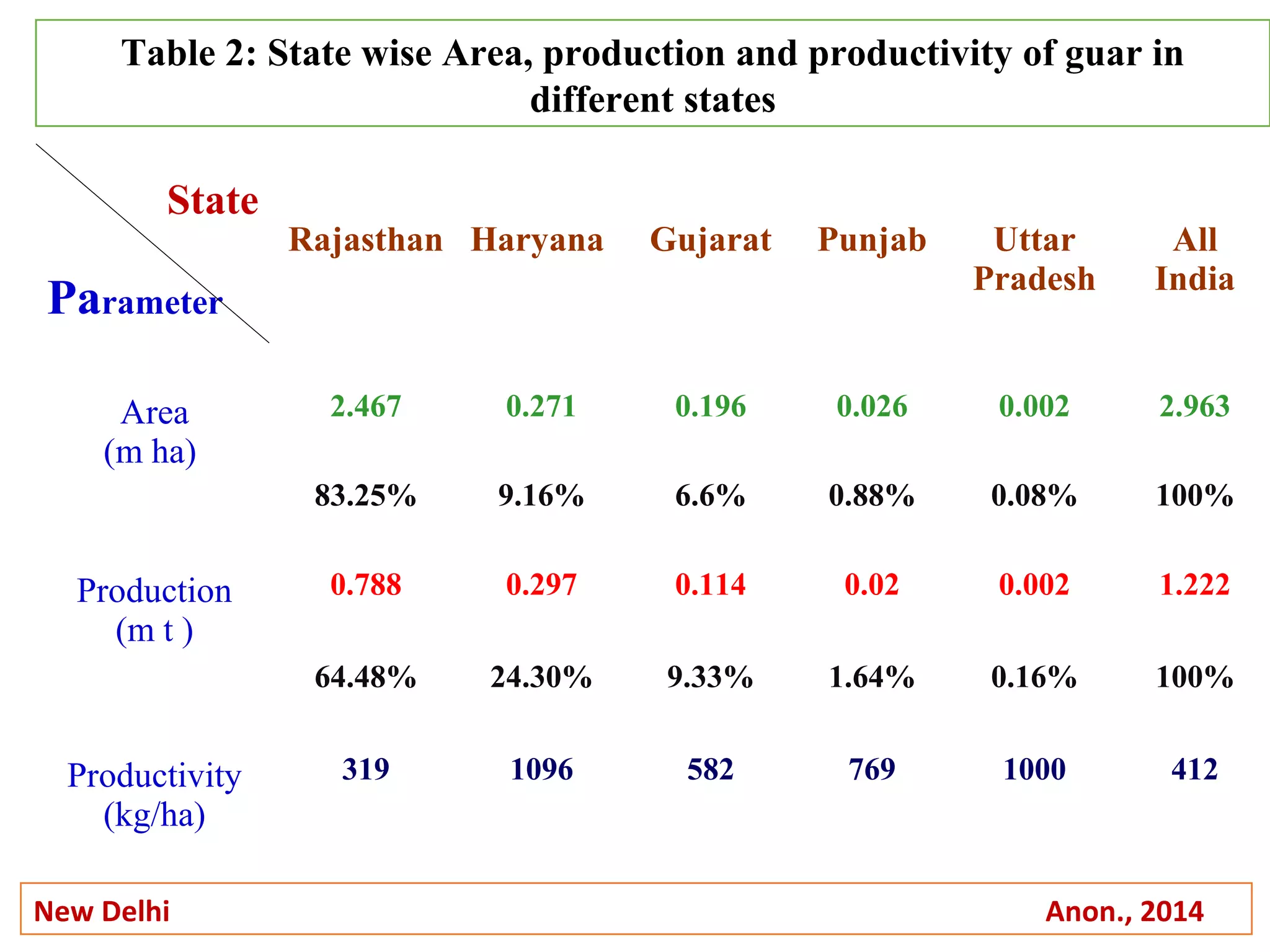
State
Parameter
Rajasthan Haryana Gujarat Punjab Uttar
Pradesh
All
India
Area
(m ha)
2.467 0.271 0.196 0.026 0.002 2.963
83.25% 9.16% 6.6% 0.88% 0.08% 100%
Production
(m t )
0.788 0.297 0.114 0.02 0.002 1.222
64.48% 24.30% 9.33% 1.64% 0.16% 100%
Productivity
(kg/ha)
319 1096 582 769 1000 412
Table 2: State wise Area, production and productivity of guar in
different states
New Delhi Anon., 2014
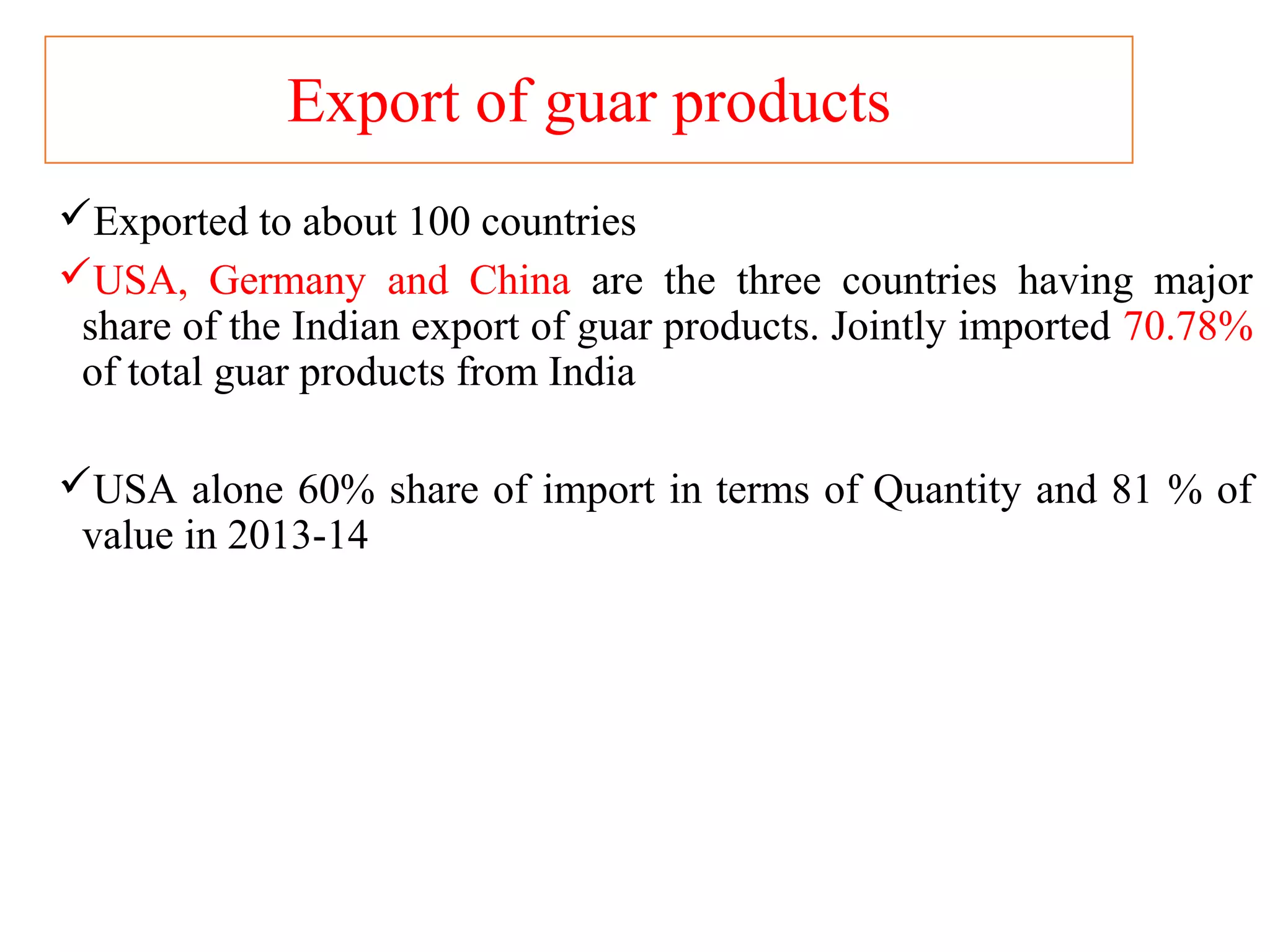
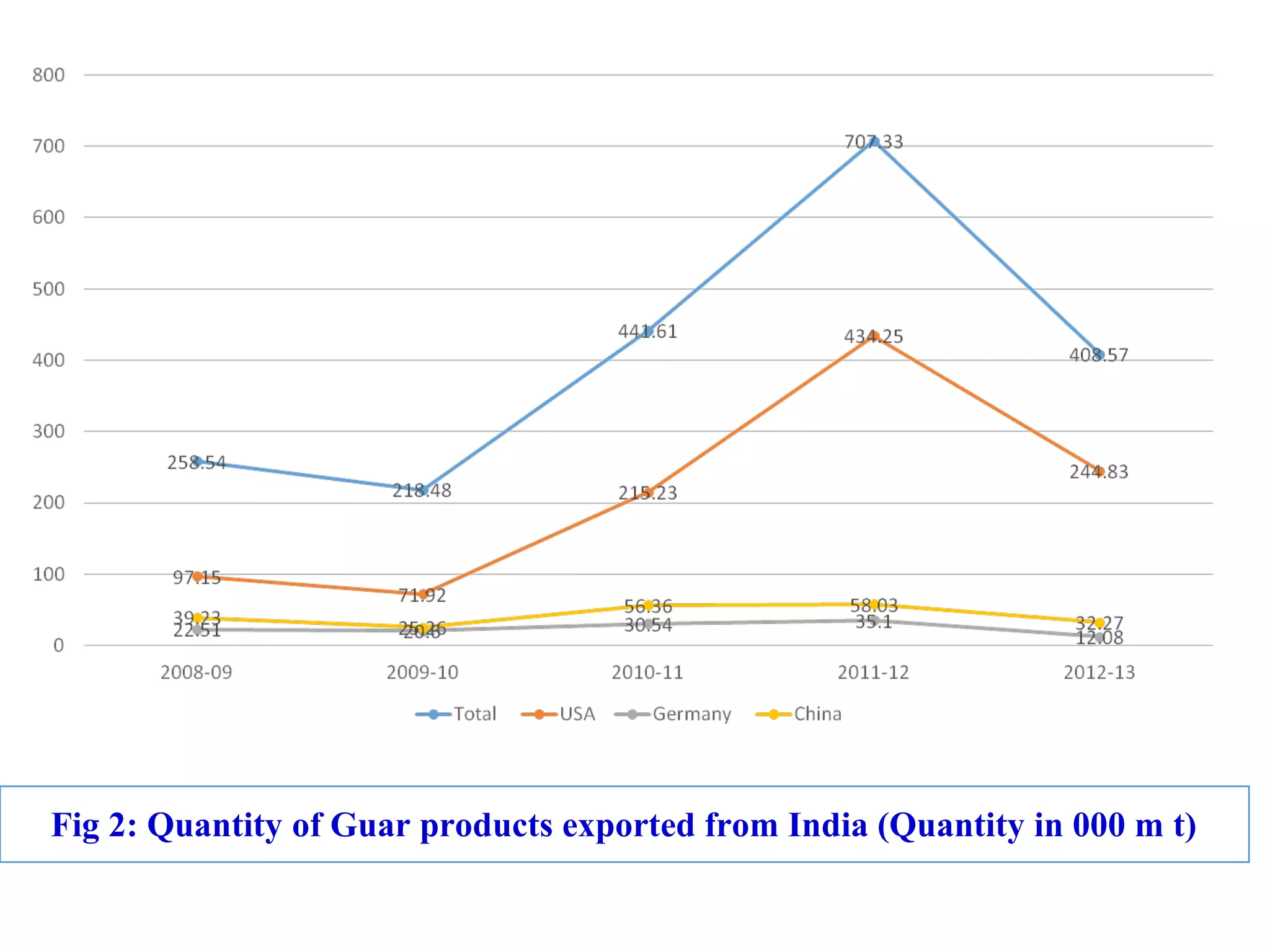
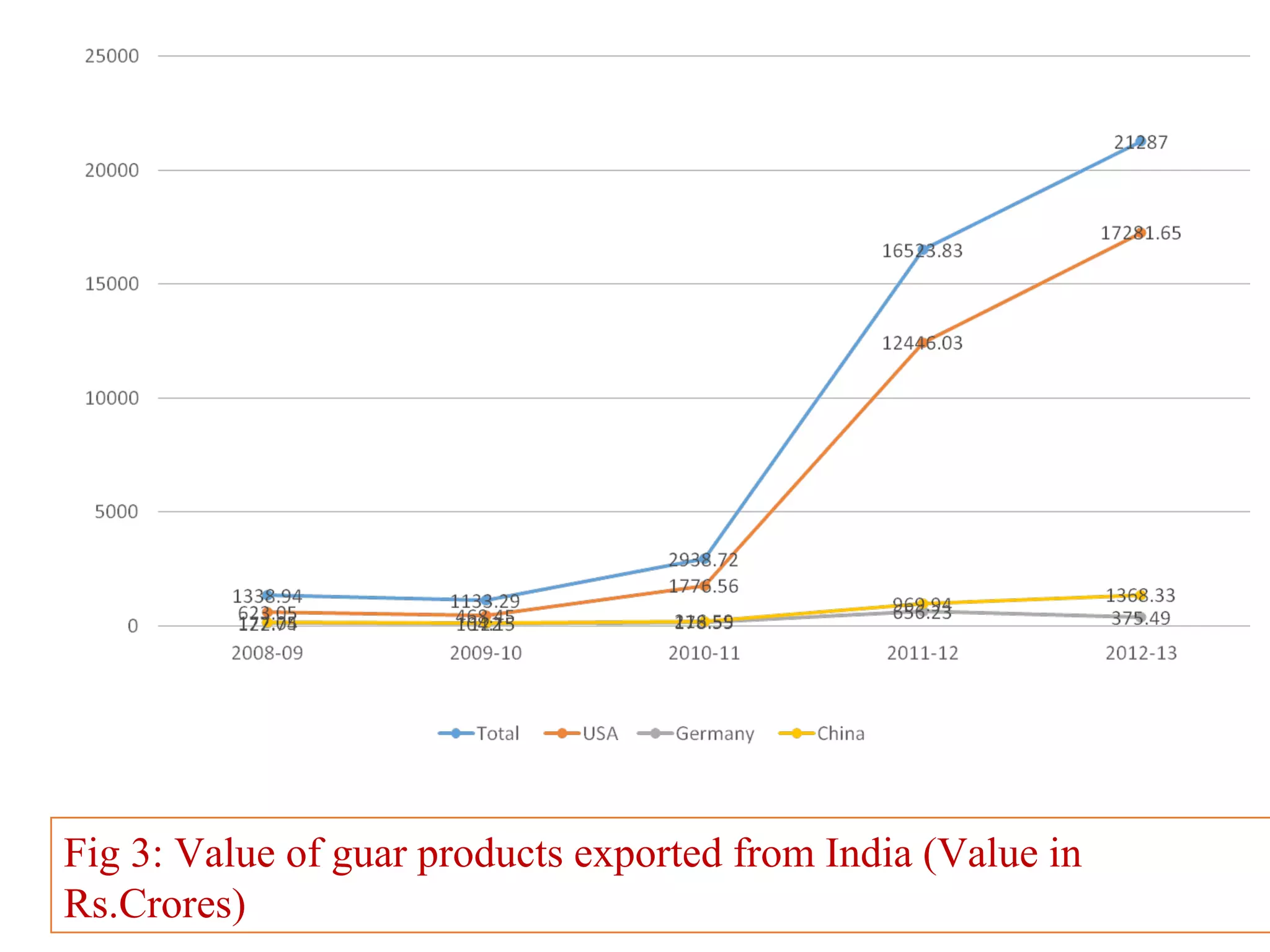
Export of guar products
Exported to about 100 countries
USA, Germany and China are the three countries having major
share of the Indian export of guar products. Jointly imported 70.78%
of total guar products from India
USA alone 60% share of import in terms of Quantity and 81 % of
value in 2013-14
Fig 2: Quantity of Guar products exported from India (Quantity in 000 m t)
Fig 3: Value of guar products exported from India (Value in
Rs.Crores)
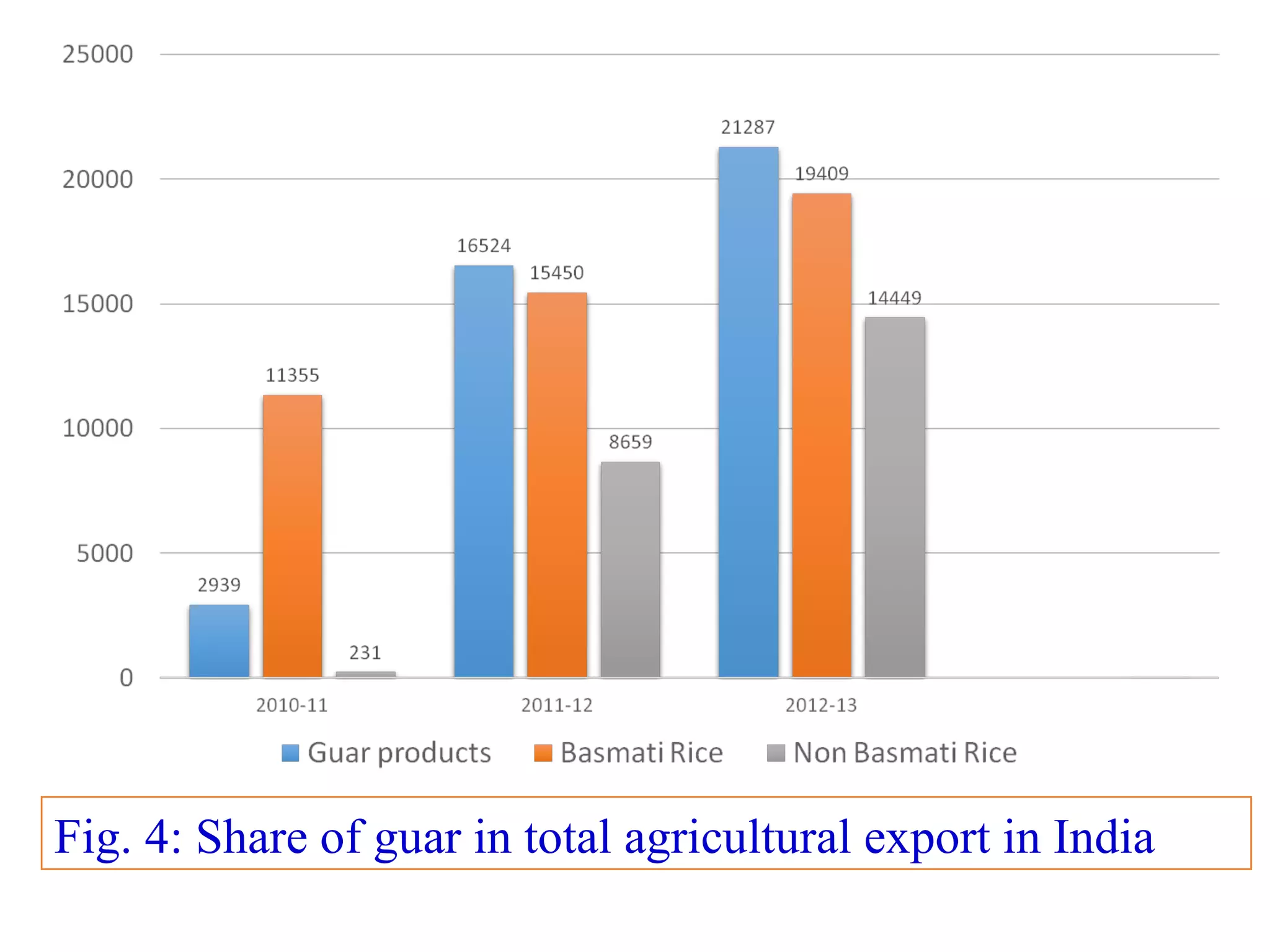
Fig. 4: Share of guar in total agricultural export in India
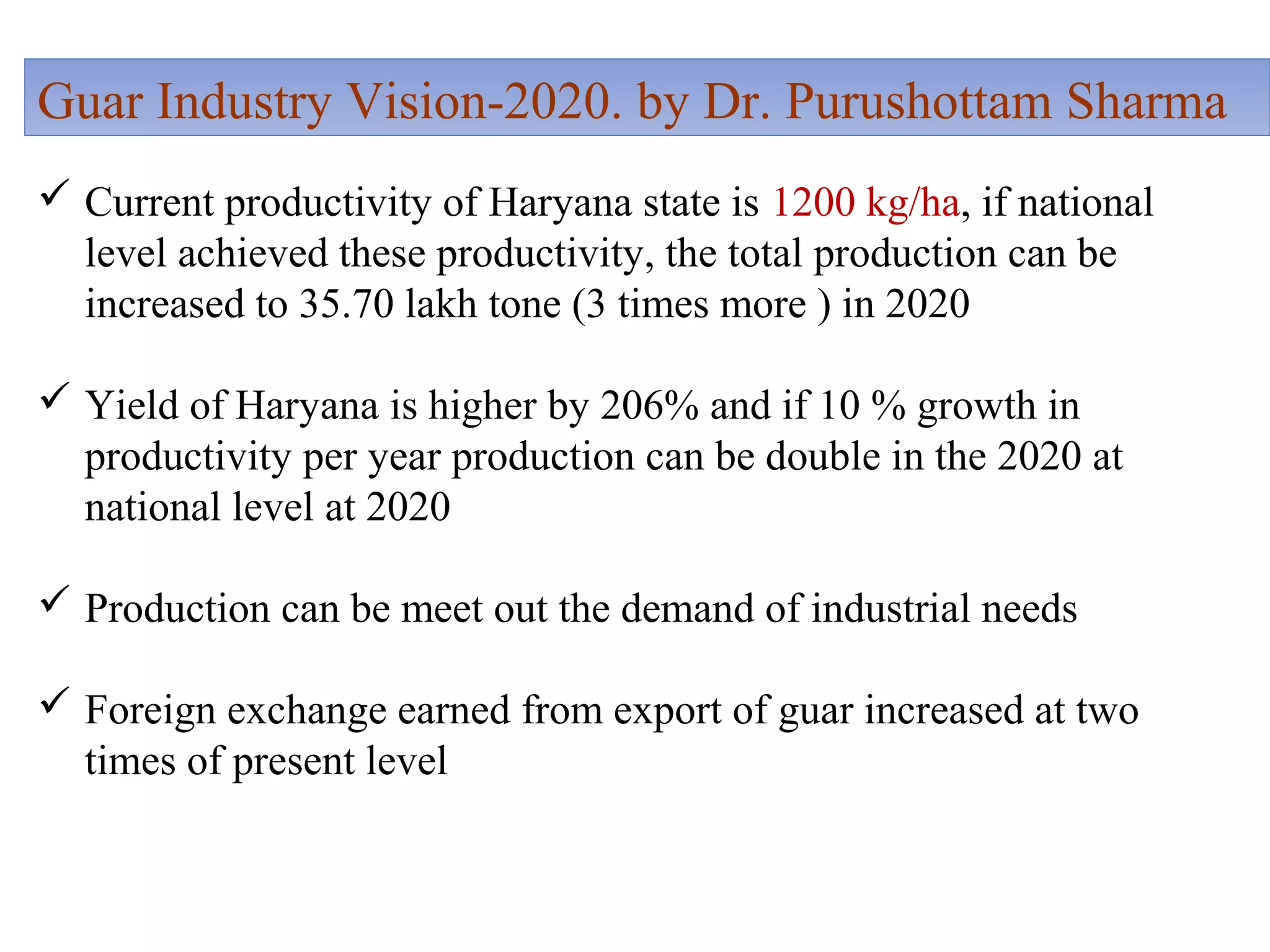
Guar Industry Vision-2020. by Dr. Purushottam Sharma
 Current productivity of Haryana state is 1200 kg/ha, if national
level achieved these productivity, the total production can be
increased to 35.70 lakh tone (3 times more ) in 2020
 Yield of Haryana is higher by 206% and if 10 % growth in
productivity per year production can be double in the 2020 at
national level at 2020
 Production can be meet out the demand of industrial needs
 Foreign exchange earned from export of guar increased at two
times of present level
Application of guar
•Guar seed is an important source of the industrial vegetable
gum guar galactomannan which is used in many food and
non food products.
•Mainly used in Industrial, Food and feed uses
•The traditional uses of guar are for
•Human consumption;
•Cattle feed,
•Medicinal purpose and
•Soil improvement
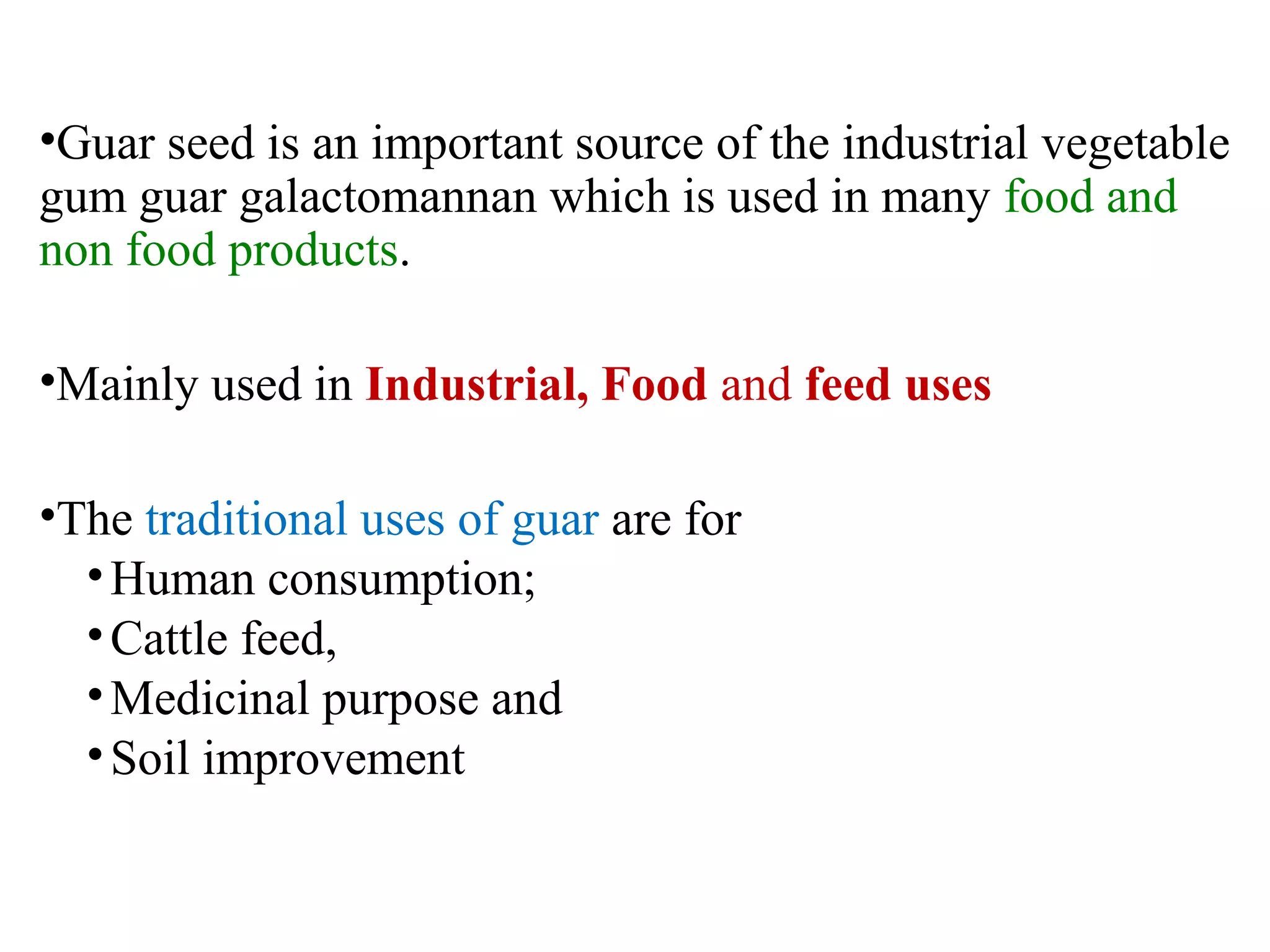
I. Industrial application
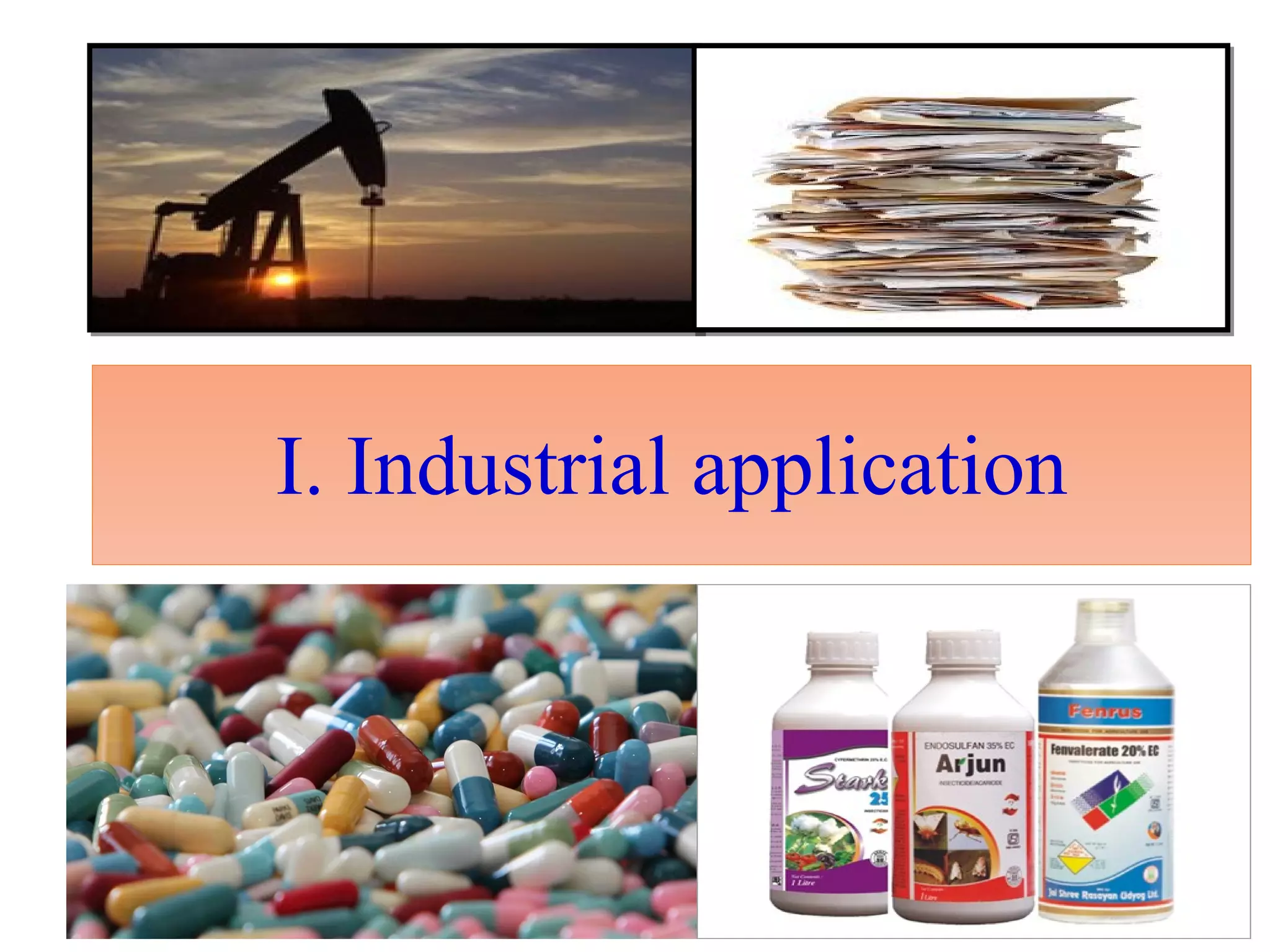
1. Food industry
Gelling and stabilizing agent
Thickening
Heat stabilizer
Improves consistency
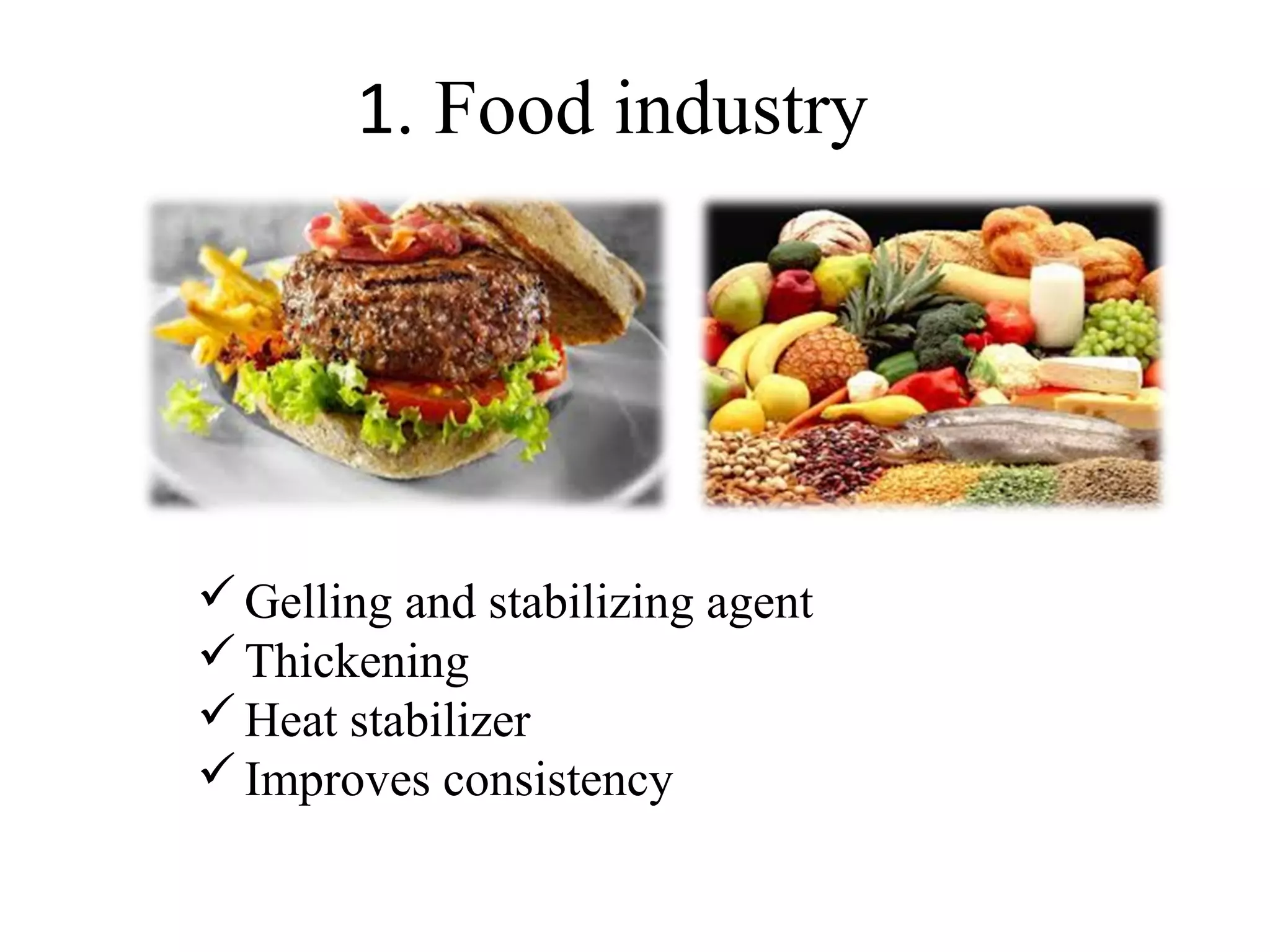
2. Pharmaceuticals industry
Synergistic activity
Laxative property
Malnutrition treatment
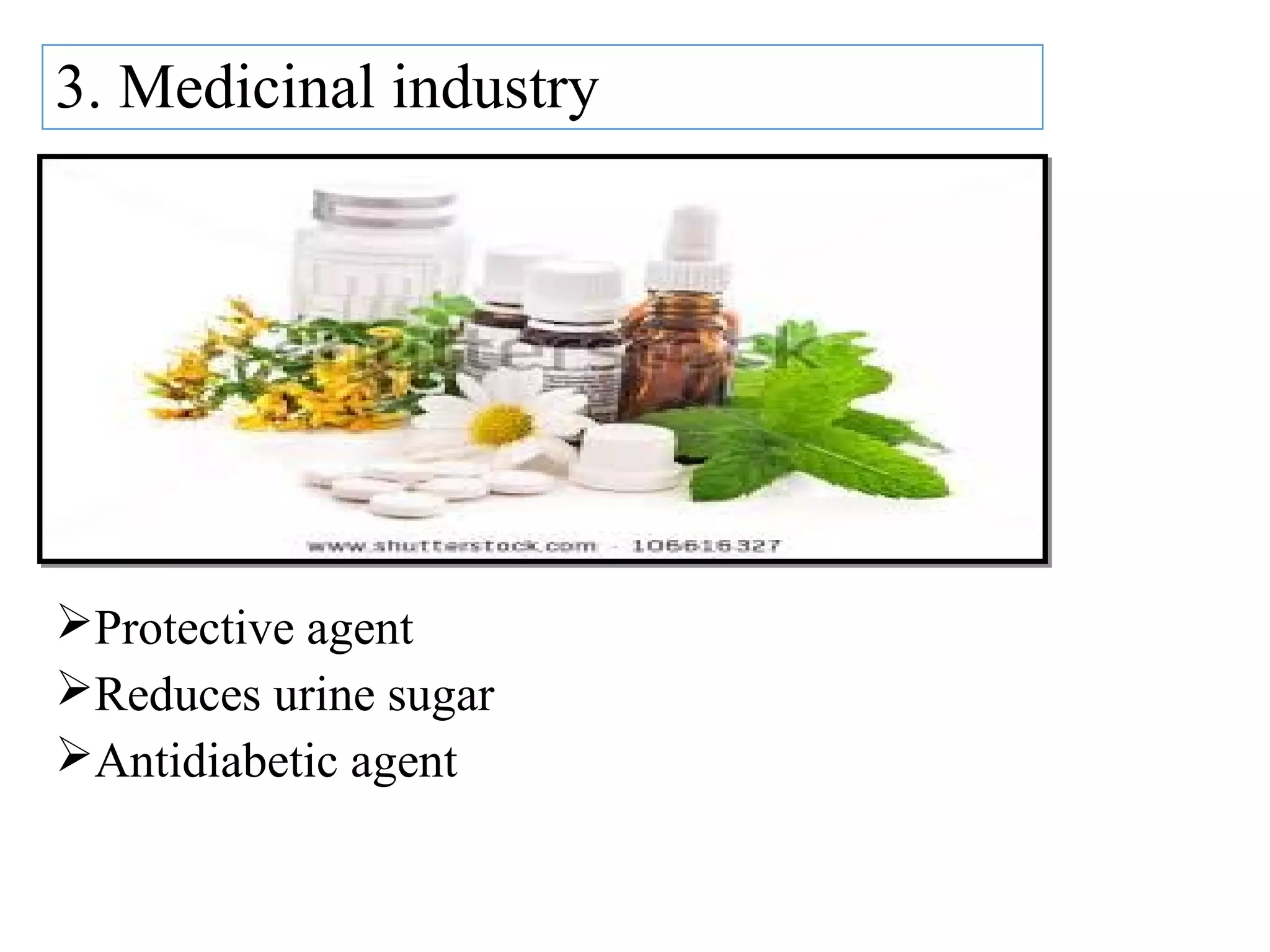
3. Medicinal industry
Protective agent
Reduces urine sugar
Antidiabetic agent
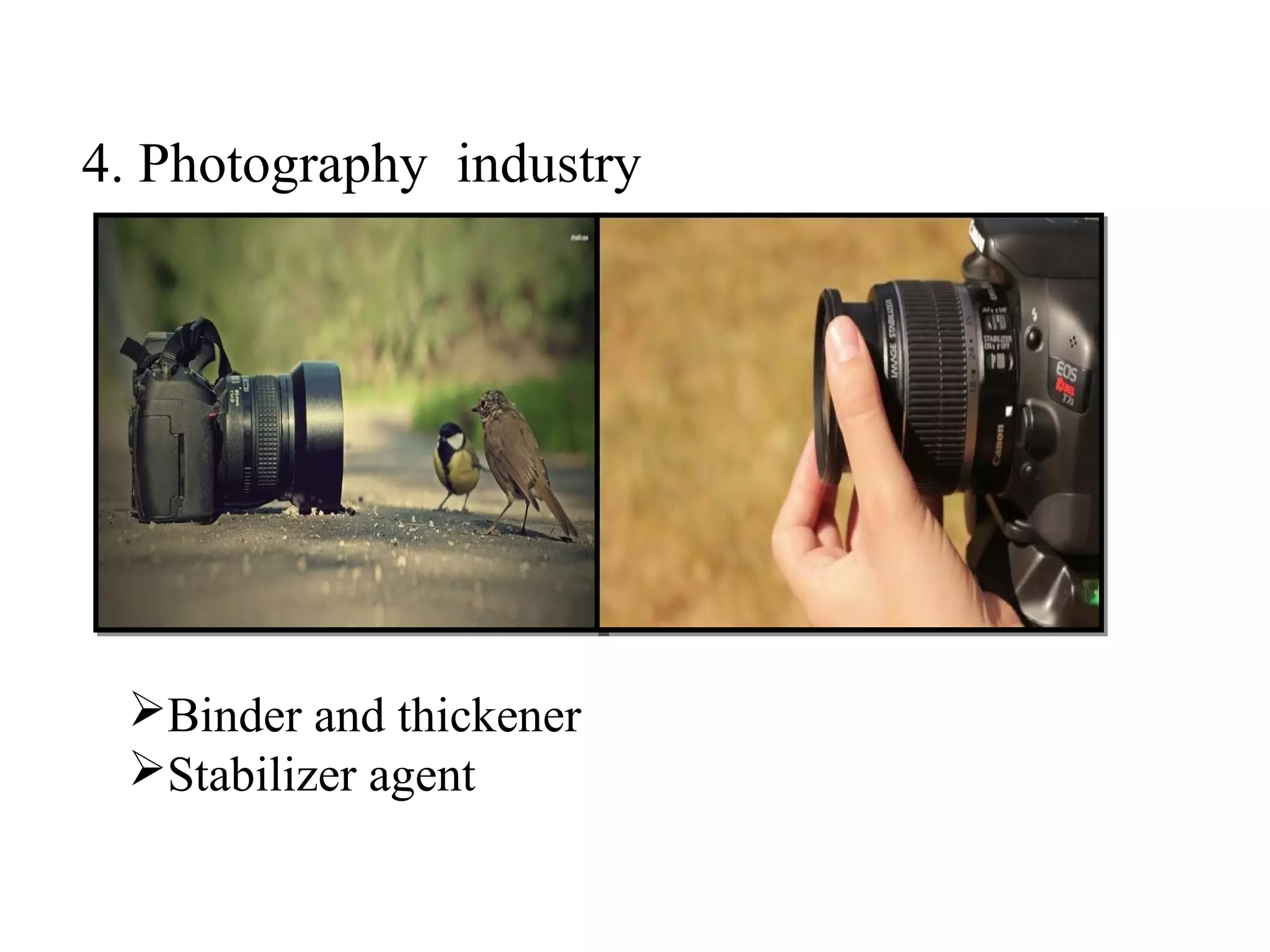
4. Photography industry
Binder and thickener
Stabilizer agent
5. Cosmetics industry
 Stabilizer agent
 Thickener agent
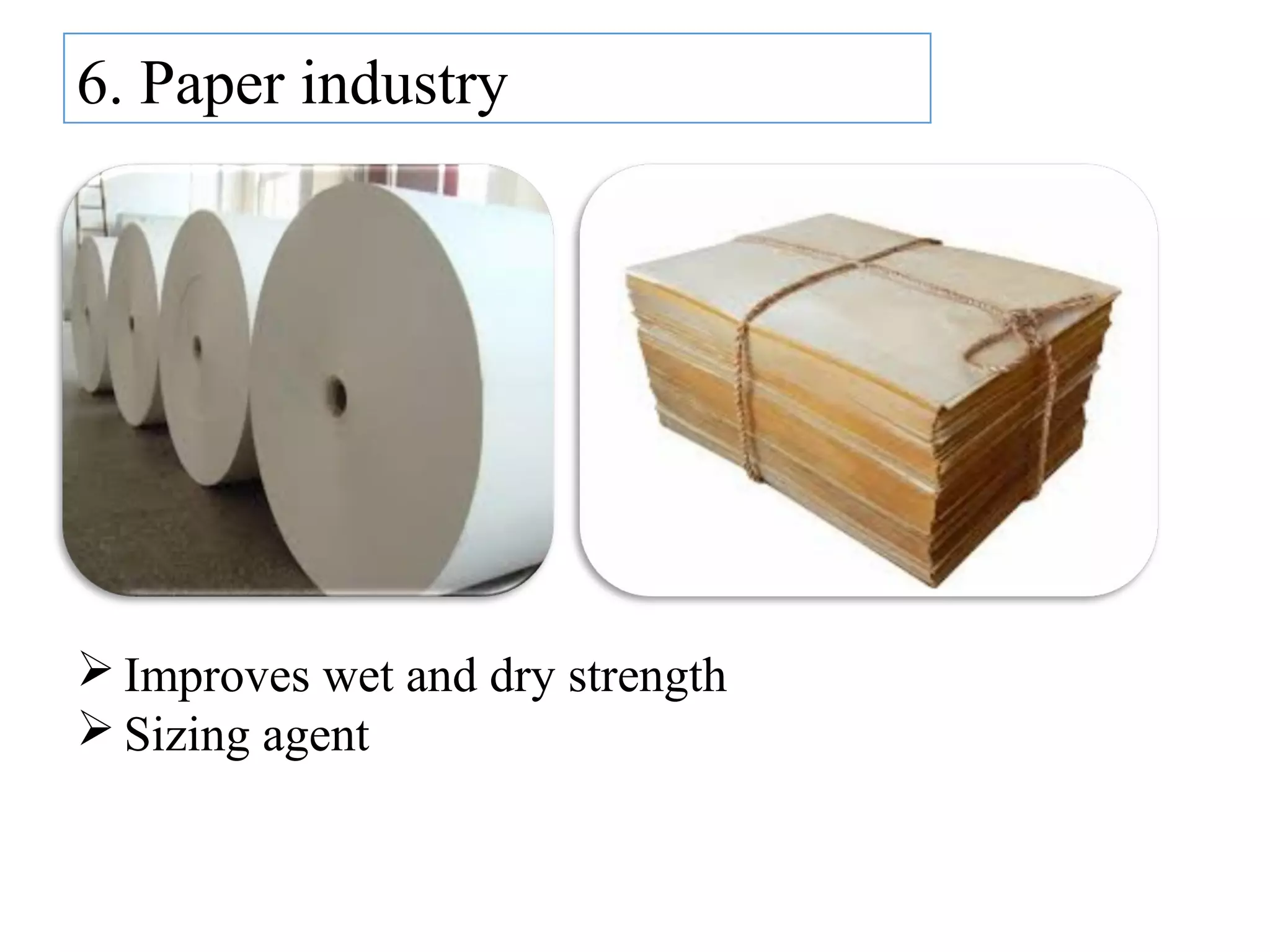
6. Paper industry
 Improves wet and dry strength
 Sizing agent
7. Building industry
Thickening agent
Water proofing
Foam stabilizer
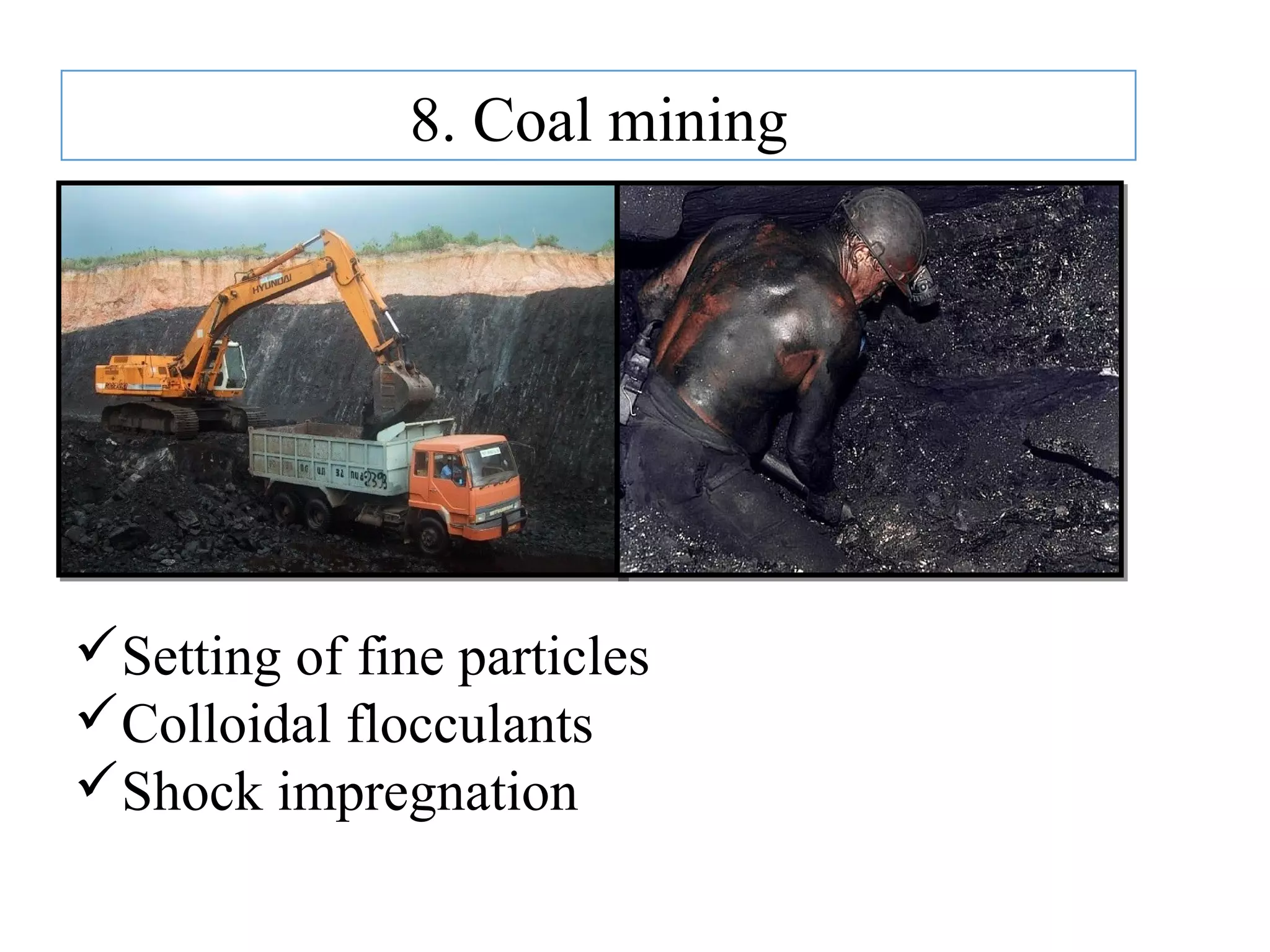
8. Coal mining
Setting of fine particles
Colloidal flocculants
Shock impregnation
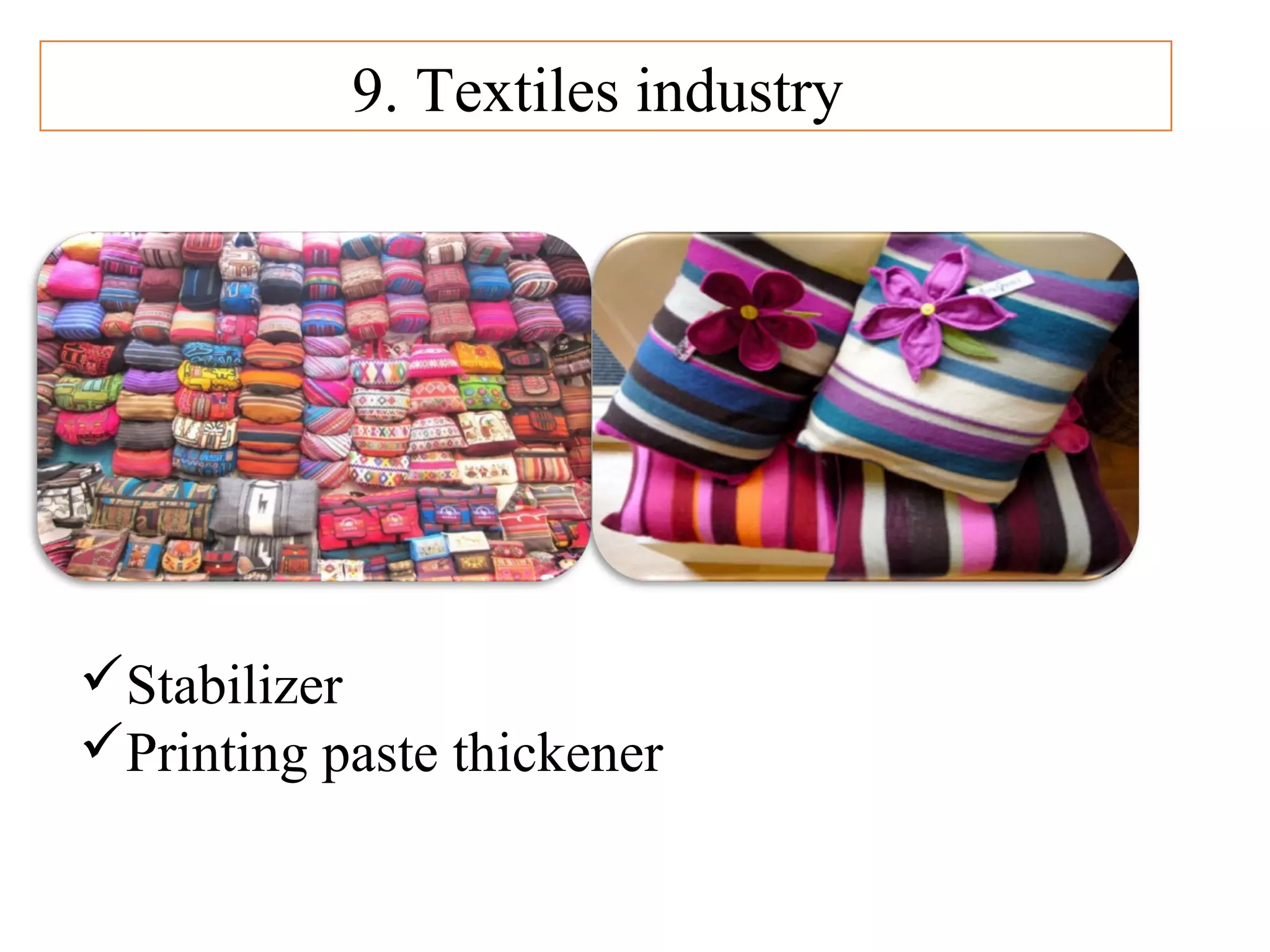
9. Textiles industry
Stabilizer
Printing paste thickener
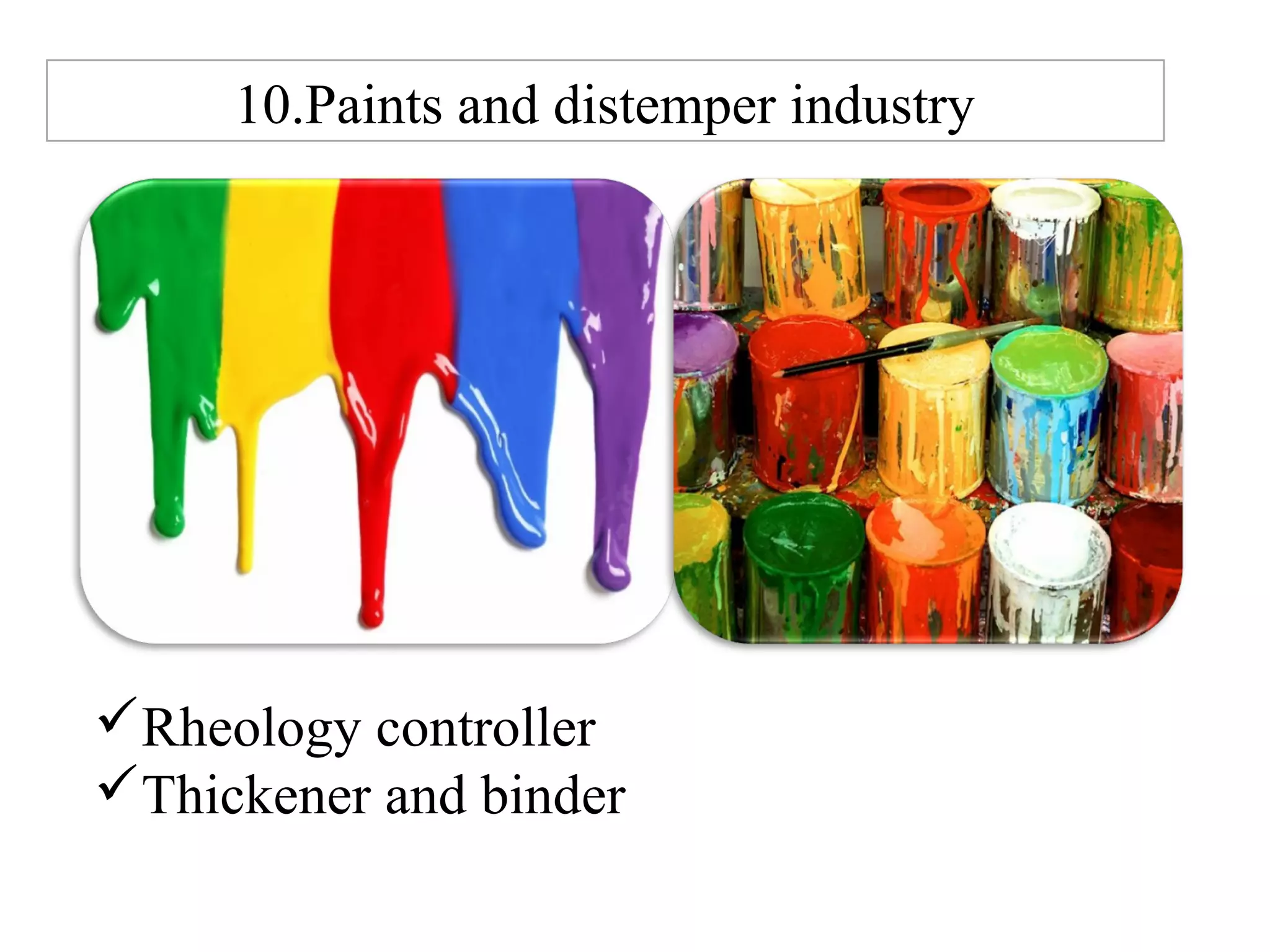
10.Paints and distemper industry
Rheology controller
Thickener and binder
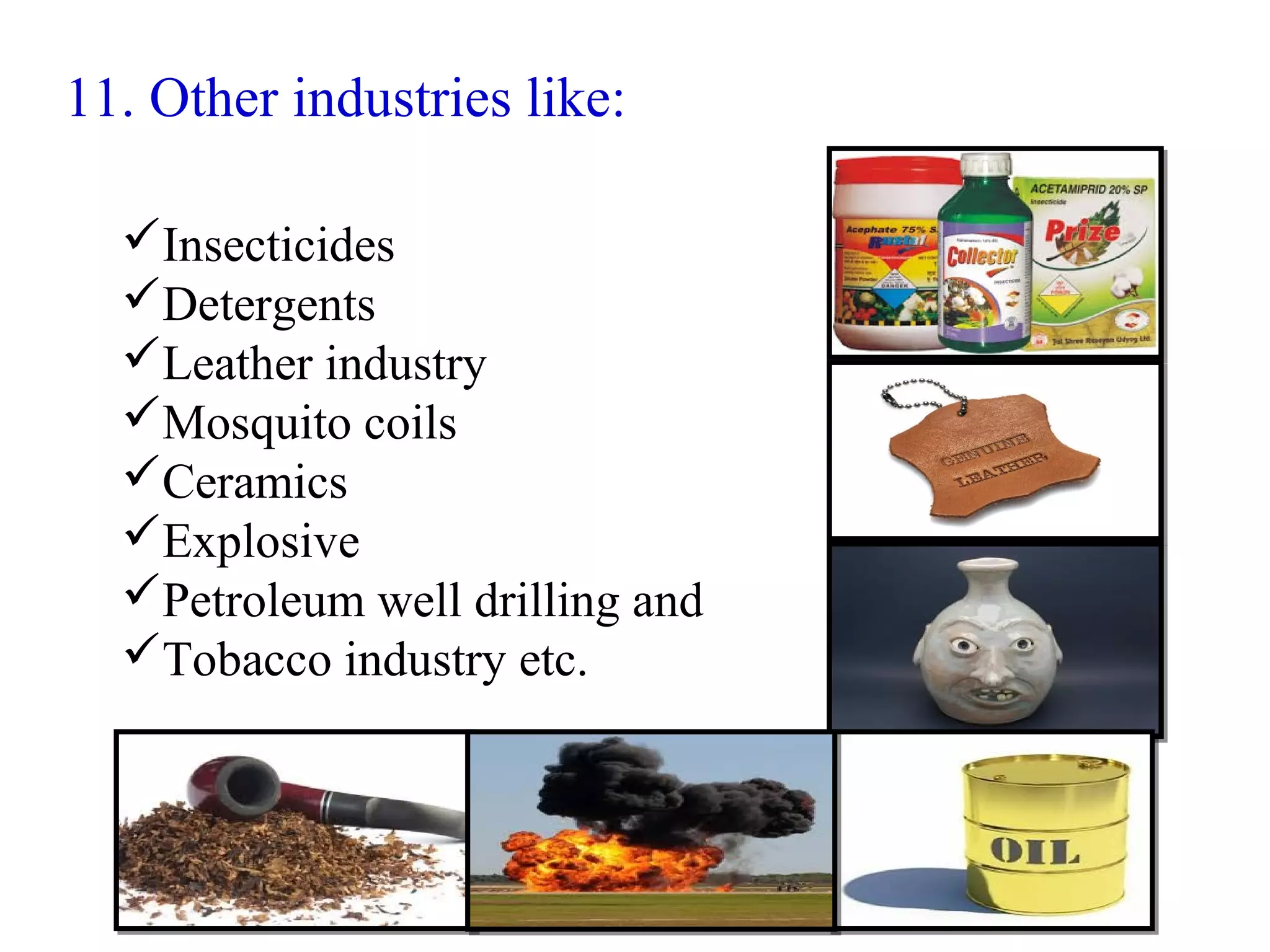
11. Other industries like:
Insecticides
Detergents
Leather industry
Mosquito coils
Ceramics
Explosive
Petroleum well drilling and
Tobacco industry etc.
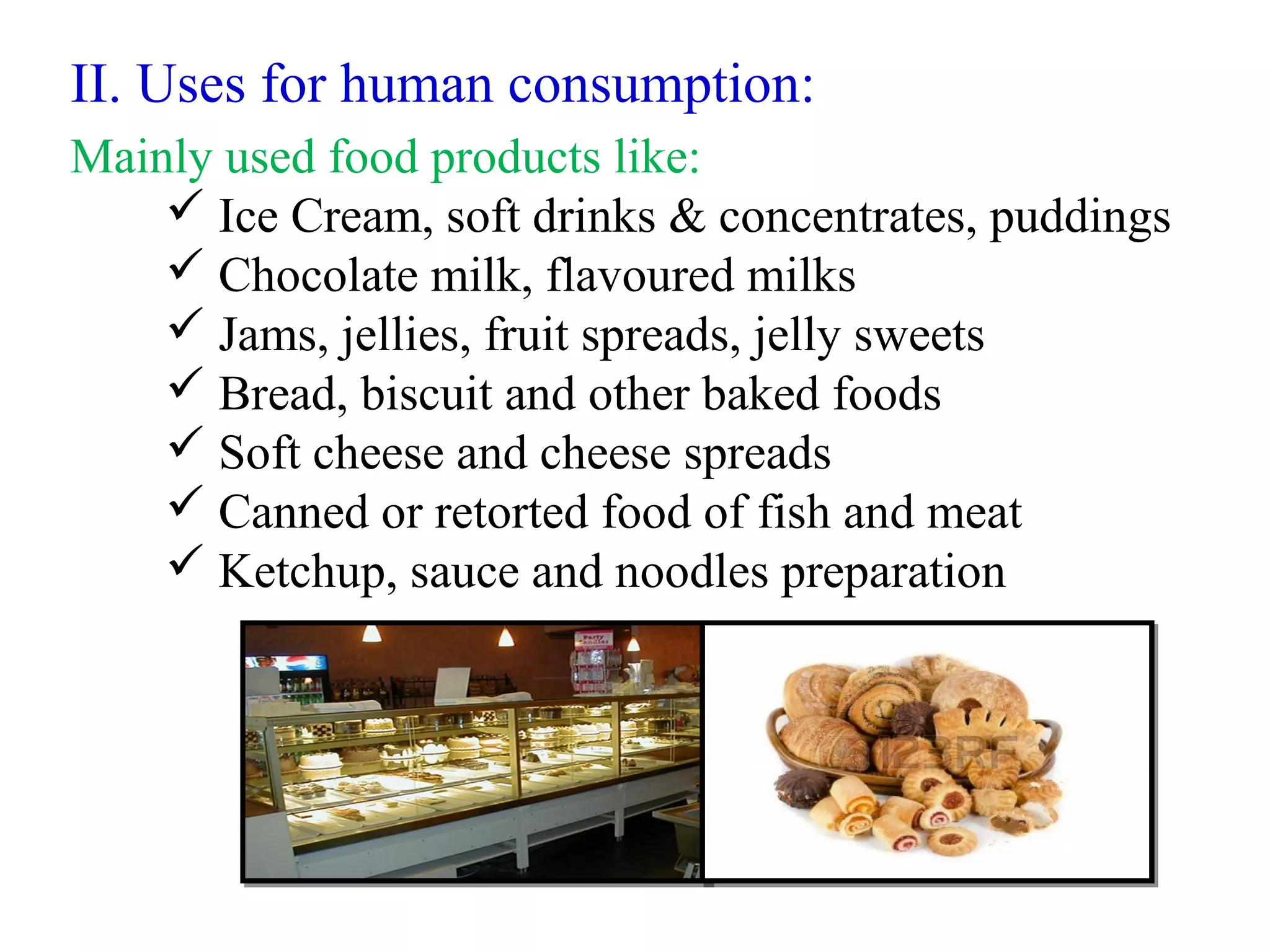
II. Uses for human consumption:
Mainly used food products like:
 Ice Cream, soft drinks & concentrates, puddings
 Chocolate milk, flavoured milks
 Jams, jellies, fruit spreads, jelly sweets
 Bread, biscuit and other baked foods
 Soft cheese and cheese spreads
 Canned or retorted food of fish and meat
 Ketchup, sauce and noodles preparation
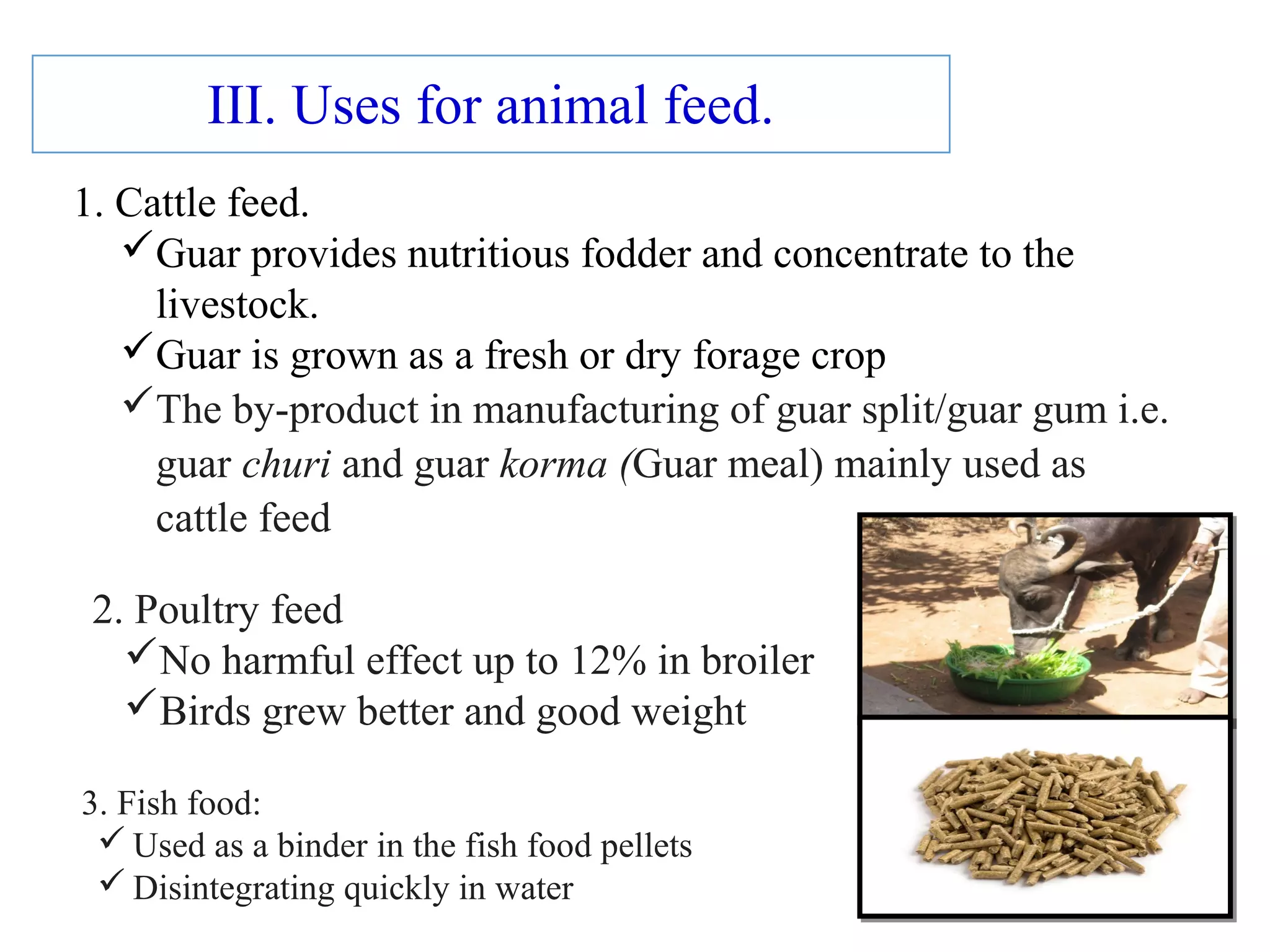
III. Uses for animal feed.
1. Cattle feed.
Guar provides nutritious fodder and concentrate to the
livestock.
Guar is grown as a fresh or dry forage crop
The by-product in manufacturing of guar split/guar gum i.e.
guar churi and guar korma (Guar meal) mainly used as
cattle feed
2. Poultry feed
No harmful effect up to 12% in broiler
Birds grew better and good weight
3. Fish food:
 Used as a binder in the fish food pellets
 Disintegrating quickly in water
Processing of guar seed
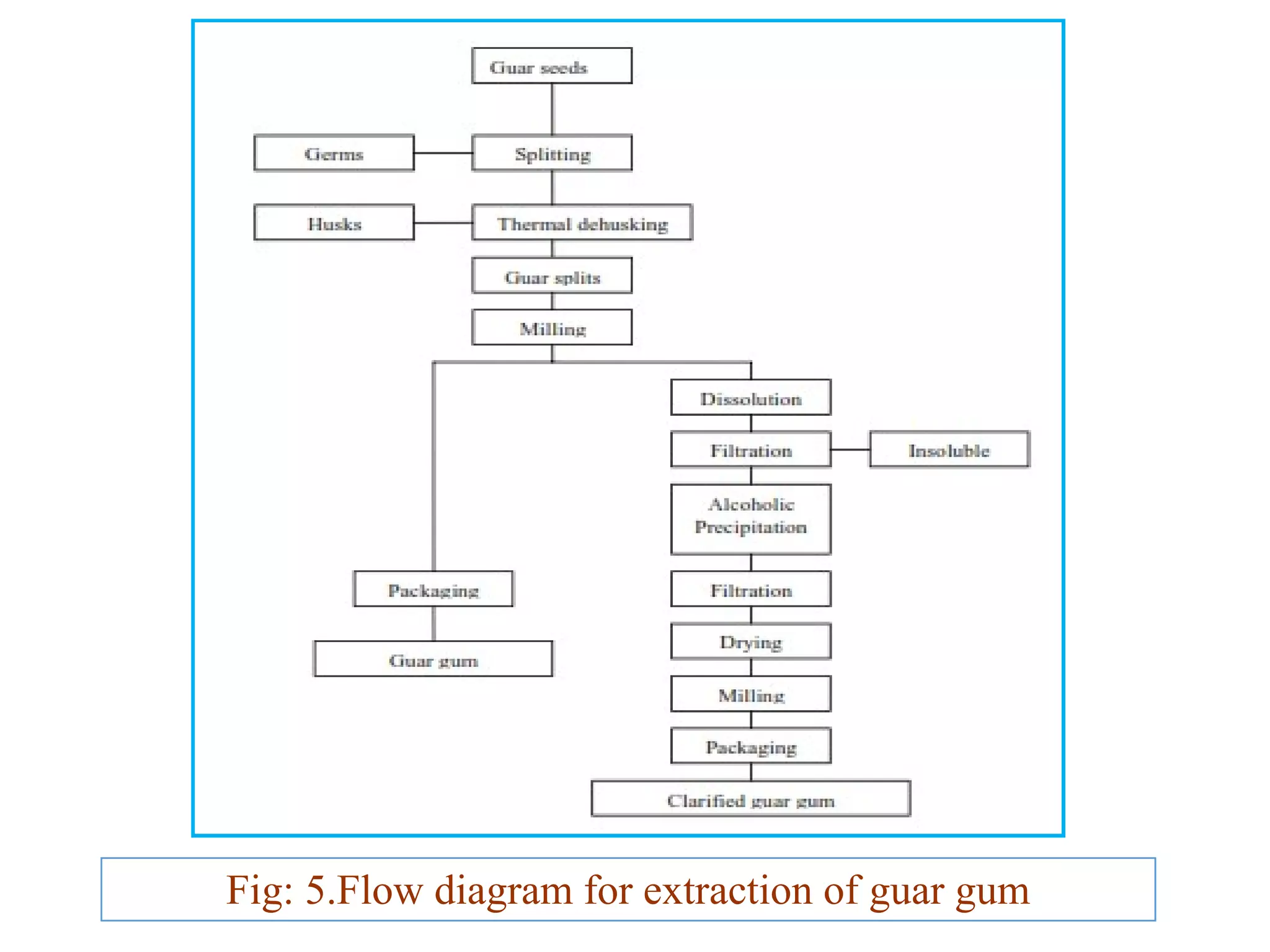
Guar seed are processed for the production of guar gum
and the by-products produced during this process are
Churi and Korma collectively called as “guar meal”.
There are two types of guar seed processing industries,
1. Guar seed to guar splits
2. Guar splits to powder.
Fig: 5.Flow diagram for extraction of guar gum
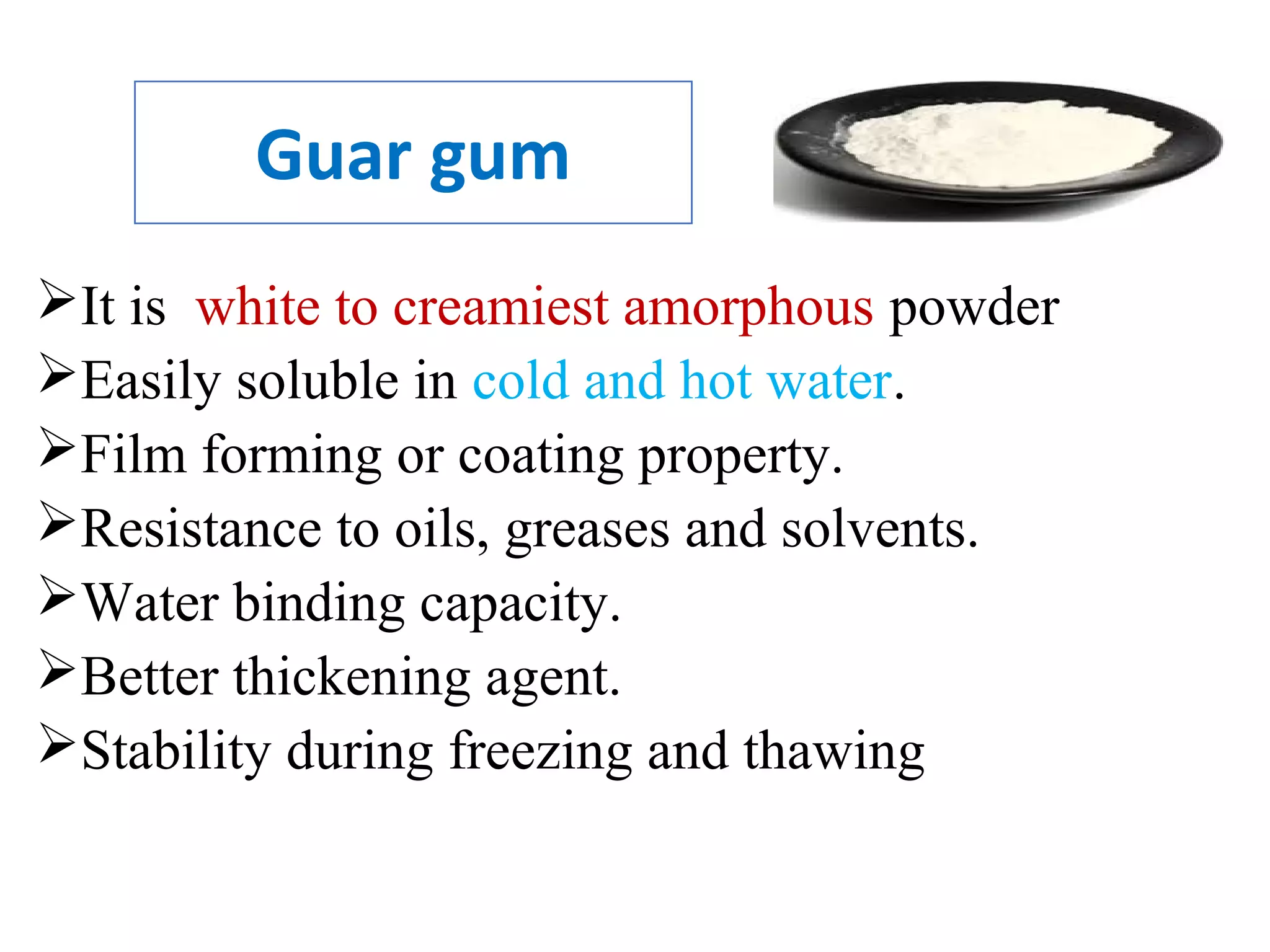
Guar gum
It is white to creamiest amorphous powder
Easily soluble in cold and hot water.
Film forming or coating property.
Resistance to oils, greases and solvents.
Water binding capacity.
Better thickening agent.
Stability during freezing and thawing
Physical properties of guar gum
•Its natural high molecular weight and hydrocolloidal
polysaccharide.
•It is composed of Galactan + Mannan through glycosidic
linkages chemically called as Galactomannan.
•Guar’s viscosity is a function of temperature, time, and
concentration.
•Solutions with different gum concentrations can be used
as emulsifiers and stabilizers because they prevent oil
droplets from coalescing.
Chemical properties of guar gum
Guar gum shows high low-shear viscosity but is
strongly shear-thinning.
Being non-ionic, it is not affected by ionic strength or
pH but will degrade at pH extremes e.g. pH 3 at 50°
temperature.
Guar gum has a polymeric structure, containing several
hydroxyl groups and also used as:
1. Dispersion Control,
2. Viscosity Causing,
3. Gelling and
4. Preservatives
By products of guar
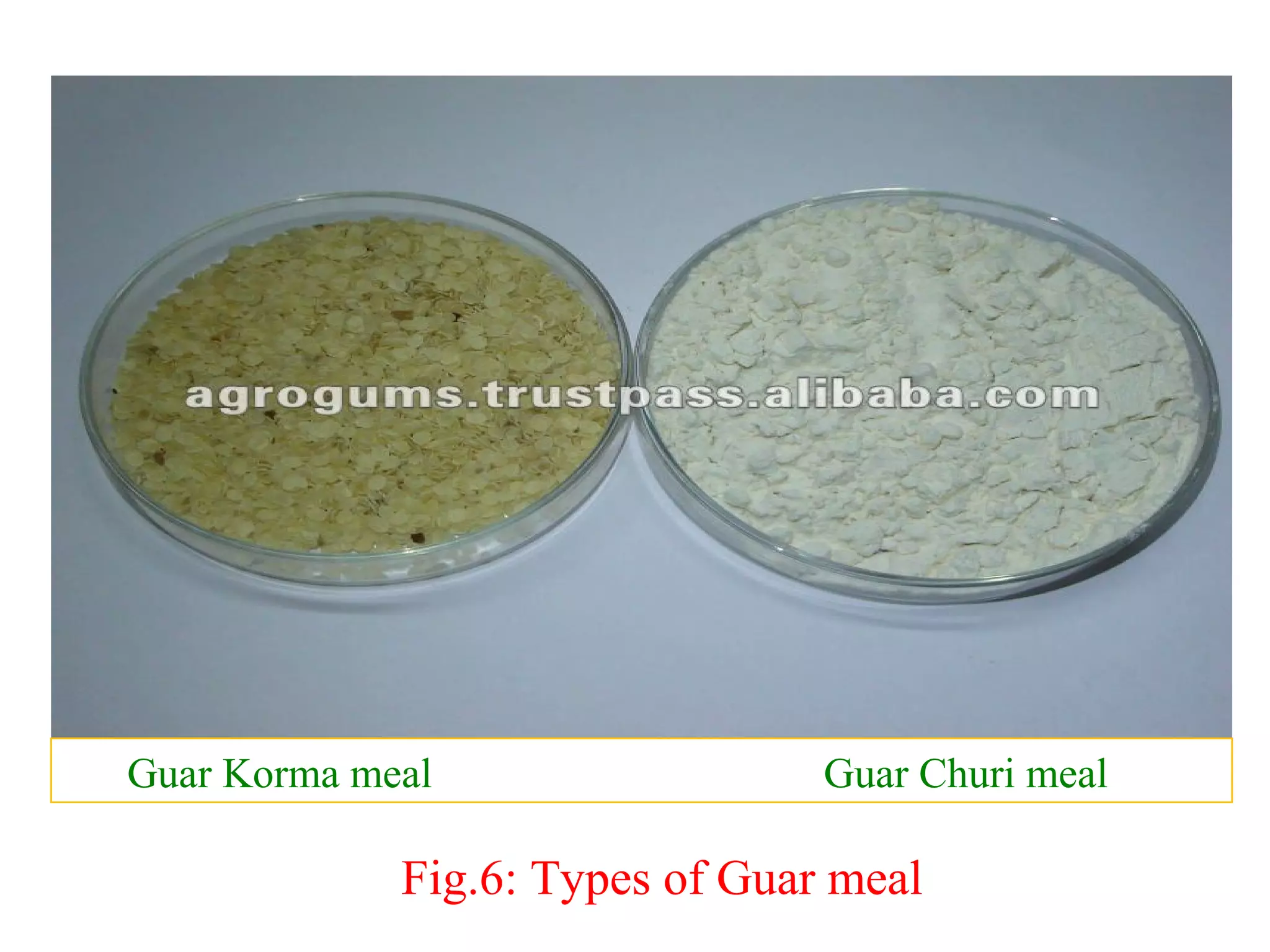
•Guar meal : During the split manufacturing process, husk
and germ are obtained which are used as high
proteinaceous animal and poultry feed. These are widely
sold in the international market as “Guar Meal” having
high contents of “Oil & Albuminoids” (O & A ).
•Guar meal basically has two grades called
• Guar meal churi
• Guar meal korma.
Fig.6: Types of Guar meal
Guar Korma meal Guar Churi meal
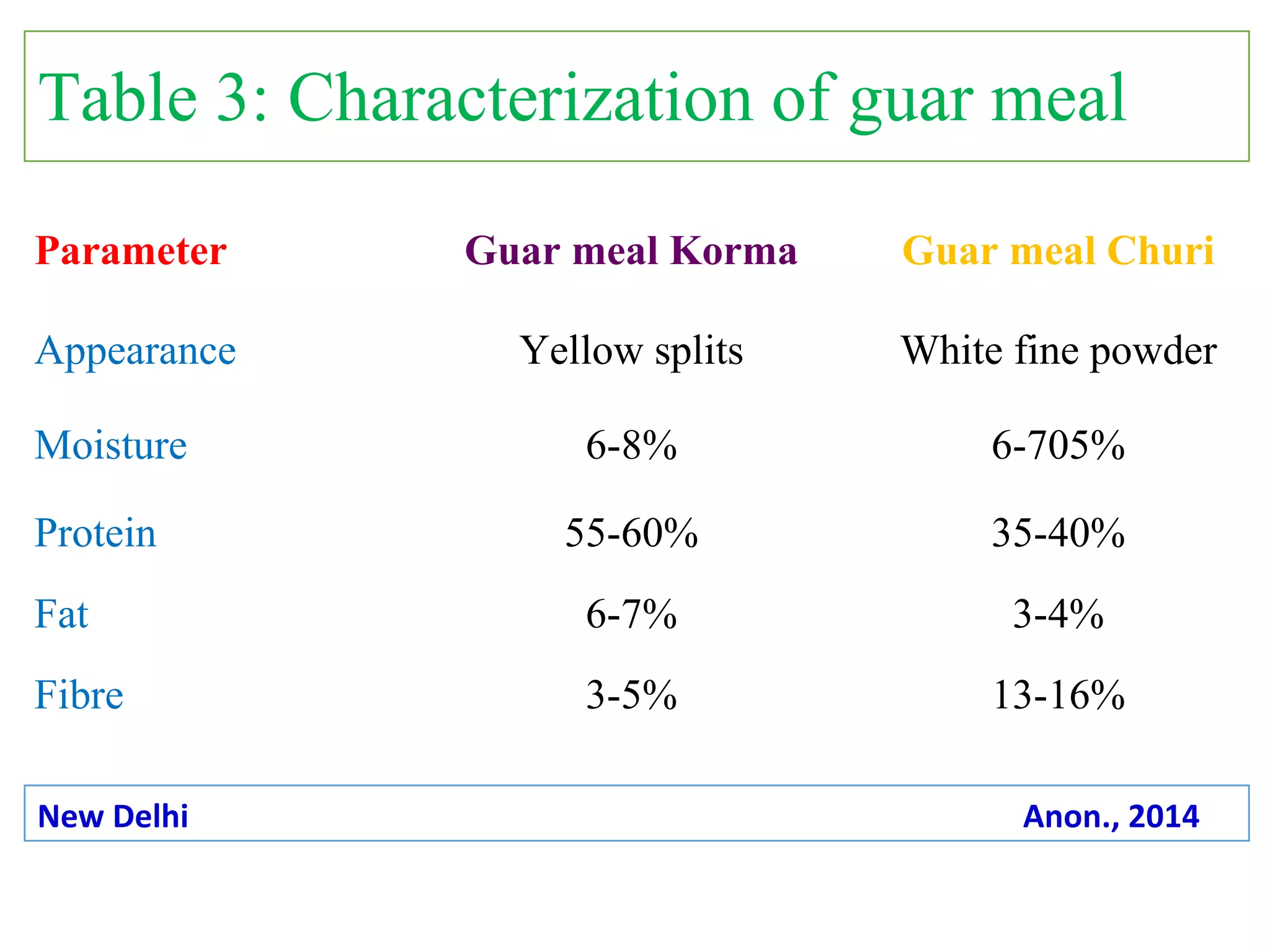
Table 3: Characterization of guar meal
Parameter Guar meal Korma Guar meal Churi
Appearance Yellow splits White fine powder
Moisture 6-8% 6-705%
Protein 55-60% 35-40%
Fat 6-7% 3-4%
Fibre 3-5% 13-16%
New Delhi Anon., 2014
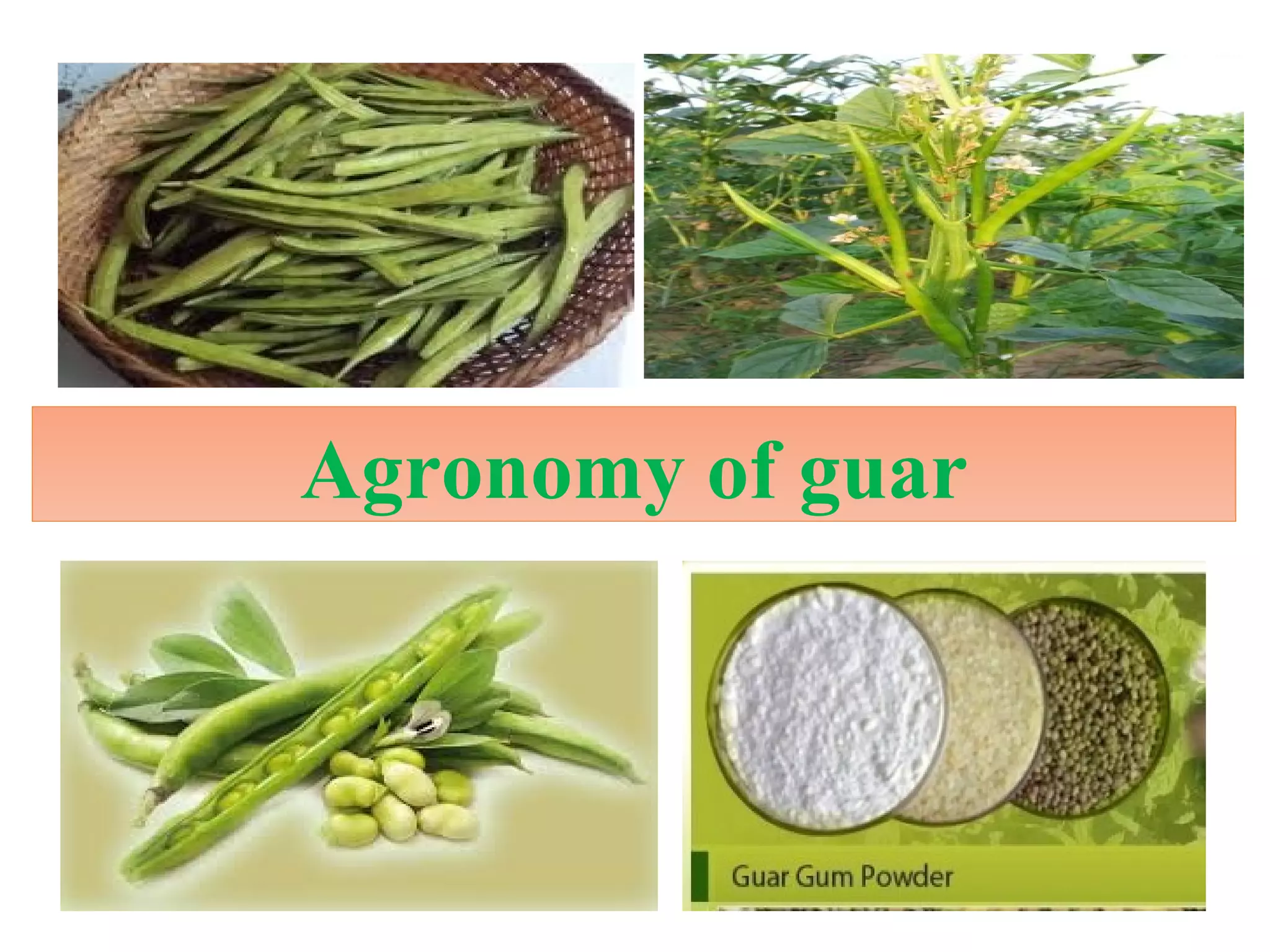
Agronomy of guar
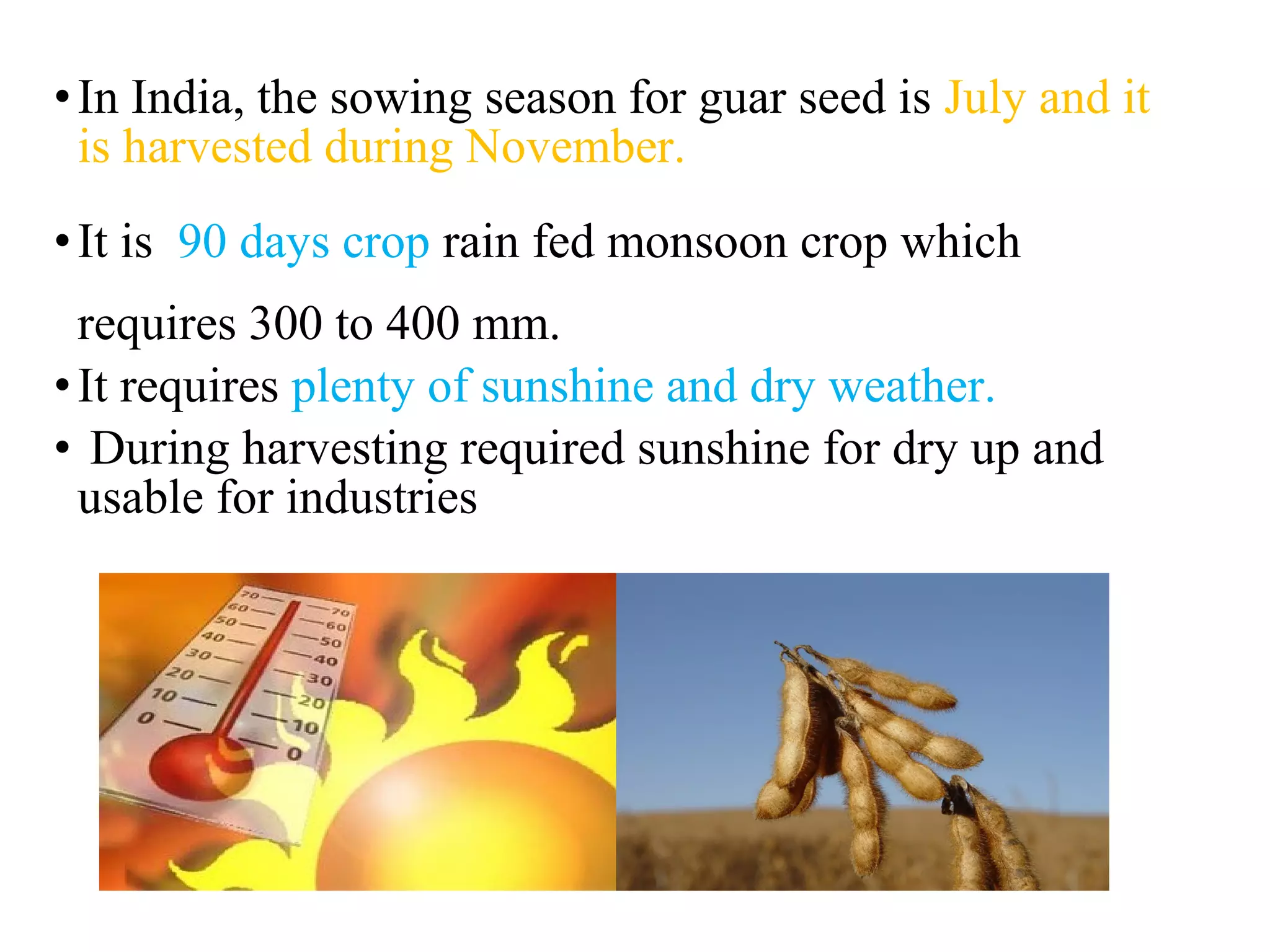
•In India, the sowing season for guar seed is July and it
is harvested during November.
•It is 90 days crop rain fed monsoon crop which
requires 300 to 400 mm.
•It requires plenty of sunshine and dry weather.
• During harvesting required sunshine for dry up and
usable for industries
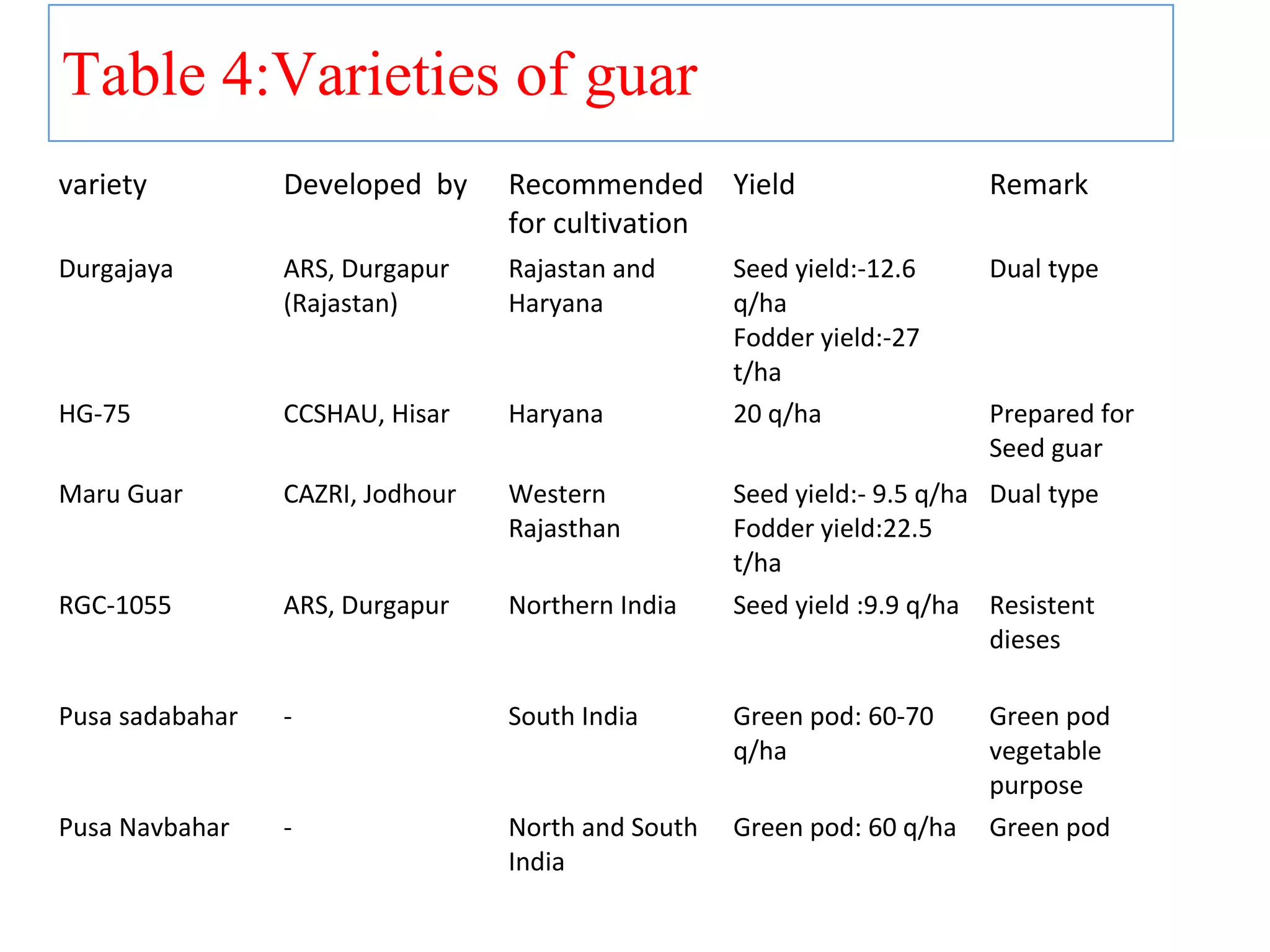
Table 4:Varieties of guar
variety Developed by Recommended
for cultivation
Yield Remark
Durgajaya ARS, Durgapur
(Rajastan)
Rajastan and
Haryana
Seed yield:-12.6
q/ha
Fodder yield:-27
t/ha
Dual type
HG-75 CCSHAU, Hisar Haryana 20 q/ha Prepared for
Seed guar
Maru Guar CAZRI, Jodhour Western
Rajasthan
Seed yield:- 9.5 q/ha
Fodder yield:22.5
t/ha
Dual type
RGC-1055 ARS, Durgapur Northern India Seed yield :9.9 q/ha Resistent
dieses
Pusa sadabahar - South India Green pod: 60-70
q/ha
Green pod
vegetable
purpose
Pusa Navbahar - North and South
India
Green pod: 60 q/ha Green pod
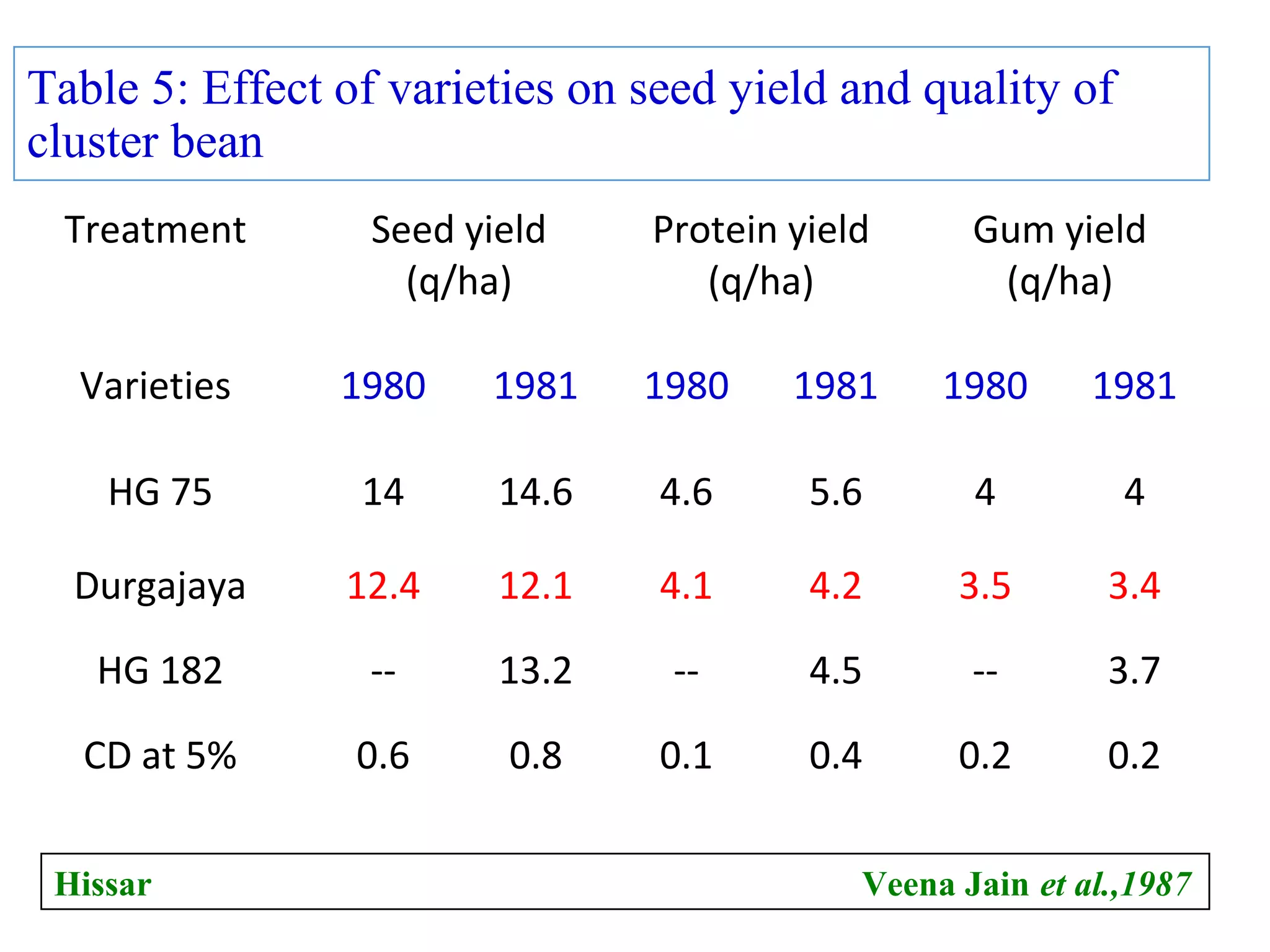
Table 5: Effect of varieties on seed yield and quality of
cluster bean
Treatment Seed yield
(q/ha)
Protein yield
(q/ha)
Gum yield
(q/ha)
Varieties 1980 1981 1980 1981 1980 1981
HG 75 14 14.6 4.6 5.6 4 4
Durgajaya 12.4 12.1 4.1 4.2 3.5 3.4
HG 182 -- 13.2 -- 4.5 -- 3.7
CD at 5% 0.6 0.8 0.1 0.4 0.2 0.2
Hissar Veena Jain et al.,1987
Climate and Soil
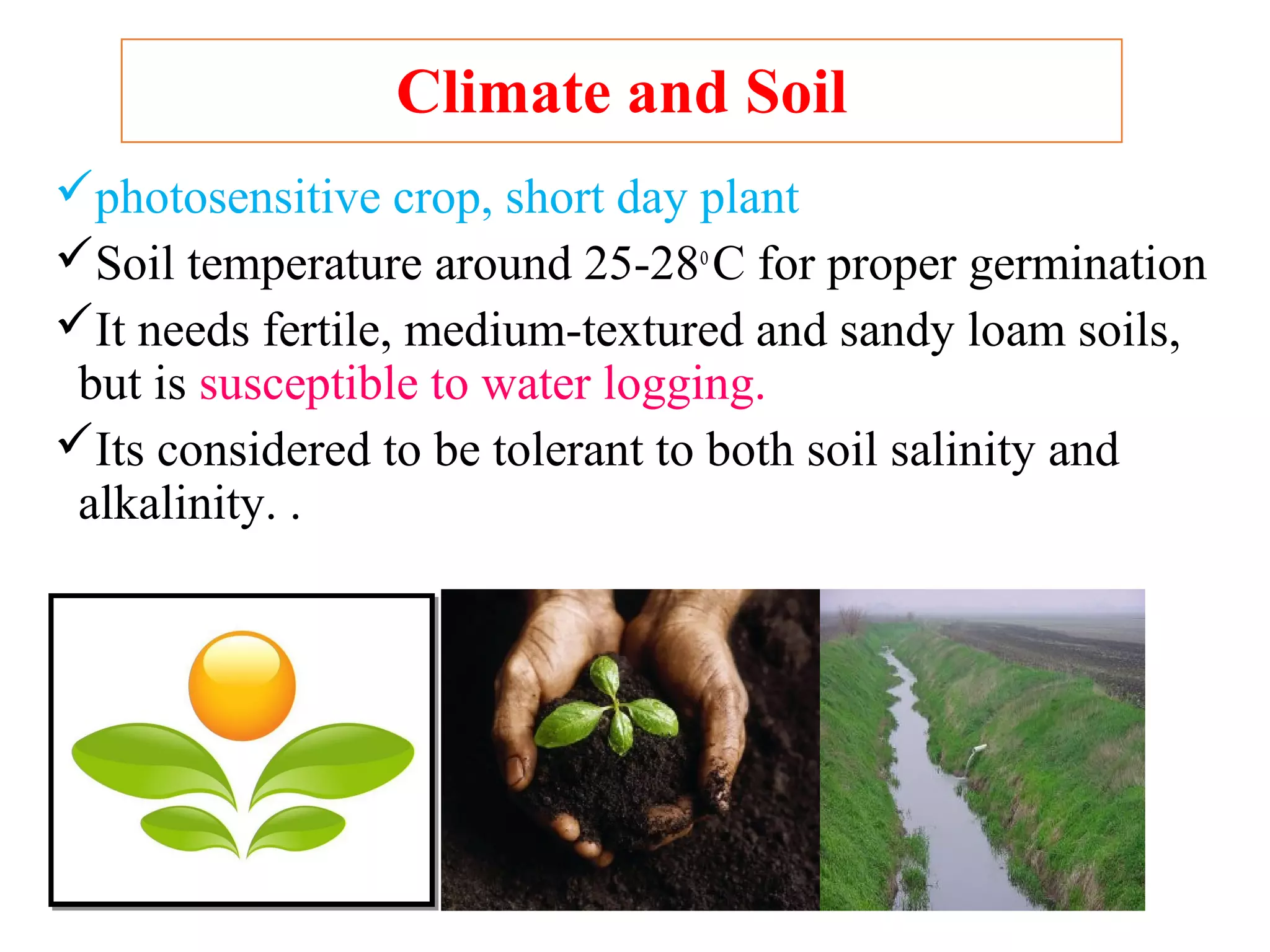
photosensitive crop, short day plant
Soil temperature around 25-28o
C for proper germination
It needs fertile, medium-textured and sandy loam soils,
but is susceptible to water logging.
Its considered to be tolerant to both soil salinity and
alkalinity. .
Time of sowing
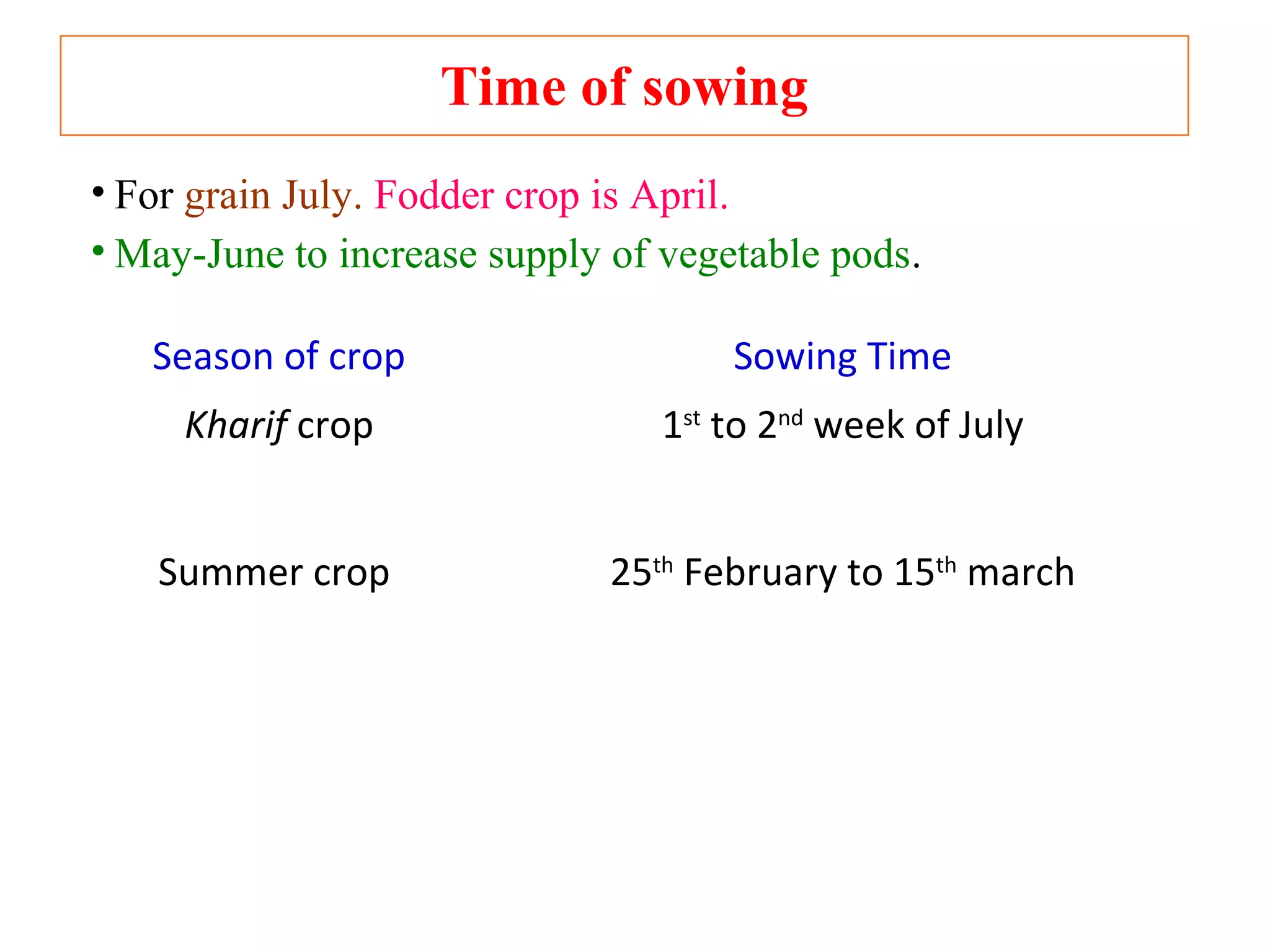
• For grain July. Fodder crop is April.
• May-June to increase supply of vegetable pods.
Season of crop Sowing Time
Kharif crop 1st
to 2nd
week of July
Summer crop 25th
February to 15th
march
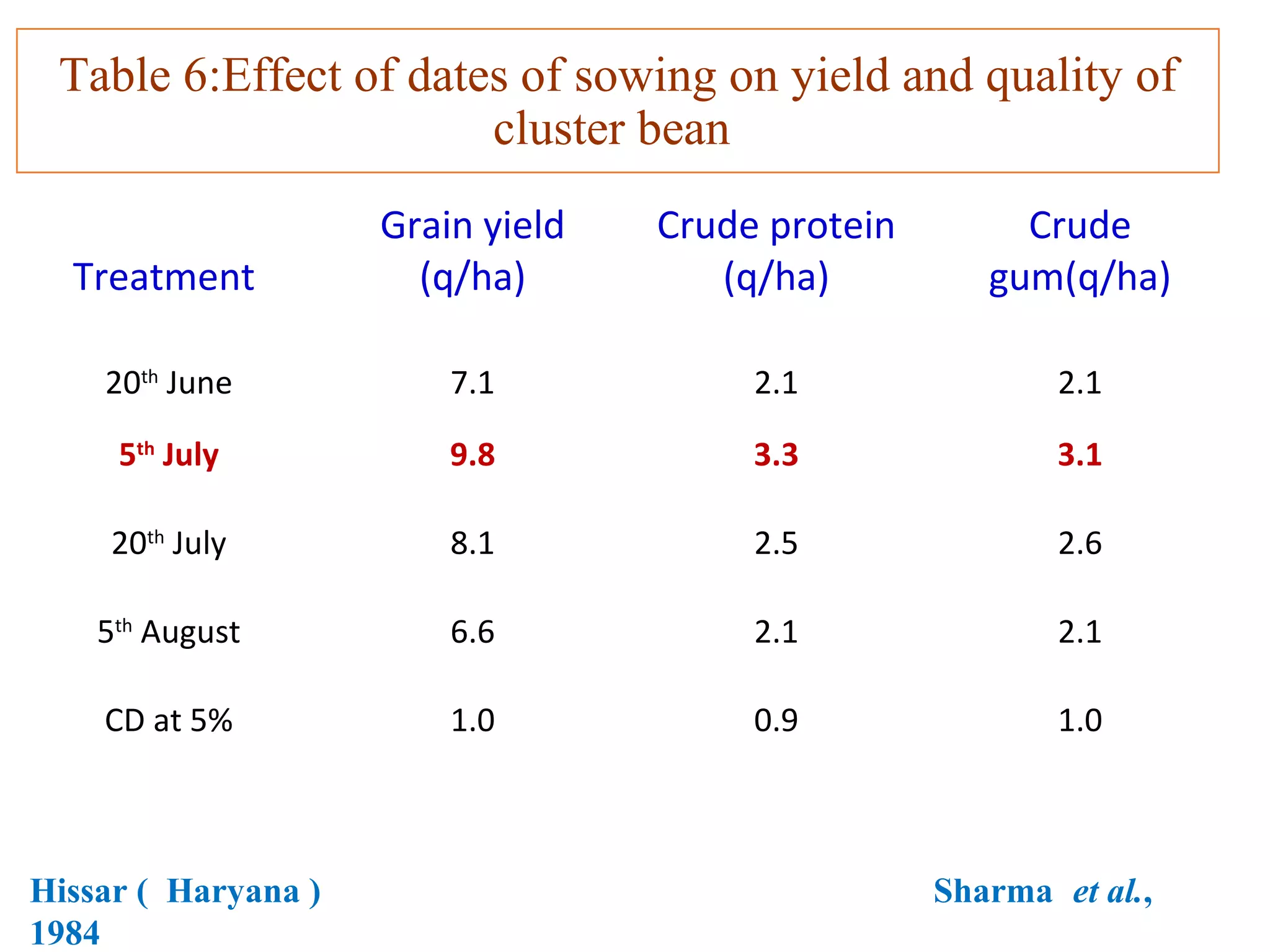
Table 6:Effect of dates of sowing on yield and quality of
cluster bean
Treatment
Grain yield
(q/ha)
Crude protein
(q/ha)
Crude
gum(q/ha)
20th
June 7.1 2.1 2.1
5th
July 9.8 3.3 3.1
20th
July 8.1 2.5 2.6
5th
August 6.6 2.1 2.1
CD at 5% 1.0 0.9 1.0
Hissar ( Haryana ) Sharma et al.,
1984
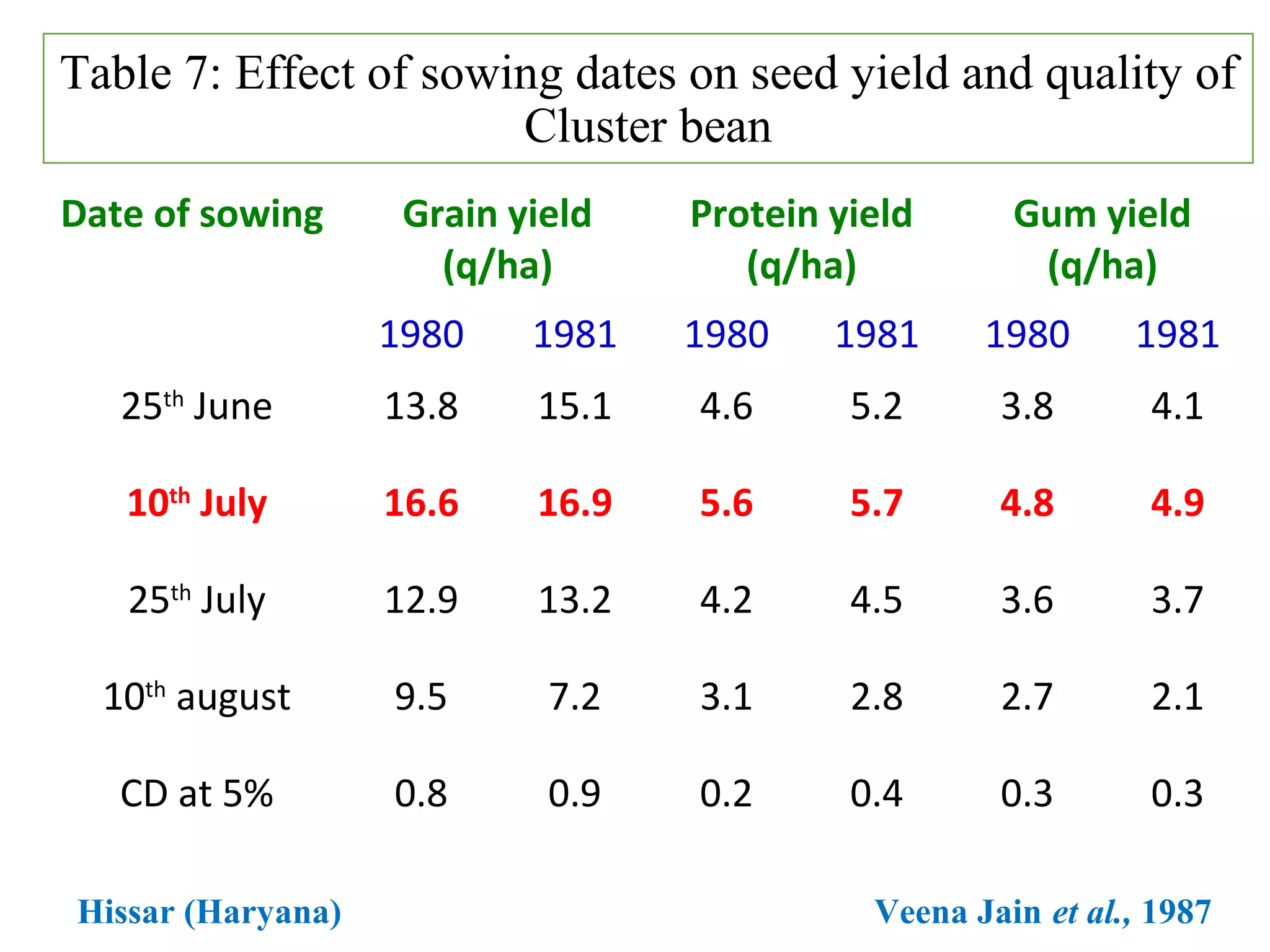
Table 7: Effect of sowing dates on seed yield and quality of
Cluster bean
Date of sowing Grain yield
(q/ha)
Protein yield
(q/ha)
Gum yield
(q/ha)
1980 1981 1980 1981 1980 1981
25th
June 13.8 15.1 4.6 5.2 3.8 4.1
10th
July 16.6 16.9 5.6 5.7 4.8 4.9
25th
July 12.9 13.2 4.2 4.5 3.6 3.7
10th
august 9.5 7.2 3.1 2.8 2.7 2.1
CD at 5% 0.8 0.9 0.2 0.4 0.3 0.3
Hissar (Haryana) Veena Jain et al., 1987
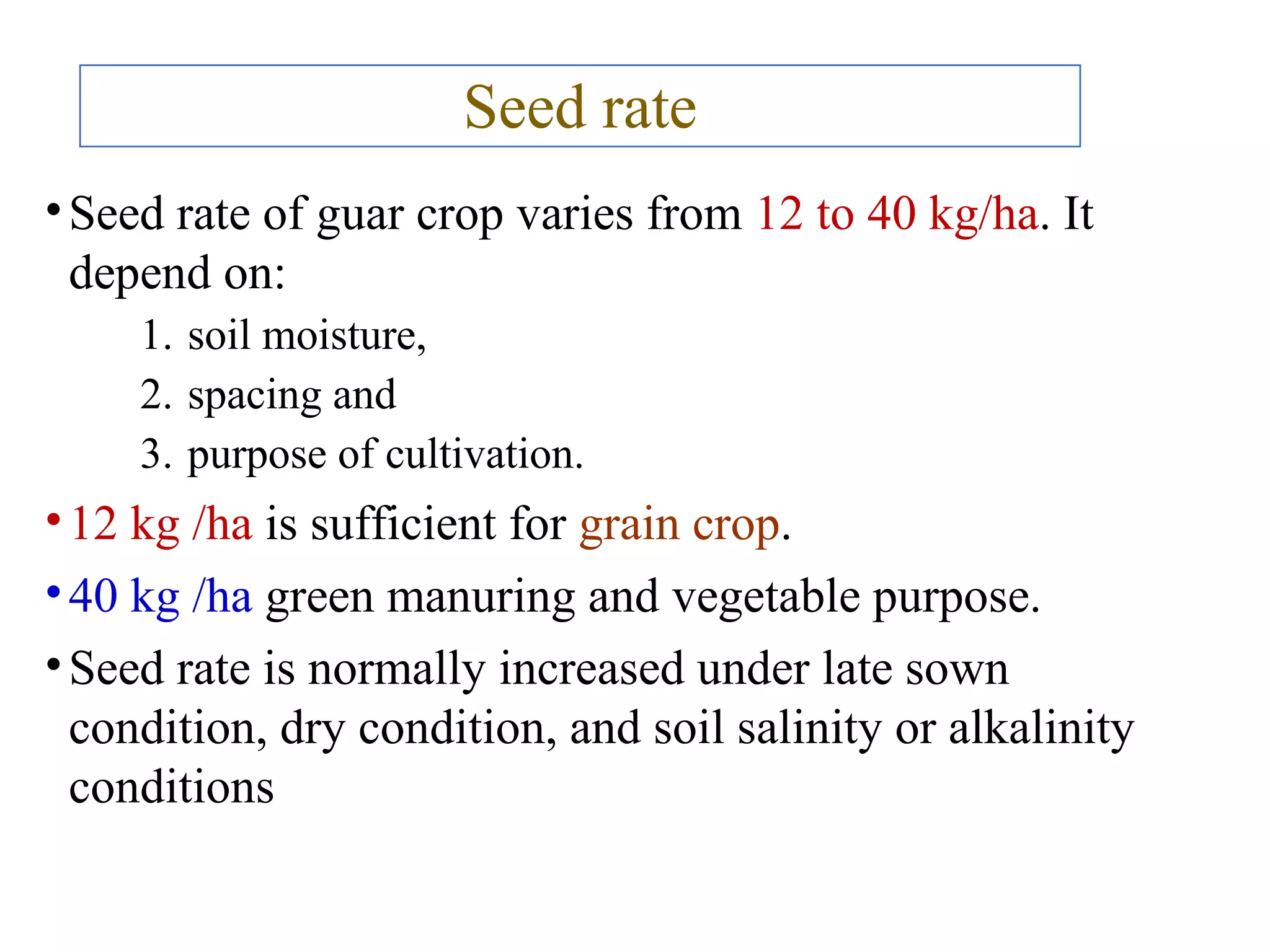
Seed rate
•Seed rate of guar crop varies from 12 to 40 kg/ha. It
depend on:
1. soil moisture,
2. spacing and
3. purpose of cultivation.
•12 kg /ha is sufficient for grain crop.
•40 kg /ha green manuring and vegetable purpose.
•Seed rate is normally increased under late sown
condition, dry condition, and soil salinity or alkalinity
conditions
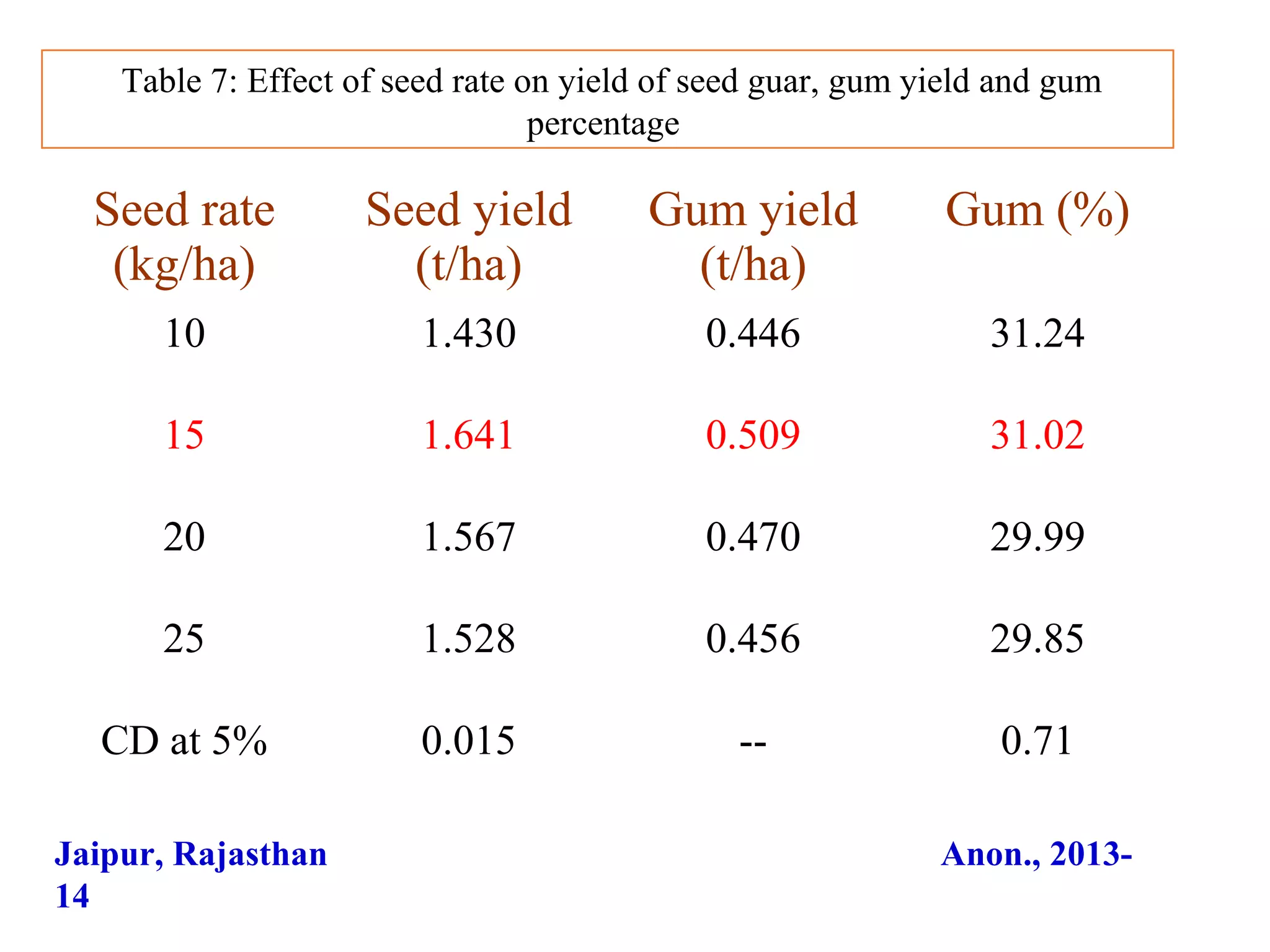
Jaipur, Rajasthan Anon., 2013-
14
Table 7: Effect of seed rate on yield of seed guar, gum yield and gum
percentage
Seed rate
(kg/ha)
Seed yield
(t/ha)
Gum yield
(t/ha)
Gum (%)
10 1.430 0.446 31.24
15 1.641 0.509 31.02
20 1.567 0.470 29.99
25 1.528 0.456 29.85
CD at 5% 0.015 -- 0.71
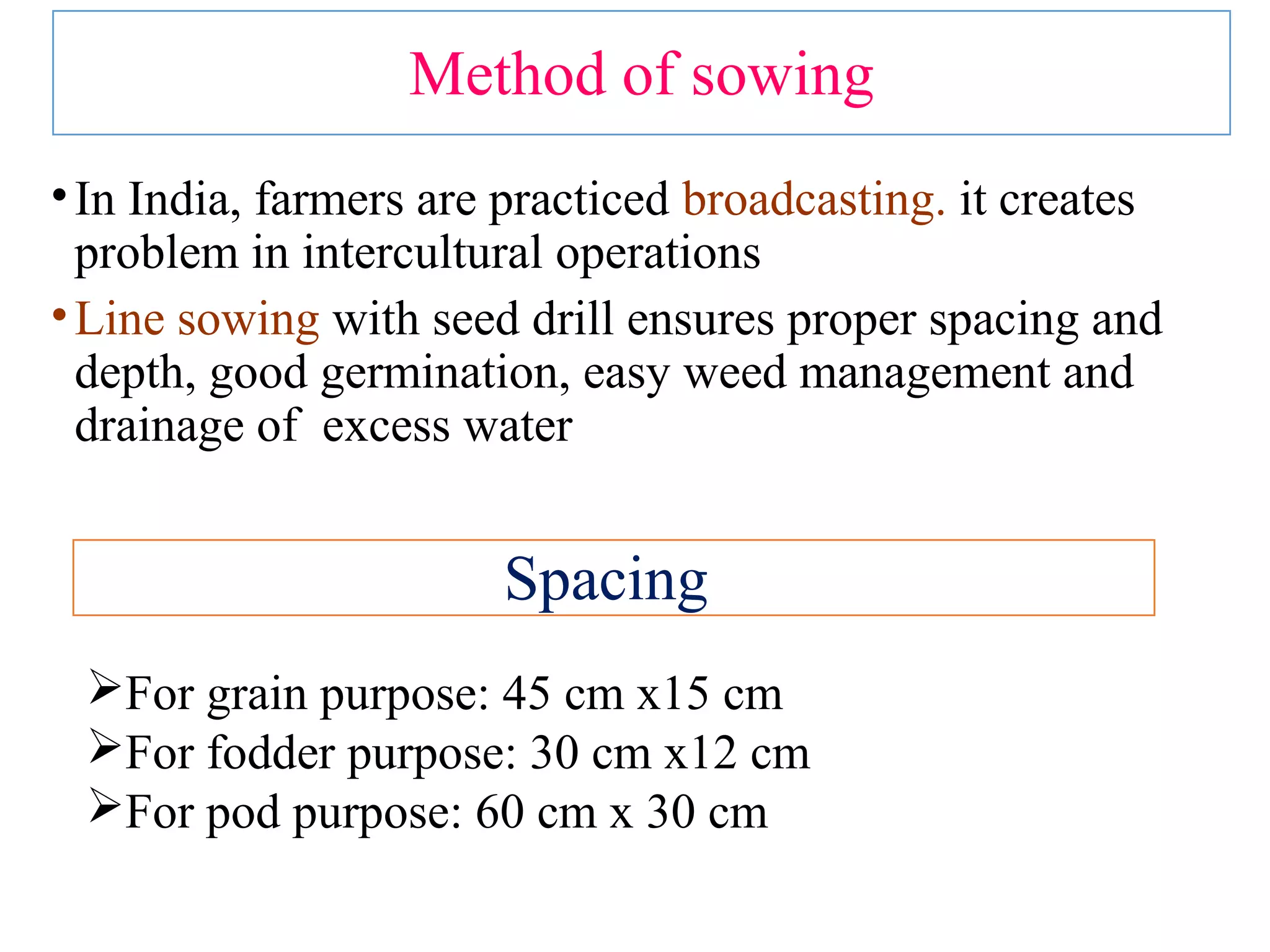
Method of sowing
•In India, farmers are practiced broadcasting. it creates
problem in intercultural operations
•Line sowing with seed drill ensures proper spacing and
depth, good germination, easy weed management and
drainage of excess water
Spacing
For grain purpose: 45 cm x15 cm
For fodder purpose: 30 cm x12 cm
For pod purpose: 60 cm x 30 cm
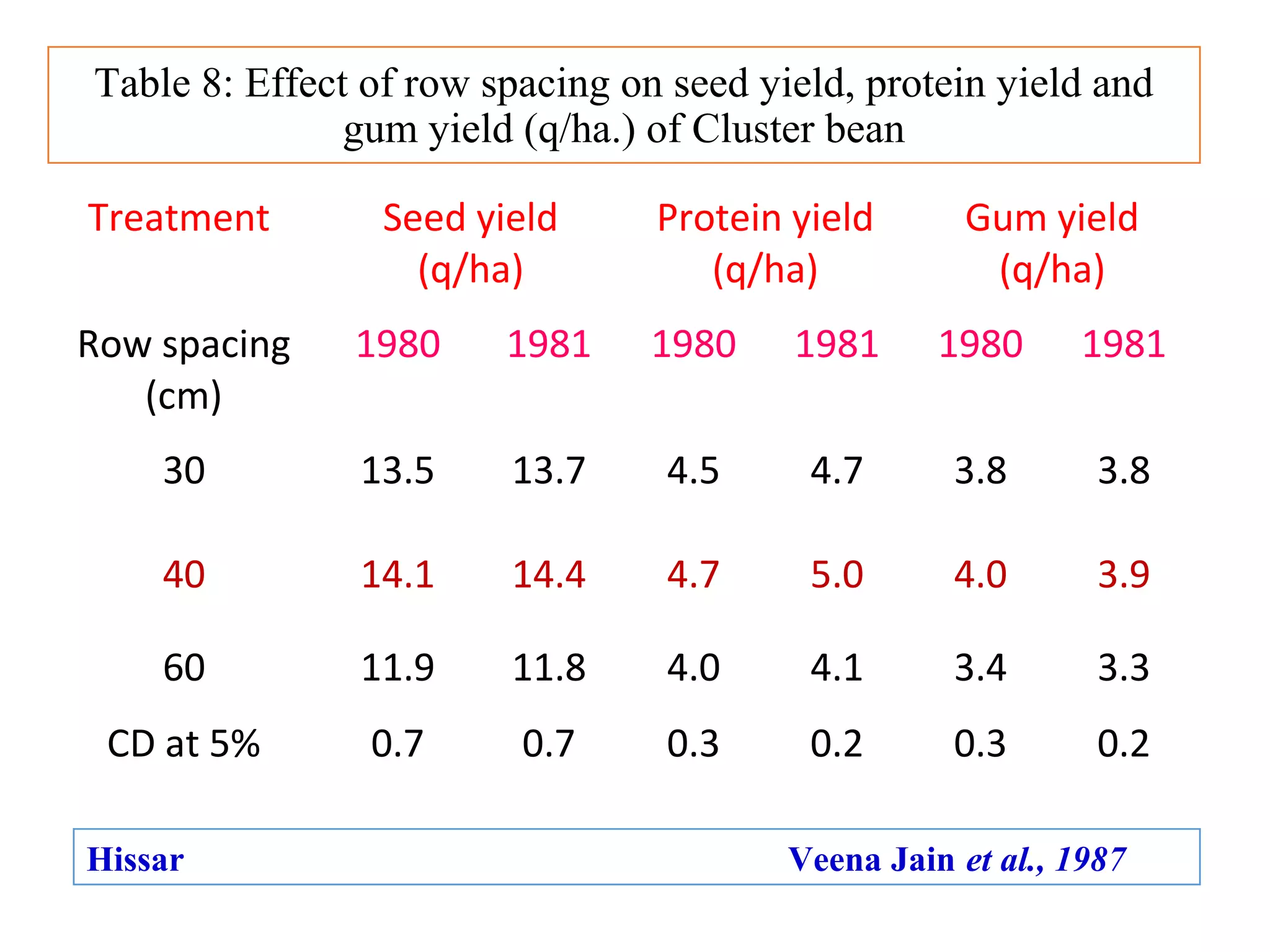
Table 8: Effect of row spacing on seed yield, protein yield and
gum yield (q/ha.) of Cluster bean
Treatment Seed yield
(q/ha)
Protein yield
(q/ha)
Gum yield
(q/ha)
Row spacing
(cm)
1980 1981 1980 1981 1980 1981
30 13.5 13.7 4.5 4.7 3.8 3.8
40 14.1 14.4 4.7 5.0 4.0 3.9
60 11.9 11.8 4.0 4.1 3.4 3.3
CD at 5% 0.7 0.7 0.3 0.2 0.3 0.2
Hissar Veena Jain et al., 1987
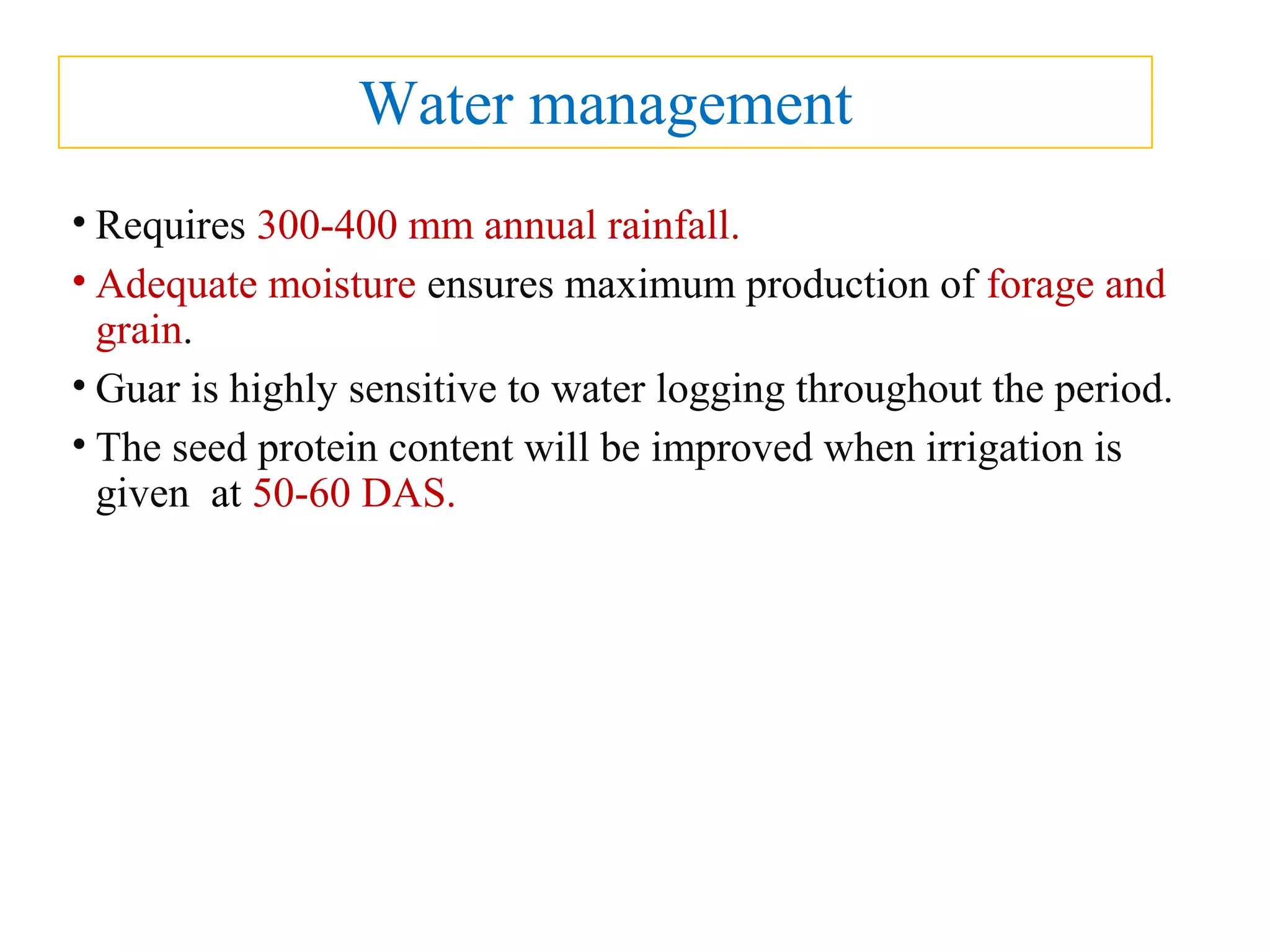
Water management
• Requires 300-400 mm annual rainfall.
• Adequate moisture ensures maximum production of forage and
grain.
• Guar is highly sensitive to water logging throughout the period.
• The seed protein content will be improved when irrigation is
given at 50-60 DAS.
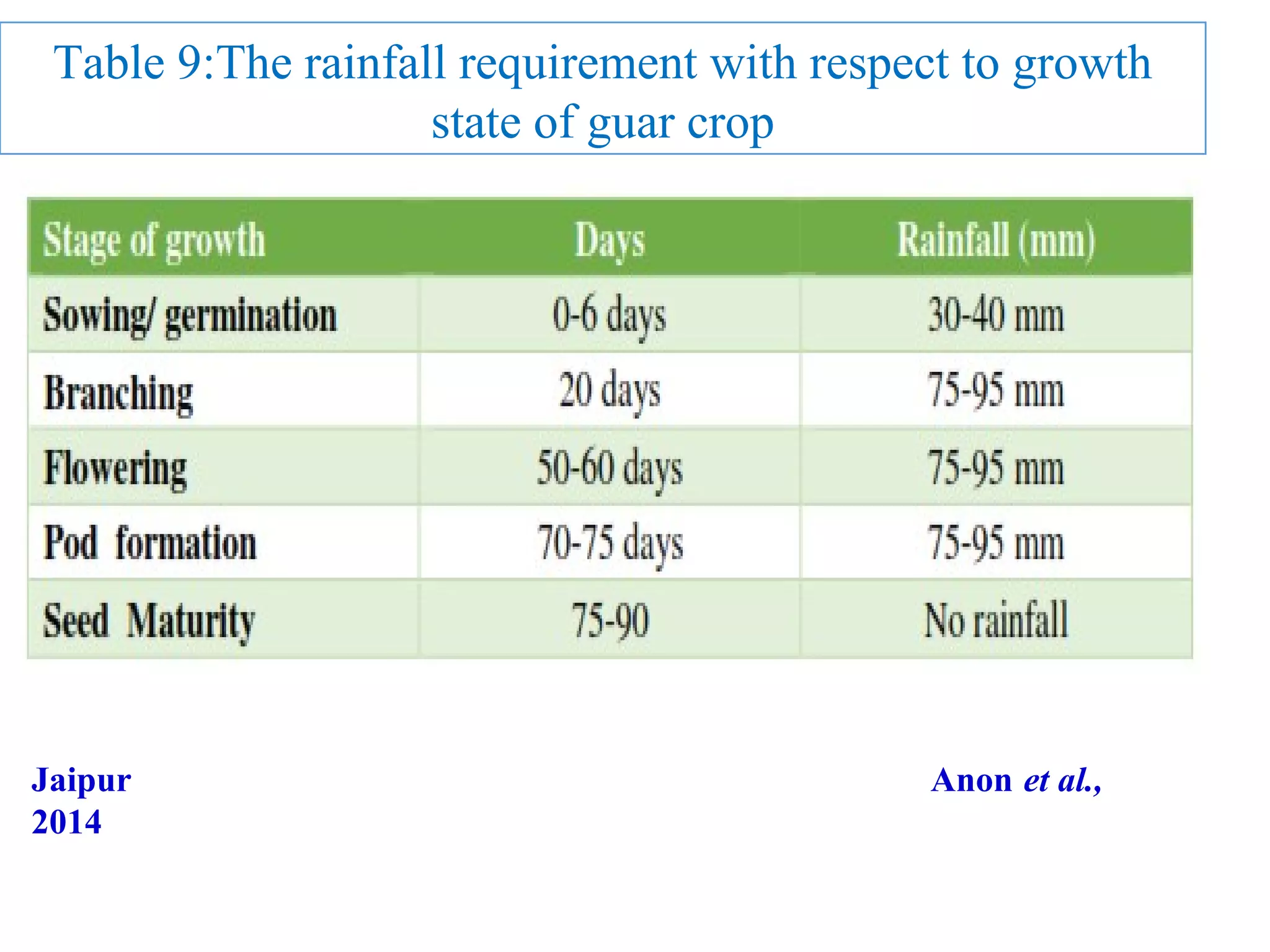
Table 9:The rainfall requirement with respect to growth
state of guar crop
Jaipur Anon et al.,
2014
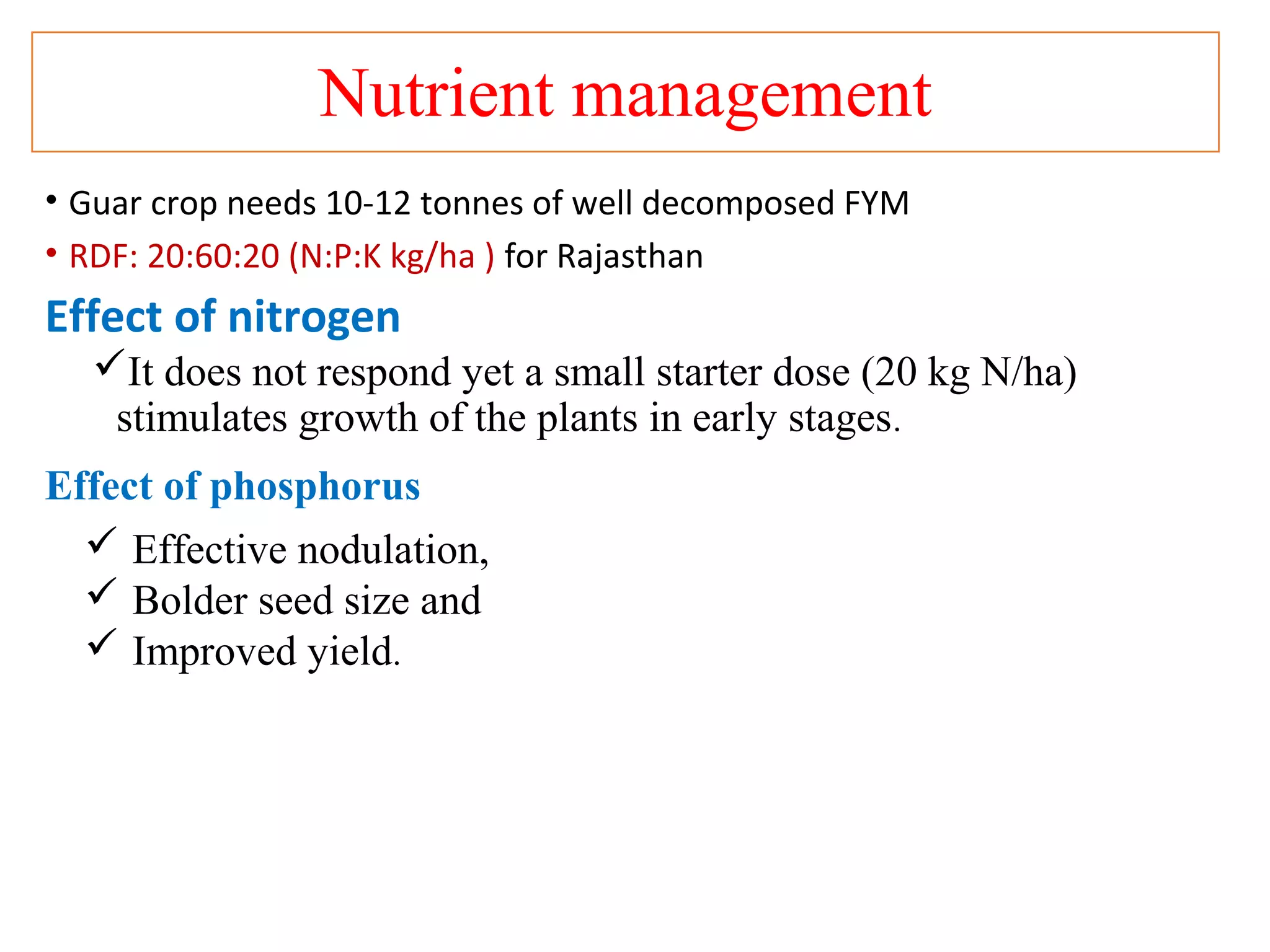
Nutrient management
• Guar crop needs 10-12 tonnes of well decomposed FYM
• RDF: 20:60:20 (N:P:K kg/ha ) for Rajasthan
Effect of nitrogen
It does not respond yet a small starter dose (20 kg N/ha)
stimulates growth of the plants in early stages.
Effect of phosphorus
 Effective nodulation,
 Bolder seed size and
 Improved yield.
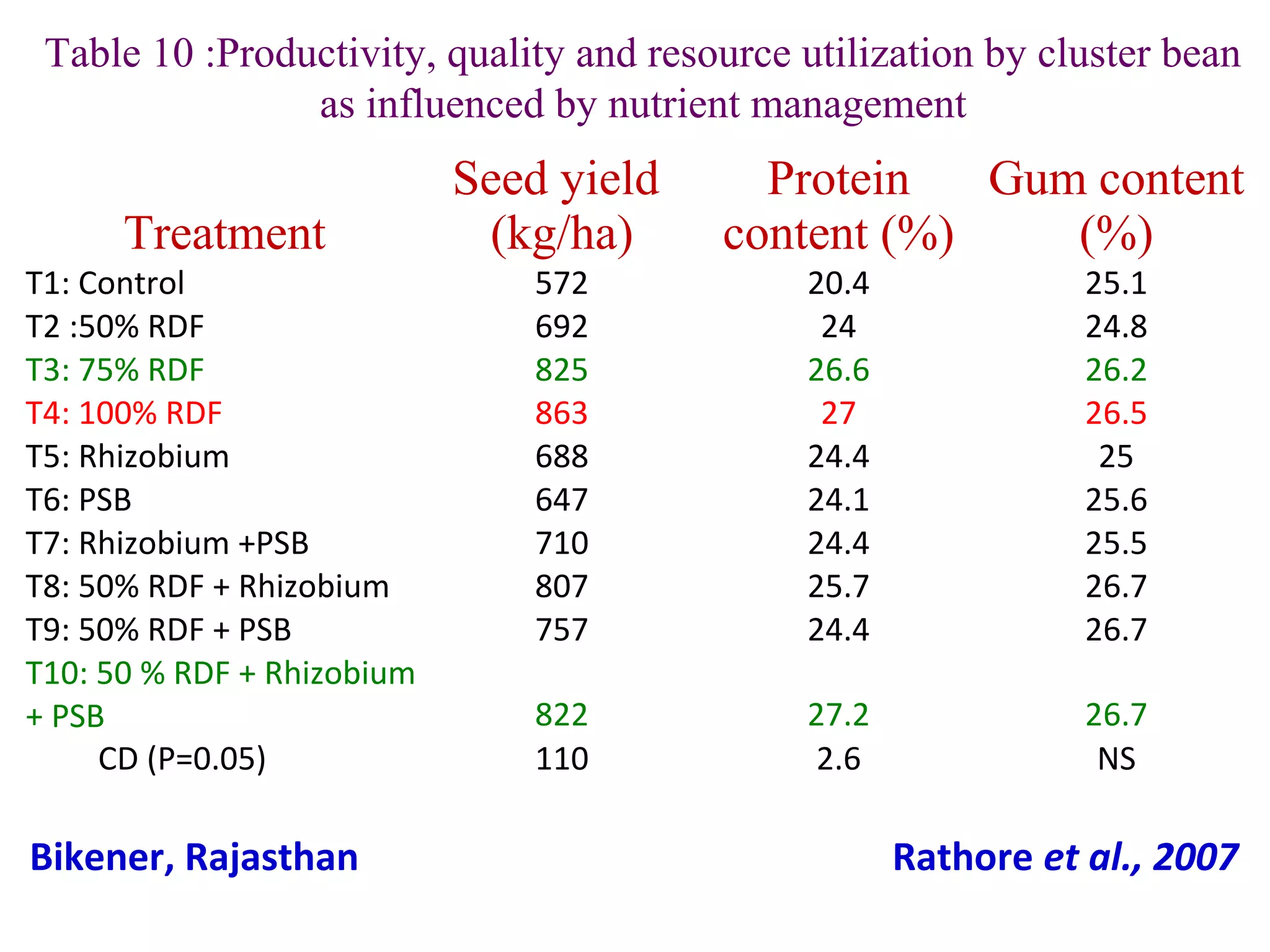
Treatment
Seed yield
(kg/ha)
Protein
content (%)
Gum content
(%)
T1: Control 572 20.4 25.1
T2 :50% RDF 692 24 24.8
T3: 75% RDF 825 26.6 26.2
T4: 100% RDF 863 27 26.5
T5: Rhizobium 688 24.4 25
T6: PSB 647 24.1 25.6
T7: Rhizobium +PSB 710 24.4 25.5
T8: 50% RDF + Rhizobium 807 25.7 26.7
T9: 50% RDF + PSB 757 24.4 26.7
T10: 50 % RDF + Rhizobium
+ PSB 822 27.2 26.7
CD (P=0.05) 110 2.6 NS
Table 10 :Productivity, quality and resource utilization by cluster bean
as influenced by nutrient management
Bikener, Rajasthan Rathore et al., 2007
Weed management
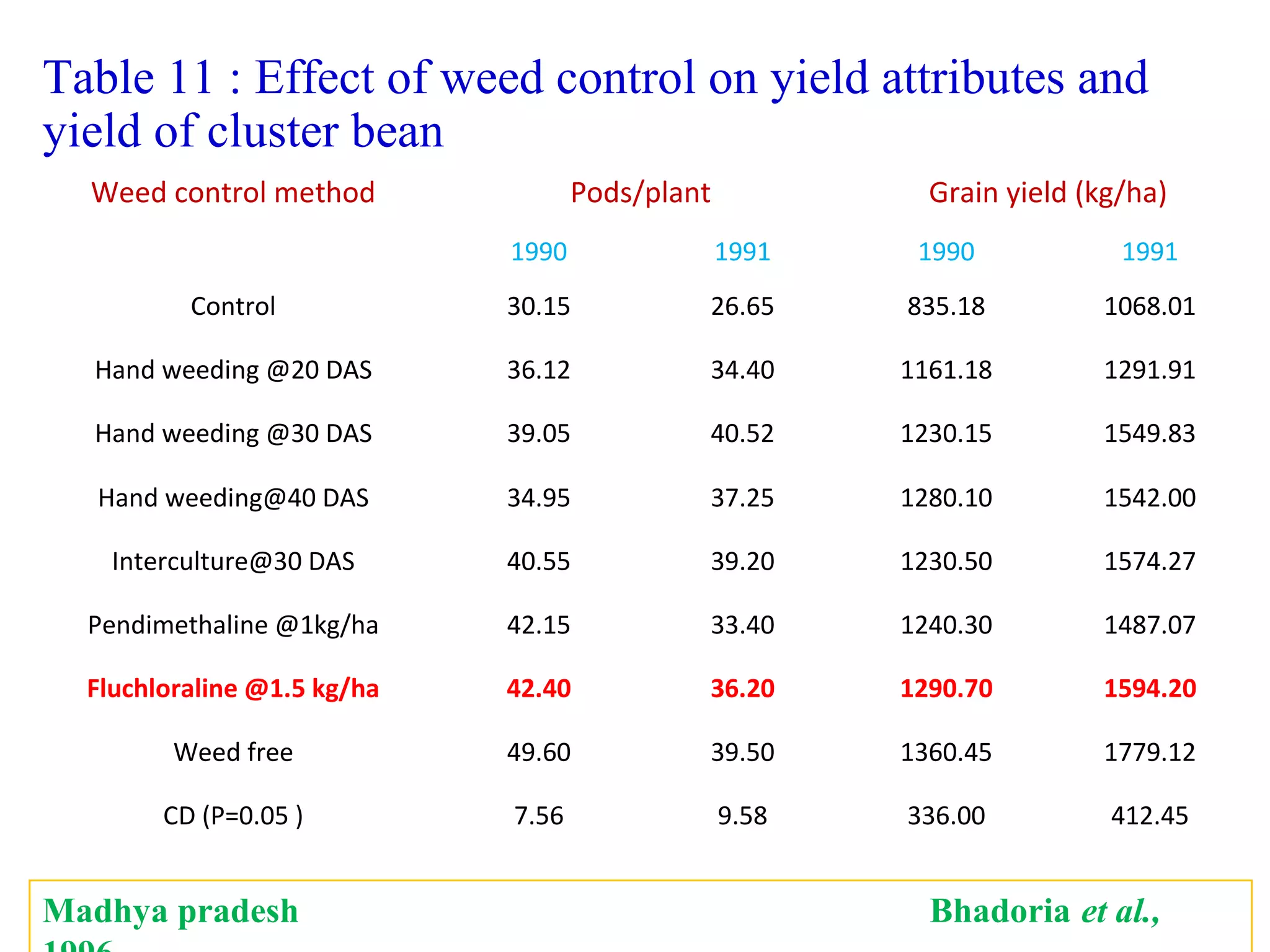
Table 11 : Effect of weed control on yield attributes and
yield of cluster bean
Weed control method Pods/plant Grain yield (kg/ha)
1990 1991 1990 1991
Control 30.15 26.65 835.18 1068.01
Hand weeding @20 DAS 36.12 34.40 1161.18 1291.91
Hand weeding @30 DAS 39.05 40.52 1230.15 1549.83
Hand weeding@40 DAS 34.95 37.25 1280.10 1542.00
Interculture@30 DAS 40.55 39.20 1230.50 1574.27
Pendimethaline @1kg/ha 42.15 33.40 1240.30 1487.07
Fluchloraline @1.5 kg/ha 42.40 36.20 1290.70 1594.20
Weed free 49.60 39.50 1360.45 1779.12
CD (P=0.05 ) 7.56 9.58 336.00 412.45
Madhya pradesh Bhadoria et al.,
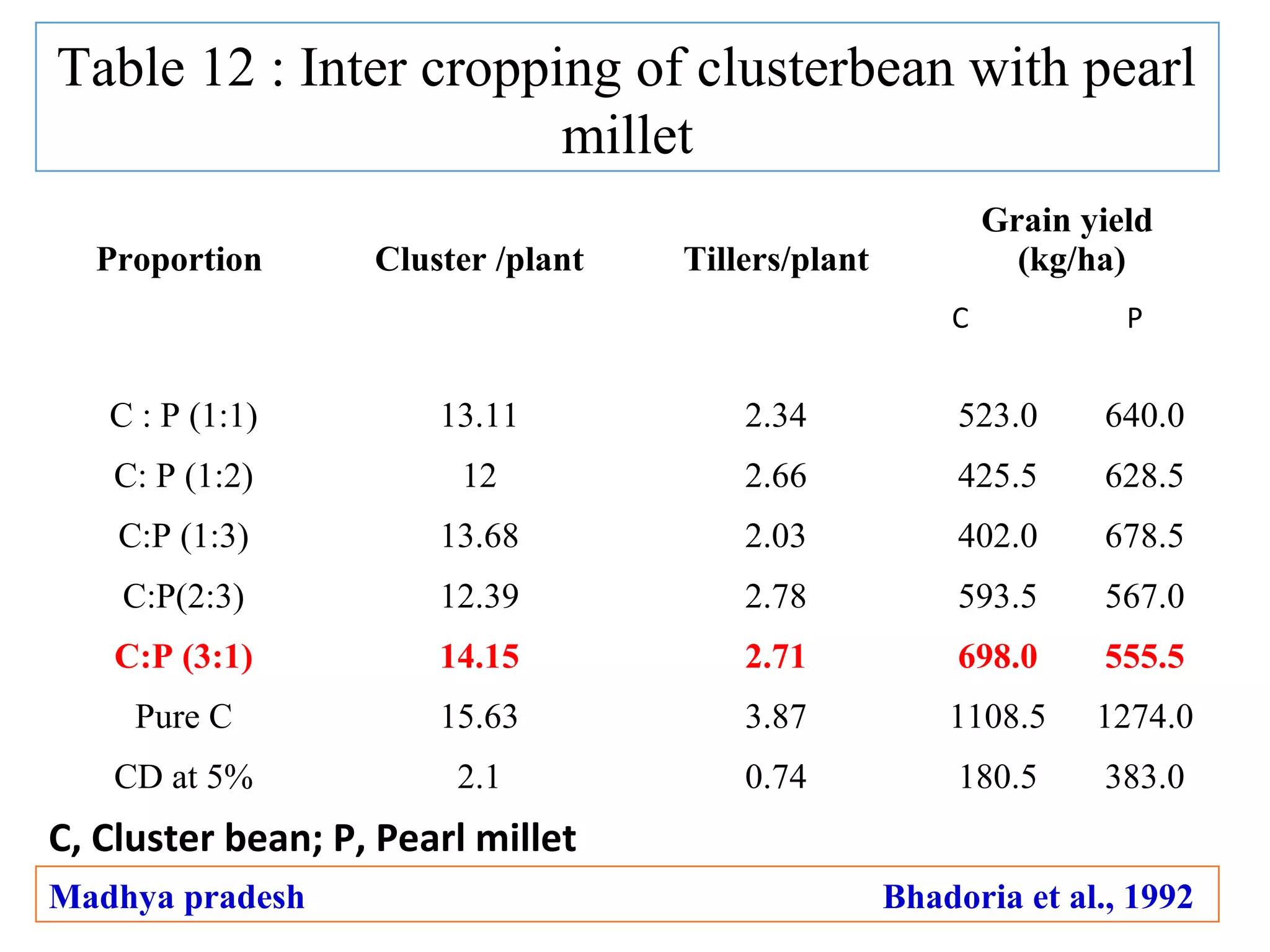
Table 12 : Inter cropping of clusterbean with pearl
millet
Proportion Cluster /plant Tillers/plant
Grain yield
(kg/ha)
C P
C : P (1:1) 13.11 2.34 523.0 640.0
C: P (1:2) 12 2.66 425.5 628.5
C:P (1:3) 13.68 2.03 402.0 678.5
C:P(2:3) 12.39 2.78 593.5 567.0
C:P (3:1) 14.15 2.71 698.0 555.5
Pure C 15.63 3.87 1108.5 1274.0
CD at 5% 2.1 0.74 180.5 383.0
C, Cluster bean; P, Pearl millet
Madhya pradesh Bhadoria et al., 1992
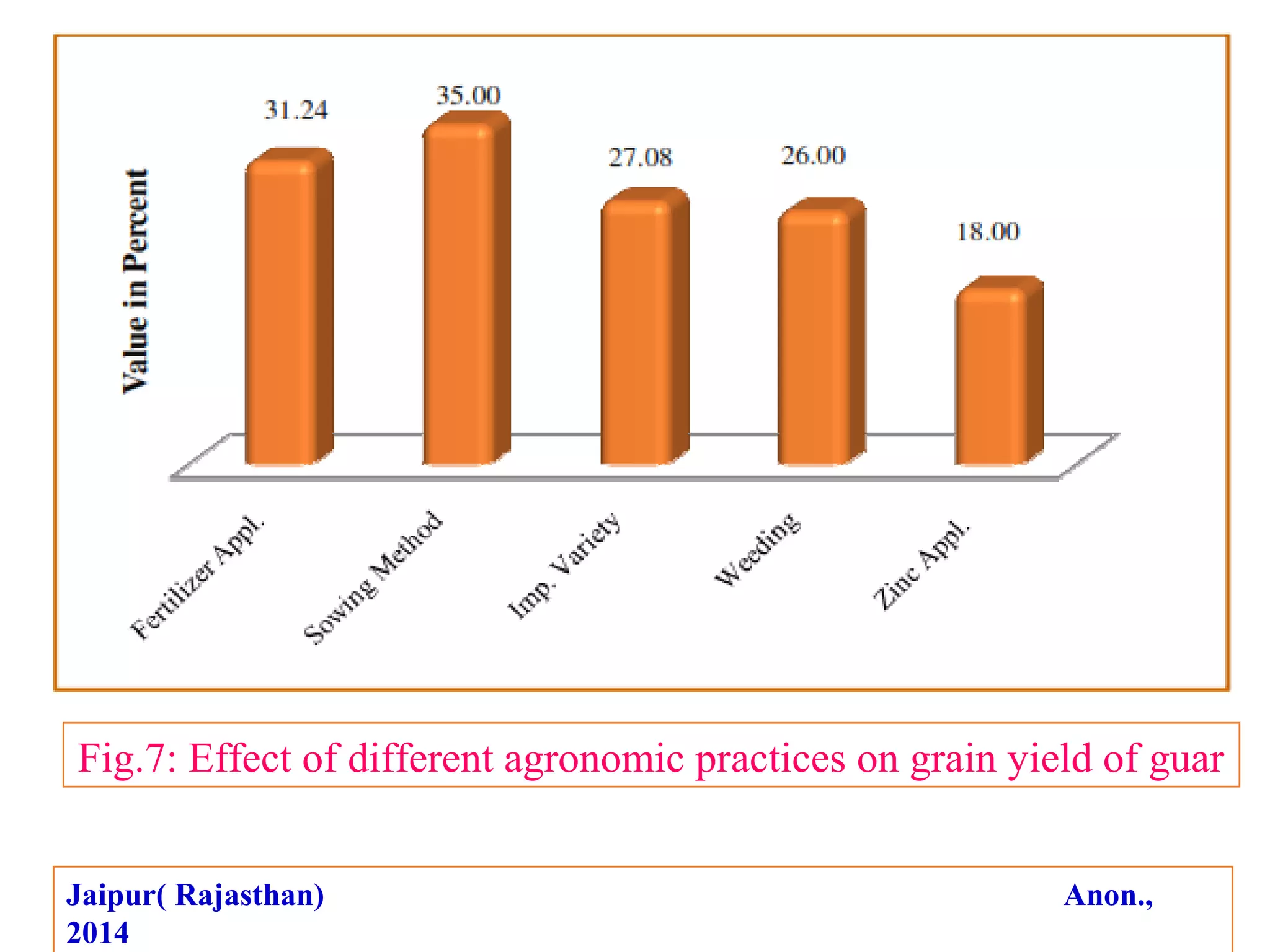
Fig.7: Effect of different agronomic practices on grain yield of guar
Jaipur( Rajasthan) Anon.,
2014
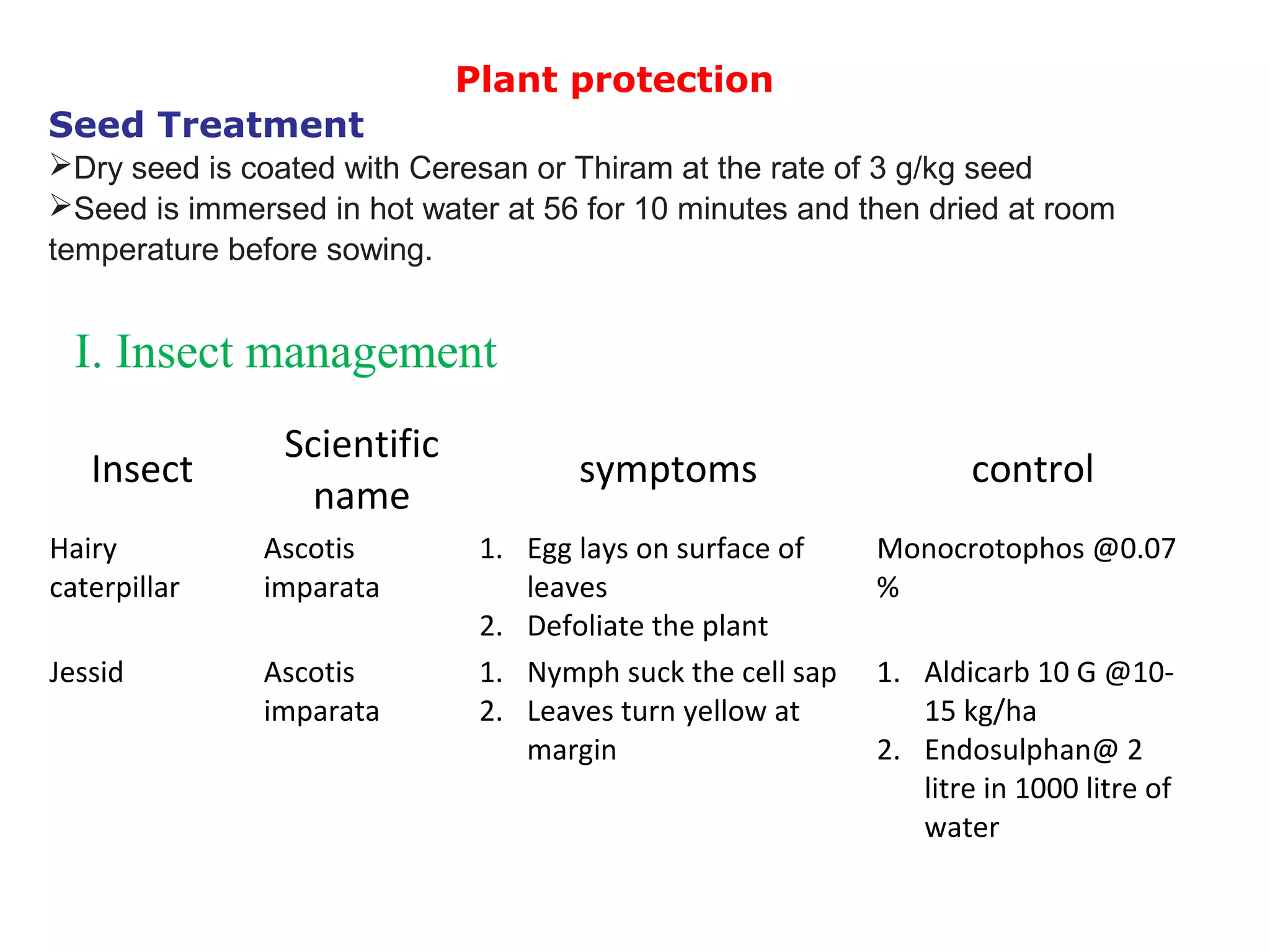
I. Insect management
Plant protection
Seed Treatment
Dry seed is coated with Ceresan or Thiram at the rate of 3 g/kg seed
Seed is immersed in hot water at 56 for 10 minutes and then dried at room
temperature before sowing.
Insect
Scientific
name
symptoms control
Hairy
caterpillar
Ascotis
imparata
1. Egg lays on surface of
leaves
2. Defoliate the plant
Monocrotophos @0.07
%
Jessid Ascotis
imparata
1. Nymph suck the cell sap
2. Leaves turn yellow at
margin
1. Aldicarb 10 G @10-
15 kg/ha
2. Endosulphan@ 2
litre in 1000 litre of
water
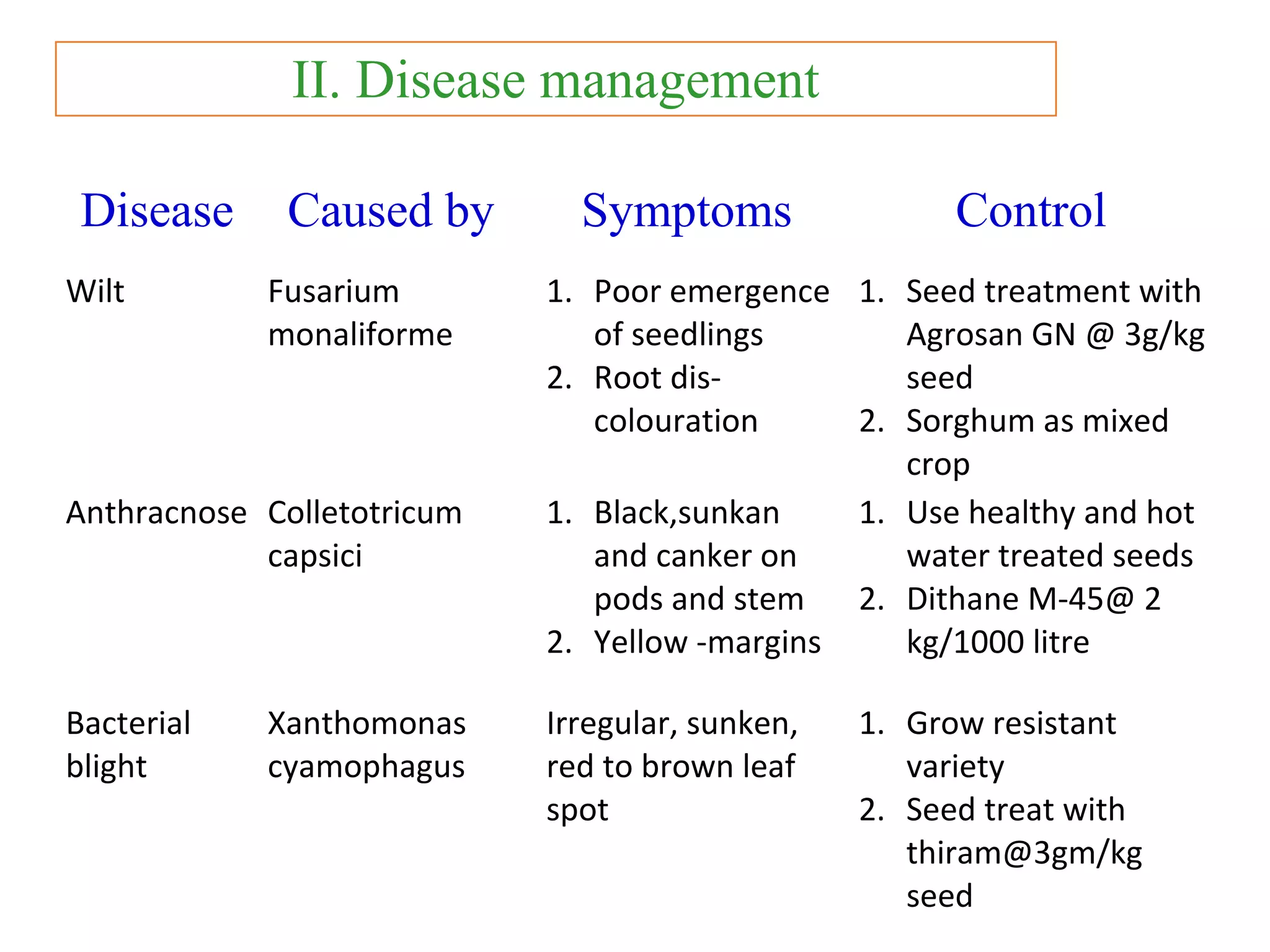
II. Disease management
Disease Caused by Symptoms Control
Wilt Fusarium
monaliforme
1. Poor emergence
of seedlings
2. Root dis-
colouration
1. Seed treatment with
Agrosan GN @ 3g/kg
seed
2. Sorghum as mixed
crop
Anthracnose Colletotricum
capsici
1. Black,sunkan
and canker on
pods and stem
2. Yellow -margins
1. Use healthy and hot
water treated seeds
2. Dithane M-45@ 2
kg/1000 litre
Bacterial
blight
Xanthomonas
cyamophagus
Irregular, sunken,
red to brown leaf
spot
1. Grow resistant
variety
2. Seed treat with
thiram@3gm/kg
seed
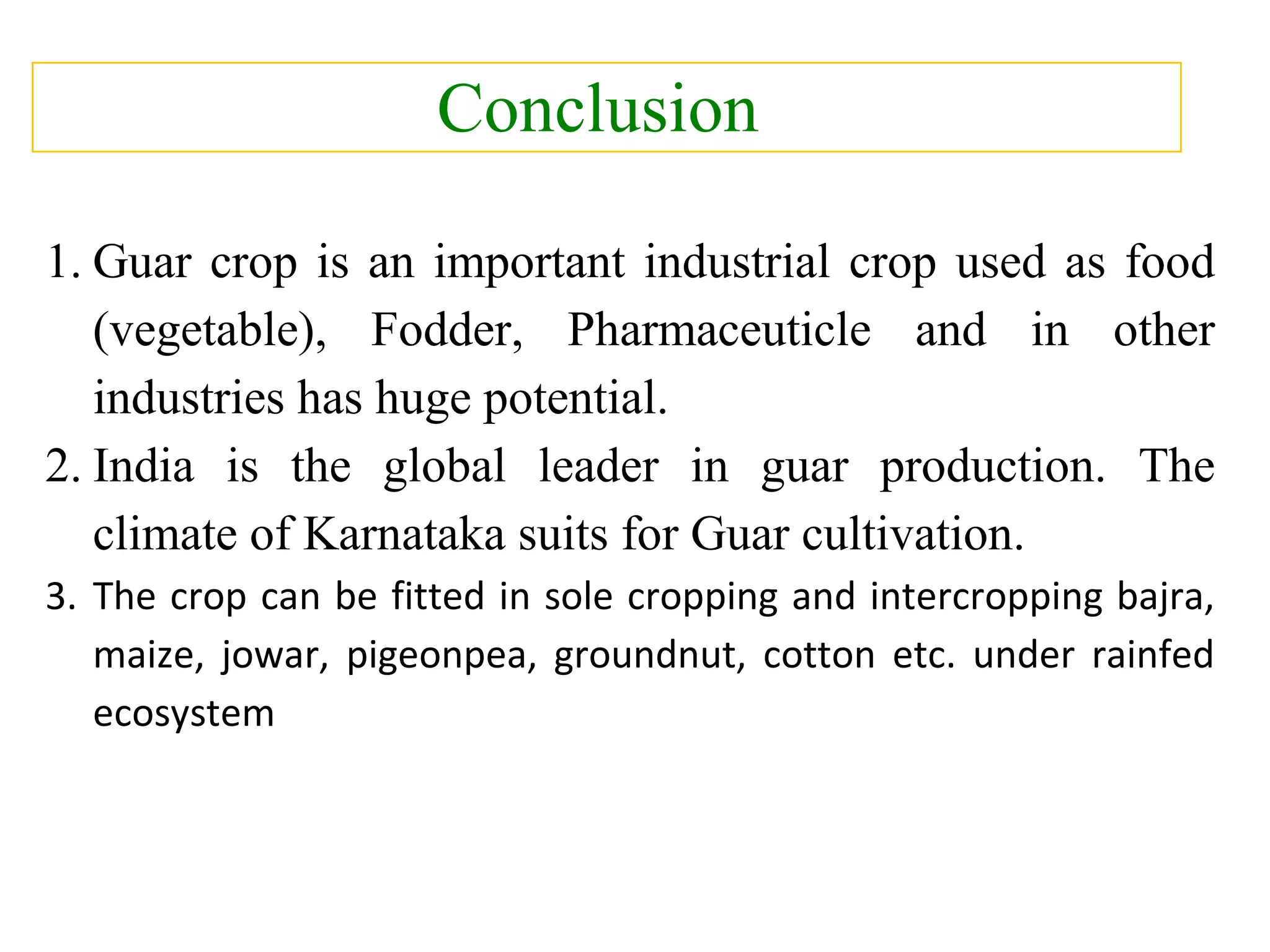
Conclusion
1. Guar crop is an important industrial crop used as food
(vegetable), Fodder, Pharmaceuticle and in other
industries has huge potential.
2. India is the global leader in guar production. The
climate of Karnataka suits for Guar cultivation.
3. The crop can be fitted in sole cropping and intercropping bajra,
maize, jowar, pigeonpea, groundnut, cotton etc. under rainfed
ecosystem
Future line of work
1.Need to popularize the crop
2.Development of location specific genotypes
3.Need to develop location specific agronomic
practices with emphasis for intercropping in
rainfed ecosystem of the state.
Gum gaur applications and potentials

Gum gaur applications and potentials

  • 2.
  • 3.
    Sequence of presentation Introduction Potentialof guar Application of guar Conclusion Future line of work
  • 4.
    Introduction Guar (Cyamopsis tetragonoloba) Theterm evolved from ‘Gowahaar’ (Gow means cow and Ahaar mean feed)  Its mainly grown as Vegetable, Fodder crop, Gum purpose, Green manure and Catch crop Kharif season, rainfed and grown in arid and semi-arid region Enhances the soil fertility by nitrogen fixation In India, mainly grown in Rajasthan, Haryana, Gujarat, Punjab and to a limited extent in Uttar Pradesh and Madhya Pradesh.
  • 5.
    Guar plant producesa cluster of flower and pods, therefore, it is also known as cluster bean. Its well developed tap root system make it drought hardy plant. It is a natural source of nano-particles of hydrocolloids A substance which forms a gel in water and is known as guar gum having main commercial value. Ex. Used in food industry Used in paper industry Botany of guar
  • 6.
    Table 1: Compositionof guar seed Part of seed Protein (%) Fibre (%) Type of sugar Hull (14-17 %) 5 36 D-Glucose Endosperm ( 35-42 %) 5 1.5 Galectomannen Germ ( 43-47 %) 55.3 18 Glucose New Delhi Anon., 2014
  • 7.
  • 8.
  • 9.
    Global scenario ofguar production Mainly concentrated in Indo-Pakistan subcontinent. India is the world leader with 80% share in global production It produces 1.22 million tones of guar seed were produced in in 2014 Pakistan stands next to India with 15% of world production. Remaining 5% guar is produced in rest of the world (USA, Brazil, some African countries like South Africa, Malawi, Zaire and Sudan)
  • 10.
    Indian scenario ofguar production  In India, guar is cultivated on 2.96 m. ha area with a production of 1.22 m. t of guar seeds with a average national productivity of 412 kg/ha.  In India, North-Western parts of country encompassing States of Rajasthan, Haryana, Gujrat, Punjab and Uttar Pradesh are the main guar production  Rajasthan contribute 70% of the area and contributes about 65% of the production.
  • 11.
    State Parameter Rajasthan Haryana GujaratPunjab Uttar Pradesh All India Area (m ha) 2.467 0.271 0.196 0.026 0.002 2.963 83.25% 9.16% 6.6% 0.88% 0.08% 100% Production (m t ) 0.788 0.297 0.114 0.02 0.002 1.222 64.48% 24.30% 9.33% 1.64% 0.16% 100% Productivity (kg/ha) 319 1096 582 769 1000 412 Table 2: State wise Area, production and productivity of guar in different states New Delhi Anon., 2014
  • 12.
    Export of guarproducts Exported to about 100 countries USA, Germany and China are the three countries having major share of the Indian export of guar products. Jointly imported 70.78% of total guar products from India USA alone 60% share of import in terms of Quantity and 81 % of value in 2013-14
  • 13.
    Fig 2: Quantityof Guar products exported from India (Quantity in 000 m t)
  • 14.
    Fig 3: Valueof guar products exported from India (Value in Rs.Crores)
  • 15.
    Fig. 4: Shareof guar in total agricultural export in India
  • 16.
    Guar Industry Vision-2020.by Dr. Purushottam Sharma  Current productivity of Haryana state is 1200 kg/ha, if national level achieved these productivity, the total production can be increased to 35.70 lakh tone (3 times more ) in 2020  Yield of Haryana is higher by 206% and if 10 % growth in productivity per year production can be double in the 2020 at national level at 2020  Production can be meet out the demand of industrial needs  Foreign exchange earned from export of guar increased at two times of present level
  • 17.
  • 18.
    •Guar seed isan important source of the industrial vegetable gum guar galactomannan which is used in many food and non food products. •Mainly used in Industrial, Food and feed uses •The traditional uses of guar are for •Human consumption; •Cattle feed, •Medicinal purpose and •Soil improvement
  • 19.
  • 20.
    1. Food industry Gellingand stabilizing agent Thickening Heat stabilizer Improves consistency
  • 21.
    2. Pharmaceuticals industry Synergisticactivity Laxative property Malnutrition treatment
  • 22.
    3. Medicinal industry Protectiveagent Reduces urine sugar Antidiabetic agent
  • 23.
    4. Photography industry Binderand thickener Stabilizer agent
  • 24.
    5. Cosmetics industry Stabilizer agent  Thickener agent
  • 25.
    6. Paper industry Improves wet and dry strength  Sizing agent
  • 26.
    7. Building industry Thickeningagent Water proofing Foam stabilizer
  • 27.
    8. Coal mining Settingof fine particles Colloidal flocculants Shock impregnation
  • 28.
  • 29.
    10.Paints and distemperindustry Rheology controller Thickener and binder
  • 30.
    11. Other industrieslike: Insecticides Detergents Leather industry Mosquito coils Ceramics Explosive Petroleum well drilling and Tobacco industry etc.
  • 31.
    II. Uses forhuman consumption: Mainly used food products like:  Ice Cream, soft drinks & concentrates, puddings  Chocolate milk, flavoured milks  Jams, jellies, fruit spreads, jelly sweets  Bread, biscuit and other baked foods  Soft cheese and cheese spreads  Canned or retorted food of fish and meat  Ketchup, sauce and noodles preparation
  • 32.
    III. Uses foranimal feed. 1. Cattle feed. Guar provides nutritious fodder and concentrate to the livestock. Guar is grown as a fresh or dry forage crop The by-product in manufacturing of guar split/guar gum i.e. guar churi and guar korma (Guar meal) mainly used as cattle feed 2. Poultry feed No harmful effect up to 12% in broiler Birds grew better and good weight 3. Fish food:  Used as a binder in the fish food pellets  Disintegrating quickly in water
  • 33.
    Processing of guarseed Guar seed are processed for the production of guar gum and the by-products produced during this process are Churi and Korma collectively called as “guar meal”. There are two types of guar seed processing industries, 1. Guar seed to guar splits 2. Guar splits to powder.
  • 34.
    Fig: 5.Flow diagramfor extraction of guar gum
  • 35.
    Guar gum It iswhite to creamiest amorphous powder Easily soluble in cold and hot water. Film forming or coating property. Resistance to oils, greases and solvents. Water binding capacity. Better thickening agent. Stability during freezing and thawing
  • 36.
    Physical properties ofguar gum •Its natural high molecular weight and hydrocolloidal polysaccharide. •It is composed of Galactan + Mannan through glycosidic linkages chemically called as Galactomannan. •Guar’s viscosity is a function of temperature, time, and concentration. •Solutions with different gum concentrations can be used as emulsifiers and stabilizers because they prevent oil droplets from coalescing.
  • 37.
    Chemical properties ofguar gum Guar gum shows high low-shear viscosity but is strongly shear-thinning. Being non-ionic, it is not affected by ionic strength or pH but will degrade at pH extremes e.g. pH 3 at 50° temperature. Guar gum has a polymeric structure, containing several hydroxyl groups and also used as: 1. Dispersion Control, 2. Viscosity Causing, 3. Gelling and 4. Preservatives
  • 38.
    By products ofguar •Guar meal : During the split manufacturing process, husk and germ are obtained which are used as high proteinaceous animal and poultry feed. These are widely sold in the international market as “Guar Meal” having high contents of “Oil & Albuminoids” (O & A ). •Guar meal basically has two grades called • Guar meal churi • Guar meal korma.
  • 39.
    Fig.6: Types ofGuar meal Guar Korma meal Guar Churi meal
  • 40.
    Table 3: Characterizationof guar meal Parameter Guar meal Korma Guar meal Churi Appearance Yellow splits White fine powder Moisture 6-8% 6-705% Protein 55-60% 35-40% Fat 6-7% 3-4% Fibre 3-5% 13-16% New Delhi Anon., 2014
  • 41.
  • 42.
    •In India, thesowing season for guar seed is July and it is harvested during November. •It is 90 days crop rain fed monsoon crop which requires 300 to 400 mm. •It requires plenty of sunshine and dry weather. • During harvesting required sunshine for dry up and usable for industries
  • 43.
    Table 4:Varieties ofguar variety Developed by Recommended for cultivation Yield Remark Durgajaya ARS, Durgapur (Rajastan) Rajastan and Haryana Seed yield:-12.6 q/ha Fodder yield:-27 t/ha Dual type HG-75 CCSHAU, Hisar Haryana 20 q/ha Prepared for Seed guar Maru Guar CAZRI, Jodhour Western Rajasthan Seed yield:- 9.5 q/ha Fodder yield:22.5 t/ha Dual type RGC-1055 ARS, Durgapur Northern India Seed yield :9.9 q/ha Resistent dieses Pusa sadabahar - South India Green pod: 60-70 q/ha Green pod vegetable purpose Pusa Navbahar - North and South India Green pod: 60 q/ha Green pod
  • 44.
    Table 5: Effectof varieties on seed yield and quality of cluster bean Treatment Seed yield (q/ha) Protein yield (q/ha) Gum yield (q/ha) Varieties 1980 1981 1980 1981 1980 1981 HG 75 14 14.6 4.6 5.6 4 4 Durgajaya 12.4 12.1 4.1 4.2 3.5 3.4 HG 182 -- 13.2 -- 4.5 -- 3.7 CD at 5% 0.6 0.8 0.1 0.4 0.2 0.2 Hissar Veena Jain et al.,1987
  • 45.
    Climate and Soil photosensitivecrop, short day plant Soil temperature around 25-28o C for proper germination It needs fertile, medium-textured and sandy loam soils, but is susceptible to water logging. Its considered to be tolerant to both soil salinity and alkalinity. .
  • 46.
    Time of sowing •For grain July. Fodder crop is April. • May-June to increase supply of vegetable pods. Season of crop Sowing Time Kharif crop 1st to 2nd week of July Summer crop 25th February to 15th march
  • 47.
    Table 6:Effect ofdates of sowing on yield and quality of cluster bean Treatment Grain yield (q/ha) Crude protein (q/ha) Crude gum(q/ha) 20th June 7.1 2.1 2.1 5th July 9.8 3.3 3.1 20th July 8.1 2.5 2.6 5th August 6.6 2.1 2.1 CD at 5% 1.0 0.9 1.0 Hissar ( Haryana ) Sharma et al., 1984
  • 48.
    Table 7: Effectof sowing dates on seed yield and quality of Cluster bean Date of sowing Grain yield (q/ha) Protein yield (q/ha) Gum yield (q/ha) 1980 1981 1980 1981 1980 1981 25th June 13.8 15.1 4.6 5.2 3.8 4.1 10th July 16.6 16.9 5.6 5.7 4.8 4.9 25th July 12.9 13.2 4.2 4.5 3.6 3.7 10th august 9.5 7.2 3.1 2.8 2.7 2.1 CD at 5% 0.8 0.9 0.2 0.4 0.3 0.3 Hissar (Haryana) Veena Jain et al., 1987
  • 49.
    Seed rate •Seed rateof guar crop varies from 12 to 40 kg/ha. It depend on: 1. soil moisture, 2. spacing and 3. purpose of cultivation. •12 kg /ha is sufficient for grain crop. •40 kg /ha green manuring and vegetable purpose. •Seed rate is normally increased under late sown condition, dry condition, and soil salinity or alkalinity conditions
  • 50.
    Jaipur, Rajasthan Anon.,2013- 14 Table 7: Effect of seed rate on yield of seed guar, gum yield and gum percentage Seed rate (kg/ha) Seed yield (t/ha) Gum yield (t/ha) Gum (%) 10 1.430 0.446 31.24 15 1.641 0.509 31.02 20 1.567 0.470 29.99 25 1.528 0.456 29.85 CD at 5% 0.015 -- 0.71
  • 51.
    Method of sowing •InIndia, farmers are practiced broadcasting. it creates problem in intercultural operations •Line sowing with seed drill ensures proper spacing and depth, good germination, easy weed management and drainage of excess water Spacing For grain purpose: 45 cm x15 cm For fodder purpose: 30 cm x12 cm For pod purpose: 60 cm x 30 cm
  • 52.
    Table 8: Effectof row spacing on seed yield, protein yield and gum yield (q/ha.) of Cluster bean Treatment Seed yield (q/ha) Protein yield (q/ha) Gum yield (q/ha) Row spacing (cm) 1980 1981 1980 1981 1980 1981 30 13.5 13.7 4.5 4.7 3.8 3.8 40 14.1 14.4 4.7 5.0 4.0 3.9 60 11.9 11.8 4.0 4.1 3.4 3.3 CD at 5% 0.7 0.7 0.3 0.2 0.3 0.2 Hissar Veena Jain et al., 1987
  • 53.
    Water management • Requires300-400 mm annual rainfall. • Adequate moisture ensures maximum production of forage and grain. • Guar is highly sensitive to water logging throughout the period. • The seed protein content will be improved when irrigation is given at 50-60 DAS.
  • 54.
    Table 9:The rainfallrequirement with respect to growth state of guar crop Jaipur Anon et al., 2014
  • 55.
    Nutrient management • Guarcrop needs 10-12 tonnes of well decomposed FYM • RDF: 20:60:20 (N:P:K kg/ha ) for Rajasthan Effect of nitrogen It does not respond yet a small starter dose (20 kg N/ha) stimulates growth of the plants in early stages. Effect of phosphorus  Effective nodulation,  Bolder seed size and  Improved yield.
  • 56.
    Treatment Seed yield (kg/ha) Protein content (%) Gumcontent (%) T1: Control 572 20.4 25.1 T2 :50% RDF 692 24 24.8 T3: 75% RDF 825 26.6 26.2 T4: 100% RDF 863 27 26.5 T5: Rhizobium 688 24.4 25 T6: PSB 647 24.1 25.6 T7: Rhizobium +PSB 710 24.4 25.5 T8: 50% RDF + Rhizobium 807 25.7 26.7 T9: 50% RDF + PSB 757 24.4 26.7 T10: 50 % RDF + Rhizobium + PSB 822 27.2 26.7 CD (P=0.05) 110 2.6 NS Table 10 :Productivity, quality and resource utilization by cluster bean as influenced by nutrient management Bikener, Rajasthan Rathore et al., 2007
  • 57.
  • 58.
    Table 11 :Effect of weed control on yield attributes and yield of cluster bean Weed control method Pods/plant Grain yield (kg/ha) 1990 1991 1990 1991 Control 30.15 26.65 835.18 1068.01 Hand weeding @20 DAS 36.12 34.40 1161.18 1291.91 Hand weeding @30 DAS 39.05 40.52 1230.15 1549.83 Hand weeding@40 DAS 34.95 37.25 1280.10 1542.00 Interculture@30 DAS 40.55 39.20 1230.50 1574.27 Pendimethaline @1kg/ha 42.15 33.40 1240.30 1487.07 Fluchloraline @1.5 kg/ha 42.40 36.20 1290.70 1594.20 Weed free 49.60 39.50 1360.45 1779.12 CD (P=0.05 ) 7.56 9.58 336.00 412.45 Madhya pradesh Bhadoria et al.,
  • 59.
    Table 12 :Inter cropping of clusterbean with pearl millet Proportion Cluster /plant Tillers/plant Grain yield (kg/ha) C P C : P (1:1) 13.11 2.34 523.0 640.0 C: P (1:2) 12 2.66 425.5 628.5 C:P (1:3) 13.68 2.03 402.0 678.5 C:P(2:3) 12.39 2.78 593.5 567.0 C:P (3:1) 14.15 2.71 698.0 555.5 Pure C 15.63 3.87 1108.5 1274.0 CD at 5% 2.1 0.74 180.5 383.0 C, Cluster bean; P, Pearl millet Madhya pradesh Bhadoria et al., 1992
  • 60.
    Fig.7: Effect ofdifferent agronomic practices on grain yield of guar Jaipur( Rajasthan) Anon., 2014
  • 61.
    I. Insect management Plantprotection Seed Treatment Dry seed is coated with Ceresan or Thiram at the rate of 3 g/kg seed Seed is immersed in hot water at 56 for 10 minutes and then dried at room temperature before sowing. Insect Scientific name symptoms control Hairy caterpillar Ascotis imparata 1. Egg lays on surface of leaves 2. Defoliate the plant Monocrotophos @0.07 % Jessid Ascotis imparata 1. Nymph suck the cell sap 2. Leaves turn yellow at margin 1. Aldicarb 10 G @10- 15 kg/ha 2. Endosulphan@ 2 litre in 1000 litre of water
  • 62.
    II. Disease management DiseaseCaused by Symptoms Control Wilt Fusarium monaliforme 1. Poor emergence of seedlings 2. Root dis- colouration 1. Seed treatment with Agrosan GN @ 3g/kg seed 2. Sorghum as mixed crop Anthracnose Colletotricum capsici 1. Black,sunkan and canker on pods and stem 2. Yellow -margins 1. Use healthy and hot water treated seeds 2. Dithane M-45@ 2 kg/1000 litre Bacterial blight Xanthomonas cyamophagus Irregular, sunken, red to brown leaf spot 1. Grow resistant variety 2. Seed treat with thiram@3gm/kg seed
  • 63.
    Conclusion 1. Guar cropis an important industrial crop used as food (vegetable), Fodder, Pharmaceuticle and in other industries has huge potential. 2. India is the global leader in guar production. The climate of Karnataka suits for Guar cultivation. 3. The crop can be fitted in sole cropping and intercropping bajra, maize, jowar, pigeonpea, groundnut, cotton etc. under rainfed ecosystem
  • 64.
    Future line ofwork 1.Need to popularize the crop 2.Development of location specific genotypes 3.Need to develop location specific agronomic practices with emphasis for intercropping in rainfed ecosystem of the state.