Virtual reality (VR) has evolved significantly from its origins in the 19th century. Some key developments include:
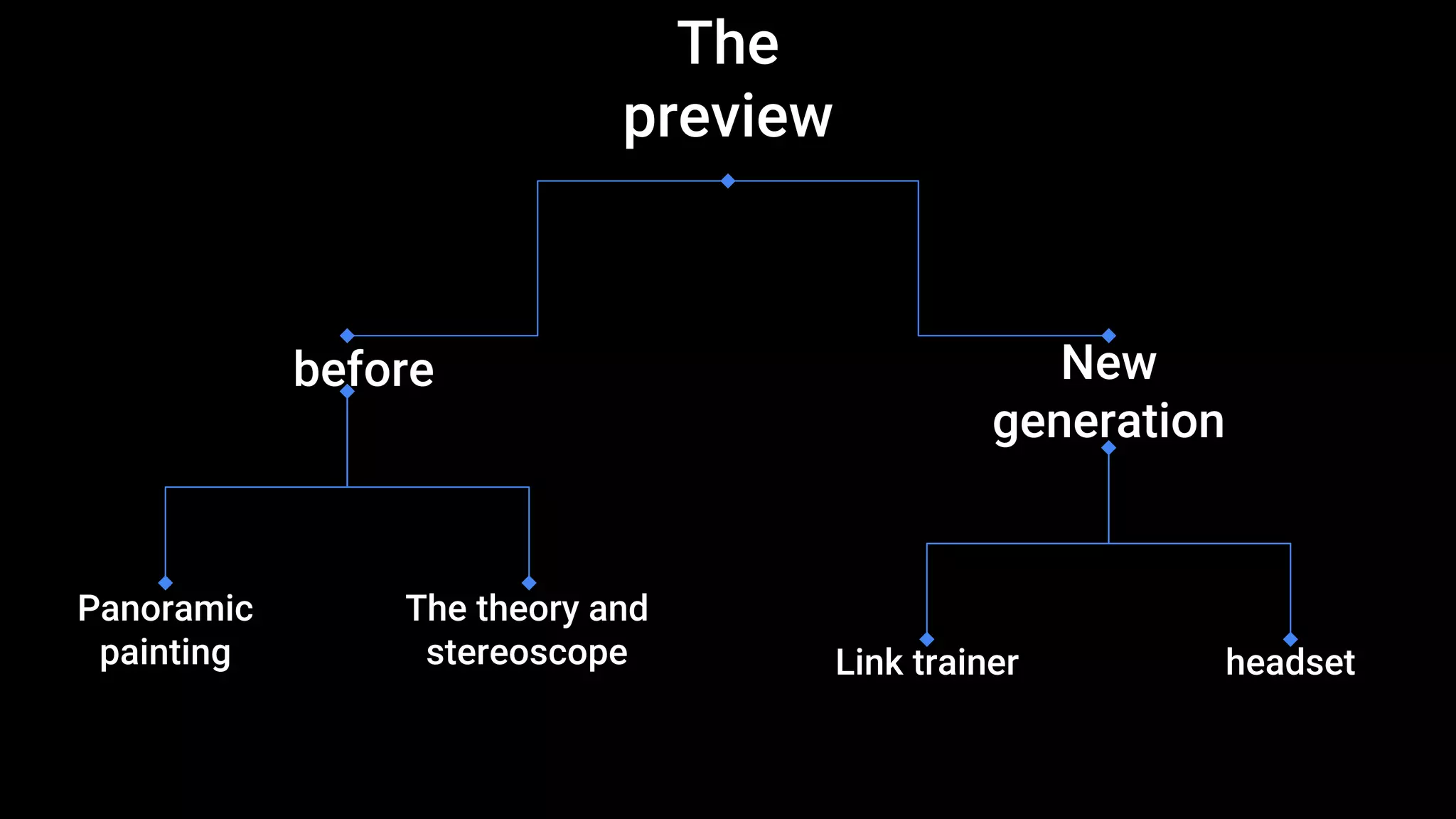
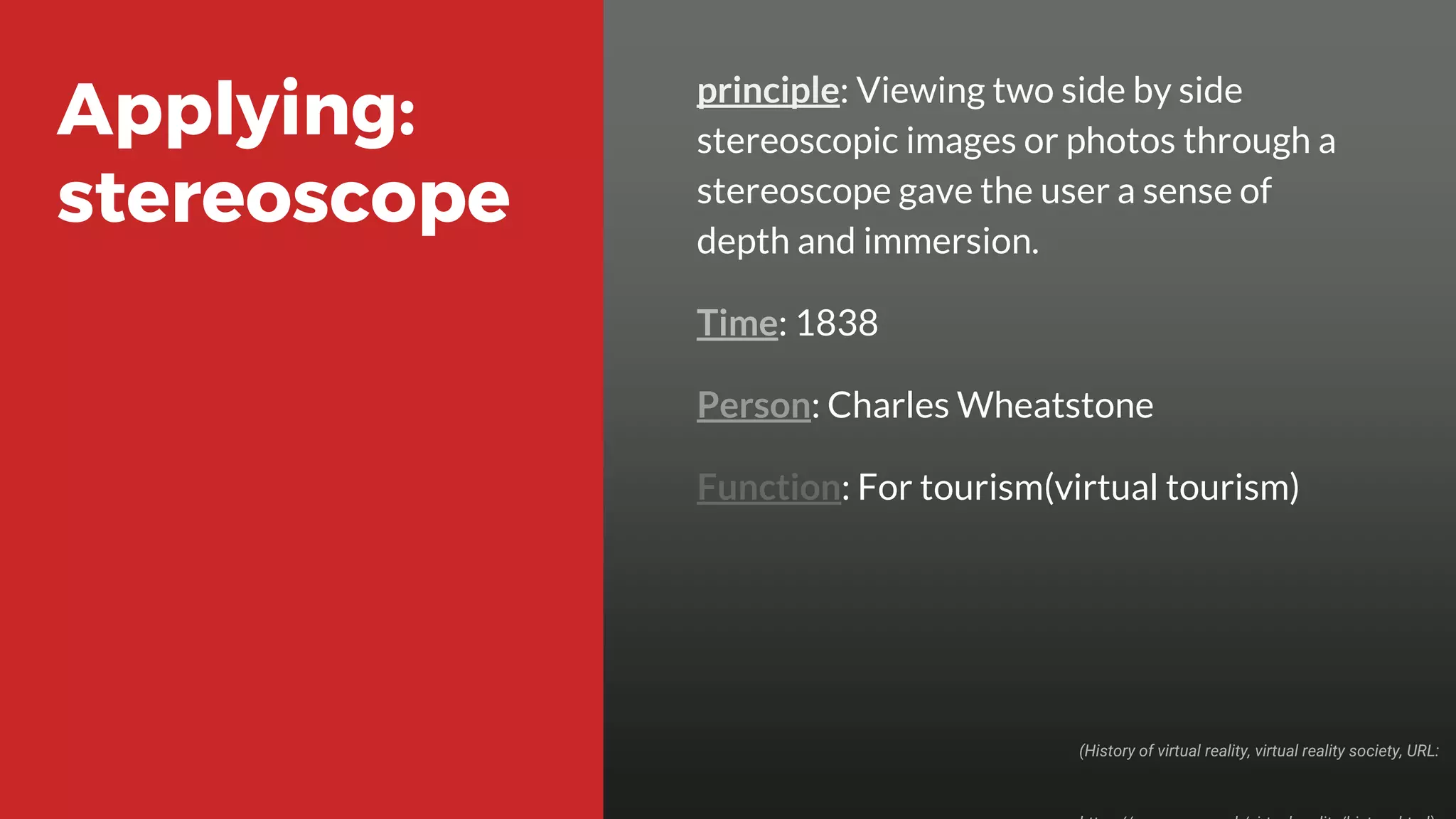
- In 1838, Wheatstone discovered the principles of 3D vision and stereoscopy, leading to early VR viewing devices.
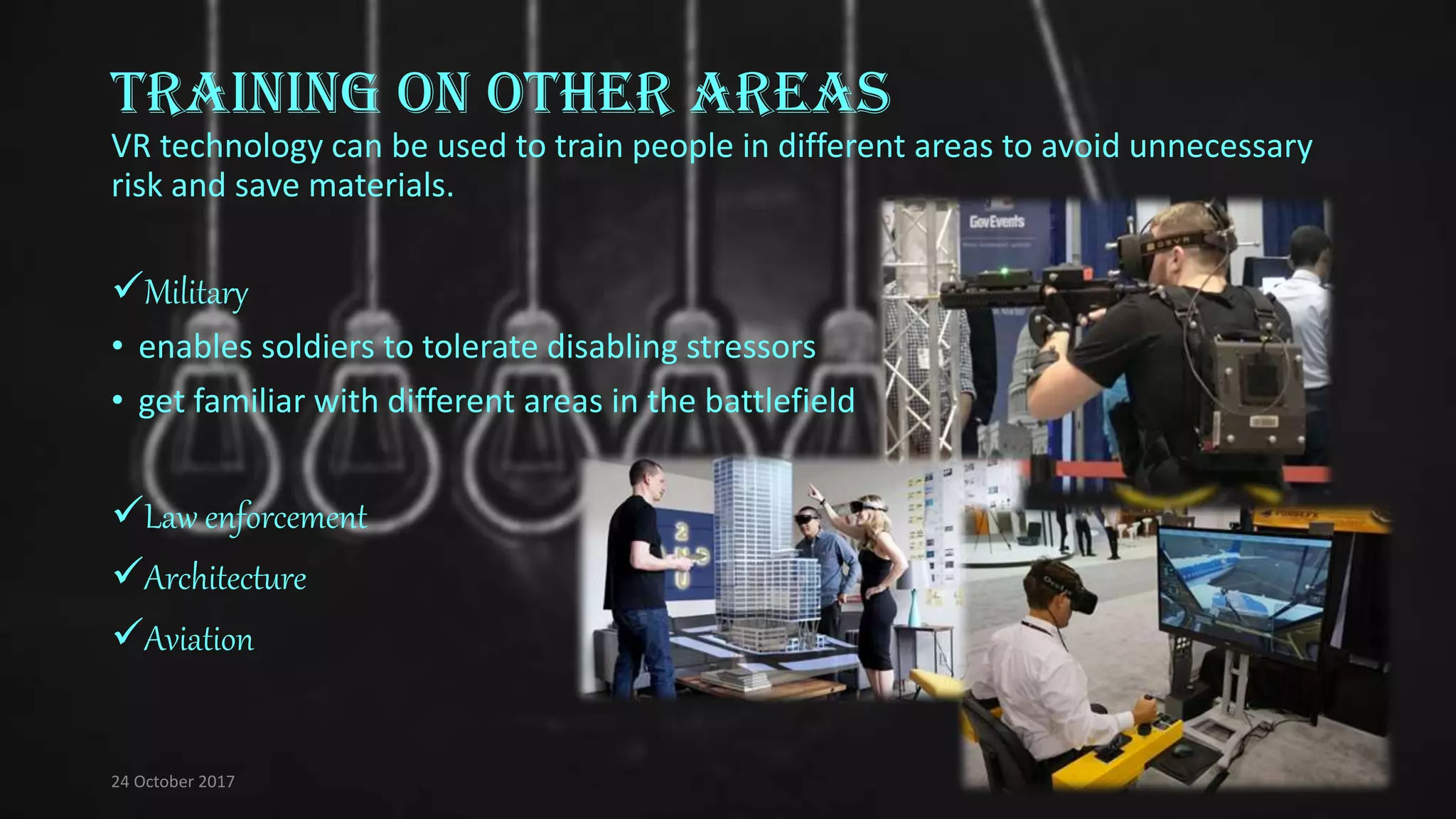
- In the 1920s-30s, flight simulators like the Link Trainer were developed for military training.
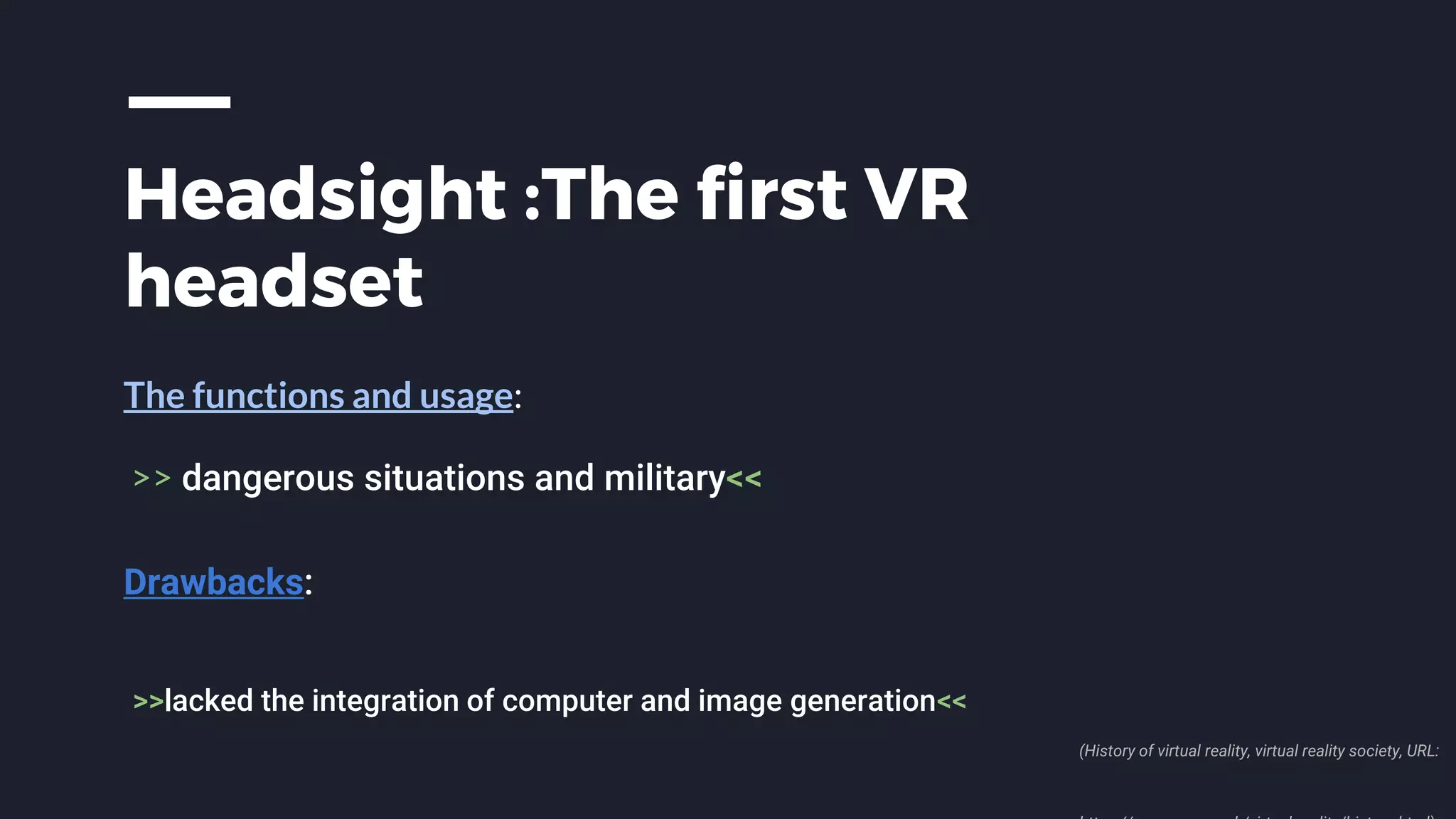
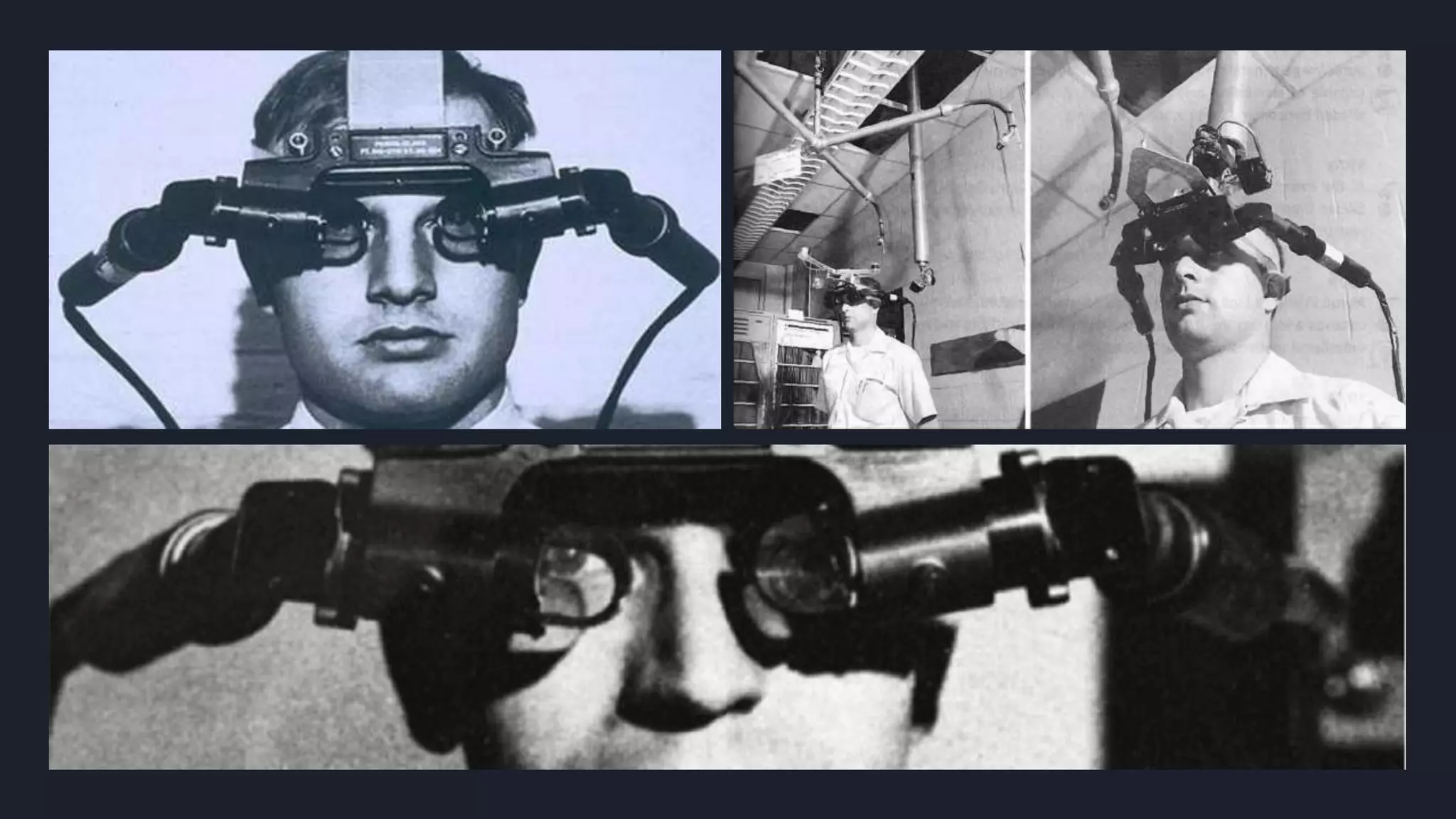
- In 1961, the first head-mounted display called the Headsight was created for military and dangerous situations.
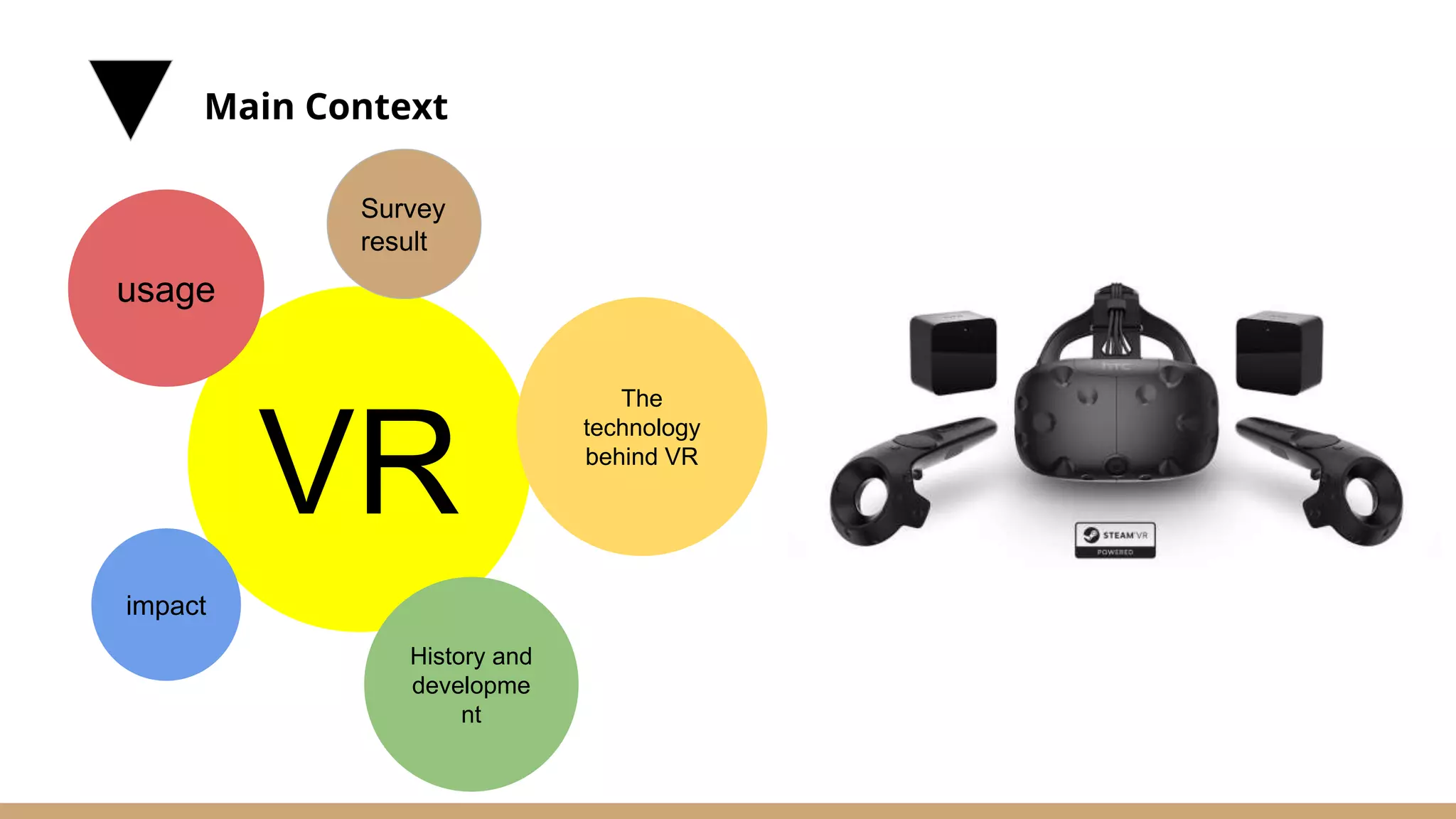
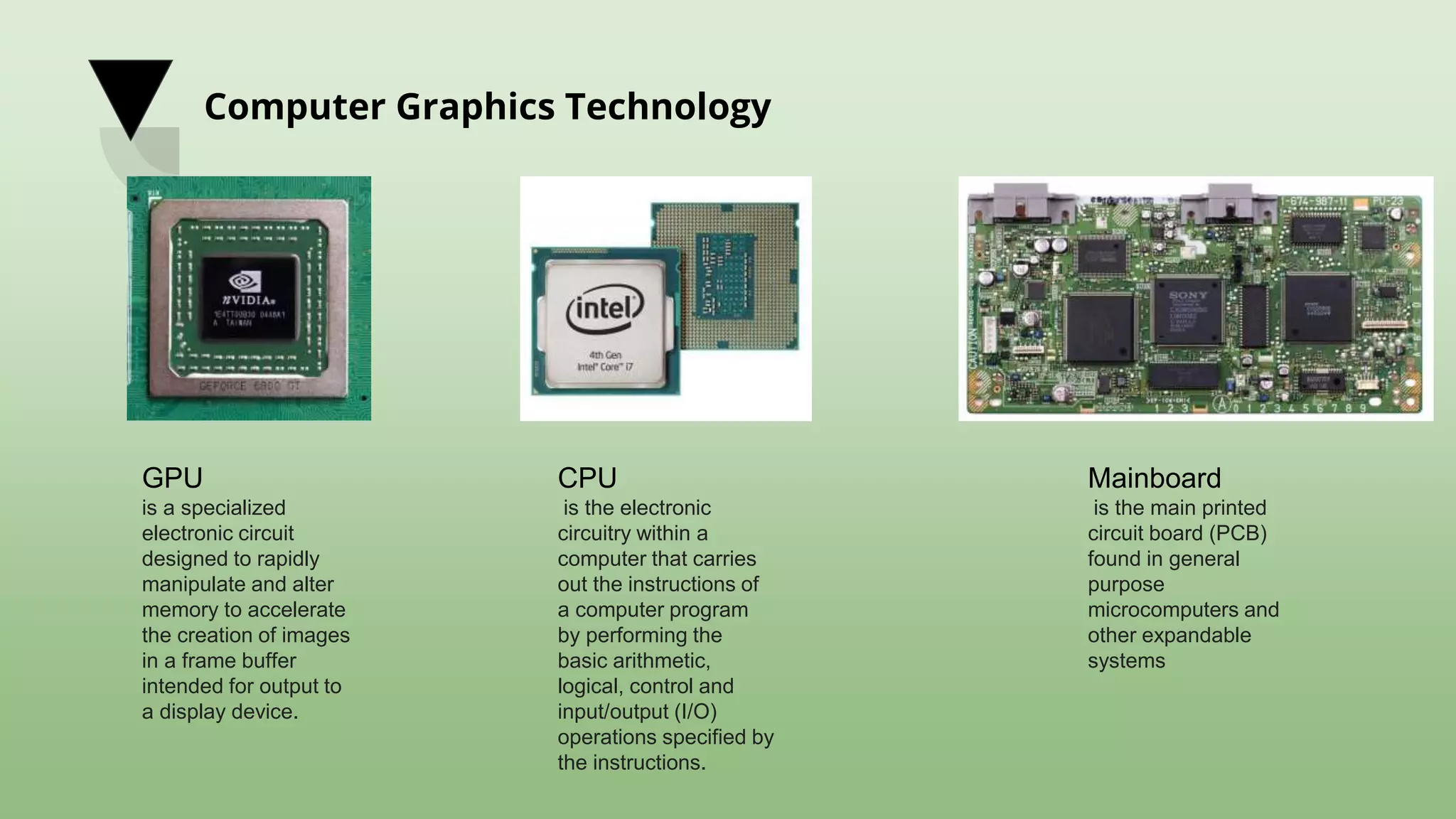
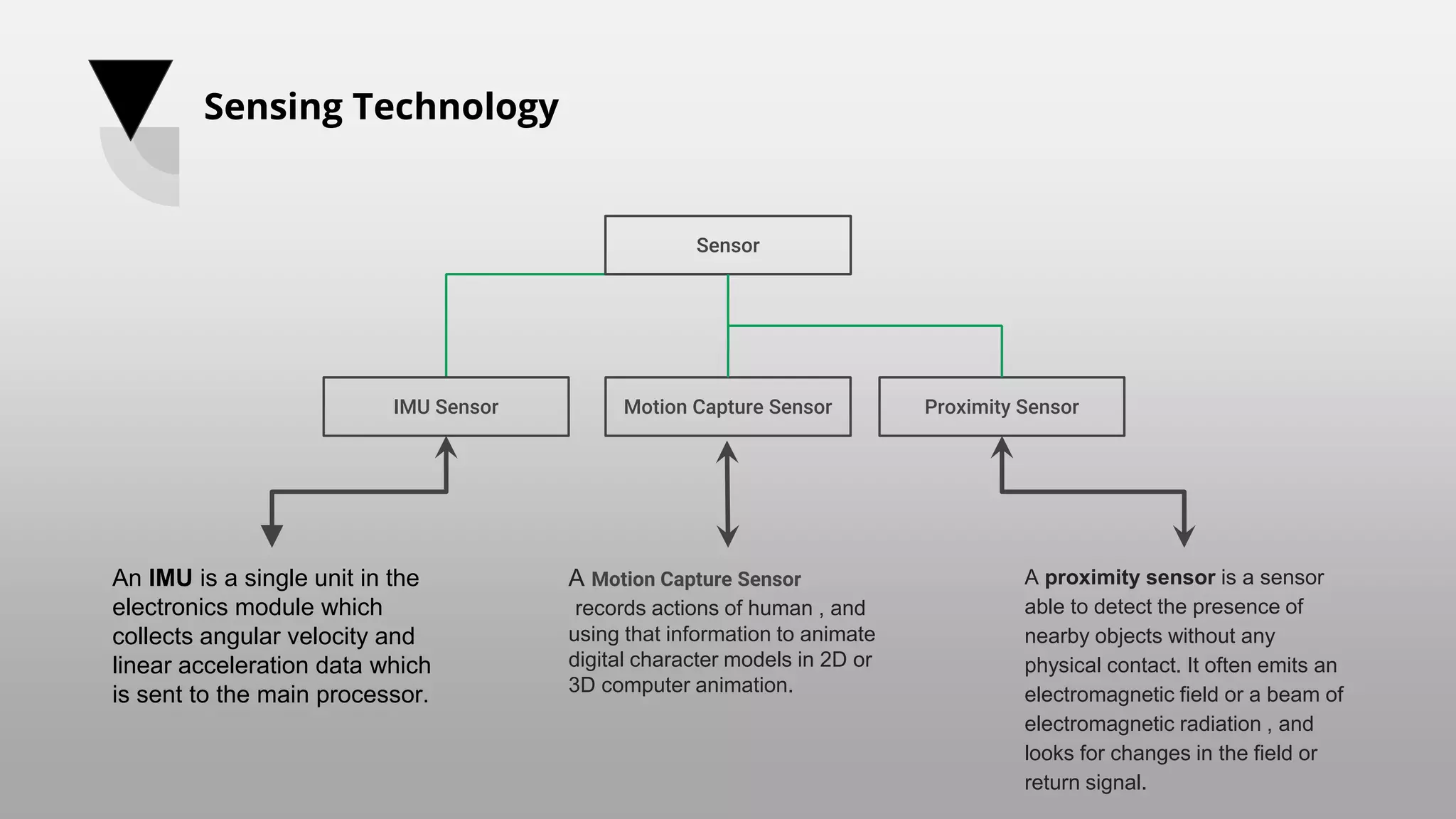
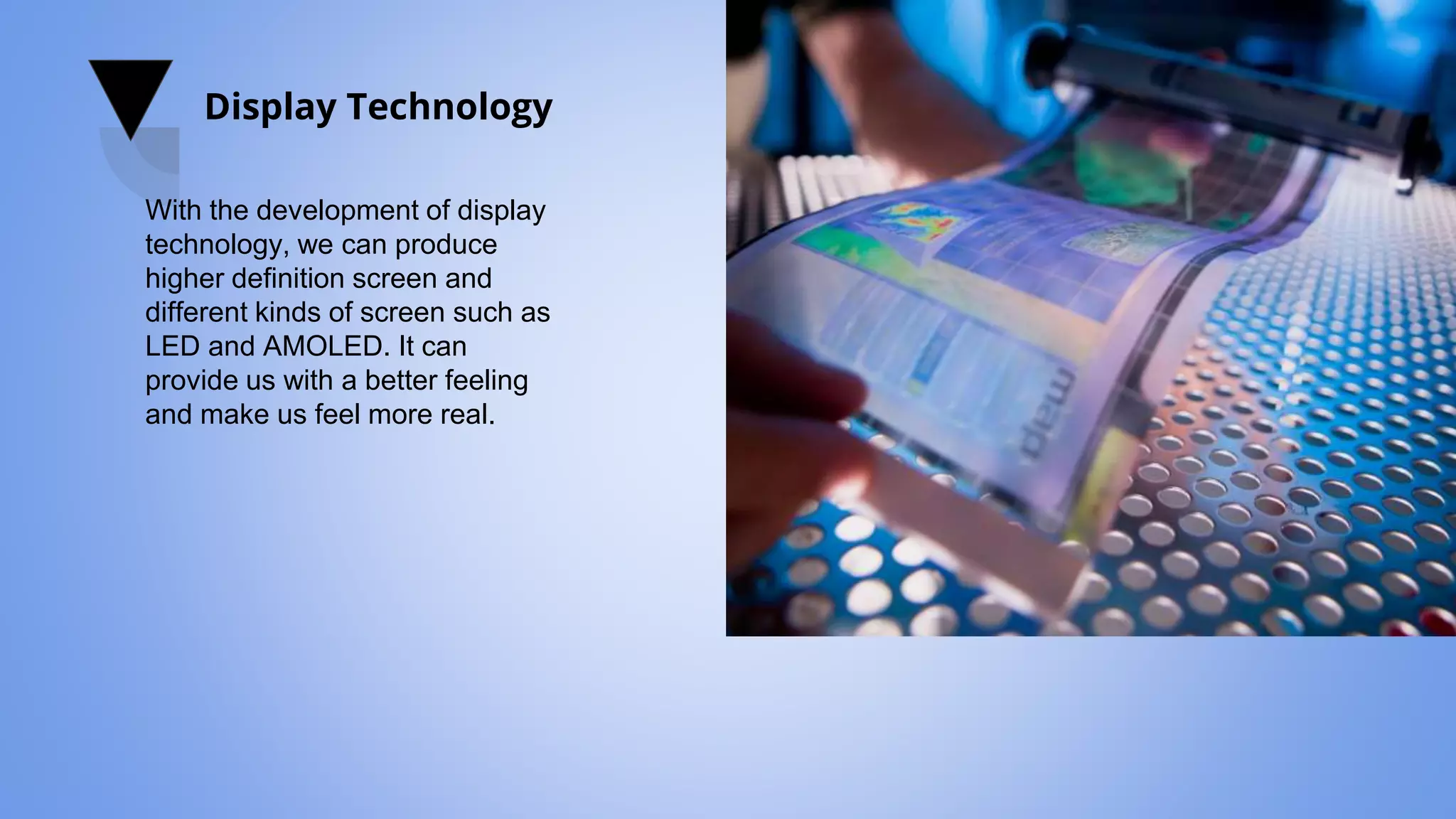
- Modern VR relies on technologies like computer graphics, sensors, displays and artificial intelligence for immersive experiences across industries like medicine, education, and entertainment.