




1935-1960
Presented by:
Aaron, Jennifay, Randy, Steve
Message From
Our Sponsor
A Glimpse of America
›    This presentation will attempt to…

      ›    Set the stage for a period of American history
      ›    Focus on significant developments
      ›    Help you understand overall meaning
America From 1935-1960
›    Black Tuesday                   ›    Global icons
›    The Great Depression                  ›    Amelia Earhart
                                                  Gandhi
›    Rise and fall of Nazi Germany         › 
                                            ›    Adolf Hitler
›    World War II
                                            ›    Rosie the Riveter
›    Cold War tensions                     ›    Fidel Castro
›    First satellite launch                ›    The Beatles
ARCHITECTURE
1935-1960
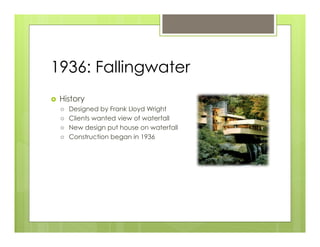
1936: Fallingwater
›    History
      ›    Designed by Frank Lloyd Wright
      ›    Clients wanted view of waterfall
      ›    New design put house on waterfall
      ›    Construction began in 1936
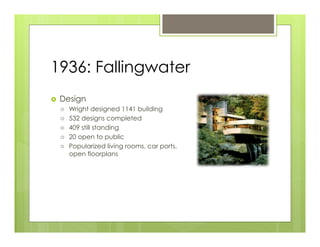
1936: Fallingwater
›    Design
      ›    Wright designed 1141 building
      ›    532 designs completed
      ›    409 still standing
      ›    20 open to public
      ›    Popularized living rooms, car ports,
            open floorplans
1936: Fallingwater
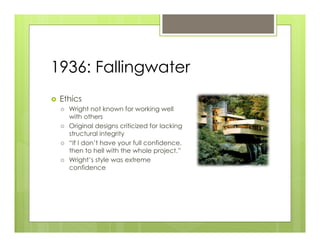
›    Ethics
      ›    Wright not known for working well
            with others
      ›    Original designs criticized for lacking
            structural integrity
      ›    “If I don’t have your full confidence,
            then to hell with the whole project.”
      ›    Wright’s style was extreme
            confidence
1936: Fallingwater
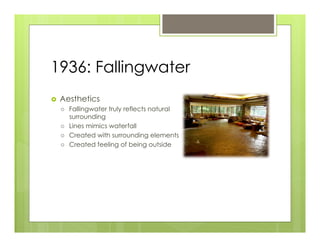
›    Aesthetics
      ›    Fallingwater truly reflects natural
            surrounding
      ›    Lines mimics waterfall
      ›    Created with surrounding elements
      ›    Created feeling of being outside
MEDICAL
1935-1960
1943: Kidney Dialysis
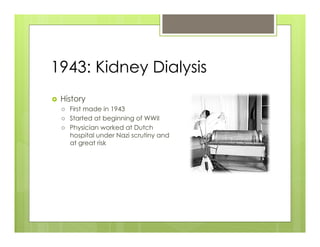
›    History
      ›    First made in 1943
      ›    Started at beginning of WWII
      ›    Physician worked at Dutch
            hospital under Nazi scrutiny and
            at great risk
1943: Kidney Dialysis
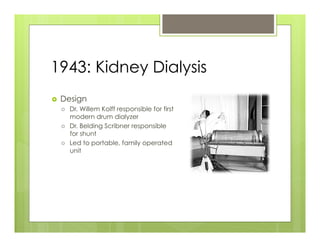
›    Design
      ›    Dr. Willem Kolff responsible for first
            modern drum dialyzer
      ›    Dr. Belding Scribner responsible
            for shunt
      ›    Led to portable, family operated
            unit
1943: Kidney Dialysis
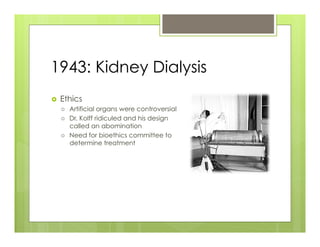
›    Ethics
      ›    Artificial organs were controversial
      ›    Dr. Kolff ridiculed and his design
            called an abomination
      ›    Need for bioethics committee to
            determine treatment
1943: Kidney Dialysis
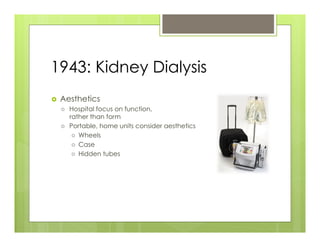
›    Aesthetics
      ›    Hospital focus on function,
            rather than form
      ›    Portable, home units consider aesthetics
             ›  Wheels
             ›  Case
             ›  Hidden tubes
WARFARE
1935-1960
1945: Atomic Bomb
›    History
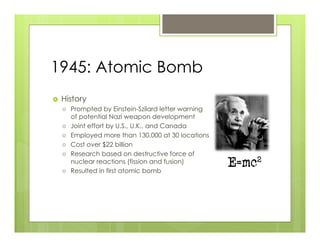
      ›    Prompted by Einstein-Szilard letter warning
            of potential Nazi weapon development
      ›    Joint effort by U.S., U.K., and Canada
      ›    Employed more than 130,000 at 30 locations
      ›    Cost over $22 billion
      ›    Research based on destructive force of
            nuclear reactions (fission and fusion)
      ›    Resulted in first atomic bomb
1945: Atomic Bomb
›    Design
      ›    First fission (atomic) test produces
            explosion equal to 20,000 tons of TNT
      ›    First thermonuclear (hydrogen) test
            produces explosion equal to 10,000,000
            tons of TNT
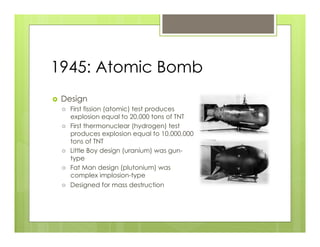
      ›    Little Boy design (uranium) was gun-
            type
      ›    Fat Man design (plutonium) was
            complex implosion-type
      ›    Designed for mass destruction
1945: Atomic Bomb
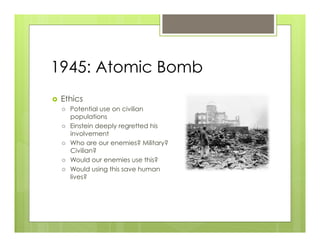
›    Ethics
      ›    Potential use on civilian
            populations
      ›    Einstein deeply regretted his
            involvement
      ›    Who are our enemies? Military?
            Civilian?
      ›    Would our enemies use this?
      ›    Would using this save human
            lives?
1945: Atomic Bomb
›    Aesthetics
      ›    Engineering focus on function
            rather than form
      ›    Aesthetics focus not physical,
            but philosophical
      ›    Changed the way we think
            about war
      ›    Changed the way the world
            thinks about weapons
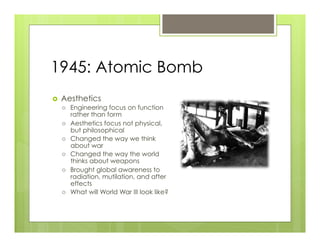
      ›    Brought global awareness to
            radiation, mutilation, and after
            effects
      ›    What will World War III look like?
MEDIA
1935-1960
Late 1940s: Television
›    History
      ›    Originally popularized in 1920s
      ›    Somewhat of a letdown
      ›    Almost entirely eliminated
      ›    Popularized after end of the
            World War II
Late 1940s: Television
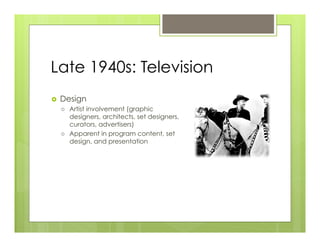
›    Design
      ›    Artist involvement (graphic
            designers, architects, set designers,
            curators, advertisers)
      ›    Apparent in program content, set
            design, and presentation
Late 1940s: Television
›    Ethics
      ›    In sales opportunists
      ›    In brand advertising
      ›    In mass communication
Late 1940s: Television
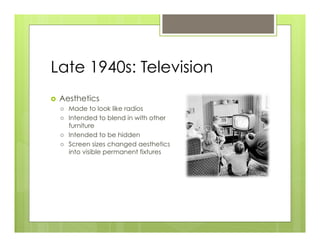
›    Aesthetics
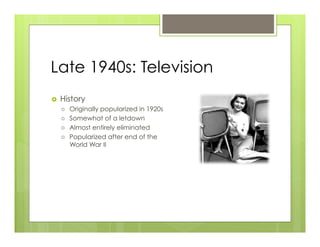
      ›    Made to look like radios
      ›    Intended to blend in with other
            furniture
      ›    Intended to be hidden
      ›    Screen sizes changed aesthetics
            into visible permanent fixtures
A Glimpse of America
›  1935-1960
›  This time period was significant
      ›    Globally
      ›    Economically
      ›    Technologically
      ›    Culturally
›    Slice of American history
      ›    Showcases some best and worst moments
      ›    Demonstrates resilience of America
      ›    Was just a slice
THANK YOU
1935-1960

LWIT BTAD: Group "Era" Presentation

  • 1.
  • 2.
  • 3.
    A Glimpse ofAmerica ›  This presentation will attempt to… ›  Set the stage for a period of American history ›  Focus on significant developments ›  Help you understand overall meaning
  • 4.
    America From 1935-1960 ›  Black Tuesday ›  Global icons ›  The Great Depression ›  Amelia Earhart Gandhi ›  Rise and fall of Nazi Germany ›  ›  Adolf Hitler ›  World War II ›  Rosie the Riveter ›  Cold War tensions ›  Fidel Castro ›  First satellite launch ›  The Beatles
  • 5.
  • 6.
    1936: Fallingwater ›  History ›  Designed by Frank Lloyd Wright ›  Clients wanted view of waterfall ›  New design put house on waterfall ›  Construction began in 1936
  • 7.
    1936: Fallingwater ›  Design ›  Wright designed 1141 building ›  532 designs completed ›  409 still standing ›  20 open to public ›  Popularized living rooms, car ports, open floorplans
  • 8.
    1936: Fallingwater ›  Ethics ›  Wright not known for working well with others ›  Original designs criticized for lacking structural integrity ›  “If I don’t have your full confidence, then to hell with the whole project.” ›  Wright’s style was extreme confidence
  • 9.
    1936: Fallingwater ›  Aesthetics ›  Fallingwater truly reflects natural surrounding ›  Lines mimics waterfall ›  Created with surrounding elements ›  Created feeling of being outside
  • 10.
  • 11.
    1943: Kidney Dialysis ›  History ›  First made in 1943 ›  Started at beginning of WWII ›  Physician worked at Dutch hospital under Nazi scrutiny and at great risk
  • 12.
    1943: Kidney Dialysis ›  Design ›  Dr. Willem Kolff responsible for first modern drum dialyzer ›  Dr. Belding Scribner responsible for shunt ›  Led to portable, family operated unit
  • 13.
    1943: Kidney Dialysis ›  Ethics ›  Artificial organs were controversial ›  Dr. Kolff ridiculed and his design called an abomination ›  Need for bioethics committee to determine treatment
  • 14.
    1943: Kidney Dialysis ›  Aesthetics ›  Hospital focus on function, rather than form ›  Portable, home units consider aesthetics ›  Wheels ›  Case ›  Hidden tubes
  • 15.
  • 16.
    1945: Atomic Bomb ›  History ›  Prompted by Einstein-Szilard letter warning of potential Nazi weapon development ›  Joint effort by U.S., U.K., and Canada ›  Employed more than 130,000 at 30 locations ›  Cost over $22 billion ›  Research based on destructive force of nuclear reactions (fission and fusion) ›  Resulted in first atomic bomb
  • 17.
    1945: Atomic Bomb ›  Design ›  First fission (atomic) test produces explosion equal to 20,000 tons of TNT ›  First thermonuclear (hydrogen) test produces explosion equal to 10,000,000 tons of TNT ›  Little Boy design (uranium) was gun- type ›  Fat Man design (plutonium) was complex implosion-type ›  Designed for mass destruction
  • 18.
    1945: Atomic Bomb ›  Ethics ›  Potential use on civilian populations ›  Einstein deeply regretted his involvement ›  Who are our enemies? Military? Civilian? ›  Would our enemies use this? ›  Would using this save human lives?
  • 19.
    1945: Atomic Bomb ›  Aesthetics ›  Engineering focus on function rather than form ›  Aesthetics focus not physical, but philosophical ›  Changed the way we think about war ›  Changed the way the world thinks about weapons ›  Brought global awareness to radiation, mutilation, and after effects ›  What will World War III look like?
  • 20.
  • 21.
    Late 1940s: Television ›  History ›  Originally popularized in 1920s ›  Somewhat of a letdown ›  Almost entirely eliminated ›  Popularized after end of the World War II
  • 22.
    Late 1940s: Television ›  Design ›  Artist involvement (graphic designers, architects, set designers, curators, advertisers) ›  Apparent in program content, set design, and presentation
  • 23.
    Late 1940s: Television ›  Ethics ›  In sales opportunists ›  In brand advertising ›  In mass communication
  • 24.
    Late 1940s: Television ›  Aesthetics ›  Made to look like radios ›  Intended to blend in with other furniture ›  Intended to be hidden ›  Screen sizes changed aesthetics into visible permanent fixtures
  • 25.
    A Glimpse ofAmerica ›  1935-1960 ›  This time period was significant ›  Globally ›  Economically ›  Technologically ›  Culturally ›  Slice of American history ›  Showcases some best and worst moments ›  Demonstrates resilience of America ›  Was just a slice
  • 26.