KEY TERMS OF GROUP BEHAVIOUR IN AN
OB
•Group
•Group behaviour
•Formal group
•Informal group
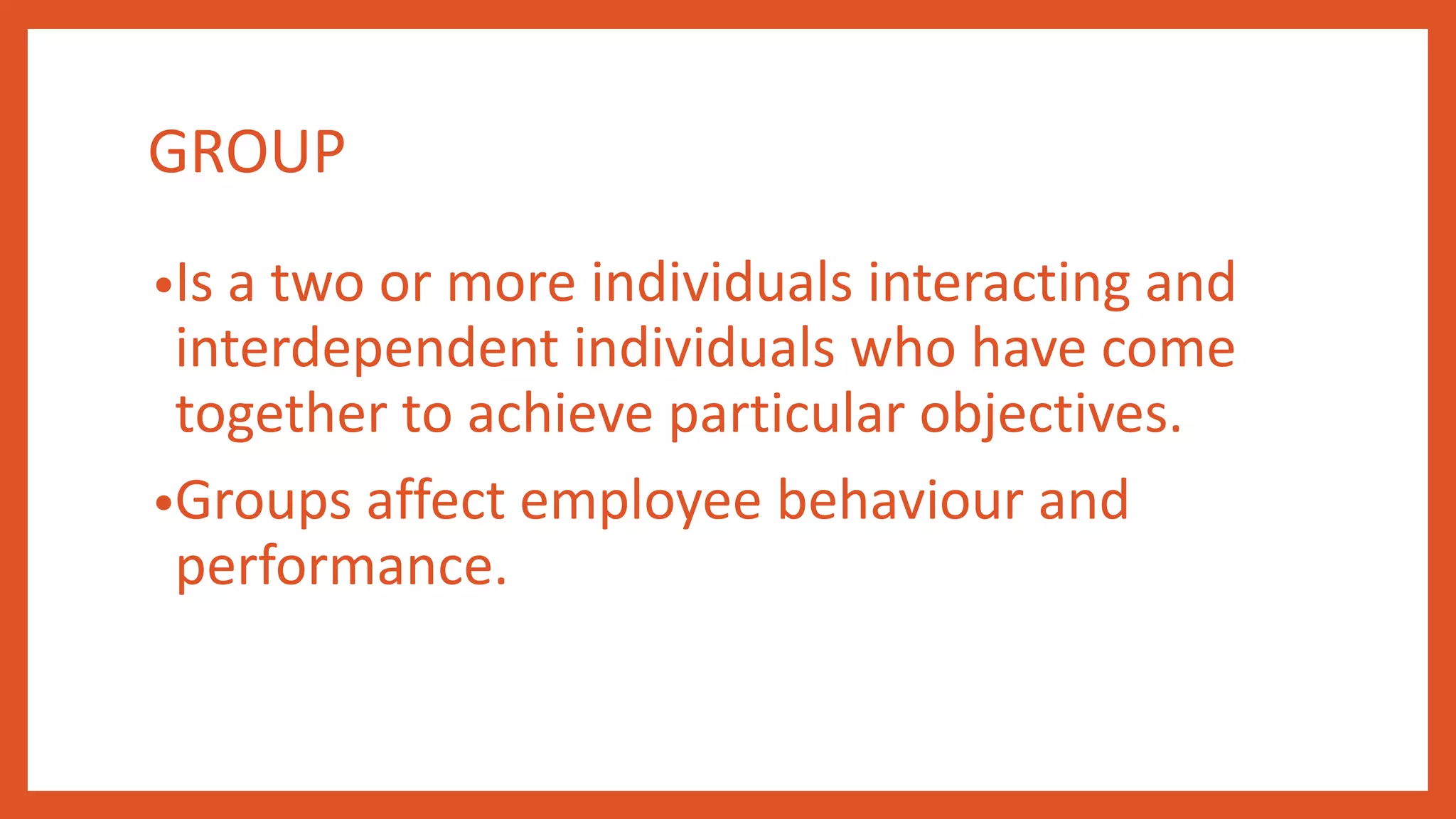
GROUP
•Is a two or more individuals interacting and
interdependent individuals who have come
together to achieve particular objectives.
•Groups affect employee behaviour and
performance.
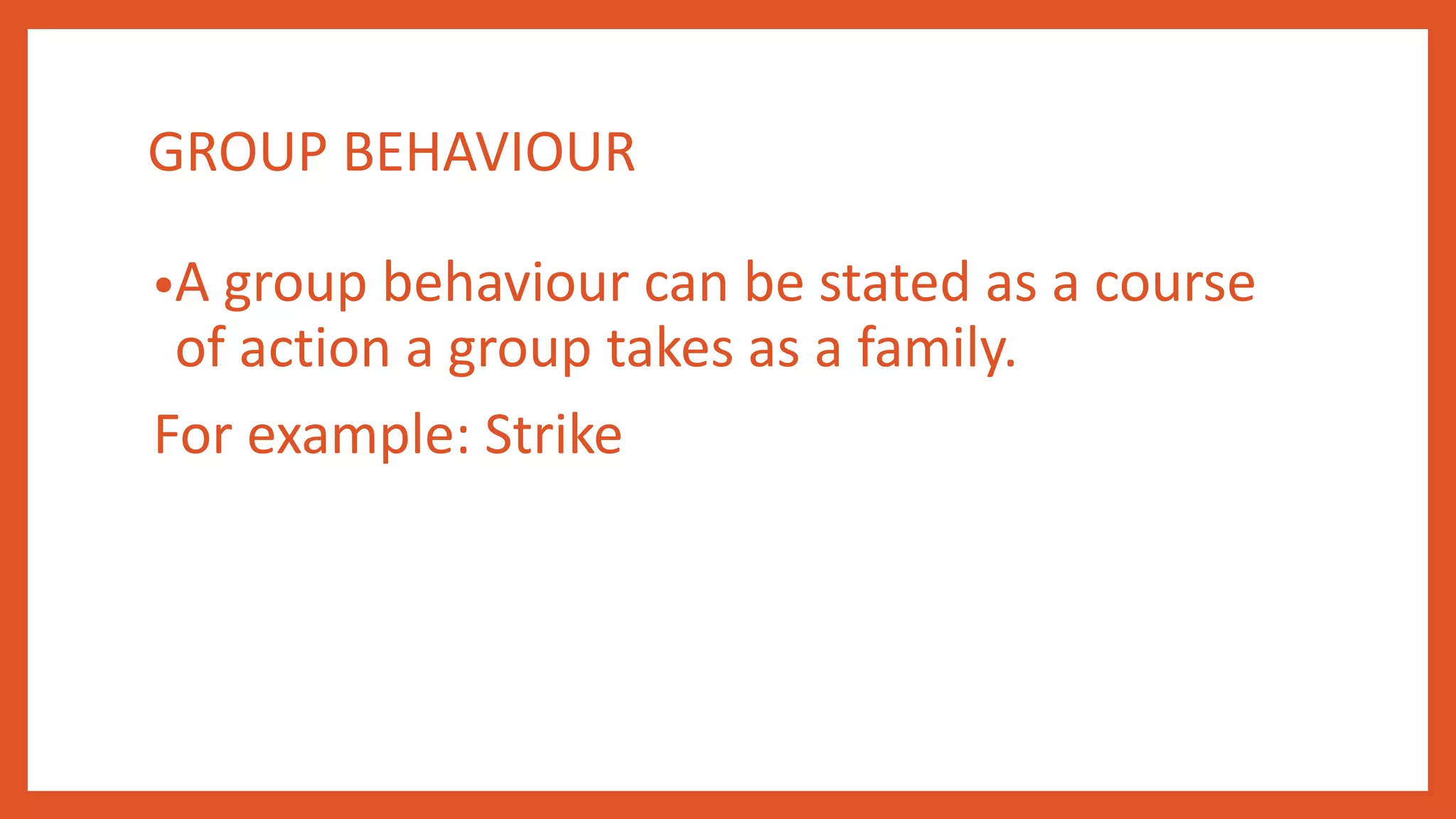
GROUP BEHAVIOUR
•A group behaviour can be stated as a course
of action a group takes as a family.
For example: Strike
FORMAL GROUP
•These are types of work groups created by the
organization and have designated work
assignments and established tasks.
•The behaviour of such groups is directed toward
achieving organizational goals.
Example of formal groups are; Airline crew
members, a board of directors, a sports team or a
project team.
INFORMAL GROUP
• Informal group is neither formally structured nor organizationally
determined.
• These are groups formed with friendships and common interest.
• In work environment, informal groups meet the need for social
contact.
Example, four employees from different departments who
regularly meet for lunch or who meets to play squash on
weekends.
• These types of behaviour though informal deeply affect the
behaviour performance.

GROUP BEHAVIOUR PPT.pptx

  • 2.
    KEY TERMS OFGROUP BEHAVIOUR IN AN OB •Group •Group behaviour •Formal group •Informal group
  • 3.
    GROUP •Is a twoor more individuals interacting and interdependent individuals who have come together to achieve particular objectives. •Groups affect employee behaviour and performance.
  • 4.
    GROUP BEHAVIOUR •A groupbehaviour can be stated as a course of action a group takes as a family. For example: Strike
  • 5.
    FORMAL GROUP •These aretypes of work groups created by the organization and have designated work assignments and established tasks. •The behaviour of such groups is directed toward achieving organizational goals. Example of formal groups are; Airline crew members, a board of directors, a sports team or a project team.
  • 6.
    INFORMAL GROUP • Informalgroup is neither formally structured nor organizationally determined. • These are groups formed with friendships and common interest. • In work environment, informal groups meet the need for social contact. Example, four employees from different departments who regularly meet for lunch or who meets to play squash on weekends. • These types of behaviour though informal deeply affect the behaviour performance.