Fraud Auditing
By Group 11:
Kartika Ayuning Tiar C1C020082
Nurul Aisyah Rahmalita Putri C1C020114
Lcturer : Dr. Novita Sari, SE.,M.Si
Types of Fraud
1. Fraudulent financial reporting
2. Misappropriation of assets
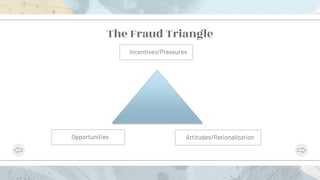
The Fraud Triangle
Incentives/Pressures
Opportunities Attitudes/Rationalization
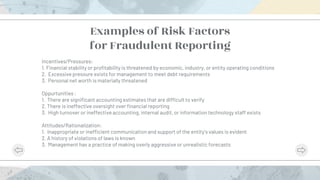
Examples of Risk Factors
for Fraudulent Reporting
Incentives/Pressures:
1. Financial stability or profitability is threatened by economic, industry, or entity operating conditions
2. Excessive pressure exists for management to meet debt requirements
3. Personal net worth is materially threatened
Oppurtunities :
1. There are significant accounting estimates that are difficult to verify
2. There is ineffective oversight over financial reporting
3. High turnover or ineffective accounting, internal audit, or information technology staff exists
Attitudes/Rationalization:
1. Inappropriate or inefficient communication and support of the entity’s values is evident
2. A history of violations of laws is known
3. Management has a practice of making overly aggressive or unrealistic forecasts
Examples of Risk Factors
for Misappropriation of Assets
●Incentives/Pressures:
●1. Personal financial obligations create pressure to misappropriate assets
●2. Adverse relationships between management and employees motivate employees to misappropriate assets
●Oppurtunities :
●1. There is a presence of large amounts of cash on hand or inventory items
●2. There is an inadequate internal control over assets
●Attitudes/Rationalization:
●1. Disregard for the need to monitor or reduce risk of misappropriating assets exists
●2. There is a disregard for internal controls
SAS 99 provides guidance
to auditors in assessing the
risk of fraud.
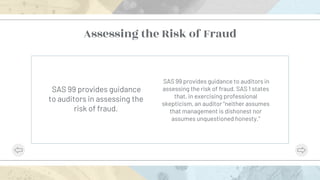
Assessing the Risk of Fraud
SAS 99 provides guidance to auditors in
assessing the risk of fraud. SAS 1 states
that, in exercising professional
skepticism, an auditor “neither assumes
that management is dishonest nor
assumes unquestioned honesty.”
Documenting Fraud Assessment
1. Discussion
3. Specific risks
2. Procedures
4. Reasons
6. Nature of communications
5. Other conditions and analytical relationships
Responding to the Risk of Fraud
1. Change the overall conduct of the audit
to respond to identified fraud risks.
2. Design and perform audit procedures
to address identified risks.
3. Design and perform procedures to
address the risk of management
override of controls.
When fraud is suspected, the auditor gathers
additional information to determine whether
fraud actually exists.
Responding to Misstatements
That May Be the Result of
Fraud
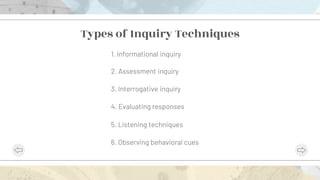
Types of Inquiry Techniques
1. Informational inquiry
2. Assessment inquiry
3. Interrogative inquiry
4. Evaluating responses
5. Listening techniques
6. Observing behavioral cues
THANK
YOU!

GROUP 11 - FRAUD AUDITING.pptx

  • 1.
    Fraud Auditing By Group11: Kartika Ayuning Tiar C1C020082 Nurul Aisyah Rahmalita Putri C1C020114 Lcturer : Dr. Novita Sari, SE.,M.Si
  • 2.
    Types of Fraud 1.Fraudulent financial reporting 2. Misappropriation of assets
  • 3.
  • 4.
    Examples of RiskFactors for Fraudulent Reporting Incentives/Pressures: 1. Financial stability or profitability is threatened by economic, industry, or entity operating conditions 2. Excessive pressure exists for management to meet debt requirements 3. Personal net worth is materially threatened Oppurtunities : 1. There are significant accounting estimates that are difficult to verify 2. There is ineffective oversight over financial reporting 3. High turnover or ineffective accounting, internal audit, or information technology staff exists Attitudes/Rationalization: 1. Inappropriate or inefficient communication and support of the entity’s values is evident 2. A history of violations of laws is known 3. Management has a practice of making overly aggressive or unrealistic forecasts
  • 5.
    Examples of RiskFactors for Misappropriation of Assets ●Incentives/Pressures: ●1. Personal financial obligations create pressure to misappropriate assets ●2. Adverse relationships between management and employees motivate employees to misappropriate assets ●Oppurtunities : ●1. There is a presence of large amounts of cash on hand or inventory items ●2. There is an inadequate internal control over assets ●Attitudes/Rationalization: ●1. Disregard for the need to monitor or reduce risk of misappropriating assets exists ●2. There is a disregard for internal controls
  • 6.
    SAS 99 providesguidance to auditors in assessing the risk of fraud. Assessing the Risk of Fraud SAS 99 provides guidance to auditors in assessing the risk of fraud. SAS 1 states that, in exercising professional skepticism, an auditor “neither assumes that management is dishonest nor assumes unquestioned honesty.”
  • 7.
    Documenting Fraud Assessment 1.Discussion 3. Specific risks 2. Procedures 4. Reasons 6. Nature of communications 5. Other conditions and analytical relationships
  • 8.
    Responding to theRisk of Fraud 1. Change the overall conduct of the audit to respond to identified fraud risks. 2. Design and perform audit procedures to address identified risks. 3. Design and perform procedures to address the risk of management override of controls.
  • 9.
    When fraud issuspected, the auditor gathers additional information to determine whether fraud actually exists. Responding to Misstatements That May Be the Result of Fraud
  • 10.
    Types of InquiryTechniques 1. Informational inquiry 2. Assessment inquiry 3. Interrogative inquiry 4. Evaluating responses 5. Listening techniques 6. Observing behavioral cues
  • 11.