Environment and Resource Economics
Shivraj Singh Negi
HS07H022
Groundwater
 It provides about one-third of the world’s freshwater
consumption.
 Input for many economic activities as well as used as a
product.
 Has always been regarded as a common property resource.
 Collects slowly over very long periods of time as water
seeps in from the surface.
Groundwater Use Externalities
 Water level descents, surface water flow reduction, water
quality deterioration, land subsidence.
 Water quality is also degraded due to excessive extraction.
 Degradation of aquatic ecosystems.
 Soil salinity in areas served by canals. Importing Surface
Water from far off areas creates its own set of problems.
 South Asia is the largest user of groundwater and
groundwater irrigation plays a crucial role in supporting its
largely agrarian economies.
Why Externalities Arise?
 Public Good, Private benefits from Public Costs.
 People who extract them and use them are not paying
their scarcity rents (both in terms of quality and
quantity); they only pay the private extraction costs.
 Problems are associated with identifying , measuring
and making strategies/policies to tackle the
externality.
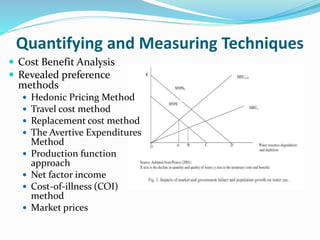
Quantifying and Measuring Techniques
 Cost Benefit Analysis
 Revealed preference
methods
 Hedonic Pricing Method
 Travel cost method
 Replacement cost method
 The Avertive Expenditures
Method
 Production function
approach
 Net factor income
 Cost-of-illness (COI)
method
 Market prices
Quantifying and Measuring Techniques
 Stated preference methods
 Contingent valuation method
 Choice experiment method
Strategies and Policies
 Different strategies/policies for different kinds of
externalities.
 Legalizing Illegal well and monitoring consumption.
 Monitoring electricity consumption for water
pumping.
 Using weather forecasts to charge variable prices for
water.
 In case of agriculture, rationed supply of electricity for
water pumping.
 Monitoring Groundwater Quality to ensure that
water prices reflect the cost of using such water.
Conclusion
 Studies suggest that different pricing mechanisms do
affect water usage patterns.
 This effect is generated mainly as a result of water
pricing providing incentives to the modification of
production methods.
 Total Economic Value of groundwater resources
should be determined in order to make sustainable,
efficient and equitable allocation.
References
 Alexander E. Saak, J. M. (2007). Groundwater use under
incomplete information. Journal of Environmental
Economics and Management , 214–228.
 Casey Brown, P. R. (2006). Demand management of
groundwater with monsoon forecasting. Agricultural
Systems , 293-311.
 E. Fano, M. B. (1989). Issues in Ground-Water Economics.
Developments in Water Science , 485-507.
 Edwards, S. F. (December 1988). Option prices for
groundwater protection. Journal of Environmental
Economics and Management , 475-487.
 Eric C. Schuck, G. P. (2002). Supply-based water pricing in
a conjunctive use system: implications for resource and
energy use. Resource and Energy Economics , 175-192.
References
 Escudero, J. G. (1989). Toward A Correct Evaluation of Water
Economics: Experience from the Region of Murcia, Spain.
Developments in Water Science , 231-248.
 Gonzalez, A. S. (1989). Ground Water Externalities .
Developments in Water Science , 361-371.
 Hamid Balali, S. K. (2011). Groundwater balance and
conservation under different water pricing and agricultural
policy scenarios: A case study of the Hamadan-Bahar plain.
Ecological Economics , 863–872.
 Irene Blanco-Gutierreza, C. V.-O. (2011). Cost-effectiveness of
groundwater conservation measures: A multi-level analysis with
policy implications. Agricultural Water Management , 639-652.
 Korim, K. (1989). Economic Aspects of Ground Water Use .
Developments in Water Science , 295-302.
References
 Kumar, M. D. (2005). Impact of electricity prices and volumetric
water allocation on energy and groundwater demand
management: Analysis from Western India. Energy Policy , 39–
51.
 Loaiciga, H. A. (2004). Analytic game—theoretic approach to
ground-water extraction. Journal of Hydrology , 22-33.
 Mukherji, A. (2007 ). The energy-irrigation nexus and its impact
on groundwater markets in eastern Indo-Gangetic basin:
Evidence from West Bengal, India. Energy Policy , 6413–6430.
 Petra Hellegers, D. Z. (2001 ). Dynamics of agricultural
groundwater extraction. Ecological Economics , 303–311.
 Rimjhim M. Aggarwal, T. A. (2004 ). Does inequality lead to
greater efficiency in the use of local commons? The role of
strategic investments in capacity. Journal of Environmental
Economics and Management , 163–182.
References
 Sahuquillo, A. (1989). Economic Aspects of the Conjunctive
Use of Ground and Surface Water. Developments in Water
Science , 347-359.
 Santiago J. Rubio, B. C. (2001). Competitive versus efficient
extraction of a common property resource: The
groundwater case. Journal of Economic Dynamics &
Control , 1117-1137.
 Shah, T. (1989). Externality and Equity Implications of
Private Exploitation of Ground Water Resources.
Developments in Water Science , 119-139.
 Tushaar Shah, S. B. (2008). Groundwater governance
through electricity supply management: Assessing an
innovative intervention in Gujarat, western India.
Agricultural Water Management , 1233-1242.
 Zekri, S. (2009). Controlling groundwater pumping online.
Journal of Environmental Management , 3581-3588.

Groundwater externalities and strategies

  • 1.
    Environment and ResourceEconomics Shivraj Singh Negi HS07H022
  • 2.
    Groundwater  It providesabout one-third of the world’s freshwater consumption.  Input for many economic activities as well as used as a product.  Has always been regarded as a common property resource.  Collects slowly over very long periods of time as water seeps in from the surface.
  • 3.
    Groundwater Use Externalities Water level descents, surface water flow reduction, water quality deterioration, land subsidence.  Water quality is also degraded due to excessive extraction.  Degradation of aquatic ecosystems.  Soil salinity in areas served by canals. Importing Surface Water from far off areas creates its own set of problems.  South Asia is the largest user of groundwater and groundwater irrigation plays a crucial role in supporting its largely agrarian economies.
  • 4.
    Why Externalities Arise? Public Good, Private benefits from Public Costs.  People who extract them and use them are not paying their scarcity rents (both in terms of quality and quantity); they only pay the private extraction costs.  Problems are associated with identifying , measuring and making strategies/policies to tackle the externality.
  • 5.
    Quantifying and MeasuringTechniques  Cost Benefit Analysis  Revealed preference methods  Hedonic Pricing Method  Travel cost method  Replacement cost method  The Avertive Expenditures Method  Production function approach  Net factor income  Cost-of-illness (COI) method  Market prices
  • 6.
    Quantifying and MeasuringTechniques  Stated preference methods  Contingent valuation method  Choice experiment method
  • 7.
    Strategies and Policies Different strategies/policies for different kinds of externalities.  Legalizing Illegal well and monitoring consumption.  Monitoring electricity consumption for water pumping.  Using weather forecasts to charge variable prices for water.  In case of agriculture, rationed supply of electricity for water pumping.  Monitoring Groundwater Quality to ensure that water prices reflect the cost of using such water.
  • 8.
    Conclusion  Studies suggestthat different pricing mechanisms do affect water usage patterns.  This effect is generated mainly as a result of water pricing providing incentives to the modification of production methods.  Total Economic Value of groundwater resources should be determined in order to make sustainable, efficient and equitable allocation.
  • 9.
    References  Alexander E.Saak, J. M. (2007). Groundwater use under incomplete information. Journal of Environmental Economics and Management , 214–228.  Casey Brown, P. R. (2006). Demand management of groundwater with monsoon forecasting. Agricultural Systems , 293-311.  E. Fano, M. B. (1989). Issues in Ground-Water Economics. Developments in Water Science , 485-507.  Edwards, S. F. (December 1988). Option prices for groundwater protection. Journal of Environmental Economics and Management , 475-487.  Eric C. Schuck, G. P. (2002). Supply-based water pricing in a conjunctive use system: implications for resource and energy use. Resource and Energy Economics , 175-192.
  • 10.
    References  Escudero, J.G. (1989). Toward A Correct Evaluation of Water Economics: Experience from the Region of Murcia, Spain. Developments in Water Science , 231-248.  Gonzalez, A. S. (1989). Ground Water Externalities . Developments in Water Science , 361-371.  Hamid Balali, S. K. (2011). Groundwater balance and conservation under different water pricing and agricultural policy scenarios: A case study of the Hamadan-Bahar plain. Ecological Economics , 863–872.  Irene Blanco-Gutierreza, C. V.-O. (2011). Cost-effectiveness of groundwater conservation measures: A multi-level analysis with policy implications. Agricultural Water Management , 639-652.  Korim, K. (1989). Economic Aspects of Ground Water Use . Developments in Water Science , 295-302.
  • 11.
    References  Kumar, M.D. (2005). Impact of electricity prices and volumetric water allocation on energy and groundwater demand management: Analysis from Western India. Energy Policy , 39– 51.  Loaiciga, H. A. (2004). Analytic game—theoretic approach to ground-water extraction. Journal of Hydrology , 22-33.  Mukherji, A. (2007 ). The energy-irrigation nexus and its impact on groundwater markets in eastern Indo-Gangetic basin: Evidence from West Bengal, India. Energy Policy , 6413–6430.  Petra Hellegers, D. Z. (2001 ). Dynamics of agricultural groundwater extraction. Ecological Economics , 303–311.  Rimjhim M. Aggarwal, T. A. (2004 ). Does inequality lead to greater efficiency in the use of local commons? The role of strategic investments in capacity. Journal of Environmental Economics and Management , 163–182.
  • 12.
    References  Sahuquillo, A.(1989). Economic Aspects of the Conjunctive Use of Ground and Surface Water. Developments in Water Science , 347-359.  Santiago J. Rubio, B. C. (2001). Competitive versus efficient extraction of a common property resource: The groundwater case. Journal of Economic Dynamics & Control , 1117-1137.  Shah, T. (1989). Externality and Equity Implications of Private Exploitation of Ground Water Resources. Developments in Water Science , 119-139.  Tushaar Shah, S. B. (2008). Groundwater governance through electricity supply management: Assessing an innovative intervention in Gujarat, western India. Agricultural Water Management , 1233-1242.  Zekri, S. (2009). Controlling groundwater pumping online. Journal of Environmental Management , 3581-3588.