Gregorian Chants
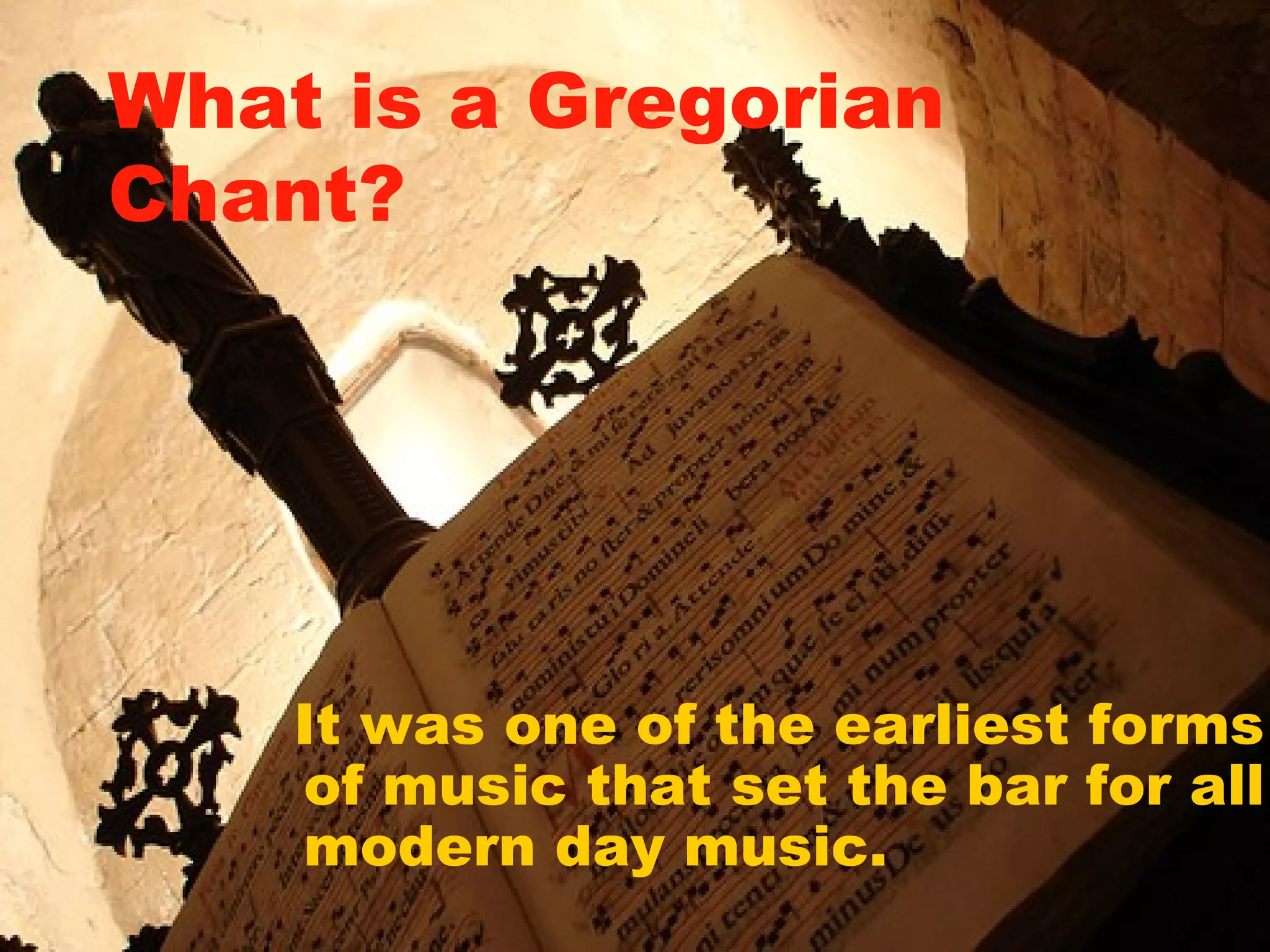
What is a Gregorian Chant? It was one of the earliest forms of music that set the bar for all modern day music.
When was it invented? Gregorian chants were used at their highest during the period knows as, “The Dark Ages”, so most chants are spiritual in nature and quite dark sounding.
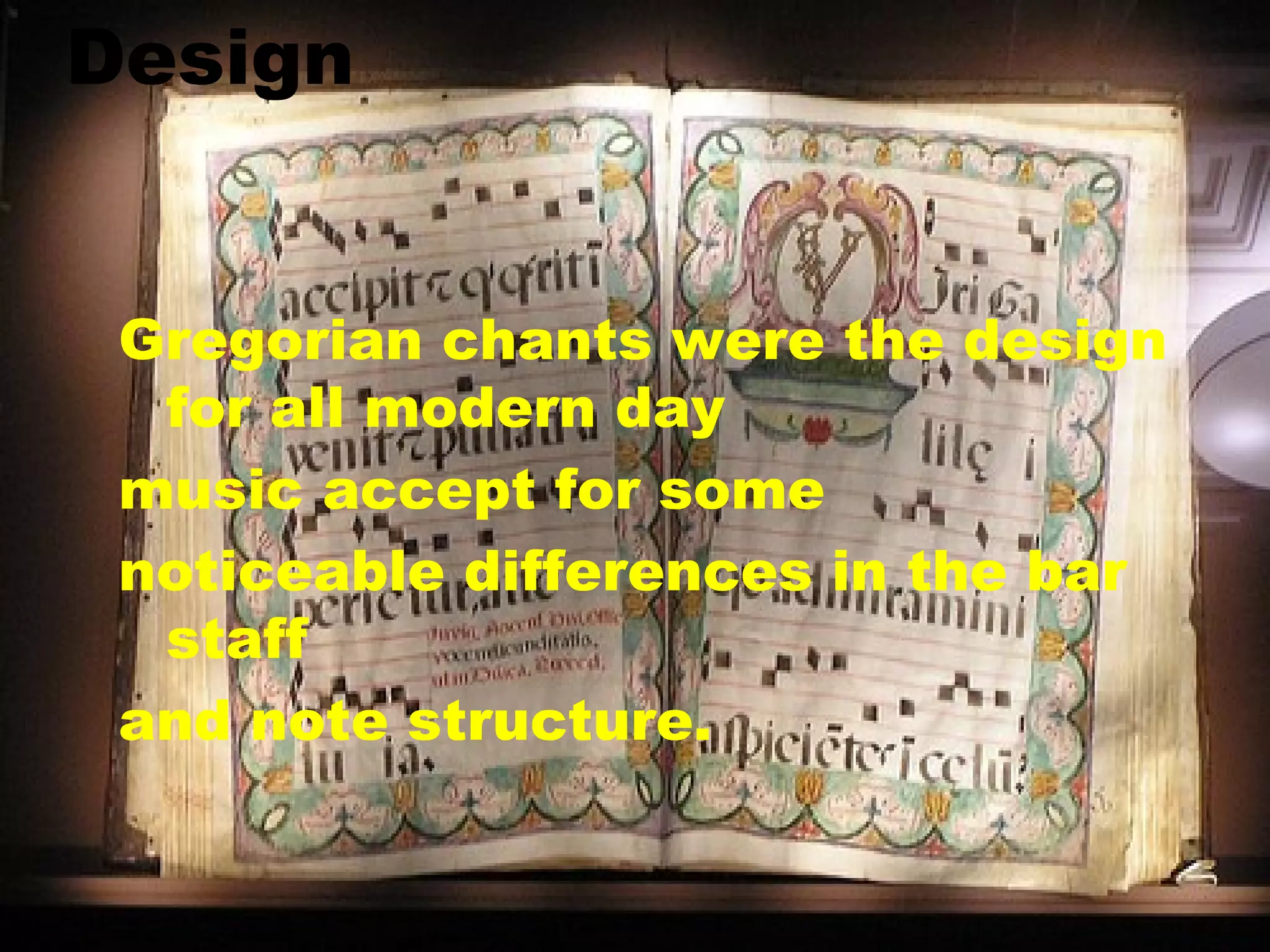
Design Gregorian chants were the design for all modern day  music accept for some  noticeable differences in the bar staff  and note structure.
Design Gregorian chants were designed on a  4 bar  staff which is different from our  modern day music  staff. The  Gregorian   Notes also looked quite different from modern day notes.
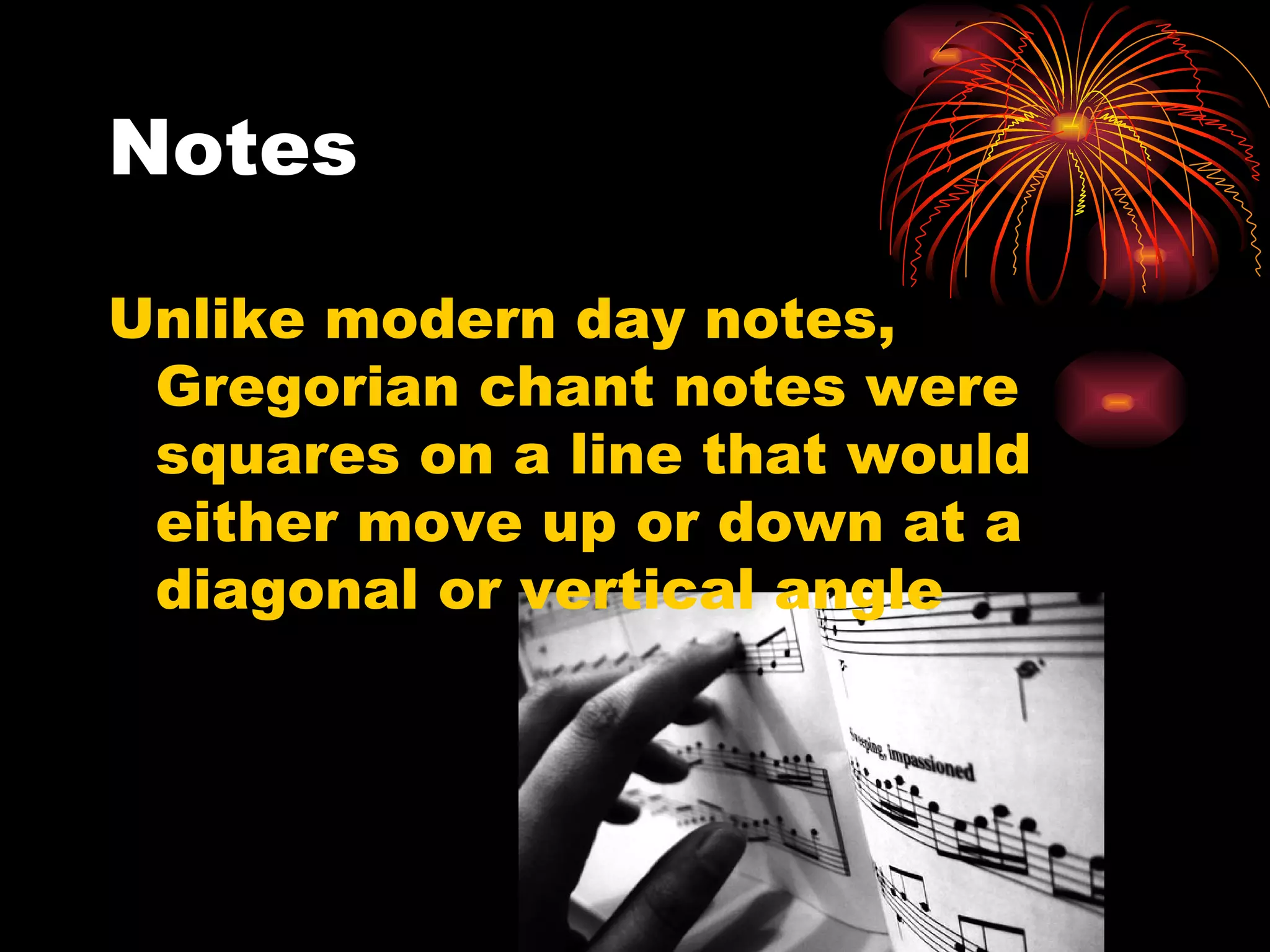
Notes Unlike modern day notes, Gregorian chant notes were squares on a line that would either move up or down at a diagonal or vertical angle
Notes Most notes were generally tied or separate (All songs always started and ended on the same pitch.)
Number Count Notes were all given a separate number count, some notes counted from anywhere between 1-4 beats
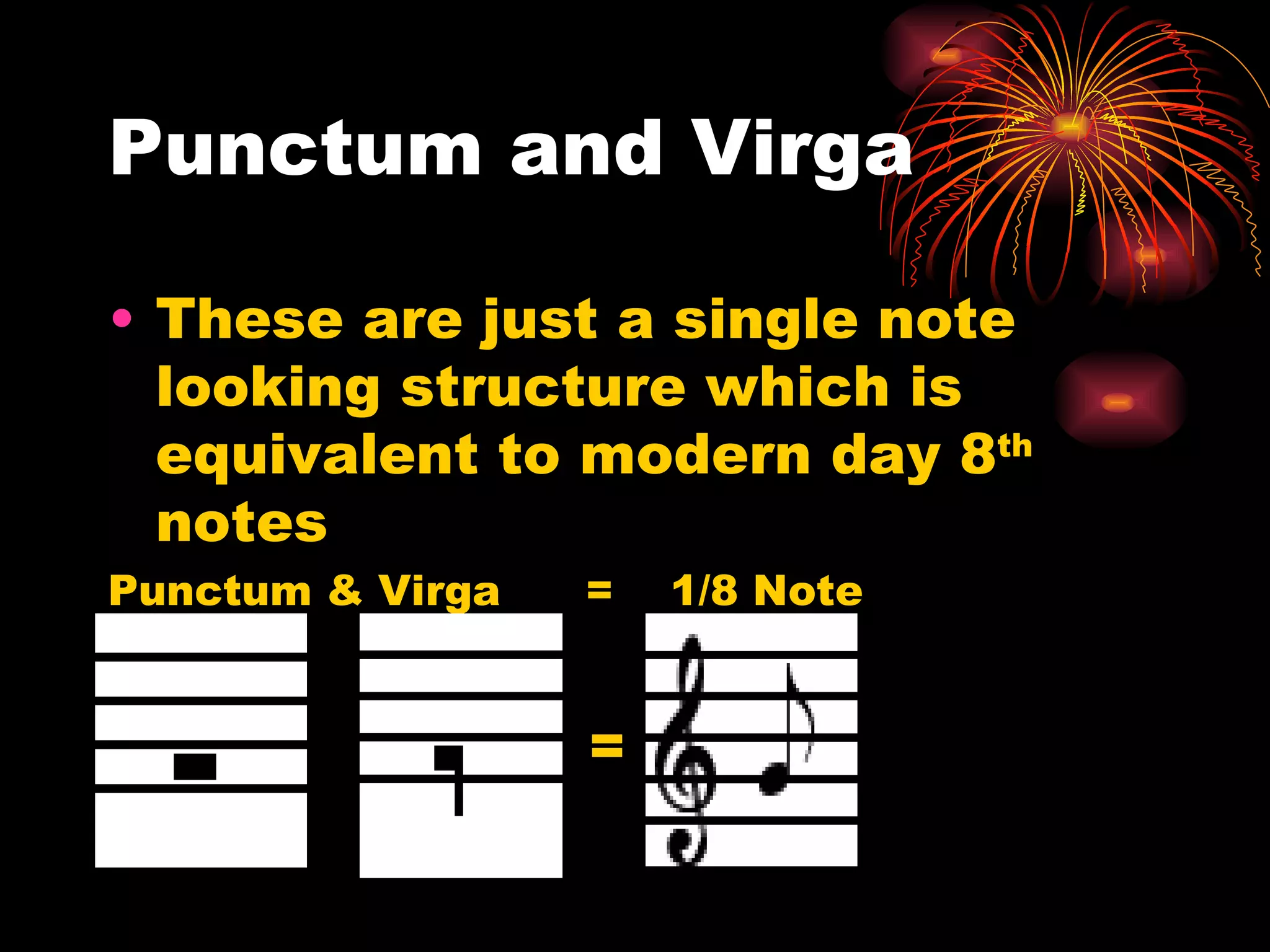
Punctum and Virga These are just a single note looking structure which is equivalent to modern day 8 th  notes Punctum & Virga  =  1/8 Note =
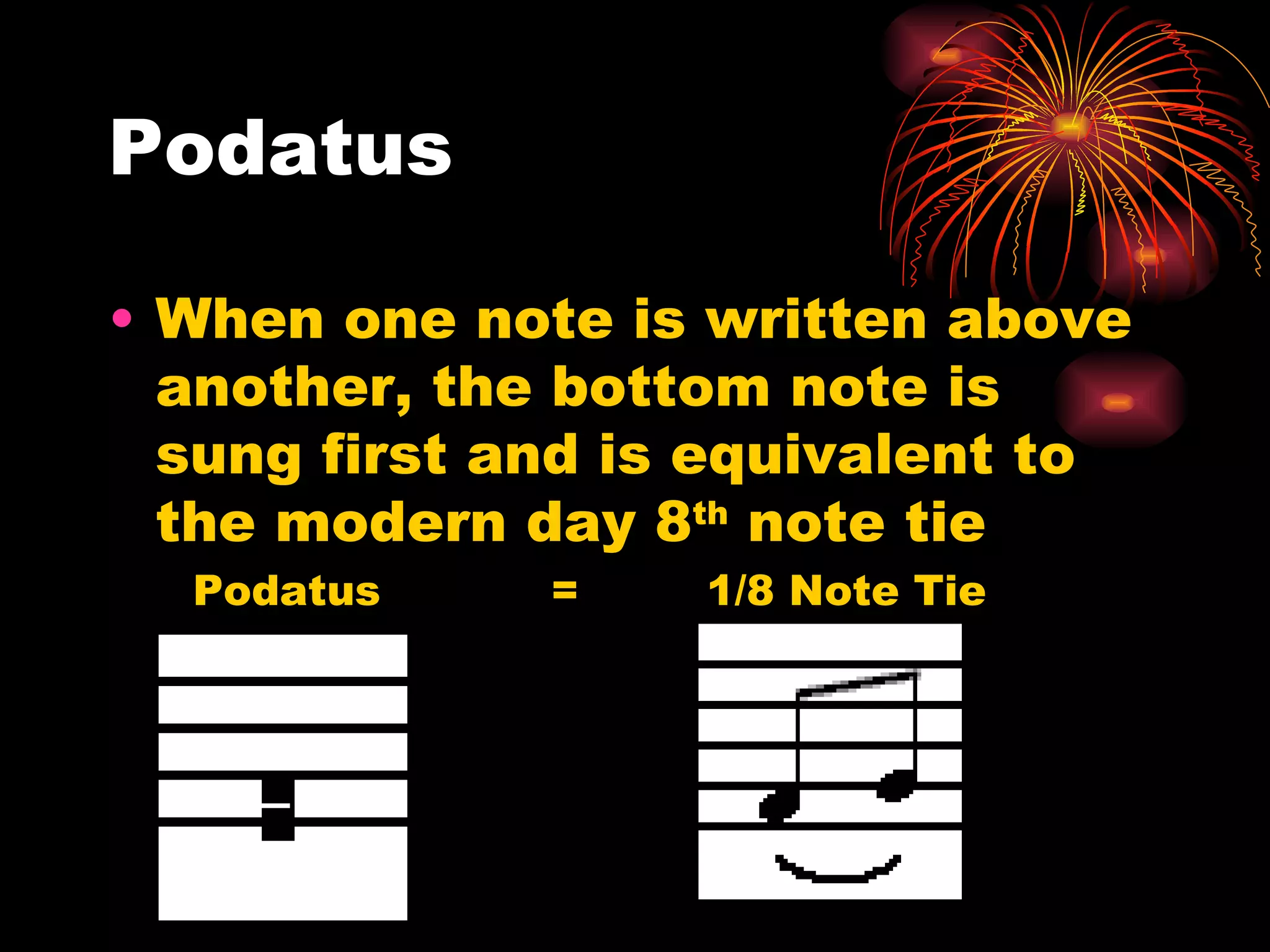
Podatus When one note is written above another, the bottom note is sung first and is equivalent to the modern day 8 th  note tie Podatus  =  1/8 Note Tie
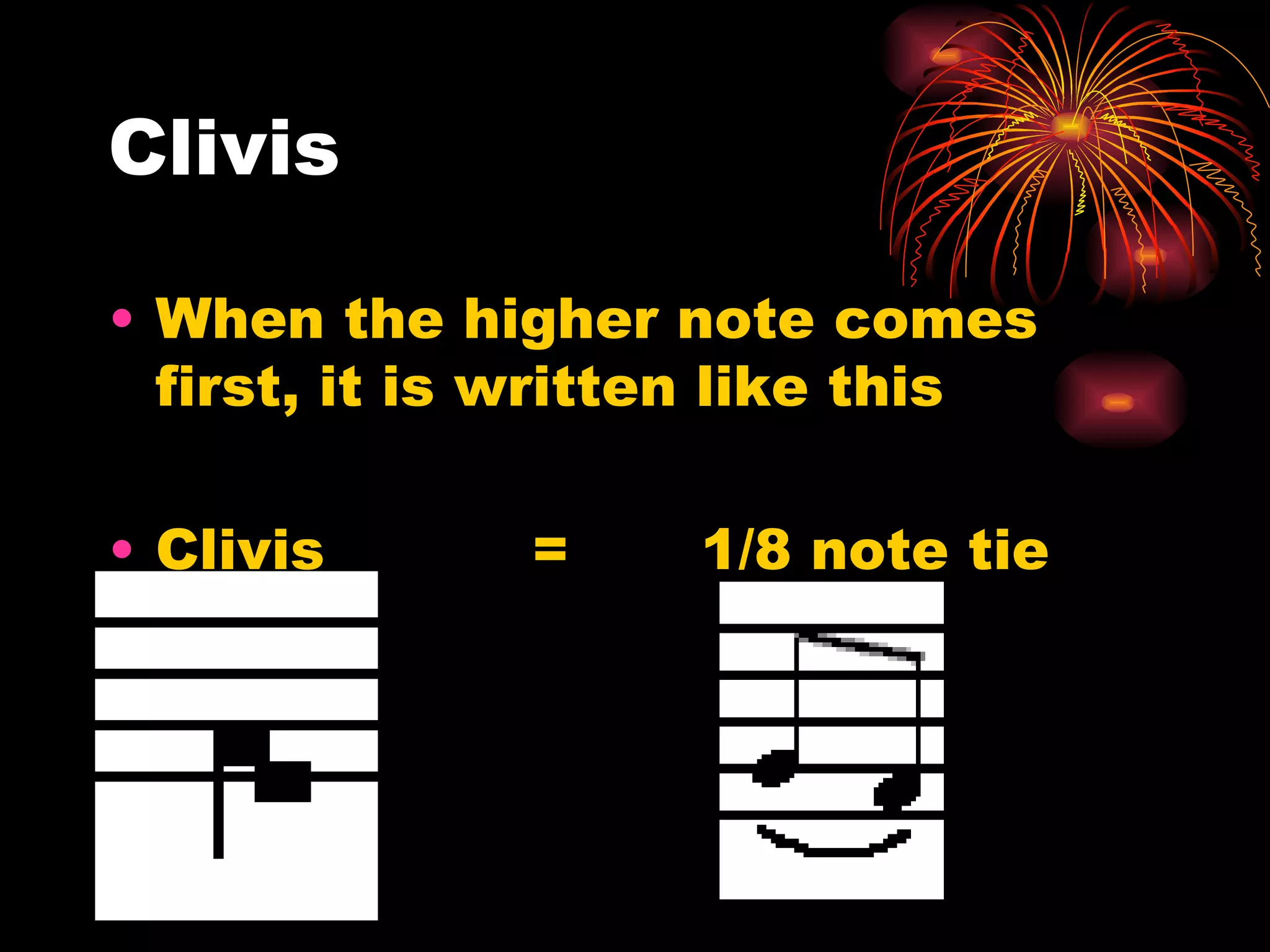
Clivis When the higher note comes first, it is written like this  Clivis  =  1/8 note tie
WHAT’S WITH THE WEIRD NAMES!? In early music and history everything was in LATIN! Confusing… Yes Irritating… Yes
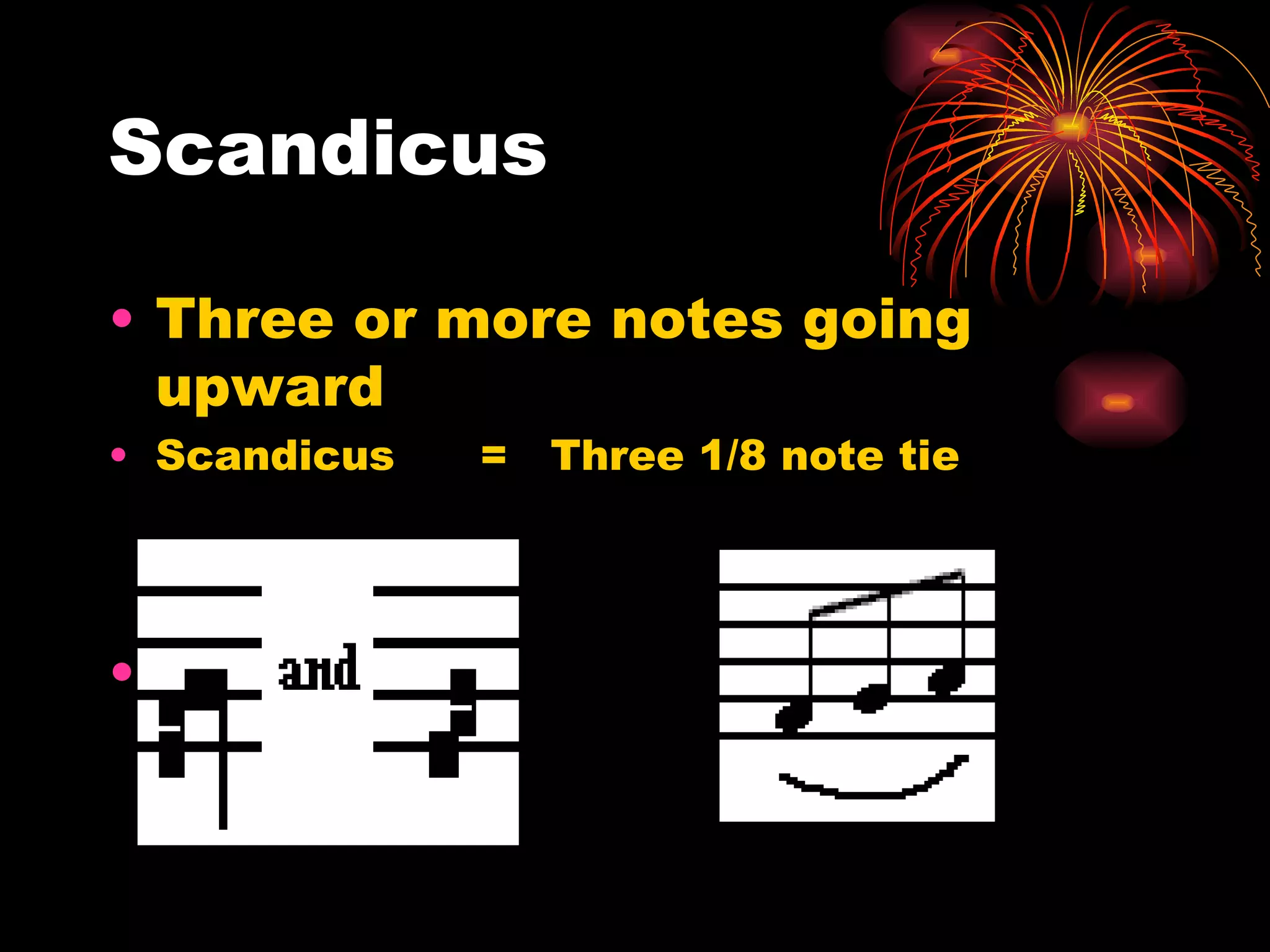
Scandicus Three or more notes going upward  Scandicus  =  Three 1/8 note tie
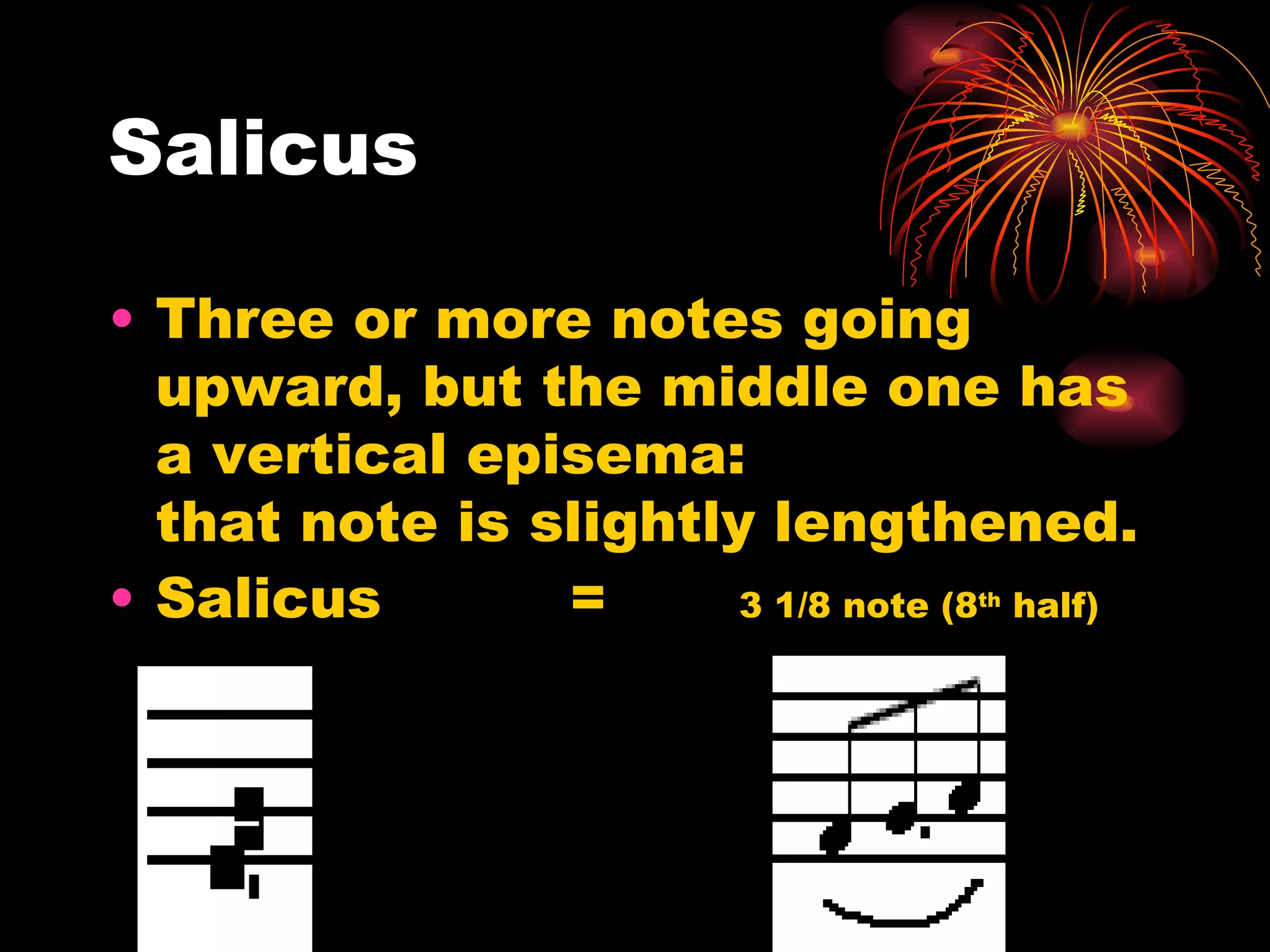
Salicus Three or more notes going upward, but the middle one has a vertical episema:  that note is slightly lengthened.  Salicus  =  3 1/8 note (8 th  half)
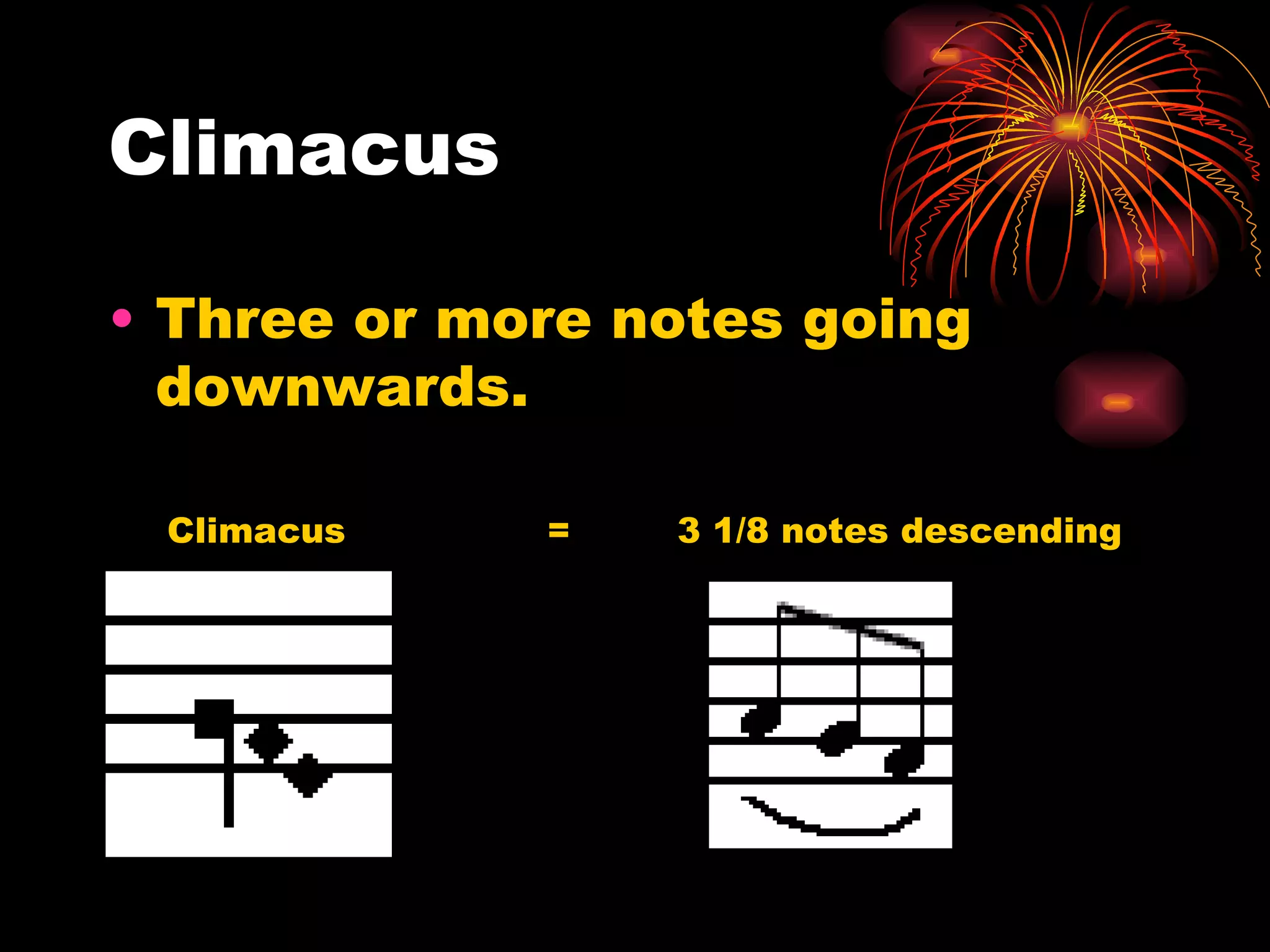
Climacus Three or more notes going downwards.  Climacus  =  3 1/8 notes descending
Still more weird names… Om-nom-nom-nom-nom-nom-nom
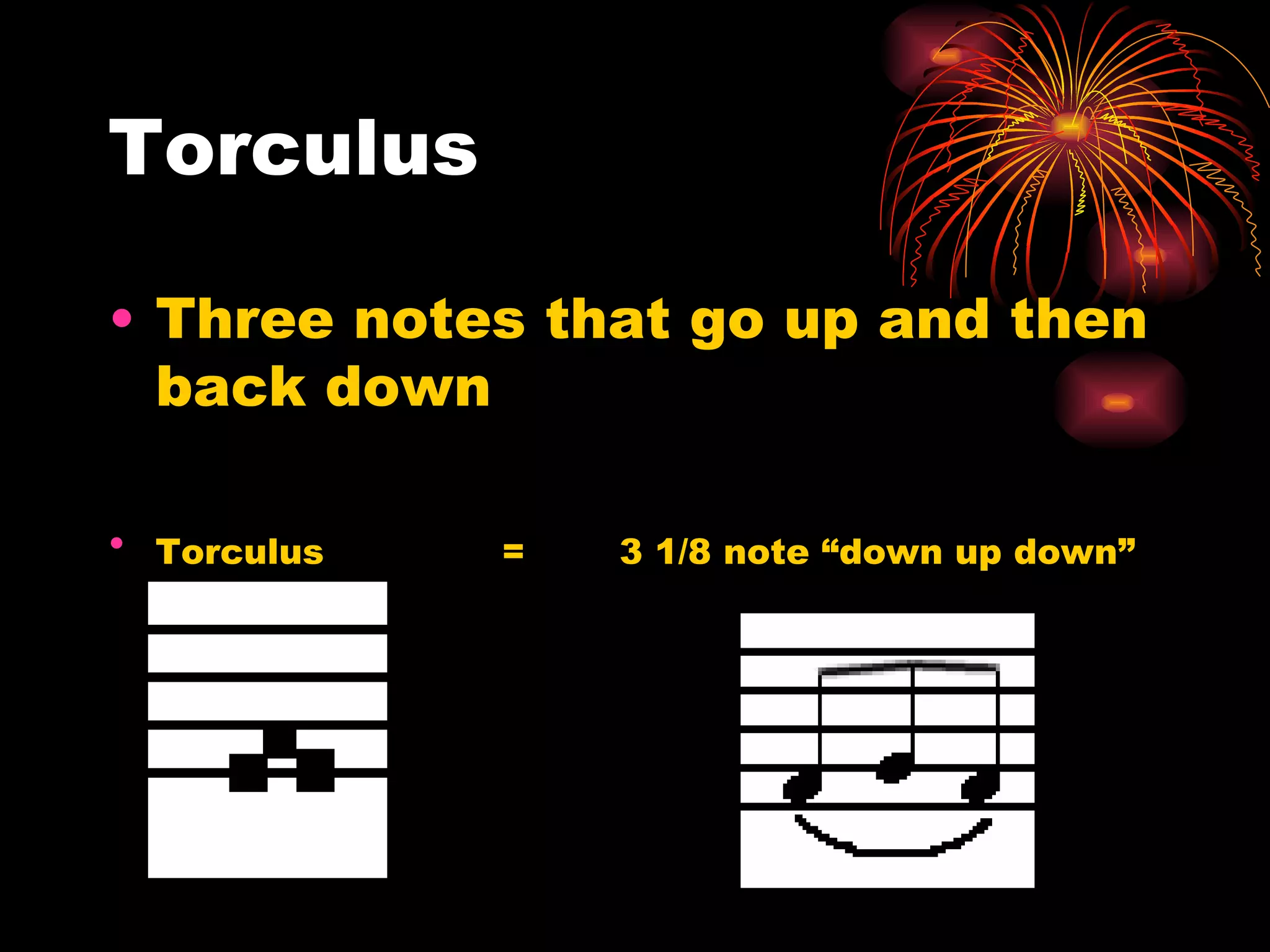
Torculus Three notes that go up and then back down  Torculus  =   3 1/8 note “down up down”
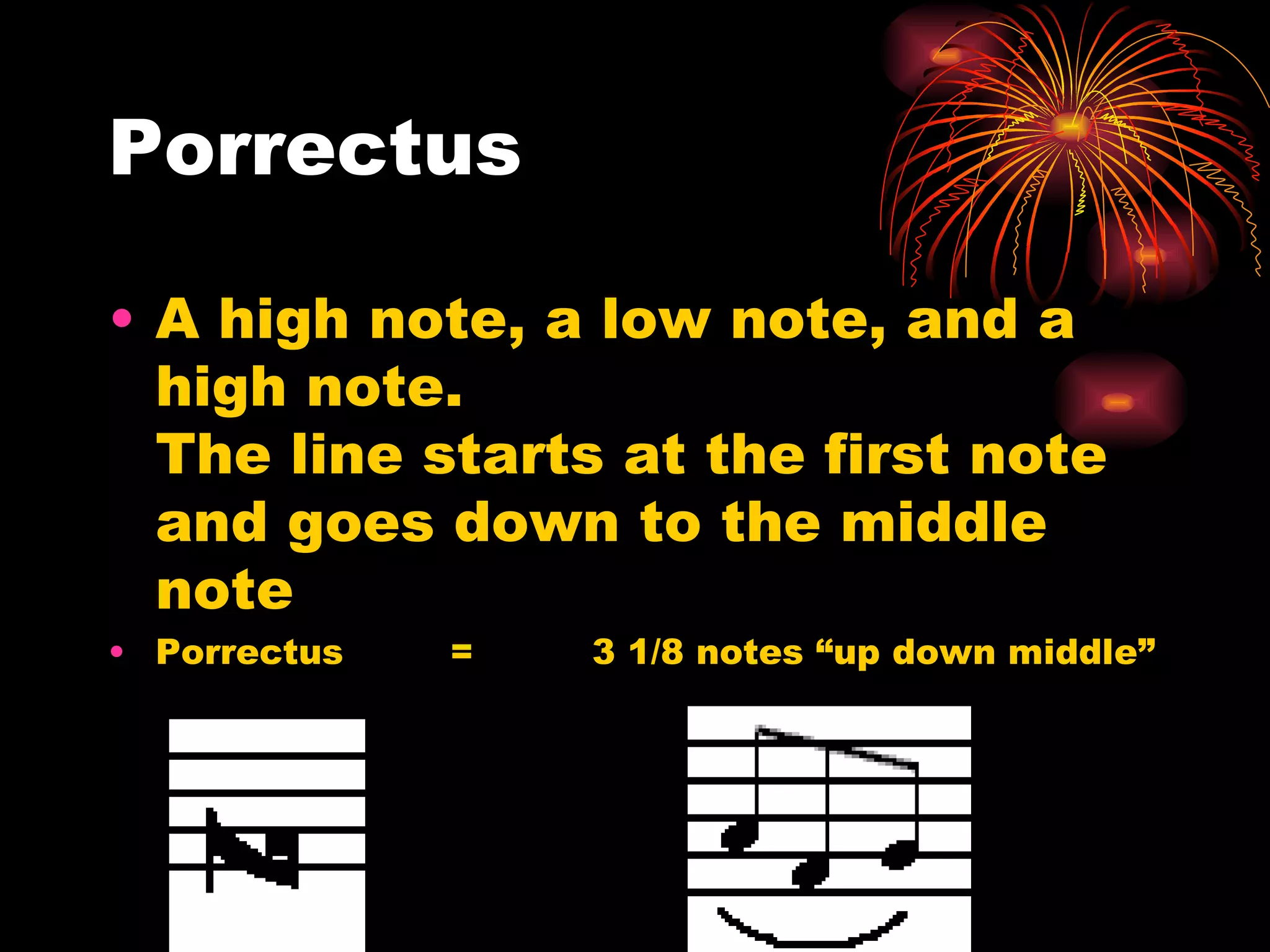
Porrectus A high note, a low note, and a high note.  The line starts at the first note and goes down to the middle note  Porrectus  =  3 1/8 notes “up down middle”
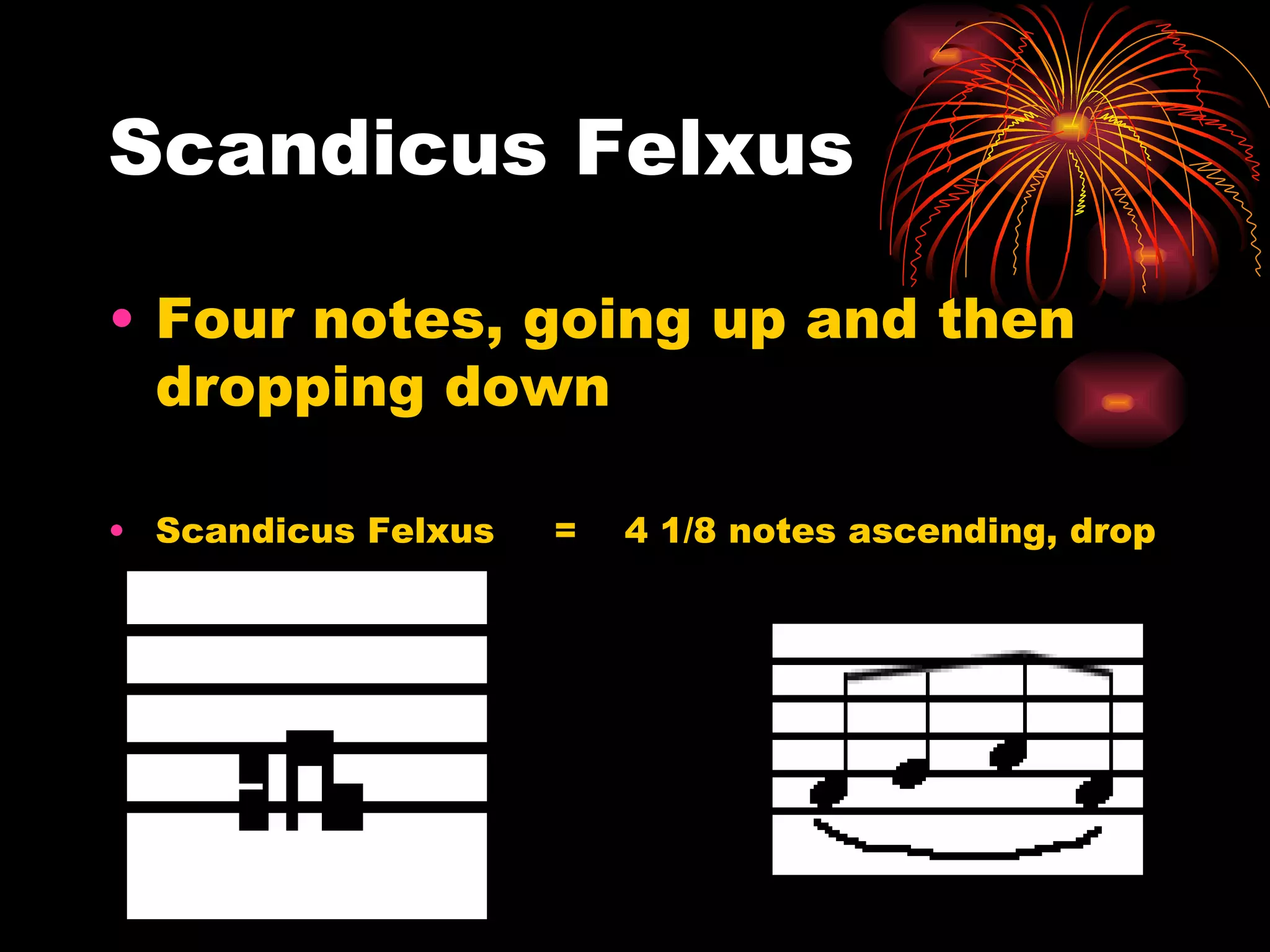
Scandicus Felxus Four notes, going up and then dropping down  Scandicus Felxus  =  4 1/8 notes ascending, drop
BUT WAIT… There's still More! Crying face! =..(
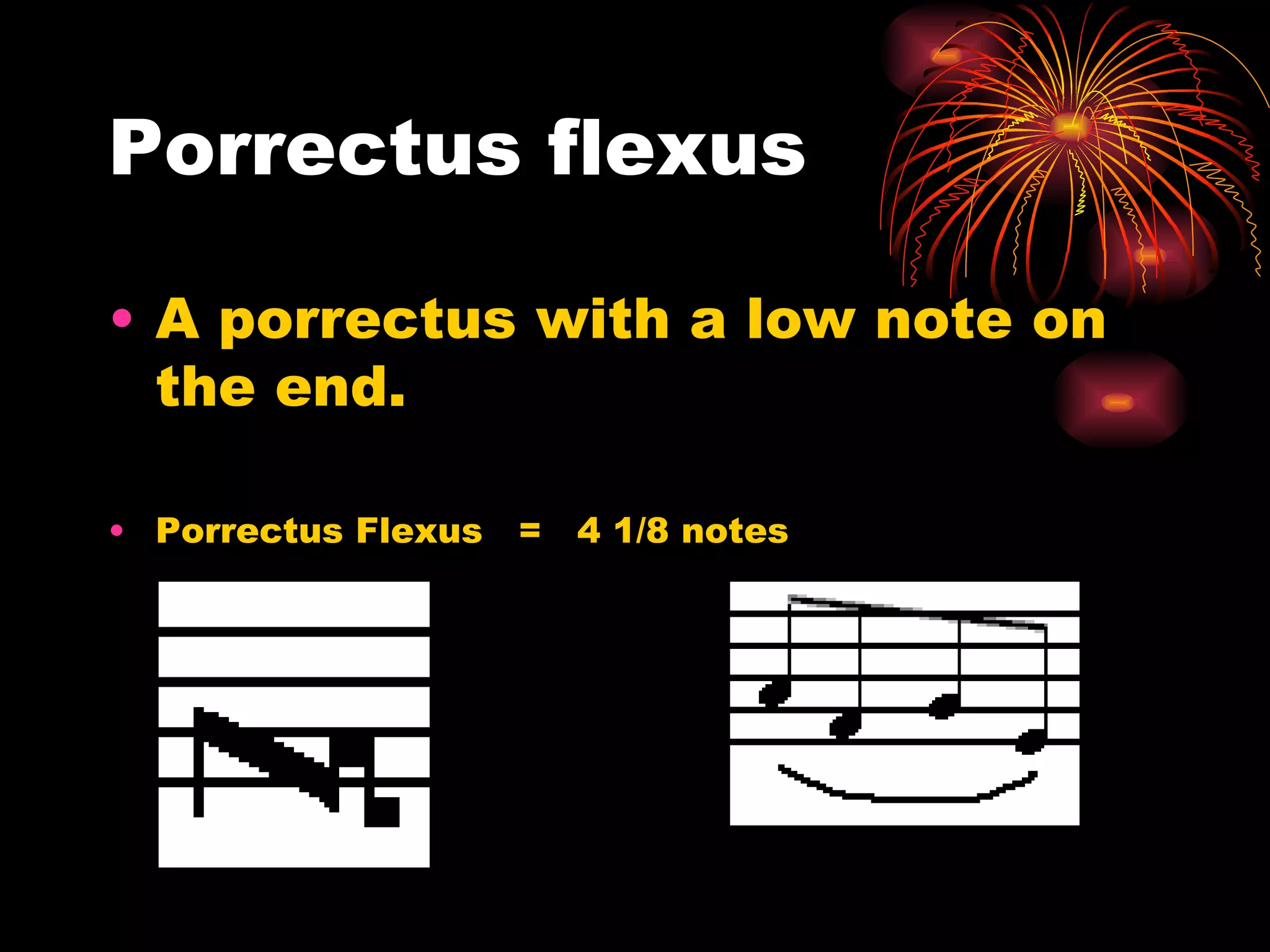
Porrectus flexus A porrectus with a low note on the end.  Porrectus Flexus  =  4 1/8 notes
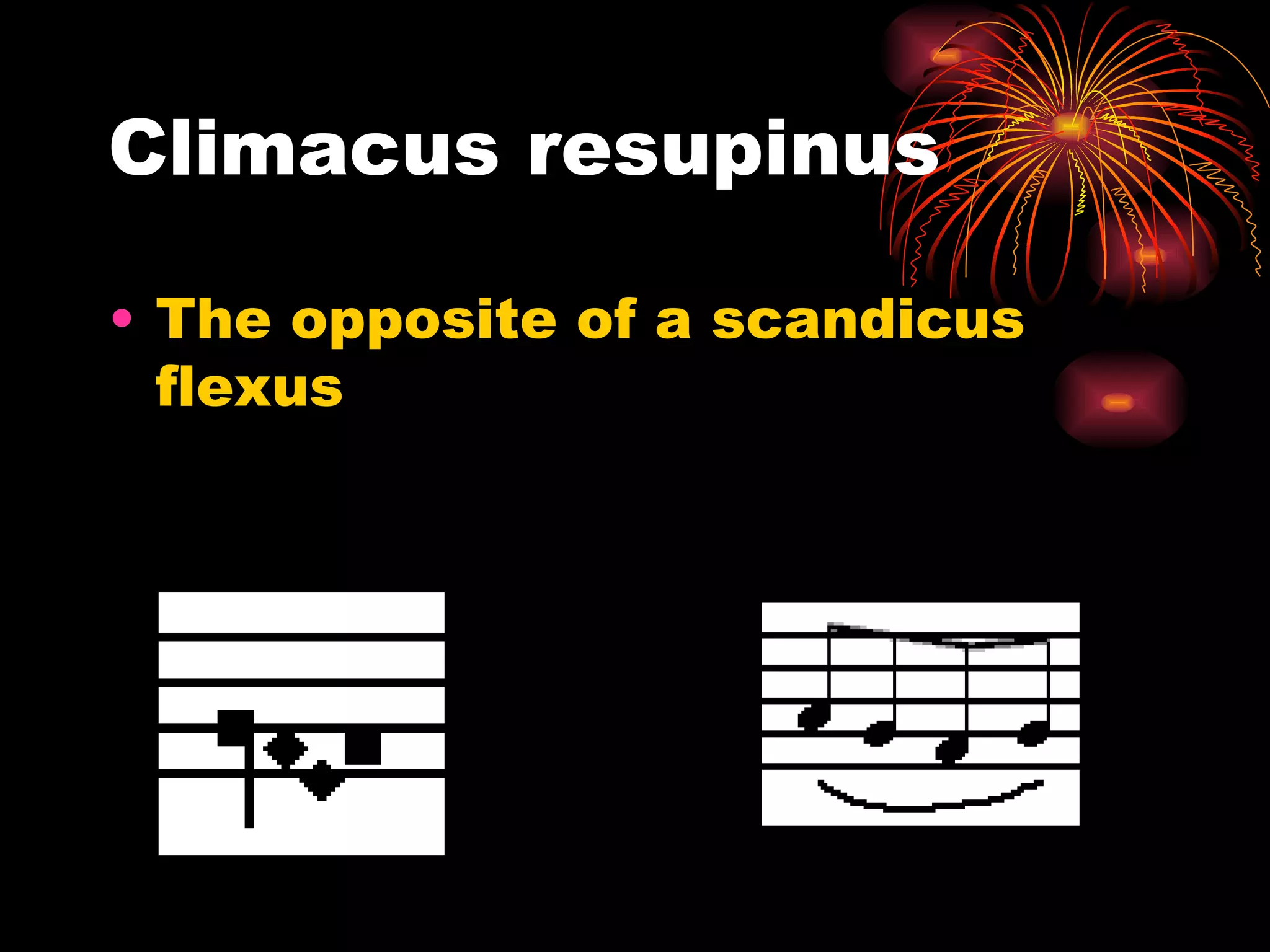
Climacus resupinus The opposite of a scandicus flexus
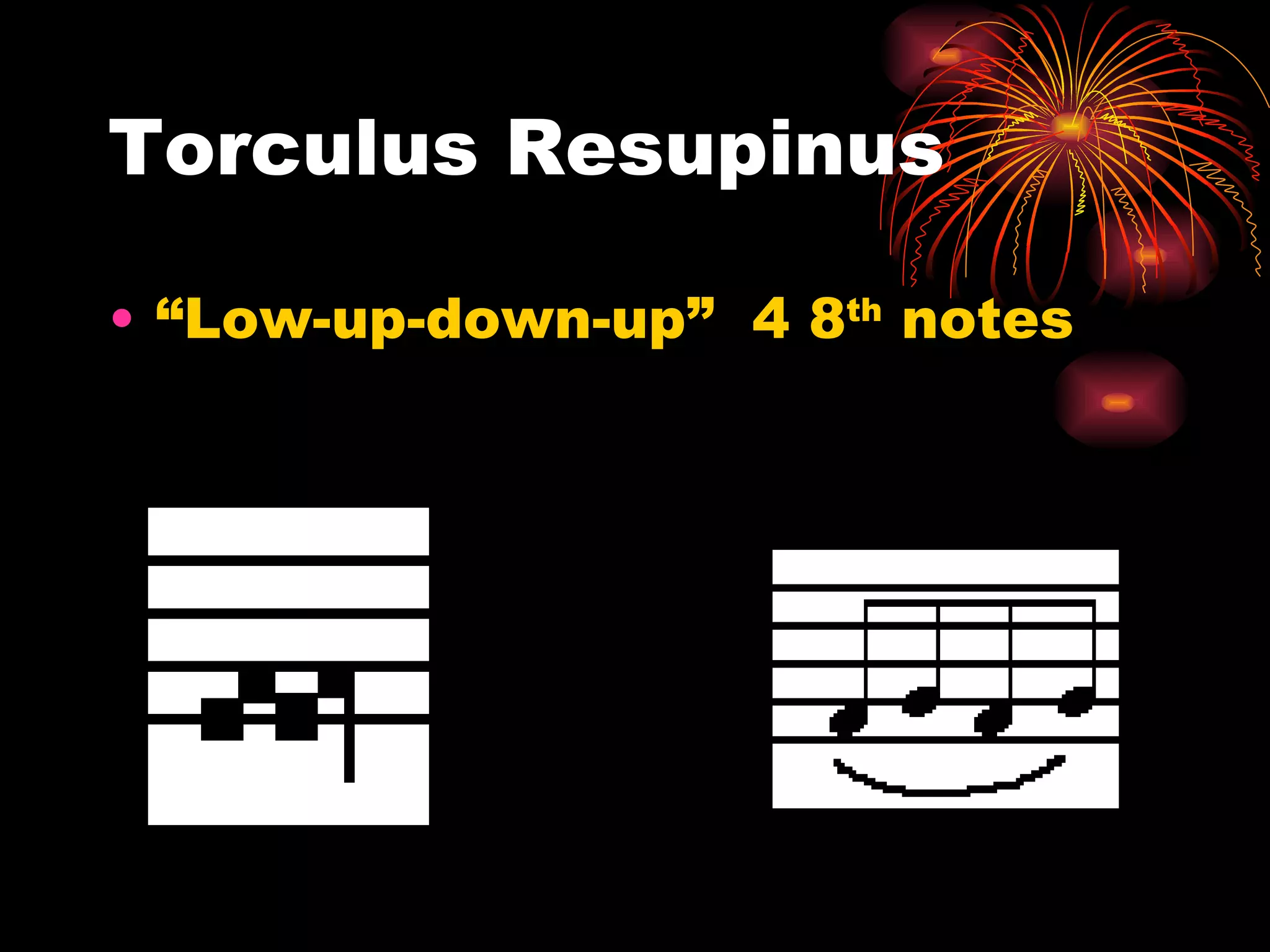
Torculus Resupinus “Low-up-down-up”  4 8 th  notes
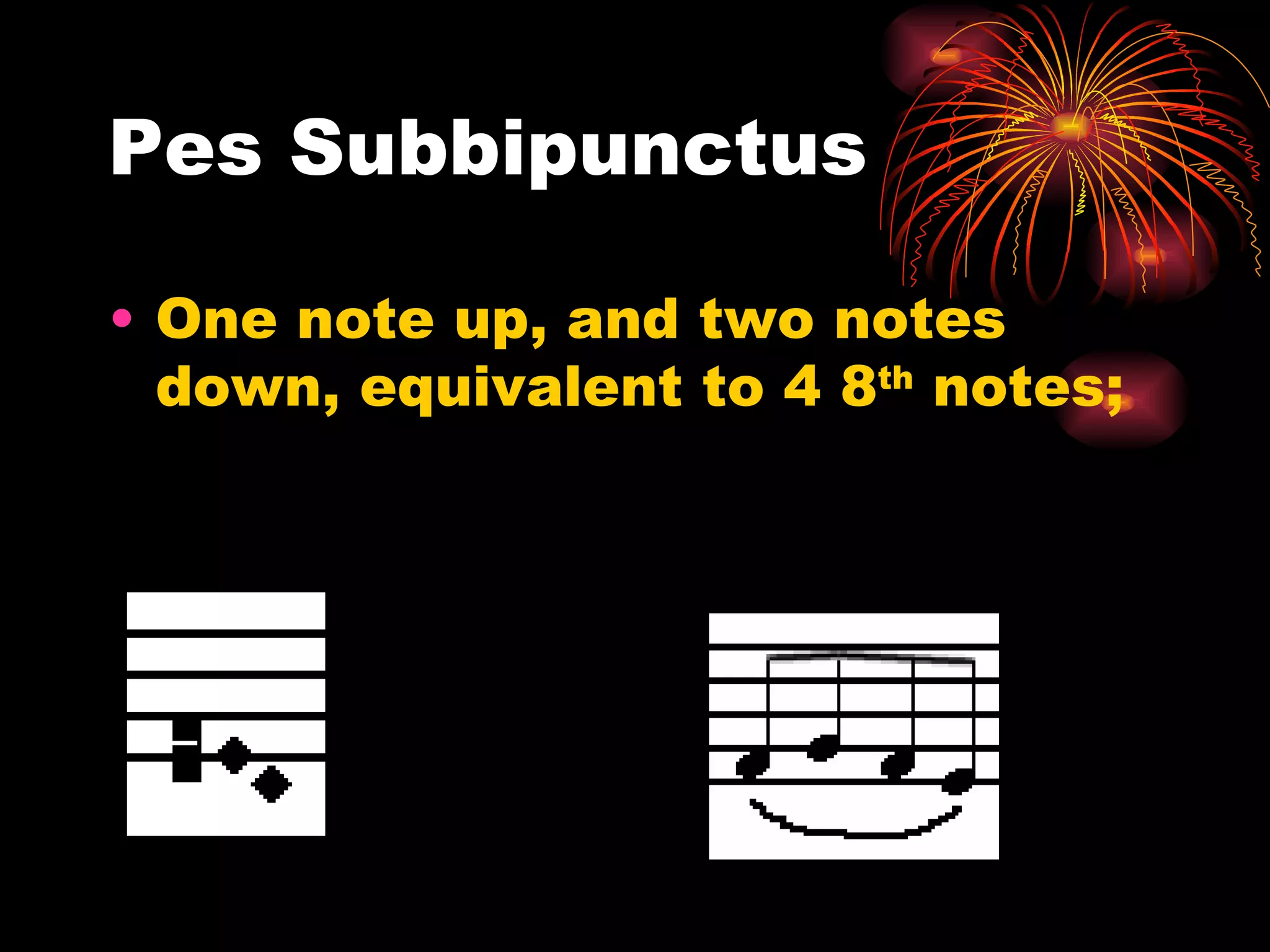
Pes Subbipunctus One note up, and two notes down, equivalent to 4 8 th  notes;
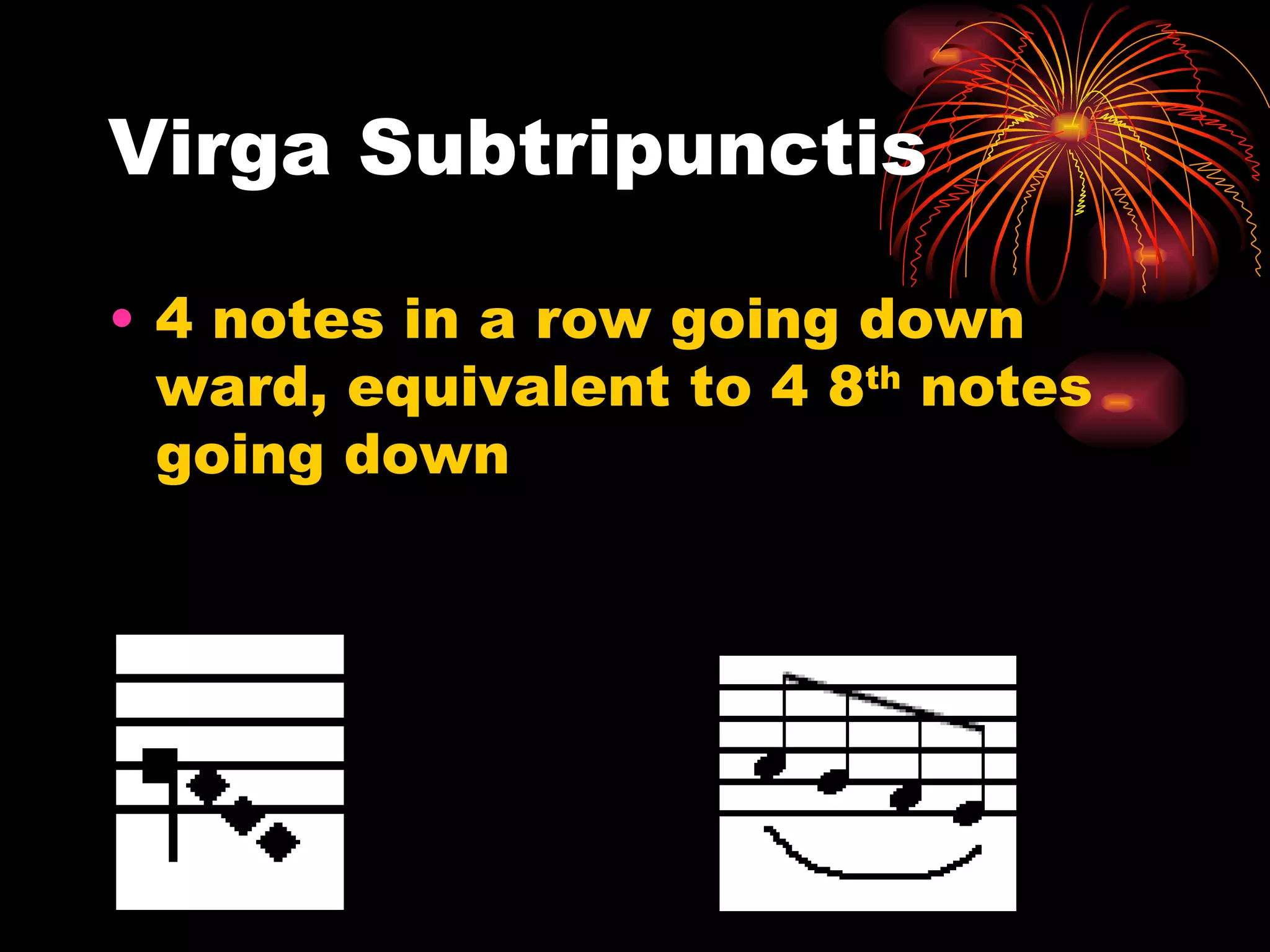
Virga Subtripunctis 4 notes in a row going down ward, equivalent to 4 8 th  notes going down
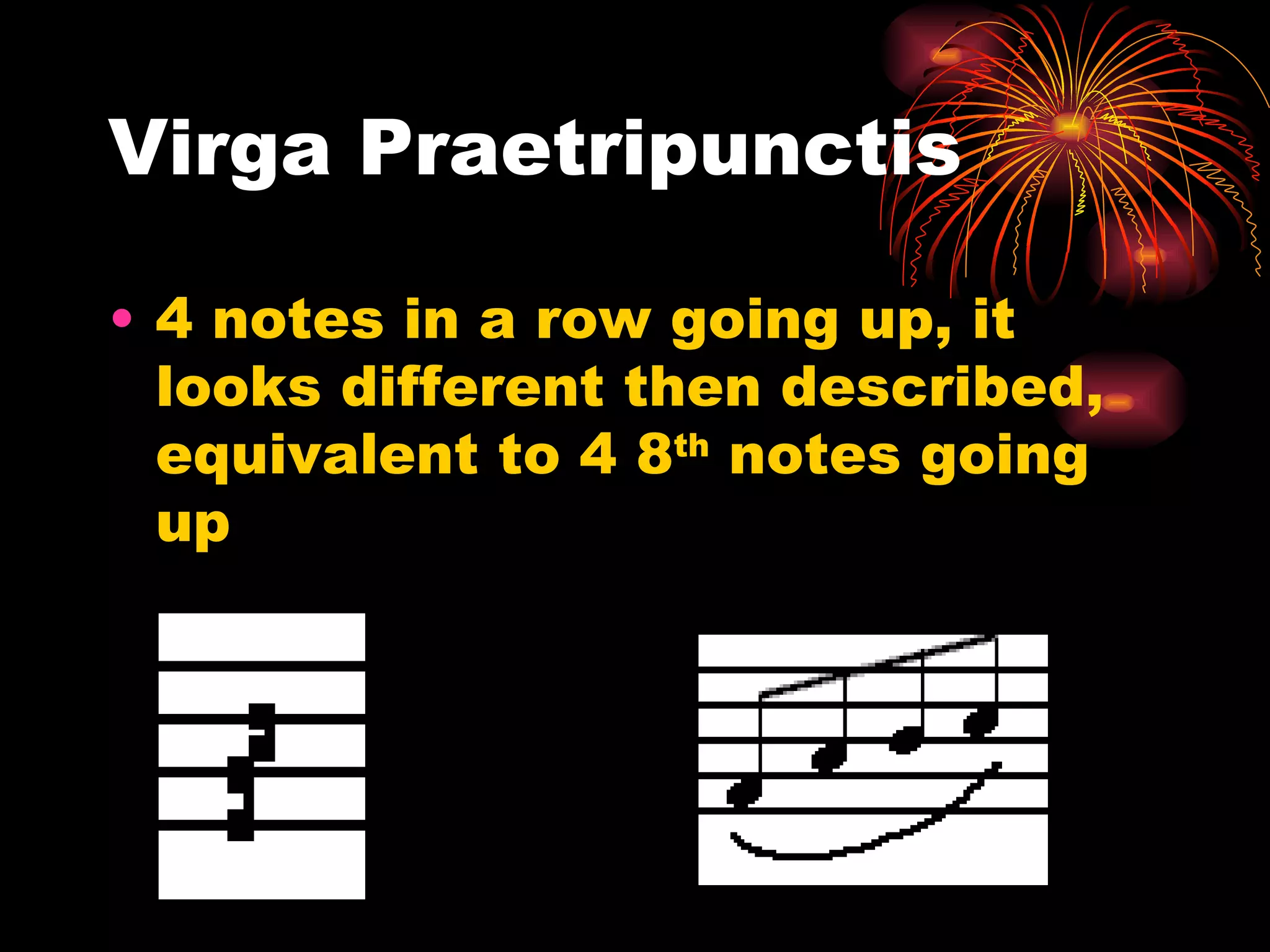
Virga Praetripunctis 4 notes in a row going up, it looks different then described, equivalent to 4 8 th  notes going up
BAD NEWS! What was just shown was only about ½ of the notes in the actual Gregorian Music!
GOOD NEWS! It would take far too long to show and explain all of them- Moving on!
Lyrics Lyrics for Gregorian chants were mainly written in Latin.
Lyrics Rhythm and notes were also predicted by the amount of syllables
What did they sound like? Gregorian chants are something that are used at church and temple.
BUT WAIT! What if you don’t go to church or temple or any religious ceremonies?
Well.. To describe it to any person in general it simply sounds like chanting, a long continuous  chain of chanting in one specific Key.
Who was the inventor of it? Well its hard  to really say who  Was the specific Inventor. What is known is that it was mainly a  group of catholic  priests who started  to use it instead of saying prayers in speech, they could chant it chorally.
What Keys were they written in? These chants were written in all 8 keys of the musical scale
Those keys Are: The Key of  C,F,G : a relatively happy key used tin generally happy/ holiday chants. These keys were more common  over all in church ceremonies and modern day
The Minor Keys The keys of  D,E, and A : all minor keys that are more commonly used in funerals today or in some video games. The most common minor keyed song that I guarantee almost all of you know, is the original Halo Theme Song
Aren't We  Missing  Something? Now you may have  noticed  (if u are a music wizz)  I neglected to mention one specific key.  That key was the key of B
The Key of B Gregorian chants  back in the days  of old were  NEVER written in the  key of B for  many  reasons
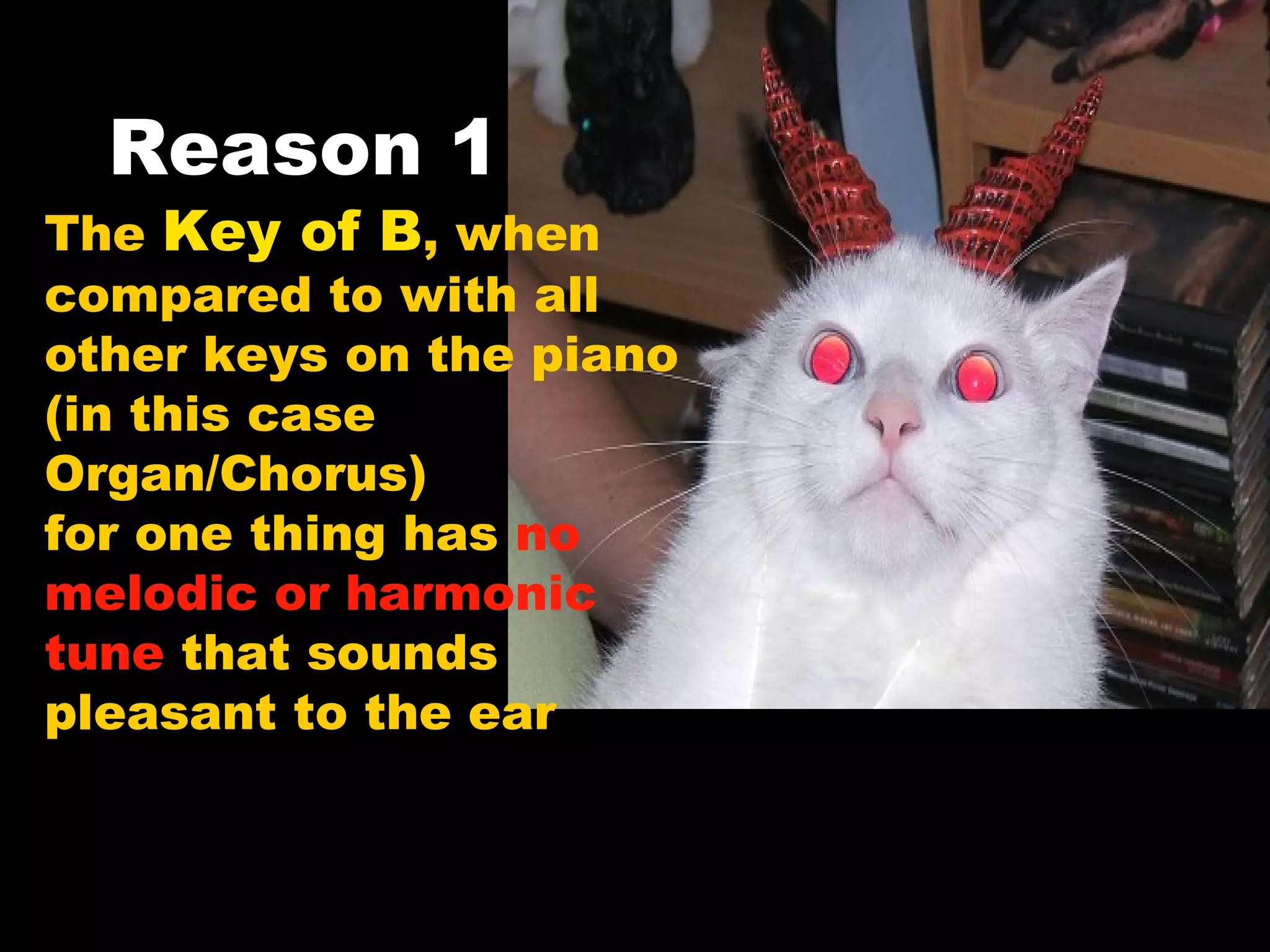
Reason 1 The  Key of B , when  compared to with all  other keys on the piano (in this case  Organ/Chorus)  for one thing has  no  melodic or harmonic  tune  that sounds  pleasant to the ear
Reason 2 The key of B was  thought to be evil  and cursed and  was forbidden to  be written for  any   chant whether it  be for the Catholic  church or not
Reason 3 The Key of B  was thought to  be the key of the Devil  and  if played would  bring death or Curse all Mortals
 
FIN! Zzzzzzzzzzzz

Gregorian Chants

  • 1.
  • 2.
    What is aGregorian Chant? It was one of the earliest forms of music that set the bar for all modern day music.
  • 3.
    When was itinvented? Gregorian chants were used at their highest during the period knows as, “The Dark Ages”, so most chants are spiritual in nature and quite dark sounding.
  • 4.
    Design Gregorian chantswere the design for all modern day music accept for some noticeable differences in the bar staff and note structure.
  • 5.
    Design Gregorian chantswere designed on a 4 bar staff which is different from our modern day music staff. The Gregorian Notes also looked quite different from modern day notes.
  • 6.
    Notes Unlike modernday notes, Gregorian chant notes were squares on a line that would either move up or down at a diagonal or vertical angle
  • 7.
    Notes Most noteswere generally tied or separate (All songs always started and ended on the same pitch.)
  • 8.
    Number Count Noteswere all given a separate number count, some notes counted from anywhere between 1-4 beats
  • 9.
    Punctum and VirgaThese are just a single note looking structure which is equivalent to modern day 8 th notes Punctum & Virga = 1/8 Note =
  • 10.
    Podatus When onenote is written above another, the bottom note is sung first and is equivalent to the modern day 8 th note tie Podatus = 1/8 Note Tie
  • 11.
    Clivis When thehigher note comes first, it is written like this Clivis = 1/8 note tie
  • 12.
    WHAT’S WITH THEWEIRD NAMES!? In early music and history everything was in LATIN! Confusing… Yes Irritating… Yes
  • 13.
    Scandicus Three ormore notes going upward Scandicus = Three 1/8 note tie
  • 14.
    Salicus Three ormore notes going upward, but the middle one has a vertical episema: that note is slightly lengthened. Salicus = 3 1/8 note (8 th half)
  • 15.
    Climacus Three ormore notes going downwards. Climacus = 3 1/8 notes descending
  • 16.
    Still more weirdnames… Om-nom-nom-nom-nom-nom-nom
  • 17.
    Torculus Three notesthat go up and then back down Torculus = 3 1/8 note “down up down”
  • 18.
    Porrectus A highnote, a low note, and a high note. The line starts at the first note and goes down to the middle note Porrectus = 3 1/8 notes “up down middle”
  • 19.
    Scandicus Felxus Fournotes, going up and then dropping down Scandicus Felxus = 4 1/8 notes ascending, drop
  • 20.
    BUT WAIT… There'sstill More! Crying face! =..(
  • 21.
    Porrectus flexus Aporrectus with a low note on the end. Porrectus Flexus = 4 1/8 notes
  • 22.
    Climacus resupinus Theopposite of a scandicus flexus
  • 23.
  • 24.
    Pes Subbipunctus Onenote up, and two notes down, equivalent to 4 8 th notes;
  • 25.
    Virga Subtripunctis 4notes in a row going down ward, equivalent to 4 8 th notes going down
  • 26.
    Virga Praetripunctis 4notes in a row going up, it looks different then described, equivalent to 4 8 th notes going up
  • 27.
    BAD NEWS! Whatwas just shown was only about ½ of the notes in the actual Gregorian Music!
  • 28.
    GOOD NEWS! Itwould take far too long to show and explain all of them- Moving on!
  • 29.
    Lyrics Lyrics forGregorian chants were mainly written in Latin.
  • 30.
    Lyrics Rhythm andnotes were also predicted by the amount of syllables
  • 31.
    What did theysound like? Gregorian chants are something that are used at church and temple.
  • 32.
    BUT WAIT! Whatif you don’t go to church or temple or any religious ceremonies?
  • 33.
    Well.. To describeit to any person in general it simply sounds like chanting, a long continuous chain of chanting in one specific Key.
  • 34.
    Who was theinventor of it? Well its hard to really say who Was the specific Inventor. What is known is that it was mainly a group of catholic priests who started to use it instead of saying prayers in speech, they could chant it chorally.
  • 35.
    What Keys werethey written in? These chants were written in all 8 keys of the musical scale
  • 36.
    Those keys Are:The Key of C,F,G : a relatively happy key used tin generally happy/ holiday chants. These keys were more common over all in church ceremonies and modern day
  • 37.
    The Minor KeysThe keys of D,E, and A : all minor keys that are more commonly used in funerals today or in some video games. The most common minor keyed song that I guarantee almost all of you know, is the original Halo Theme Song
  • 38.
    Aren't We Missing Something? Now you may have noticed (if u are a music wizz) I neglected to mention one specific key. That key was the key of B
  • 39.
    The Key ofB Gregorian chants back in the days of old were NEVER written in the key of B for many reasons
  • 40.
    Reason 1 The Key of B , when compared to with all other keys on the piano (in this case Organ/Chorus) for one thing has no melodic or harmonic tune that sounds pleasant to the ear
  • 41.
    Reason 2 Thekey of B was thought to be evil and cursed and was forbidden to be written for any chant whether it be for the Catholic church or not
  • 42.
    Reason 3 TheKey of B was thought to be the key of the Devil and if played would bring death or Curse all Mortals
  • 43.
  • 44.