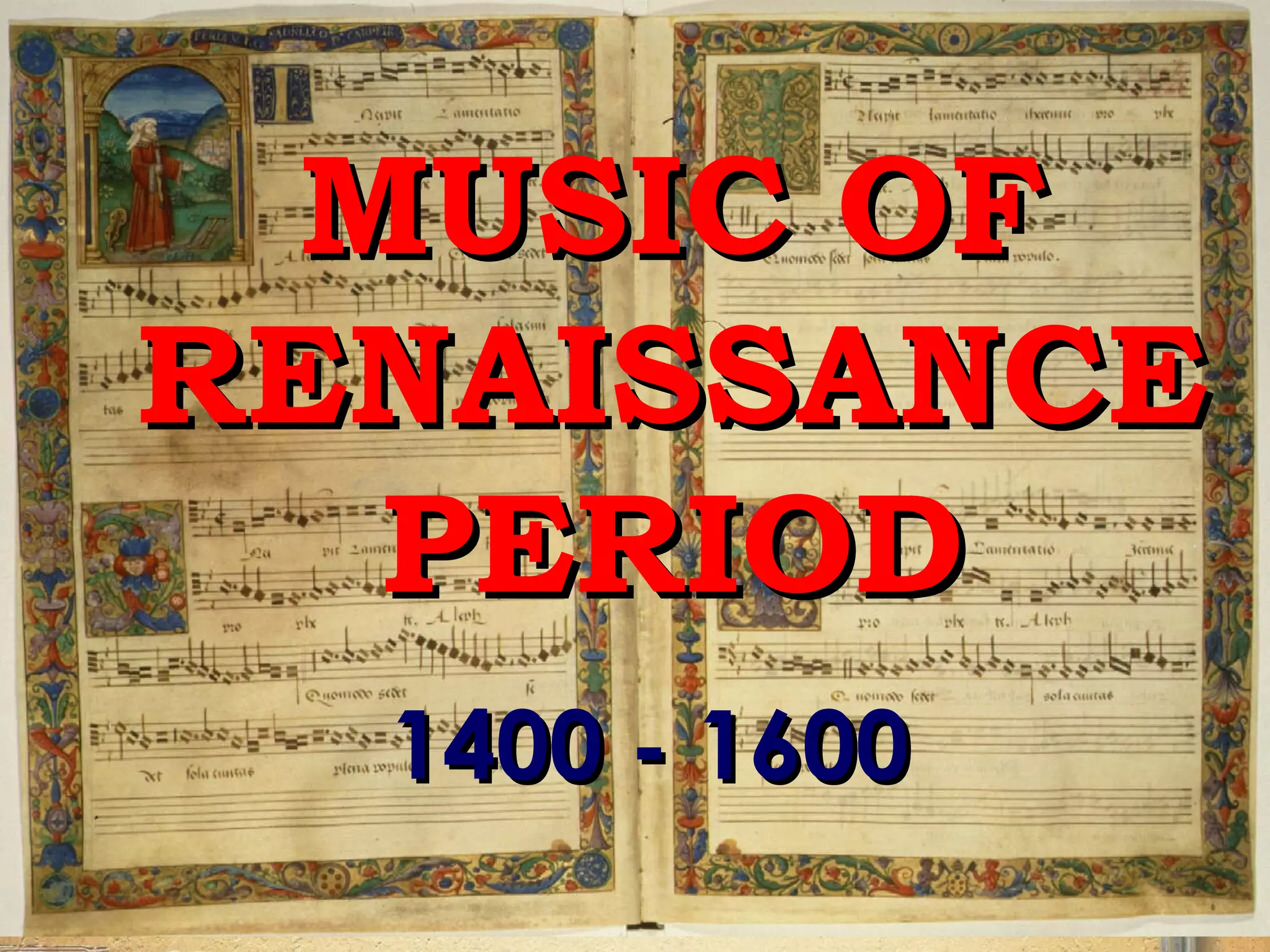
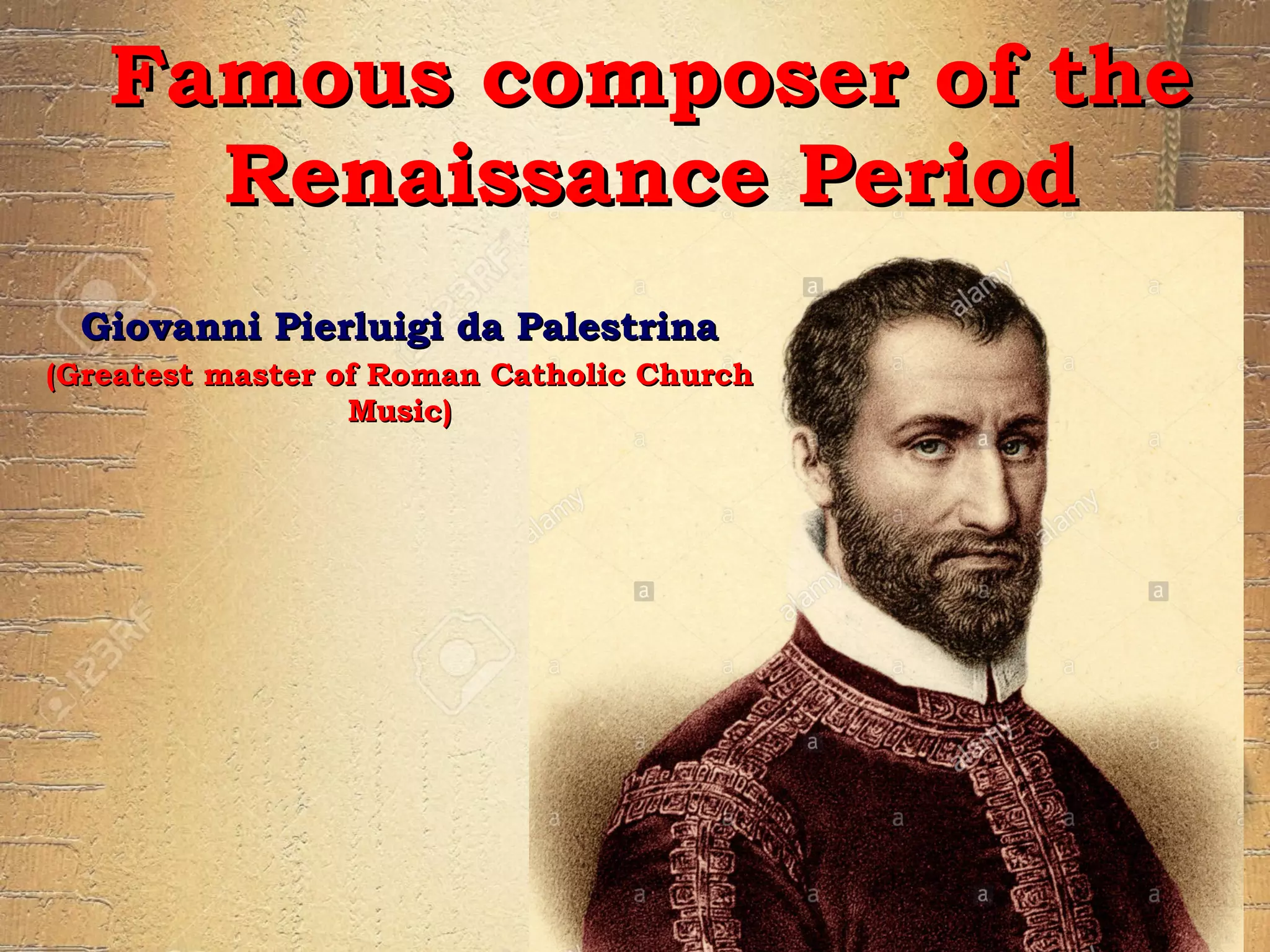
The document summarizes the music of the Renaissance period from 1400-1600 CE. It describes Renaissance music as becoming popular entertainment for amateurs and the educated. Secular music became more prominent than sacred music. Characteristics included polyphonic structure with imitation among voices in a flowing manner. Vocal music included the Mass, with sections like the Kyrie and Agnus Dei, as well as madrigals, which were secular polyphonic compositions sung in poetry. Famous Renaissance composers mentioned include Giovanni Pierluigi da Palestrina, known for church music, and Thomas Morley, known for secular compositions like "April is in my Mistress' Face."