Ângelo Batista nº2
Joana Monteiro nº7
Francisca Fonseca nº8
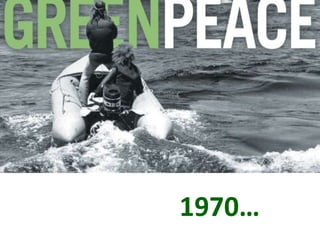
1970…
In 1970, the Don't Make A Wave Committee was established;
its sole objective was to stop a second nuclear weapons test at
Amchitka Island in the Aleutians;
Canadian ecologist Bill Darnell, one of the members of the committee, came
up with the dynamic combination of words to bind together the group's
concern for the planet and opposition to nuclear arms.
Bill said "Let's make it a Green Peace. And we all went
Ommmmmmmm." Jim Bohlen's son Paul, having trouble making the two
words fit on a button, linked them together into the committee's new
name: Greenpeace.
THE FIRST ACTION
1971…
On September 15th 1971 , 12 activists left Vancouver on an
old boat towards the Amchitka island, a small island next to
Alaska, to stop nuclear tests.
Several animal species were threatened by those tests.
The boat where they followed, called Greenpeace for that mission,
was stopped before reaching the island, but the activists managed to
attract international attention.
The following year the US stopped nuclear testing .
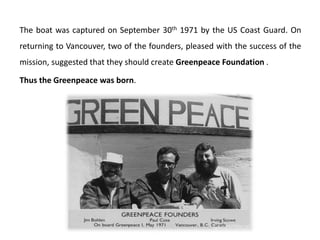
The boat was captured on September 30th 1971 by the US Coast Guard. On
returning to Vancouver, two of the founders, pleased with the success of the
mission, suggested that they should create Greenpeace Foundation .
Thus the Greenpeace was born.
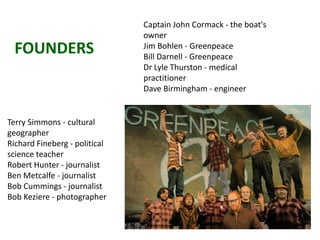
FOUNDERS
Captain John Cormack - the boat's
owner
Jim Bohlen - Greenpeace
Bill Darnell - Greenpeace
Dr Lyle Thurston - medical
practitioner
Dave Birmingham - engineer
Terry Simmons - cultural
geographer
Richard Fineberg - political
science teacher
Robert Hunter - journalist
Ben Metcalfe - journalist
Bob Cummings - journalist
Bob Keziere - photographer
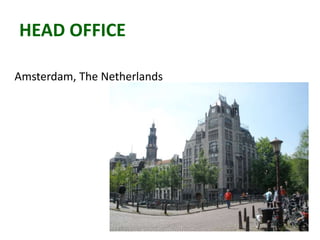
HEAD OFFICE
Amsterdam, The Netherlands
NATIONAL AND REGIONAL OFFICES GREENPEACE
Greenpeace Africa
Greenpeace Germany
Greenpeace Argentina
Greenpeace Australia Pacific
Greenpeace Belgium
Greenpeace Brazil
Greenpeace Canada
Greenpeace Chile
Greenpeace China
Greenpeace Spain
Greenpeace USA
Greenpeace Central and Eastern
Europe
Greenpeace France
Greenpeace Greece
Greenpeace Netherlands
Greenpeace India
Greenpeace Italy
Greenpeace Japan
Greenpeace Luxembourg
Greenpeace Mediterranean
Greenpeace Mexico
Greenpeace New Zealand
Greenpeace Nordic Countries
Greenpeace Czech Republic
Greenpeace UK
Greenpeace Russia
Greenpeace Southeast Asia
Greenpeace Switzerland
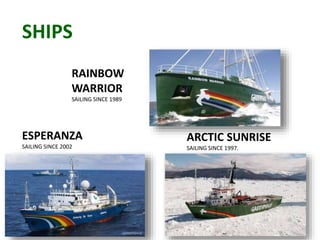
SHIPS
ARCTIC SUNRISE
SAILING SINCE 1997.
ESPERANZA
SAILING SINCE 2002
RAINBOW
WARRIOR
SAILING SINCE 1989
GREENPEACE BALLOON
INFLATABLES
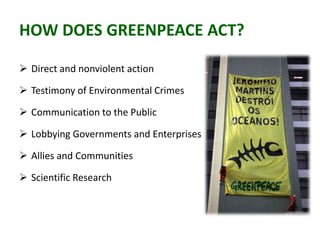
HOW DOES GREENPEACE ACT?
 Direct and nonviolent action
 Testimony of Environmental Crimes
 Communication to the Public
 Lobbying Governments and Enterprises
 Allies and Communities
 Scientific Research
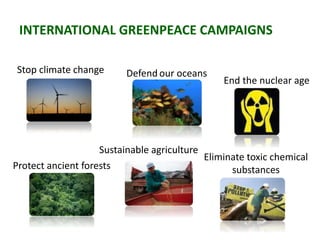
INTERNATIONAL GREENPEACE CAMPAIGNS
Stop climate change
Protect ancient forests
Defend our oceans
Sustainable agriculture
Eliminate toxic chemical
substances
End the nuclear age
DESIGN ELEMENTS, HISTORY AND
EVOLUTION OF GREENPEACE LOGO
Shape and Colors of the Greenpeace Logo
The Greenpeace logo consists of a simple wordmark that
features the organization’s name in a playful and engaging way,
reflecting its eco-friendly philosophy and spirit. The green and
white colors add freshness and appealing to the overall design,
while symbolizing eco-friendliness, peace, prosperity, health,
balance and stability.
CONTACTS
Greenpeace International
Ottho Heldringstraat 5
1066 AZ Amsterdam
The Netherlands
Phone: +31 (0) 20 718 20 00
Fax: +31 (0) 20 718 20 02
Email: supporter.services.int@greenpeace.org
WEBGRAFIA
• http://www.greenpeace.org/portugal/pt/
• http://pt.wikipedia.org/wiki/Greenpeace

GREENPEACE

  • 1.
    Ângelo Batista nº2 JoanaMonteiro nº7 Francisca Fonseca nº8
  • 2.
  • 3.
    In 1970, theDon't Make A Wave Committee was established; its sole objective was to stop a second nuclear weapons test at Amchitka Island in the Aleutians;
  • 4.
    Canadian ecologist BillDarnell, one of the members of the committee, came up with the dynamic combination of words to bind together the group's concern for the planet and opposition to nuclear arms. Bill said "Let's make it a Green Peace. And we all went Ommmmmmmm." Jim Bohlen's son Paul, having trouble making the two words fit on a button, linked them together into the committee's new name: Greenpeace.
  • 5.
  • 6.
    On September 15th1971 , 12 activists left Vancouver on an old boat towards the Amchitka island, a small island next to Alaska, to stop nuclear tests.
  • 7.
    Several animal specieswere threatened by those tests. The boat where they followed, called Greenpeace for that mission, was stopped before reaching the island, but the activists managed to attract international attention. The following year the US stopped nuclear testing .
  • 8.
    The boat wascaptured on September 30th 1971 by the US Coast Guard. On returning to Vancouver, two of the founders, pleased with the success of the mission, suggested that they should create Greenpeace Foundation . Thus the Greenpeace was born.
  • 9.
    FOUNDERS Captain John Cormack- the boat's owner Jim Bohlen - Greenpeace Bill Darnell - Greenpeace Dr Lyle Thurston - medical practitioner Dave Birmingham - engineer Terry Simmons - cultural geographer Richard Fineberg - political science teacher Robert Hunter - journalist Ben Metcalfe - journalist Bob Cummings - journalist Bob Keziere - photographer
  • 10.
  • 11.
    NATIONAL AND REGIONALOFFICES GREENPEACE Greenpeace Africa Greenpeace Germany Greenpeace Argentina Greenpeace Australia Pacific Greenpeace Belgium Greenpeace Brazil Greenpeace Canada Greenpeace Chile Greenpeace China Greenpeace Spain Greenpeace USA Greenpeace Central and Eastern Europe Greenpeace France Greenpeace Greece Greenpeace Netherlands Greenpeace India Greenpeace Italy Greenpeace Japan Greenpeace Luxembourg Greenpeace Mediterranean Greenpeace Mexico Greenpeace New Zealand Greenpeace Nordic Countries Greenpeace Czech Republic Greenpeace UK Greenpeace Russia Greenpeace Southeast Asia Greenpeace Switzerland
  • 12.
    SHIPS ARCTIC SUNRISE SAILING SINCE1997. ESPERANZA SAILING SINCE 2002 RAINBOW WARRIOR SAILING SINCE 1989
  • 13.
  • 14.
    HOW DOES GREENPEACEACT?  Direct and nonviolent action  Testimony of Environmental Crimes  Communication to the Public  Lobbying Governments and Enterprises  Allies and Communities  Scientific Research
  • 15.
    INTERNATIONAL GREENPEACE CAMPAIGNS Stopclimate change Protect ancient forests Defend our oceans Sustainable agriculture Eliminate toxic chemical substances End the nuclear age
  • 16.
    DESIGN ELEMENTS, HISTORYAND EVOLUTION OF GREENPEACE LOGO Shape and Colors of the Greenpeace Logo The Greenpeace logo consists of a simple wordmark that features the organization’s name in a playful and engaging way, reflecting its eco-friendly philosophy and spirit. The green and white colors add freshness and appealing to the overall design, while symbolizing eco-friendliness, peace, prosperity, health, balance and stability.
  • 17.
    CONTACTS Greenpeace International Ottho Heldringstraat5 1066 AZ Amsterdam The Netherlands Phone: +31 (0) 20 718 20 00 Fax: +31 (0) 20 718 20 02 Email: supporter.services.int@greenpeace.org
  • 18.