z
 Presented by: Marchie Camillo
z
• Global warming is a reality. It
is a growing problem upsetting
governments and society in
general and is endangering
health and the environment.
One of the ways to fight against
global warming is by means of
the so-called green
technologies. Engineers and
scientists around the world are
developing technological
solutions aimed at reducing
and eliminating everything that
causes global warming and,
therefore, climate change.
Please find below 10 examples
of green technology that are
environmentally-friendly and
widely used nowadays:
z
10 Examples of Green Technology
z
1. Emissions treatment
 The management of exhaust air
generated during industrial
production processes can
significantly reduce the
greenhouse effect. Methane and
carbon dioxide are substances that
harm the environment. Industries
such as the chemical sector, the
petrochemical sector or the
pharmaceutical sector must
eliminate their polluting emissions
so as not to cause serious
environmental damage. Check here
several technology solutions to
eliminate emissions.
z
2. Waste-to-Energy
 The generation of energy from
waste, also called Waste-to-Energy,
is technology that generates energy
from waste. This technology is
sometimes abbreviated as “W2E”
as well. There are several
technologies to achieve energy
from waste, for example
incineration or pyrolysis. Check
here several waste treatment
solutions that generate energy in
the form of steam, hot water or
electricity. Production plants can
use this extra energy for internal
processes, which has obvious
economic and environmental
advantages.
z
3. Recycling and waste management
 The increase in household and
industrial waste has been
disproportionate. Managing
solid waste is the commitment
of companies as well as
individuals. Outstanding
technologies such as smart
containers, automated food
waste tracking systems and
automated optical scanning
technologies can help sort
mixed plastics by separating
them from others.
z
4. Biofuels
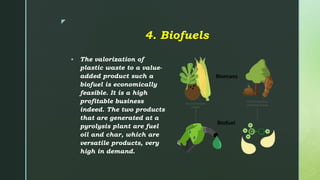
 The valorization of
plastic waste to a value-
added product such a
biofuel is economically
feasible. It is a high
profitable business
indeed. The two products
that are generated at a
pyrolysis plant are fuel
oil and char, which are
versatile products, very
high in demand.
z 5. Wastewater treatment
 In this field, there are few
technological
developments, but the
existing ones are
important. Key
developments include
membrane filtration,
microbial fuel cells,
nanotechnology,
development of biological
treatments, etc. All these
processes are used to make
water drinkable or
significantly reduce the
presence of pollutants from
what is discharged into the
sea and rivers.
z
6. Solar energy
 Solar energy is energy from the
sun. This technology aims to
reduce dependence on energy from
hydrocarbons and fossil fuels and
promote greener solutions. Solar
energy systems are the renewable
energy systems that have been
worked on and researched the
most. Examples of solar energy
conversion technologies are high
vacuum tube for hot water,
polypropylene collector for hot
water, photovoltaic collector to
produce electricity and solar
streetlamps, among others.
z
7. Wave and tidal energy
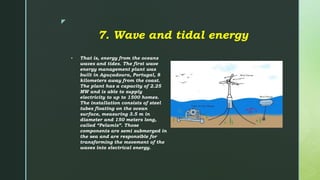
 That is, energy from the oceans
waves and tides. The first wave
energy management plant was
built in Aguçadoura, Portugal, 8
kilometers away from the coast.
The plant has a capacity of 2.25
MW and is able to supply
electricity to up to 1500 homes.
The installation consists of steel
tubes floating on the ocean
surface, measuring 3.5 m in
diameter and 150 meters long,
called “Pelamis”. Those
components are semi submerged in
the sea and are responsible for
transforming the movement of the
waves into electrical energy.
z
 Known as ecological
vehicles, they do not emit
pollutants into the
atmosphere. They are called
“eco” because their use does
not negatively influence the
environment and contributes
to reducing the presence of
polluting gases in the
atmosphere. Those are mainly
carbon dioxide (CO2), carbon
monoxide (CO), nitrogen oxide
(NOx), unburned hydrocarbons
(HC) and compounds of lead
and Sulphur dioxide.
8. Eco Vehicles
z
9. Smart buildings
 Smart buildings or self-
sufficient buildings are
those constructions that are
able to function by
themselves by generating
energy without the need of
an external
contribution. One way to
achieve greater production
with the same surface of
photovoltaic panels is to
incorporate intelligent solar
tracking systems, thus
obtaining an optimal use of
radiation.
z
10. Vertical gardens and farms
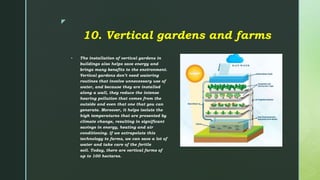
 The installation of vertical gardens in
buildings also helps save energy and
brings many benefits to the environment.
Vertical gardens don’t need watering
routines that involve unnecessary use of
water, and because they are installed
along a wall, they reduce the intense
hearing pollution that comes from the
outside and even that one that you can
generate. Moreover, it helps isolate the
high temperatures that are presented by
climate change, resulting in significant
savings in energy, heating and air
conditioning. If we extrapolate this
technology to farms, we can save a lot of
water and take care of the fertile
soil. Today, there are vertical farms of
up to 100 hectares.
z
 Those were 10 examples of green
technology very much in demand
nowadays. There are many
technological advances for industries
and households nowadays, but still
much remains to be done in the field
of implementing measures to reduce
pollution and waste worldwide.
z
The End

Green Technology

  • 1.
    z  Presented by:Marchie Camillo
  • 2.
    z • Global warmingis a reality. It is a growing problem upsetting governments and society in general and is endangering health and the environment. One of the ways to fight against global warming is by means of the so-called green technologies. Engineers and scientists around the world are developing technological solutions aimed at reducing and eliminating everything that causes global warming and, therefore, climate change. Please find below 10 examples of green technology that are environmentally-friendly and widely used nowadays:
  • 3.
    z 10 Examples ofGreen Technology
  • 4.
    z 1. Emissions treatment The management of exhaust air generated during industrial production processes can significantly reduce the greenhouse effect. Methane and carbon dioxide are substances that harm the environment. Industries such as the chemical sector, the petrochemical sector or the pharmaceutical sector must eliminate their polluting emissions so as not to cause serious environmental damage. Check here several technology solutions to eliminate emissions.
  • 5.
    z 2. Waste-to-Energy  Thegeneration of energy from waste, also called Waste-to-Energy, is technology that generates energy from waste. This technology is sometimes abbreviated as “W2E” as well. There are several technologies to achieve energy from waste, for example incineration or pyrolysis. Check here several waste treatment solutions that generate energy in the form of steam, hot water or electricity. Production plants can use this extra energy for internal processes, which has obvious economic and environmental advantages.
  • 6.
    z 3. Recycling andwaste management  The increase in household and industrial waste has been disproportionate. Managing solid waste is the commitment of companies as well as individuals. Outstanding technologies such as smart containers, automated food waste tracking systems and automated optical scanning technologies can help sort mixed plastics by separating them from others.
  • 7.
    z 4. Biofuels  Thevalorization of plastic waste to a value- added product such a biofuel is economically feasible. It is a high profitable business indeed. The two products that are generated at a pyrolysis plant are fuel oil and char, which are versatile products, very high in demand.
  • 8.
    z 5. Wastewatertreatment  In this field, there are few technological developments, but the existing ones are important. Key developments include membrane filtration, microbial fuel cells, nanotechnology, development of biological treatments, etc. All these processes are used to make water drinkable or significantly reduce the presence of pollutants from what is discharged into the sea and rivers.
  • 9.
    z 6. Solar energy Solar energy is energy from the sun. This technology aims to reduce dependence on energy from hydrocarbons and fossil fuels and promote greener solutions. Solar energy systems are the renewable energy systems that have been worked on and researched the most. Examples of solar energy conversion technologies are high vacuum tube for hot water, polypropylene collector for hot water, photovoltaic collector to produce electricity and solar streetlamps, among others.
  • 10.
    z 7. Wave andtidal energy  That is, energy from the oceans waves and tides. The first wave energy management plant was built in Aguçadoura, Portugal, 8 kilometers away from the coast. The plant has a capacity of 2.25 MW and is able to supply electricity to up to 1500 homes. The installation consists of steel tubes floating on the ocean surface, measuring 3.5 m in diameter and 150 meters long, called “Pelamis”. Those components are semi submerged in the sea and are responsible for transforming the movement of the waves into electrical energy.
  • 11.
    z  Known asecological vehicles, they do not emit pollutants into the atmosphere. They are called “eco” because their use does not negatively influence the environment and contributes to reducing the presence of polluting gases in the atmosphere. Those are mainly carbon dioxide (CO2), carbon monoxide (CO), nitrogen oxide (NOx), unburned hydrocarbons (HC) and compounds of lead and Sulphur dioxide. 8. Eco Vehicles
  • 12.
    z 9. Smart buildings Smart buildings or self- sufficient buildings are those constructions that are able to function by themselves by generating energy without the need of an external contribution. One way to achieve greater production with the same surface of photovoltaic panels is to incorporate intelligent solar tracking systems, thus obtaining an optimal use of radiation.
  • 13.
    z 10. Vertical gardensand farms  The installation of vertical gardens in buildings also helps save energy and brings many benefits to the environment. Vertical gardens don’t need watering routines that involve unnecessary use of water, and because they are installed along a wall, they reduce the intense hearing pollution that comes from the outside and even that one that you can generate. Moreover, it helps isolate the high temperatures that are presented by climate change, resulting in significant savings in energy, heating and air conditioning. If we extrapolate this technology to farms, we can save a lot of water and take care of the fertile soil. Today, there are vertical farms of up to 100 hectares.
  • 14.
    z  Those were10 examples of green technology very much in demand nowadays. There are many technological advances for industries and households nowadays, but still much remains to be done in the field of implementing measures to reduce pollution and waste worldwide.
  • 15.