The greenhouse effect is a
process by which thermal
radiation from a planetary
surface is absorbed by
atmospheric greenhouse gas
es, and is re-radiated in all
directions.
What is a Green House Effect?
The major
natural greenhouse
gases are water vapor,
which causesabout 36-70%
of the greenhouse effect on
Earth (not including clouds);
carbon dioxide CO2,
which causes 9-26%;
methane, which causes 4-
9%, and ozone,
which causes 3-7%
What is the reason for Green
House Effect?
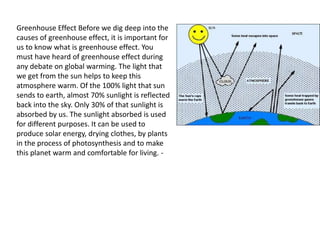
Greenhouse Effect Before we dig deep into the
causes of greenhouse effect, it is important for
us to know what is greenhouse effect. You
must have heard of greenhouse effect during
any debate on global warming. The light that
we get from the sun helps to keep this
atmosphere warm. Of the 100% light that sun
sends to earth, almost 70% sunlight is reflected
back into the sky. Only 30% of that sunlight is
absorbed by us. The sunlight absorbed is used
for different purposes. It can be used to
produce solar energy, drying clothes, by plants
in the process of photosynthesis and to make
this planet warm and comfortable for living. -
The 70% of the light that is reflected back into the space, also known as
infrared radiations, are absorbed by greenhouse gases before they are lost
to space. The absorption of these lights by greenhouse gases make it
possible to keep this planet warm for living beings as these gases acts like a
mirror and reflect some of the heat back to earth. Without Greenhouse
effect, the temperature of this planet would be lesser by 30 degree celsius
and this would be too cold for us to survive.
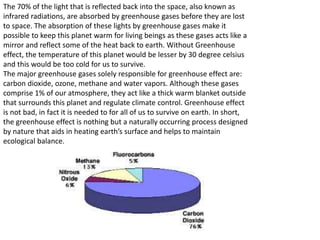
The major greenhouse gases solely responsible for greenhouse effect are:
carbon dioxide, ozone, methane and water vapors. Although these gases
comprise 1% of our atmosphere, they act like a thick warm blanket outside
that surrounds this planet and regulate climate control. Greenhouse effect
is not bad, in fact it is needed to for all of us to survive on earth. In short,
the greenhouse effect is nothing but a naturally occurring process designed
by nature that aids in heating earth’s surface and helps to maintain
ecological balance.
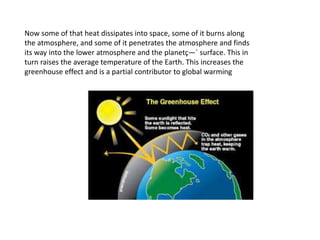
Now some of that heat dissipates into space, some of it burns along
the atmosphere, and some of it penetrates the atmosphere and finds
its way into the lower atmosphere and the planetç—´ surface. This in
turn raises the average temperature of the Earth. This increases the
greenhouse effect and is a partial contributor to global warming
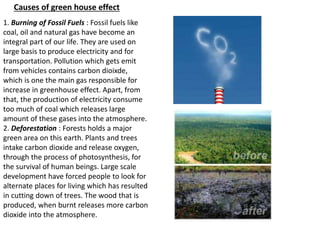
1. Burning of Fossil Fuels : Fossil fuels like
coal, oil and natural gas have become an
integral part of our life. They are used on
large basis to produce electricity and for
transportation. Pollution which gets emit
from vehicles contains carbon dioixde,
which is one the main gas responsible for
increase in greenhouse effect. Apart, from
that, the production of electricity consume
too much of coal which releases large
amount of these gases into the atmosphere.
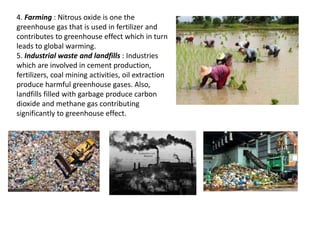
2. Deforestation : Forests holds a major
green area on this earth. Plants and trees
intake carbon dioxide and release oxygen,
through the process of photosynthesis, for
the survival of human beings. Large scale
development have forced people to look for
alternate places for living which has resulted
in cutting down of trees. The wood that is
produced, when burnt releases more carbon
dioxide into the atmosphere.
Causes of green house effect
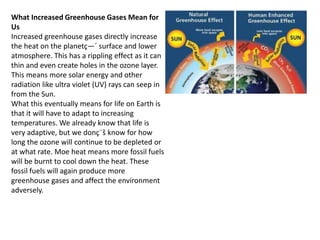
4. Farming : Nitrous oxide is one the
greenhouse gas that is used in fertilizer and
contributes to greenhouse effect which in turn
leads to global warming.
5. Industrial waste and landfills : Industries
which are involved in cement production,
fertilizers, coal mining activities, oil extraction
produce harmful greenhouse gases. Also,
landfills filled with garbage produce carbon
dioxide and methane gas contributing
significantly to greenhouse effect.
What Increased Greenhouse Gases Mean for
Us
Increased greenhouse gases directly increase
the heat on the planetç—´ surface and lower
atmosphere. This has a rippling effect as it can
thin and even create holes in the ozone layer.
This means more solar energy and other
radiation like ultra violet (UV) rays can seep in
from the Sun.
What this eventually means for life on Earth is
that it will have to adapt to increasing
temperatures. We already know that life is
very adaptive, but we don稚 know for how
long the ozone will continue to be depleted or
at what rate. Moe heat means more fossil fuels
will be burnt to cool down the heat. These
fossil fuels will again produce more
greenhouse gases and affect the environment
adversely.
Many scientists believe that global warming
and increased greenhouse effects are simply
part of a global cycle. It seems the earth goes
through these cycles every so often of
warming and then cooling. It is very difficult
to determine what effect man-made gases
have on the ozone layer and the greenhouse
effect when so much of naturally occurring
systems cause numerous effects themselves.
If the Earth does not go into a cooling cycle
within the next few hundred years, it is
possible that life on Earth will be very
different for the generations living here. Heat
and radiation increases may make going
outside difficult or dangerous during the
daytime. These increased energies could also
affect entire ecosystems. If plants and animals
cannot adapt quickly enough, we may see
entire species become extinct from thermal
changes alone.
All of this is a long way off, but it is still worth
thinking about the legacy we may be leaving
to the generations that follow us.

green house effect

  • 1.
    The greenhouse effectis a process by which thermal radiation from a planetary surface is absorbed by atmospheric greenhouse gas es, and is re-radiated in all directions. What is a Green House Effect? The major natural greenhouse gases are water vapor, which causesabout 36-70% of the greenhouse effect on Earth (not including clouds); carbon dioxide CO2, which causes 9-26%; methane, which causes 4- 9%, and ozone, which causes 3-7% What is the reason for Green House Effect?
  • 2.
    Greenhouse Effect Beforewe dig deep into the causes of greenhouse effect, it is important for us to know what is greenhouse effect. You must have heard of greenhouse effect during any debate on global warming. The light that we get from the sun helps to keep this atmosphere warm. Of the 100% light that sun sends to earth, almost 70% sunlight is reflected back into the sky. Only 30% of that sunlight is absorbed by us. The sunlight absorbed is used for different purposes. It can be used to produce solar energy, drying clothes, by plants in the process of photosynthesis and to make this planet warm and comfortable for living. -
  • 3.
    The 70% ofthe light that is reflected back into the space, also known as infrared radiations, are absorbed by greenhouse gases before they are lost to space. The absorption of these lights by greenhouse gases make it possible to keep this planet warm for living beings as these gases acts like a mirror and reflect some of the heat back to earth. Without Greenhouse effect, the temperature of this planet would be lesser by 30 degree celsius and this would be too cold for us to survive. The major greenhouse gases solely responsible for greenhouse effect are: carbon dioxide, ozone, methane and water vapors. Although these gases comprise 1% of our atmosphere, they act like a thick warm blanket outside that surrounds this planet and regulate climate control. Greenhouse effect is not bad, in fact it is needed to for all of us to survive on earth. In short, the greenhouse effect is nothing but a naturally occurring process designed by nature that aids in heating earth’s surface and helps to maintain ecological balance.
  • 4.
    Now some ofthat heat dissipates into space, some of it burns along the atmosphere, and some of it penetrates the atmosphere and finds its way into the lower atmosphere and the planetç—´ surface. This in turn raises the average temperature of the Earth. This increases the greenhouse effect and is a partial contributor to global warming
  • 5.
    1. Burning ofFossil Fuels : Fossil fuels like coal, oil and natural gas have become an integral part of our life. They are used on large basis to produce electricity and for transportation. Pollution which gets emit from vehicles contains carbon dioixde, which is one the main gas responsible for increase in greenhouse effect. Apart, from that, the production of electricity consume too much of coal which releases large amount of these gases into the atmosphere. 2. Deforestation : Forests holds a major green area on this earth. Plants and trees intake carbon dioxide and release oxygen, through the process of photosynthesis, for the survival of human beings. Large scale development have forced people to look for alternate places for living which has resulted in cutting down of trees. The wood that is produced, when burnt releases more carbon dioxide into the atmosphere. Causes of green house effect
  • 6.
    4. Farming :Nitrous oxide is one the greenhouse gas that is used in fertilizer and contributes to greenhouse effect which in turn leads to global warming. 5. Industrial waste and landfills : Industries which are involved in cement production, fertilizers, coal mining activities, oil extraction produce harmful greenhouse gases. Also, landfills filled with garbage produce carbon dioxide and methane gas contributing significantly to greenhouse effect.
  • 7.
    What Increased GreenhouseGases Mean for Us Increased greenhouse gases directly increase the heat on the planet痴 surface and lower atmosphere. This has a rippling effect as it can thin and even create holes in the ozone layer. This means more solar energy and other radiation like ultra violet (UV) rays can seep in from the Sun. What this eventually means for life on Earth is that it will have to adapt to increasing temperatures. We already know that life is very adaptive, but we don稚 know for how long the ozone will continue to be depleted or at what rate. Moe heat means more fossil fuels will be burnt to cool down the heat. These fossil fuels will again produce more greenhouse gases and affect the environment adversely.
  • 8.
    Many scientists believethat global warming and increased greenhouse effects are simply part of a global cycle. It seems the earth goes through these cycles every so often of warming and then cooling. It is very difficult to determine what effect man-made gases have on the ozone layer and the greenhouse effect when so much of naturally occurring systems cause numerous effects themselves. If the Earth does not go into a cooling cycle within the next few hundred years, it is possible that life on Earth will be very different for the generations living here. Heat and radiation increases may make going outside difficult or dangerous during the daytime. These increased energies could also affect entire ecosystems. If plants and animals cannot adapt quickly enough, we may see entire species become extinct from thermal changes alone. All of this is a long way off, but it is still worth thinking about the legacy we may be leaving to the generations that follow us.