Greenhouse Effect
•Presented by:
1. Muhammad Ramzan
2. Nabeel Arslan
3. Usman Shakir
4. Muhammad Bilal
5. Muhammad Rizwan
Contents:
• What is the Greenhouse Effect?
• Greenhouse Gases
• Causes of Greenhouse Effect
• Effects of Greenhouse Effect
• Runaway Greenhouse Effect
Greenhouse Effect Definition
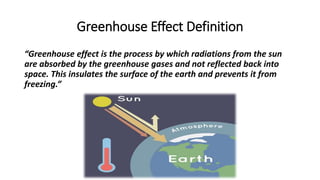
“Greenhouse effect is the process by which radiations from the sun
are absorbed by the greenhouse gases and not reflected back into
space. This insulates the surface of the earth and prevents it from
freezing.”
What is the Greenhouse Effect?
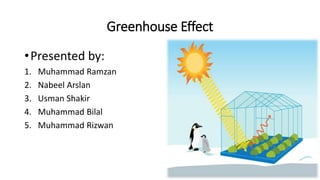
• A greenhouse is a house made of glass that can be used to grow plants. The
sun’s radiations warm the plants and the air inside the greenhouse. The
heat trapped inside can’t escape out and warms the greenhouse which is
essential for the growth of the plants. Same is the case in the earth’s
atmosphere.
• During the day the sun heats up the earth’s atmosphere. At night, when
the earth cools down the heat is radiated back into the atmosphere. During
this process, the heat is absorbed by the greenhouse gases in the earth’s
atmosphere. This is what makes the surface of the earth warmer, that
makes the survival of living beings on earth possible.
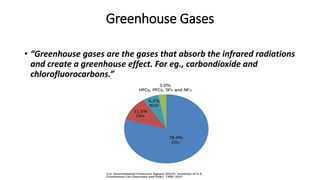
Greenhouse Gases
• “Greenhouse gases are the gases that absorb the infrared radiations
and create a greenhouse effect. For eg., carbondioxide and
chlorofluorocarbons.”
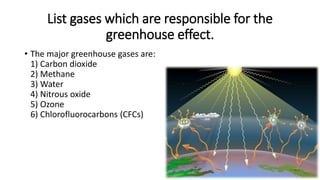
List gases which are responsible for the
greenhouse effect.
• The major greenhouse gases are:
1) Carbon dioxide
2) Methane
3) Water
4) Nitrous oxide
5) Ozone
6) Chlorofluorocarbons (CFCs)
What would have happened if the greenhouse
gases were totally missing in the earth’s
atmosphere?
• Earth’s most abundant greenhouse gases are carbon dioxide,
methane, ozone, CFCs, and water vapour. These gases are present
near the Earth’s surface. They absorb solar energy that is radiated
back from the surface of the Earth. The absorption of radiation results
in the heating up of the atmosphere. Hence, greenhouse gases are
essential for maintaining the temperature of Earth for the sustenance
of life.
In the absence of greenhouse gases, the average temperature of
Earth will decrease drastically, making it uninhabitable. As a result, life
on Earth would be impossible.
Continue:
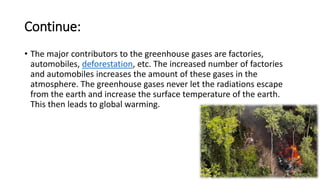
• The major contributors to the greenhouse gases are factories,
automobiles, deforestation, etc. The increased number of factories
and automobiles increases the amount of these gases in the
atmosphere. The greenhouse gases never let the radiations escape
from the earth and increase the surface temperature of the earth.
This then leads to global warming.
Causes of Greenhouse Effect
The major causes of the greenhouse effect are:
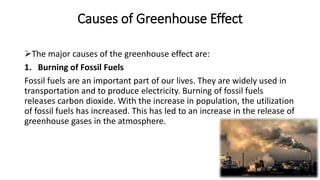
1. Burning of Fossil Fuels
Fossil fuels are an important part of our lives. They are widely used in
transportation and to produce electricity. Burning of fossil fuels
releases carbon dioxide. With the increase in population, the utilization
of fossil fuels has increased. This has led to an increase in the release of
greenhouse gases in the atmosphere.
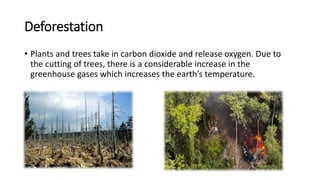
Deforestation
• Plants and trees take in carbon dioxide and release oxygen. Due to
the cutting of trees, there is a considerable increase in the
greenhouse gases which increases the earth’s temperature.
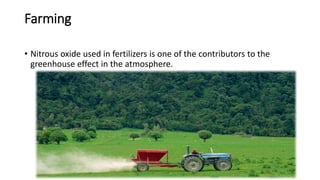
Farming
• Nitrous oxide used in fertilizers is one of the contributors to the
greenhouse effect in the atmosphere.
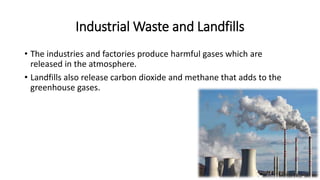
Industrial Waste and Landfills
• The industries and factories produce harmful gases which are
released in the atmosphere.
• Landfills also release carbon dioxide and methane that adds to the
greenhouse gases.
Effects of Greenhouse Effect
The main effects of increased greenhouse gases are:
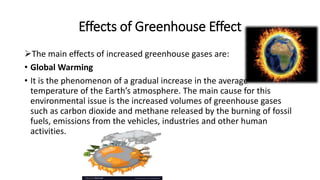
• Global Warming
• It is the phenomenon of a gradual increase in the average
temperature of the Earth’s atmosphere. The main cause for this
environmental issue is the increased volumes of greenhouse gases
such as carbon dioxide and methane released by the burning of fossil
fuels, emissions from the vehicles, industries and other human
activities.
Depletion of Ozone Layer
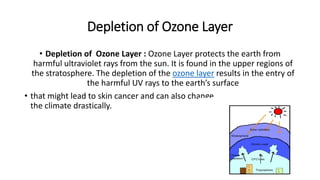
• Depletion of Ozone Layer : Ozone Layer protects the earth from
harmful ultraviolet rays from the sun. It is found in the upper regions of
the stratosphere. The depletion of the ozone layer results in the entry of
the harmful UV rays to the earth’s surface
• that might lead to skin cancer and can also change
the climate drastically.
Smog and Air Pollution
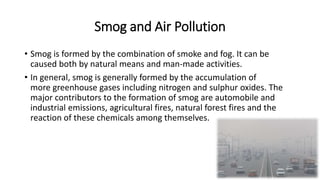
• Smog is formed by the combination of smoke and fog. It can be
caused both by natural means and man-made activities.
• In general, smog is generally formed by the accumulation of
more greenhouse gases including nitrogen and sulphur oxides. The
major contributors to the formation of smog are automobile and
industrial emissions, agricultural fires, natural forest fires and the
reaction of these chemicals among themselves.
Conclusion
• Call to Action
• Global Collaboration
• Hope and Solutions
• The Path Forward
Green house effect.pptx

Green house effect.pptx

  • 2.
    Greenhouse Effect •Presented by: 1.Muhammad Ramzan 2. Nabeel Arslan 3. Usman Shakir 4. Muhammad Bilal 5. Muhammad Rizwan
  • 3.
    Contents: • What isthe Greenhouse Effect? • Greenhouse Gases • Causes of Greenhouse Effect • Effects of Greenhouse Effect • Runaway Greenhouse Effect
  • 4.
    Greenhouse Effect Definition “Greenhouseeffect is the process by which radiations from the sun are absorbed by the greenhouse gases and not reflected back into space. This insulates the surface of the earth and prevents it from freezing.”
  • 5.
    What is theGreenhouse Effect? • A greenhouse is a house made of glass that can be used to grow plants. The sun’s radiations warm the plants and the air inside the greenhouse. The heat trapped inside can’t escape out and warms the greenhouse which is essential for the growth of the plants. Same is the case in the earth’s atmosphere. • During the day the sun heats up the earth’s atmosphere. At night, when the earth cools down the heat is radiated back into the atmosphere. During this process, the heat is absorbed by the greenhouse gases in the earth’s atmosphere. This is what makes the surface of the earth warmer, that makes the survival of living beings on earth possible.
  • 6.
    Greenhouse Gases • “Greenhousegases are the gases that absorb the infrared radiations and create a greenhouse effect. For eg., carbondioxide and chlorofluorocarbons.”
  • 7.
    List gases whichare responsible for the greenhouse effect. • The major greenhouse gases are: 1) Carbon dioxide 2) Methane 3) Water 4) Nitrous oxide 5) Ozone 6) Chlorofluorocarbons (CFCs)
  • 8.
    What would havehappened if the greenhouse gases were totally missing in the earth’s atmosphere? • Earth’s most abundant greenhouse gases are carbon dioxide, methane, ozone, CFCs, and water vapour. These gases are present near the Earth’s surface. They absorb solar energy that is radiated back from the surface of the Earth. The absorption of radiation results in the heating up of the atmosphere. Hence, greenhouse gases are essential for maintaining the temperature of Earth for the sustenance of life. In the absence of greenhouse gases, the average temperature of Earth will decrease drastically, making it uninhabitable. As a result, life on Earth would be impossible.
  • 9.
    Continue: • The majorcontributors to the greenhouse gases are factories, automobiles, deforestation, etc. The increased number of factories and automobiles increases the amount of these gases in the atmosphere. The greenhouse gases never let the radiations escape from the earth and increase the surface temperature of the earth. This then leads to global warming.
  • 10.
    Causes of GreenhouseEffect The major causes of the greenhouse effect are: 1. Burning of Fossil Fuels Fossil fuels are an important part of our lives. They are widely used in transportation and to produce electricity. Burning of fossil fuels releases carbon dioxide. With the increase in population, the utilization of fossil fuels has increased. This has led to an increase in the release of greenhouse gases in the atmosphere.
  • 11.
    Deforestation • Plants andtrees take in carbon dioxide and release oxygen. Due to the cutting of trees, there is a considerable increase in the greenhouse gases which increases the earth’s temperature.
  • 12.
    Farming • Nitrous oxideused in fertilizers is one of the contributors to the greenhouse effect in the atmosphere.
  • 13.
    Industrial Waste andLandfills • The industries and factories produce harmful gases which are released in the atmosphere. • Landfills also release carbon dioxide and methane that adds to the greenhouse gases.
  • 14.
    Effects of GreenhouseEffect The main effects of increased greenhouse gases are: • Global Warming • It is the phenomenon of a gradual increase in the average temperature of the Earth’s atmosphere. The main cause for this environmental issue is the increased volumes of greenhouse gases such as carbon dioxide and methane released by the burning of fossil fuels, emissions from the vehicles, industries and other human activities.
  • 15.
    Depletion of OzoneLayer • Depletion of Ozone Layer : Ozone Layer protects the earth from harmful ultraviolet rays from the sun. It is found in the upper regions of the stratosphere. The depletion of the ozone layer results in the entry of the harmful UV rays to the earth’s surface • that might lead to skin cancer and can also change the climate drastically.
  • 16.
    Smog and AirPollution • Smog is formed by the combination of smoke and fog. It can be caused both by natural means and man-made activities. • In general, smog is generally formed by the accumulation of more greenhouse gases including nitrogen and sulphur oxides. The major contributors to the formation of smog are automobile and industrial emissions, agricultural fires, natural forest fires and the reaction of these chemicals among themselves.
  • 17.
    Conclusion • Call toAction • Global Collaboration • Hope and Solutions • The Path Forward